





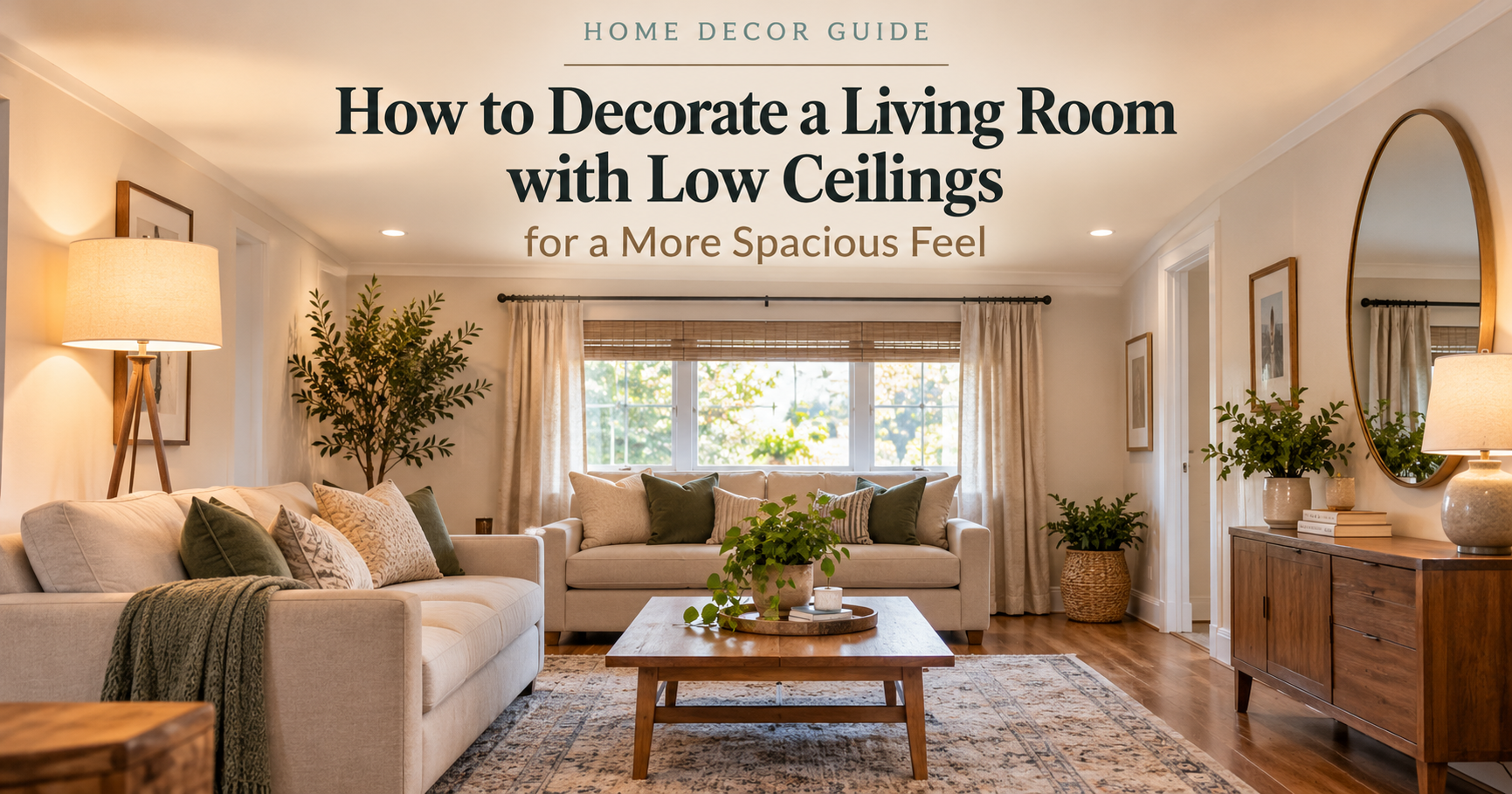
How to Decorate a Living Room with Low Ceilings: 12 Smart Ideas That Make Any Room Feel Taller

A low ceiling can make a living room feel cozy, but it can also make it feel boxy, heavy and cramped. The good news is that you do not need to renovate or raise the roof to fix that. With the right colors, lighting, furniture and layout, you can trick the eye into seeing height that is not really there.
In this complete guide, you will learn exactly how to decorate a living room with low ceilings, which mistakes to avoid, and what to look for when you shop for furniture, lamps, curtains and decor. Whether you live in a city apartment, an older house or a basement flat, these ideas will help you create a room that feels bright, balanced and comfortable.
What Counts as a Low Ceiling?
Most modern homes have ceilings around 8 feet (about 2.4 meters). A ceiling is usually considered low when it is closer to 7 to 7.5 feet (about 2.1 to 2.3 meters) or less. You often find low ceilings in older houses, attics, basements, mobile homes, and apartments in dense cities. Even if your ceiling is a standard height, a dark, cluttered or badly lit room can feel just as low, so the tips below help in almost any space.
1. Choose Light, Bright Wall and Ceiling Colors
Color is the fastest and cheapest way to change how tall a room feels. Light colors reflect more natural and artificial light, which makes walls seem to move away from you and the ceiling feel higher.
- Paint the ceiling white or a very pale tint. A bright ceiling bounces light around the room and avoids the heavy, pressed-down look of a dark ceiling.
- Keep walls light too. Soft white, warm cream, pale grey, sage and pale blue all work beautifully.
- Try a color-drenched look carefully. Painting walls and ceiling the same light shade removes the hard line where they meet, so the eye cannot tell exactly where the ceiling starts.
- Use a matte or soft satin finish. A slight sheen on the ceiling can reflect light, but very glossy paint highlights every flaw.

Can you use dark colors? Yes, but with intention. A deep color on all surfaces, including the ceiling, can feel dramatic and cozy in a small media room. In a main living room with low ceilings, however, light shades are safer and more flexible.
2. Draw the Eye Upward with Vertical Lines
Your eyes naturally follow lines. Horizontal lines stretch a room sideways and make it feel shorter, while vertical lines lead the eye up and add a feeling of height.
- Vertical stripes: Use striped wallpaper, painted stripes or paneling that runs from floor to ceiling.
- Tall, narrow bookcases: Slim shelving that reaches almost to the ceiling emphasizes height without taking much floor space.
- Vertical wall art: Choose tall frames, or hang several pieces in a column rather than a wide horizontal row.
- Tall plants: A slender floor plant, such as a snake plant or fiddle leaf fig, adds greenery and a vertical accent.

3. Hang Curtains High and Make Them Long
One of the most common decorating mistakes is hanging curtains right above the window frame. In a room with low ceilings, this makes the window and the whole wall look short.
- Mount the curtain rod as close to the ceiling as possible, or just a few inches below it.
- Choose curtains that reach the floor, or lightly kiss it, so the fabric forms one long vertical line.
- Extend the rod 8 to 12 inches (20 to 30 cm) beyond each side of the window so the glass is not covered and the window looks wider.
- Pick light, airy fabrics such as linen, cotton or sheer voile in white, cream or soft neutrals. Avoid heavy velvet in dark shades.
- Skip bulky valances, swags and thick pelmets, which add visual weight at the top of the room.
4. Choose Low-Profile Furniture
Furniture that sits low to the ground creates more empty space between the top of the furniture and the ceiling. That gap is what makes the room feel taller and more open.
- Sofas: Look for a sofa with a low back and a slim, clean silhouette. Modern low-profile sofas, loveseats and sectionals work well.
- Exposed legs: Furniture on slim legs lets you see the floor underneath, which adds to the feeling of space and light.
- Low shelving and sideboards: Use a long, low media console or credenza rather than a tall wall unit.
- Coffee tables: A low table with a glass, light wood or reflective top keeps sight lines open.
- Avoid: Oversized armoires, tall four-poster style pieces, high-back wingback chairs and heavy cabinets that sit close to the ceiling.

5. Pick the Right Lighting
Lighting can make or break a low-ceiling room. The wrong fixture can hang right in your line of sight, while the right layers of light make the ceiling seem to disappear.
- Flush-mount or semi-flush ceiling lights: They sit close to the ceiling and do not hang down into the room. Avoid long chandeliers and big pendants.
- Recessed lights (downlights): Slim, built-in lights give bright, even light without any visible fixture.
- Wall sconces: They free up floor and table space and add warm, soft light at eye level. Sconces that cast light upward are especially good because they wash the ceiling with light.
- Uplighting floor lamps: A torchiere-style or arc floor lamp directs light toward the ceiling, which makes it feel brighter and higher.
- Warm white bulbs: Around 2700K to 3000K feels cozy, while a slightly cooler tone helps in rooms with little daylight.

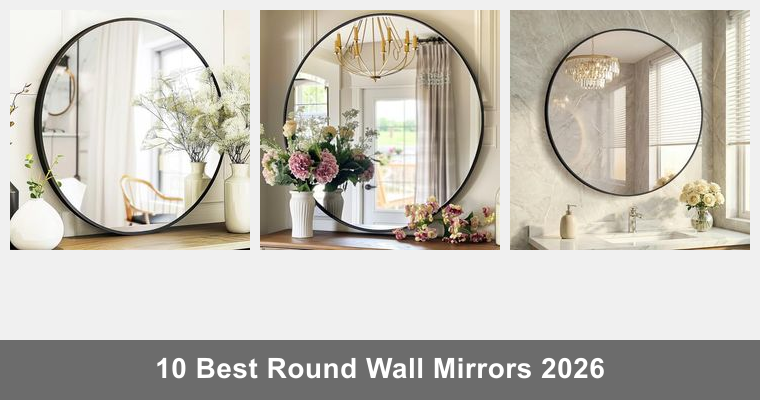
6. Use Mirrors to Add Light and Depth
Mirrors double the light in a room and create the illusion of extra space. In a low-ceiling living room, they are one of the best decor items you can own.
- Choose a tall, narrow or full-length mirror and lean it against the wall, or hang it vertically so it draws the eye up.
- Place a mirror opposite or beside a window so it reflects daylight deeper into the room.
- Try a mirrored or glass-front cabinet, a mirrored console or a metallic side table for an extra reflective effect.
- Avoid hanging a mirror too low, as it should reflect the upper part of the room and the light.
7. Keep Wall Decor Simple and Well Placed
- Hang art at eye level. The center of a picture should sit around 57 to 60 inches (145 to 152 cm) from the floor. Hanging pieces too high near the ceiling can emphasize how close it is.
- Go vertical. Tall frames or stacked arrangements add height.
- Skip heavy crown molding. Thick, chunky trim at the top of the wall lowers the ceiling visually. If you like trim, choose a slim profile painted the same color as the ceiling.
- Consider a picture rail or floor-to-ceiling paneling in a light shade for texture without weight.
8. Choose Flooring and Rugs Wisely
The floor is a big part of the overall look. A light or medium floor reflects more light and makes the room feel more open.
- Light wood or light tile: Oak, ash, birch or light vinyl planks give a bright, airy base.
- Lay planks lengthwise toward the longest wall or main light source to stretch the space.
- Use a large area rug. A rug that fits under at least the front legs of your sofa and chairs makes the seating area feel unified and bigger.
- Pick simple patterns. Soft stripes, subtle geometrics or solid neutrals are better than busy, dark designs.
9. Choose Slim and Streamlined Decor Pieces
Large, heavy items eat up visual space. Slimmer shapes keep the room feeling light.
- Glass, acrylic, metal and light wood tables allow light and sight lines to pass through.
- Nesting tables or small side tables save floor space compared with one big heavy table.
- Wall-mounted shelves and floating media units keep the floor clear.
- Use a few larger accessories rather than many tiny ones, so the room does not feel cluttered.
10. Declutter and Choose Smart Storage
Clutter makes any room feel smaller, and in a low-ceiling room it makes the space feel even more compressed. Aim for closed storage and a clean surface.
- Use ottomans with hidden storage, benches with baskets and lidded boxes.
- Store items in low cabinets and use the wall for floating shelves with only a few styled pieces.
- Leave some empty wall and surface space so the eye has a place to rest.
- Follow the “one in, one out” rule when you buy new decor.
11. Use Texture and Layers Instead of Height
A low-ceiling room does not need to be plain. You can create warmth and interest with soft textures while keeping the shapes low and light.
- Layer cushions and throws in linen, cotton, bouclé and wool.
- Combine natural materials such as rattan, light wood, jute and ceramics.
- Stick to a limited color palette of two or three main shades plus one accent color.
- Add a couple of plants to bring life and a fresh feeling into the room.
12. Think About Layout and Flow
- Keep walkways open and avoid blocking windows with furniture.
- Float your sofa away from the wall only if the room is big enough; in small rooms, placing furniture along walls leaves a clear central area.
- Use a symmetrical arrangement for a calm, balanced look.
- Choose multi-functional pieces such as a sofa bed, a lift-top coffee table or a console that doubles as a desk.
Best Decor Styles for Low Ceiling Living Rooms
- Scandinavian: Light woods, white walls, simple lines and cozy textiles are a natural fit.
- Japandi: A blend of Japanese minimalism and Nordic warmth, with low furniture that suits low ceilings perfectly.
- Modern minimalist: Clean lines, hidden storage and a neutral palette keep the room open.
- Coastal: White, sand and soft blue tones with natural fibers feel breezy and bright.
- Mid-century modern: Tapered legs and low, sleek silhouettes show off the floor and keep things light.
Common Mistakes to Avoid
- Hanging a big chandelier or heavy pendant light.
- Painting the ceiling a darker color than the walls in a room with little daylight.
- Hanging curtains right above the window frame.
- Filling the room with tall, bulky furniture.
- Using thick crown molding or dark exposed beams without painting them.
- Choosing small rugs that float in the middle of the room.
- Skipping layered lighting and relying on one ceiling light.
- Overcrowding walls and surfaces with decor.
Shopping Checklist: What to Look For
Use this simple list when you shop online or in stores, so every piece you bring home supports the look of a taller room.
| Item | What to Look For |
|---|---|
| Sofa | Low back, slim arms, visible legs, light or mid-tone fabric |
| Ceiling Light | Flush-mount or semi-flush, slim profile, dimmable |
| Floor Lamp | Uplighting or arc design with a warm white bulb |
| Curtains | Floor-length, light linen or cotton, plus an adjustable rod that mounts high |
| Mirror | Tall, full-length or arched, with a slim frame |
| Area Rug | Large, light or softly striped, low pile |
| Media Console | Long and low, on legs or wall-mounted |
| Coffee Table | Low, glass or light wood, rounded corners |
| Wall Art | Vertical frames in light mats and slim frames |
Frequently Asked Questions
What is the best paint color for a living room with low ceilings?
Soft white, warm cream, pale grey, light sage and pale blue are the best choices. They reflect light and make the ceiling look higher. A bright white ceiling usually works best.
Should I paint the ceiling the same color as the walls?
It can work well if the color is light. It softens the edge where the wall meets the ceiling and makes the room feel more seamless. In very small or dim rooms, a slightly lighter ceiling than the walls adds extra brightness.
Are dark colors a bad idea for low ceilings?
Not always. Dark colors can create a cozy, moody atmosphere when used on every surface, including the ceiling. But for most living rooms, especially those without much daylight, light colors are the safer way to create a sense of height.
What type of light fixture is best for a low ceiling?
Flush-mount and semi-flush fixtures, recessed downlights and wall sconces are best. Avoid long chandeliers and big hanging pendants that drop into the room.
Do rugs make a difference in a low-ceiling room?
Yes. A large rug in a light color or with subtle stripes anchors the furniture and makes the whole floor look bigger, which helps the room feel more spacious.
Can I use a sectional in a low-ceiling living room?
Yes, as long as it is low-profile with a lower back and slim arms. Choose one with exposed legs and a light or neutral fabric to keep it from looking heavy.
Final Thoughts
Decorating a living room with low ceilings is all about creating the illusion of height and keeping the space light, simple and balanced. Start with light colors, lead the eye upward with vertical lines and tall curtains, choose low and leggy furniture, add layered lighting and mirrors, and keep clutter under control. You do not have to apply every idea at once; even two or three of these changes can transform how your room looks and feels.
With the right approach, a low ceiling stops being a problem and becomes part of a cozy, welcoming space you will love spending time in.