
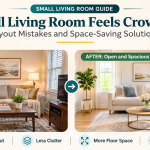

Small Living Room Feels Crowded? 12 Easy Fixes to Make It Feel Open and Airy

You walk into your living room and something feels off. The sofa seems too big, the walls feel close, and there is nowhere to put anything. If your small living room feels crowded, you are not alone. It is one of the most common home decor problems, especially in apartments, condos and older houses.
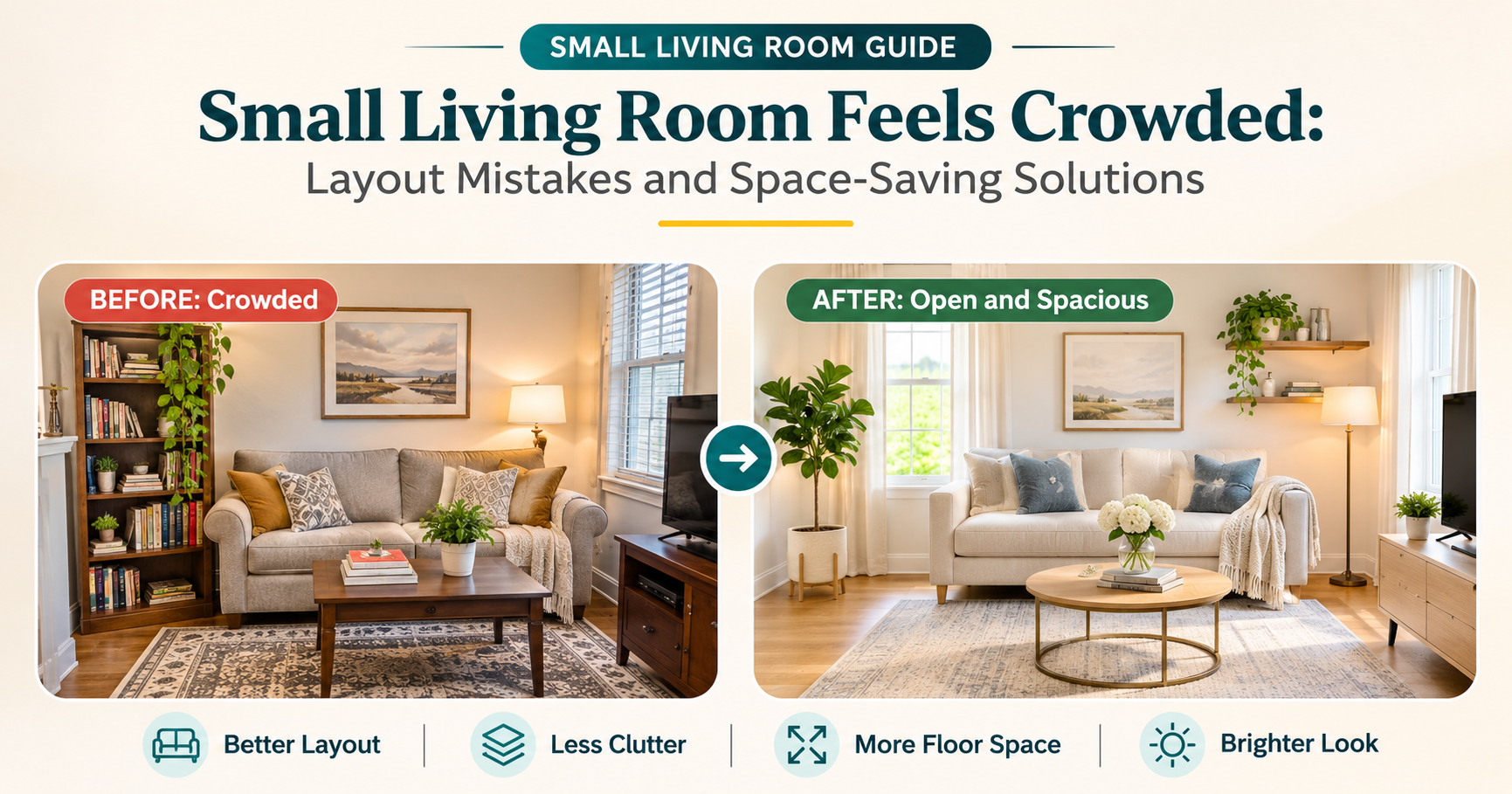
The good news is that a crowded feeling usually has little to do with the actual size of the room. It comes from furniture scale, clutter, poor layout, heavy colors and blocked walkways. You can fix most of these without a renovation and often without spending much money.
In this complete guide, you will learn why a small living room feels cramped, how to plan the layout, which furniture to choose, how to use light and color, and which mistakes to avoid. Every idea is practical and easy to try.
Why Does a Small Living Room Feel Crowded?
Before you change anything, it helps to know what is making the room feel tight. These are the most common causes:
- Oversized furniture: A big sectional or deep recliner can take up half the room.
- Too many pieces: Extra chairs, side tables, ottomans and shelves leave no breathing space.
- Clutter: Open surfaces filled with small items create visual noise.
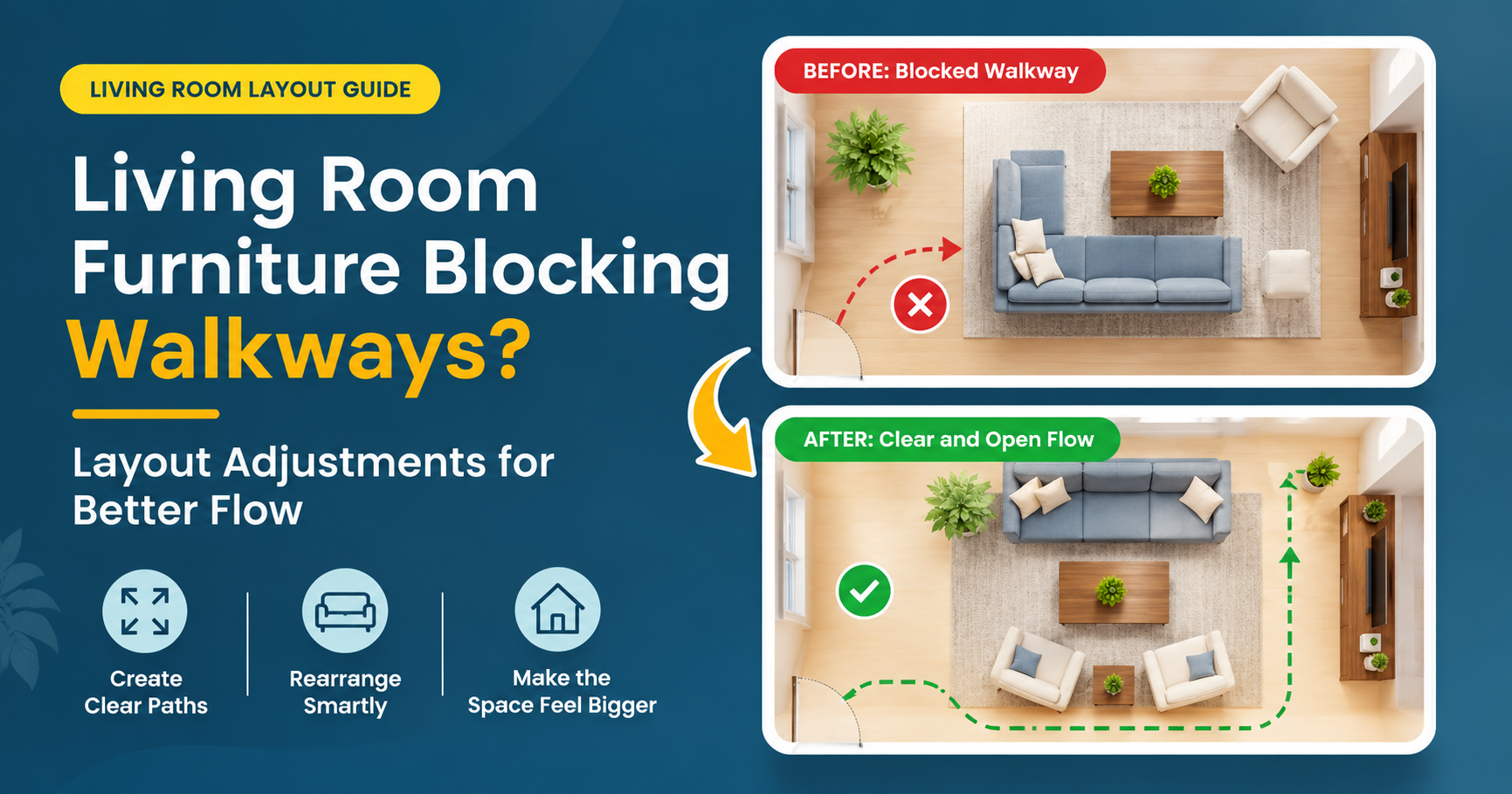
- Blocked walkways: If you must squeeze between furniture, the room feels tight.
- Dark or busy colors: Heavy shades and many patterns make walls feel closer.
- Poor lighting: A dim room looks smaller and heavier.
- Everything on the floor: Without wall storage or visible floor, the room feels packed.
1. Start by Decluttering and Editing
Clutter is the fastest way to make a small room feel smaller. Before you buy anything new, take everything off the shelves and surfaces and decide what really belongs in the room.
- Sort items into keep, store elsewhere, donate and throw away.
- Remove anything that does not have a clear use or that you do not love.
- Keep only a few decor items on each surface, and group them in threes or fives.
- Clear magazines, mail, chargers and remote controls into a tray or a closed basket.
- Follow the “one in, one out” rule so clutter does not return.
Be honest about furniture too. If a chair, table or cabinet is rarely used, moving it to another room can instantly open up the space.
2. Measure the Room and Plan Your Layout
Many crowded rooms are the result of furniture bought without measuring. Take a few minutes to measure your walls, windows, doors and the main pieces you own. Sketch a simple floor plan on paper or use free online room planners.
- Keep the main walkway about 30 to 36 inches (75 to 90 cm) wide.
- Leave about 14 to 18 inches (35 to 45 cm) between the sofa and the coffee table.
- Keep doors and drawers able to open fully.
- Do not block windows with tall furniture.

3. Choose Furniture That Fits the Scale of the Room
The right size of furniture matters more than the number of pieces. A large sofa in a small room dominates everything. Look for compact designs that still give comfort.
- Sofa: A loveseat or apartment-size sofa (about 60 to 80 inches, or 150 to 200 cm) is often enough.
- Slim arms and low backs: Thin arms save several inches of width.
- Armless or small chairs: A single accent chair on a swivel base can be easier to move than two heavy chairs.
- Shallow depth: Choose pieces with less depth, such as slim consoles and narrow bookcases.
- Avoid: Large recliners, big sectionals and deep, overstuffed chairs.

4. Improve the Layout and Traffic Flow
Even small rooms can feel spacious if people can move easily. A good layout has one clear focal point, such as a window, a fireplace or a TV, and a clear path through the room.
- Place the largest piece, usually the sofa, against the longest wall.
- Keep the main path from the door to the seating area free.
- Push furniture against walls or into corners to free the center. In a very small room, this works better than floating pieces.
- Use a simple arrangement with seating facing each other or the focal point, rather than many pieces in different directions.
- Do not block the radiator, vents or windows.

5. Choose Furniture with Exposed Legs
When you can see the floor under furniture, the room feels lighter and larger. Pieces that sit directly on the floor look heavy and block the line of sight.
- Choose sofas, chairs, consoles and TV units that stand on slim legs.
- Pick light-colored or glass coffee tables that you can see through.
- Use nesting tables, which tuck away when not needed.
- Try round or oval tables to avoid sharp corners that stick out into walkways.
6. Pick Multi-Functional Furniture
In a small living room, every piece should work hard. Multi-functional furniture gives you extra function without extra pieces.
- Storage ottomans: A seat, footrest and storage for blankets in one.
- Lift-top coffee tables: Turn into a desk or dining surface.
- Sofa beds or daybeds: Good for guests in a one-room home.
- Console tables with shelves: Can act as a desk, entry table and display shelf.
- Benches with baskets: Extra seating that hides clutter.
7. Use Vertical and Wall Storage
If your floor is full, use your walls. Vertical storage makes use of space you already have and keeps the floor clear.
- Install floating shelves above the sofa, desk or TV.
- Choose tall, narrow bookcases rather than wide, low units.
- Use wall hooks, rails and picture ledges for books and art.
- Wall-mounting the TV removes the need for a bulky media unit.
- Use the space above doors for a shelf for baskets or books.

8. Use a Light, Simple Color Palette
Light colors reflect light and make walls feel farther away. Using a limited palette also reduces visual noise, so the room feels calmer and more organized.
- Paint walls in soft white, cream, light grey, pale beige or pale sage.
- Keep large furniture in colors close to the walls so it blends in.
- Use one or two accent colors in small items such as cushions, throws and art.
- Avoid too many patterns; stick to one or two that share the same colors.
- Painting trim and ceiling in the same or a lighter shade makes the room feel seamless.
Dark colors are not forbidden, but in a small room they work best when applied to the entire space with intention, and with plenty of good lighting.
9. Let in Light and Add Mirrors
Light is one of the best ways to make a room feel open. Natural light makes the space feel bigger, while mirrors multiply it.
- Keep windows clear of heavy furniture and bulky decor.
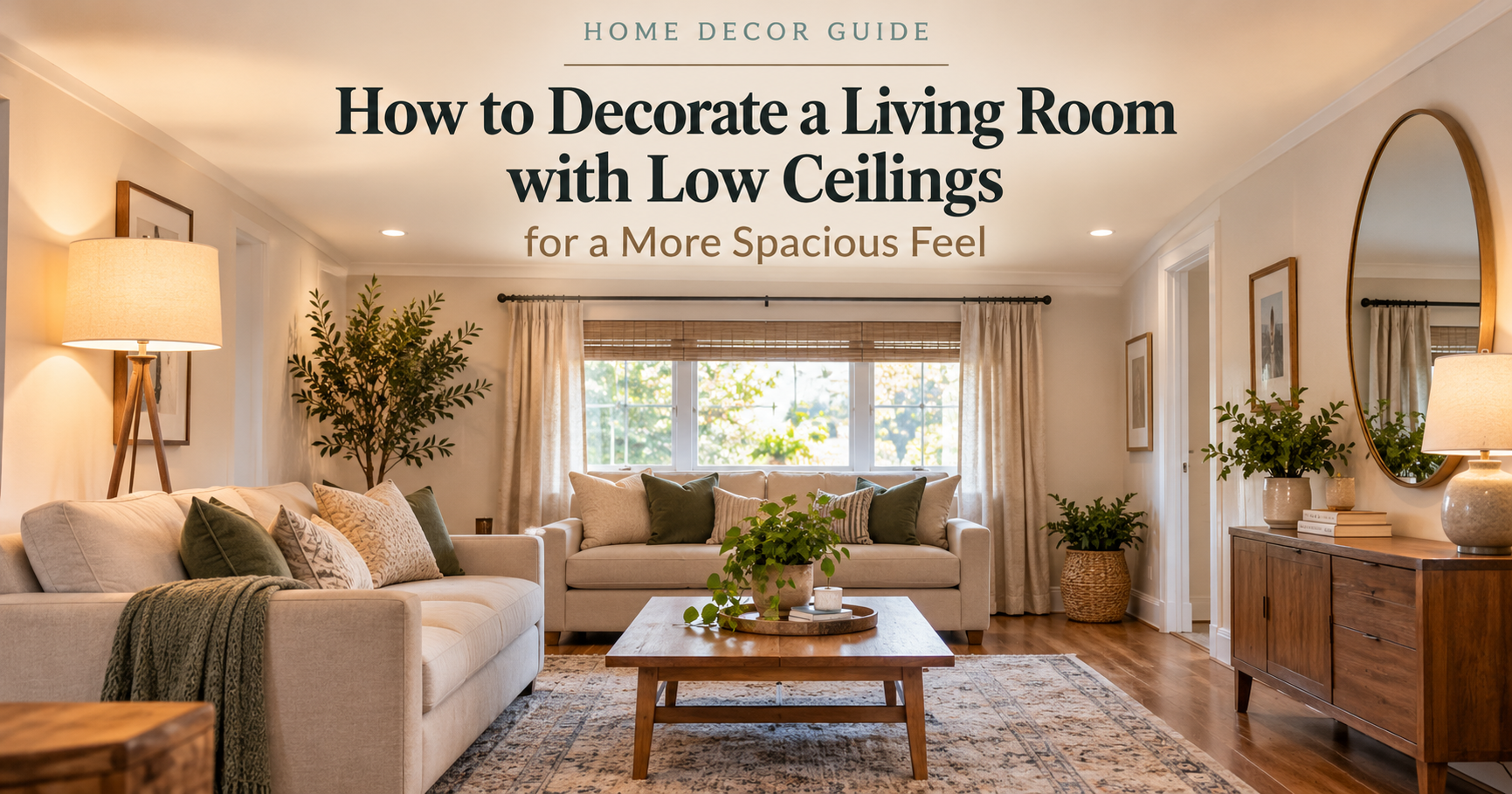
- Choose sheer or light curtains, and hang them near the ceiling and wide enough that they do not cover the glass.
- Place a large mirror opposite or beside a window to bounce light into the room.
- Layer your lighting with a ceiling light, a floor lamp and a table lamp, instead of relying on one light.
- Use warm white bulbs for comfort, and use dimmers where possible.
10. Choose the Right Rug
A rug that is too small makes the furniture look scattered and the room feel smaller. A well-sized rug connects the seating area and makes the whole space feel planned.
- Pick a rug large enough so that at least the front legs of your sofa and chairs sit on it.
- Choose a light or low-contrast rug, or a soft stripe, to avoid breaking the room into small pieces.
- Use a low-pile rug that stays flat and does not catch the door.
- Avoid layering many small rugs.
11. Decorate with Fewer, Larger Pieces
Lots of small decor items look busy. A few larger pieces look intentional and calm.
- Choose one large piece of art instead of many small frames.
- Pick one or two big plants rather than many tiny pots.
- Keep coffee table and shelf styling simple, with a tray, a candle and a plant or book stack.
- Leave some empty wall and shelf space so the eye can rest.
12. Hide Cables and Control Visual Noise
Tangled cables, boxes and cords make a room look messy and crowded without you noticing.
- Use cable clips, sleeves or cord covers to hide wires along walls.
- Put routers and game consoles in a closed cabinet or a ventilated box.
- Use matching baskets, boxes and frames to create a consistent look.
- Keep the TV on a slim stand or wall-mount it to save space.
Best Decor Styles for a Small Living Room
- Scandinavian: Light woods, white walls, simple shapes and cozy textiles.
- Minimalist: Few pieces, clean lines and hidden storage.
- Japandi: Calm, natural and low furniture with warm woods.
- Modern coastal: Soft blues, sand and white with natural textures.
- Mid-century modern: Slim legs and tidy silhouettes that show off the floor.
Common Mistakes That Make a Small Living Room Feel Crowded
- Buying a big sectional because it looks comfortable in the store.
- Placing furniture against every wall and also adding items in the middle.
- Using several small rugs or a rug that is too small.
- Choosing heavy dark curtains that cover the window and wall.
- Filling every shelf and surface with decor.
- Blocking the doorway or windows with furniture.
- Skipping measurements before buying.
- Relying on one overhead light.
Shopping Checklist for a Small Living Room
Use this list as a quick guide when you shop online or in stores. It keeps every purchase in proportion to your space.
| Item | What to Look For |
|---|---|
| Sofa | Compact or apartment size, slim arms, exposed legs, light or neutral fabric |
| Coffee Table | Round or oval, glass or light wood, with a lower shelf or lift-top |
| Accent Chair | Small footprint, swivel base or armless design |
| TV Unit | Wall-mounted or slim and low, with closed storage |
| Shelving | Floating or tall and narrow, with a light finish |
| Rug | Large enough for front legs of the furniture, low pile, light color |
| Mirror | Large, full-length or arched, placed opposite a window |
| Lighting | Wall sconce, slim floor lamp, dimmable warm bulbs |
| Storage | Ottoman with storage, baskets, lidded boxes |
| Curtains | Light, floor-length, mounted high and wide |
A Simple Weekend Plan to Fix a Crowded Living Room
- Saturday morning: Declutter shelves, tables and the floor, and measure the room.
- Saturday afternoon: Move or remove oversized furniture, and test a new layout.
- Sunday morning: Hide cables, organize storage and add baskets or shelves.
- Sunday afternoon: Style the room with a mirror, simple decor, a rug and layered lighting.
Frequently Asked Questions
Why does my small living room feel so cluttered even though it is tidy?
Large furniture, many small decor items, strong patterns and dark colors can make a room feel full, even when it is clean. Try fewer, larger pieces and a lighter, simpler color palette.
How many pieces of furniture should a small living room have?
There is no exact number, but a sofa or loveseat, one chair, a coffee table or side table, and a media unit or shelf are enough for most small rooms. Add more only if the walkway stays clear.
Should I put the sofa against the wall in a small living room?
Usually yes. In a small room, placing the sofa against the longest wall frees the center for walking and makes the space feel larger.
Do mirrors really make a small room look bigger?
Yes. Mirrors reflect light and views, which adds depth and brightness. They work best opposite or beside a window.
What color makes a small living room feel bigger?
Light and soft shades such as white, cream, pale grey, pale sage and light blue reflect more light and make the room feel more open.
Is a sectional sofa a bad idea for a small living room?
Not always. A compact, low-profile sectional can work in some layouts, but large or deep ones often take up too much space. Always measure first.
How can I add storage without adding clutter?
Use closed storage such as ottomans, cabinets and lidded baskets, plus wall shelves with only a few items on display.
Final Thoughts
A small living room feels crowded for reasons you can control: too much furniture, furniture that is too large, clutter, poor layout and heavy colors. Start by decluttering and measuring, choose compact pieces with exposed legs, keep walkways clear, use walls for storage, and add light with mirrors and layered lighting.
You do not need to do everything at once. Even two or three of these changes can make your living room feel calmer, brighter and much more spacious. With a little planning, your small space can become a comfortable and stylish room you enjoy every day.