


It is a cold evening, you switch on your heater, and nothing much happens. The fan spins, the light glows, yet the air stays chilly. If your room heater is not heating properly, you are far from alone. It is one of the most common winter complaints, and the good news is that the cause is often simple: a power problem, a dusty vent, a thermostat set too low, or a heater that is simply too small for the room.
In this guide you will learn why a heater stops producing enough warmth, how to check each possible cause safely, which problems you can fix yourself, and when it makes more sense to call a technician or buy a new heater. Whether you own a fan heater, an oil-filled radiator, a ceramic heater or a convector, the steps below will help you get your room warm again.
Why Is My Room Heater Not Heating Properly? The Quick Answer
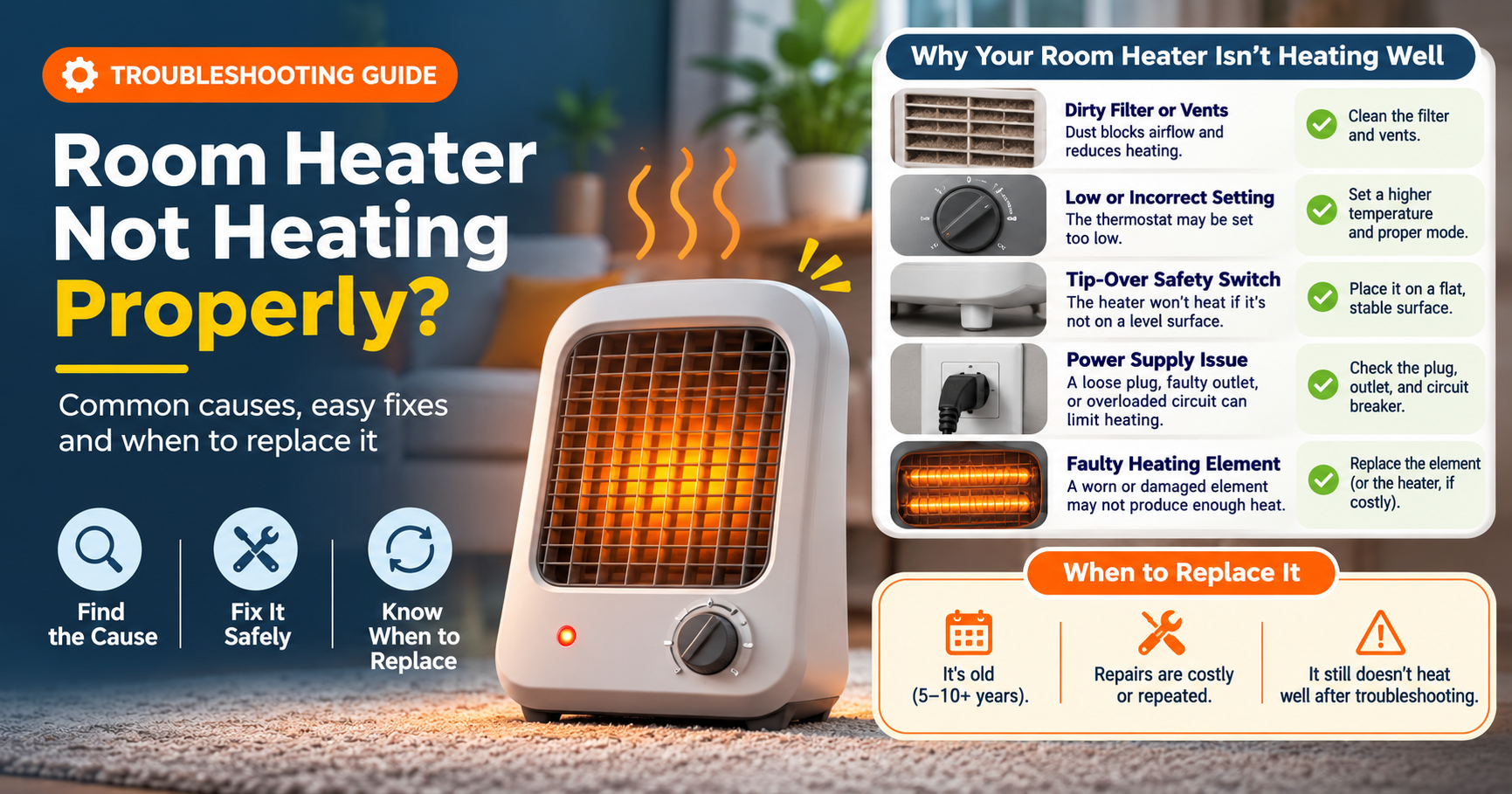
A heater usually loses performance for one of five reasons: it is not getting full power, a safety device has switched it off, airflow is blocked, a part inside has worn out, or the heater is not powerful enough for the space.
- Heater is dead or weak: check the socket, plug, cord, breaker and power switch.
- Heater turns off after a few minutes: clean the vents and filter; the overheat cutoff is probably tripping.
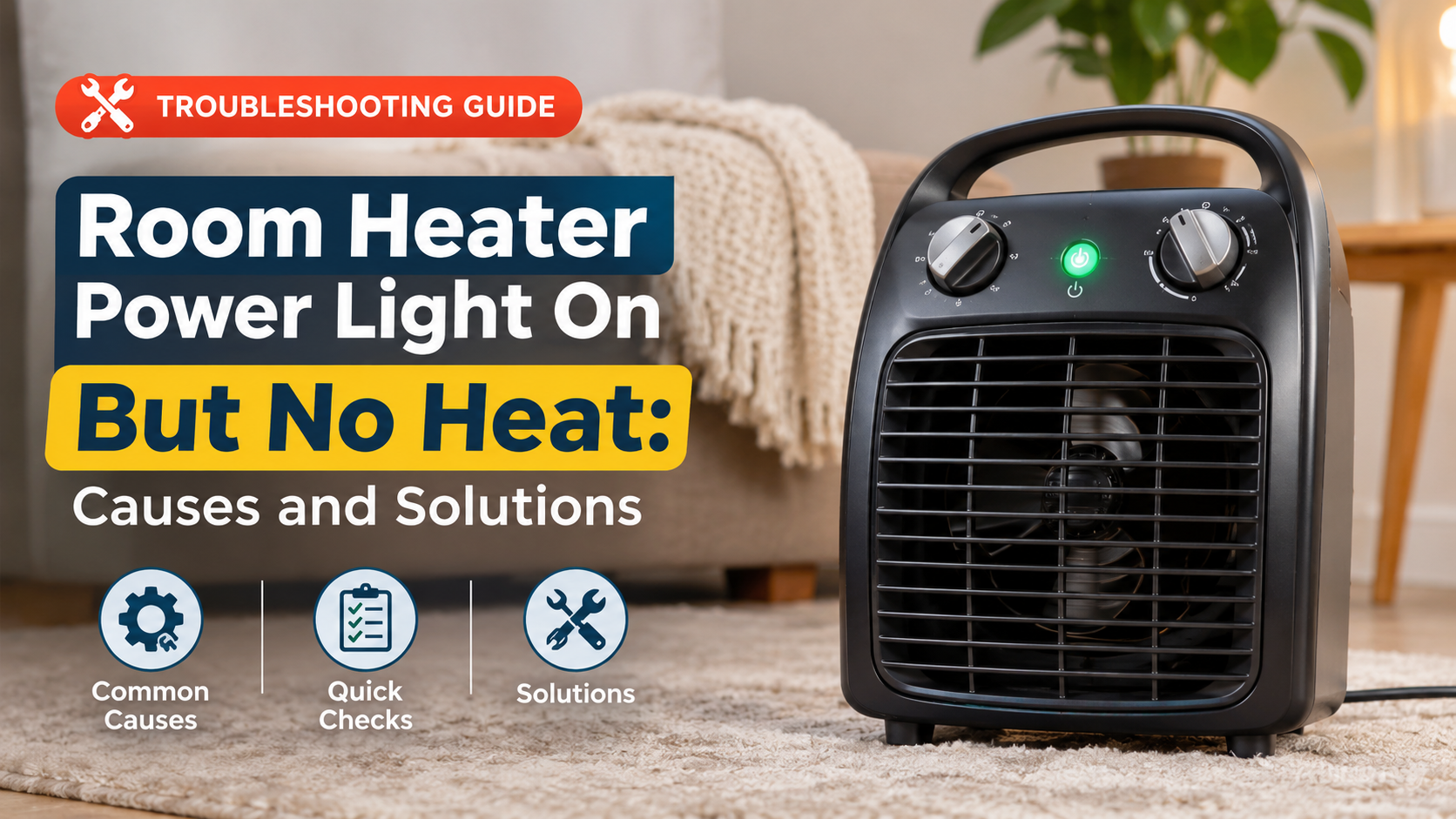
- Fan runs but air is cool: raise the thermostat, check the mode selector, then suspect the heating element or thermal fuse.
- Heater works but the room stays cold: the heater may be too small, or warm air is escaping through drafts.
Safety First: Before You Troubleshoot
A heater draws a lot of electricity and gets very hot, so basic safety matters more than speed. Follow these rules every time.
- Unplug the heater and let it cool completely before touching, moving or cleaning it.
- Never open a sealed oil-filled radiator or try to refill the oil.
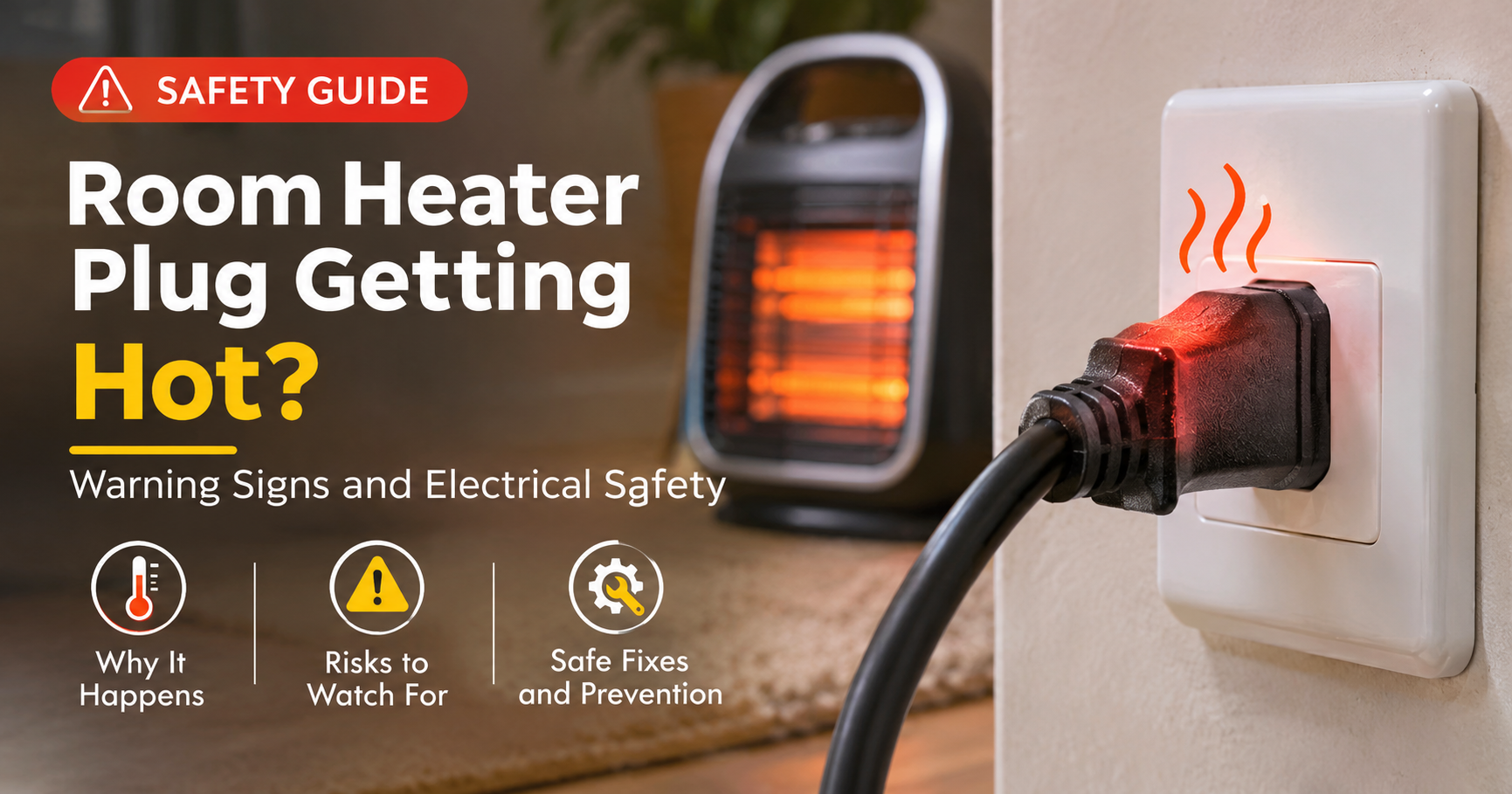
- Do not use a heater with a melted plug, scorched socket, cracked cord or burning smell.
- Do not attempt to rewire or replace internal electrical parts unless you are qualified; ask a licensed electrician or service centre.
- If you use a gas or kerosene heater and the flame looks yellow or you smell fumes, stop using it, ventilate the room and get it checked.
How a Room Heater Works (and Where It Can Fail)
Most electric heaters follow the same basic idea. Electricity flows through a resistance wire or ceramic element, which turns the energy into heat. In a fan heater, a small motor and fan push air across that element. In an oil-filled radiator, the element warms oil sealed inside metal fins, and the fins release the heat slowly. A thermostat switches the element on and off to keep the room at your chosen temperature, while safety parts such as a thermal fuse and a tip-over switch protect you if something goes wrong.
Because several parts must work together, a fault in any one of them can leave you with a heater that runs but does not heat well.
10 Common Reasons a Room Heater Is Not Heating Properly
1. The heater is not getting proper power
A loose plug, a faulty socket or a tripped breaker is the most common cause of a weak or dead heater. Heaters are high-wattage appliances, and even a slightly damaged connection can limit the current they receive.
What to do: Push the plug in firmly and try a different wall socket on a different circuit. Check your breaker or fuse box, and make sure the heater’s own power switch is on. If the plug feels hot or looks discoloured, stop using the heater and have the socket checked.
2. An extension cord or shared circuit is limiting the current
Thin extension cords and multi-plug adapters can overheat and drop the voltage reaching the heater. Sharing a circuit with an air conditioner, geyser, iron or microwave can cause the same problem.
What to do: Plug the heater directly into a wall socket whenever possible, and keep other heavy appliances off that circuit while it runs. Low voltage matters more than most people think: if the supply drops by 10 percent, a resistive heater produces about 19 percent less heat, because output depends on the square of the voltage.
3. The thermostat is set too low or is faulty
If the thermostat dial is set below the current room temperature, the element will not switch on. A worn thermostat may also cut the heat too early or never switch the element on at all.
What to do: Turn the dial to maximum and wait a few minutes. If the heater still does not heat but the fan runs, or if it clicks on and off rapidly, the thermostat may be failing and should be replaced by a technician.
4. Dust is blocking the vents and filter
Dust, pet hair and lint are the silent enemies of every heater. A blocked air inlet or outlet stops heat from escaping, the internal temperature climbs, and the overheat protection reduces power or shuts the heater off.
What to do: With the heater unplugged and cool, vacuum the vents and grille using a soft brush attachment. Clean or replace the air filter if your model has one. Keep at least three feet (about one metre) of clear space around the heater.
5. The overheat protection has tripped
Almost every modern heater has a safety cutoff that interrupts the power when the unit gets too hot. If your heater works for a few minutes and then goes cold, this is the classic sign.
What to do: Unplug it, let it cool for 20 to 30 minutes, clean the vents, and restart it in an open area. Some models reset automatically, while others have a small reset button. If the cutoff keeps tripping even with clean vents, the thermostat or a sensor may be faulty.
6. The tip-over safety switch is stuck or not seated properly
Tip-over switches cut the power when the heater is tilted. A heater placed on a thick carpet, a slightly slanted floor or a wobbly surface can keep the switch from closing fully, or dust can make it stick.
What to do: Move the heater to a hard, flat surface and test again. If the heater works only when held at a certain angle, the switch needs servicing or replacement.
7. The heating element is worn out or burnt
The heating element is the part that actually creates heat. After years of use, or after repeated overheating and voltage spikes, the wire can weaken and break. In a fan heater, you will hear the fan but feel only cool air. In an infrared or quartz heater, a tube that no longer glows is a clear warning sign.
What to do: A technician can test the element for continuity and replace it if it is faulty. For low-cost heaters, replacing the whole unit is often more economical.
8. The thermal fuse has blown
A thermal fuse is a one-time safety part. If the heater overheats badly, the fuse breaks the circuit permanently to prevent a fire. Once it blows, the heater stays dead or the element never turns on, even though the fan may still run.
What to do: A blown fuse is a symptom, not the real problem. Have a technician find out why the heater overheated before replacing it, otherwise it will fail again.
9. The fan motor is weak or failing
In a fan heater, a slow, noisy or stuck fan cannot move enough air over the element. The result is weak warm air, a burning smell and frequent overheat shutdowns.
What to do: Check that nothing is touching the blades and clean around the fan. If the fan still turns slowly or makes grinding noises, the motor or bearings are wearing out and need professional repair or replacement.
10. The heater is too small for the room, or the room loses heat
Sometimes there is nothing wrong with the heater at all. A small heater cannot warm a large room, and an open door, a window gap or a poorly insulated wall can let the heat escape as fast as it is produced.
What to do: Compare your heater’s wattage with the size of the room (see the chart below), close the door, seal gaps with draft stoppers, and use curtains over windows at night.
Quick Diagnosis Map
If you are not sure where to begin, match what you see with the first thing to check. This map covers the four situations people describe most often.
Troubleshooting Different Types of Room Heaters
Each heater type has its own habits, so something that looks like a fault may actually be normal behaviour.
| Heater type | Common problem | What to try |
|---|---|---|
| Fan heater | Blows cool air, shuts off after a few minutes, or smells of burning dust | Clean vents and fan, check the thermostat, and make sure the airflow is not blocked. |
| Ceramic (PTC) heater | Warm but not hot air, frequent shutdowns | Clean the intake, avoid extension cords, and let it cool before restarting. PTC elements naturally limit their own temperature, so output feels gentler. |
| Oil-filled radiator | Takes long to warm up, bottom of the fins stays cooler | Allow 20 to 30 minutes or more to heat fully; this is normal. If it stays cold, check power, thermostat and thermal cutoff. Never open the oil chamber. |
| Convector heater | Weak heat in a large room | Keep the vents clear, place it away from furniture and curtains, and match the wattage to the room. |
| Infrared, quartz or halogen heater | Tube not glowing, or only part of it glows | Check power and switch settings first; a dark tube usually means the element or the tube itself has failed. |
| Gas or kerosene heater | Weak or yellow flame, fumes, repeated shutoff | Stop using it and call a qualified technician. Do not attempt DIY repairs. |
Step-by-Step Troubleshooting Checklist
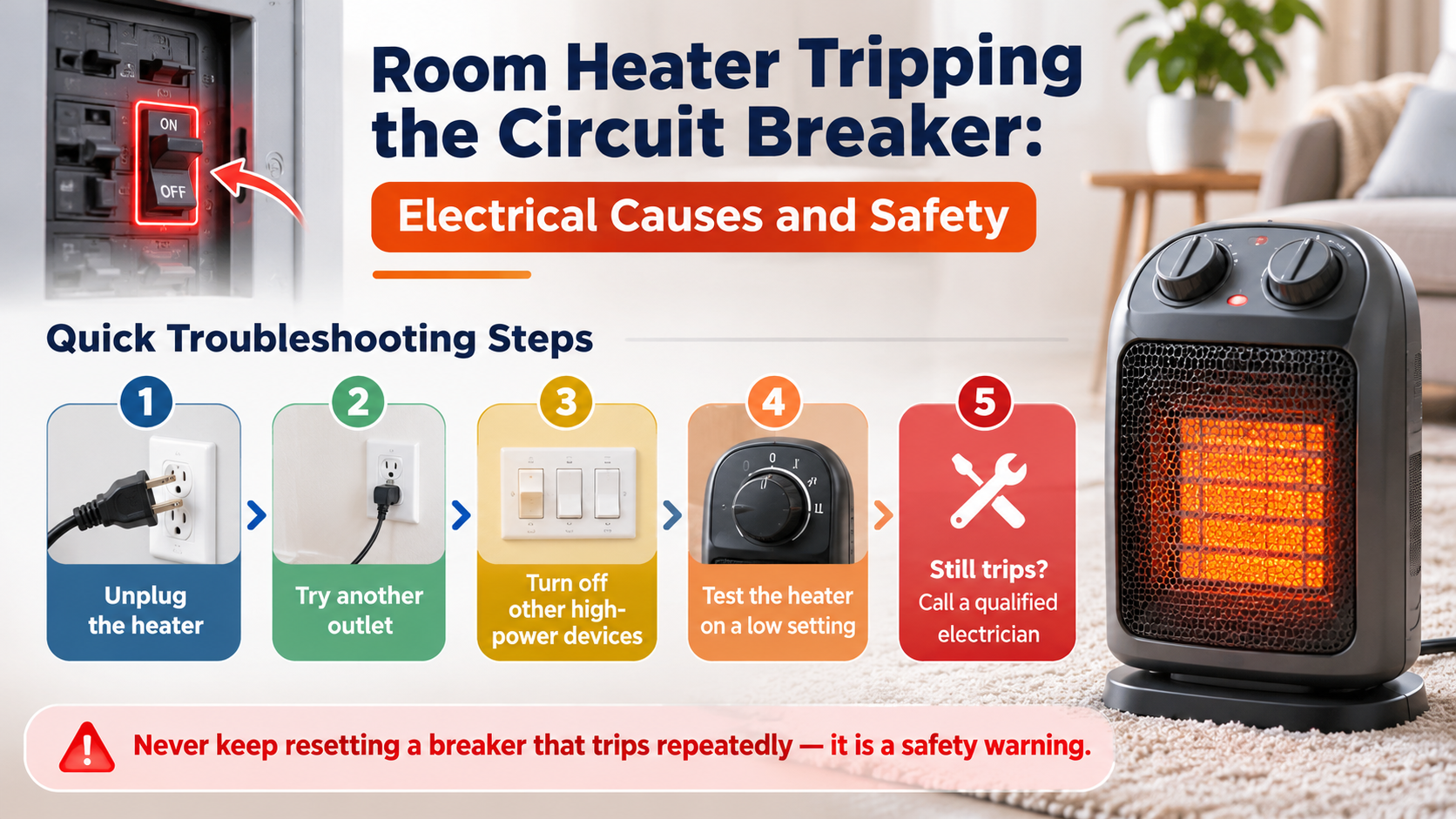
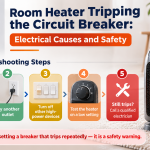
Work through these steps in order. Most problems are solved by the first four.
- Unplug and cool. Always begin with the heater switched off and unplugged.
- Test another socket. Plug the heater directly into a working wall outlet, without an extension cord.
- Inspect the plug and cord. Look for bent pins, discolouration, cracks or soft spots.
- Check the settings. Turn the thermostat to maximum and select the highest heat mode.
- Clean the vents and filter. Remove dust from the grille and air intake with a vacuum and soft brush.
- Place it on a flat, hard surface. This helps the tip-over switch work properly.
- Run it for 10 to 15 minutes. Notice whether the air warms up, whether the fan sounds normal and whether it shuts off.
- Decide next steps. If it still does not heat, the problem is probably an internal part such as the element, thermostat, fuse or fan motor, and it needs a technician.
If your heater smells for a few minutes the first time you use it each winter, that is usually just dust burning off. A strong chemical or burning-plastic smell, smoke or sparks is different: switch it off at once and do not use it again until it is inspected.
Is Your Heater Too Small for the Room?
Many people think their heater is faulty when the real issue is size. A heater that is perfectly healthy but underpowered will run constantly and never reach your target temperature. As a general rule, you need around 10 watts of heating power for every square foot of floor space.
These figures assume normal insulation. If your room has large windows, an exterior wall, a high ceiling or a tile floor, choose the next size up. Closing doors, hanging thick curtains and placing a rug on the floor can all help the same heater feel noticeably warmer.
How to Keep Your Room Heater Working Like New
A little care each season goes a long way toward preventing heating problems.
- Clean before winter starts. Vacuum the vents and grille before the first use of the season, and again every month in heavy use.
- Store it properly. Keep the heater covered and dry during summer to prevent dust buildup and corrosion.
- Use the right outlet. Plug it directly into a wall socket and avoid sharing the circuit with other heavy appliances.
- Do not block airflow. Keep curtains, furniture, bedding and clothes well away from the heater.
- Do not leave it running unattended. Use a timer or a model with auto shut-off if you sleep with it on.
- Check the cord regularly. Replace the heater if the cord or plug shows wear or heat damage.
Repair or Replace: What Makes More Sense?
A simple fix such as cleaning the vents, resetting the cutoff or changing the socket costs almost nothing. Internal repairs are different. If a technician quotes more than about half the price of a comparable new heater, replacing it is usually the smarter choice, especially for budget models.
Consider replacing your heater if you notice any of these signs:
- The plug, cord or socket is scorched, melted or unusually hot.
- The heater trips the breaker repeatedly.
- It smells strongly of burning every time it runs, even after cleaning.
- The heater is many years old and has needed several repairs.
- The housing is cracked or the controls no longer work properly.
- It lacks modern safety features such as tip-over protection and overheat protection.
What to Look for in a New Room Heater
If it is time for an upgrade, a little planning will help you avoid the same problem again. Start with your room size, then match the heater type to how you plan to use it.
| Heater type | Best for | Keep in mind |
|---|---|---|
| Fan heater | Fast heat in small rooms, bathrooms and offices | Can be noisy and dries the air. |
| Ceramic (PTC) heater | Small to medium rooms and everyday use | Output is steady rather than powerful. |
| Oil-filled radiator | Bedrooms and long, quiet heating | Slow to warm up and heavy to move. |
| Convector heater | Even heat in medium to large rooms | Needs space around it for good airflow. |
| Infrared or quartz heater | Warming a person or a small spot quickly | Heats objects and people, not the whole room. |
Whatever type you choose, look for these features:
- Adjustable thermostat to hold a steady temperature and save electricity.
- Tip-over and overheat protection for safety.
- Multiple heat settings so you can match output to the weather.
- Timer or auto shut-off for safer overnight use.
- Cool-touch housing and a sturdy base, especially in homes with children or pets.
- A recognised safety certification mark for your country, and a clear warranty.
- Washable or easy-to-clean filter and vents to keep performance high for years.
Frequently Asked Questions
Why is my heater blowing cold air?
The most common causes are a thermostat set too low, the wrong mode selected, a tripped overheat cutoff, a blown thermal fuse or a burnt heating element. Start with the settings and the vents, and call a technician if the fan runs but the air never warms.
Why does my heater turn off after a few minutes?
This usually means the overheat protection is activating because of blocked vents, a dirty filter or poor airflow. Clean the heater, keep clear space around it and avoid extension cords. If it keeps happening, the thermostat or a sensor may be faulty.
How long does an oil-filled heater take to warm up?
Most oil-filled radiators need about 20 to 30 minutes to feel properly warm, and some need longer in a large room. They heat slowly but keep releasing warmth even after they cycle off.
Can a heater lose power as it gets older?
Yes. Heating elements can weaken, dust can build up inside, thermostats wear out and fans slow down. Regular cleaning slows this down, but older heaters do gradually perform worse.
Is it safe to use an extension cord with a room heater?
It is best to plug a heater straight into a wall socket. Extension cords and adapters can overheat and reduce the voltage reaching the heater. If you absolutely must use one, choose a heavy-duty cord rated for the heater’s wattage and keep it fully uncoiled, but a direct connection is always safer.
Is a burning smell from my heater normal?
A light dusty smell when you first switch the heater on after months of storage is common and fades quickly. A strong, persistent or chemical smell, smoke or sparks is not normal. Turn the heater off, unplug it and have it checked.
Should I repair or replace my heater?
Repair makes sense for simple, low-cost issues and for higher-quality heaters. Replace it if the repair costs close to half the price of a new unit, if the heater is old, or if there are signs of heat damage to the plug or cord.
Final Thoughts
When a room heater is not heating properly, the cause is often easier to fix than it first appears. Begin with the basics: power, plug, thermostat and clean vents. Then think about safety devices, internal parts and whether the heater is powerful enough for your room. Never take risks with electrical parts, and do not keep using a heater that smells of burning or has a damaged plug or cord.
With a little regular cleaning, careful placement and the right wattage for your space, a good heater can keep you warm for many winters. And if yours has reached the end of its life, choose a model with a proper thermostat and modern safety protection so you can enjoy a warm, comfortable room with confidence.