


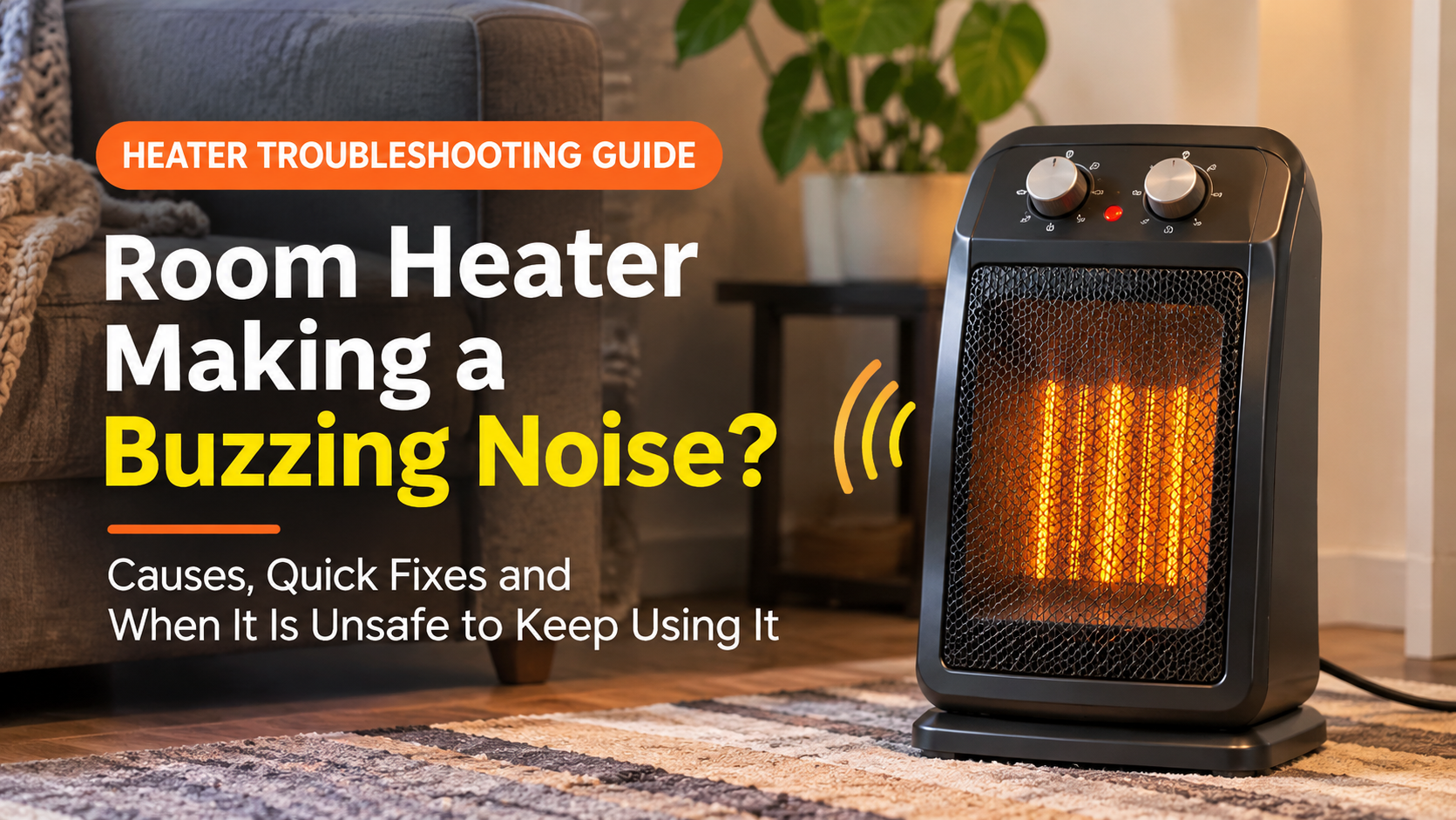

You switch on your room heater on a cold evening, expecting quiet warmth, and instead you hear a steady buzz. It might be a low hum, a sharp electrical whine, or a rattle that gets louder the longer the heater runs. It is natural to wonder whether the heater is about to break, or worse, whether it is dangerous.
The good news is that most buzzing noises have simple causes, and many can be fixed at home in under half an hour with nothing more than a vacuum cleaner, a small brush and a screwdriver. The important part is knowing which sounds are harmless, which ones need attention soon, and which ones mean you should unplug the heater right away.
This guide walks you through everything: how a room heater makes noise, the nine most common reasons for buzzing, a quick way to diagnose your own heater, safe step-by-step fixes, and clear warning signs that say it is time to stop using it.
A room heater usually buzzes because of dust on the fan or motor, loose panels or screws, a worn fan motor, a relay or thermostat that is switching, or a loose electrical connection. The first three are common and usually easy to fix. A buzz that comes with a burning smell, sparks, a hot plug or a tripping breaker is an electrical fault: unplug the heater and do not use it again until it has been checked.
Is it normal for a room heater to buzz?
A little sound is normal. Every electric heater has parts that move, switch or heat up, and each of those can make some noise. A fan heater has a motor and blades. A ceramic heater has a thermostat that clicks on and off. An oil-filled radiator can tick and gurgle as the oil warms. Even a simple element heater makes soft ticking sounds as metal expands.
What is not normal is a loud, harsh or growing buzz, a sound that changes suddenly, or any noise that arrives together with a smell, smoke, flicker or unusual heat at the plug. A heater that was quiet last winter and buzzes this winter is also telling you something has changed, usually dust build-up or wear.

9 common reasons a room heater makes a buzzing noise
1. Dust and debris on the fan or motor
This is the number one cause, especially if the heater has been stored for months. Dust, pet hair and lint collect on the fan blades and around the motor. The blades become slightly unbalanced, the motor works harder, and you hear a hum or a light buzz that is more obvious when the fan is on high.
What to do: unplug the heater, let it cool, then clean the vents and fan area as described in the step-by-step section below.
2. Loose screws, grille or outer panels
Heaters vibrate slightly whenever the fan runs. Over time, the screws holding the grille, back cover or handle can loosen, and the metal or plastic starts to buzz against its neighbour. This sounds like a rattling buzz that often changes if you press on the housing with your hand.
What to do: with the heater unplugged, check and gently tighten the visible screws. Do not over-tighten plastic parts, as they can crack.
3. A worn fan motor or bearings
Small fan motors have bearings that wear out with age and use. A worn motor tends to produce a continuous whirr, hum or grinding buzz that gets worse as the heater warms up. The fan may also spin slowly, wobble or take a moment to start.
What to do: cleaning sometimes helps, but a motor that is clearly worn usually needs replacement. On an inexpensive heater, replacing the whole unit is often more practical than repairing it.
4. A relay or thermostat switching on and off
Many heaters use a small relay to switch the heating element. When it switches, you may hear a click, and sometimes a short buzz, particularly if the relay contacts are worn or the thermostat is cycling rapidly. If the buzz happens in a regular rhythm, matching the moments the heat turns on and off, this is a strong clue.
What to do: try a different temperature setting. If the buzz is only at one setting, that is often a sign of a thermostat hovering near its switching point. If it persists and worsens, the part may need replacing by a qualified technician.
5. Electronic controls, transformers and dimmer-style speed controls
Modern heaters with digital displays, remote controls, adjustable power levels or variable fan speeds contain electronic components. Some of these can emit a light hum or high-pitched whine, especially at certain power settings. This is often harmless, although it can be annoying in a quiet bedroom.
What to do: try other settings and note whether the sound changes. A faint electronic hum that stays constant, with no smell and no heat problems, is generally a nuisance rather than a danger. A loud or growing buzz from the control area is worth having inspected.
6. A loose plug, worn cord or faulty wall socket
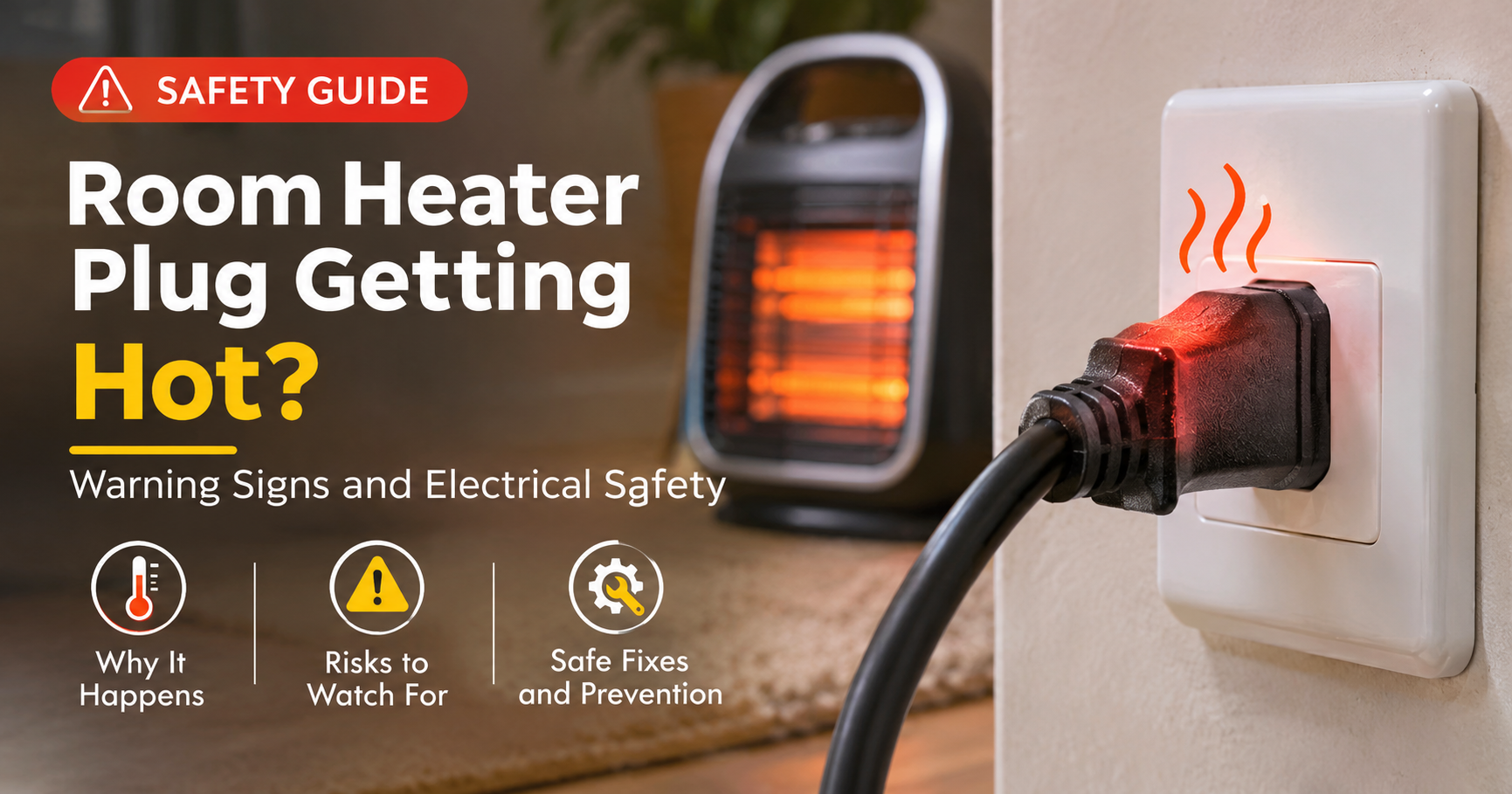
Heaters draw a lot of power, and a loose connection at the plug or socket can create a buzzing or crackling sound, along with heat. This is one of the more serious causes because poor connections can overheat.
What to do: feel the plug and the cord (carefully, after unplugging and letting things cool) for warmth or discolouration. Try a different wall socket. If the plug looks scorched, the cord is damaged, or the socket feels hot during use, stop using the heater and have the cord, plug or socket checked.
7. Using an extension cord or power strip
High-wattage heaters are best plugged directly into a wall socket. Thin extension cords and power strips can struggle with the load, causing buzzing, voltage drop and heat. Many heater manuals specifically advise against extension cords for this reason.
What to do: plug the heater straight into the wall and see whether the buzz disappears.
8. An uneven surface or a tilted heater
If the heater is sitting on a soft rug, a wobbly table or an uneven floor, vibration from the fan can transfer into the surface and amplify the noise. Sometimes what sounds like an internal buzz is simply the heater rattling against what it is standing on.
What to do: move it to a flat, hard, stable surface away from walls and furniture, as recommended by most manufacturers.
9. Oil-filled radiators: air, oil movement and thermostat noise
Oil-filled heaters are normally very quiet, but they make their own sounds. Gurgling, ticking or popping as the oil heats is generally normal. A buzz is more likely to come from the thermostat switching, a loose part, or an electrical connection. If the heater is leaking oil, stop using it immediately.
What to do: let it warm up fully and see whether the sound fades. If the buzz stays, follow the same checks for loose parts, plug and socket.

What kind of heater do you have? Typical noise sources by type
Different heater designs buzz for different reasons. This table gives you a faster starting point.
| Heater type | Most likely cause of buzzing | Best first step |
|---|---|---|
| Fan heater | Dust on fan blades, worn motor, loose grille | Clean vents and fan area, tighten screws |
| Ceramic heater | Fan noise, thermostat or relay switching, electronic controls | Clean intake, try different settings |
| Oil-filled radiator | Thermostat switching, loose parts, electrical connection | Check surface, plug and socket |
| Infrared or quartz heater | Loose reflector or grille, relay clicking, power setting | Check mounting and tighten screws |
| Convection panel heater | Thermostat clicking, expansion sounds, wall-mount vibration | Check bracket and mounting |
| Bathroom or wall-mounted fan heater | Dust in fan, loose fixing, worn motor | Switch off at the isolator, then clean and re-fix |
How to fix a buzzing room heater: step-by-step
Most buzzing caused by dust, loose parts or placement can be fixed safely at home. Follow these steps in order, and stop if you notice damage, scorching or a burning smell at any point.
Always unplug the heater from the wall and let it cool completely before touching or cleaning it. Never open the casing if you are not comfortable working with electrical appliances, and never use a heater with a damaged cord, plug or housing.

- Unplug the heater. Disconnect it from the wall socket, not just the switch.
- Let it cool. Wait around 30 minutes so that nothing is hot to the touch.
- Vacuum the vents and grille. Use a soft brush attachment on the air intake and outlet. Dust here is the most common cause of fan noise.
- Brush the fan blades gently. Use a soft, dry brush or a small paintbrush. Avoid liquids and compressed water. If you use canned air, keep short bursts and hold the fan still so it does not over-spin.
- Tighten loose screws. Check the grille, back panel, base and handle. Tighten gently with the correct screwdriver size.
- Check the surface. Place the heater on a flat, hard, stable surface with clear space around it. Avoid soft rugs and uneven floors.
- Check the cord and plug. Look for kinks, cuts, discolouration or a loose fit in the wall socket. Try another wall socket and avoid extension cords.
- Test on low. Plug it back in directly to the wall, run it on the lowest setting first, and listen for the original sound. Then try higher settings.
If yes, the cause was most likely dust, a loose part or placement. Make a note to clean the heater at the start of every heating season. If the noise is still there, it is probably a worn motor, a relay or thermostat, or an electrical issue. At that point, contact the manufacturer, use any warranty you have, or consult a qualified technician.
When a buzzing heater is unsafe: warning signs
Buzzing alone is not always a hazard, but it can be the earliest sign of a real electrical problem. The heater should be unplugged and not used again until checked if you notice any of the following:
- A burning, fishy or hot-plastic smell, especially from the plug area or the vents
- Sparks, flickering lights or crackling sounds
- A plug, cord or wall socket that feels hot, or shows brown or black marks
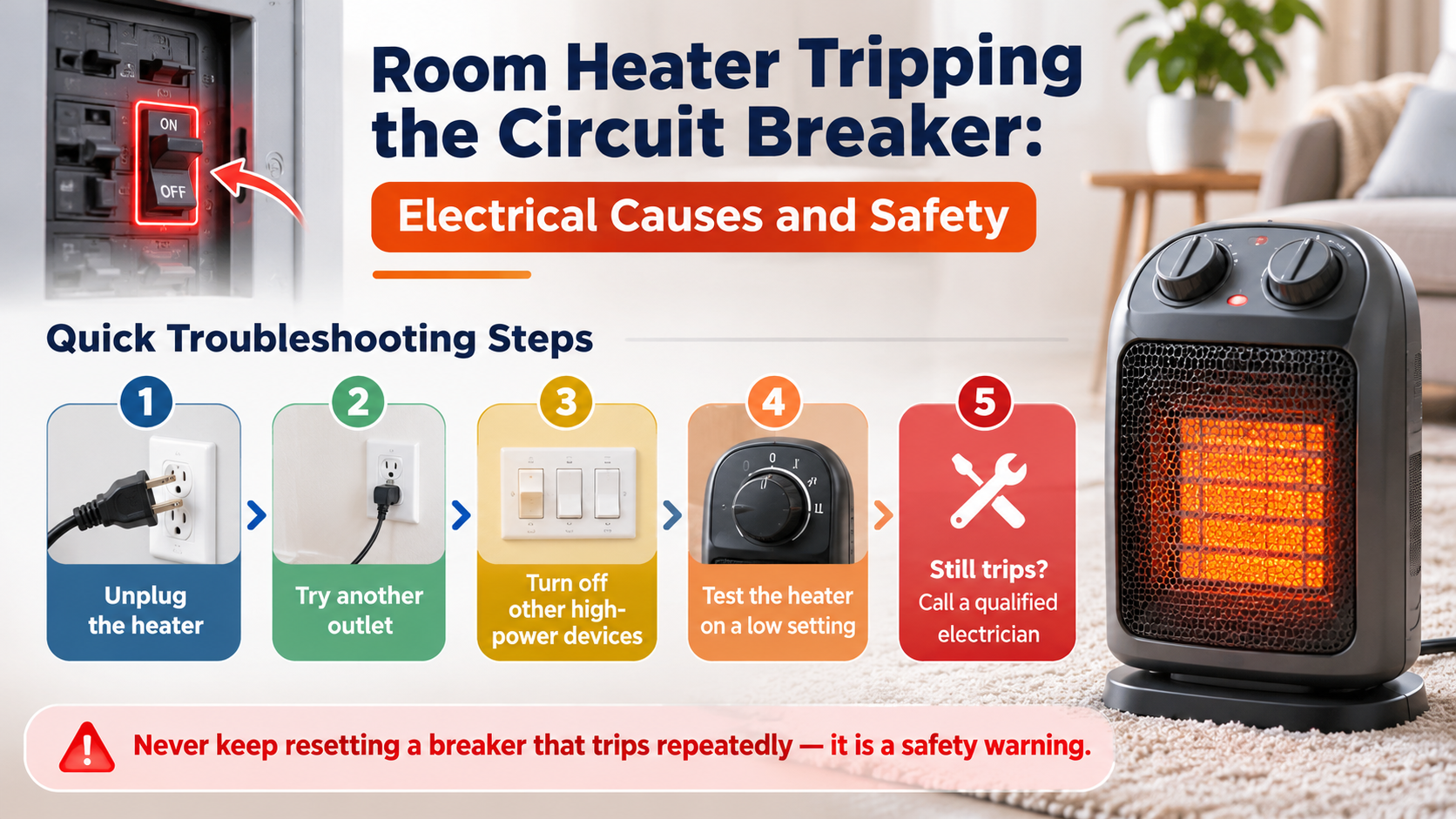
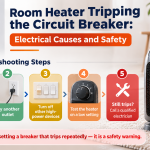
- A circuit breaker or fuse that trips repeatedly when the heater runs
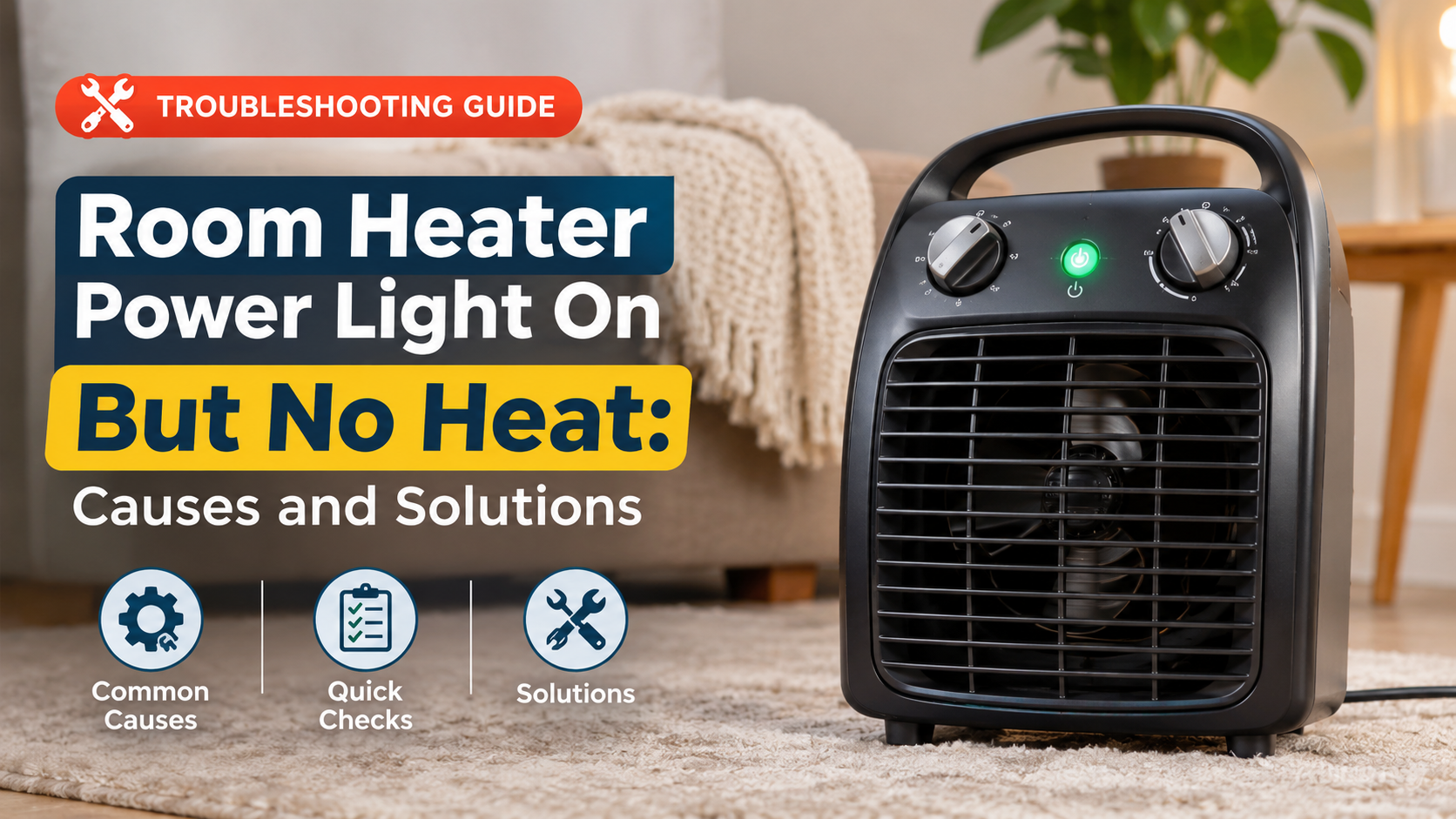
- A heater that buzzes loudly but produces little or no heat
- Smoke, melted plastic or visible damage to the casing
- Oil leaking from an oil-filled radiator

A heater runs at high power for hours at a time, often while you are asleep or out of the room. If you are unsure whether a sound is safe, unplug the heater and do not leave it running unattended until you have a clear answer.
Repair or replace? How to decide
Whether to repair a buzzing heater depends on its age, price and the cause of the noise.
- Repair or clean when the heater is fairly new, still under warranty, or the problem is only dust, a loose screw or placement.
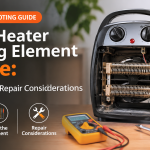
- Consider repair for higher-priced heaters when the faulty part, such as a fan motor or thermostat, is available and a qualified technician can fit it.
- Replace when the heater is old, the cord or plug is damaged, there are signs of overheating or scorching, or the repair would cost close to the price of a new model.
Safety should always come before cost. A damaged or overheating heater is never worth the risk of keeping in use.
How to prevent your room heater from buzzing
- Clean it before each winter. A quick vacuum of the vents and grille makes a noticeable difference to both noise and efficiency.
- Store it properly. Keep it in a dry, covered place during warm months so dust and moisture do not collect inside.
- Use a flat, hard surface. This reduces vibration and keeps the heater stable.
- Plug directly into the wall. Avoid extension cords and crowded power strips.
- Do not cover vents. Blocked airflow makes the fan work harder and can lead to overheating.
- Listen early. A small change in sound is easier and cheaper to fix than a failed motor.
- Follow the manual. Cleaning and maintenance instructions differ between models.
Choosing a quieter room heater next time
If your heater is beyond saving, or you simply want something calmer for a bedroom or study, these features make a real difference to noise levels:
- Heater type: oil-filled radiators and convection panel heaters have no fan, so they are generally quieter than fan heaters. They warm up more slowly but hold heat well.
- Quiet or night mode: some fan heaters include a low-speed setting designed for sleeping areas.
- Stated noise level: some manufacturers list a decibel rating. Lower is better for bedrooms.
- Adjustable thermostat: a good thermostat reduces how often the heater switches on and off, which cuts clicking and relay noise.
- Build quality: solid housing and a stable base reduce vibration and rattling.
- Safety features: look for tip-over protection and overheat protection, which switch the heater off if it falls or gets too hot.
- Right size for the room: a heater that is too small runs flat out and tends to be louder and less efficient. Choose a model with enough capacity for your room size.
Frequently asked questions
Why does my room heater buzz when I first turn it on?
A brief buzz or light smell at the start of the season is often dust burning off the element or metal parts warming and expanding. It should fade within a few minutes. If it continues, or the smell is strong or acrid, switch it off and clean the heater.
Why is my heater buzzing but not heating?
This can point to a failed relay, a faulty thermostat, a problem with the heating element or a control board fault. Since a heater that hums without producing heat may have an internal electrical fault, unplug it and have it checked instead of continuing to run it.
Why does my oil-filled heater make a buzzing noise?
Oil-filled radiators are usually silent apart from ticking and gurgling as they heat. A buzz is more likely to come from the thermostat, a loose component or an electrical connection. Check the surface, the plug and the socket, and stop using it if you notice any oil leaking.
Is a buzzing sound from a heater dangerous?
Not always. A faint, steady hum from the fan or electronics is usually harmless. A louder buzz, or one that comes with a burning smell, sparks, a hot plug or tripping breaker, should be treated as dangerous. Unplug the heater and do not use it again until it has been inspected.
Can dust really make a heater buzz?
Yes. Dust and hair build up on the fan blades and motor, creating imbalance and extra friction. This is one of the most common reasons a heater starts buzzing after being stored, and it is also one of the easiest to fix.
Why does my heater buzz louder on high?
On a higher setting the fan spins faster, so vibration from dust, loose parts or a worn motor becomes easier to hear. The relay and electronic components also work harder, which can increase hum from them.
How often should I clean my room heater?
A good habit is to clean the vents and grille at the start of each heating season, and again during heavy use if you have pets, carpets or a dusty room. Always unplug it and let it cool first.
Should I open the heater to fix the buzzing myself?
Cleaning the outside vents and tightening external screws is safe for most people. Opening the casing to work on wiring, relays, thermostats or the motor is best left to a qualified technician, because electrical parts can be hazardous and opening the heater may void your warranty.
Final thoughts
A room heater making a buzzing noise is annoying, but it is also useful information. In most cases the cause is simple: dust on the fan, a loose screw, an uneven surface or a thermostat doing its job. A short cleaning and a quick check of the placement, plug and socket will fix the majority of problems.
The key is to stay alert to the difference between a harmless hum and a warning sign. If the buzzing comes with a burning smell, sparks, excessive heat at the plug, a tripping breaker or a loss of heating, unplug the heater straight away. Your warmth is important, but your safety and your home matter more.
This article is for general information only and does not replace the manufacturer’s instructions or professional advice. If you are unsure about the condition of your heater or your home’s wiring, contact a qualified electrician or the manufacturer’s support team.