Room Heater Power Light On But No Heat? 8 Causes and Safe Fixes
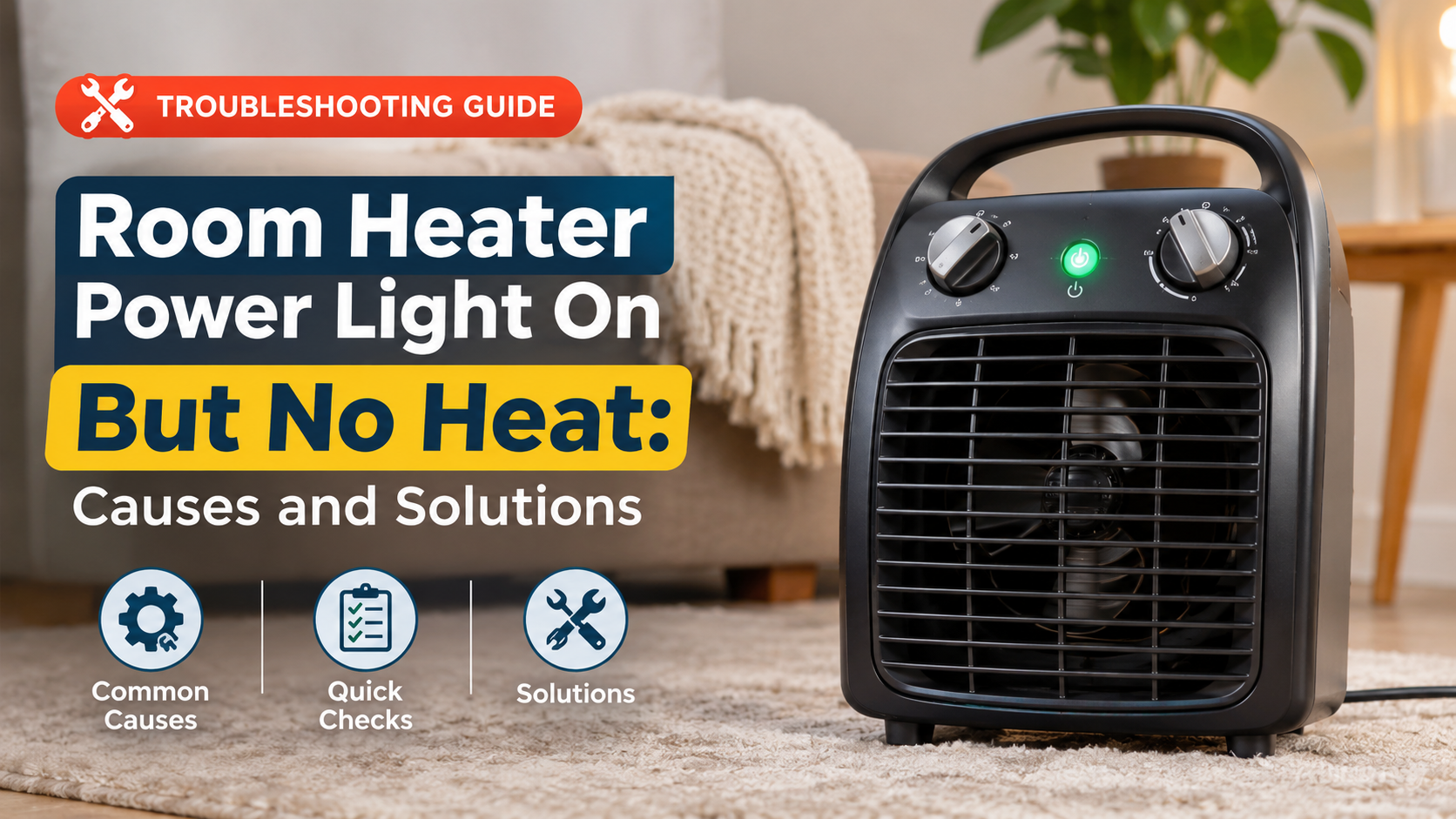
It is a cold evening, you switch on your room heater, and the little power light glows reassuringly. You wait a minute, then five, then ten. The fan may even be spinning, yet the air coming out is cold. Few things are more frustrating, and it leaves one obvious question: why is my room heater’s power light on but no heat coming out?
The good news is that this is one of the most common heater problems, and in many cases the cause is simple: a thermostat setting, a safety switch, or a blocked air intake. In other cases a small internal part such as a thermal fuse or heating element has failed. This guide explains why the light stays on while the heat disappears, walks you through the safest checks in the right order, and helps you decide whether to repair or replace the heater.
Quick Answer
The power light only tells you that electricity is reaching the heater’s control panel. It does not prove the heating element is receiving power. The most common reasons for no heat are a thermostat set too low, a tripped tip-over or overheat safety switch, a clogged air intake, a blown thermal fuse, a faulty thermostat, or a burned-out heating element.
Table of Contents
- Why the power light stays on when there is no heat
- Safety first: before you touch anything
- Cause 1: Thermostat or temperature setting is too low
- Cause 2: Wrong mode or heat setting selected
- Cause 3: Tip-over switch has been triggered
- Cause 4: Overheat protection has tripped
- Cause 5: Faulty thermostat
- Cause 6: Blown thermal fuse
- Cause 7: Burned-out heating element
- Cause 8: Damaged cord, plug, outlet or control board
- Step-by-step troubleshooting guide
- What to check by heater type
- Repair or replace?
- How to prevent the problem
- Frequently asked questions
Why the Power Light Stays On When There Is No Heat
A room heater is not one single circuit. Inside, the electricity passes through a chain of parts before it reaches the heating element: the main power switch, one or more safety devices, a thermostat, and finally the element itself. The small indicator light is usually connected near the beginning of that chain, so it lights up as soon as the heater receives power from the wall.
If something fails later in the chain, such as a safety switch, thermostat, fuse or element, the light will still glow, because it never depended on those parts. That is why a heater with a lit indicator can still blow cold air. The diagram below shows the typical path.
Safety First: Before You Touch Anything
Room heaters draw a lot of power and can cause burns, electric shock or fire if handled carelessly. Before you start any check on the list below, follow these rules:
- Unplug the heater from the wall and let it cool for at least 20 to 30 minutes before touching internal areas.
- Never open the casing while the heater is plugged in.
- Do not use water or a wet cloth on electrical parts or vents while the heater is connected.
- If you notice a burning smell, scorch marks, a melted plug or sparks, stop using the heater and do not plug it back in.
- If the heater is still under warranty, opening it may void the warranty. Check the manual first.
Important: The simple checks in Causes 1 to 4 are safe for almost anyone. Testing a thermal fuse, thermostat or heating element requires opening the heater and using a multimeter. Only attempt that if you are comfortable and experienced with basic electrical work. Otherwise, use a qualified technician.
Cause 1: Thermostat or Temperature Setting Is Too Low
This is the simplest explanation and the one most people overlook. A room heater only produces heat when the thermostat detects that the room is colder than the temperature you have chosen. If the dial is set low, or the room is already warmer than the target, the heating element stays switched off while the power light remains on.
How to fix it:
- Turn the thermostat dial to its maximum setting and wait a few minutes.
- On digital models, raise the target temperature at least 5 to 10 degrees above the current room temperature.
- If the heater starts producing warmth at the highest setting, the thermostat is working and you simply need to adjust it.
Cause 2: Wrong Mode or Heat Setting Selected
Many modern heaters have several modes: fan only, low heat, high heat, eco mode and timer mode. If the heater is set to fan only or a cool-air mode, you will feel airflow but no warmth. Eco mode may also cycle the element on and off, which can feel like it is not heating at all.
How to fix it:
- Check the mode selector and heat-level buttons or switches.
- Choose the highest heat setting and turn off eco mode and the timer.
- If the heater has a remote, replace the batteries and try the buttons on the unit itself.
- On models with a wall-mounted or room thermostat, make sure it is set to heat.
Cause 3: The Tip-Over Switch Has Been Triggered
Most modern room heaters contain a tip-over switch. This safety device cuts power to the heating element if the unit is knocked over or tilted. The problem is that the switch can also be triggered, or stick, when the heater sits on soft carpet, an uneven surface, or is slightly tilted. When that happens, the control panel stays powered and the light remains on, but the element is disabled.
How to fix it:
- Unplug the heater and place it on a hard, flat, level surface.
- Look underneath for a small button or plunger. It should move freely and press down when the heater is on a flat surface.
- Gently remove dust or pet hair around the switch with a dry brush.
- Plug the heater back in and test it again.
If the switch feels stuck, broken or never clicks, it may need replacement, which usually calls for a technician or a replacement unit.
Cause 4: Overheat Protection Has Tripped
Room heaters have an overheat protection device that shuts off the element if internal temperatures rise too high. The most common triggers are blocked air intakes, dust-clogged filters and vents, or objects placed too close to the heater. On many models, the protection resets by itself after the heater cools down. On others, there is a small reset button.
How to fix it:
- Unplug the heater and let it cool completely for 30 minutes or more.
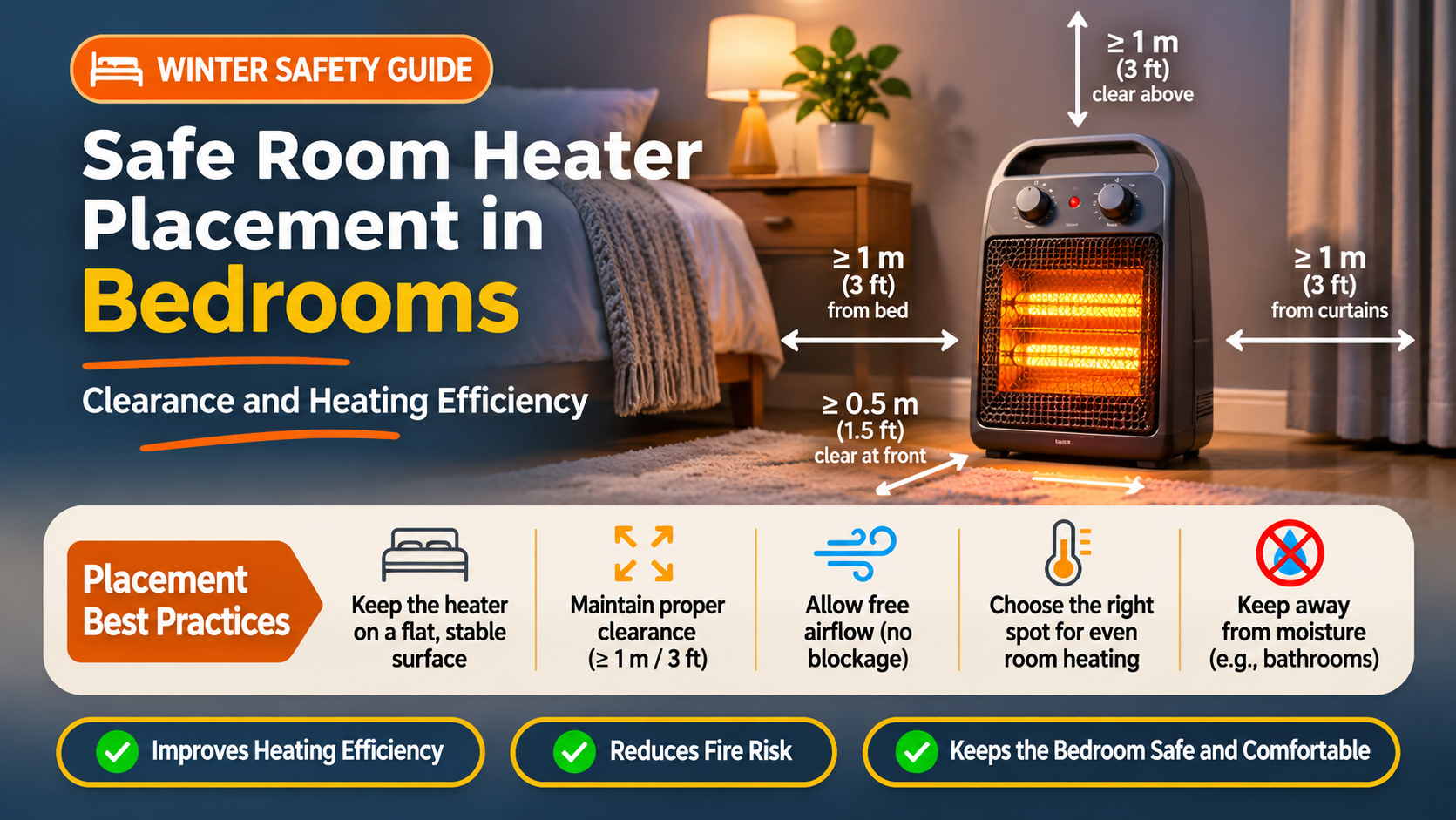
- Clear any curtains, furniture, clothing or bedding from around the unit. Keep at least three feet of open space on all sides.
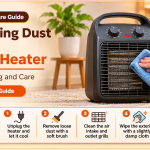
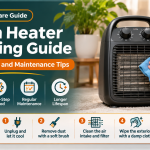
- Clean the air intake grille and any removable filter with a vacuum cleaner and a soft brush.
- If your model has a reset button, press it firmly.
- Plug the heater directly into a wall outlet, not an extension cord, and turn it on.
If the heater works for a short time and then stops again, there may be an airflow problem inside, such as a failing fan, or a protective device that is wearing out.
Cause 5: Faulty Thermostat
The thermostat tells the heating element when to turn on and off. Over time its internal contacts can wear, burn or stick open. If the thermostat fails, it may never send power to the element, even though the power light and fan work normally.
Signs of a bad thermostat:
- The heater does not heat at any dial position, but the fan runs.
- You do not hear the usual faint click when you turn the dial from low to high.
- The heater heats only at certain dial positions or only sometimes.
- The room temperature reading on a digital display looks wrong.
A technician can test the thermostat for continuity. On many inexpensive heaters, however, a replacement thermostat costs close to what a new heater would, which is covered in the repair-or-replace section below.
Cause 6: Blown Thermal Fuse
A thermal fuse is a one-time safety device. If the heater overheats, the fuse permanently opens the circuit to prevent a fire. Unlike a tripped overheat switch, a blown thermal fuse does not reset. After it fails, the heater may power up and show a lit indicator, but the heating element never receives electricity.
What usually causes it to blow:
- Repeated overheating from blocked vents or dusty intakes.
- A failed fan that stops moving air across the element.
- Age and repeated heating cycles.
A thermal fuse can be tested with a multimeter set to continuity. A good fuse shows continuity, and a blown fuse shows none. Never bypass or jump a thermal fuse. It exists to protect your home. Replace it only with a fuse of the exact same rating, and if you are unsure, leave the work to a professional.
Cause 7: Burned-Out Heating Element
The heating element is the part that actually produces heat. Depending on the heater type, it may be a coiled wire, a ceramic plate, a quartz tube or a metal-sheathed element. After years of use, elements can crack, thin out or break, and once the circuit through the element is broken, no heat will be produced.
Signs of a failed element:
- The fan runs and the light is on, but the air stays cold, even after you have ruled out the other causes.
- On a coil or quartz heater, you may see a visible break or dark spots, and the element no longer glows orange.
- The heater gave weaker and weaker heat in the weeks before it stopped altogether.
- You smelled something burning shortly before it failed.
Elements can be tested for continuity with a multimeter after unplugging the heater. In most small room heaters, a burned-out element means the unit has reached the end of its life, and replacement is usually the safer and more economical choice.
Cause 8: Damaged Cord, Plug, Outlet or Control Board
Sometimes the issue is outside the heating parts altogether, or in the electronics that control them.
- Weak outlet or loose plug: Heaters draw a high current. A worn outlet, loose plug or an extension cord can cause voltage drops, which may be enough to run the light and fan but not the element. Plug the heater directly into a different wall outlet, ideally on a different circuit.
- Damaged power cord: A cord that is frayed, crushed or overheated can fail partway. A plug that feels hot or looks discolored is a serious warning sign.
- Loose or burned internal wiring: Vibration and heat can loosen connections. Burn marks or melted insulation inside the heater mean it should not be used again.
- Failed relay or control board: Digital heaters use a relay to switch power to the element. If the relay or board fails, the display and light may work while the element never receives power. This usually requires professional repair or replacement.
Step-by-Step Troubleshooting Guide
Work through the checks below in order. They are arranged from the easiest and safest to the most technical, so you do not waste time or take unnecessary risks.
Testing a Thermal Fuse or Element With a Multimeter
If you are comfortable with basic electrical work, a continuity test can pinpoint a failed part:
- Unplug the heater and wait until it is completely cool.
- Remove the casing according to the manual, taking photos of the wiring before you disconnect anything.
- Set the multimeter to the continuity (beep) or lowest resistance setting.
- Disconnect one wire from the part you are testing, then touch the probes to its two terminals.
- A working fuse or switch shows continuity. A working heating element shows a low but measurable resistance. No reading or an infinite reading means the part has failed.
Replace failed parts only with exact matches for the same model and rating, and reassemble everything carefully. If anything looks burned, melted or unfamiliar, stop and have the heater inspected or replaced.
What to Check by Heater Type
Different heater designs fail in slightly different ways. This quick reference can help you focus on the likeliest causes.
| Heater Type | Most Likely Causes of No Heat | Good First Step |
|---|---|---|
| Fan / Ceramic Heater | Clogged intake, overheat cut-off, tripped tip-over switch, failed ceramic element or thermal fuse | Unplug, clean the intake, and cool for 30 minutes |
| Oil-Filled Radiator | Thermostat set too low, tip-over switch, thermal cut-out, failed internal element. These heaters also warm up slowly | Set to maximum and allow 15 to 20 minutes to warm |
| Infrared / Quartz Heater | Broken or blackened quartz tube, tip-over switch, loose connection | Check whether the tubes glow orange when switched on |
| Convection Panel Heater | Thermostat, blocked vents, overheat protection, failed element | Turn the thermostat to maximum and clear the vents |
| Digital / Remote Model | Wrong mode, eco or timer active, failed relay or control board | Reset to default settings and use buttons on the unit itself |
Repair or Replace?
Once you have found the likely cause, the next question is whether fixing the heater makes sense. Room heaters are usually inexpensive and simple, so the answer depends on what has failed and how old the heater is.
As a general rule, if the repair is a simple cleaning or a cheap standard part, it is worth trying. If the fix involves the element, wiring or control board on a low-cost heater, or if you see any sign of burning or melting, replacing the heater is usually safer and more economical.
What to Look for in a Replacement Heater
- Safety certification: Choose a heater tested by a recognized safety laboratory.
- Tip-over and overheat protection: Both should be built in as standard.
- Adjustable thermostat: Helps hold a steady temperature and saves energy.
- Right size for the room: A common guideline is about 10 watts of heating power per square foot of floor space.
- Easy-to-clean intake or filter: Makes regular maintenance simple.
- Cool-touch housing: Especially valuable in homes with children or pets.
How to Prevent the Problem From Coming Back
Most heater faults develop gradually, and simple habits can extend a heater’s life and reduce the chance of cold surprises.
- Clean it regularly. Vacuum the intake and vents at least once a month during heavy use, and before storing it for the season.
- Give it space. Keep curtains, furniture, bedding and clothes at least three feet away.
- Use a hard, flat surface. Avoid placing the heater on thick carpet, cushions or uneven floors.
- Plug directly into the wall. Avoid extension cords and power strips unless the heater’s manual allows it.
- Inspect the cord and plug. Look for fraying, discoloration or heat damage every few weeks.
- Do not run it unattended. Turn it off when you leave the room or go to sleep, unless the manufacturer clearly says otherwise.
- Store it properly. At the end of winter, clean it, wrap the cord loosely, and store the heater in a dry place.
When to Call a Professional
Stop troubleshooting and contact a qualified technician, or the manufacturer if the heater is under warranty, in any of these situations:
- You smell burning plastic or smoke, or see sparks or scorch marks.
- The plug, outlet or cord is hot, melted or discolored.
- The circuit breaker trips every time the heater is switched on.
- You are not comfortable opening the casing or using a multimeter.
- The heater has been dropped, got wet or has visible internal damage.
A tripping breaker, a hot plug or burn marks can point to a problem with the home wiring or outlet, not just the heater. Do not ignore these warning signs.
Frequently Asked Questions
Why is my room heater fan working but there is no heat?
The fan and the heating element are separate circuits. The fan can run normally while the element is cut off by a tripped safety switch, a blown thermal fuse, a faulty thermostat or a burned-out element. Start with the settings, tip-over switch and vents, then move to component tests.
Can a dirty filter or vent stop a heater from heating?
Yes. A blocked intake restricts airflow, causing the heater to overheat internally and trigger its protection device. Cleaning the intake and letting the heater cool down often restores normal operation.
How long does an oil-filled heater take to warm up?
Oil-filled radiators heat slowly because the oil must warm up first. It is normal for them to take 15 to 20 minutes or longer before the surface feels warm, so be patient before assuming something is wrong.
Can I reset my room heater?
Many heaters reset themselves after cooling down, and some have a dedicated reset button. If there is no button, unplug the heater for 30 minutes, then plug it into a wall outlet and turn it on again. A heater that keeps cutting out repeatedly should not be used until it is checked.
Is it safe to bypass a thermal fuse or safety switch?
No. These parts are designed to prevent overheating and fires. Bypassing them is dangerous and can put your home and family at risk. If a safety component keeps failing, find out why or replace the heater.
Why does my heater work for a few minutes and then stop heating?
This is most often caused by overheat protection tripping due to blocked airflow, a failing fan, or a worn thermostat. Clean the vents, give the heater space and test again. If it repeats, there may be an internal fault.
Should I use an extension cord with a room heater?
It is best to plug the heater directly into a wall outlet. Heaters draw a high current, and ordinary extension cords or power strips can overheat or cause voltage drops that stop the element from working properly.
Final Thoughts
When your room heater’s power light is on but it gives no heat, the problem is rarely a mystery. The indicator light is only telling you that power has reached the control panel, not that the heating element is working. In many cases the fix is as easy as raising the thermostat, switching modes, moving the heater to a flat surface, or cleaning a clogged vent and letting the overheat protection reset.
If those quick checks do not help, work through the remaining possibilities in order: the thermostat, the thermal fuse, the heating element, and the cord, plug or control board. Always unplug the heater first, never bypass a safety device, and be honest about your comfort level with electrical work. When the repair is cheap and simple, go ahead. When the heating element has failed or you see signs of burning, a new heater is the safer investment.
With a little care and regular cleaning, a good room heater can keep you warm for many winters, and when something does go wrong, you will know exactly where to look first.