


Room Heater Overheating: Causes, Quick Fixes and Safety Tips

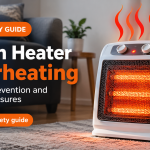
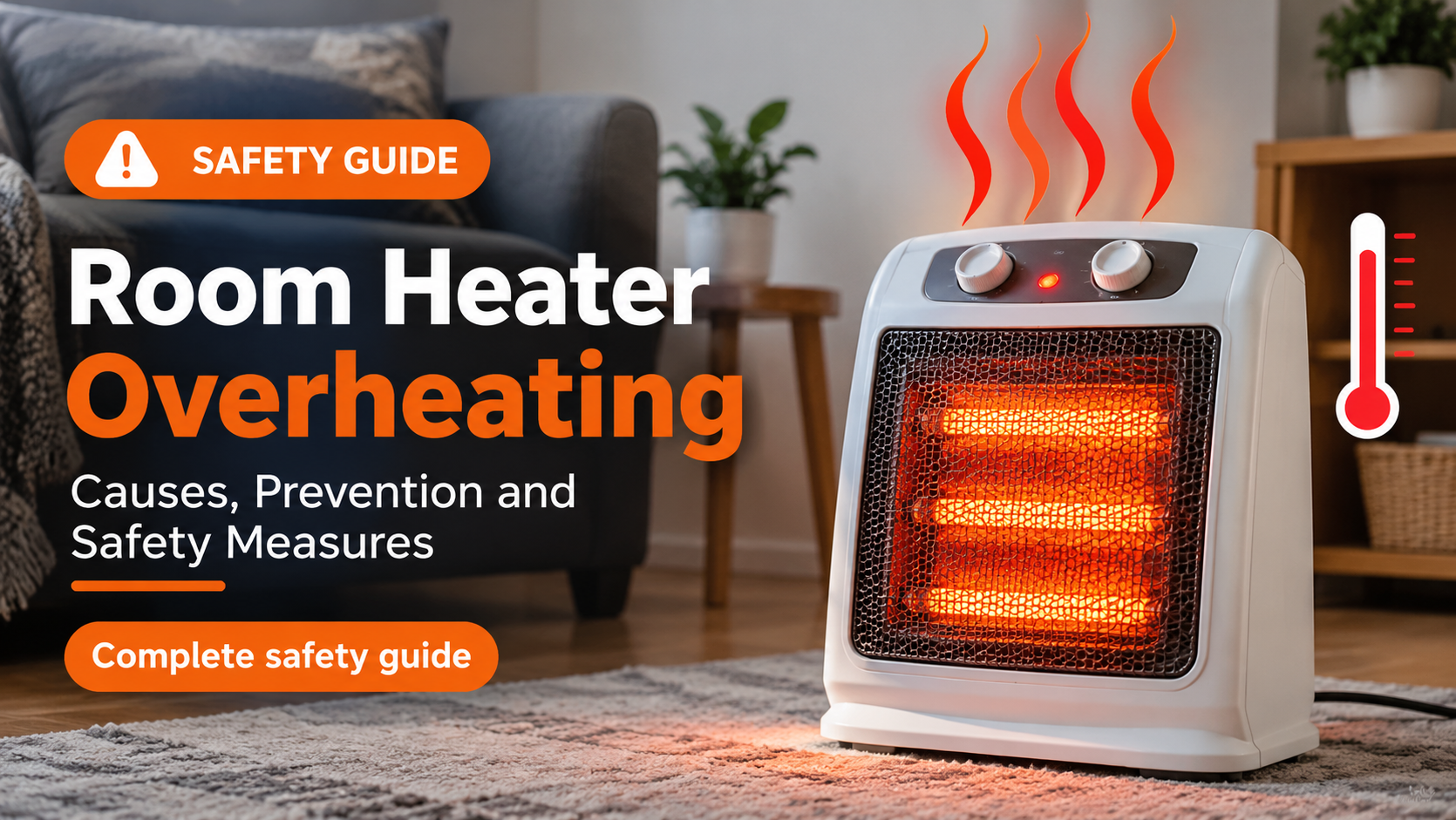
A room heater is supposed to make a cold room comfortable. When yours gets too hot to touch, smells like burning, or keeps shutting itself off, it is warning you that something is wrong. Overheating is one of the most common problems with portable heaters, and it deserves a quick, serious response, because excess heat is exactly how many heater-related fires begin.
The good news is that most overheating problems have simple causes, such as dust, blocked airflow or a poor power connection, and you can often fix them in minutes. This guide explains how to tell normal warmth from real overheating, what causes it, what to do right away, how to fix it step by step, and when it is time to replace the heater.
Quick answer
A room heater usually overheats because its vents are clogged with dust, its airflow is blocked, the thermostat or fan has failed, or the plug and outlet are overloaded. Switch it off, unplug it, let it cool for at least 30 minutes, clean the vents and check the cord and plug. If it overheats again, stop using it and replace it or have a qualified technician inspect it.
Is It Normal for a Room Heater to Get Hot?
Yes, a heater is meant to be warm. The grille, the front panel or the metal fins of an oil-filled heater will feel hot, and that is normal. What is not normal is heat in places that should stay cool, heat that keeps climbing, or a heater that cannot stop itself from heating.
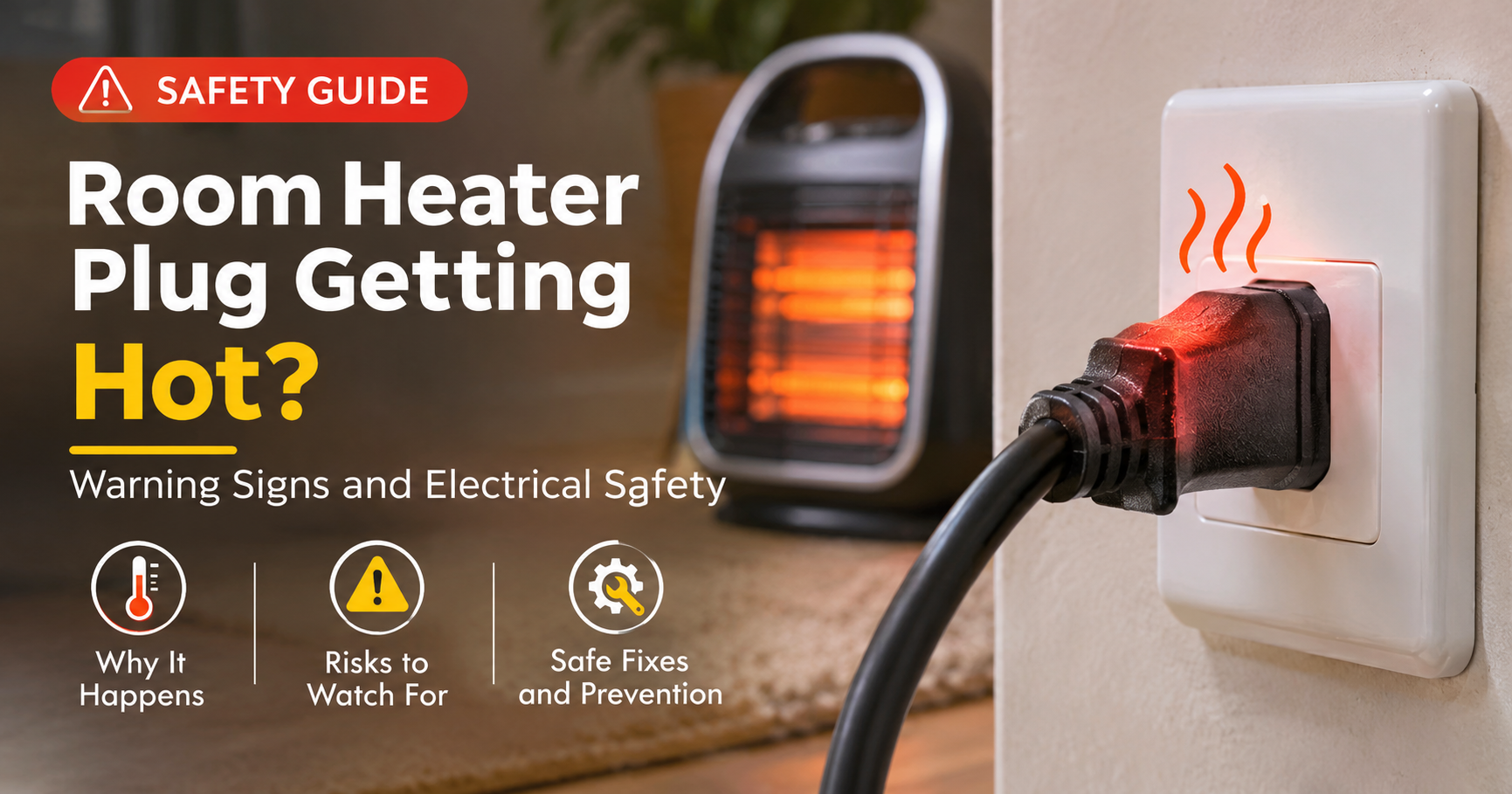
A useful rule: the heating surface can be hot, but the plug, the cord and the wall outlet should never feel hot. A heater should also cycle on and off by itself once the room reaches the temperature you set.

Warning Signs Your Heater Is Overheating
Catch the problem early by watching for these signals:
- A burning smell that continues after the first few minutes of use, especially a hot plastic or electrical odor.
- The heater shuts off repeatedly because its overheat protection keeps triggering.
- The plug, cord or wall outlet feels hot, looks discolored or smells scorched.
- The casing or grille feels much hotter than usual, or the paint or plastic has changed color.
- The fan is noisy, slow or silent while the heater is on.
- Sparks, crackling or flickering from the heater or the outlet.
- The heater keeps running at full power even when the room is already warm.
Safety first
If you see smoke or sparks, or smell strong burning, switch the heater off, unplug it only if it is safe to do so, move everyone away and contact your emergency services if there is any sign of fire. Never keep using a heater that smells of burning.
Main Causes of Room Heater Overheating

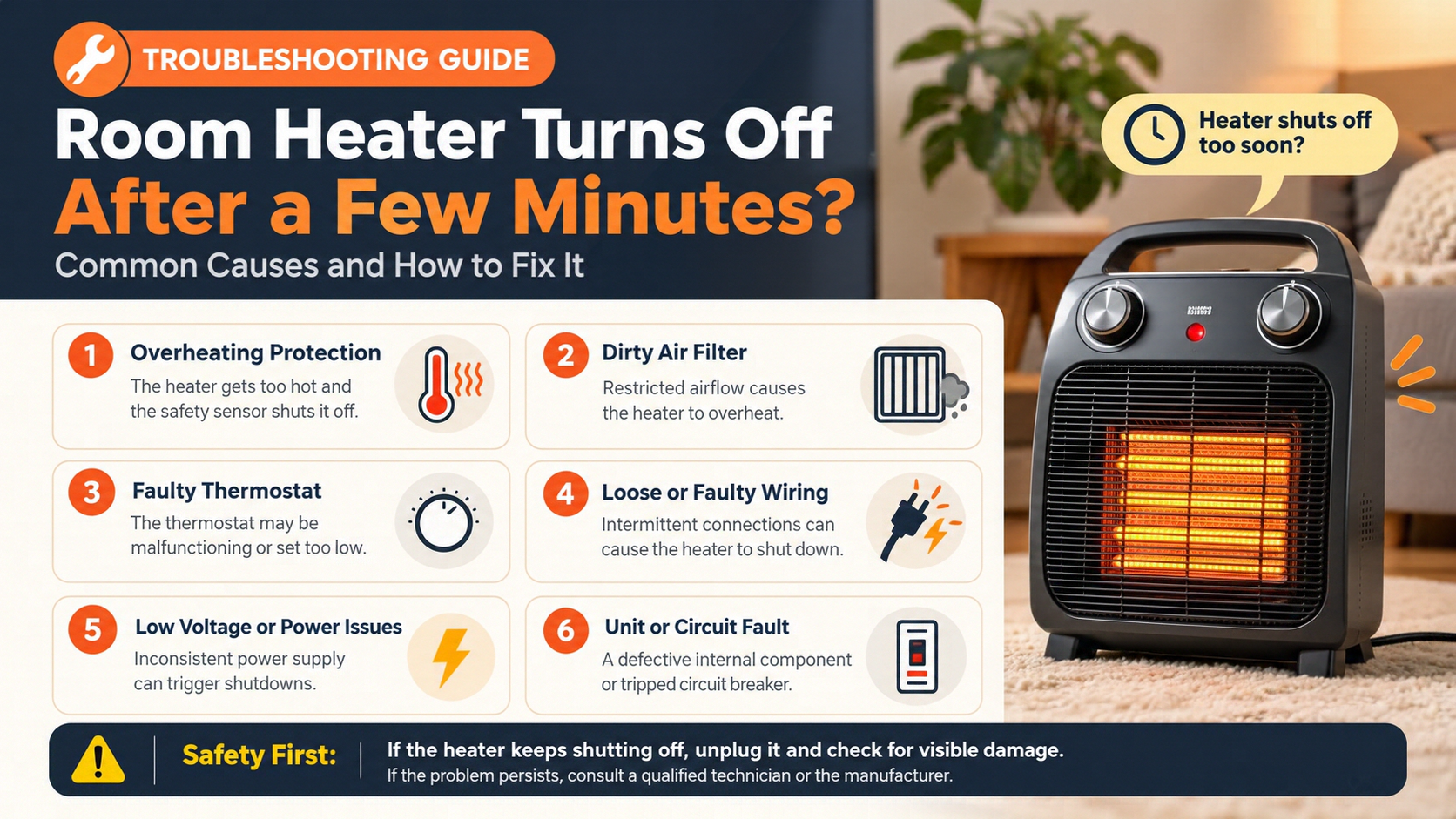
1. Dust and lint buildup
Heaters pull in air, and with it dust, pet hair and lint. Over time this collects on the vents, the fan and the heating element. A dusty element can smell like burning, and a clogged vent traps heat inside the unit, which pushes the temperature higher than the design allows.
2. Blocked airflow
Heaters need space to release heat. Placing a heater too close to a wall, sofa or curtain, or covering it with clothes or a blanket, stops the heat from escaping. The temperature inside rises quickly, and the safety cutoff may start switching the heater off.
3. Faulty thermostat
The thermostat tells the heater when to stop. If it fails, the heater can run continuously and keep getting hotter. A simple test: set the dial to a low setting in an already warm room. If the heater never clicks off, the thermostat is probably faulty.
4. Failed or weak fan
Fan heaters and ceramic heaters depend on the fan to carry heat away from the element. If the fan is jammed with dust, worn out or has stopped, the element overheats within minutes. A fan that is much louder or slower than before is an early warning.
5. Overloaded outlet, loose plug or extension cord
Room heaters draw a lot of power, often 1,000 to 2,000 watts. A loose plug, a worn outlet, a long thin extension cord or a power strip shared with other devices can create resistance, and resistance creates heat at the connection. The plug and outlet get hot even if the heater itself seems fine.
6. Worn heating element or internal fault
Older heaters develop weak spots in the element, loose internal wiring or a failing thermal fuse. These faults cause hot spots, uneven heating and shutdowns. They are not a do-it-yourself repair, so treat them as a sign the heater has reached the end of its life.
Overheating by Heater Type
Different heaters overheat for slightly different reasons. Here is a quick guide:
| Heater type | Most common overheating cause | What to do |
|---|---|---|
| Fan heater | Dusty vents or a slow, failing fan | Unplug, then vacuum the vents and fan guard. Replace the heater if the fan stays weak. |
| Ceramic heater | Blocked intake and dust on the ceramic plates | Clean the intake and outlet grilles and keep the area around it clear. |
| Oil-filled radiator | Poor placement, covered fins or a faulty thermostat | Keep the fins uncovered. Never open it. Replace it if it leaks or never cycles off. |
| Infrared or quartz heater | Dirty reflector or placement too close to objects | Wipe the reflector when cool and keep a wide clearance in front. |
| Convector heater | Blocked vents above and below the unit | Clear both vents and avoid placing it in tight corners. |
Note that an oil-filled radiator is designed to stay hot on its surface for a long time. The warning sign for this type is a hot plug or cord, a burning smell, or a heater that never switches off.
What to Do Right Away When a Heater Overheats

- Switch it off with the power switch or dial.
- Unplug it by holding the plug, not the cord.
- Let it cool for at least 30 minutes before touching or moving it.
- Inspect it for damage, melted plastic, bent prongs or a scorched plug.
- Clean and reposition it so it has clear space on all sides.
- Test it briefly while you stay in the room. If it overheats again, stop using it.
How to Fix an Overheating Room Heater Step by Step
Always unplug the heater and let it cool completely before you do any of the following.
Step 1: Clean the vents and fan
Use a vacuum with a soft brush attachment to remove dust from the intake and outlet vents. Use a dry soft brush or compressed air to reach between the grille slats. Do not use water or spray cleaners on the inside of the heater.
Step 2: Check the cord and plug
Look for cracks, frayed insulation, bent prongs, discoloration or a melted look. If the cord or plug is damaged, do not use the heater. A heater with a damaged power cord should be repaired by a qualified technician or replaced.
Step 3: Plug it into a proper outlet
Connect the heater directly to a wall outlet that is in good condition. Avoid power strips and extension cords. If an extension cord is truly unavoidable, use a heavy-duty cord rated for the heater’s wattage and keep it as short as possible.
Step 4: Reposition the heater
Place it on a flat, hard, level surface, away from curtains, bedding, sofas and paper. Keep at least 3 feet (about 1 meter) of clear space around it, and never place it on a carpet edge or soft surface that could block the base.

Step 5: Test the thermostat and fan
Plug the heater in and set it to a low temperature in a warm room. It should click off after a short time. Then switch to fan or heat mode and listen to the fan. If the thermostat never cycles off or the fan is weak, noisy or silent, the heater needs professional repair or replacement.
Step 6: Run a short supervised test
Run the heater for 10 to 15 minutes while you stay in the room. Check that the plug and cord stay cool and that the smell and shutdowns do not return. If the problem comes back, stop using the heater.
When to Stop Using Your Heater and Replace It
Cleaning solves many problems, but some faults are not safe to repair at home. Stop using the heater and replace it, or ask a qualified technician to inspect it, if:
- It keeps overheating or shutting off after cleaning and repositioning.
- The cord, plug or outlet is hot, melted or discolored.
- The thermostat never switches the heater off.
- The casing is cracked, melted or visibly burnt.
- An oil-filled heater is leaking oil.
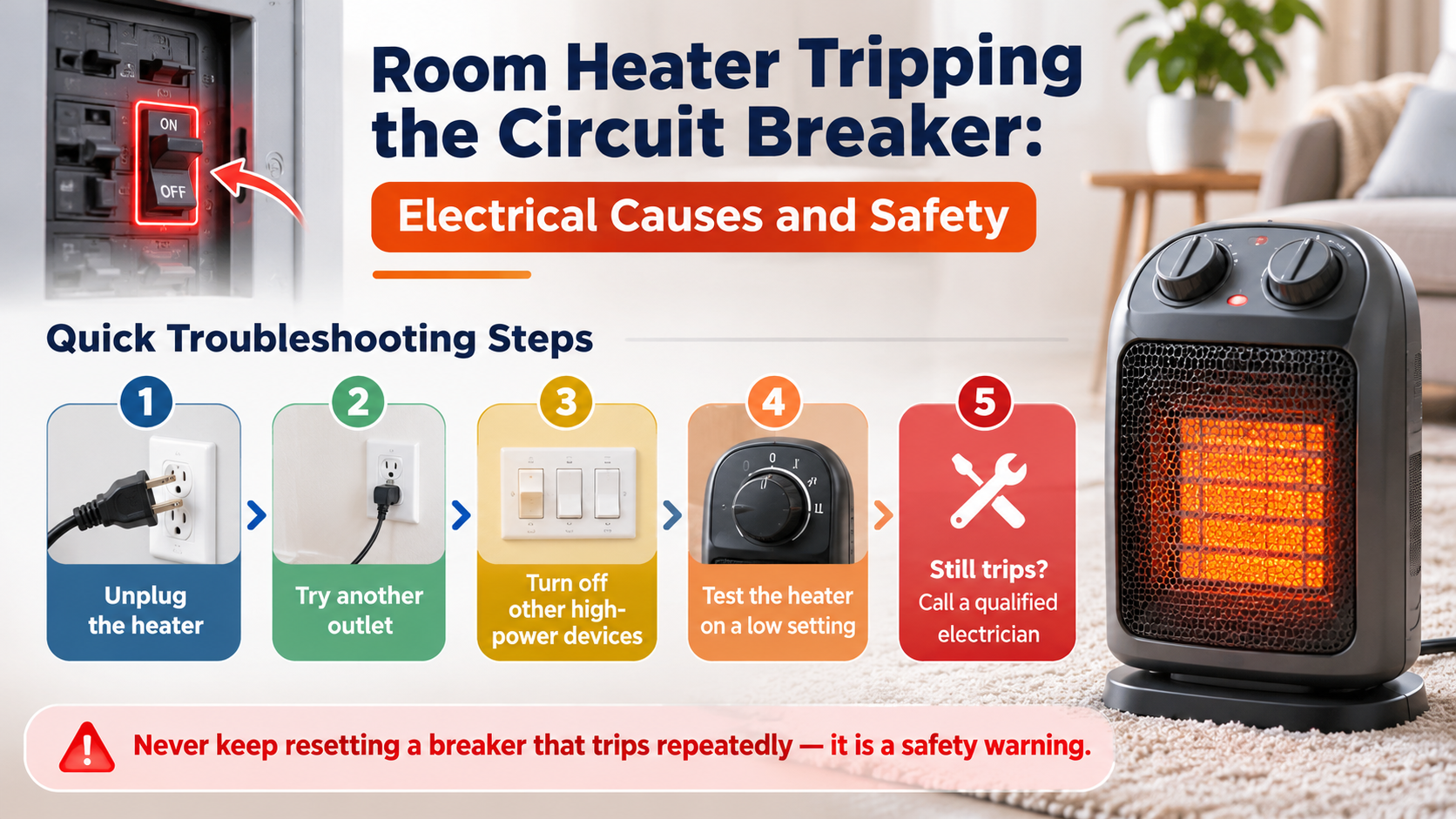
- It sparks, crackles or trips the circuit breaker.
- It is very old or has been dropped or damaged.
Never bypass or remove the thermal fuse, tip-over switch or any other safety part. These parts are there to prevent fires, and a heater with a bypassed safety feature is not safe to use.
How to Prevent Room Heater Overheating
- Clean it regularly. Vacuum the vents every few weeks during heavy use, and before storing it for summer.
- Give it space. Keep at least 3 feet (1 meter) clear on all sides and above it.
- Use a wall outlet. Do not share the outlet with other high-power devices.
- Do not cover it. Never dry clothes or towels on or near a heater.
- Use the thermostat. Set the temperature you need instead of running it at maximum all day.
- Never leave it unattended. Switch it off when you leave the room or go to sleep, unless the manufacturer states it is designed for continuous use and has proper safety features.
- Match the heater to the room. A heater that is too small runs constantly and works harder.
- Read the manual. Follow the manufacturer’s instructions for placement, cleaning and maximum run time.
Safety Features to Look For in a Room Heater
If your heater is old or keeps overheating, replacing it with a safer model is often the best decision. Look for these features:
- Overheat protection: shuts the heater off automatically if the internal temperature gets too high.
- Tip-over switch: turns the heater off if it falls or is knocked over.
- Adjustable thermostat: keeps the room at a steady temperature and prevents constant heating.
- Cool-touch housing: reduces the risk of burns on the outside of the heater.
- Recognized safety certification: look for the safety marks that apply in your country.
- Timer and auto shut-off: prevents the heater from running for hours without anyone noticing.
Choosing the right size also matters. As a general rule of thumb, a heater needs about 10 watts of power for every square foot of floor space, which is roughly 110 watts per square meter. The table below gives a simple guide, but always check the manufacturer’s recommendation and your local voltage and outlet rating.
| Room size | Approximate heater power |
|---|---|
| Up to 100 sq ft (about 9 m²) | Around 1,000 watts |
| Up to 150 sq ft (about 14 m²) | Around 1,500 watts |
| Larger than 150 sq ft | Use a stronger heater designed for the space or more than one properly placed heater |
Frequently Asked Questions
Why is my room heater so hot?
The heating surface is meant to be warm or hot. If the whole unit feels dangerously hot, the plug is hot, or it smells of burning, the cause is usually blocked airflow, dust, a failed fan or a faulty thermostat.
Why does my heater smell like burning?
A light dusty smell for the first few minutes after months of storage is normal because dust burns off the element. A burning smell that continues means something is wrong, such as heavy dust, melted plastic, a hot plug or an electrical fault. Switch it off and inspect it.
How do I reset a heater that shut off from overheating?
Switch it off, unplug it and let it cool for at least 30 minutes. Clear any blockage, clean the vents and plug it back in directly to a wall outlet. Some models have a reset button, so check your manual. If it shuts off again, there is a real fault.
Can I leave a room heater on all night?
Fire safety experts generally advise against leaving portable heaters running while you sleep or when nobody is in the room. If you do use one that is designed for continuous use, make sure it has overheat protection and a tip-over switch, and that there is plenty of space around it.
Is it safe to use an extension cord with a room heater?
It is best to plug a heater directly into a wall outlet. Standard extension cords and power strips can overheat under the heavy load. If you must use one, it should be a heavy-duty cord rated for the heater’s power, as short as possible and fully uncoiled.
Can an overheating heater be repaired?
Simple causes such as dust and poor placement can be fixed at home. Internal problems such as a bad thermostat, a failing element or a damaged thermal fuse should be handled by a qualified technician, and often replacing an older heater is safer and more economical.
Final Thoughts
A room heater that overheats is a warning, not a nuisance. In most cases the cause is simple: dust, a blocked vent, a crowded location or a poor power connection. Switch the heater off, let it cool, clean it, give it space and plug it in properly, and many problems disappear.
If the heater keeps overheating, smells of burning, or has a hot plug or damaged cord, do not take chances. Retire it and choose a model with overheat protection, a tip-over switch and an adjustable thermostat. A few minutes of care now keeps your home warm and safe all winter.
This article is for general information. Always follow your heater’s instruction manual and local safety guidance, and contact a qualified electrician or technician for repairs.