






Oil Filled Radiator vs Electric Heater: Which One Is Best for Your Home?

Disclosure: This site may earn a small commission if you buy through our recommendations, at no extra cost to you.
Cold mornings and chilly evenings make a good room heater feel like a necessity. But when you start shopping, one question comes up again and again: should you buy an oil filled radiator or a regular electric heater? Both plug into a wall socket, both warm a room, and both come in many sizes and prices. Yet they behave very differently once you switch them on.
In this complete guide, we compare oil filled radiators and electric heaters (fan, ceramic, infrared and panel types) on heating speed, running cost, safety, noise, comfort and more. By the end, you will know exactly which one fits your room, budget and lifestyle.
Quick Answer: Which Should You Choose?
- Choose an oil filled radiator if you want quiet, steady, long-lasting warmth for a bedroom, nursery, home office or any room you heat for several hours.
- Choose an electric fan or ceramic heater if you need fast heat in a small space for a short time, such as a bathroom, a desk or a cold morning corner.
- Choose an infrared or panel heater if you want silent, targeted warmth and a slim design that can sit against a wall.
What Is an Oil Filled Radiator?
An oil filled radiator is a sealed metal unit filled with thermal oil. An electric element at the bottom heats this oil, and the hot oil circulates through the metal fins. The fins then release heat into the room through a mix of radiant heat and gentle natural convection.
The oil is never burned or used up. It is simply a heat reservoir that stays inside the unit for its whole life, so you never need to refill it. Because oil holds heat well, the radiator keeps giving off warmth for a while even after the thermostat switches the element off.

Key features of oil filled radiators
- Silent operation, since there is no fan
- Slow warm-up but long heat retention
- Adjustable thermostat and several power settings (often 600 W, 900 W and 1500 W)
- Usually fitted with wheels, a tip-over switch and overheat protection
- Does not dry out the air as aggressively as fan heaters
What Is an Electric Heater?
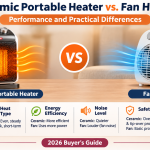
“Electric heater” is a broad term. It covers several designs, and each one delivers heat in a different way:
- Fan heaters: Blow air across a hot element. Very fast, but noisy and only warm while running.
- Ceramic heaters: A fan heater variant using ceramic plates. They heat up quickly, are compact and often include oscillation.
- Infrared (quartz) heaters: Warm people and objects directly rather than the air. Good for spot heating.
- Convection panel heaters: Slim wall or floor units that warm air as it passes through. Quiet and stylish, with moderate speed.
For simplicity, when we say “electric heater” below we mainly mean the common fan and ceramic types, and we note where other types behave differently.
Oil Filled Radiator vs Electric Heater: Side-by-Side Comparison
| Feature | Oil Filled Radiator | Electric Fan / Ceramic Heater |
|---|---|---|
| Heating speed | Slow (15 to 30 minutes) | Very fast (within minutes) |
| Heat after switch-off | Keeps radiating for a while | Stops almost immediately |
| Noise | Virtually silent (small clicks) | Fan noise |
| Heat feel | Soft, even, gentle | Strong, direct blast |
| Best room size | Small to large rooms | Small rooms and spot heating |
| Portability | Heavier, usually on wheels | Light and compact |
| Surface temperature | Warm to hot, but lower than an element | Grille can get hot |
| Price | Mid-range | Usually cheaper |
| Lifespan | Long, few moving parts | Shorter, fan can wear out |

1. Heating Speed
Electric fan and ceramic heaters win here. They push hot air into the room almost instantly, so you feel warmer within a few minutes. An oil filled radiator has to heat its oil first, so it can take 15 to 30 minutes before the room feels noticeably warmer.
If you want a quick warm-up for a short stay, such as getting dressed or drying off after a shower, a fan heater is the better tool. If you are heating a space for hours, the slow start of an oil radiator matters far less.
2. Running Cost and Energy Efficiency
This is where many buyers get confused. Almost all electric resistance heaters convert nearly 100% of the electricity they use into heat. A 1500 W oil filled radiator and a 1500 W fan heater give out the same amount of heat per hour at full power. Neither is magically more efficient.
The real difference lies in how they use that power over time:
- An oil radiator holds heat, so once the room is warm the thermostat cycles the element on and off. The oil keeps radiating between cycles, which can reduce total energy use over a long session.
- A fan heater warms the air quickly, but the heat disappears as soon as it switches off, so it may cycle more often in a leaky or large room.
Simple cost formula: Power in kilowatts x hours used x your electricity price per kWh. For example, a 1.5 kW heater running for 4 hours uses 6 kWh. Multiply that by your local tariff to see the cost.
Tip: always use the thermostat and a timer. Running any heater non-stop at full power is the fastest way to a high electricity bill.
3. Comfort and Quality of Heat
Oil filled radiators produce a soft, even warmth that many people find more comfortable, especially in bedrooms. There is no draught and no hot air blast on your face. They also tend to keep humidity more natural than fan heaters.
Fan heaters feel stronger and more immediate, but the moving air can feel dry and cause dust to circulate. Infrared heaters feel like sunshine on your skin, which is lovely nearby but does little for the rest of the room.
4. Noise Level
If you are a light sleeper or work from home, noise matters. Oil radiators are almost silent. Fan heaters and ceramic fan heaters usually produce a constant hum or whoosh, and cheaper models can be quite loud. For a bedroom or nursery, an oil filled radiator is the clear favourite.
5. Safety
Both types of heater can be used safely when you follow basic rules, and good models include tip-over protection and overheat cut-off. Still, there are differences:
- Oil filled radiators have no exposed glowing element, and their surface temperature stays lower than a fan heater’s grille. Even so, the metal gets hot, so keep it away from curtains, bedding and children’s reach.
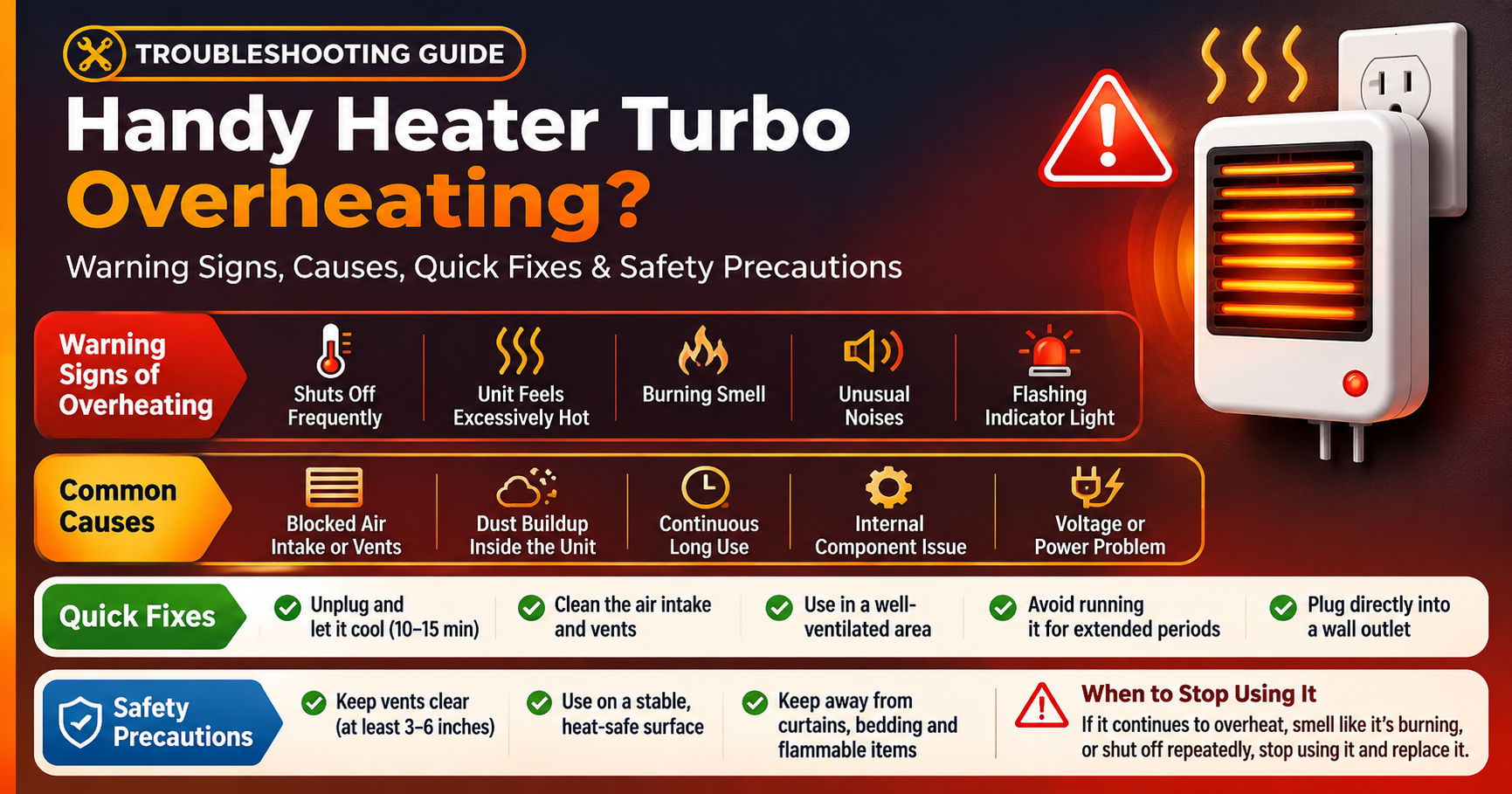
- Fan heaters have hot internal elements that can reach very high temperatures. Never cover them and never leave them unattended.
- Both types: plug directly into a wall socket rather than an extension lead, and never use them to dry clothes unless the manufacturer says it is allowed.
A heater with a flame-retardant housing, a tip-over switch and automatic overheat protection is worth a few extra dollars every time.
6. Portability and Design
Fan heaters and ceramic heaters are light, compact and easy to carry from room to room. Oil radiators are heavier, but most come with wheels and a cable-storage area, so moving them is simple. Panel heaters add a slim, wall-mounted option if you want to save floor space.
7. Durability and Maintenance
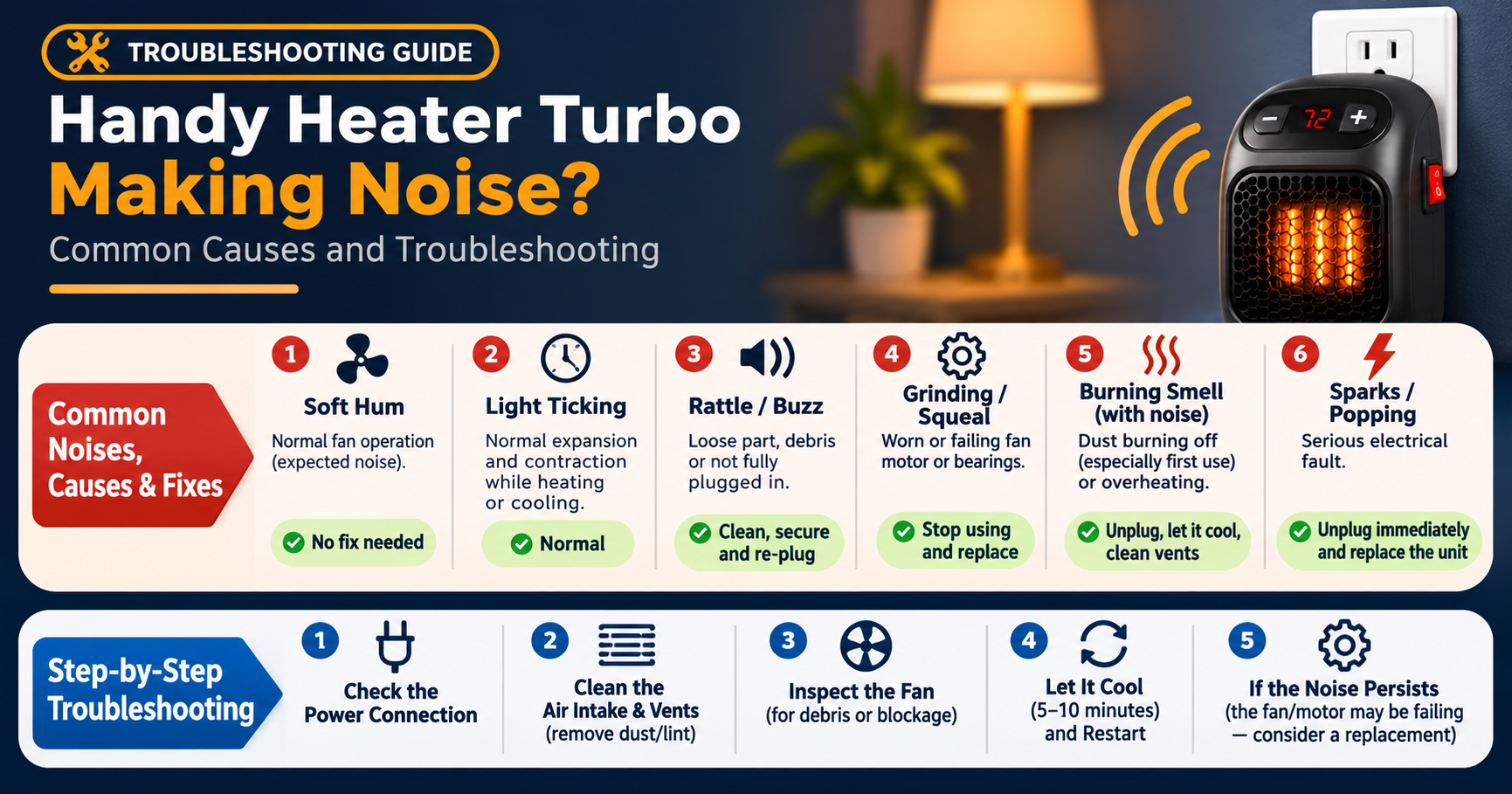
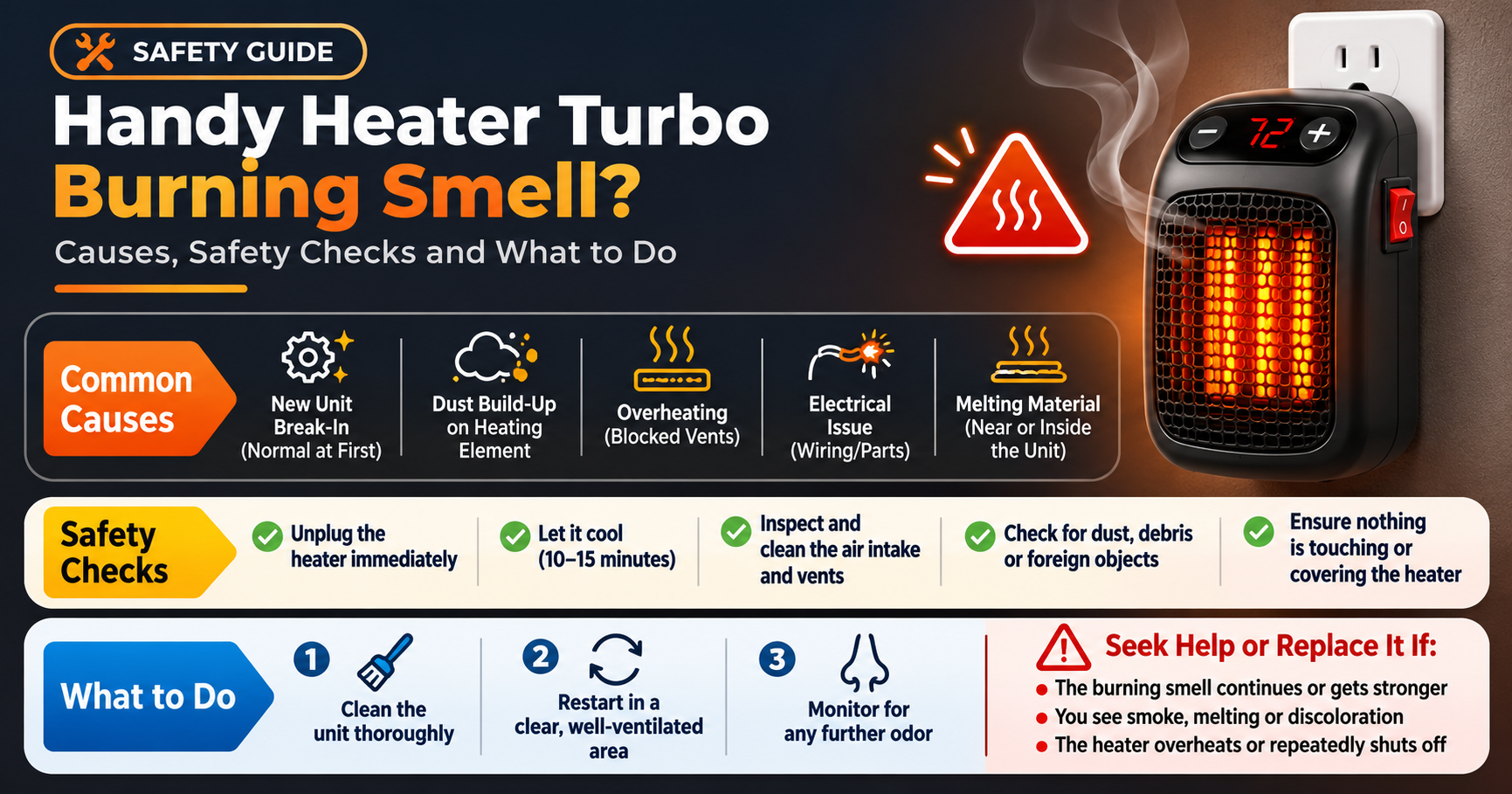
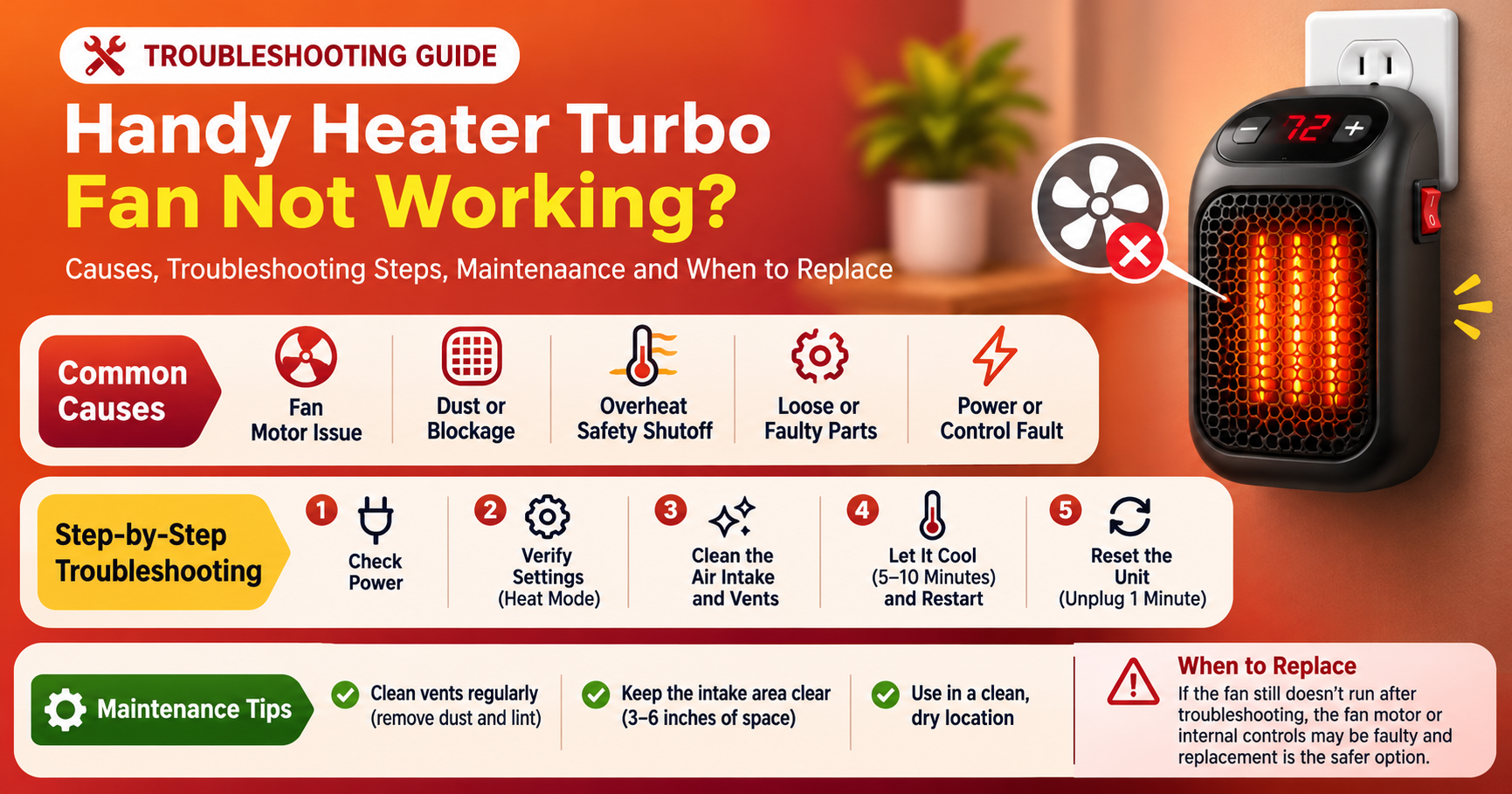
Oil filled radiators have no fan or moving parts, so there is very little to wear out. A well-made unit can last many years with only an occasional dusting. Fan heaters rely on a motor, which can get noisy or fail over time, and dust build-up on the element can cause a burning smell.
Which Heater Is Best for Each Room?
- Bedroom: Oil filled radiator, because it is quiet and gives steady overnight warmth.
- Baby or child’s room: Oil filled radiator placed well out of reach, or a thermostat-controlled model with child-lock features.
- Home office: Oil filled radiator for all-day comfort, or an infrared heater under the desk for your feet.
- Living room: A 1500 W oil radiator or a large convection panel heater.
- Bathroom: Only heaters rated for bathroom use. Never place a regular heater near water.
- Small cold corner or quick use: Ceramic fan heater.
How to Choose the Right Heater Size
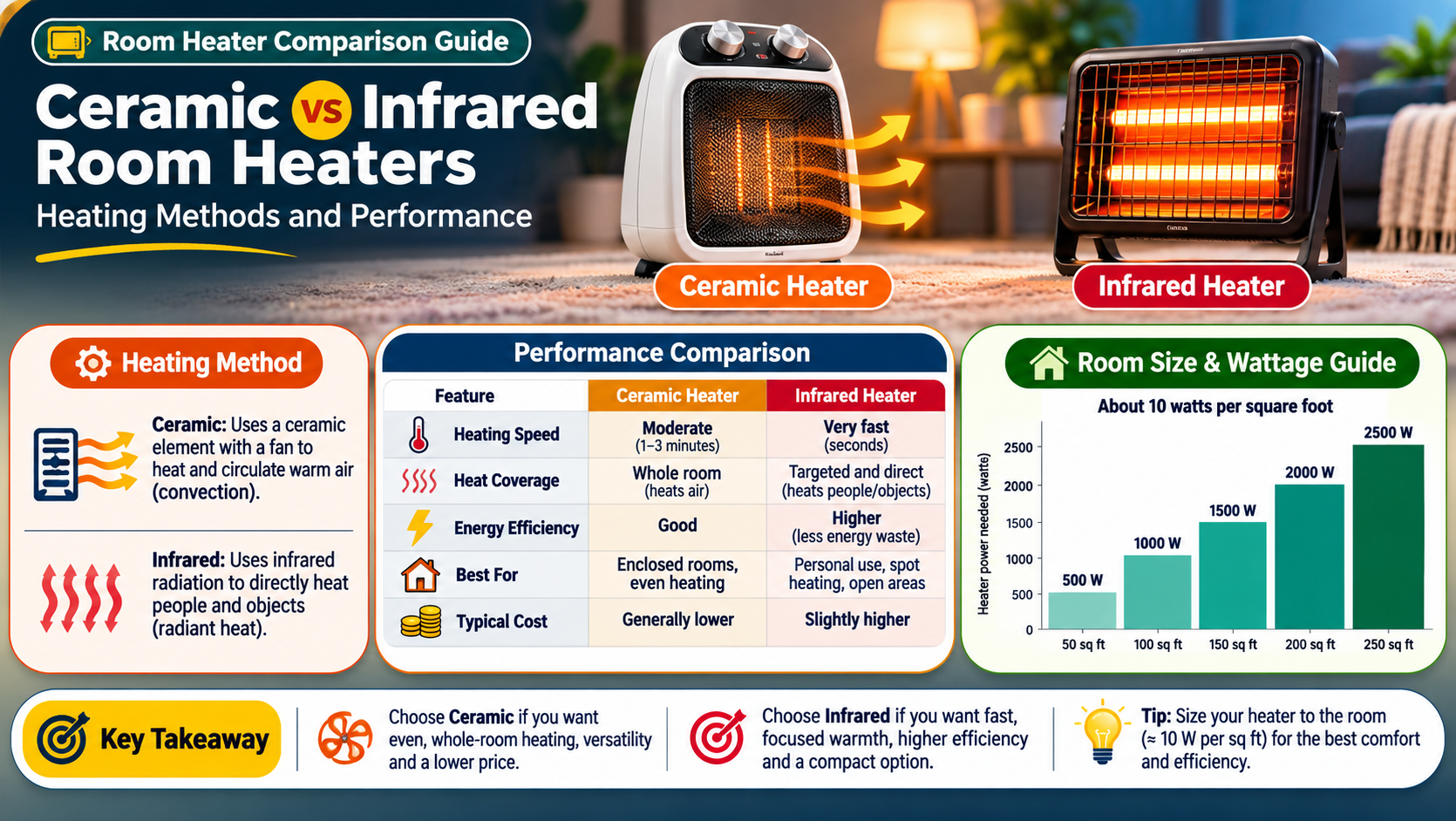
A simple rule of thumb is to allow about 10 watts per square foot of floor space, assuming a standard ceiling height and average insulation. If your room is poorly insulated, has big windows or very high ceilings, increase the power or choose a larger unit.

What to Look for Before You Buy
- Adjustable thermostat: Keeps temperature steady and saves electricity.
- Multiple heat settings: Lets you scale down once the room is warm.
- Timer: Switches the heater off automatically so you do not forget it.
- Tip-over and overheat protection: Essential safety features.
- Number of fins (oil radiators): More fins mean more surface area and faster, more even heat.
- Wheels and cord storage: Make a heavier radiator easy to move.
- Warranty and brand reputation: A longer warranty is a sign of build confidence.
- Remote control or digital display: A nice extra if you want fine control.
Pros and Cons Summary
Oil filled radiator
Pros: Silent, steady warmth, keeps heating after switch-off, gentle on the air, durable, no refilling needed.
Cons: Slow to warm up, heavier, usually costs more than basic fan heaters.
Electric fan / ceramic heater
Pros: Heats fast, compact and light, affordable, great for quick bursts.
Cons: Noisy, heat stops instantly, can dry the air, shorter lifespan.
Tips to Get More Warmth for Less Money
- Close doors and windows in the room you are heating.
- Seal draughts around doors and windows with simple weather strips.
- Use thick curtains to cut heat loss through glass.
- Heat only the room you are using, not the whole house.
- Set the thermostat to a comfortable level rather than the maximum.
- Start the heater a little earlier and let the oil radiator do its slow work, then reduce the power.
- Keep the heater clear of furniture so heat can spread freely.
Frequently Asked Questions
Is an oil filled radiator cheaper to run than an electric heater?
Not per watt. Both convert almost all electricity into heat. An oil radiator can use less energy over several hours because it holds heat and the thermostat cycles off, but a heater of the same wattage costs the same per hour at full power.
Is an oil filled radiator safe to leave on overnight?
Modern models with a thermostat, tip-over switch and overheat protection are designed for extended use, and they are generally considered among the safer options. Keep it clear of bedding and curtains, plug it straight into the wall and follow the manufacturer’s instructions.
How long does an oil filled radiator take to heat a room?
Usually 15 to 30 minutes to feel the difference, depending on room size, insulation and the heater’s wattage.
Do oil filled radiators dry out the air?
They affect humidity much less than fan heaters because they do not blow hot air around, which many people find more comfortable, particularly for sleeping.
Which is better for a bedroom?
An oil filled radiator is usually the better bedroom choice thanks to its silence and steady, gentle warmth.
Which is better for a quick warm-up?
A ceramic or fan heater. It delivers warm air within minutes and suits short-term use.
Can I use these heaters with an extension lead?
It is best to plug high-wattage heaters directly into a wall socket. If you must use an extension, it needs to be fully unwound and rated for the heater’s power, but direct connection is always safer.
Final Verdict
There is no single winner, because the right heater depends on how you will use it. For long, quiet and comfortable heating, an oil filled radiator is the better choice. For fast, affordable heat in small spaces and short bursts, an electric fan or ceramic heater is the smarter pick. Many households end up owning both: an oil radiator for the bedroom or office, and a compact fan heater for quick top-ups.
Whichever you choose, pick a model with a thermostat, timer and proper safety protection, match the wattage to your room size, and you will stay warm without wasting money.
(Add your affiliate button here.)