




When temperatures drop, a portable heater is one of the quickest ways to make a cold room comfortable without running a whole-house heating system. But the shelves are packed with two popular options that look almost identical: the ceramic portable heater and the standard fan heater. Both blow warm air, both are compact, and both plug into a regular outlet. So what is actually different, and which one deserves your money?
In this complete guide, we compare ceramic heaters and fan heaters side by side on heating performance, safety, noise, energy use, running cost, durability, and ideal use cases. By the end, you will know exactly which type fits your room, budget, and lifestyle.
Quick Answer: Which One Should You Buy?
If you want a safer, more controlled, and generally quieter heater for a bedroom, home office, or nursery area, a ceramic portable heater is usually the better choice. If you need the cheapest possible option for occasional, short bursts of heat in a small space, a basic fan heater can do the job. Read on for the details behind that verdict.
What Is a Ceramic Portable Heater?
A ceramic heater uses a ceramic heating element, most often a PTC (Positive Temperature Coefficient) ceramic plate. When electricity passes through the ceramic, it heats up quickly. As the ceramic reaches its target temperature, its electrical resistance rises and the current drops, so the element naturally limits its own temperature. Thin aluminum fins usually sit next to the ceramic plates to spread the heat, and a small fan pushes the warmed air into the room.

Key Features of Ceramic Heaters
- Self-regulating element: The PTC ceramic limits its own maximum temperature, which adds an extra layer of safety.
- Fast, steady warmth: Most models reach comfortable output within a minute or two.
- Often includes adjustable settings: Many units offer multiple heat levels, an adjustable thermostat, oscillation, and a timer.
- Cleaner operation: Ceramic elements do not glow red hot and generally produce less of the burnt-dust smell common with exposed coils.
What Is a Fan Heater?
A fan heater, in its most traditional form, uses a metal resistance coil (often nichrome wire). Electricity heats the coil until it glows, and a fan blows air across it so the heat is carried into the room. It is a simple design that has been around for decades, which is why basic fan heaters are inexpensive and widely available.
It is worth noting that the term “fan heater” is also used loosely. Many ceramic heaters also contain a fan, so they are technically fan-forced ceramic heaters. In this article, “fan heater” refers to the standard coil-based type, while “ceramic heater” refers to the PTC ceramic type.

Key Features of Fan Heaters
- Very fast initial heat: The exposed coil gets hot almost instantly.
- Low purchase price: Simple construction keeps costs down.
- Lightweight and compact: Easy to carry from room to room.
- Basic controls: Typically a few heat settings and a simple thermostat.
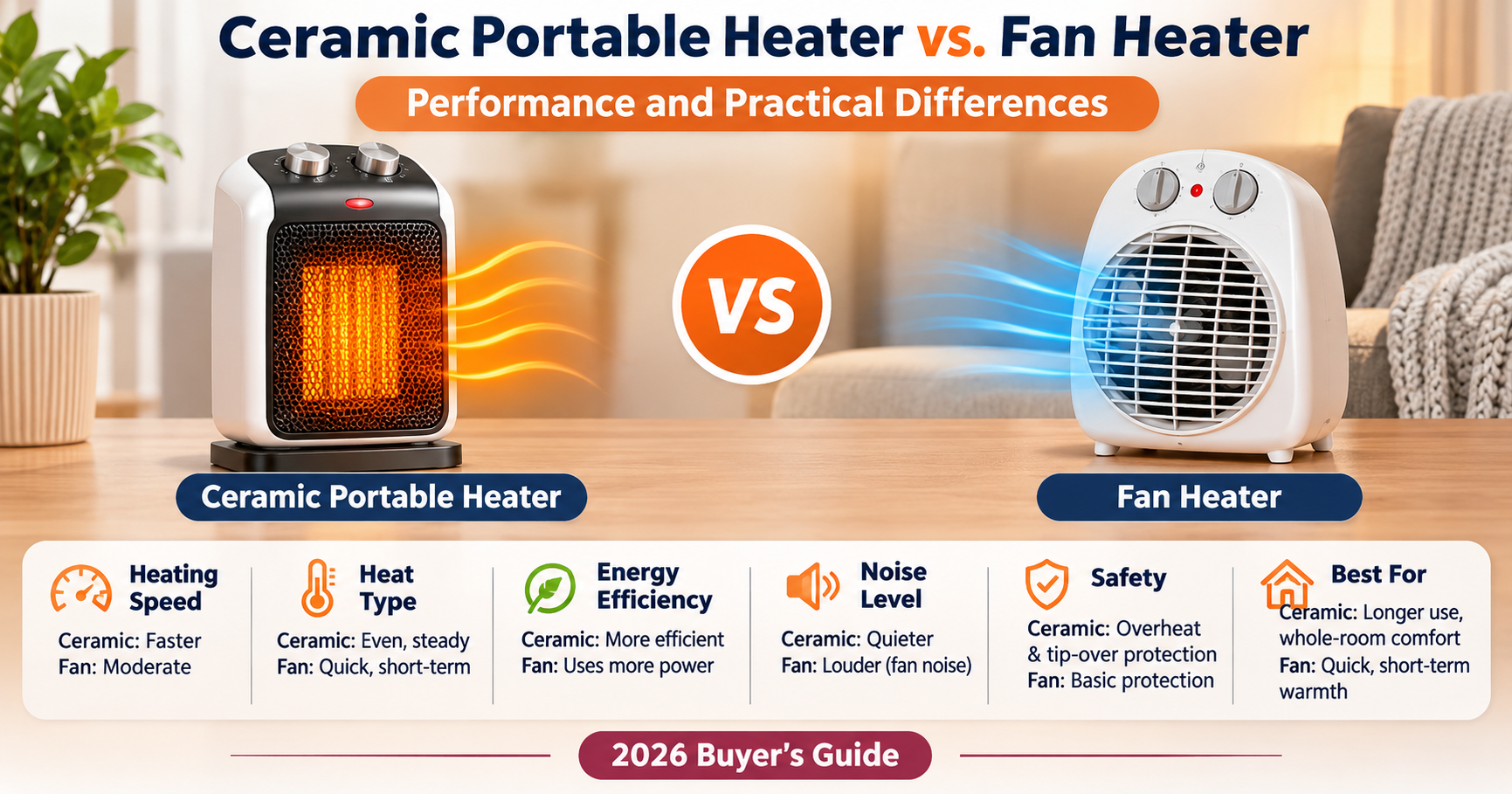
Ceramic Heater vs Fan Heater: Side-by-Side Comparison

| Feature | Ceramic Portable Heater | Fan Heater |
|---|---|---|
| Heating element | PTC ceramic plates with aluminum fins | Metal resistance coil |
| Heat-up speed | Fast | Very fast |
| Temperature control | Self-regulating plus thermostat | Thermostat only |
| Safety | Generally higher | Good with proper safety features |
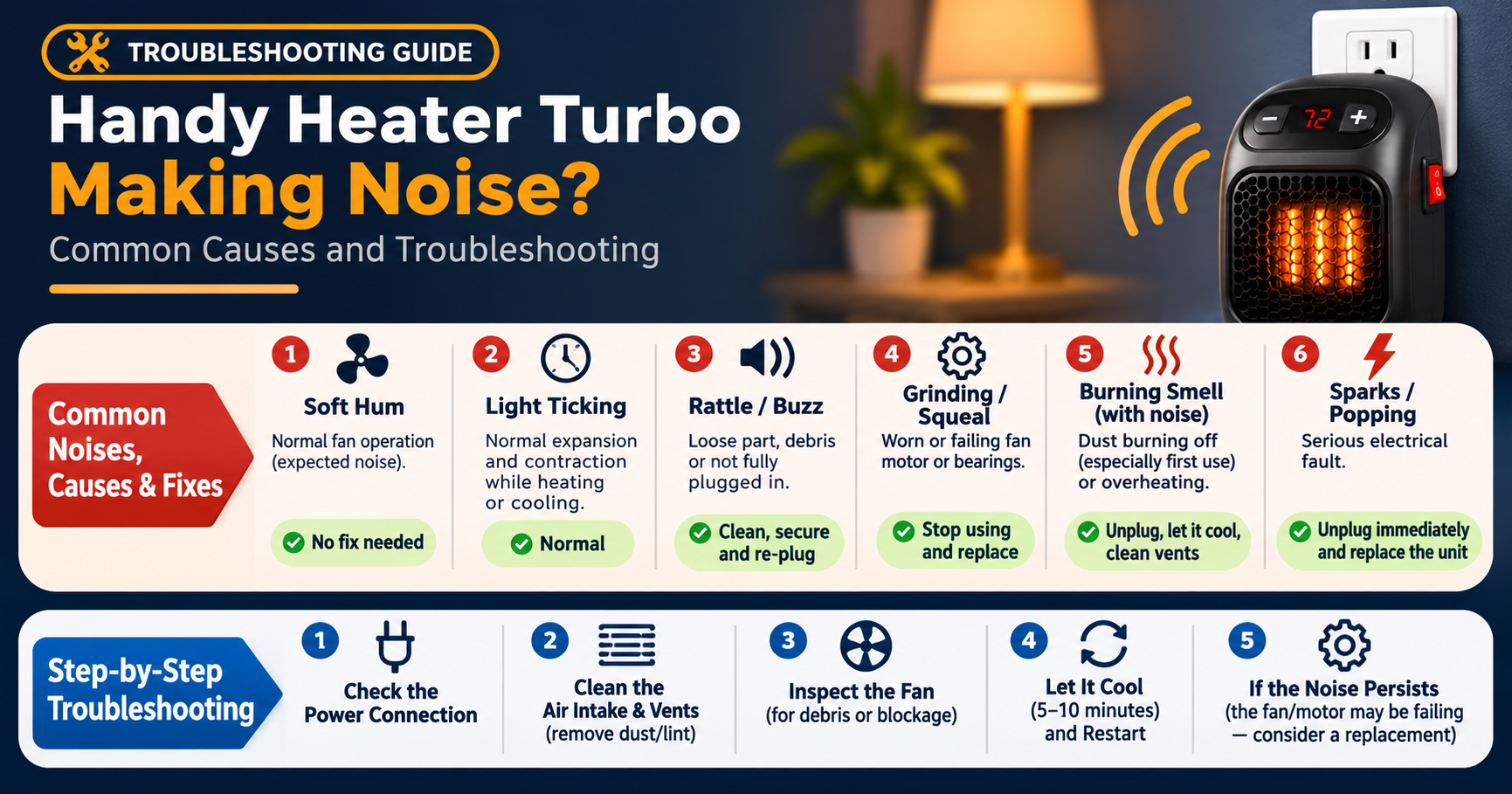
| Noise | Low to medium | Medium, can rattle on cheaper models |
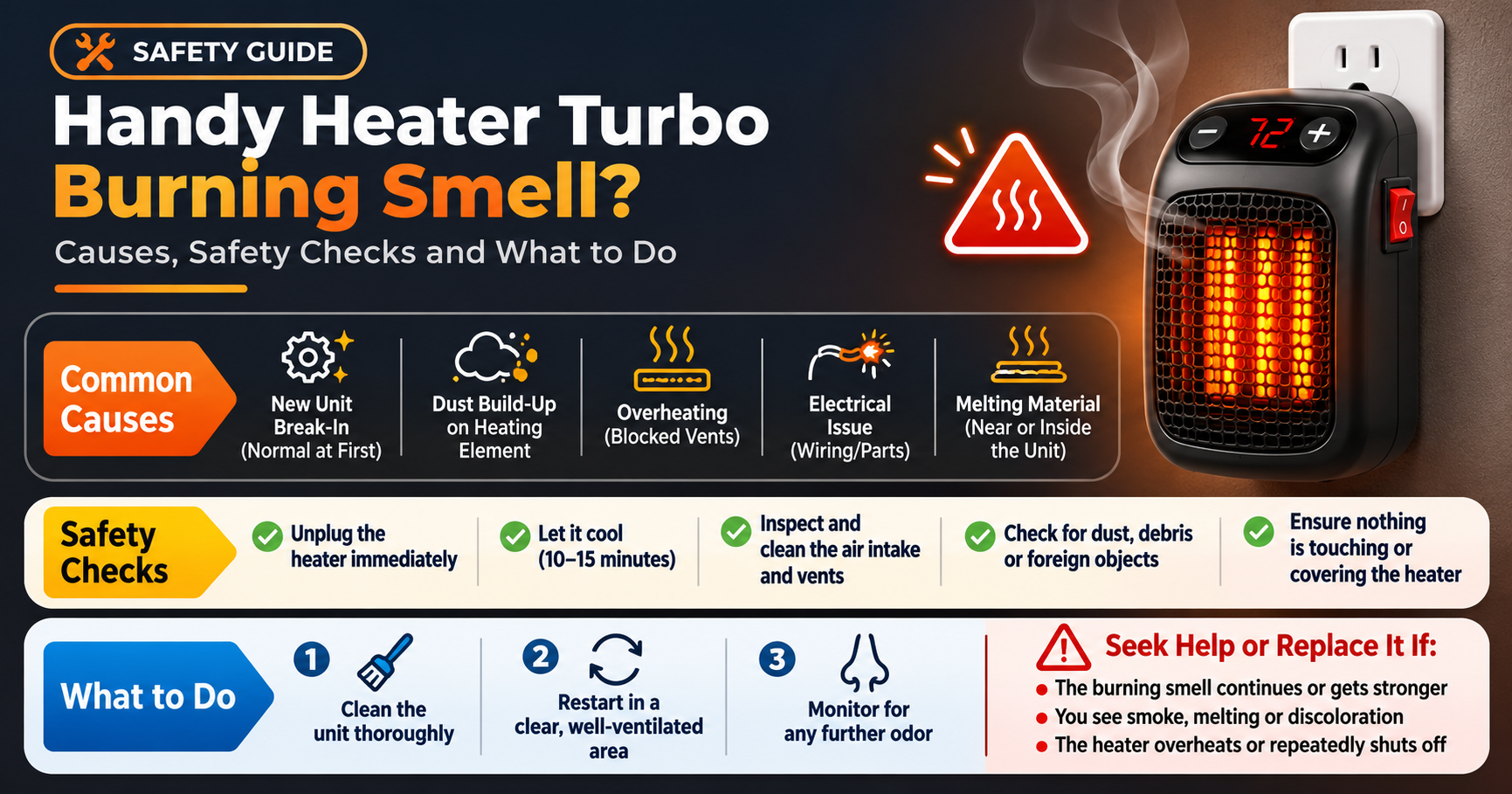
| Smell on first use | Minimal | Possible burnt-dust smell |
| Typical price | Mid-range | Budget-friendly |
| Lifespan | Often longer | Varies, coils can wear out |
| Best for | Bedrooms, offices, longer use | Quick top-ups, small spaces |
Heating Performance
Both heater types convert nearly all the electricity they use into heat, so at the same wattage they put out essentially the same amount of heat energy. A 1500-watt ceramic heater and a 1500-watt fan heater will warm a room at a very similar rate. The real differences show up in how that heat feels and how it is delivered.
A fan heater tends to deliver a sharp blast of hot air as soon as it is switched on, which feels great when you walk into a freezing room. Ceramic heaters ramp up just as quickly in practice but usually offer a more even, consistent warmth thanks to the self-regulating element and the fin design. Neither type is a whole-house solution. They are best used as zone heaters to warm the space you are actually using.
Safety: Where Ceramic Heaters Pull Ahead
Safety is the most important factor when choosing any space heater. Because a ceramic PTC element limits its own temperature, it is less likely to reach dangerously high temperatures than an exposed coil. Ceramic heaters also typically have a cooler outer casing, which matters in homes with children or pets.
That said, a well-built fan heater can be safe too. Whichever type you choose, look for these essential features:
- Tip-over protection: Automatically switches the heater off if it is knocked over.
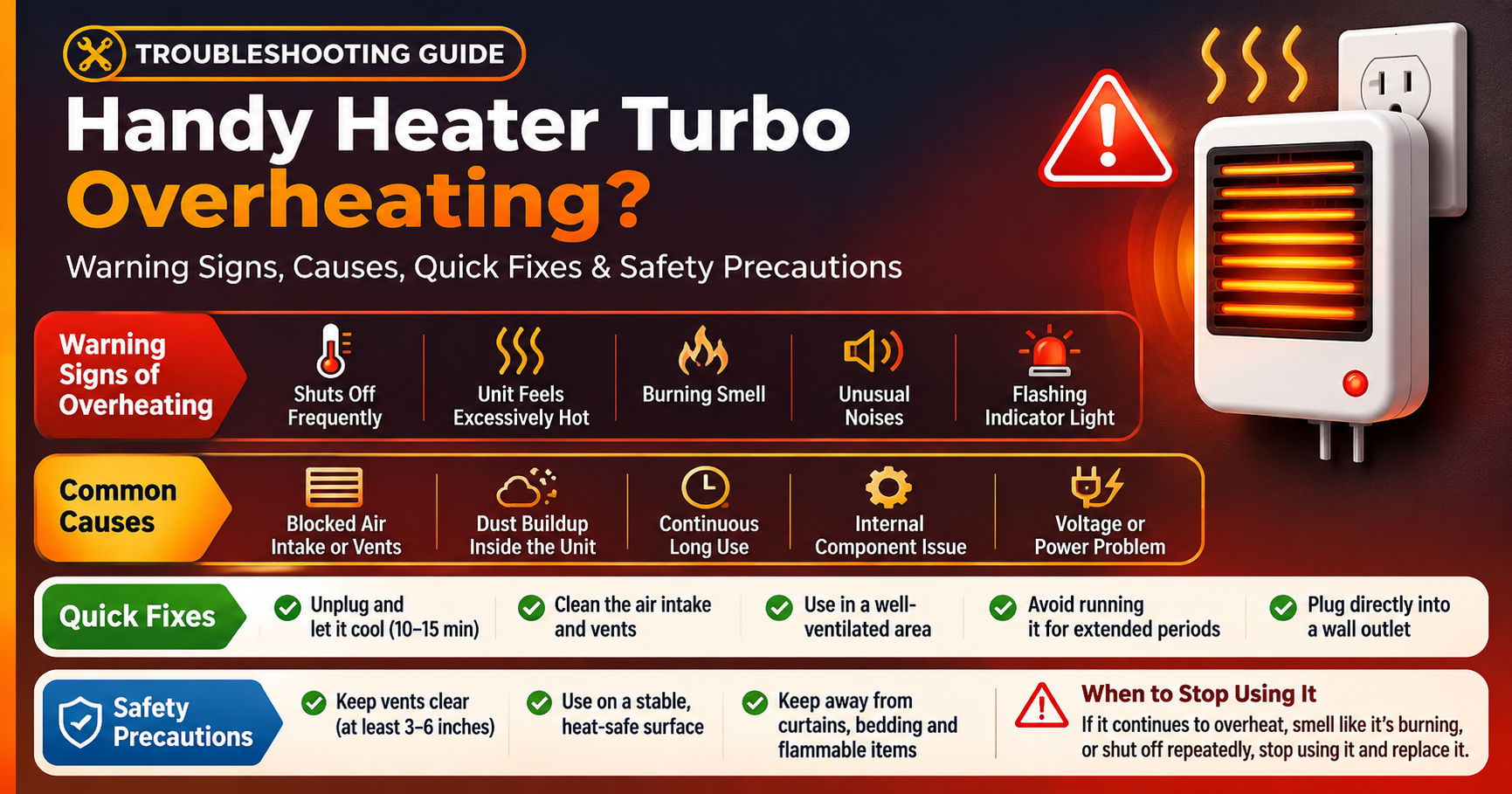
- Overheat protection: Cuts power if internal temperatures get too high.
- Certified safety marking: Look for recognized safety certification from an independent testing body.
- Cool-touch housing: Reduces burn risk on contact.
- Sturdy plug and cord: Avoid cheap, thin cables that can overheat.
Always plug a portable heater directly into a wall outlet rather than an extension cord or power strip, keep it at least three feet away from curtains, bedding, and furniture, and never leave it running unattended or while you sleep unless the manufacturer specifically allows it.
Noise Level
Both types use a fan, so neither is silent. Ceramic heaters usually run quieter because their fans are designed for steady, lower-speed airflow. Budget fan heaters can produce a noticeable hum or rattle, especially on the highest setting. If you plan to use the heater in a bedroom or home office, check the decibel rating, and look for a “quiet” or “low-noise” mode.
Energy Consumption and Running Cost
Most portable heaters in both categories top out at 1500 watts in regions with standard household circuits, while some markets offer models up to 2000 watts. A 1500-watt heater uses 1.5 kilowatt-hours of electricity for every hour it runs on its highest setting. Multiply that by your local electricity rate to estimate cost per hour.
The important point is that a heater cannot create more heat than the electricity it consumes. A ceramic heater is not magically cheaper to run than a fan heater at the same wattage. The savings come from features. A good thermostat, a timer, and an eco mode let the heater cycle off once the room reaches the target temperature, so it draws less power over time. Ceramic models more commonly include these smart controls, which can lower your real-world bills.
Simple Ways to Cut Heating Costs
- Heat only the room you are using and keep the door closed.
- Use the thermostat instead of running on high continuously.
- Seal drafts around windows and doors.
- Use a timer to switch off the heater before you leave or go to bed.
- Choose the right wattage for your room size.
Choosing the Right Size for Your Room
A common rule of thumb is roughly 10 watts of heating power per square foot of floor area. A heater that is too weak will run constantly without reaching a comfortable temperature, while an oversized one can overheat a small room and waste energy.

| Room Size | Recommended Power | Example Space |
|---|---|---|
| Up to 80 sq ft | 500 to 750 W | Small bathroom, tiny office |
| 80 to 150 sq ft | 1000 to 1500 W | Bedroom, home office |
| 150 to 250 sq ft | 1500 to 2000 W | Larger bedroom, small living area |
Ceiling height, insulation quality, window size, and your local climate all affect how much heat you really need, so treat these numbers as a starting point.
Durability and Maintenance
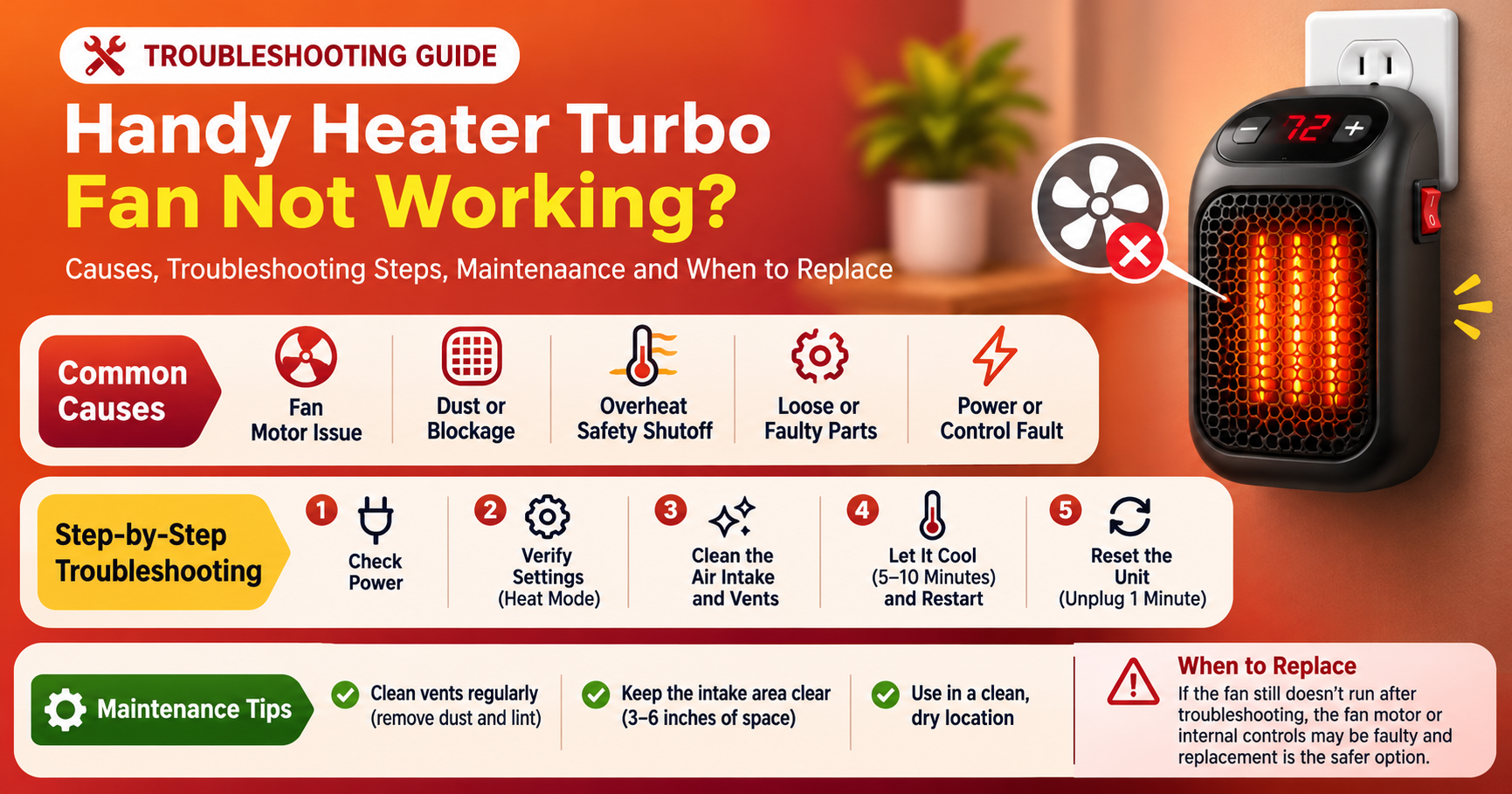
Ceramic heating elements are robust and typically last a long time with normal use. Coil-based fan heaters can work for years too, but exposed coils are more prone to dust buildup and eventual wear. Either way, a little maintenance goes a long way:
- Unplug the heater and let it cool before cleaning.
- Gently remove dust from the grille and intake with a soft brush or vacuum.
- Store it in a dry place during warmer months.
- Stop using it immediately if you notice a damaged cord, a burning smell that does not fade, or unusual noises.
Pros and Cons
Ceramic Portable Heater
Pros: Self-regulating element, generally safer surface temperatures, steady warmth, quieter operation, and more feature-rich models with timers, remotes, and oscillation.
Cons: Higher upfront price than basic fan heaters and slightly heavier on some models.
Fan Heater
Pros: Low price, instant hot air, lightweight, and easy to find.
Cons: Can be noisier, may produce an initial burning-dust smell, offers fewer advanced features, and the exposed element is less forgiving than ceramic.
Which One Is Best for Your Situation?
- Bedroom or nursery area: Ceramic heater, for quieter operation and better safety features.
- Home office or desk area: Ceramic heater, for steady comfort and low noise during calls.
- Bathroom or tiny room, short use: A compact model rated for the environment. Never use a standard heater near water unless it is specifically rated for bathrooms.
- Garage or workshop, occasional use: A basic fan heater can be a budget-friendly fit.
- Households with kids or pets: Ceramic heater with cool-touch housing and tip-over protection.
What to Look for Before You Buy
- Adjustable thermostat: Keeps the room at your chosen temperature.
- Multiple heat settings: Lets you pick low, medium, or high output.
- Oscillation: Spreads warmth across a wider area.
- Timer and remote control: Convenient and helps you save energy.
- Digital display: Makes it easy to monitor and adjust the temperature.
- Warranty: A longer warranty is a sign of manufacturer confidence.
Frequently Asked Questions
Is a ceramic heater better than a fan heater?
For most households, yes. Ceramic heaters tend to offer better safety, quieter operation, and more features. A fan heater is still a reasonable pick when budget is the main concern and use will be occasional.
Which heater uses less electricity?
At the same wattage, they use about the same amount of electricity. Savings come from thermostats, timers, and eco modes, which you will find more often on ceramic models.
Can I leave a portable heater on all night?
It is generally not recommended to leave any portable heater running unattended or while you sleep. If you do use one overnight, choose a model with a timer, tip-over switch, and overheat protection, and follow the manufacturer guidelines.
Do ceramic heaters dry out the air?
Neither type removes moisture from the air, but warming air lowers its relative humidity, which can feel dry. Keeping a bowl of water or a humidifier nearby can help.
Are ceramic heaters safe for children and pets?
They are generally considered safer because of cooler casings and self-regulating elements, but no heater is completely risk-free. Keep any heater out of reach and maintain a safe clearance zone around it.
How long does a portable heater last?
With proper care, a quality heater can last several years. Regular cleaning and avoiding extension cords will extend its service life.
Final Verdict
The ceramic portable heater and the fan heater deliver similar raw heat at the same wattage, but the ceramic type wins on safety, comfort, noise, and smart features. If you will use your heater regularly in a bedroom, office, or family space, a ceramic portable heater is the smarter long-term investment. If you simply need a cheap, quick burst of warmth now and then, a basic fan heater still has its place.
Whichever you choose, match the wattage to your room size, pick a model with solid safety protection, and use the thermostat and timer to keep your energy bills under control. Stay warm and stay safe this winter.