





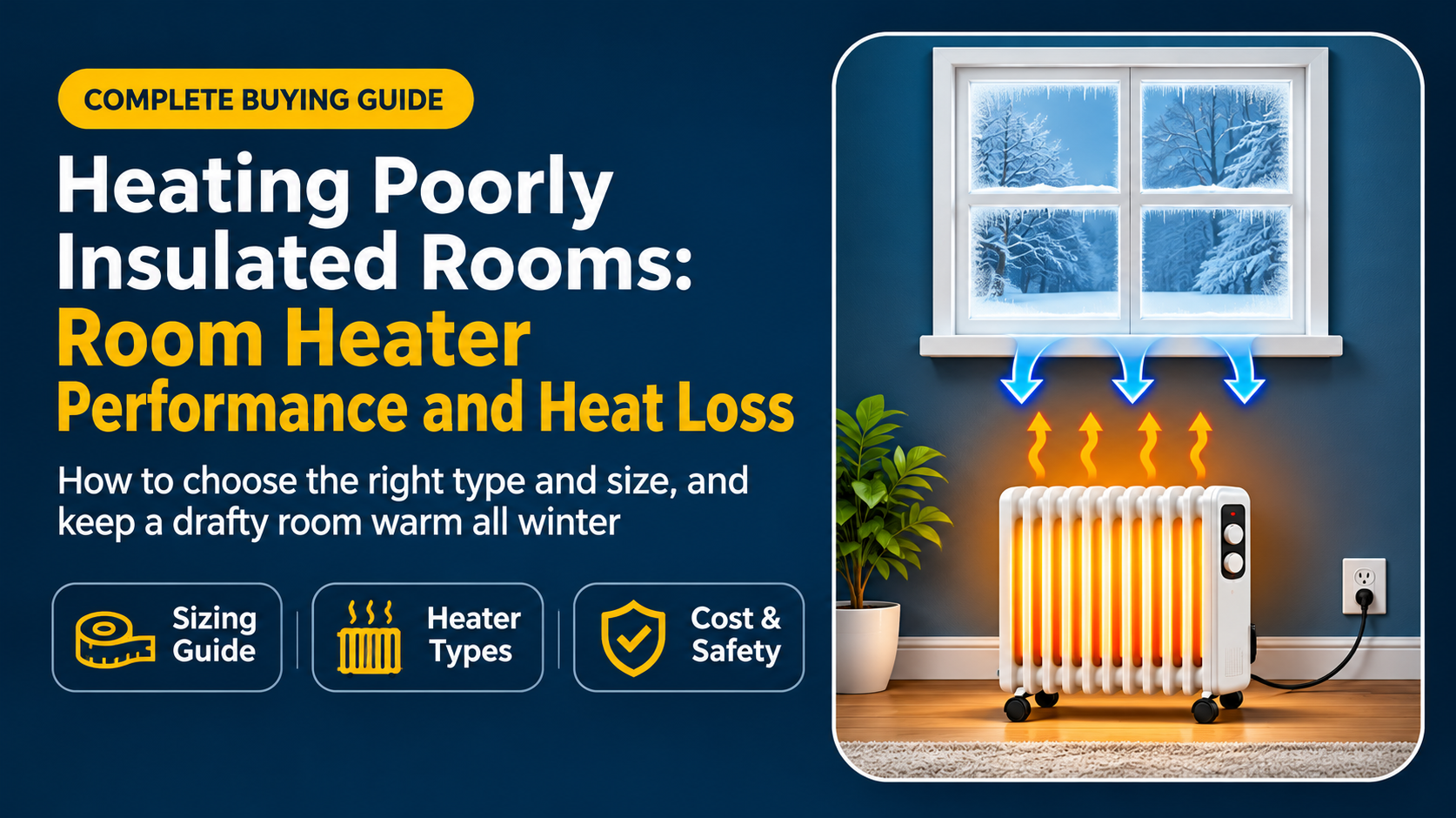

You switch the heater on, turn it up, wait an hour… and the room still feels cold. If that sounds familiar, the heater is probably not the only thing to blame. In a poorly insulated room, warmth escapes through the walls, roof, window glass, floor and every little gap almost as quickly as the heater can make it. The result is a room that never quite warms up and an electricity bill that keeps climbing.
The good news is that this is very fixable. The right room heater for a poorly insulated room, sized correctly, placed sensibly and supported by a few cheap draft-proofing tricks, can turn a freezing space into a comfortable one without wasting energy. This guide explains why these rooms are so hard to heat, how much power you really need, which heater types work best, what they cost to run, and how to use them safely.
Quick answer: For a poorly insulated room, aim for roughly 13–15 watts per square foot (about 140–160 W per m²) of floor area, choose a heater with an adjustable thermostat and tip-over and overheat protection, and seal the biggest drafts first. Oil-filled radiators are best for rooms you heat for hours, ceramic fan heaters are best for fast warm-ups, and infrared (radiant) heaters are best for warming you directly in a drafty spot.
Why a Poorly Insulated Room Feels Cold Even With the Heater On
Heat always flows from warm places to cold places. Insulation simply slows that flow down. When a room has thin walls, single-pane windows, an uninsulated ceiling or floor, and gaps around doors and frames, the heat you add leaks out quickly. Every heater has a point where the heat it produces equals the heat the room loses, and in a leaky room that balance point sits at a much lower temperature than you would like.
There is a second problem: comfort is not only about air temperature. Cold walls, windows and floors pull warmth away from your body by radiation, so you can feel chilly even when a thermometer says the air is a reasonable temperature. That is why standing near a cold window feels so unpleasant, and why a heater that warms you directly can feel better than one that only heats the air.
This also explains why simply buying a bigger heater is not always the best answer. A larger heater can overcome the losses, but you pay for every watt that escapes. The most effective approach combines a correctly sized heater with cheap fixes that reduce the heat loss.
What to Look for in a Room Heater for a Poorly Insulated Room
1. Enough Power (Wattage)
A common rule of thumb is about 10 watts per square foot (roughly 108 W per m²) for a well-insulated room with a standard 8-foot ceiling. A poorly insulated room loses heat faster, so it needs more, typically 25–50% extra. That works out to about 12.5–15 watts per square foot.
| Room size | Well-insulated room | Poorly insulated room |
|---|---|---|
| 100 sq ft (about 9 m²) | about 1,000 W | 1,250–1,500 W |
| 150 sq ft (about 14 m²) | about 1,500 W | 1,900–2,250 W |
| 200 sq ft (about 19 m²) | about 2,000 W | 2,500–3,000 W |
| 300 sq ft (about 28 m²) | about 3,000 W | 3,750–4,500 W |
Add a little extra if the room has high ceilings, large windows, an exterior corner, a north-facing wall (in the northern hemisphere), or a bare floor above an unheated space such as a garage or basement.
Good to know: Many portable heaters are limited to about 1,500 W when used on a standard 120 V household outlet. If your room needs more than that, use two heaters plugged into separate circuits, or look at a fixed or hard-wired heater installed by a qualified electrician. In countries with 220–240 V supply, single heaters with higher ratings are common, but always check the circuit and plug rating first.
2. An Adjustable Thermostat and Timer
A thermostat lets the heater switch off when the room reaches your chosen temperature and back on when it drops, which prevents overheating and saves electricity. In a leaky room the heater will cycle more often, so a reliable thermostat matters. A timer is just as useful: you can warm the room before you get home or wake up, instead of running the heater all day.
3. Adjustable Power Settings
Two or three heat settings let you use full power to warm the room quickly and then drop to a lower setting to hold the temperature. A heater with only one fixed output is less flexible and often less efficient in practice.
4. Safety Features and Certification
- Tip-over switch: shuts the heater off automatically if it is knocked over.
- Overheat protection: cuts power if internal parts get too hot.
- Cool-touch housing: especially useful around children and pets.
- Recognised safety mark: look for marks such as UL or ETL in North America, or CE or UKCA in Europe and the UK, and buy from reputable sellers.
5. Noise, Size and Portability
If the heater will run in a bedroom or home office, noise matters. Oil-filled and infrared heaters are generally quiet, while fan heaters produce fan noise. Wheels, a carry handle and a long enough power cord (used without an extension cord) make a heater easier to position well.
Heater Types Compared: What Works Best in a Drafty Room?
Almost all electric room heaters turn nearly 100% of the electricity they use into heat, so a 1,500 W oil-filled radiator and a 1,500 W ceramic fan heater cost about the same per hour at full power. The real differences are how they deliver the heat and how it feels in a room that loses warmth quickly.
Oil-Filled Radiators
These contain heated oil inside metal fins. They take a while to warm up, but they keep radiating heat for a long time, even after the element cycles off. That steady, quiet warmth suits bedrooms, studies and living spaces that are heated for several hours. Because they warm both the air and nearby surfaces, they cope reasonably well with slow heat loss. The downside is the slow start and the weight.
Ceramic Fan Heaters
A fan pushes air over a hot ceramic element, giving fast warmth within minutes. They are compact, affordable and good for quick top-ups. In a very drafty room, though, the warm air they blow around can leak out quickly, and the fan adds noise. They work well as a boost for a small room, but are not always the best choice for all-day heating.
Infrared (Radiant) Heaters
Infrared heaters warm people and objects directly, much like sunshine, rather than relying on heating all the air. That makes them a smart choice in a drafty room, a garage workshop or a home office where you only need to be comfortable in one spot. The trade-off is that the warmth is directional and stops quickly when the heater is off, and it will not raise the temperature of the whole room as evenly.
Convection Panel Heaters
Panel heaters warm the air that flows through them and are often slim, quiet and available as freestanding or wall-mounted models. They are fine for rooms with moderate heat loss and steady use, but they can struggle in rooms with strong drafts because warm air rises and escapes before the room reaches a comfortable temperature.
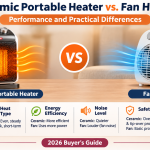
| Heater type | Best for | Watch out for |
|---|---|---|
| Oil-filled radiator | Bedrooms and rooms heated for many hours | Slow warm-up, heavy to move |
| Ceramic fan heater | Fast warm-ups in small rooms | Fan noise, warm air escapes in drafty spaces |
| Infrared / radiant heater | Spot heating at a desk, workshop or seating area | Directional warmth, no heat storage |
| Convection panel heater | Quiet, steady heating in moderately leaky rooms | Struggles against strong drafts |
Avoid unvented fuel-burning heaters indoors. Kerosene, propane and similar heaters that are not designed for indoor use can release carbon monoxide, a dangerous gas you cannot see or smell. In a sealed-up room the risk is even higher. Stick to electric heaters, or to fuel-burning heaters that are properly vented and approved for indoor use.
Which Heater Is Best for Your Situation?
- Cold bedroom: an oil-filled radiator with a thermostat and timer, switched on shortly before bedtime, gives quiet, steady warmth.
- Drafty home office: a small infrared or ceramic heater aimed at your desk keeps you comfortable without trying to heat the whole room.
- Large, leaky living room: use a higher-output oil-filled radiator, or two heaters on separate circuits, and prioritise draft-proofing.
- Rarely used spare room: a ceramic fan heater gives quick warmth when you need it, without waiting for an oil-filled unit to warm up.
- Converted garage, attic or extension: insulate where you can first, then use a radiant or oil-filled heater sized for the larger heat loss.
Fix the Leaks First: Cheap Ways to Make Any Heater Work Better
Before spending more on a bigger heater, spend a little on stopping the heat from escaping. Even simple changes make a noticeable difference, and many are rental-friendly.
- Treat the windows. Window insulation film is cheap and easy to fit, and heavy lined or thermal curtains add another barrier. Keep them closed at night, and open them on sunny days to let free heat in.
- Stop door drafts. A draft stopper or door sweep along the bottom of the door blocks the cold air that pours in at floor level.
- Cover bare floors. A thick rug, ideally with an underlay, makes the floor feel warmer and reduces heat loss through boards or concrete.
- Seal small gaps. Use weatherstripping around window and door frames, and caulk or foam sealant around cracks, pipes and skirting boards. To find drafts, hold a thin strip of tissue near frames and sockets on a windy day and watch for flutter.
- Rearrange the room. Move your bed or sofa away from cold exterior walls, and keep the door closed so the heat stays where you need it.
If you own the property, loft or ceiling insulation, wall insulation and double glazing are the long-term upgrades that cut heat loss the most. They cost more up front, but they lower your heating costs year after year and make every heater you use more effective.
How to Heat a Poorly Insulated Room Efficiently: Step by Step
- Close the room off. Shut the door and block any gap beneath it so you are only heating one space.
- Warm it up before you need it. Use the timer to start 30–60 minutes ahead rather than blasting the heater at the last minute.
- Start high, then turn down. Use full power to reach your target temperature, then switch to a lower setting or let the thermostat hold it.
- Set a sensible temperature. Around 68°F (20°C) suits most living spaces, and a cooler 60–65°F (16–18°C) is often comfortable for sleeping. Each degree lower reduces running costs.
- Place the heater well. Put it on a flat, hard floor with clear space around it (see the safety section below), ideally on the cooler side of the room so the warmth spreads through the space.
- Heat the person, not just the room. Wear layers, use a blanket and wear warm socks. It is far cheaper than raising the temperature.
Safe Placement and Use
- Keep 3 feet (1 metre) clear of curtains, bedding, furniture, clothes, paper and anything else that can burn.
- Plug directly into a wall outlet. Avoid extension cords and power strips, which can overheat with high-wattage appliances.
- Never cover the heater or use it to dry clothes, towels or shoes.
- Do not leave it running unattended or while you sleep unless the manufacturer’s manual says it is designed for that, and use a timer wherever possible.
- Use it on a flat, stable surface, away from water and damp areas such as bathrooms.
- Inspect the cord and plug regularly. Stop using the heater if you see damage, scorch marks or a plug that gets very hot.
- Test your smoke alarms regularly, and add a carbon monoxide alarm if you use any fuel-burning appliance in the home.
Always follow the manufacturer’s instructions for your specific model, as they take priority over general advice.
How Much Does It Cost to Run a Room Heater?
The formula is simple: power in kilowatts × hours of use × your electricity price per kWh. A 1,500 W heater uses 1.5 kWh for every hour it runs at full power. Using an example price of $0.16 per kWh (check your own bill, as prices vary widely), the numbers look like this:
| Heater rating | Cost per hour | 6 hours a day | 6 hours a day for 30 days |
|---|---|---|---|
| 500 W | $0.08 | $0.48 | $14.40 |
| 1,000 W | $0.16 | $0.96 | $28.80 |
| 1,500 W | $0.24 | $1.44 | $43.20 |
| 2,000 W | $0.32 | $1.92 | $57.60 |
These figures assume the heater runs at full power the whole time. In practice, a thermostat switches the heater off once the room is warm, so real usage is usually lower. In a poorly insulated room, though, the heater has to run for longer, which is exactly why draft-proofing pays for itself.
Be wary of marketing that claims a particular electric heater is “energy saving” or “low consumption.” Since nearly all of the electricity becomes heat, the real savings come from a good thermostat, a sensible schedule, heating only the space you use, and reducing heat loss. If you plan to heat a room for many hours every winter, a heat pump or mini-split system can deliver the same warmth for a fraction of the electricity, although it costs more to install.
Common Mistakes to Avoid
- Buying a heater that is too small, so it runs flat out and still never reaches a comfortable temperature.
- Ignoring the drafts, which wastes much of the heat you pay for.
- Heating with the door open, turning one room into a heater for the whole house.
- Using an extension cord with a high-wattage heater.
- Placing the heater too close to curtains, beds or sofas.
- Leaving it on all day at maximum power instead of using the thermostat and timer.
Quick Pick Guide
| If you want… | Choose | Also do |
|---|---|---|
| Steady warmth for hours | Oil-filled radiator | Use the timer to pre-heat the room |
| Fast heat in a small room | Ceramic fan heater | Close the door and block the gap |
| Warmth at your desk or seat | Infrared heater | Seal window drafts nearby |
| Quiet, low-maintenance heating | Convection panel heater | Add thermal curtains |
| A bigger or very leaky room | Higher-output heater, or two on separate circuits | Insulate and draft-proof first |
Frequently Asked Questions
What is the best room heater for a poorly insulated room?
There is no single best model, but the best choice is a correctly sized heater with a thermostat. Oil-filled radiators suit long periods of heating, ceramic fan heaters suit quick warm-ups, and infrared heaters suit warming yourself in a drafty spot. Whichever you choose, sealing drafts will improve the results.
How many watts do I need for a poorly insulated room?
Plan on about 12.5–15 watts per square foot (roughly 135–160 W per m²), and a little more for high ceilings, large windows or exterior corner rooms. A 150 sq ft room therefore needs about 1,900–2,250 W.
Are oil-filled radiators good for drafty rooms?
They are a solid choice for steady, quiet heat, especially if you can reduce the drafts. They warm up slowly, so use a timer to pre-heat the room. For spot warmth in a very drafty area, an infrared heater can feel more effective.
Is it cheaper to heat one room than the whole house?
Often yes, because you only heat the space you are using. However, electric resistance heaters can cost more per unit of heat than some other fuels, so the answer depends on your energy prices and heating system. Heating one room with the door closed, for the hours you use it, is usually the most efficient way to use a room heater.
Can I leave a room heater on overnight?
Many manufacturers advise against leaving heaters running unattended or while you sleep. If you must heat a bedroom, warm it before bed with a timer, keep clearance around the heater, plug it directly into the wall and follow the manual for your model.
Will a room heater cause damp or mold in a cold room?
Electric heaters do not add moisture, but warm air holds more moisture and can condense on cold walls and windows in a poorly insulated room. Ventilate the room regularly, avoid drying laundry in it, and consider a dehumidifier if you see condensation or musty smells.
Does a room heater dry out the air?
A heater does not remove moisture, but warming air lowers its relative humidity, which can make it feel drier. Keeping a comfortable (not excessive) temperature and ventilating the room can help.
Final Thoughts
Heating a poorly insulated room is a balance between making heat and keeping it. Start by choosing a heater with enough wattage for the space, with a reliable thermostat and proper safety features. Match the type to how you use the room: oil-filled for long, steady warmth, ceramic for quick boosts and infrared for warming yourself directly. Then spend a little time and money sealing the biggest drafts, because every bit of heat you keep in is heat you do not have to pay for.
With the right heater, sensible habits and a few simple fixes, even a drafty room can become a comfortable place to sleep, work and relax through the coldest months.