

A cold office is more than uncomfortable. When your hands are stiff and your feet are freezing, typing slows down, concentration drops, and the workday feels longer than it is. Central heating is often set by building management, which leaves you with one practical option: a portable electric heater for office use.
The right heater warms your personal space quickly, runs quietly during calls, and uses power sensibly. The wrong one can be noisy, weak, or even unsafe. This guide covers heater types, how to choose the right wattage, key safety features, running costs, and practical tips so you can buy with confidence.
Table of Contents
- Why use a portable electric heater in the office?
- Types of office heaters compared
- How to choose the right wattage
- Key features to look for
- Safety checklist
- Running cost and energy saving
- Office etiquette and workplace rules
- Best use cases: which heater fits your situation
- Common mistakes to avoid
- Frequently asked questions
- Final verdict
1. Why Use a Portable Electric Heater in the Office?
- Personal control: Shared thermostats rarely suit everyone. A heater lets you set your own comfort zone.
- Better focus: Many people find it easier to concentrate when they are comfortably warm rather than cold.
- Targeted warmth: Heating just your desk area can be cheaper than raising the temperature of an entire floor.
- Easy to move: Compact models can go from desk to meeting room to home with a single handle.
- Plug and play: No installation is needed. Plug it into a wall outlet and you are ready.
2. Types of Office Heaters Compared
Not every heater suits an office. Noise, size, and how the heat is delivered matter far more at work than at home. Here are the four most common types.
Ceramic Heaters
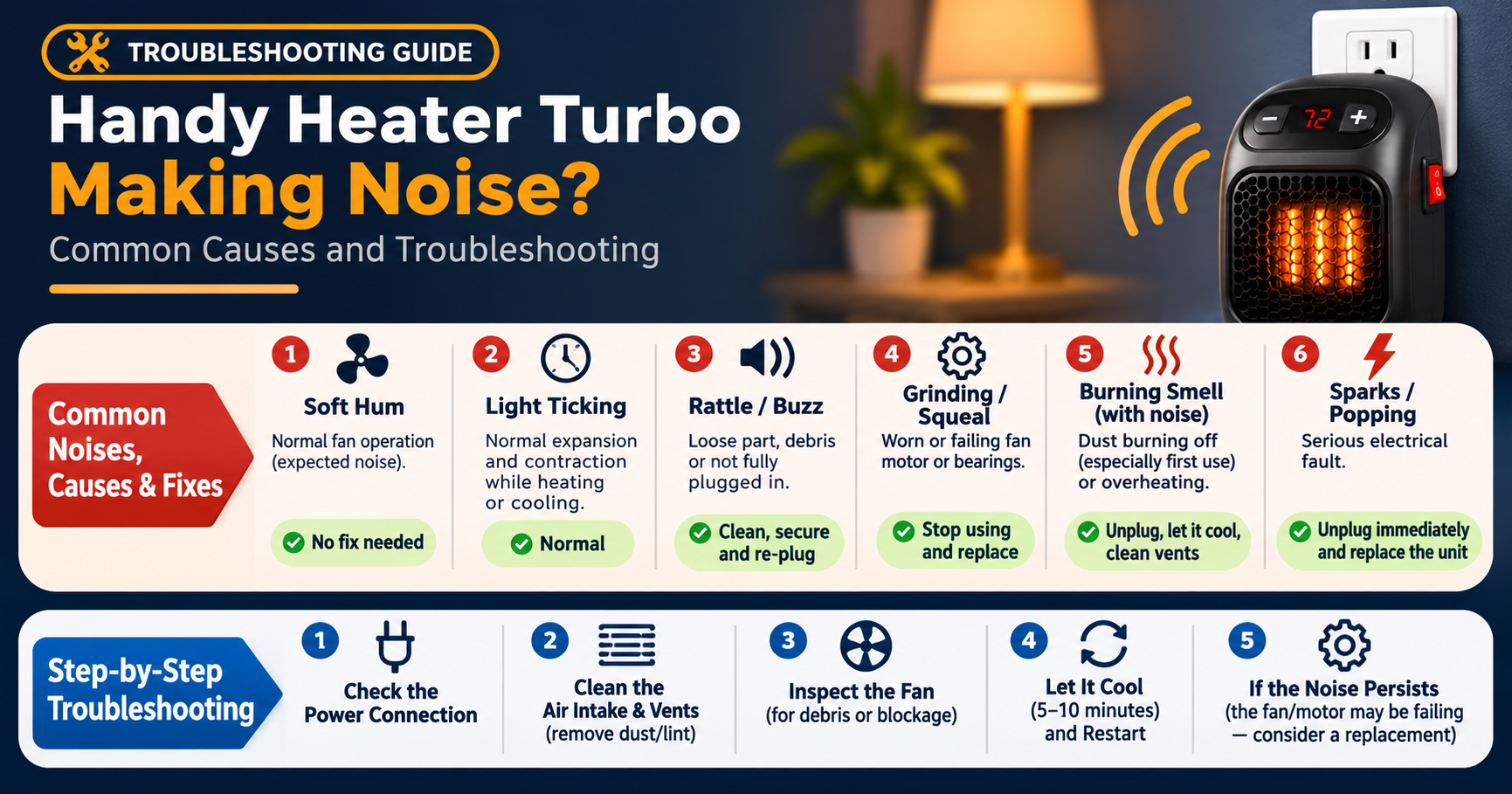
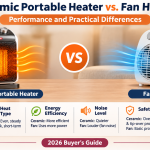
Ceramic heaters use a heating element that warms up quickly and a fan to push warm air out. They are compact, often feature thermostats and oscillation, and suit most cubicles and small offices. The fan produces some sound, so check noise levels if your work involves frequent calls.
Oil-Filled Radiator Heaters
These heaters warm sealed oil, which then radiates steady heat. They take longer to start but stay warm after switching off and are very quiet because there is no fan. They are heavier and bulkier, so they suit private offices where you can leave them in one place.
Infrared (Radiant) Heaters
Infrared heaters warm objects and people directly rather than heating the air. That makes them effective for under-desk use, where you want warm feet and legs without heating the whole room. Heat is felt almost immediately, but it only reaches what is in front of the unit.
Fan / Convection Heaters
Simple, lightweight, and often the most affordable. They warm a small area fast but can be louder than other types and may dry out the air. They are best as a short-term solution or for small spaces.
| Type | Heat-up speed | Noise | Best for |
|---|---|---|---|
| Ceramic | Fast | Low to moderate | Cubicles, small offices |
| Oil-filled | Slow | Very quiet | Private offices, long hours |
| Infrared | Instant (direct) | Very quiet | Under-desk foot warming |
| Fan / convection | Fast | Moderate to loud | Short-term, tight budgets |
3. How to Choose the Right Wattage
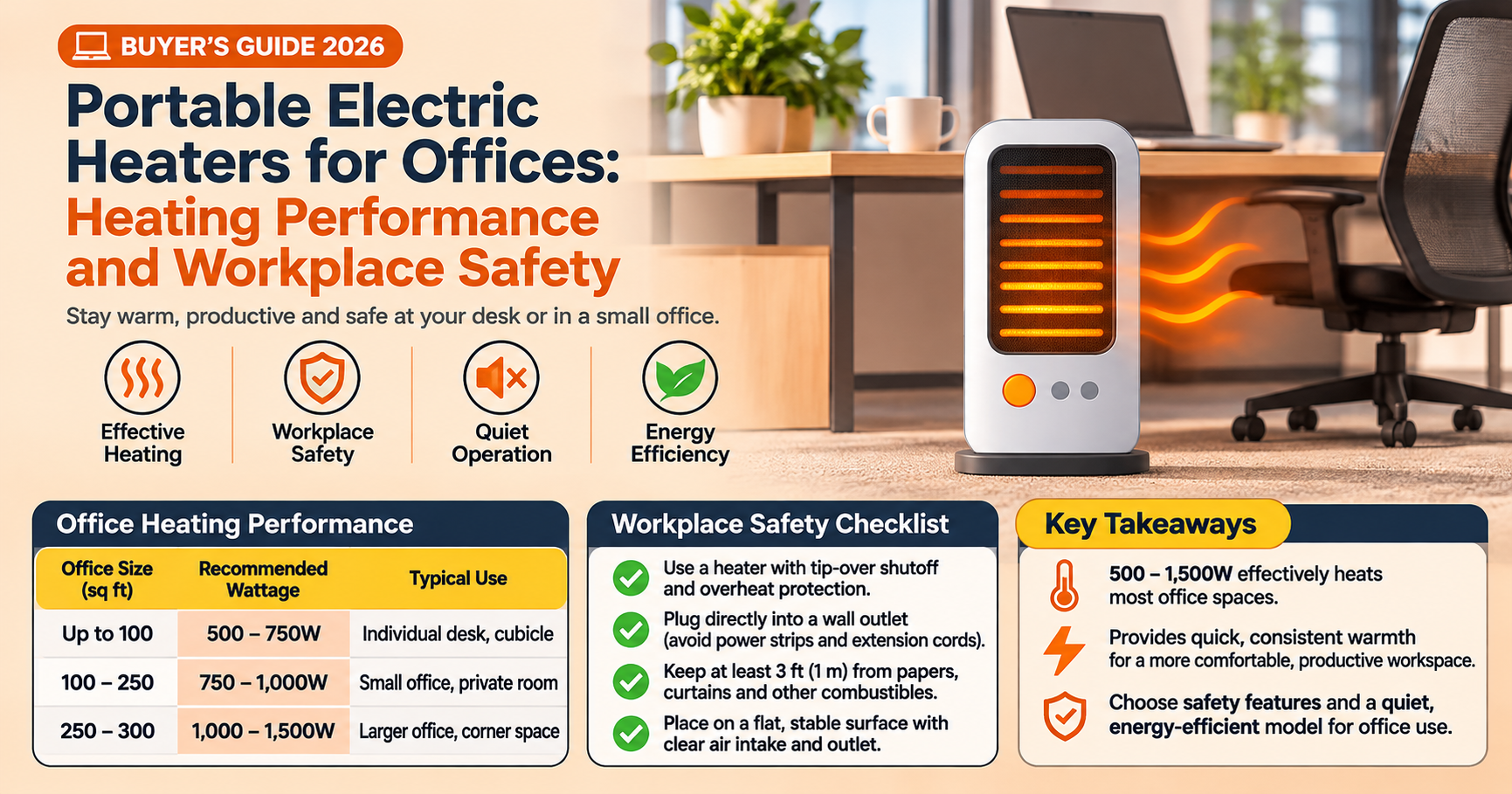
Wattage is the heater’s power rating. Higher wattage produces more heat but also draws more electricity. A common rule of thumb is about 10 watts per square foot of space, though insulation, ceiling height, and outside temperature all change the real result.
- Under-desk or personal use: Smaller heaters in the low hundreds of watts are usually enough to keep your feet and legs warm.
- Cubicle: Around 750W to 1,000W is a practical range.
- Small private office: 1,500W is the standard maximum for most household-style outlets and suits many closed rooms.
4. Key Features to Look For
- Adjustable thermostat: Holds a steady temperature instead of blasting continuously, which improves comfort and saves energy.
- Multiple heat settings: Low, medium, and high modes let you adjust through the day.
- Quiet operation: Look for a stated noise level. Lower numbers are better for open offices and video calls.
- Timer: Auto shut-off after a set time helps prevent leaving the heater on after you leave.
- Compact footprint: Measure your space. Under-desk models need to fit around chair legs and cables.
- Carry handle and cord length: A comfortable handle and a reasonable cord make moving it easy. Avoid using extension cords with heaters.
- Cool-touch housing: Reduces the risk of burns if someone brushes against it.
- Remote control: Convenient if the heater sits across the room, though it is not essential for a desk unit.
5. Safety Checklist
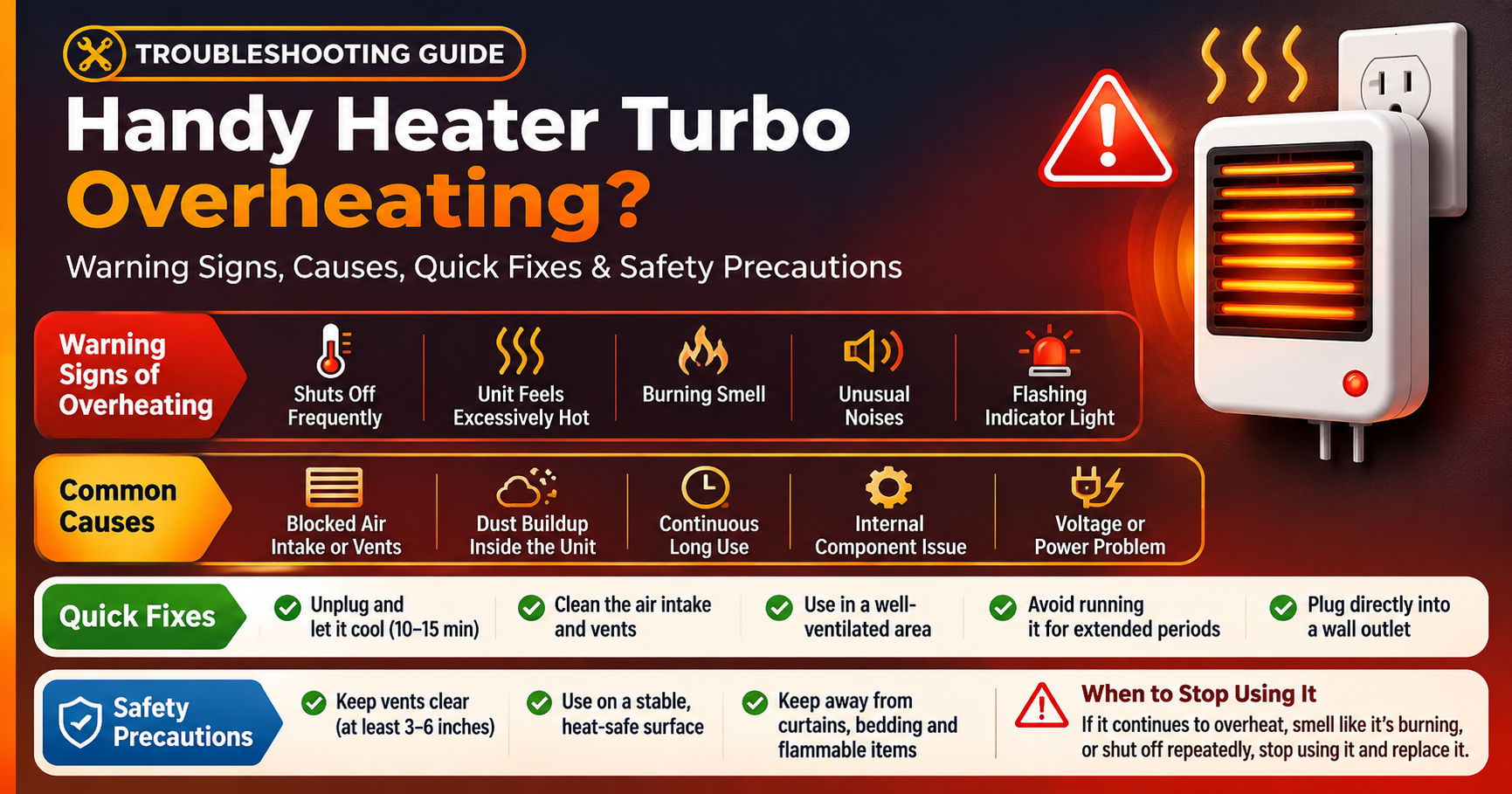
Heaters are one of the more common causes of home and workplace fires, so safety features matter more than extra bells and whistles. Before buying, confirm the following.
• Plug directly into a wall outlet, never into an extension cord or power strip.
• Keep at least three feet (about one meter) of clear space around the heater.
• Keep paper, fabric, and cardboard away from it.
• Never leave it running unattended or while you sleep at your desk.
• Turn it off and unplug it at the end of the day.
6. Running Cost and Energy Saving
You can estimate running cost with a simple formula: kilowatts x hours x electricity rate. A 1,500W heater is 1.5 kW. If it runs for 8 hours at full power and your rate is $0.15 per kWh, the cost is 1.5 x 8 x 0.15 = $1.80 per day. A thermostat cycling on and off typically uses far less than continuous full power.
To keep costs down:
- Use the thermostat setting rather than running on high all day.
- Close the door or windows to hold heat in.
- Use a smaller heater for your feet instead of heating the whole space.
- Wear an extra layer. A light sweater lets you use a lower setting.
- Seal gaps under doors if drafts are a problem.
7. Office Etiquette and Workplace Rules
Before bringing a heater to work, check your company policy. Some buildings restrict personal heaters because of fire codes or electrical load. Ask your facilities or HR team, and consider these points:
- Choose a quiet model so you do not disturb coworkers.
- Do not point the heater toward walkways where people may trip over cords.
- Be mindful that others may feel too warm, and share the space considerately.
8. Best Use Cases: Which Heater Fits Your Situation?
| Your situation | Recommended type | Why |
|---|---|---|
| Cold feet at a desk | Infrared under-desk heater | Warms legs directly and quietly |
| Open-plan cubicle | Compact ceramic heater | Quick heat with a small footprint |
| Closed private office | Oil-filled radiator | Steady, silent room warmth |
| Frequent video calls | Oil-filled or infrared | No fan noise on your microphone |
| Tight budget | Basic fan heater | Lowest upfront cost |
9. Common Mistakes to Avoid
- Buying on wattage alone: More power does not help if the heater type does not suit your space.
- Ignoring noise ratings: A loud heater quickly becomes annoying in a shared office.
- Skipping safety certification: Uncertified products may lack proper protection.
- Using extension cords: Heaters draw a lot of current and can overheat thin cords.
- Placing it too close to your legs or furniture: Keep a safe distance to prevent burns and damage.
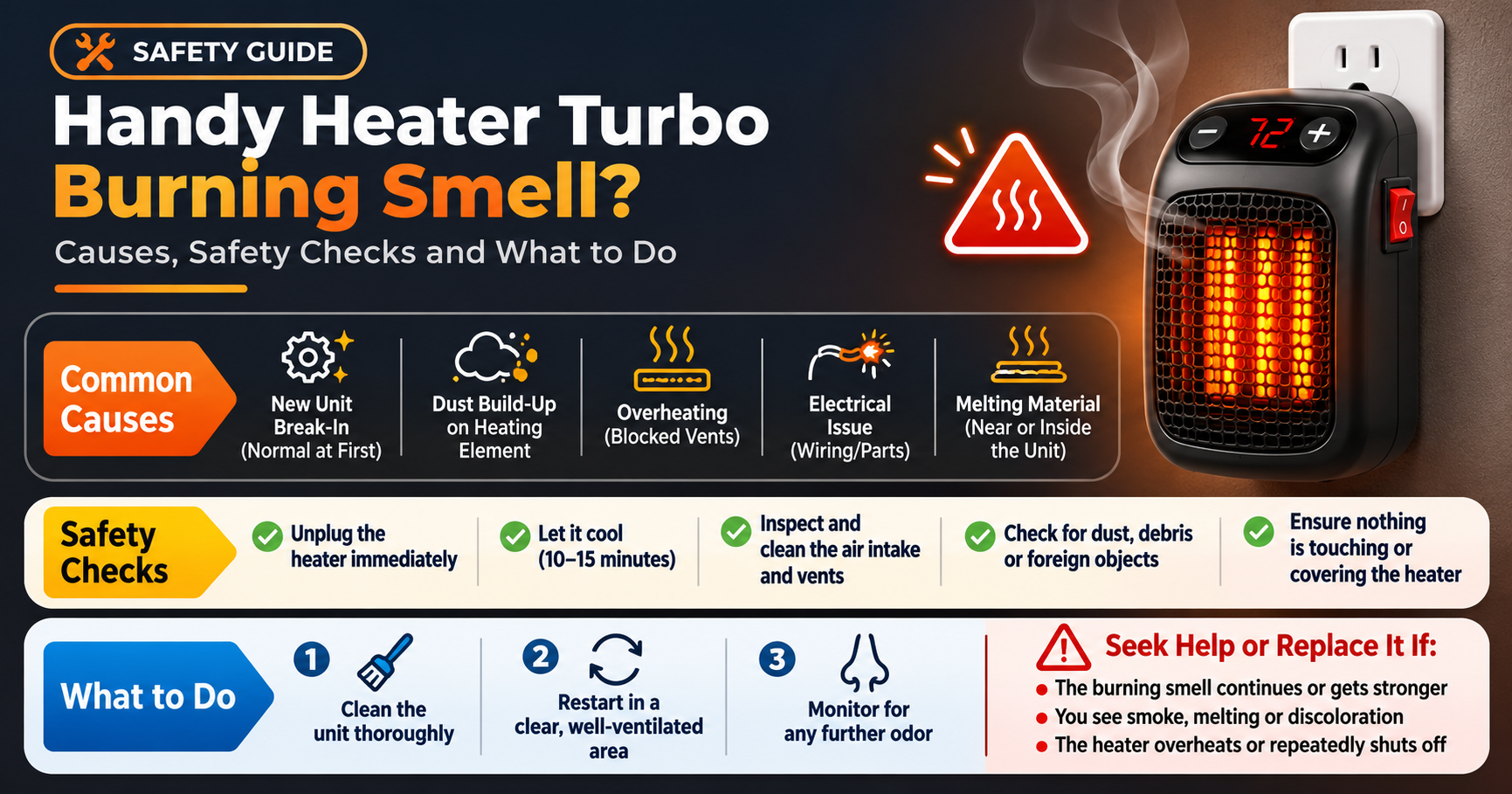
- Never cleaning it: Dust buildup reduces efficiency and can produce an odor. Unplug and wipe it down periodically.
10. Frequently Asked Questions
What is the best portable electric heater for a small office?
For most small offices, a ceramic heater with an adjustable thermostat and tip-over protection is a strong all-round choice. If silence matters more than speed, an oil-filled radiator is a better option.
Is it safe to leave a heater on while I am away from my desk?
No. Even heaters with safety features should be turned off and unplugged when you leave the area. Use a timer if you want automatic shut-off.
How much electricity does an office heater use?
A 1,500W heater at full power uses 1.5 kWh per hour. Thermostat-controlled operation usually lowers actual consumption because the heater cycles off once the temperature is reached.
Can I plug a heater into a power strip?
It is not recommended. Most manufacturers advise plugging directly into a wall outlet because heaters draw high current that can overload strips and extension cords.
Are under-desk heaters effective?
Yes, for personal warmth. Infrared and compact ceramic models warm your legs and feet directly, which often makes you feel warmer than heating the whole room would.
Which type is quietest?
Oil-filled radiators and infrared heaters are generally the quietest because they have no fan, or only a very gentle one.
Do I need permission to use a heater at work?
Many workplaces have rules on personal electrical appliances. Check with your facilities team or manager before bringing one in.
Final Verdict
The best portable electric heater for office use is the one that matches your space, your noise tolerance, and your workplace rules. Choose a ceramic heater for fast, flexible warmth, an oil-filled radiator for silent all-day comfort in a private room, or an infrared under-desk model for targeted foot warming. Whatever you pick, prioritize an adjustable thermostat, tip-over protection, overheat shut-off, and a recognized safety certification.
Use the checklist in this guide, compare two or three models against your needs, and you will be warm, productive, and safe all winter long.