Cold bathroom mornings are no fun. Stepping out of a warm shower into freezing air can feel miserable, especially in winter. A portable electric heater for bathroom use solves this quickly: it warms a small room in minutes, needs no installation, and can be moved or stored when the season ends. But a bathroom is a wet space, so choosing the wrong heater can be risky. This guide explains how to pick a safe, efficient model and use it correctly.
Why Use a Portable Heater in the Bathroom?
- Quick warmth: Small rooms heat up in 5 to 10 minutes.
- No installation: Plug in and use. Great for renters.
- Portable: Move it to the bedroom or nursery when needed.
- Lower cost: Heating only the room you use saves energy compared with warming the whole home.
- Less moisture and mould: Warm air helps the room dry faster after showers.
Types of Portable Bathroom Heaters
1. Ceramic Fan Heaters
These use a ceramic heating element and a fan to push warm air into the room. They heat very fast and are compact, which makes them the most popular choice for bathrooms. The fan makes some noise, but good models are fairly quiet.
2. Infrared (Radiant) Heaters
Infrared heaters warm people and objects directly rather than the air. You feel warmth almost instantly, and they run silently. They are ideal if you want heat right where you stand, such as near the sink or mirror.
3. Panel and Oil-Filled Heaters
These give gentle, steady heat and stay warm after switching off. They take longer to warm up, so they suit larger bathrooms or people who spend long periods inside, but they are heavier and slower for quick use.
Comparison Table
| Type | Heat-up Speed | Noise | Best For | Typical Power |
|---|---|---|---|---|
| Ceramic Fan | Very fast | Low to medium | Small and medium bathrooms | 1000 to 2000 W |
| Infrared | Instant (direct) | Silent | Spot heating, short use | 400 to 1200 W |
| Panel / Oil-Filled | Slow | Silent | Longer stays, bigger rooms | 800 to 2000 W |
Key Features to Look For
IP Rating (Water Protection)
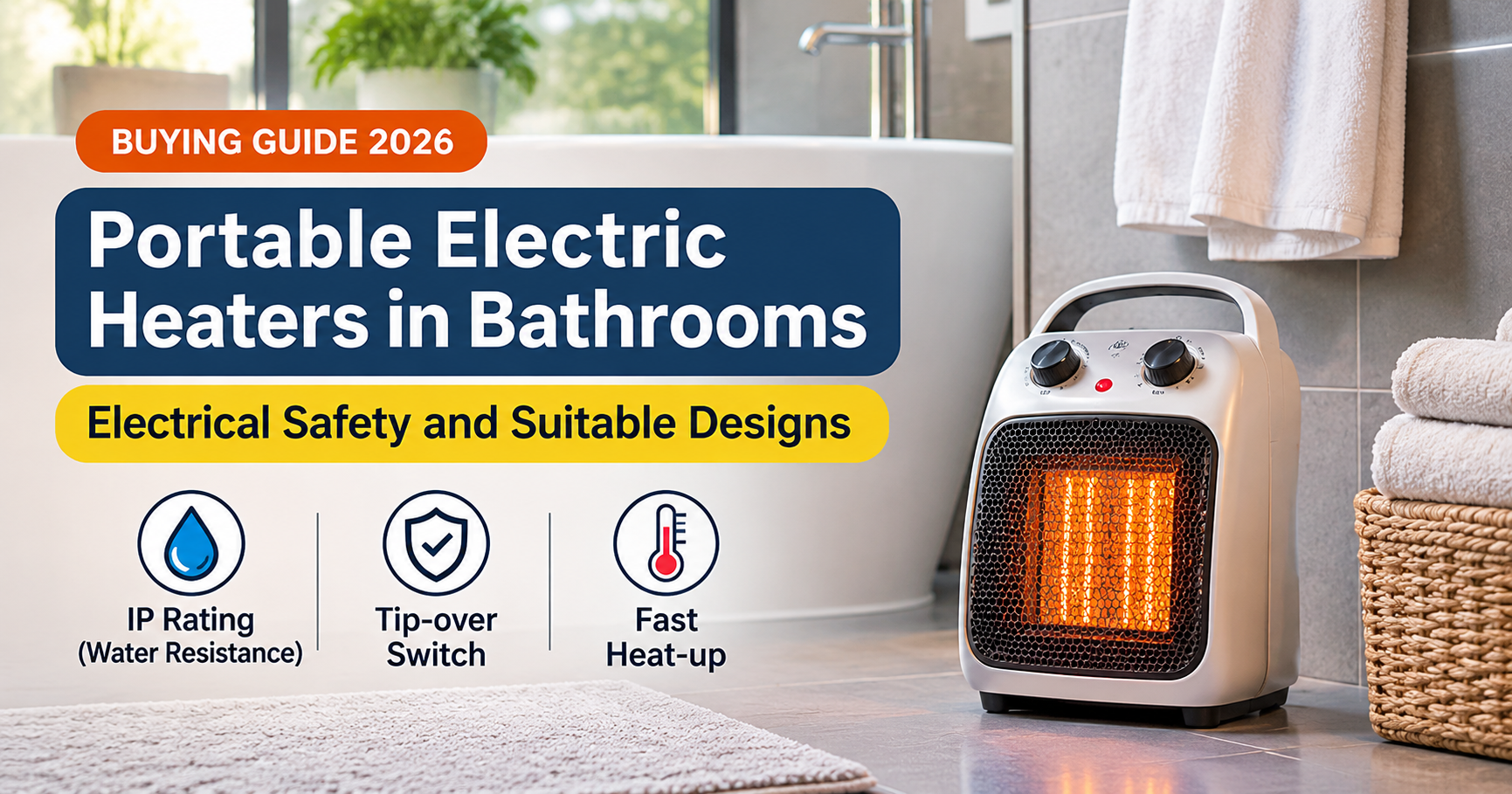
The IP rating shows resistance to dust and water. For bathrooms, look for IPX2 or higher; IPX4 (splash-proof) is better. Remember, an IP rating is not permission to place the heater next to a shower. It only adds a safety margin.
Tip-Over Protection
This switch cuts the power automatically if the heater falls. It is essential in a small, busy room.
Overheat Protection
A thermal cut-off turns the heater off if internal temperature gets too high, preventing damage and fire risk.
Adjustable Thermostat and Heat Settings
A thermostat holds the room at your chosen temperature and saves electricity. Two or three power settings give you flexibility between a light chill and a freezing morning.
Cool-Touch Housing
If children or pets are around, choose a body that stays cool on the outside.
Timer and Remote
A timer prevents the heater from running all day, and a remote lets you switch it on from the bedroom so the bathroom is warm before you walk in.
Power (Wattage) and Room Size
| Bathroom Size | Suggested Wattage |
|---|---|
| Up to 40 sq ft (small) | 800 to 1000 W |
| 40 to 70 sq ft (medium) | 1000 to 1500 W |
| 70 sq ft or more (large) | 1500 to 2000 W |
Where to Place the Heater Safely
- Keep it at least 1 meter (3 feet) from the shower, bathtub and sink.
- Place it on a flat, dry, stable floor, never on a wet surface.
- Plug it into a wall socket protected by a GFCI/RCD where possible. Avoid extension cords.
- Keep towels, clothes and curtains well clear of the heater.
- Never touch or move the heater with wet hands.
Safety Tips Every Buyer Should Know
- Never leave a heater running while you sleep or leave the house.
- Switch it off and unplug it before showering if you cannot keep it a safe distance away.
- Check the cord and plug regularly for damage or heat marks.
- Buy from trusted brands with safety certifications such as CE, UL or BSI marks.
- Clean dust from vents every few weeks.
Are Portable Bathroom Heaters Energy Efficient?
Electric heaters convert almost all the electricity they use into heat, but running costs depend on wattage and use time. A 1500 W heater uses 1.5 kWh per hour. Using a thermostat, a timer, and heating the room for only 15 to 20 minutes before a shower keeps the bill low. Closing the door and window also stops heat escaping.
Common Mistakes to Avoid
- Buying a heater with no water rating.
- Choosing too much or too little power for the room size.
- Using an ordinary extension cord with a high-wattage heater.
- Ignoring tip-over and overheat protection to save a little money.
Frequently Asked Questions
Can I use any portable heater in the bathroom?
No. Use only heaters designed or rated for bathroom or damp-area use, and always keep them away from water.
Which is best for a small bathroom: ceramic or infrared?
Ceramic fan heaters warm the whole small room quickly, while infrared is better for instant spot warmth. For most small bathrooms, a ceramic heater with IPX4 protection is a practical choice.
How many watts do I need?
Roughly 1000 W for a small bathroom and 1500 W for a medium one is enough for most homes.
Is it safe to leave the heater on while showering?
Only if it is correctly rated, placed outside the splash area, and plugged into a protected socket. If in doubt, warm the room first and turn it off before showering.
Do bathroom heaters dry the air?
Heaters raise air temperature, which lets moisture evaporate and helps reduce mould. Good ventilation still matters.
Final Verdict
The best portable electric heater for bathroom use is one that balances safety, speed and size. For most people, a compact ceramic fan heater with IPX4 rating, tip-over switch, overheat protection and thermostat is the smartest choice. If you prefer silence and instant warmth, go for an infrared model. Whatever you pick, place it away from water and use it sensibly, and your bathroom will stay warm and comfortable all winter.
Disclosure: This site may earn a small commission from qualifying purchases at no extra cost to you.