




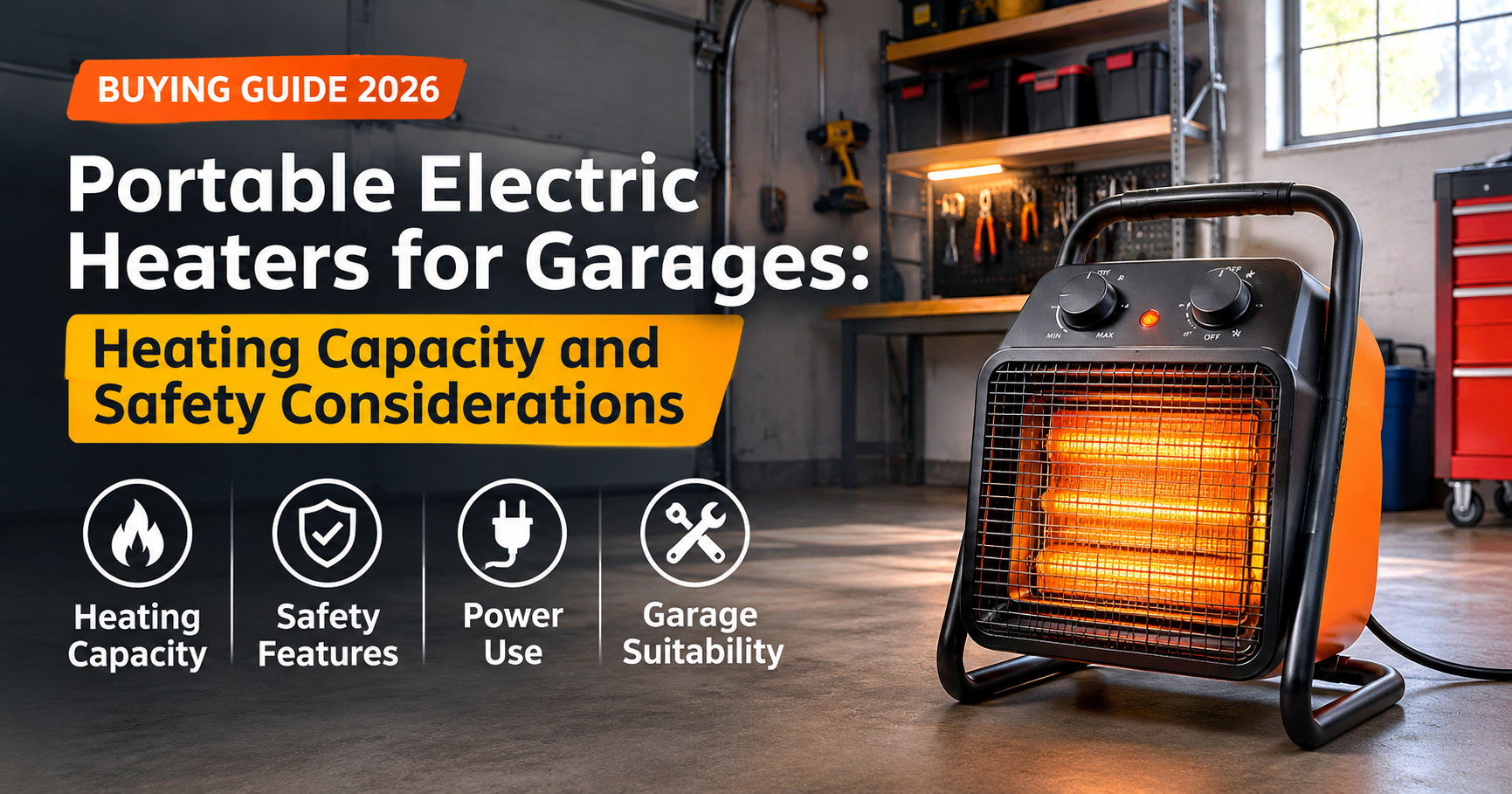

A cold garage is hard to love. Tools feel brittle, glue and paint refuse to cure, and even a quick oil change becomes a test of endurance. A portable electric heater for garage use is the simplest fix: no gas lines, no installation, and no exhaust fumes. You plug it in and it starts working.
The challenge is that garages are not ordinary rooms. They are often uninsulated, leaky and large, and they hold things like fuel and solvents. A heater that works well in a bedroom may struggle, or be unsafe, in a garage. This guide explains what to look for so you can buy with confidence.
Why Choose an Electric Heater for Your Garage?
- No combustion fumes: Electric heaters burn nothing, so there is no carbon monoxide from the heater itself.
- Portable: Move it from the workbench to the car bay in seconds.
- Easy setup: Most models just plug into a standard outlet.
- Precise control: Thermostats and multiple heat settings help you manage comfort and cost.
- Low maintenance: There are no filters, fuel tanks or burners to service.
Types of Portable Electric Garage Heaters

1. Ceramic Fan Heaters
These push air across a hot ceramic element. They heat up quickly and are compact, making them a popular choice for one-car garages. The fan adds some noise and can stir up dust.
2. Infrared (Radiant) Heaters
Infrared models warm objects and people directly rather than the air. That makes them effective in drafty garages, since heat is not lost as quickly. They are ideal for a specific work zone.
3. Oil-Filled Radiators
They heat slowly but stay warm for a long time and run quietly. They are a good match for well-insulated garages where you spend long hours on projects.
4. Quartz Radiant Heaters
Quartz tubes deliver instant warmth. They suit short jobs at a workbench, though they are less effective at heating a whole space.
5. Convection and Forced-Air Heaters (240V)
Larger 240V units provide 4,000 to 7,500 watts and can warm a two- or three-car garage. They often need a dedicated circuit, so an electrician may be required.
How to Choose the Right Wattage
Heater power is measured in watts. A common guideline is roughly 10 watts per square foot for an insulated garage. For poorly insulated spaces, or very cold climates, size up.

| Garage Size | Approx. Area | Suggested Power |
|---|---|---|
| 1-car | 150-200 sq ft | 1,500 W (120V) |
| 2-car | 400-450 sq ft | 3,000-4,000 W (240V) |
| 3-car | 600+ sq ft | 5,000 W or more (240V) |
Note: A standard 120V garage circuit usually handles about 1,500 watts per heater. Running other tools on the same circuit can trip the breaker.
Key Features to Look For
- Adjustable thermostat: Holds the temperature steady and cuts energy waste.
- Tip-over protection: Shuts the heater off if it is knocked over, which is common in busy garages.
- Overheat protection: Cuts power if internal temperatures climb too high.
- Sturdy build: Metal housings and rugged handles handle garage life better than thin plastic.
- Safety certification: Look for a recognized testing mark such as UL or ETL.
- Portability: Wheels or a carry handle matter for larger units.
- Noise level: Fans are louder; oil-filled and infrared models are quieter.
- Timer and remote: Helpful for pre-heating the garage before you walk in.
Garage Heater Safety Tips

Garages often contain gasoline, paint thinner and other flammable materials, so safety deserves extra attention.
- Keep the heater at least three feet from anything that can burn, including cardboard, rags and vehicles.
- Plug it directly into a wall outlet. Avoid extension cords and power strips unless the cord is rated for the load.
- Do not run a heater while spraying paint, using solvents or handling fuel.
- Place it on a flat, stable, non-flammable surface.
- Never leave it running unattended for long periods.
- Install working smoke and carbon monoxide alarms, especially if you also have a car or gas appliances nearby.
How Much Does It Cost to Run?
Use this formula: kilowatts x hours x electricity rate. A 1,500 W heater uses 1.5 kWh each hour. At an electricity price of $0.16 per kWh, that is about $0.24 per hour, or roughly $1.92 for an eight-hour session. Larger 240V heaters cost proportionally more, so insulation and thermostat control make a real difference.
Tips to Heat Your Garage More Efficiently
- Seal gaps around the garage door and add weatherstripping.
- Insulate the door and walls where possible.
- Pre-heat before working, then use a thermostat to maintain the temperature.
- Heat only the zone you use, with a small radiant heater near your bench.
- Close the door while the heater is running to keep warm air in.
Which Heater Is Best for You?
- Small one-car garage, occasional use: a 1,500 W ceramic or infrared heater.
- Workbench or hobby corner: an infrared or quartz radiant heater.
- Insulated garage, long sessions: an oil-filled radiator.
- Two-car or larger garage: a 240V forced-air or convection heater.
Frequently Asked Questions
What size heater do I need for a 2-car garage?
Most two-car garages need 3,000 to 5,000 watts, depending on insulation and climate. These are usually 240V models.
Can I use a space heater in my garage?
Yes, if it is designed for the job, has tip-over and overheat protection, and you follow safe placement rules.
Are electric heaters safer than propane heaters in a garage?
Electric heaters produce no combustion gases, which removes the carbon monoxide risk from the heater itself. They still need safe placement because of the fire risk.
Is a 1,500 W heater enough for a garage?
It is enough for a small, insulated one-car garage or for spot heating. Bigger spaces need more power.
Can I leave a garage heater on overnight?
It is not recommended. Use a thermostat for short periods and never leave a heater unattended for long stretches.
Do I need a special outlet?
120V heaters use standard outlets. 240V heaters need a matching outlet or a dedicated circuit, ideally installed by a licensed electrician.
Final Thoughts
The best portable electric heater for garage use matches your space, your insulation and your habits. Calculate the wattage you need, choose a type that suits how you work, and insist on solid safety features. With the right heater and a few efficiency upgrades, your garage can stay comfortable even in the middle of winter.