
Portable Electric Heater Near Curtains: Safe Distance, Risks and Smart Buying Tips
When the temperature drops, a portable electric heater is the fastest way to warm a bedroom, nursery or home office. The problem is that most rooms also have curtains, and curtains are exactly what a heater should never touch. If you are wondering whether you can place a portable electric heater near curtains, this guide gives you a clear answer, the reasons behind it, and practical steps to heat your room without taking a risk.
Why Curtains and Heaters Are a Dangerous Mix
Curtains are thin, light and hang freely, which means they have a lot of surface area exposed to air. Fabric like cotton, polyester blends, lace and voile dries out quickly when warmed and can ignite far faster than thicker materials. Once a curtain catches fire, flames climb the fabric upward and can reach the ceiling in moments.
Heating equipment is one of the leading causes of home fires in winter, and fires started by items too close to a heater are a major share of them. Many incidents involve a curtain moving in a draught, a pet or child knocking a heater, or someone simply pushing a heater closer to the window to warm a cold corner.
How Far Should a Portable Heater Be From Curtains?
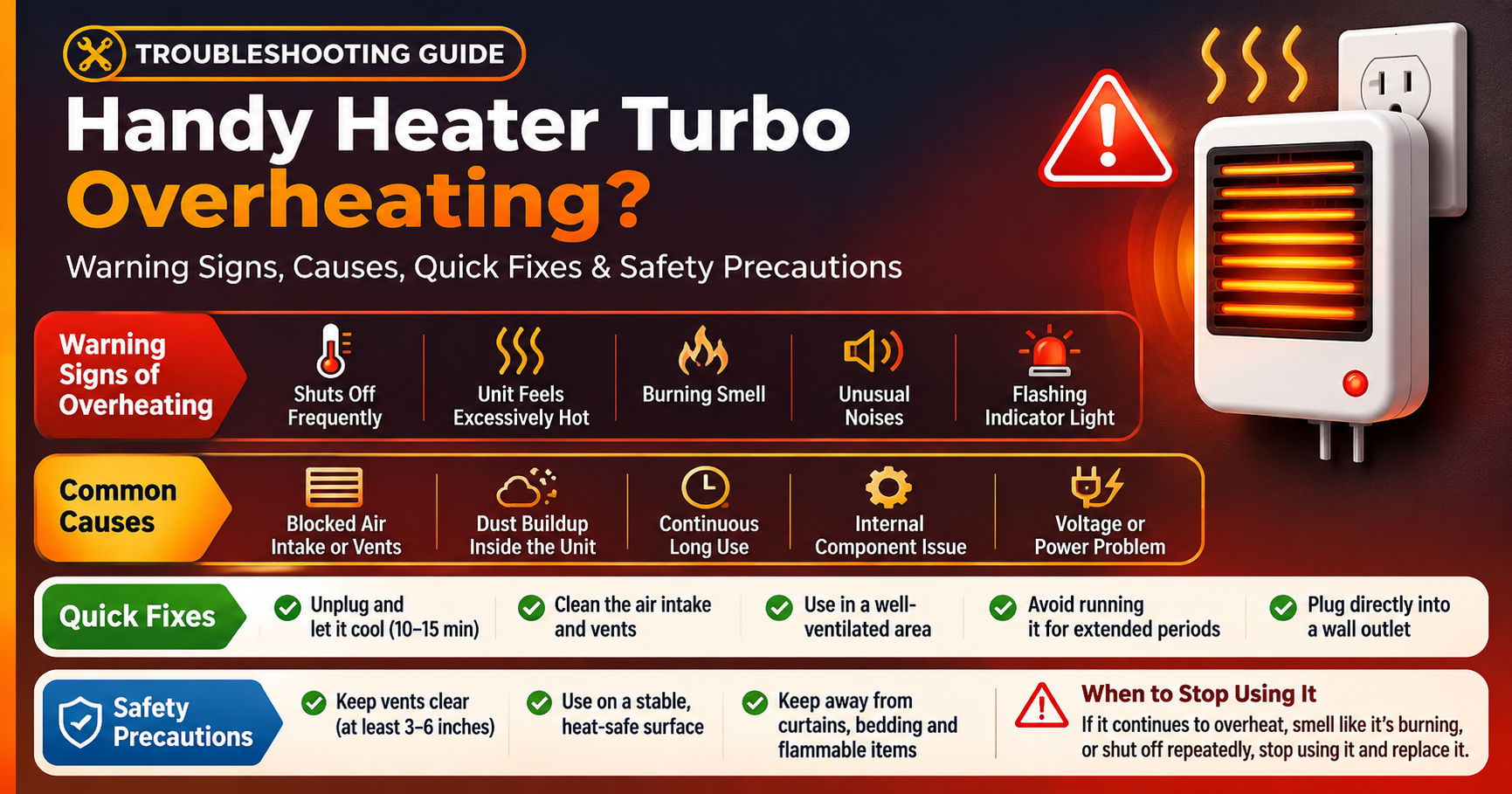
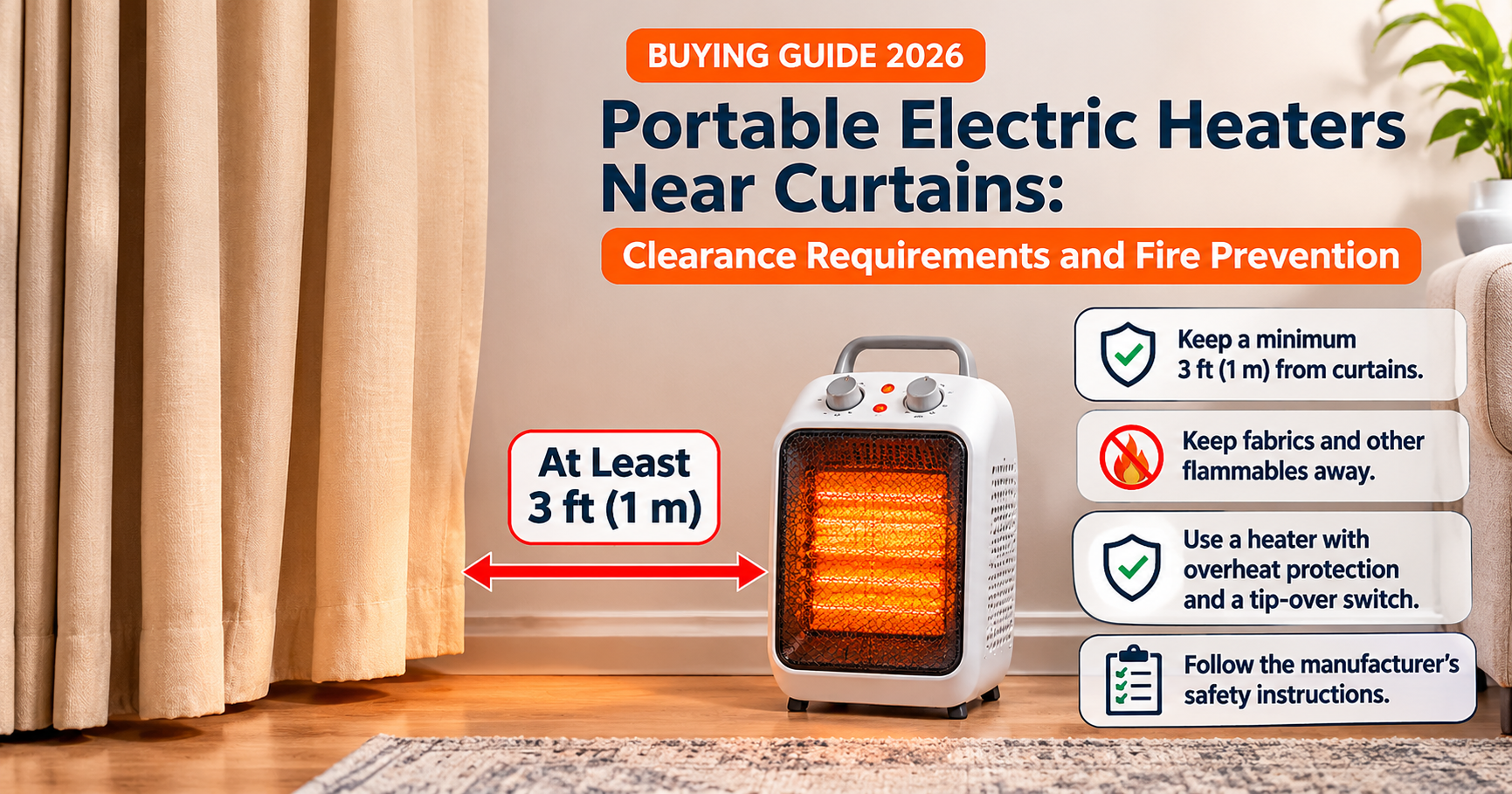
The standard rule is a minimum of 3 feet (36 inches or roughly 1 metre) in every direction. That means in front of, beside and above the heater. Radiant and fan heaters push heat forward, so the area directly in front needs the most clearance, but you should never rely on only one side being clear.
Remember that curtains move. An open window, a ceiling fan or the heater’s own fan can blow fabric toward the unit. Measure the distance with the curtains in their most blown-out position, not just hanging still.
Heater Types and Their Risk Near Curtains
All portable heaters need clearance, but the way they heat affects how much attention you should pay.
| Heater type | How it heats | Risk near curtains | Best use |
|---|---|---|---|
| Ceramic fan heater | Blows warm air from a heated ceramic element | Fan can push curtains toward the unit; element is hot | Small and medium rooms, quick heating |
| Oil-filled radiator | Heats oil that warms a metal body | Surface gets hot but there is no exposed element; still needs clearance | Bedrooms and long, steady heating |
| Infrared or quartz radiant heater | Glowing element radiates heat forward | Highest: radiant heat can scorch fabric from a distance | Spot heating with plenty of open space |
| Convection panel heater | Warms air that rises through a vented panel | Moderate: vents must not be covered by fabric | Wall or floor use in quiet rooms |
| Mini or personal heater | Compact ceramic element | Easy to knock over or push close to fabric | Desk or small personal area |
Safety Features to Look For Before You Buy
If you are choosing a new heater, the right features reduce risk even when you follow every placement rule. Look for the following:
- Tip-over protection: The heater switches off automatically if it falls over.
- Overheat protection: A thermal cut-off turns the unit off if internal temperature gets too high.
- Adjustable thermostat: Keeps the room at a set temperature instead of running at full power constantly.
- Cool-touch housing: Reduces burn risk to children and pets and lowers the heat transferred to nearby items.
- Safety certification: Look for marks from recognised testing bodies such as UL, ETL, CE or the national standards mark in your country.
- Timer or auto shut-off: Helpful if you tend to fall asleep with the heater on.
- Stable base and sturdy handle: Reduces accidental tipping and makes it easier to move safely.
- Appropriate wattage: A 1500 W unit suits most small to medium rooms. Oversized power is not safer or better.
Safe Placement: Step by Step
- Pick a hard, flat, level surface. Never place a heater on a bed, sofa, rug pile or table that can wobble.
- Clear the 3 foot zone. Remove curtains, clothes, paper, bedding, furniture and pet beds from around the heater.
- Tie back or shorten curtains. Use tie-backs, or choose shorter curtains that stop above the sill if the heater must sit near a window.
- Plug directly into a wall socket. Extension cords and power strips can overheat under a heater’s load.
- Keep the cord visible and uncovered. Do not run it under rugs or across walkways.
- Turn it off when you leave or sleep. Even the safest heater should not run unattended for long periods.
- Check smoke alarms. Test them monthly and replace batteries when needed.
Choosing Curtains That Are Safer Around Heat
Even with proper distance, the fabric you choose matters. Heavy, tightly woven natural fabrics such as thick cotton or wool tend to ignite less easily than thin synthetic or lace curtains. Some curtains are sold as flame retardant or treated to meet fire standards. These are a helpful extra layer of protection but do not replace the 3 foot rule. Avoid long curtains that pool on the floor near a heater, since the bottom edge is the easiest part to reach the heating unit.
Common Mistakes People Make
- Placing a heater right under a window to fight the cold, with curtains hanging beside it.
- Drying wet clothes or towels on or near the heater.
- Using a heater in a very small closet-like space with no airflow.
- Assuming an oil-filled radiator is safe to touch curtains because it has no glowing element.
- Leaving a heater running overnight with bedding nearby.
- Ignoring a burning smell, flickering power or damaged cord.
Better Ways to Warm a Room With Curtains
If your room layout leaves little free space, you have other options. Heat the room from a spot that is clear of fabric, such as the centre of a wall opposite the window. Use thermal or insulated curtains to keep heat inside, and close them at night, but keep the heater far from them. Seal draughts around windows and doors, lay a rug to reduce cold floors, and consider a wall-mounted or oil-filled heater that sits securely out of the way.
Frequently Asked Questions
Can I use a portable electric heater near curtains if it has tip-over protection?
No. Tip-over protection only helps if the unit falls. It does not stop radiant heat or hot air from igniting nearby fabric. You still need 3 feet of clearance.
Is an oil-filled radiator safe next to curtains?
It is safer than an exposed-element heater, but its surface still gets hot and can scorch fabric over time. Keep the same minimum distance.
What happens if a heater is too close to curtains?
The fabric can heat up, discolour, scorch and eventually catch fire. Even if it does not ignite, repeated heating can weaken and damage the curtain.
Can I leave a portable heater on overnight?
It is best not to. If you must use one at night, choose a model with a timer and thermostat, keep the area completely clear, and follow the manufacturer’s instructions.
Are ceramic heaters safer than other types?
Ceramic heaters usually have good built-in protections, but they are still electrical heating appliances and need the same clearance.
What should I do if my curtain starts to smoulder?
Switch off the heater at the wall if it is safe to do so, move away, and call your local emergency number. Do not try to fight a growing fire.
Final Thoughts
A portable electric heater is a convenient way to stay warm, but it should never share space with your curtains. Keep at least 3 feet of clearance, choose a heater with strong safety features, plug it straight into the wall and never leave it running while you sleep or go out. A few simple habits make winter heating comfortable and much safer for everyone at home.
This article is for general information. Always read your heater’s manual and follow local safety guidance.