

Disclosure: This article may contain affiliate recommendations. If you buy through them, we may earn a small commission at no extra cost to you. Our safety guidance is never influenced by this.
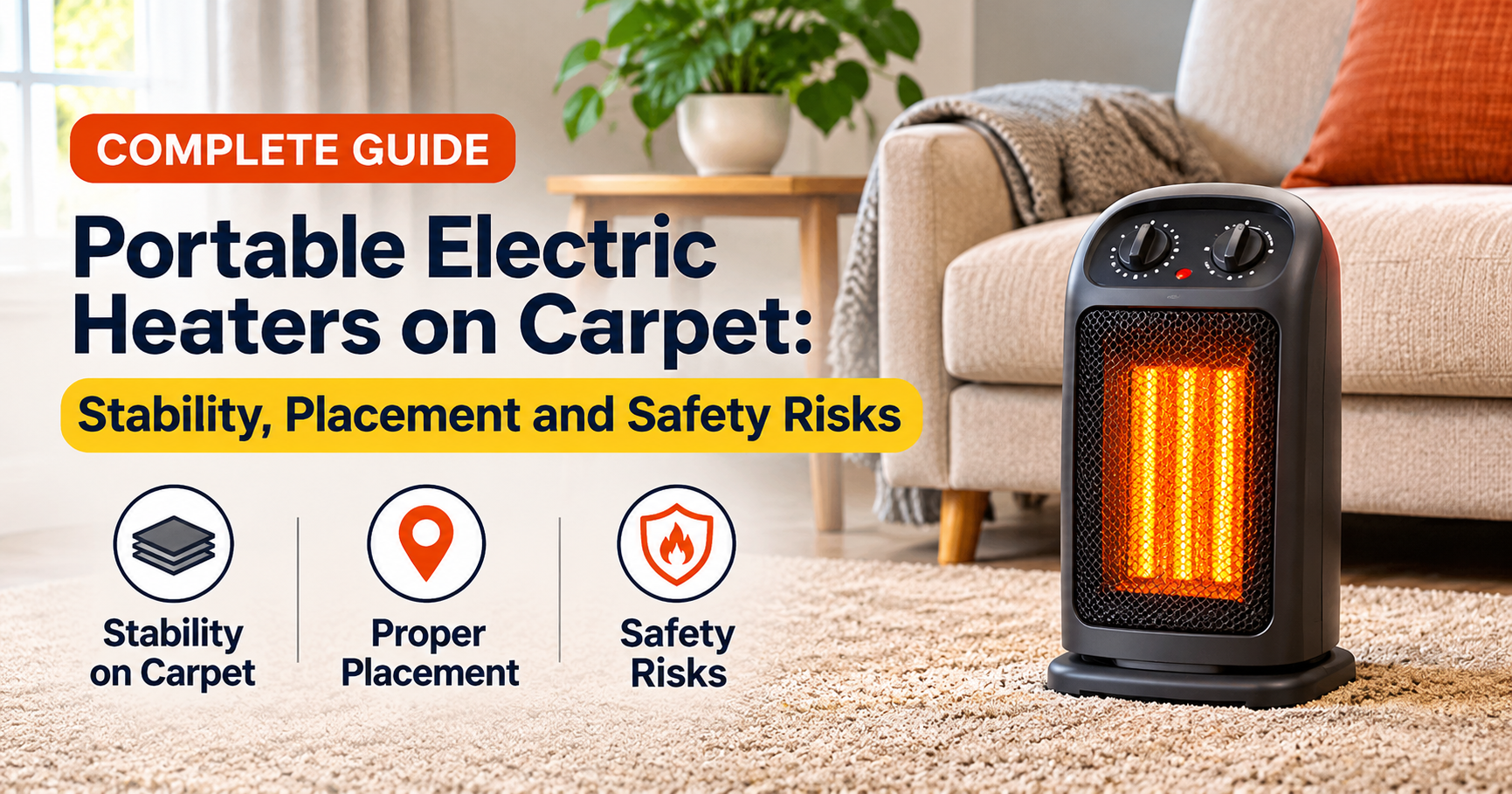
Winter mornings, a chilly basement, a drafty bedroom: a portable electric heater is the quickest way to feel warm again. But most of us live on carpet, and that raises a fair question: is it safe to run a portable electric heater on carpet?
The short answer is: it can be, if you pick the right type of heater and set it up correctly. This complete guide explains the risks, the best heater types, the features that matter, how to size a heater for your room, and a step-by-step safe setup so you can stay warm without worrying.
Can You Use a Portable Electric Heater on Carpet?
Yes, but with conditions. Carpet is not automatically forbidden, yet it creates three extra concerns compared with a hard floor:
- Heat buildup: Heaters with bottom vents or hot undersides can heat the carpet fibers directly beneath them.
- Stability: Soft, thick pile can make a narrow heater wobble, increasing the chance of tipping.
- Dust and fibers: Carpet lint can be drawn into intake grilles, which reduces airflow and can cause overheating over time.
Most manufacturers state in the manual whether the heater may be used on carpet. Always follow those instructions first. If the manual says to use only on a hard, level, non-flammable surface, respect it.
Main Risks of Heaters on Carpet
- Fire from heat contact with fibers, rugs, curtains or bedding
- Tip-overs, especially around kids and pets
- Overloaded outlets and extension cords
- Burns from touching hot grilles or casings
- Reduced indoor air comfort (dry air) in sealed rooms
Best Types of Portable Electric Heaters for Carpeted Rooms
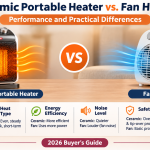
Different heater technologies behave differently on soft floors. Here is how they compare:
| Type | How it heats | Carpet suitability | Best for |
|---|---|---|---|
| Ceramic (PTC) tower or fan | Fan blows air across a hot ceramic element | Very good: cool-touch bodies and wide bases are common | Bedrooms, offices, quick warm-ups |
| Oil-filled radiator | Sealed oil heats fins that radiate warmth | Good: heavy and stable, but needs a firm level surface and check wheels on thick pile | Long, quiet, steady heat |
| Infrared / radiant | Heats people and objects directly | Fair: strong direct heat, so keep well away from rugs and fabrics | Spot heating a desk or seat |
| Convection panel | Warms air that rises naturally | Good when wall-mounted or on stable feet | Silent room heating |
| Fan-forced coil | Fan pushes air over hot coils | Use with care: some models get hot below | Budget heating of small rooms |
For most households with carpet, a ceramic tower or an oil-filled radiator offers the best balance of safety, comfort and cost.
Safety Features to Look For
- Tip-over protection: shuts the heater off automatically if it is knocked over.
- Overheat protection: cuts power if internal temperature gets too high.
- Cool-touch housing: reduces burn risk, ideal with children and pets.
- Safety certification: look for a recognized mark such as UL, ETL or CE on the product.
- Thermostat and timer: prevents the heater from running nonstop.
- Wide, stable base: resists wobbling on carpet pile.
- Removable or easy-clean filter: keeps carpet lint from clogging airflow.
- Heavy-gauge power cord: a short, thick, undamaged cord is safest.
How to Choose the Right Wattage and Size
A common rule of thumb is about 10 watts per square foot of floor space. Rooms with high ceilings, poor insulation or big windows may need a little more. Most portable heaters top out at 1500 W because that is the safe limit for a standard household circuit.
A heater that is too weak will run constantly and still leave the room cold. A heater that is too strong can cycle harshly and waste energy. Use a model with an adjustable thermostat so it can modulate output.
Step-by-Step: Setting Up a Heater on Carpet Safely
1. Read the manual
Confirm the heater is approved for use on carpet. If not, place it on a hard surface instead.
2. Create a firm, level base
If the carpet is thick or soft, set the heater on a ceramic tile, a heat-resistant mat or a solid board that the manufacturer allows. The base should be larger than the heater and must not trap heat underneath. Do not use ordinary rugs, towels or cardboard.
3. Keep the 3-foot clear zone
Remove curtains, paper, blankets, clothes and furniture from the area around the heater. Position it so the airflow is not blocked.
4. Plug directly into the wall
Avoid extension cords and power strips. They can overheat under a heater’s heavy load. Do not share the outlet with other high-wattage devices such as a kettle or hair dryer.
5. Route the cord safely
Keep the cord out of walkways and never run it under a rug or carpet, where damage and heat can go unnoticed.
6. Never leave it unattended
Turn the heater off when you leave the room or go to sleep. A timer is helpful, but it does not replace supervision.
7. Test and maintain
Check the cord and plug for damage before each season. Vacuum the grilles regularly while the unit is unplugged and cool. If the plug or cord feels hot, stop using the heater immediately.
Common Mistakes to Avoid
- Placing a heater on a pile of rugs or a fluffy bath mat
- Drying clothes on or near the heater
- Using a heater in a very small closed space without airflow
- Ignoring a burning smell or strange noise
- Using damaged or discolored plugs and outlets
- Choosing a lightweight, narrow heater for high-traffic areas
Running Cost: How Much Does It Cost?
Electric heaters turn nearly all the electricity they use into heat, so running cost depends mainly on power and your local electricity rate. A 1500 W heater uses 1.5 kWh per hour. At an example rate of 0.16 per kWh, that is about 0.24 per hour. To keep costs down:
- Heat only the room you are using and close the door.
- Use the thermostat and eco mode so it cycles instead of running nonstop.
- Seal drafts around windows and doors.
- Use a timer to avoid heating an empty room.
Who Should Be Extra Careful?
Homes with toddlers, curious pets or elderly residents need extra caution. Prefer cool-touch models, place the heater out of reach, and consider a heater with a child lock. Rental properties and apartments may have specific rules, so check before using high-wattage appliances.
Frequently Asked Questions
Is it safe to put a space heater directly on carpet?
Only if the manufacturer says so and the heater has tip-over and overheat protection. When in doubt, place it on a stable heat-resistant surface.
Which heater is best for carpeted bedrooms?
A ceramic tower with a thermostat and timer, or a quiet oil-filled radiator, suits most bedrooms. Still switch it off before sleeping.
Can a heater melt carpet?
Yes. Prolonged contact with hot vents or surfaces can scorch or melt synthetic fibers. That is why clearance and a stable base are important.
Can I use an extension cord with a heater?
It is best not to. Plug directly into a wall outlet. If you absolutely must, use a heavy-duty cord rated for the heater’s wattage, and never a thin or damaged one.
How far should a heater be from furniture?
Keep at least three feet (about one meter) from furniture, curtains, bedding and any flammable item.
Is an oil-filled heater safer than a fan heater?
Oil-filled models have no exposed element and heat gently, but their surface still gets hot. Both types are safe when used correctly with the right features.
Final Thoughts
A portable electric heater on carpet can keep your space cozy all winter, provided you choose well and place it carefully. Prioritize a wide base, tip-over and overheat protection, a thermostat and a recognized safety certification. Then follow the basics: a clear zone, a direct wall plug, a firm level base and constant supervision.
Take a few minutes to set things up properly, and you will enjoy warmth that is comfortable, efficient and safe.