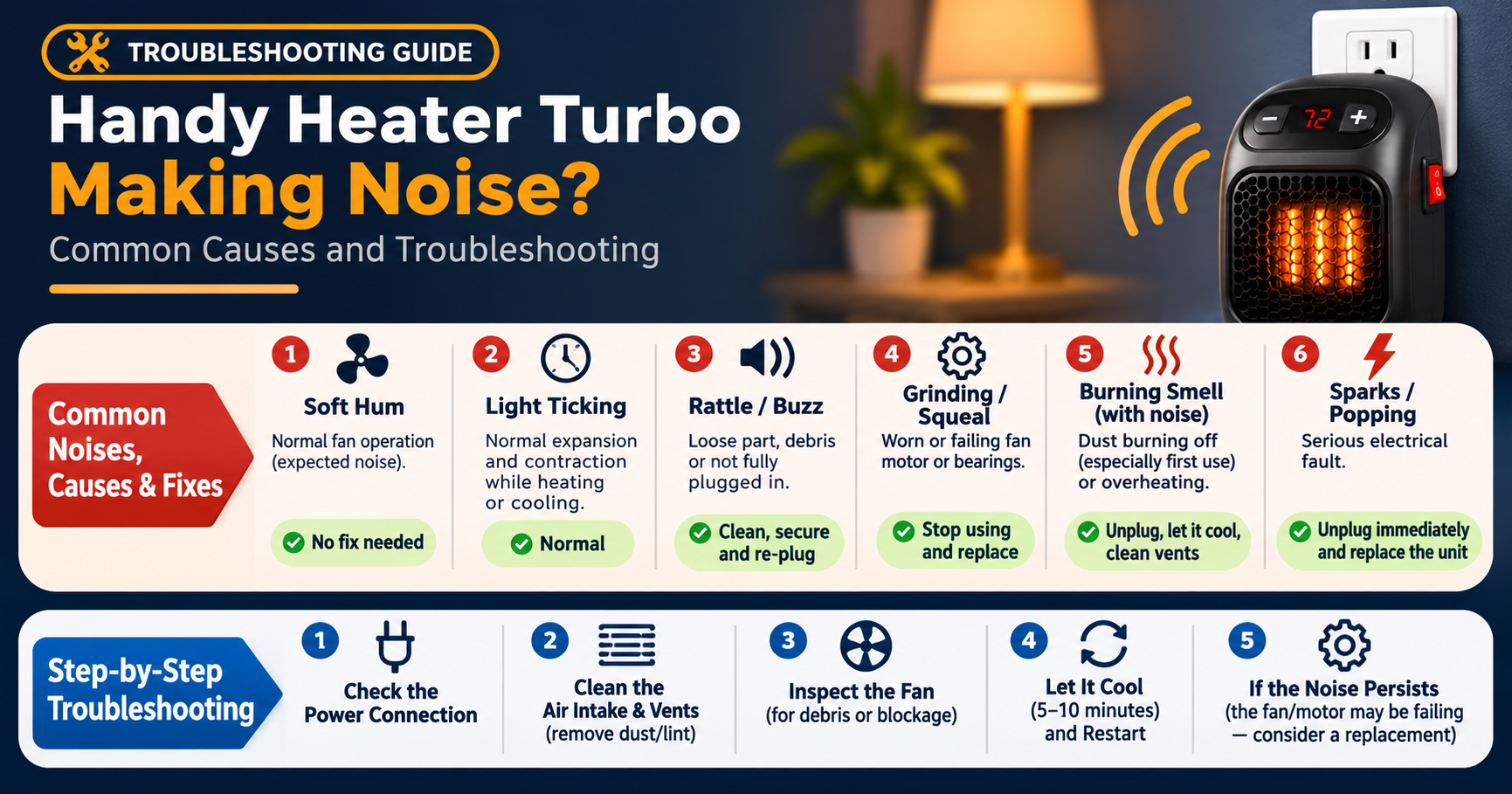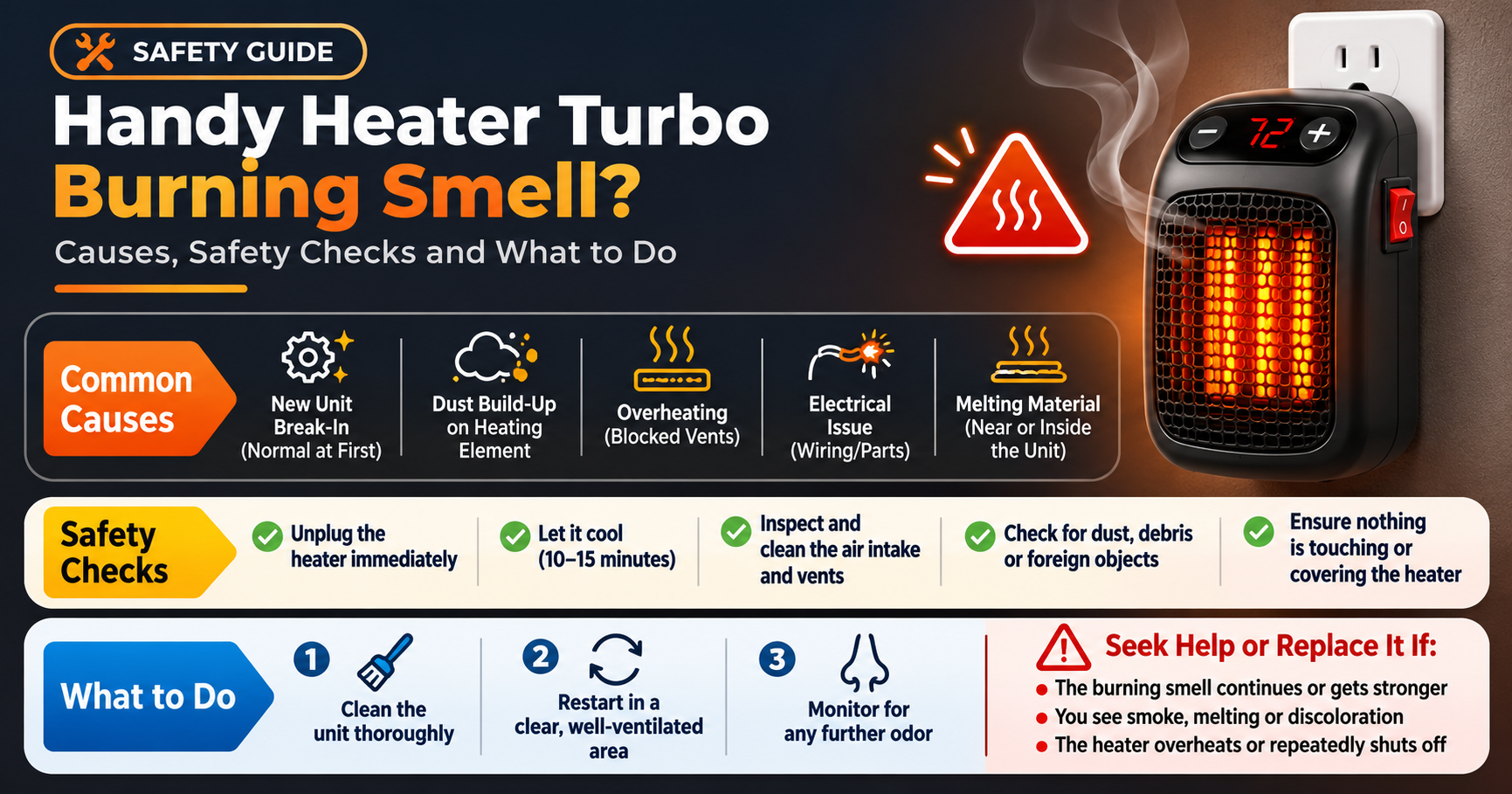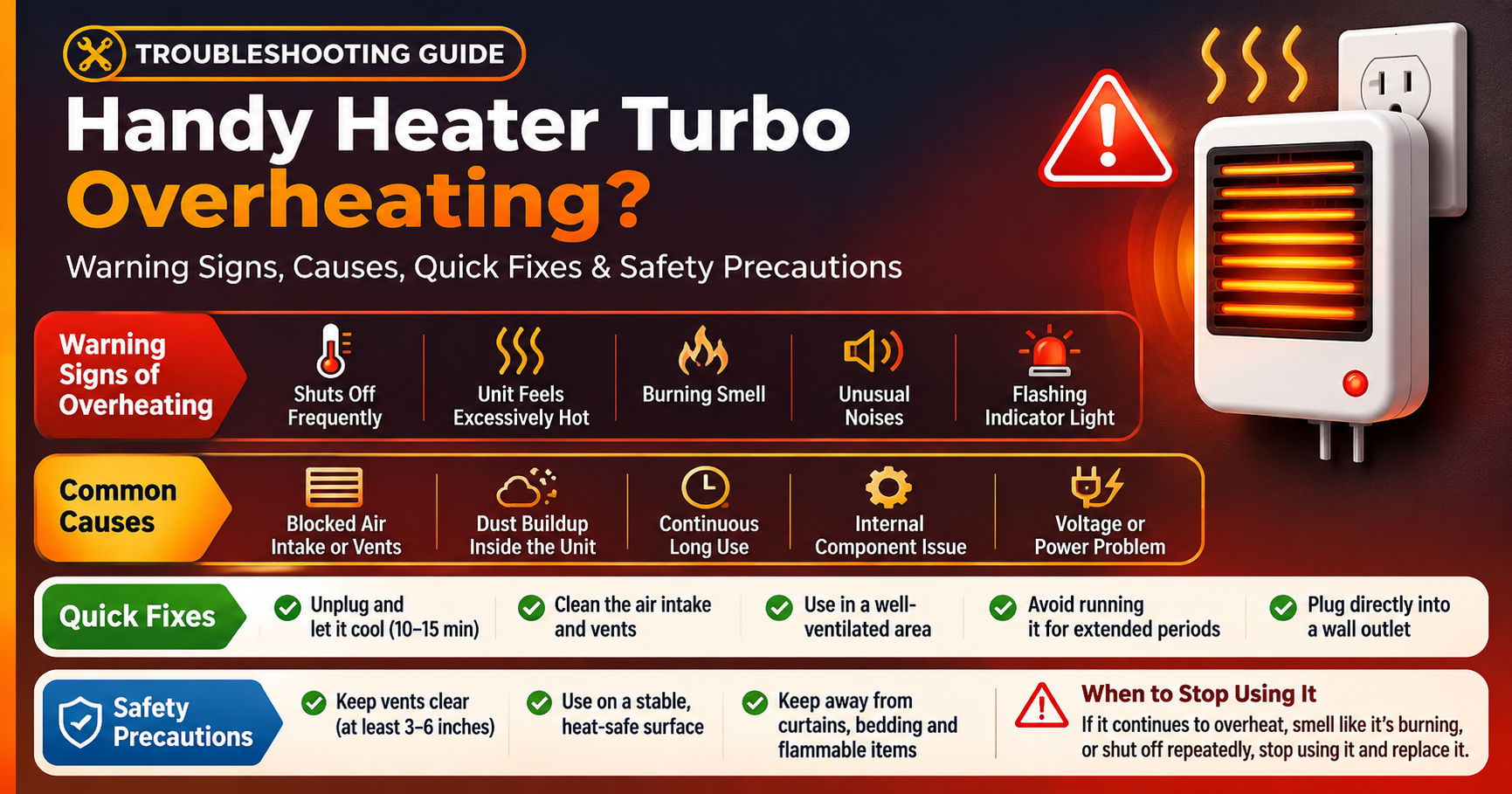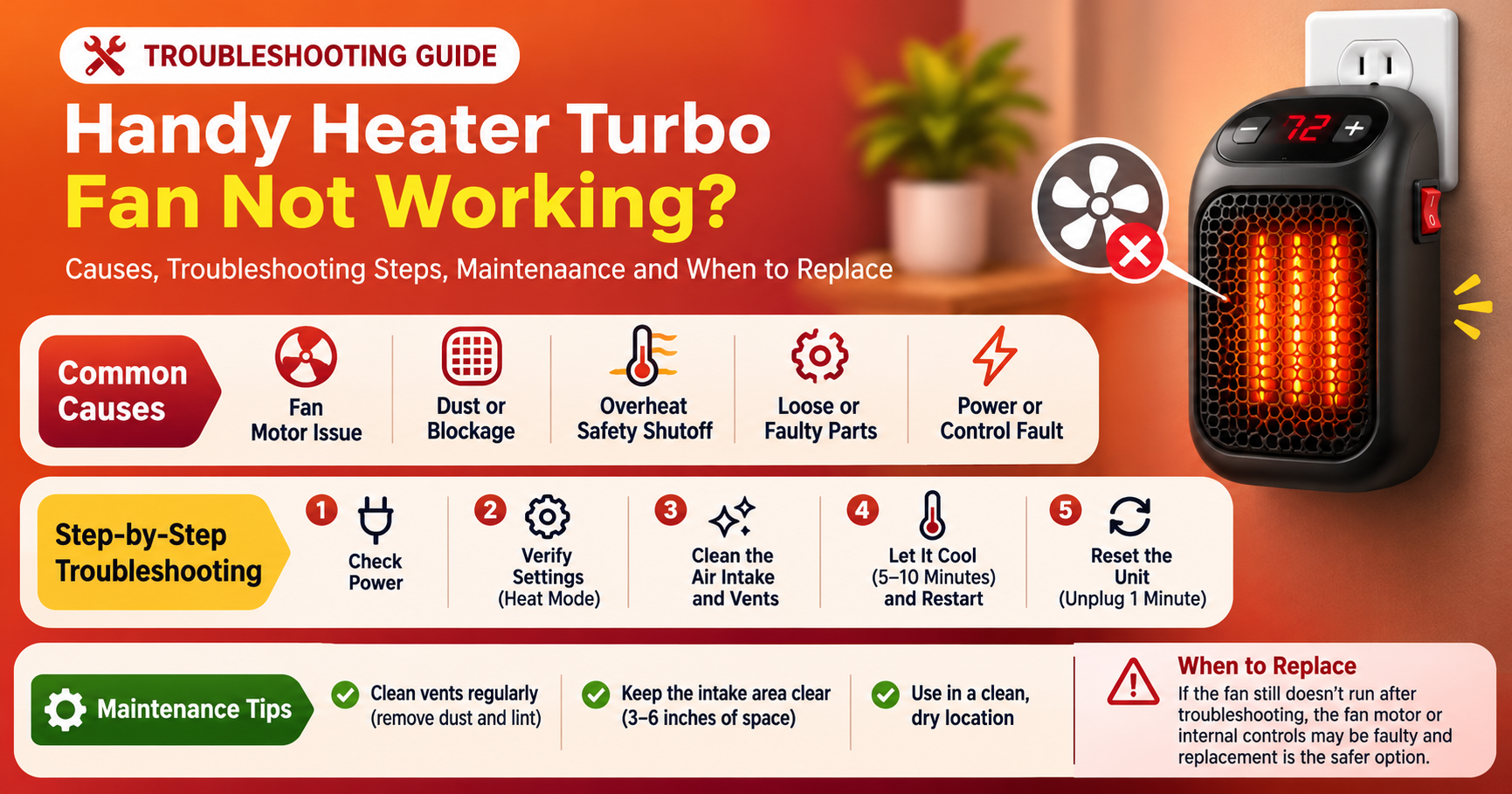
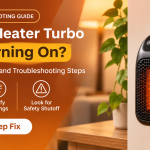
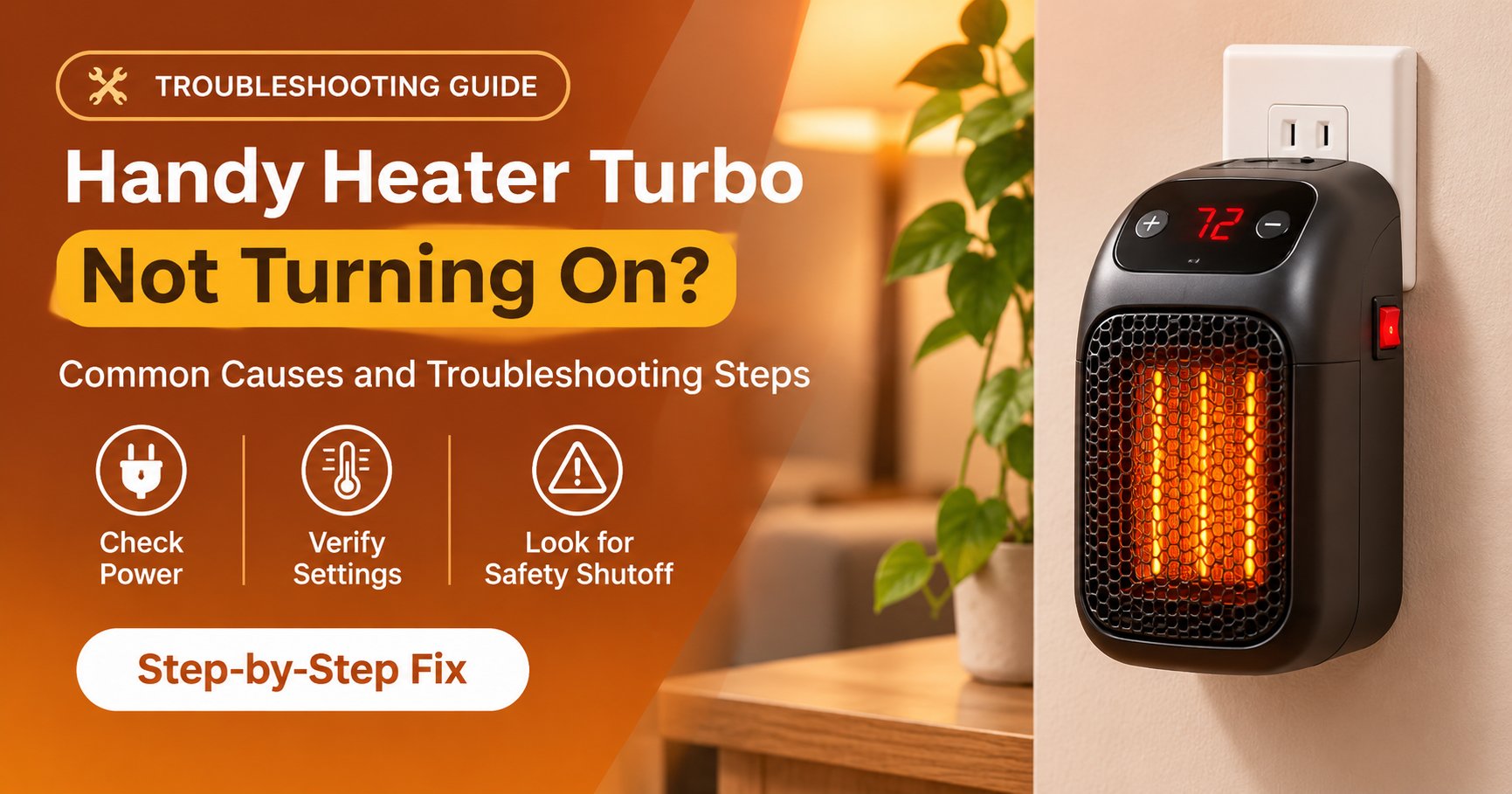
Handy Heater Turbo Not Turning On? 9 Easy Fixes That Actually Work

You plug in your Handy Heater Turbo on a cold evening, press the power button, and nothing happens. No glow, no fan sound, no warm air. It is frustrating, especially when the room is freezing and you were counting on that little heater to take the edge off.
The good news is that a heater that will not turn on is very often a simple problem. In many cases the cause is a dead outlet, a tripped breaker, a loose plug or a built-in safety feature doing exactly what it was designed to do. In this complete guide you will learn the most common reasons a Handy Heater Turbo does not start, how to check each one safely, and what to do if the heater is truly faulty.
What Is the Handy Heater Turbo?
The Handy Heater Turbo is a compact, plug-in style personal heater. Heaters in this category are designed to warm a small area such as a desk, a bedroom corner, a bathroom or a small office. They usually include a heating element, a small fan, a thermostat or temperature control and a few safety features such as overheat protection and a tip-over switch.
Because these heaters are small and have limited power, they depend on a stable electrical supply and a few safety sensors working correctly. When any one of those parts is interrupted, the heater simply refuses to start. That is why a systematic check, one step at a time, is the fastest way to find the problem.
9 Reasons Your Handy Heater Turbo Will Not Turn On
1. The Wall Outlet Has No Power
This is the most common cause and the easiest to test. Outlets can fail because of a tripped breaker, a worn contact or a switched outlet that is controlled by a wall switch. Plug a phone charger or a lamp into the same outlet. If that device does not work either, the problem is the outlet and not the heater.
2. A Tripped Breaker or GFCI Outlet
Heaters draw a lot of electricity compared to most small devices. If the circuit is shared with other appliances, the breaker may trip. Bathrooms, kitchens and garages often use GFCI outlets, which have small TEST and RESET buttons. Press RESET firmly and try again. If the breaker or GFCI trips again straight away, do not keep resetting it. Something may be wrong with the heater or the circuit.
3. A Loose Plug or Damaged Power Cord
If the plug does not sit tightly in the socket, the contact may be poor. Check the plug for bent pins, discolouration, burn marks or a plug that feels hot. Look along the cord for cuts, kinks or exposed wires. A damaged cord is a fire and shock risk, so do not use the heater again until it has been replaced by a qualified person or the unit has been exchanged.
4. Using an Extension Cord or Power Strip
Heaters should be plugged directly into a wall outlet. Many extension cords and power strips cannot safely handle the continuous load of a heating element. Some will overheat, and some power strips have built-in protection that cuts power. If you are using one, remove it and plug the heater straight into the wall.
5. The Overheat Protection Has Activated
Most modern heaters have a thermal cut-off that turns the unit off when internal temperatures get too high. If the heater was running before it stopped working, it may simply be locked out until it cools. Unplug it, leave it for at least 30 minutes, then plug it back in and try again. If it keeps shutting off, the cause is often blocked airflow, covered in the next point.
6. Dust and Blocked Air Vents
Dust, pet hair and lint collect inside the intake and outlet grilles over time. This restricts airflow and causes the heater to overheat and cut out. Unplug the heater and let it cool completely. Then gently clean the vents with a soft brush or a vacuum cleaner on low suction. Never use water or spray liquids directly on the heater.
7. The Tip-Over Safety Switch Is Engaged
Many compact heaters have a tilt sensor that switches the power off if the unit is knocked over or sitting at an angle. If the heater is on carpet, a soft rug, a bed or an uneven surface, the sensor may stay in the off position. Place the heater upright on a hard, flat, level surface and try again.
8. The Thermostat Is Set Too Low
If the thermostat or temperature setting is lower than the room temperature, the heater may not start at all because it thinks the room is already warm enough. Turn the temperature setting to the maximum and check whether the heater starts. If it works at the highest setting, the heater is fine and you only need to adjust the level.
9. An Internal Fault or Defective Unit
If you have checked everything above and the heater still has no lights, no fan and no heat, the cause may be an internal problem such as a failed switch, a burnt thermal fuse, a faulty control board or a broken heating element. These parts are not designed to be repaired at home. Stop using the heater and move to the warranty and return steps later in this article.

Step-by-Step Fix: How to Get Your Heater Working Again
- Unplug the heater and let it rest for a few minutes.
- Test the outlet with another small device to confirm it has power.
- Reset the breaker or GFCI if the outlet is dead.
- Inspect the plug and cord for damage, heat marks or a loose fit.
- Plug directly into the wall without an extension cord or power strip.
- Place the heater upright on a flat, hard surface, away from curtains, bedding and furniture.
- Clean the vents while the heater is unplugged and cool.
- Set the thermostat to maximum and press the power button firmly.
- Wait 30 minutes if the heater was recently running, to allow the overheat protection to reset.

Safety First: What You Should Never Do
When a heater fails, it is tempting to try shortcuts. Heating appliances carry real risks, so keep these rules in mind. Never open the casing, because there are live electrical parts inside even when the heater appears dead. Never use a heater with a damaged cord or plug. Never cover it or place it close to anything flammable. And never leave a heater running unattended or while you sleep unless the manufacturer states it is designed for that.

When Should You Return, Claim a Warranty or Replace It?
Consider a return or replacement when the heater does not work on a known good outlet, the cord or plug is damaged, the unit trips the breaker repeatedly, or it has stopped working shortly after purchase. Before contacting the seller, gather these details to make the process faster:
- Your order number and the date of purchase
- A short video or clear photos showing that the heater does not turn on
- Proof that you tested it on a working outlet
- The original packaging, if you still have it
Check the return window and warranty period in your order confirmation. Many online sellers allow returns for a limited number of days, so it is best to act quickly rather than wait until the cold weather gets worse.
Buying Guide: What to Look For in a Replacement Heater
If your Handy Heater Turbo cannot be fixed, take the chance to choose a heater that fits your room and your safety needs. Compact heaters are best for personal spaces and small rooms. Larger rooms usually need a more powerful type. Here is a simple comparison of common heater types:
| Heater Type | Best For | Main Advantage | Main Drawback |
|---|---|---|---|
| Ceramic fan heater | Small rooms, desks | Heats up quickly | Fan noise |
| Oil-filled radiator | Bedrooms, longer use | Quiet, steady warmth | Slow to warm up, heavy |
| Infrared / radiant heater | Warming people directly | Instant, focused heat | Heats objects and people, not the whole room |
| Convection panel heater | Living rooms, offices | Even heat, slim design | Takes time to heat a room |
Features That Matter Most
- Recognised safety certification from a trusted testing body in your country.
- Overheat protection and a tip-over switch built in.
- Adjustable thermostat so you can control temperature and save electricity.
- Suitable wattage for the size of your room. Small spaces need less power than large rooms.
- A clear warranty and return policy from the seller.
- Honest reviews from real buyers, especially about durability after a few weeks of use.
Be careful with any heater that promises to heat a whole house for almost no electricity. A heater cannot create more heat than the electricity it uses, so extreme claims are a warning sign. Always compare the stated wattage, the safety features and the seller reputation before you buy.
Tips to Keep Your Heater Working Longer
- Clean the vents every few weeks during the heating season.
- Always unplug the heater when it is not in use.
- Pull the plug by the plug body, never by the cord.
- Store it in a dry place with the cord loosely coiled, not tightly wrapped.
- Keep at least three feet of clear space around the heater.
- Avoid using it in very damp areas unless it is rated for that use.
Frequently Asked Questions
Why is my Handy Heater Turbo not turning on at all?
The most common reasons are a dead outlet, a tripped breaker, a loose or damaged plug, the overheat protection activating, or the heater not sitting level. Work through the checklist above from the simplest cause to the most complex.
Why did my heater suddenly stop working?
If it worked earlier and suddenly stopped, the overheat protection or a blocked vent is a likely cause. Let it cool for 30 minutes and clean the vents. If it does not start after that, the unit may have an internal fault.
Can I repair the heater myself?
No. Opening a heater is dangerous and may void the warranty. Limit yourself to safe checks such as testing the outlet, cleaning the vents and checking the placement.
Is it normal for the heater to switch off by itself?
Yes, if the thermostat has reached the set temperature or the safety cut-off has activated. If it switches off repeatedly within a few minutes, check for blocked vents and avoid using extension cords.
Is it safe to use the heater all night?
It is safer not to. Unless the manufacturer clearly says the heater is designed for overnight use, switch it off and unplug it before you sleep.
The heater has a light but no heat. What does that mean?
This often points to a failed heating element, a thermal fuse that has blown or a thermostat setting that is too low. Try the maximum setting first. If there is still no heat, contact the seller about a replacement.
Final Thoughts
A Handy Heater Turbo that will not turn on is usually caused by something simple: no power at the outlet, a safety feature that has been triggered, blocked vents or poor placement. Work through the steps in this guide in order, and there is a good chance you will have warm air again in just a few minutes.
If the heater still does not work after these checks, do not take risks with a faulty heating appliance. Contact the seller, use your warranty or return window, and choose a replacement that has proper safety features and a clear return policy. Your comfort matters, but your safety matters more.
Disclaimer: This article is for general information only. Always follow the manufacturer’s instructions for your specific heater. If you are unsure about any electrical problem, consult a qualified electrician.