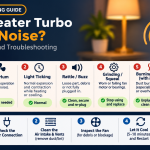
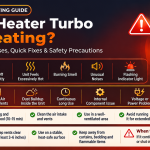
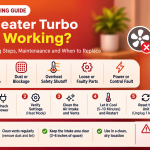
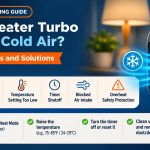
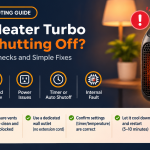
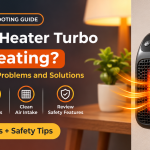
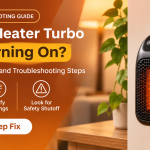
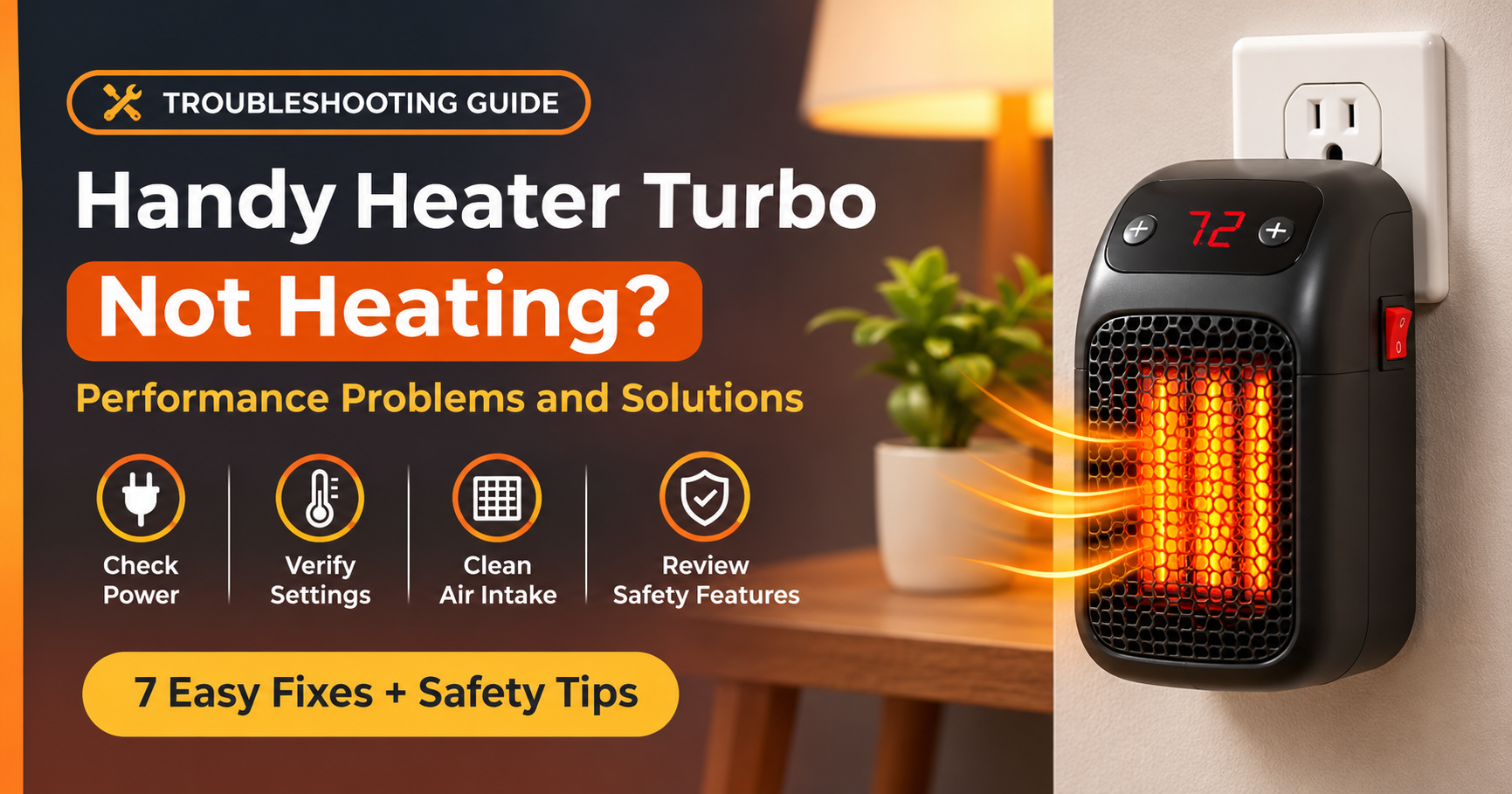
Handy Heater Turbo Not Heating? 7 Easy Fixes That Actually Work

You plug in your Handy Heater Turbo on a cold evening, switch it on, and all you get is a gentle hum or a little cool air. No warmth at all. It is frustrating, especially when winter is already here and you were counting on this compact heater to take the chill off.
The good news is that a Handy Heater Turbo that is not heating is very often caused by something simple: a power problem, a blocked vent, a thermostat setting or a tripped safety cut-off. In this complete guide you will learn the most common causes, how to fix each one step by step, how to stay safe while troubleshooting, and when it is time to replace the unit.
Quick Answer: Why Is My Handy Heater Turbo Not Heating?
In most cases the heater is not heating because of one of these reasons:
- The socket, plug or extension cord is not delivering enough power.
- The thermostat is set lower than the current room temperature.
- Dust or lint is blocking the air inlet, causing the overheat protection to switch the element off.
- The unit has a voltage mismatch with your home supply.
- The heating element or an internal thermal fuse has failed.
Work through the sections below in order. Start with the easiest checks first, because they solve the majority of problems.
How the Handy Heater Turbo Works (Short Explanation)
Compact plug-in and desktop heaters like the Handy Heater Turbo use an electric heating element, often a ceramic type, together with a small fan. Electricity warms the element and the fan pushes that warm air into your space. A thermostat monitors the temperature and an overheat safety switch cuts power if the unit gets too hot.
Knowing this makes troubleshooting easier. If any one of these parts (power supply, thermostat, fan airflow, safety switch or element) fails, you can end up with a heater that turns on but does not produce heat.

Cause 1: Power Supply Problems
A heater needs a steady supply of electricity. Even a small drop can leave the fan running while the element stays cold.
What to check
- Test the wall socket. Plug in a lamp or phone charger to confirm the outlet is working.
- Check the circuit breaker or fuse. Heaters draw a lot of current compared with most devices, so the breaker may have tripped.
- Avoid extension cords and multi-plugs. Thin or long cords can overheat and limit current. Plug the heater directly into the wall.
- Inspect the plug and cable. Look for discoloration, burn marks, bent pins or a loose fit.
Fix: Use a different wall socket on a different circuit and plug straight in. If the heater starts warming, the earlier outlet or cord was the problem.
Cause 2: Thermostat or Mode Setting Is Too Low
This is one of the most overlooked reasons. If the thermostat dial or temperature setting is lower than the current room temperature, the heater will not heat because it thinks the room is already warm enough.
Fix: Turn the thermostat to the maximum setting and select the highest heat mode (turbo or high). Wait two to three minutes and hold your hand near the outlet vent. If warm air appears, the setting was the culprit.
Cause 3: Blocked Air Vents and Dust Build-Up
Small heaters pull air in through an inlet and push it out across the element. Dust, pet hair and lint can clog the inlet very quickly. When airflow drops, the element overheats and the safety switch cuts the heat to protect the unit.
How to clean it safely
- Unplug the heater and let it cool for at least 30 minutes.
- Use a soft brush or a vacuum with a brush attachment to remove dust from the front and rear grills.
- Do not use water, spray cleaners or sharp tools inside the heater.
- Make sure it is completely dry and dust free before plugging it back in.

Cause 4: Overheat Protection Has Been Triggered
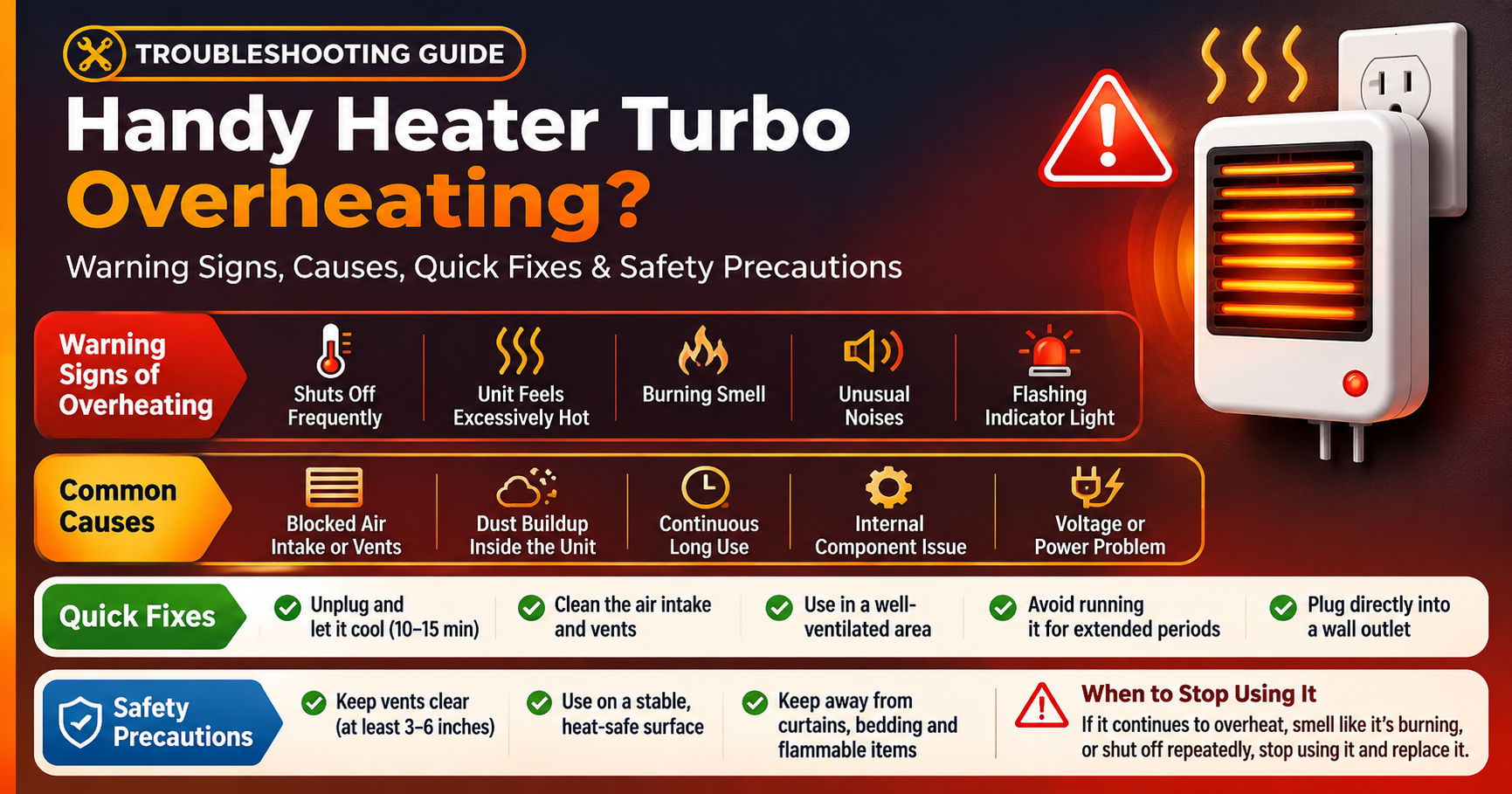
Most modern heaters include a thermal cut-off. If the heater was covered, placed against a wall or curtain, or run on a soft surface like a bed or sofa, it may have shut itself down.
Fix: Unplug it, let it cool, clear at least a metre of free space around it, place it on a flat, hard surface and plug it back in. Some models reset automatically after cooling, while others have a small reset button. Check your user manual for the exact method for your unit.
Cause 5: Voltage Mismatch
Many compact heaters sold online are made for 110V to 120V supplies, while a lot of countries use 220V to 240V. Running a heater on the wrong voltage can cause weak performance, repeated shut-offs or permanent damage.
Fix: Check the label on the back or bottom of the heater for the rated voltage and wattage. It must match your home supply. If it does not, stop using it and replace it with a model built for your local voltage. Using a cheap converter with a heating appliance is risky, because heaters draw high power.
Cause 6: Faulty Heating Element or Internal Fuse
If the fan spins, the settings are correct, the vents are clean and the power supply is fine but the air stays cold, the heating element, thermostat sensor or internal thermal fuse may have failed. This can happen with age, heavy daily use, power surges or manufacturing defects.
Fix: This is not a do it yourself repair. Opening a heater can expose you to live electrical parts and will usually void the warranty. Contact the seller or manufacturer for a replacement or repair.
Cause 7: Unrealistic Expectations About Heating Power
Sometimes the heater is working, but it is simply too small for the job. Compact, low-wattage heaters are designed for personal warming in a small area, such as a desk, a bathroom or a small bedroom. They will not noticeably heat a large living room or a cold, draughty space.
Fix: Place the heater close to you (while keeping a safe distance), close doors and windows, and use it in a small room. For larger spaces, choose a higher wattage oil-filled radiator, fan heater or ceramic tower heater.
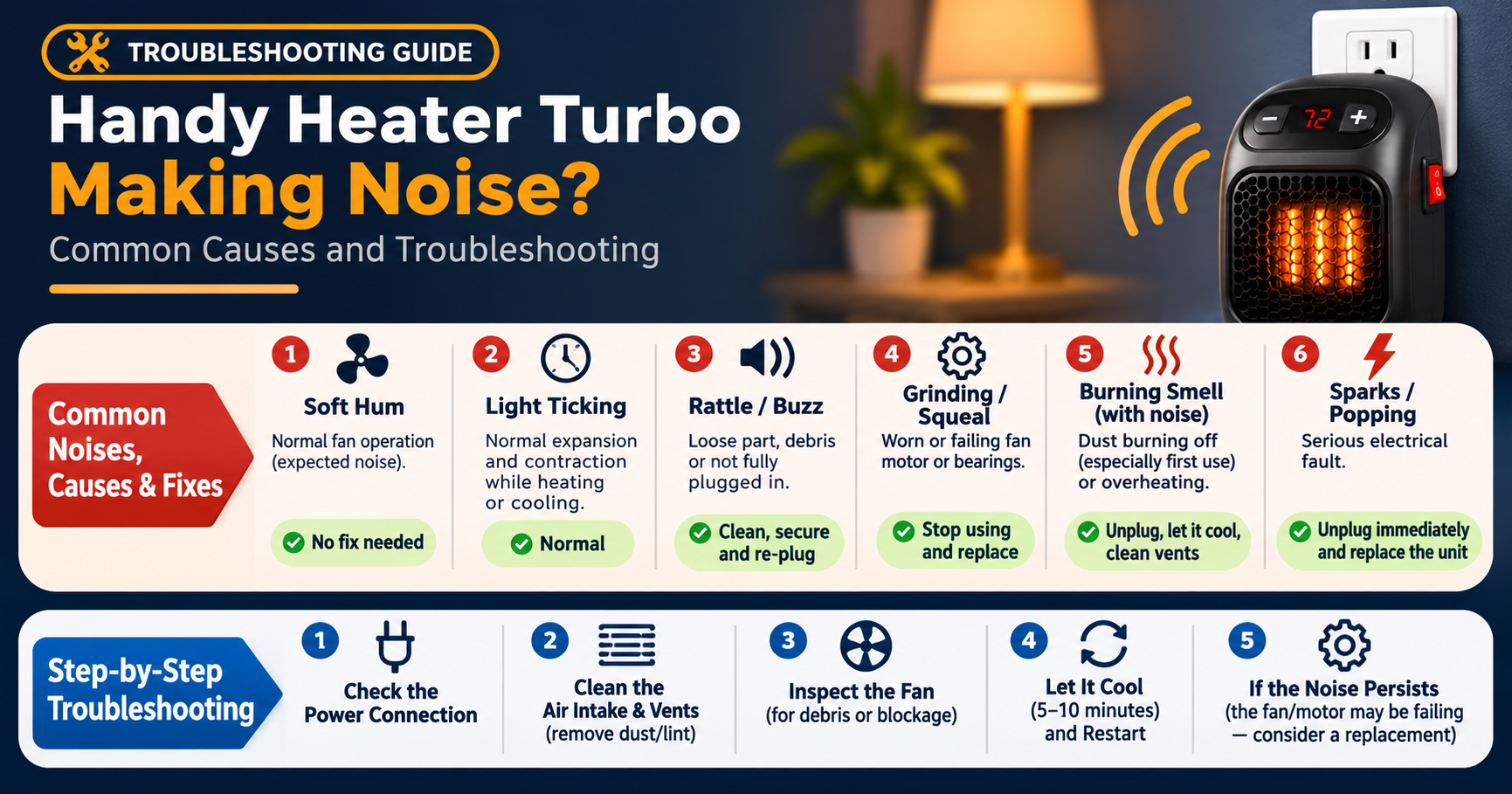
Step-by-Step Troubleshooting Checklist
Follow this order so you do not waste time:
- Unplug the heater and inspect the cable and plug for damage.
- Plug it directly into a working wall socket, with no extension cord.
- Set the thermostat to maximum and select the highest heat mode.
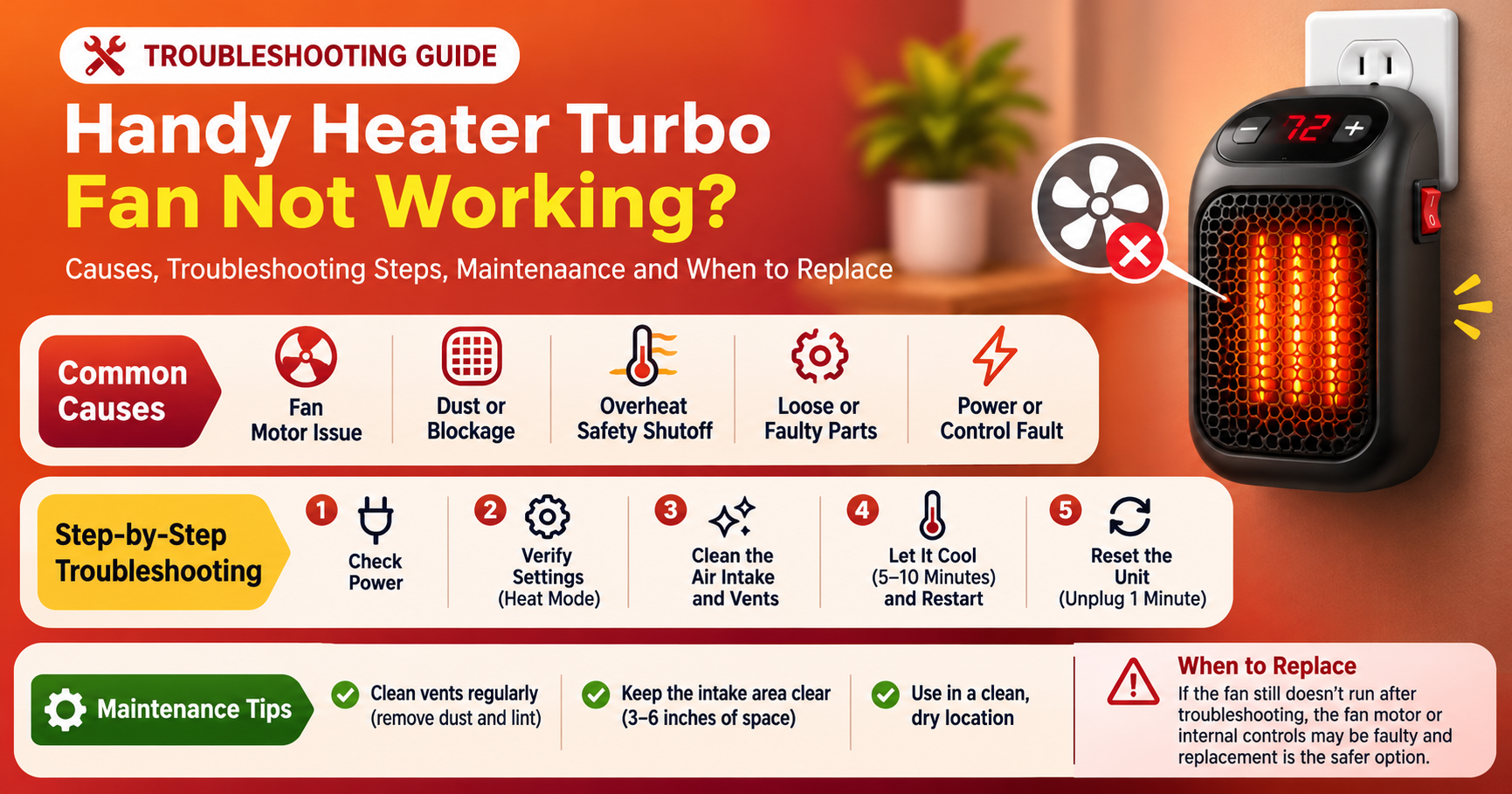
- Listen for the fan. If it does not run at all, test the socket again with another device.
- Clean the air inlet and outlet grills while the unit is unplugged and cool.
- Give the overheat protection time to reset, then try again in a clear, open area.
- Confirm the voltage on the label matches your supply.
- If there is still no heat, stop using it and contact the seller about the warranty or a replacement.

Safety Tips You Should Never Ignore
- Never leave a heater running while you sleep or when you leave the house.
- Keep it away from curtains, bedding, paper, clothes and any flammable material.
- Never cover the heater or use it to dry clothes.
- Do not use it with wet hands or in damp areas unless it is specifically rated for that.
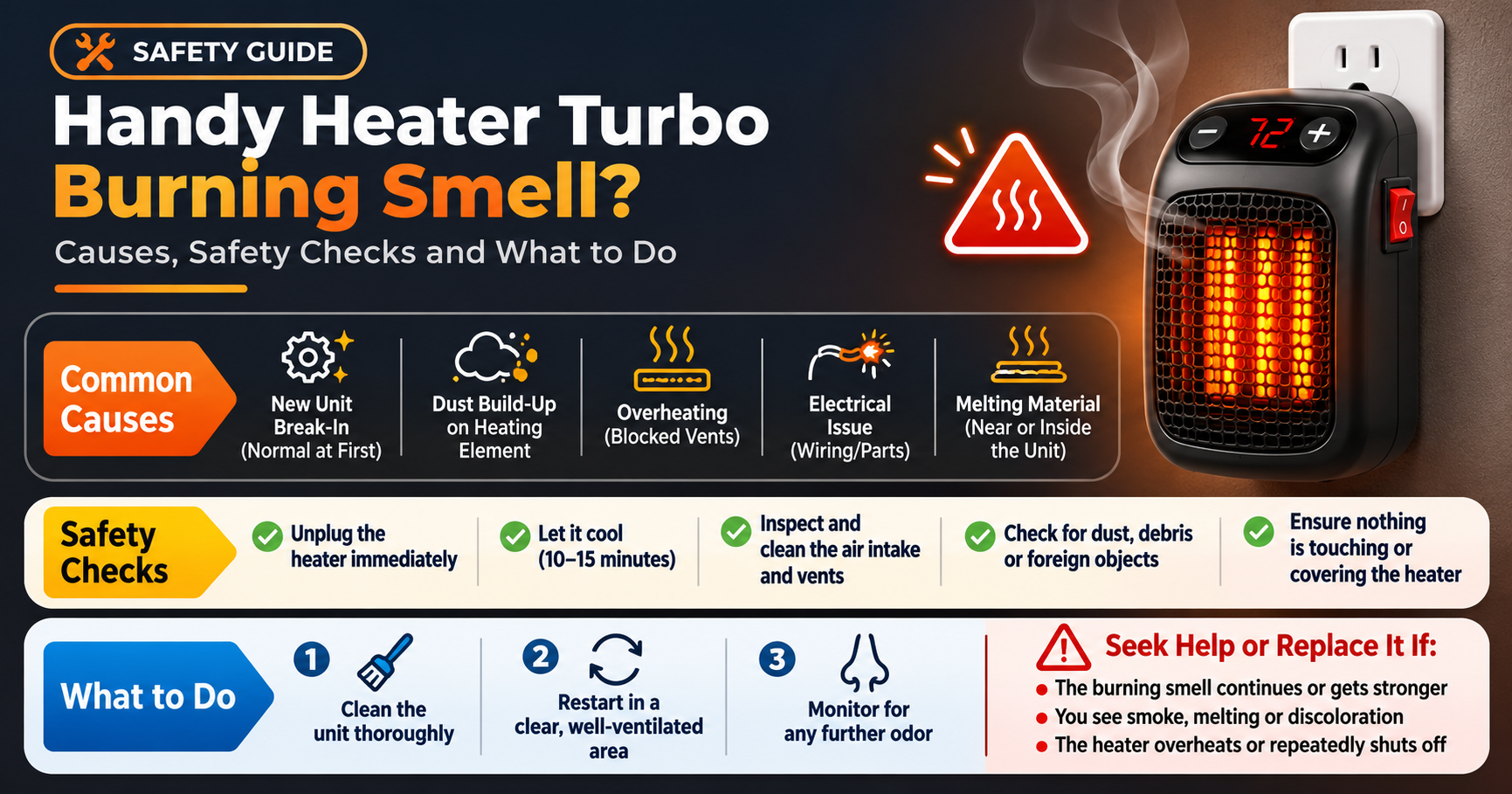
- Stop using it immediately if you notice a burning smell, sparks, smoke, a hot plug or a damaged cable.
- Keep children and pets away from the front grill.
When Should You Replace Your Heater?
Consider replacing the unit if:
- It still produces no heat after you have completed every step above.
- The plug, socket or cable gets very hot or shows burn marks.
- It switches off repeatedly or makes loud rattling or buzzing sounds.
- It is old and the repair cost is close to the price of a new heater.
- It is not rated for your local voltage.
If the heater is still under warranty or within the return period, always try for a refund or replacement before buying a new one.
What to Look for in a Better Portable Heater
If you decide to upgrade, a few features make a real difference in performance and safety:
- Correct wattage for your room. As a rough guide, small rooms need less power while larger rooms need significantly more. Check the manufacturer’s recommended room size.
- Tip-over protection. The heater should switch off automatically if it falls.
- Overheat protection. A built-in thermal cut-off is essential.
- Adjustable thermostat. This helps maintain a steady temperature and saves electricity.
- Safety certifications. Look for recognised safety marks and a clear rated voltage on the label.
- Genuine warranty and support. Buy from a seller with a clear return policy and real customer reviews.
- Quiet operation and portability. Especially useful for bedrooms and offices.
Frequently Asked Questions
Why is my Handy Heater Turbo blowing cold air?
The most common reasons are a low thermostat setting, a blocked air inlet that triggered the overheat protection, a weak power supply or a failed heating element. Check the settings and power first, then clean the vents.
How long does a Handy Heater Turbo take to warm up?
Most compact heaters begin to produce warm air within a minute or two. If you still feel nothing after three to five minutes on the highest setting, something is wrong.
Can I use an extension cord with my heater?
It is best not to. Heaters draw high current and a thin or long extension cord can overheat. Plug the heater straight into a wall socket whenever possible.
Is it normal for the heater to smell when first used?
A light dusty smell for a few minutes is common with a new unit as manufacturing residue burns off. A strong burning or plastic smell, however, means you should unplug it immediately and have it checked.
Can a small heater really warm a whole room?
Not usually. Compact heaters are meant for personal or small-space heating. For larger rooms, a higher-capacity heater is a better choice.
Should I open the heater to repair it myself?
No. Internal parts can carry dangerous voltage and opening the casing may void your warranty. Contact the seller or a qualified technician.
Final Thoughts
When your Handy Heater Turbo is not heating, do not panic. Start with the basics: a direct wall socket, the correct thermostat setting, clean vents and a proper reset after overheating. Confirm the voltage rating and be realistic about the size of the space you want to warm. These simple steps fix most heating problems in a few minutes.
If the heater is still cold after all of this, the heating element or internal safety part has probably failed, and the safest option is to claim your warranty or replace it with a heater that suits your room size and local voltage. Stay warm and stay safe this winter.