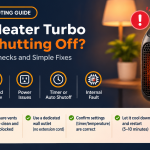

You switch on your Handy Heater Turbo, the room starts to warm up, and then it suddenly clicks off. You turn it on again and the same thing happens. It is frustrating, especially on a cold evening, and it makes you wonder whether the heater is broken or whether you did something wrong.
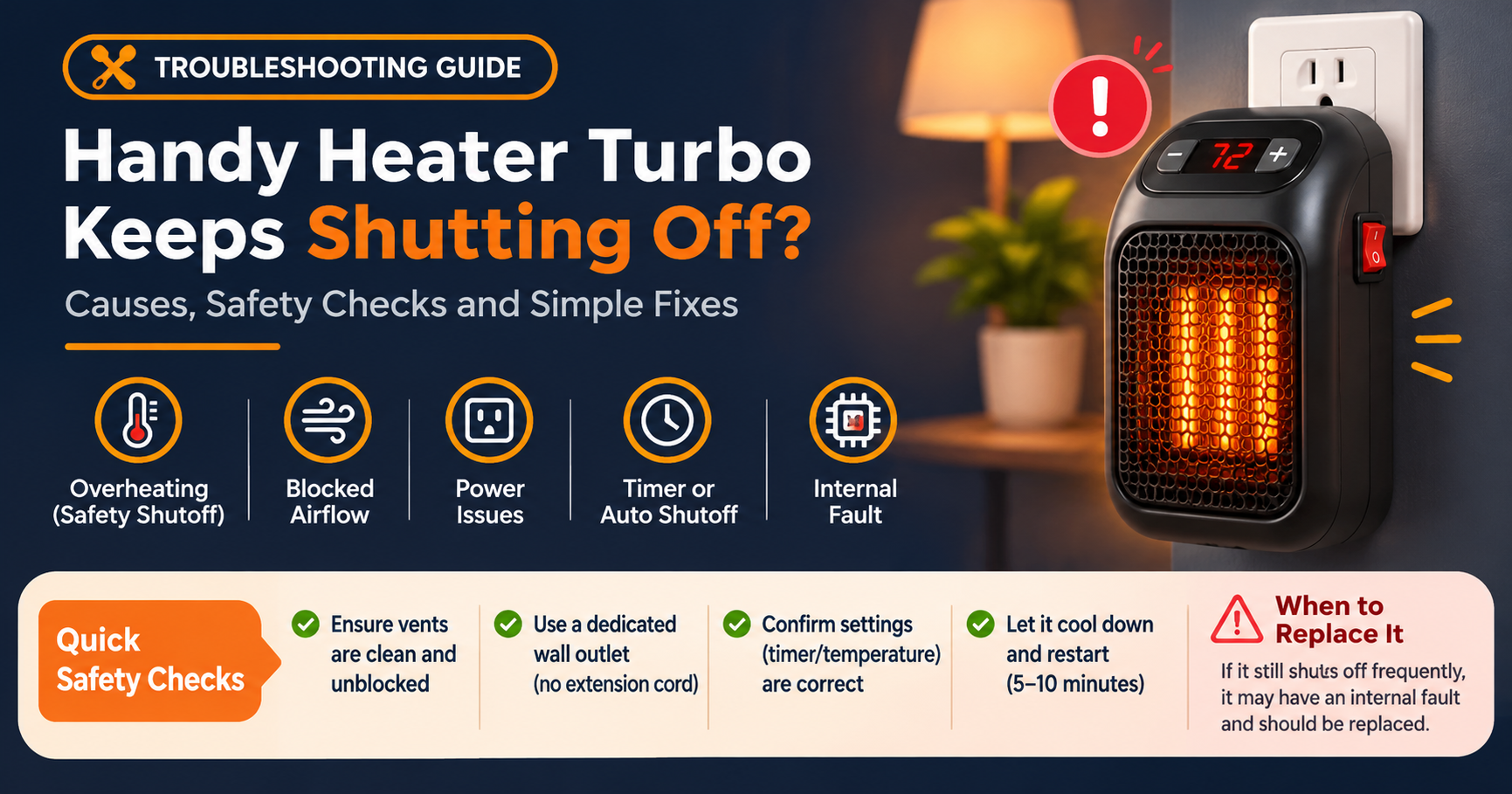
The good news is that a heater that keeps shutting off is often protecting you rather than failing. Most compact electric heaters have built-in safety systems that cut the power when something is not right. In many cases the cause is simple, such as dusty vents, an extension cord, an uneven surface or a thermostat setting. This guide explains every common reason, how to check each one safely, and when it is time to stop and replace the unit.
Quick Answer
A Handy Heater Turbo that keeps shutting off is most often triggering its overheat protection because the vents or filter are blocked by dust, or because it is plugged into an extension cord or placed on an uneven surface. Unplug it, let it cool, clean the vents, plug it directly into a wall outlet and place it on a flat hard surface. If it still shuts off, stop using it and use your warranty or replace it.
Why Compact Heaters Shut Off by Themselves
A small portable heater concentrates a lot of power into a tiny body. That is why it warms a room quickly, and also why it needs strict safety controls. Compact heaters of this type usually include a few protective features:
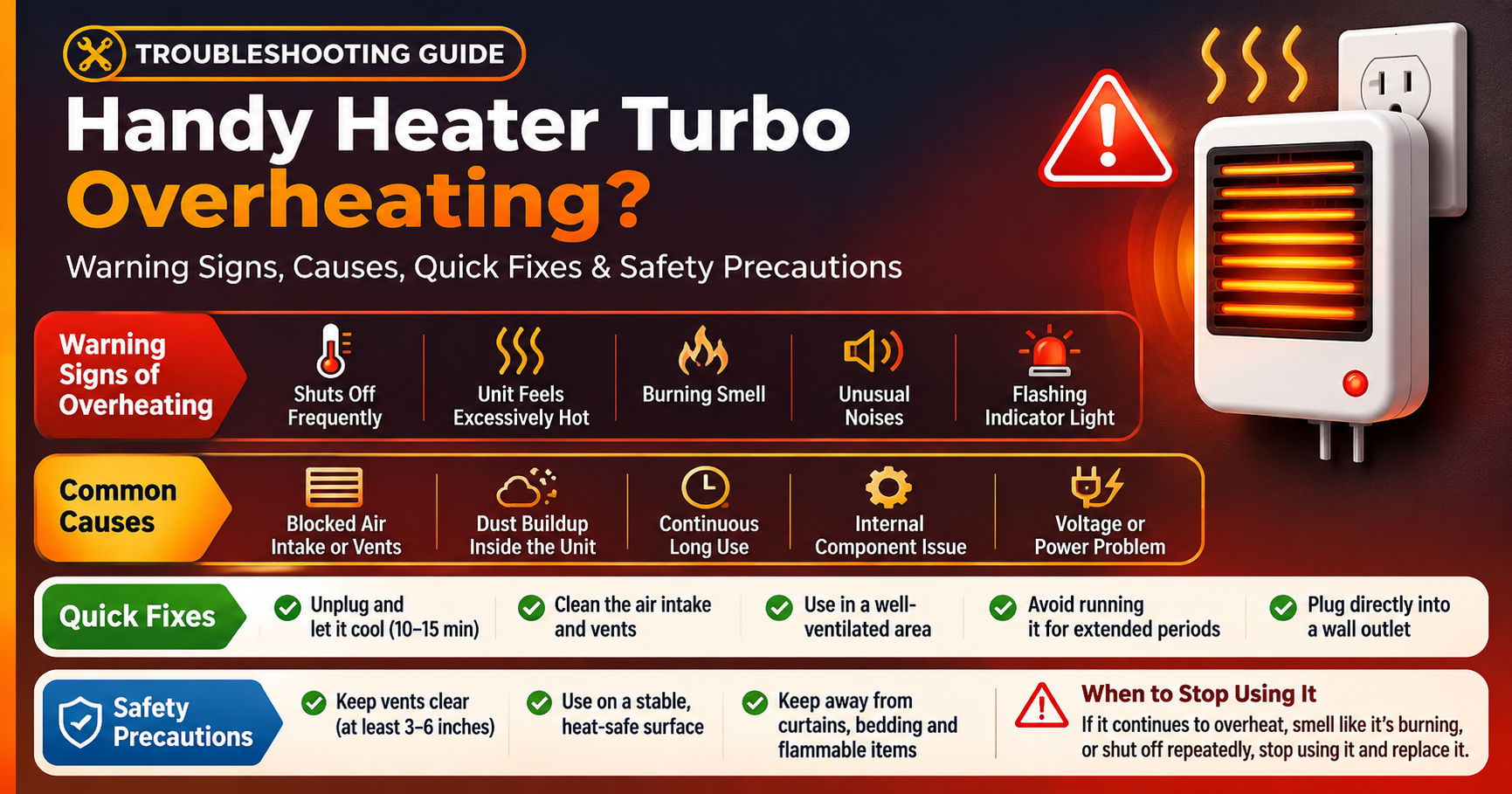
- Overheat protection: a temperature sensor or thermal cut-off that switches the heater off if the internal parts get too hot.
- Tip-over protection: a switch that cuts power if the heater is tilted or knocked over.
- Thermostat: turns the heating element off once the room reaches the selected temperature, then on again when it cools down.
- Timer: switches the heater off after a set period.
When any of these is triggered, whether for a good reason or because of a fault, the heater turns off. Your job is to work out which one is responsible.

8 Common Reasons Your Handy Heater Turbo Keeps Shutting Off
1. Dust and Blocked Air Vents
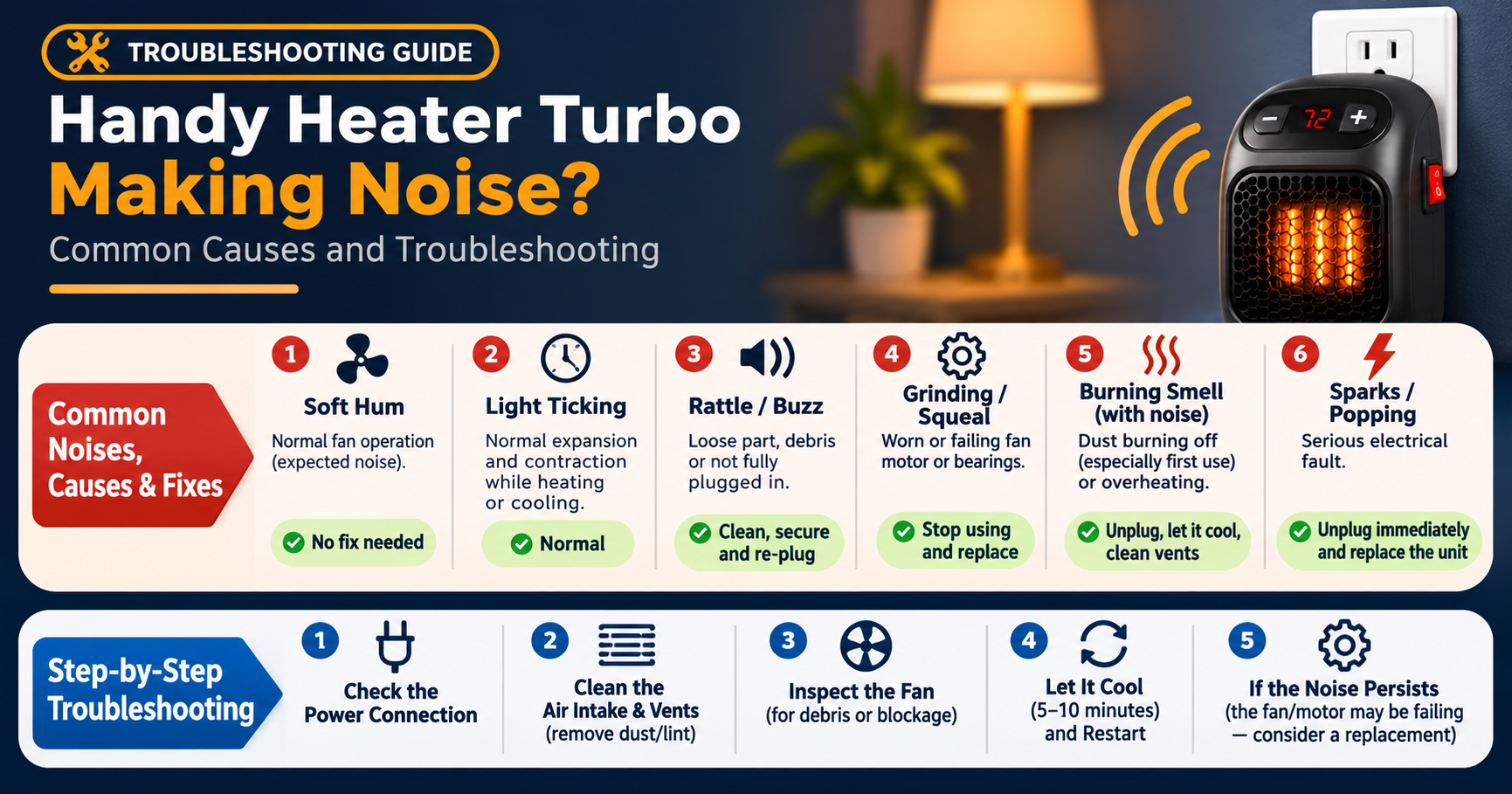
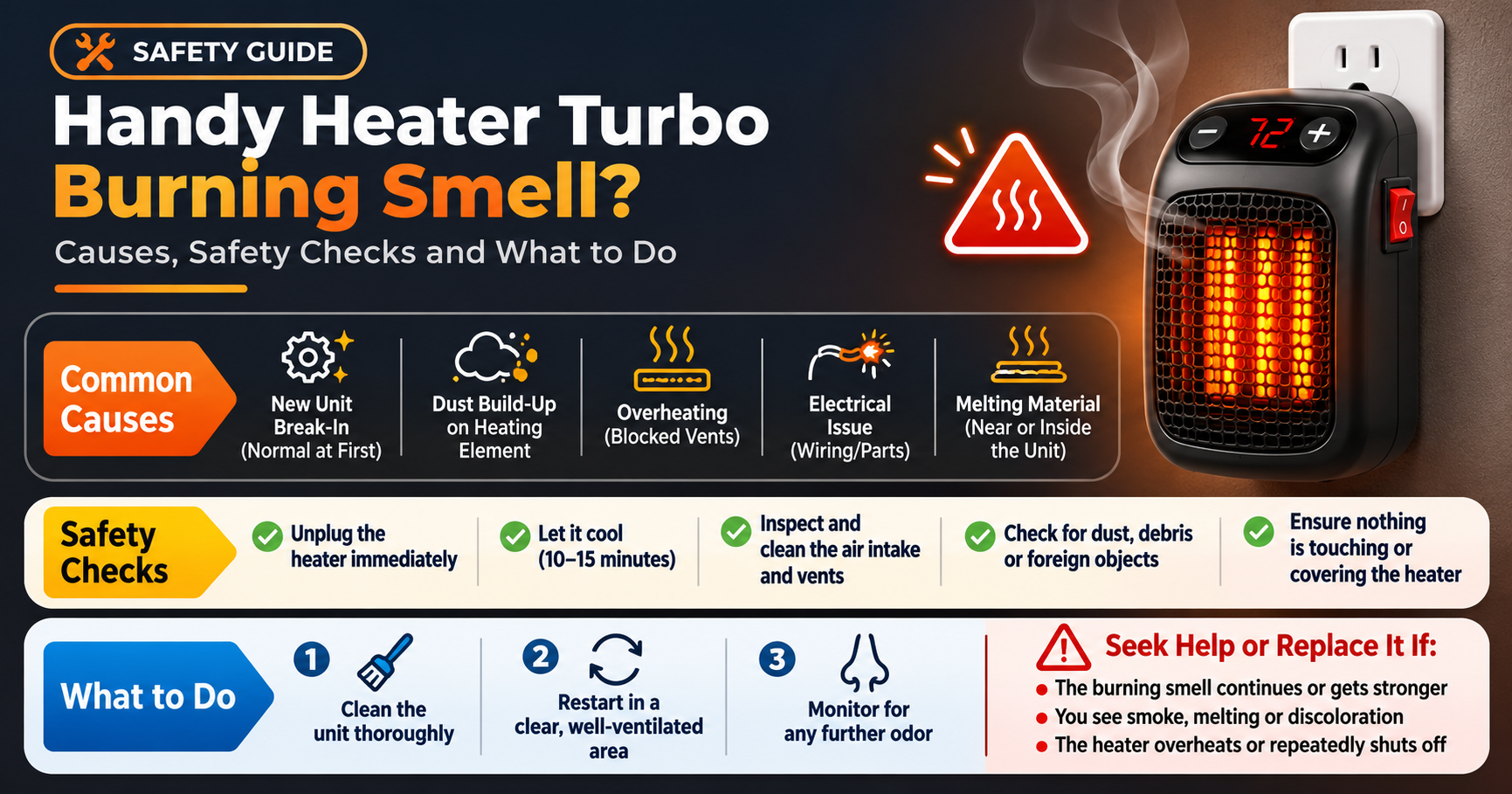
This is the number one cause. Dust, pet hair and lint collect around the air intake and the outlet grille. When air cannot flow freely, heat builds up inside the heater and the overheat protection switches it off, usually after a few minutes of use.
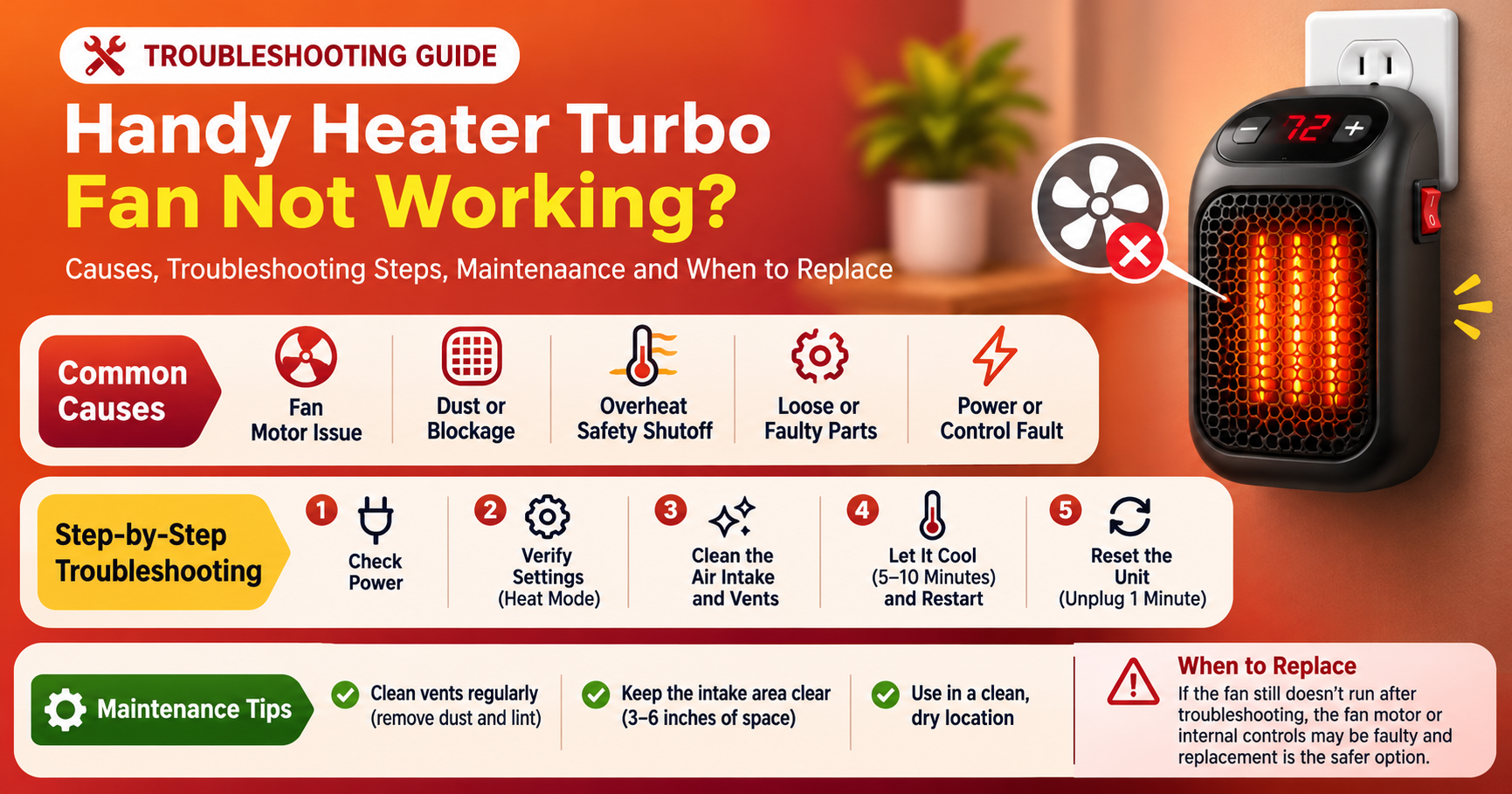
What to do: Unplug the heater and let it cool completely. Use a soft brush or a vacuum cleaner with a brush attachment to clean the vents and grille from the outside. If your model has a removable filter or dust cover, clean it according to the instructions. Do not use water inside the heater and make sure everything is completely dry before use.
2. Poor Airflow Around the Heater
Even a clean heater can overheat if it is pushed against a wall, tucked behind furniture or covered with fabric. It needs open space to pull in cool air and push out warm air.
What to do: Place the heater in an open area with plenty of clear space around it. Never cover it, never dry clothes on it and never block the front or the back.
3. Tip-Over Switch Is Triggered
If the heater sits on a soft or uneven surface such as carpet, a bed, a sofa or a wobbly table, the tip-over switch may think the unit has tilted and cut the power. Sometimes a very slight tilt is enough.
What to do: Put the heater on a flat, hard, level surface such as a solid floor. Check that all of its feet touch the ground evenly.
4. Extension Cord or Power Strip
Heaters draw a high amount of electrical current. A thin extension cord or a power strip can overheat, cause a voltage drop or trip its own protection, which makes the heater turn off or behave unpredictably. This is also a real fire risk.
What to do: Plug the heater directly into a wall outlet. Check the wattage on the heater label and avoid sharing the same circuit with other high-power appliances such as a kettle, a microwave or an air conditioner.
5. Overloaded Circuit or Tripped Breaker
If the whole outlet loses power, the heater is not the problem. The circuit breaker or fuse may be tripping because too many appliances are running together.
What to do: Turn off other heavy appliances on the same circuit, or move the heater to an outlet on a different circuit. If a breaker trips repeatedly, ask a qualified electrician to check the wiring.
6. Thermostat or Timer Settings
Sometimes nothing is wrong at all. If the target temperature is set close to the room temperature, the heater will switch off as soon as the room reaches it. A timer that was set earlier can do the same thing.
What to do: Turn the temperature setting higher, cancel any timer and watch whether the heater still turns off. Keep in mind that the sensor measures the air near the heater, which warms up quickly, so the heater may cycle on and off more than you expect.
7. Loose Plug, Damaged Cord or Worn Outlet
A plug that does not sit firmly in the socket creates resistance and heat. This can interrupt the power or make the heater cut out when the plug moves slightly. A worn outlet can cause the same problem.
What to do: Check that the plug fits tightly. If the plug or the cord feels hot, looks discolored or shows any damage, unplug it and stop using the heater. Try another outlet to see if the problem follows the heater or stays with the outlet.
8. Defective Sensor or Internal Fault
If you have checked everything above and the heater still shuts off, an internal part may be faulty. A worn temperature sensor, a weak thermal fuse or a poor internal connection can trigger the protection too early. Budget heaters and heaters that are used heavily for long hours are more likely to develop this kind of fault.
What to do: Do not open the heater and do not try to bypass the safety parts. Contact the seller or manufacturer, check whether you are still within the return or warranty period and ask for a replacement or refund.
Important Safety Warning
Never disable, bypass or tape down any safety switch to stop the heater from shutting off. These features exist to prevent overheating and fire. If a heater only works when its safety system is defeated, it is not safe to use.
Step-by-Step Troubleshooting Guide
Follow these steps in order. They start with the easiest checks and finish with the decision to replace the heater.
- Unplug the heater and let it cool for at least 15 to 30 minutes.
- Inspect the plug and cord. Look for heat marks, melting, bent pins or fraying.
- Clean the vents and filter gently with a dry brush or a vacuum.
- Move the heater to a flat, hard, level surface with open space around it.
- Plug it directly into a wall outlet. Do not use an extension cord or power strip.
- Check the settings. Raise the temperature and cancel any timer.
- Test it for 20 to 30 minutes while you stay in the room and watch it.
- Try a different outlet to rule out a circuit problem.
- If it still shuts off, stop using it and contact the seller or manufacturer.

Symptom Guide: What Is Probably Happening
| What you notice | Most likely cause | What to do |
|---|---|---|
| Shuts off after 5 to 20 minutes | Overheat protection from blocked vents or dust | Unplug, cool down, clean vents and filter |
| Shuts off when bumped or moved | Tip-over switch triggered | Place on a flat, hard, level surface |
| Shuts off only on an extension cord | Voltage drop or cord overload | Plug directly into a wall outlet |
| Shuts off when the room feels warm | Thermostat reached the target temperature | Raise the set temperature and test again |
| Shuts off at a fixed time | Timer setting | Cancel or extend the timer |
| Shuts off with a burning smell or sparks | Serious fault | Unplug immediately and stop using it |
| Shuts off even when everything is correct | Defective sensor or internal part | Use the warranty or replace the heater |
Where to Place Your Heater Safely
Correct placement prevents many shut-off problems and is the most important safety habit with any electric heater. Keep the heater at least 3 feet (about 1 meter) away from anything that can burn, such as curtains, bedding, sofas, clothes and paper. Put it directly on the floor or another hard flat surface, and never leave it running unattended or while you sleep unless the manufacturer clearly says it is designed for that.

What You Should Not Do
- Do not open the heater or repair it yourself.
- Do not tape, jam or disable any safety switch.
- Do not cover the heater or dry laundry on it.
- Do not use it in a bathroom or any place that can get wet unless it is specifically rated for it.
- Do not leave it on while you are away from home or asleep.
- Do not keep using a heater with a hot plug, a burning smell, melted parts or sparks.
How to Keep Your Heater Working Longer
- Clean it regularly. A quick dry dusting every one to two weeks during heavy use prevents most overheating shut-offs.
- Store it properly. At the end of the season, clean it, let it dry and keep it in a dry place, preferably in its original box.
- Do not run it non-stop. Give it breaks, especially in very small rooms.
- Handle it gently. Knocks and drops can damage the sensor and the tip-over switch.
- Keep the cord loose. Do not bend it sharply or wrap it tightly around the heater while it is hot.
When Is It Time to Replace the Heater?
Replace the heater if it still shuts off after a full cleaning and correct setup, if it shuts off within seconds, if it shows signs of electrical damage, or if it is no longer covered by a warranty and keeps failing. A repeated shut-off after you have fixed every outside cause usually points to a faulty internal part, and repair is not worth the risk for a low-cost compact heater.
What to Look for in a Replacement
- Recognized safety certification for your country, shown on the label or in the manual.
- Both overheat and tip-over protection clearly listed.
- Adjustable thermostat so it does not run at full power all the time.
- Suitable wattage for your room size. A heater that is too small will run constantly and overheat, while an oversized one can overload the circuit.
- Thick cord and a solid plug that fits the outlet snugly.
- Clear warranty and return policy from a seller you can contact easily.
- Honest reviews. Read recent customer reviews and look for repeated complaints about shutting off, smell or build quality, and be careful with products that rely only on dramatic advertising claims.
Frequently Asked Questions
Why does my Handy Heater Turbo turn off after a few minutes?
The most common reason is the overheat protection. If the vents are blocked by dust or the heater has no room to breathe, the internal sensor cuts the power to prevent damage. Cleaning the vents and giving the heater open space usually solves it.
Is it dangerous if a heater keeps shutting off?
The shut-off itself is a safety feature doing its job, which is a good sign. The danger comes from ignoring it, bypassing it or using a damaged heater. If you notice a burning smell, melted plastic, sparks or a hot plug, stop using it right away.
Can I reset my heater?
Many compact heaters reset themselves once they cool down. Unplug the unit, wait 15 to 30 minutes, clean the vents, then plug it back into a wall outlet. Always follow the instructions that came with your model.
Should I use an extension cord with a space heater?
It is best to avoid it. Heaters draw a lot of power, and thin cords or power strips can overheat or cause a voltage drop. Use a wall outlet directly whenever possible.
Can I open the heater and repair it myself?
No. Opening a heater can expose you to electric shock and will usually void the warranty. Contact the seller or manufacturer, or replace the unit.
How long should a small electric heater last?
With normal use and regular cleaning, many compact heaters last several seasons, but quality varies a lot between brands. A heater that keeps failing early may simply have weak internal parts.
What should I look for in a replacement heater?
Look for a recognized safety certification, tip-over protection, overheat protection, an adjustable thermostat, a thick power cord with a solid plug and a clear warranty from the seller.
Final Thoughts
If your Handy Heater Turbo keeps shutting off, do not panic. In most cases the cause is something simple that you can fix in a few minutes: clean the vents, give the heater open space, put it on a flat surface, plug it straight into the wall and check the thermostat and timer. These steps solve the majority of shut-off problems.
If the heater keeps cutting out after all of that, treat it as a warning and not as an inconvenience. Stop using it, contact the seller for a warranty claim or refund, and choose a replacement with proper safety protection. A warm room is never worth the risk of an electrical fire.
Disclaimer: This article is for general information only. Always follow the manual and safety instructions of your specific heater model. If you are unsure about the electrical safety of your heater or your home wiring, contact a qualified professional.