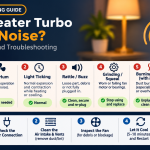
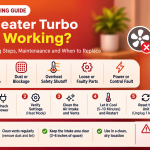
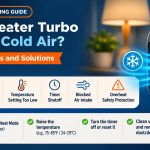
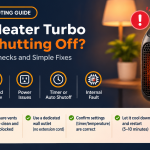
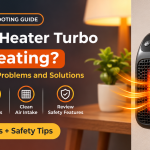
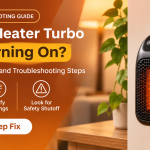


It is the middle of winter, the room is freezing, you switch on your Handy Heater, and… nothing. The turbo fan does not spin, no warm air comes out, or the fan makes a strange noise and then stops. If you are dealing with a Handy Heater turbo fan not working problem, do not panic. In most cases the cause is simple and you can fix it at home in less than 15 minutes without any special tools.
In this complete guide, you will learn why the turbo fan stops working, how to diagnose the exact problem, a step-by-step fix for each cause, the safety rules you must follow, and how to decide when it is smarter to replace the heater instead of repairing it.
Quick Answer: Why Is My Handy Heater Turbo Fan Not Working?
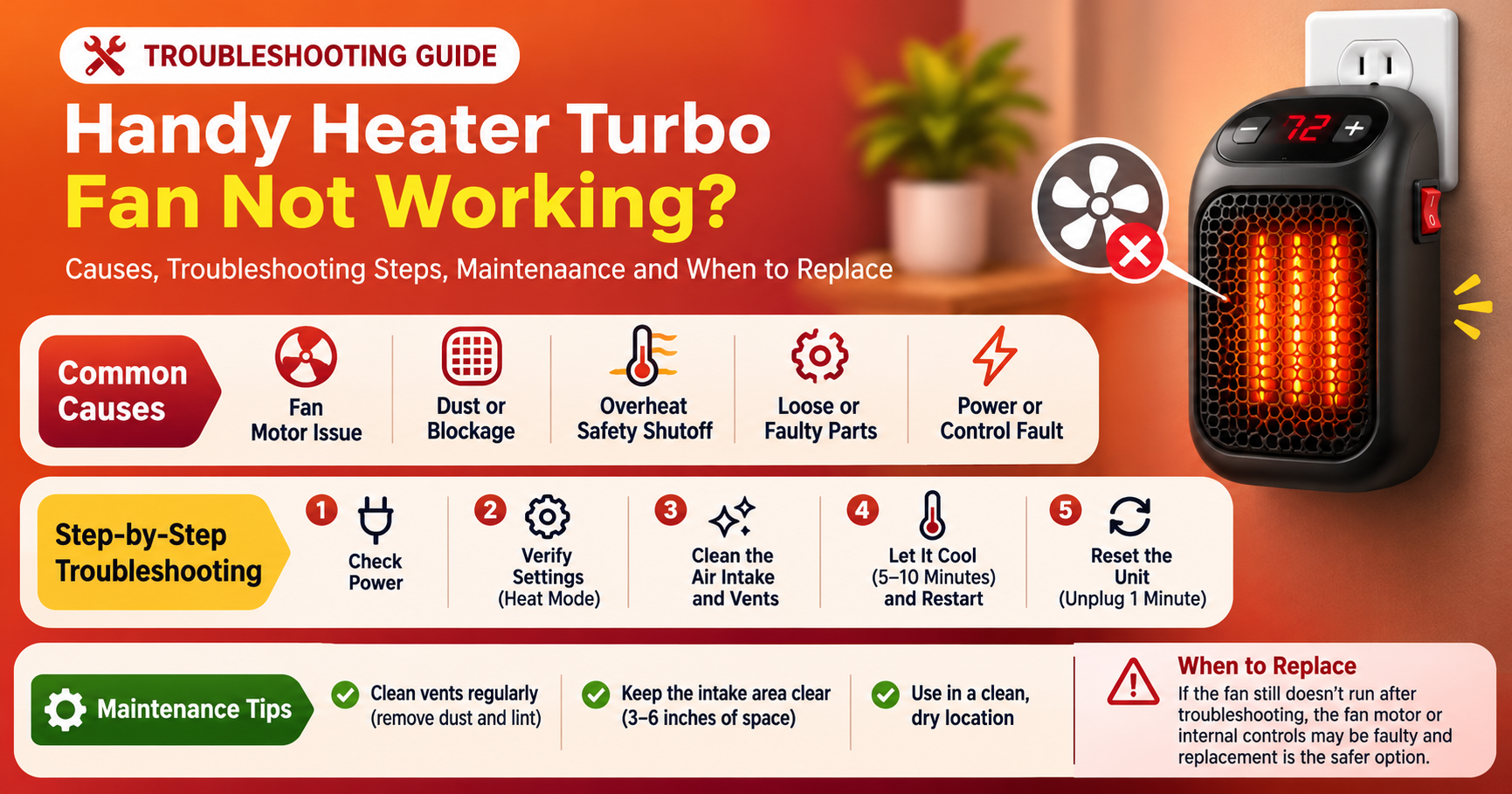
The most common reasons a portable heater’s turbo fan stops working are a power supply problem (bad outlet, damaged cord or plug), dust and lint clogging the fan and vents, an activated overheat protection (thermal cutoff) switch, an obstructed or loose fan blade, and, less often, a burnt-out fan motor or a faulty internal wire. Start with the easy checks first and move on to the harder ones only if needed.

Safety First: Before You Touch Anything
A heater combines electricity and high temperature, so safety always comes before repair. Before you start any of the fixes below:
- Unplug the heater from the wall socket completely.
- Let it cool down for at least 20 to 30 minutes.
- Place it on a flat, dry, stable surface with good lighting.
- Never open the sealed housing or touch internal wiring unless you are qualified to do so.
- Never use water or any liquid cleaner inside the heater.

10 Common Causes and How to Fix Each One
1. The Wall Outlet Is Not Supplying Power
Before blaming the heater, make sure the outlet works. A tripped circuit breaker, a loose socket or a faulty extension board can stop the fan from getting power.
How to fix it:
- Plug a lamp or phone charger into the same outlet to check that it is live.
- Check your home’s breaker or fuse box and reset any tripped breaker.
- Plug the heater directly into a wall socket. Avoid extension cords and multi-plug boards, because heaters draw a lot of power.
2. Damaged Power Cord or Plug
A cord that is bent, frayed, pinched under furniture or discolored near the plug can interrupt power to the fan. A plug that feels very hot or shows burn marks is a serious warning sign.
How to fix it:
- Inspect the full length of the cord for cuts, cracks, kinks or melted spots.
- Check that the plug pins are straight, clean and not blackened.
- If you see any damage, stop using the heater. Do not repair a heater cord with tape.
3. Dust and Lint Blocking the Fan
This is the number one reason for a weak, noisy or stuck turbo fan. Over time, dust, pet hair and lint collect around the fan blades and air intake. The fan struggles to spin, the motor overheats, and the heater may switch off completely.
How to fix it:
- With the heater unplugged and cool, use a soft brush or a small vacuum with a brush attachment to clean the intake and outlet grilles.
- Use a can of compressed air to blow dust out of the vents in short bursts.
- Wipe the outer body with a slightly damp cloth, and let it dry fully before use.
4. Overheat Protection (Thermal Cutoff) Has Activated
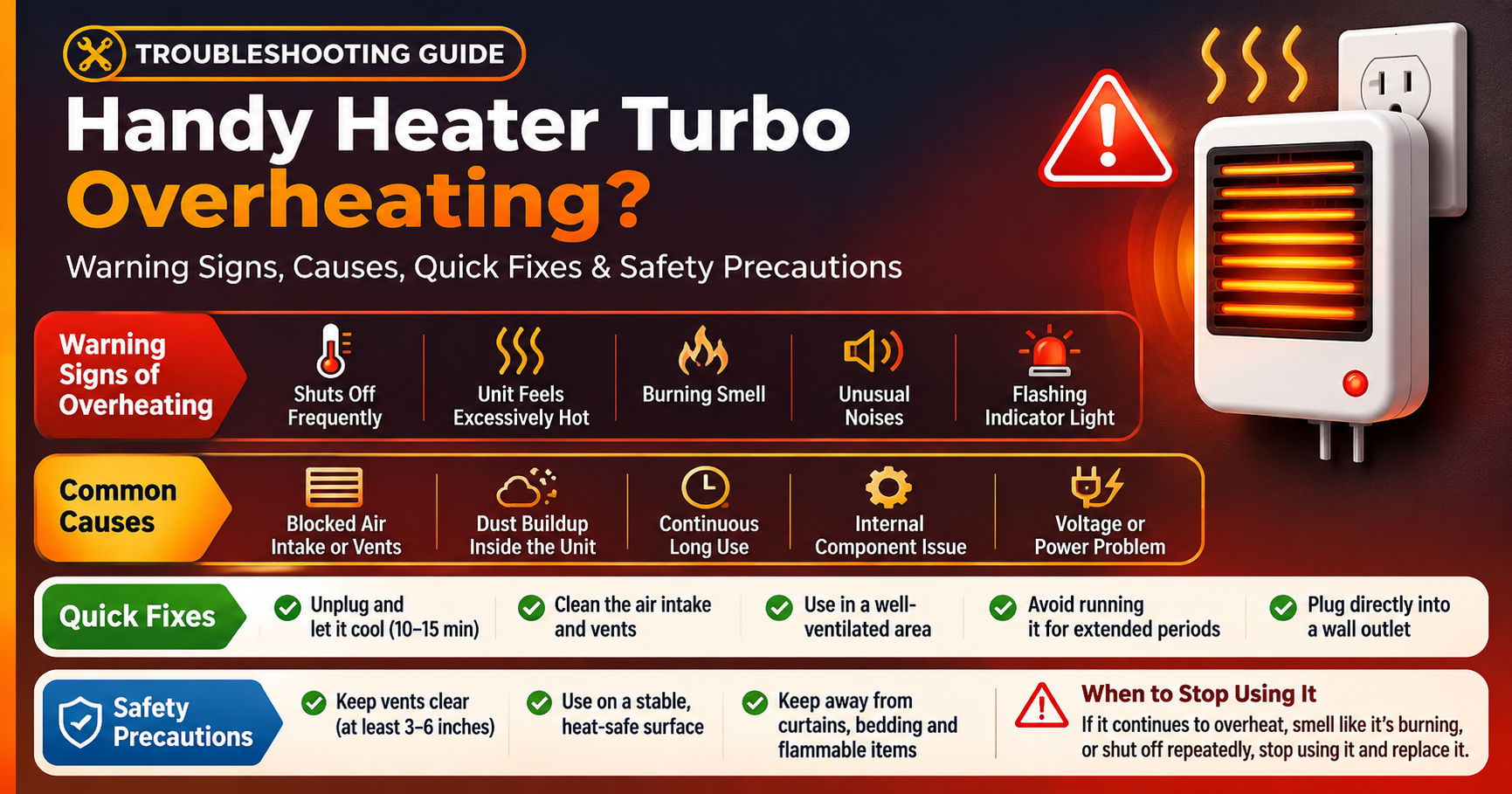
Most portable heaters have a built-in safety device that cuts power when the internal temperature gets too high. If airflow is blocked, the heater overheats, the safety device trips, and the fan stops. Some units reset on their own after cooling, and some need a manual reset.
How to fix it:
- Unplug the heater and wait at least 30 minutes.
- Clear any blocked vents and move the heater away from walls, curtains and furniture.
- Plug it back in and turn it on. If it works, the cause was overheating from poor airflow.
- If it keeps shutting off again and again, the thermal switch may be faulty or the unit is overheating internally, and you should stop using it.
5. Tip-Over Switch Is Engaged
Modern heaters have a tip-over safety switch that cuts the power if the unit is tilted or placed on an uneven surface. If the heater sits on carpet, a cushion or a slightly slanted floor, the switch may not release, and the fan will not start.
How to fix it:
- Move the heater to a hard, flat and level surface.
- Check that nothing is stuck under the base or pressing on the switch.
- Turn the unit off, wait a few seconds and switch it on again.
6. Wrong Mode or Thermostat Setting
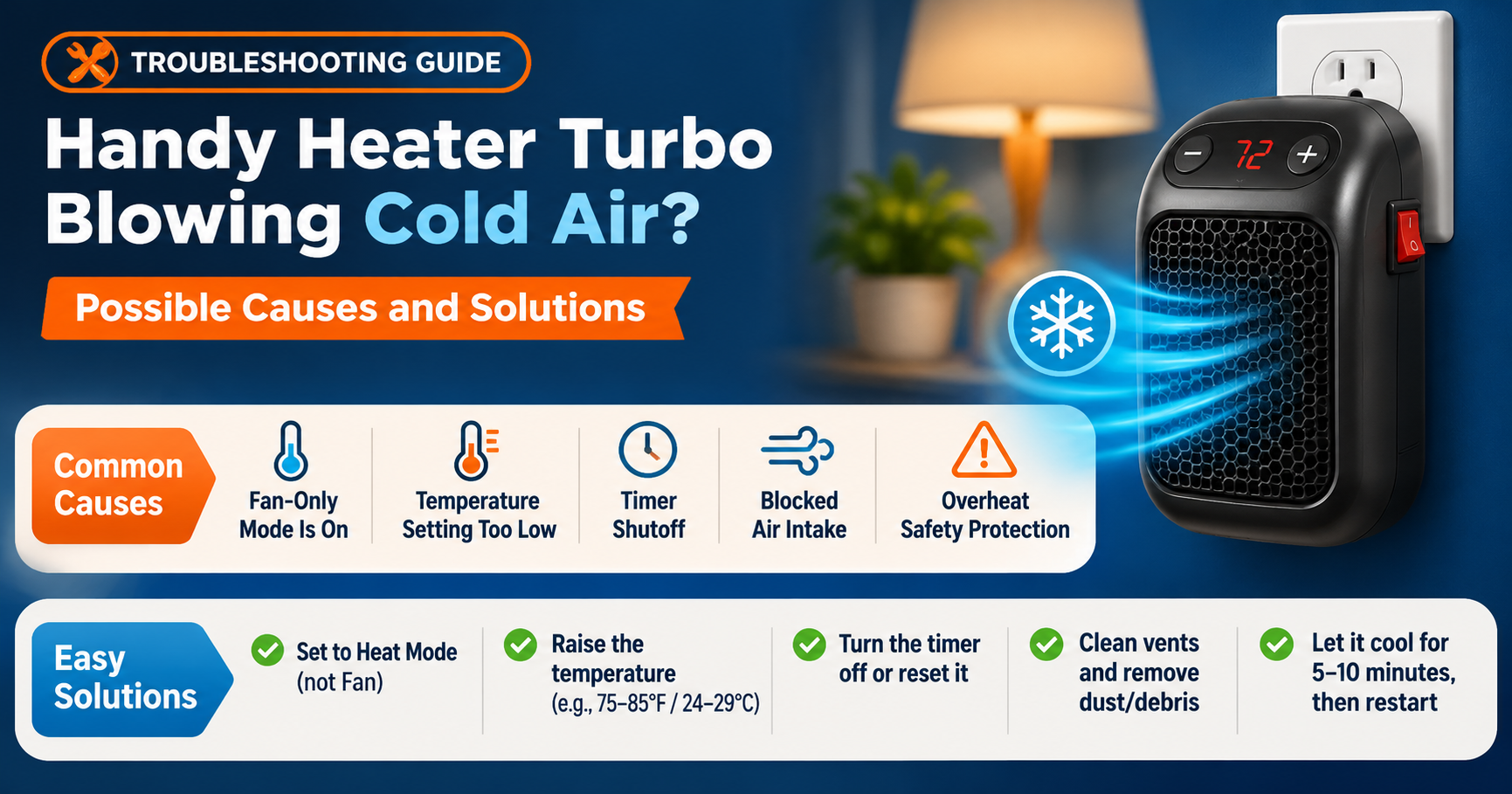
Sometimes the heater is not broken at all. If the thermostat is set lower than the room temperature, the heater may not start the heating cycle, so the turbo fan may not run as you expect.
How to fix it:
- Turn the temperature or heat setting to the highest level and test the fan.
- Switch between the available modes (fan only, low heat, high heat) to see if the fan responds.
- Check the user manual to confirm how each button or knob is supposed to behave.
7. Fan Blade Is Obstructed or Loose
A small object, a piece of paper, a thread or a loose blade can stop the fan from rotating. A blade that has shifted on its shaft can rub on the housing and produce a rattling or scraping sound.
How to fix it:
- With the unit unplugged, look through the grille with a flashlight to spot foreign objects.
- Gently try to turn the fan by hand through the grille using a plastic or wooden stick. It should move freely.
- If the blade feels stuck, cracked or wobbly, the heater needs professional service or replacement.
8. Low Voltage or Unstable Power Supply
If your home has frequent voltage drops, the fan motor may not start properly even though the heater switches on. This is common when many high-power appliances run at the same time, such as an air conditioner, a water heater and a room heater together.
How to fix it:
- Turn off other high-power appliances on the same circuit and test the heater again.
- Try a different room or a different socket on another circuit.
- If voltage fluctuation is a regular issue in your area, consider using a suitable voltage stabilizer.
9. Worn-Out or Burnt Fan Motor
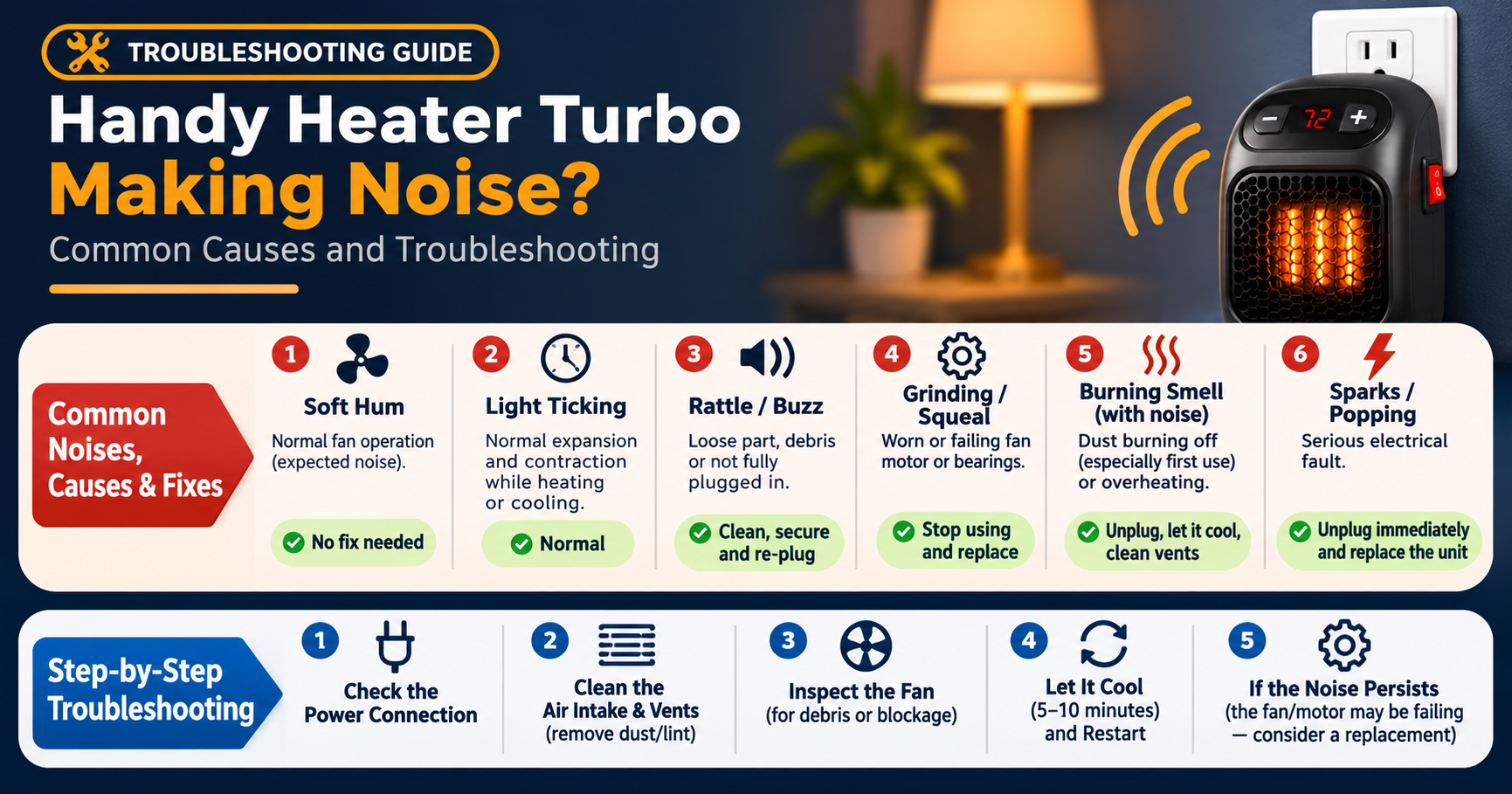
Fan motors do not last forever. Heavy daily use, dusty rooms and overheating shorten their life. Typical signs of a failing motor include a humming sound without any rotation, a burning smell, a fan that only spins when you push it by hand, or a fan that works for a few minutes and then stops.
How to fix it:
- If the unit is under warranty, contact the seller or manufacturer for a repair or replacement.
- Out of warranty, compare the cost of a repair with the price of a new heater. For low-cost portable heaters, replacement is usually the smarter choice.
- Do not keep running a heater that hums, smells of burning or sparks.
10. Internal Wiring or Control Board Fault
A loose connection, a damaged wire or a failed control board can cut power to the fan while the rest of the heater looks normal. This is not a DIY job for most people, because the internal parts carry mains voltage.
How to fix it:
- Do not open the heater yourself unless you are a trained technician.
- Take it to a certified repair shop, or use your warranty or return window.

Step-by-Step Troubleshooting Checklist
Follow this order to save time and avoid unnecessary repairs:
- Unplug the heater and let it cool down completely.
- Test the wall outlet with another device and check the breaker.
- Inspect the power cord and plug for damage or burn marks.
- Clean the vents and fan area with a brush and compressed air.
- Place the heater on a flat, hard surface and check the tip-over switch.
- Check the mode and thermostat settings.
- Look for objects blocking the fan or a loose blade.
- Plug the heater in again and test it for a few minutes while you stay in the room.
- If the fan still does not work, stop using it and arrange a warranty claim, repair or replacement.
Signs That You Should Stop Using the Heater Immediately
Some symptoms mean the heater is no longer safe. Unplug it and do not use it again until a professional checks it:
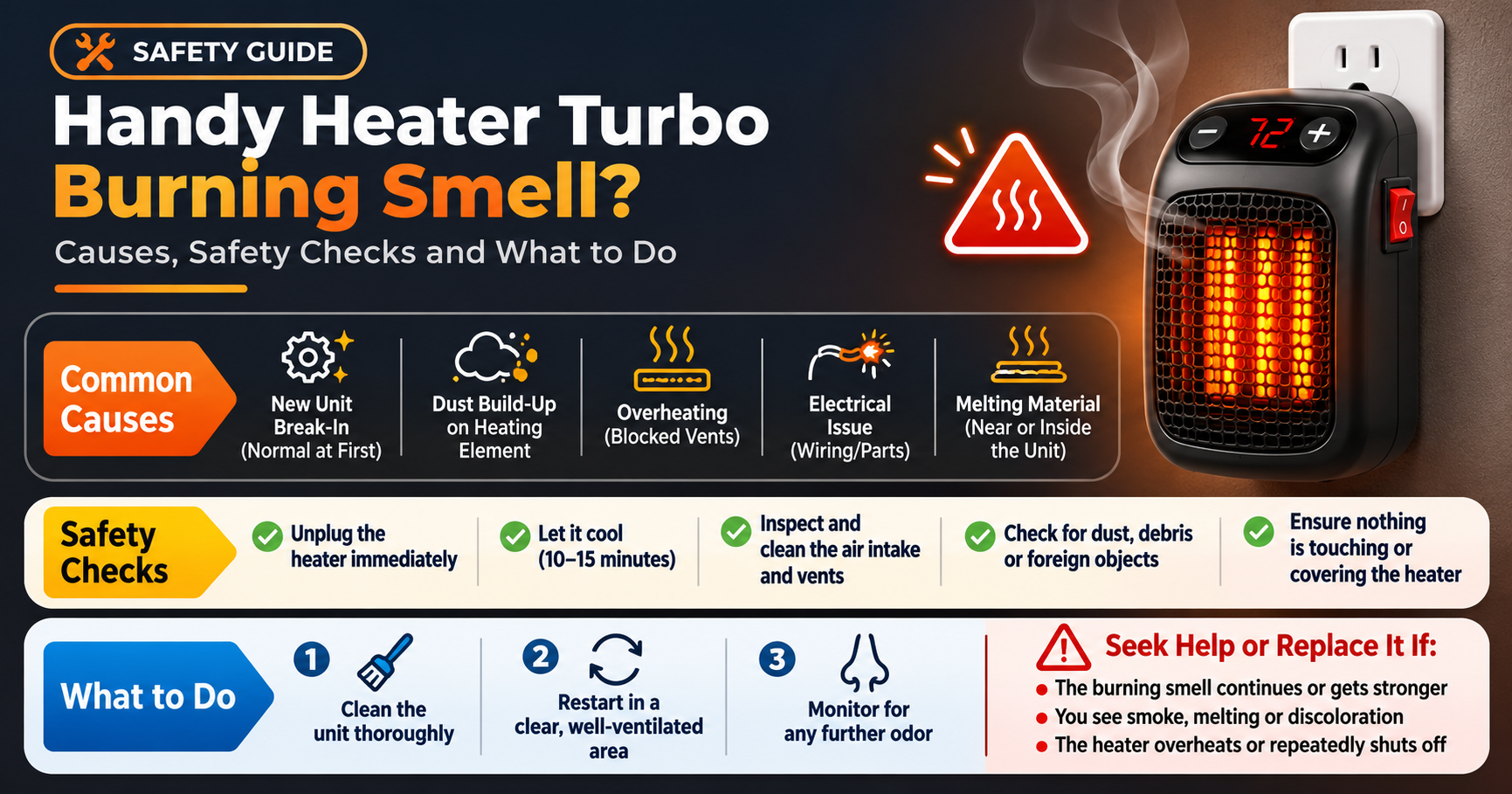
- A burning or melting plastic smell
- Smoke, sparks or visible flames
- A plug or cord that gets very hot, melts or changes color
- A loud buzzing, grinding or crackling sound
- The heater shuts off repeatedly and trips the household breaker
- Cracked or deformed plastic housing
Repair or Replace? How to Decide
Portable heaters are designed as budget-friendly appliances, so repair is not always worth the money. Use this simple guide:
| Situation | Best Option |
|---|---|
| Dust, tip-over switch or settings issue | Fix at home |
| Still under warranty or return period | Claim warranty or return |
| Burnt motor or damaged cord, out of warranty | Replace the heater |
| Burning smell, sparks or melted plug | Stop using it and replace |
| Heater is several years old and failing repeatedly | Replace for safety and efficiency |
How to Prevent Turbo Fan Problems in the Future
- Clean the vents regularly. Once every two to four weeks during heavy use is a good habit.
- Store it properly. Keep the heater covered and dry in the off-season so dust does not collect inside.
- Do not block the airflow. Keep at least 3 feet (about 1 meter) of free space around the heater.
- Avoid extension cords. Plug directly into a wall socket whenever possible.
- Do not run it non-stop for many hours. Give the motor time to rest.
- Handle the cord gently. Do not pull the plug by the cable and do not wrap the cord tightly around the unit.
What to Look for When Buying a Replacement Heater
If you decide to replace your Handy Heater, check these features before you buy so you do not face the same problem again:
- Overheat protection: An automatic shut-off prevents damage and fires.
- Tip-over protection: Essential for homes with kids and pets.
- Adjustable thermostat and modes: Gives you control over comfort and power use.
- Quality fan motor: Look for a quiet, durable motor and reviews that mention long-term reliability.
- Easy-to-clean design: Removable or accessible grilles make maintenance simple.
- Safety certifications: Choose a heater that meets recognized electrical safety standards for your country.
- Right size for your room: A compact heater is great for a small room, but a large room may need a more powerful model.
- Warranty and return policy: A longer warranty gives you peace of mind.
Frequently Asked Questions (FAQ)
Why does my Handy Heater turn on but the turbo fan does not spin?
The most likely reasons are dust blocking the fan, a stuck blade, an activated overheat protection switch or a worn-out motor. Unplug the heater, let it cool, clean the vents and check for obstructions first.
Why is the turbo fan making a loud noise?
Loud rattling, scraping or grinding is usually caused by dust buildup, a loose or bent fan blade, or a failing motor bearing. Clean the unit first. If the noise continues, stop using it.
Why does the heater work for a few minutes and then stop?
This is a classic sign of overheat protection. Blocked airflow, a weak fan or a dusty interior makes the heater overheat, and the safety switch turns it off. Clean the vents, give it space and test again.
Can I fix a Handy Heater turbo fan myself?
You can safely handle outside checks: outlet testing, cord inspection, vent cleaning, surface placement and settings. Do not open the housing or repair internal electrical parts yourself. Leave that to a qualified technician.
Is it safe to use a heater with a broken fan?
No. The fan moves heat away from the heating element. If the fan fails, the element can overheat, which raises the risk of damage and fire. Stop using the heater until the fan works properly.
How long does a portable heater usually last?
With regular cleaning and normal use, many portable heaters last several seasons. Lifespan depends on build quality, how often you use it, and how dusty your environment is.
Can I use an extension cord with my heater?
It is best to avoid it. Heaters draw high current, and a thin or low-quality extension cord can overheat. Plug the heater straight into a wall outlet.
Final Thoughts
A Handy Heater turbo fan not working problem looks scary, but it is usually caused by something simple: a dead outlet, a dusty fan, a tripped safety switch or a wrong setting. Work through the checklist in this guide step by step, keep safety as your top priority, and never ignore signs like burning smells, sparks or overheating plugs.
If the fan still refuses to spin after your checks, the smartest move is to use your warranty or replace the heater with a safer, better-built model. A little regular cleaning and proper placement will keep your next heater running strongly through many winters.
Disclaimer: This article is for general information only. Always follow the manufacturer’s manual for your specific model and consult a qualified electrician or technician for internal repairs.