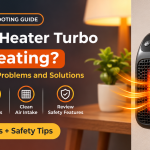

Handy Heater Turbo Overheating? Causes, Quick Fixes and Safety Tips
A small heater is supposed to make a cold room comfortable, not make you nervous. If your Handy Heater Turbo is getting too hot, smelling strange or shutting itself off, you are right to take it seriously. Compact plug-in heaters pack a lot of heat into a small body, so even a minor problem such as a blocked vent can quickly turn into an overheating issue.
This guide explains why a Handy Heater Turbo can overheat, how to tell normal warmth from a real warning sign, what you can safely check at home, and when it is time to stop using the unit completely. Read it before you plug the heater in again.
Table of Contents
- What is a Handy Heater Turbo?
- Is it normal for a small heater to get hot?
- Main causes of overheating
- Step-by-step troubleshooting
- How to prevent overheating
- Safe placement and usage rules
- When to stop using it and ask for a replacement
- Choosing a safer heater
- Frequently asked questions
- Final thoughts
What Is a Handy Heater Turbo?
The Handy Heater Turbo is a compact, portable plug-in space heater designed to warm a small area such as a bedroom corner, a home office desk, a bathroom or a small workspace. Heaters in this category usually use a ceramic or resistance heating element and a small fan to push warm air forward. They are popular because they are cheap, light and easy to move around.
The same features that make them convenient also explain why they can overheat. The body is small, the vents are narrow, and the heating element sits very close to the plastic casing. Good airflow is the only thing keeping temperatures under control.
Is It Normal for a Small Heater to Get Hot?
Yes, some heat is expected. The front grille and the air coming out of it will be hot or very warm, and the casing may feel warm after a long session. The problem begins when the heat goes beyond what the design can handle.

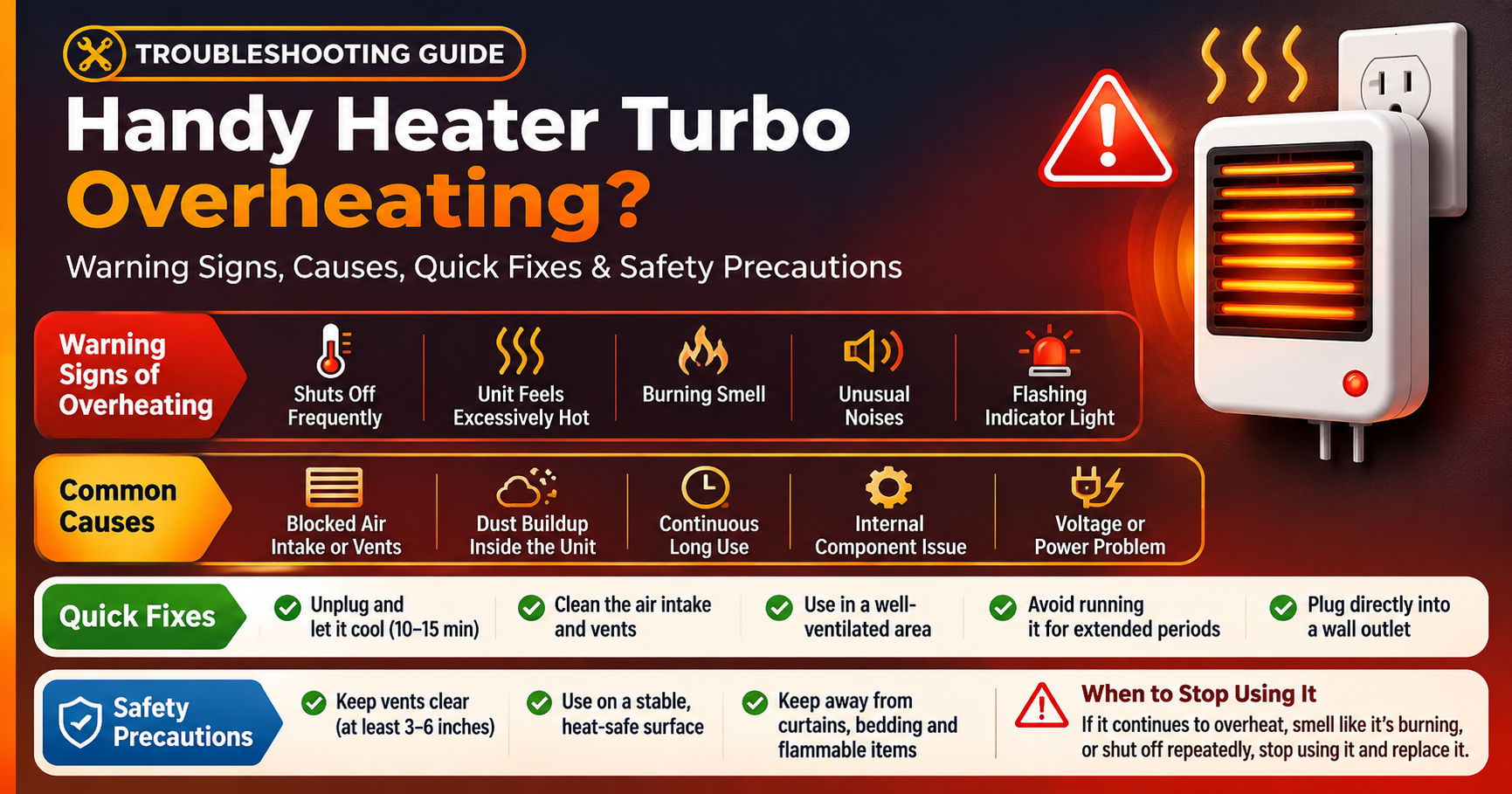
Here are the warning signs that point to real overheating:
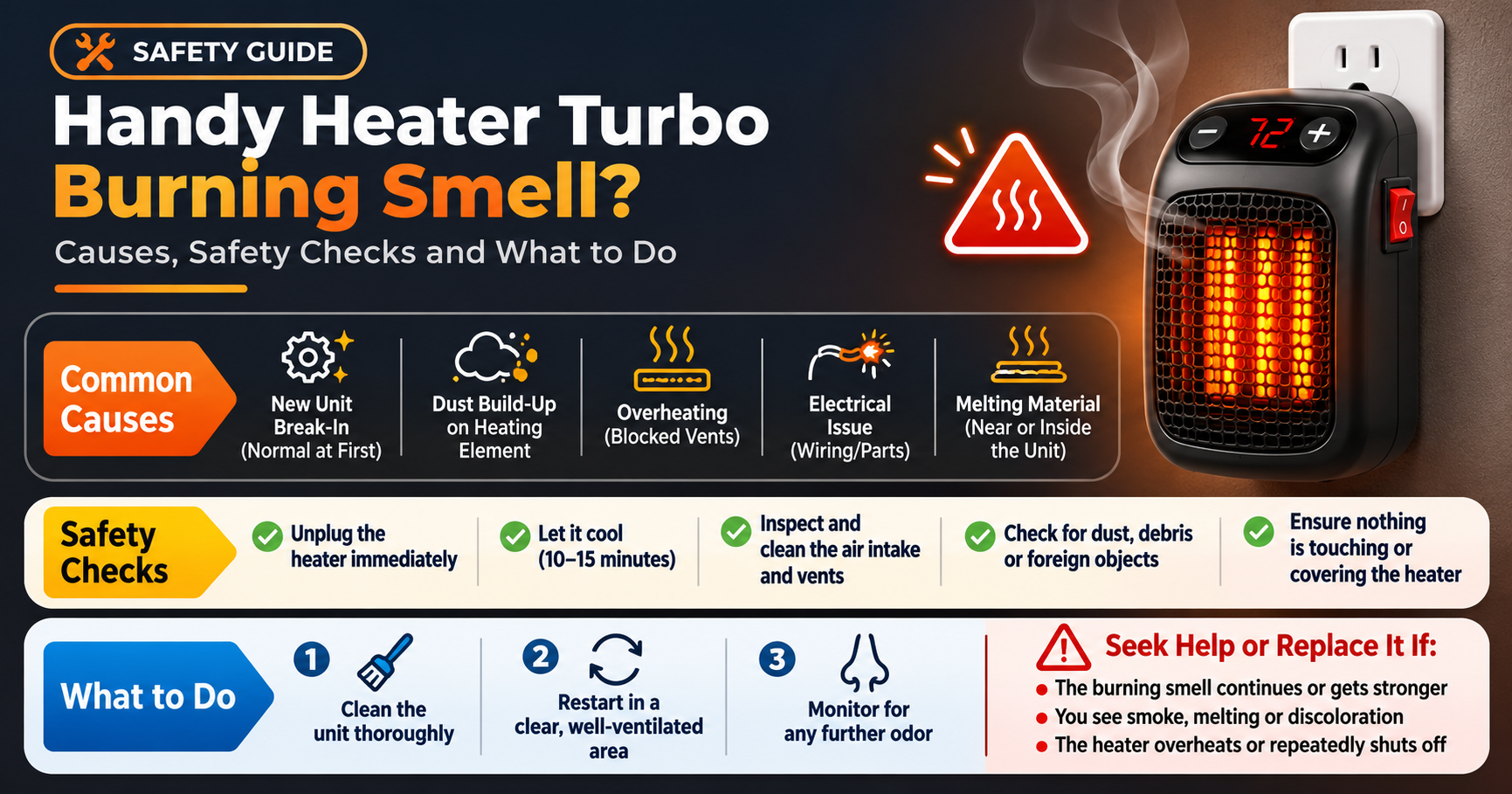
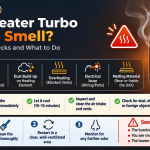
- A burning plastic or burning dust smell that does not fade after a few minutes
- A casing that is too hot to hold your hand against
- A plug, prongs or cord that feel hot or look discolored
- The heater switching off by itself again and again
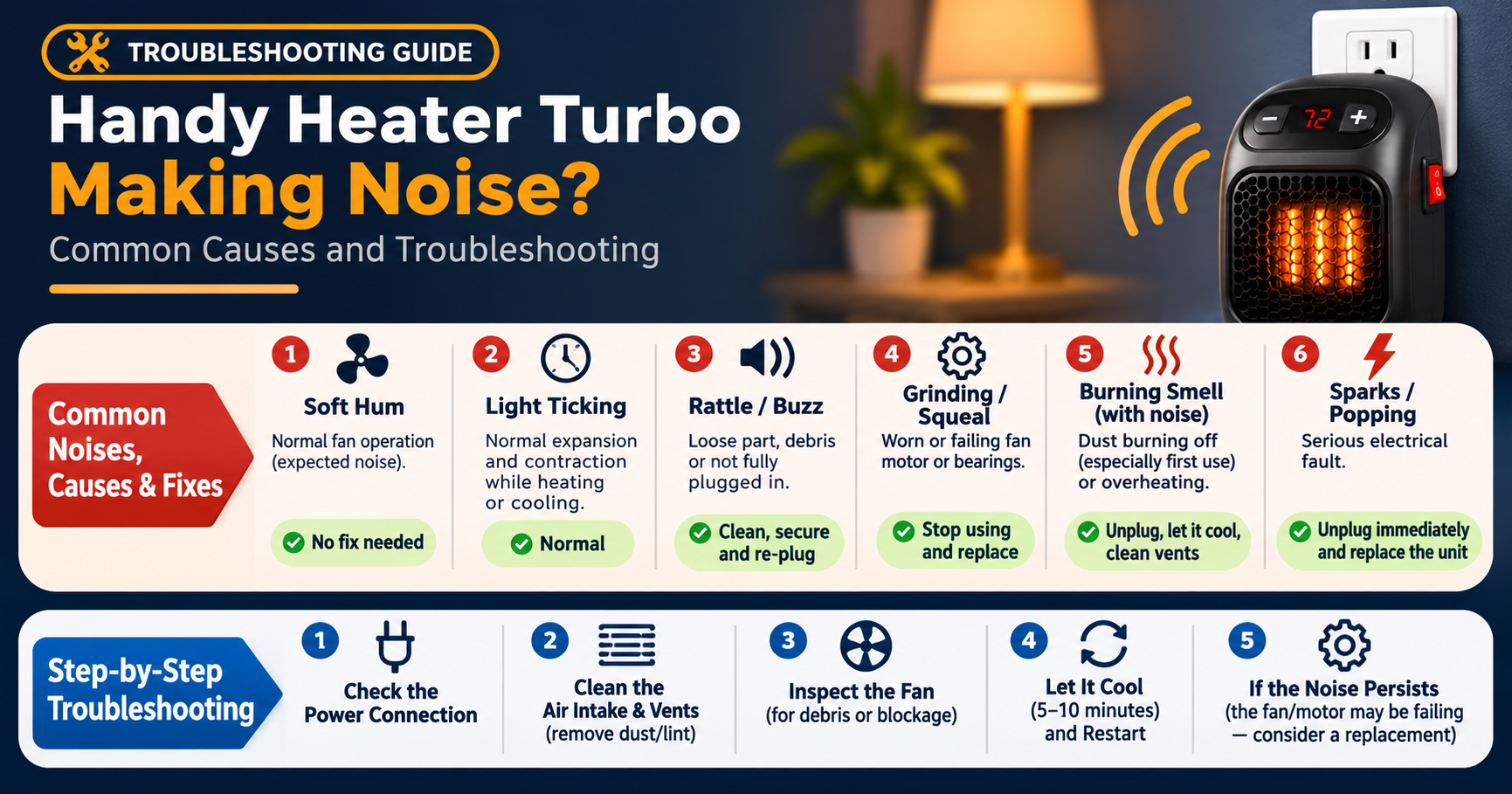
- Crackling, popping or buzzing sounds that were not there before
- Visible smoke, sparks or melted plastic
A faint dusty smell the first time you use a new heater, or after storing it for months, is common and usually clears quickly as dust burns off the element. A smell that returns every time is a different matter.
Main Causes of Handy Heater Turbo Overheating

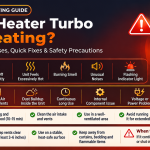
1. Blocked Air Vents
This is the number one cause. Heaters of this type rely on air moving across the element to carry heat away. If the intake or outlet is blocked by a curtain, blanket, sofa cushion or even a wall placed too close, heat builds up inside the unit instead of leaving it. Internal temperatures rise, plastic parts soften and safety cutoffs start to trip.
2. Dust and Lint Buildup
Over time, dust, pet hair and fabric fibers collect around the intake grille, the fan and the element. A layer of dust works like insulation and reduces airflow. If you use the heater daily in a bedroom with carpet, pets or lots of bedding, buildup can happen faster than you expect.
3. Using an Extension Cord or Power Strip
Small heaters draw a lot of current for their size. A thin extension cord or a crowded power strip can overheat at the plug or along the cable, which often feels like the heater itself is overheating. Plug the heater directly into a wall outlet whenever possible.
4. Placing It Too Close to Objects
Furniture, walls, bedding, clothes and paper trap heat around the heater and can reflect it back into the vents. A heater that runs fine in the middle of a room can overheat quickly when pushed against a wall or under a desk.
5. Running It Non-Stop for Many Hours
Compact heaters are meant to provide quick, supplemental warmth, not to run all day and night. Continuous use for many hours keeps the internal parts hot with no chance to cool down, which shortens the life of the thermostat, fan and wiring.
6. Tipped or Uneven Surface
Placing the heater on a soft bed, a rug, a wobbly table or a slanted surface can change the airflow and block the bottom vents. If the heater leans or tips, tip-over protection may shut it down, but you should never depend on that feature as your only safeguard.
7. Faulty Thermostat, Fan or Internal Parts
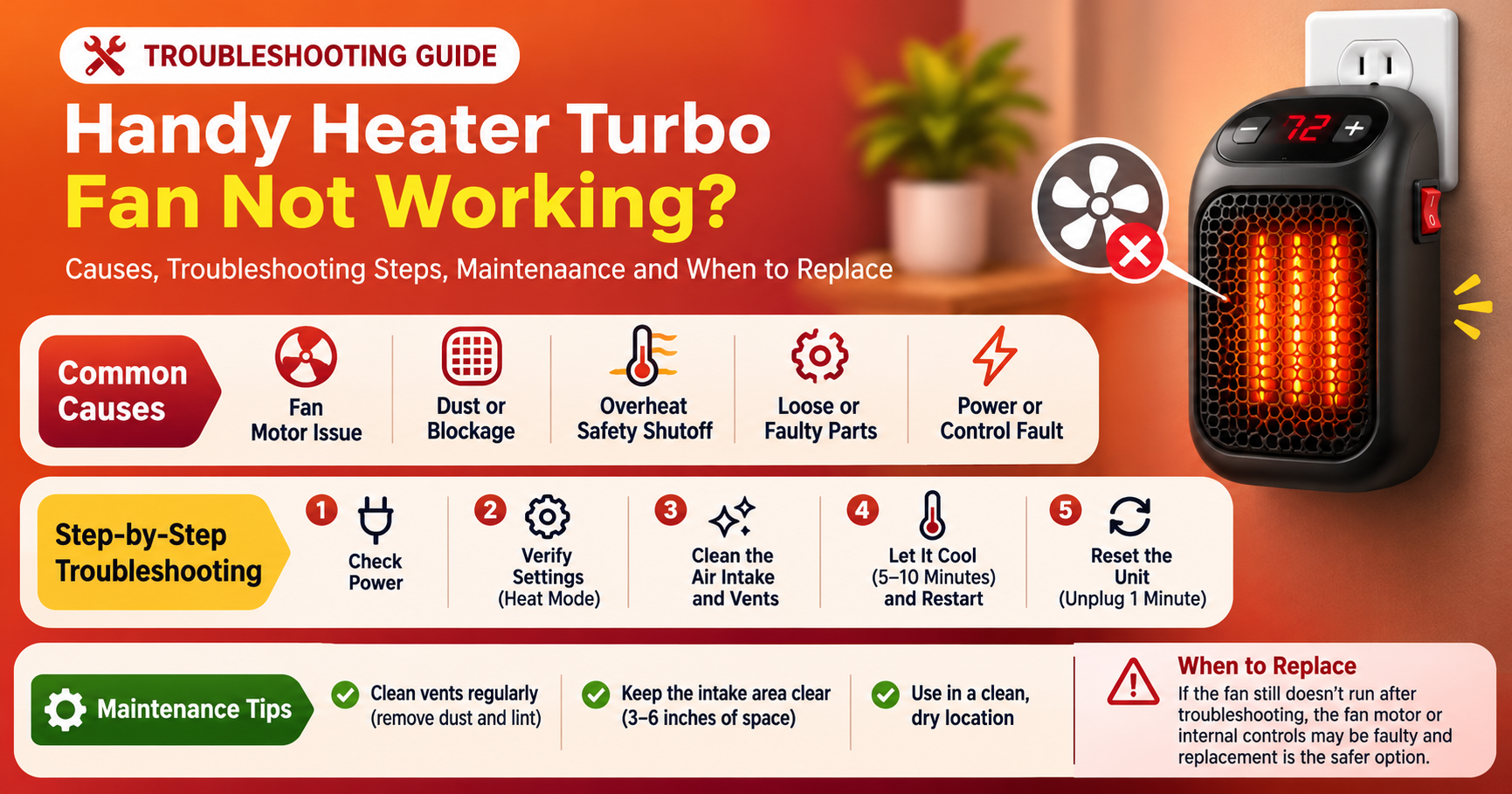
If the fan is slow, noisy or not spinning, or the thermostat fails to regulate temperature, the heater can run hotter than intended. This is a manufacturing or wear problem, and it is not something you can fix with household tools. A unit with this kind of fault should be replaced or returned.
Step-by-Step Troubleshooting
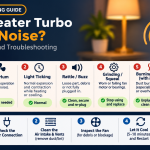
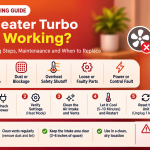
If your heater is running hotter than usual but is not smoking, sparking or melting, work through the checks below. Always unplug the unit and let it cool for at least 30 minutes before touching it.
- Unplug and cool down. Never inspect a heater that is plugged in or still hot.
- Check the vents. Look at both the front outlet and the rear or side intake. Remove anything blocking them and make sure there is open space around the unit.
- Clean the dust. Use a soft brush or a vacuum with a brush attachment to remove dust from the grille and openings. Do not use water, sprays or wet cloths on the unit.
- Inspect the plug and cord. Look for discoloration, bent prongs, melted spots, cracks or loose fit in the outlet. If you see any damage, stop using the heater.
- Move it to a wall outlet. Remove extension cords and power strips from the setup and test it on a direct outlet that is in good condition.
- Reposition on a flat, hard surface. Keep it upright with clear space on all sides.
- Run a short test. Turn it on at a lower setting for 10 to 15 minutes while you stay in the room. Check the casing and plug carefully with the back of your hand, keeping a safe distance from the grille.
- Stop if the problem returns. If it still smells, overheats or shuts off repeatedly, do not keep using it.
How to Prevent Overheating
- Clean the grille and vents every few weeks during heavy use.
- Use the lowest setting that keeps the room comfortable.
- Give the heater regular breaks instead of running it for many hours without pause.
- Use it in a room with normal airflow, not inside a closed cupboard or tent-like space.
- Store it dry and clean at the end of the season, preferably in its original box.
- Read the user manual and follow the maximum run time and clearance advice.
Safe Placement and Usage Rules

Fire safety organizations commonly recommend keeping anything that can burn at least three feet (about one meter) away from a portable heater. That includes bedding, curtains, sofas, clothes, paper and rugs. Follow these basic rules every time:
- Never leave the heater running while you sleep or leave the house.
- Never cover the heater or use it to dry clothes, towels or shoes.
- Keep it away from water, including bathroom sinks, tubs and showers, unless the product is specifically rated for that use.
- Keep children and pets away from the hot grille and cord.
- Make sure smoke alarms in the home are working.
When to Stop Using It and Ask for a Replacement
Some problems cannot be fixed by cleaning or moving the heater. Stop using the unit and contact the seller or manufacturer if:
- The plastic casing is melted, warped or discolored
- The plug, prongs or outlet show burn marks
- The heater smells of burning even after cleaning
- The fan does not work or makes grinding noises
- The unit shuts off repeatedly or fails to turn off
- It overheats while used correctly on a wall outlet with clear space around it
Keep your order details, photos of the damage and the packaging. Many sellers offer refunds, replacements or warranty support for defective electrical products, and reporting a faulty unit also helps protect other buyers. Do not try to open the housing or modify the wiring yourself.
Choosing a Safer Heater
If your current unit keeps overheating and you decide to replace it, look for these features instead of choosing by price or advertising alone:
| Feature | Why It Matters |
|---|---|
| Overheat protection | Automatically shuts the heater off if internal temperature gets too high. |
| Tip-over switch | Cuts power if the heater falls or leans. |
| Recognized safety certification | Shows the product was tested against electrical and fire safety standards. |
| Adjustable thermostat | Keeps the room at a steady temperature without constant full-power running. |
| Cool-touch housing | Lowers the risk of burns, especially around children and pets. |
| Clear manual and warranty | Makes support and returns easier if something goes wrong. |
Read recent customer feedback with a critical eye. Look for repeated reports of overheating, burning smells, plug damage or early failure, and give those more weight than general praise.
Frequently Asked Questions
Why is my Handy Heater Turbo getting so hot?
The most likely reasons are blocked vents, dust buildup, use with an extension cord, or placement too close to walls or furniture. If none of those apply, an internal fault with the fan or thermostat is possible.
Is it safe to keep using the heater if it overheats?
No. If it overheats repeatedly, smells of burning or has a hot plug, stop using it. Continuing to use a heater that shows these signs increases the risk of damage, burns and fire.
Why does it smell like burning when I turn it on?
A brief dusty smell after storage is common because dust on the element burns off. If the smell is strong, lasts more than a few minutes, or smells like plastic, unplug the heater and stop using it.
Why does the heater turn off by itself?
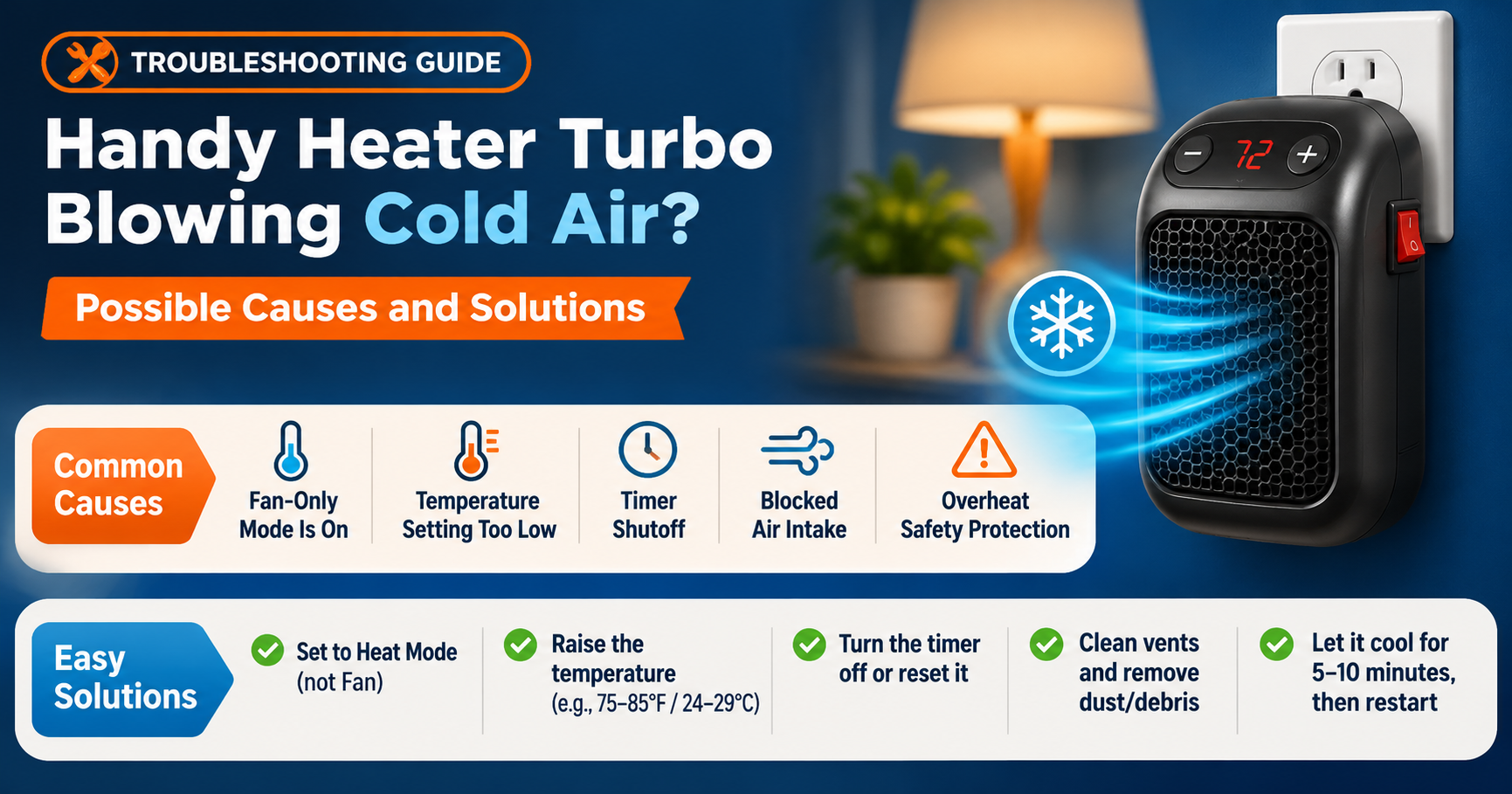
Many heaters have an overheat cutoff that shuts the unit down when internal temperatures get too high. Frequent shutoffs usually mean restricted airflow or a fault, and they should not be ignored or bypassed.
Can I use it with an extension cord?
It is best to plug directly into a wall outlet. Heaters draw high current, and ordinary extension cords and power strips can overheat and become a fire risk.
How long can I run it continuously?
Follow the maximum run time in your user manual. If none is given, use it in shorter sessions with breaks, and never run it overnight or when nobody is home.
How do I clean it safely?
Unplug it, let it cool completely, then remove dust from the grille and openings with a soft brush or vacuum brush attachment. Keep water and liquid cleaners away from the unit.
Should I repair it myself?
No. Opening the casing or touching internal wiring and the heating element is dangerous. Contact the seller, manufacturer or a qualified technician instead.
Final Thoughts
Most overheating problems with a Handy Heater Turbo come down to a few basics: airflow, dust, power supply and placement. Cleaning the vents, plugging directly into a wall outlet and keeping a clear space around the heater solve many cases. If the heater still runs too hot, smells of burning or shows damage to the plug or casing, do not take chances. Stop using it, keep the proof of purchase and ask for a replacement or refund.
A heater should add comfort to your home, and safe habits are what make that possible.
Disclaimer: This article is for general information only and is not a substitute for the manufacturer’s instructions or professional electrical advice. Always follow the user manual that comes with your product.