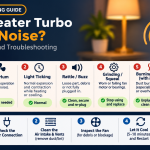
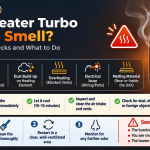

You plug in your Handy Heater Turbo, wait for the warm air, and then it hits you: a burning smell. It is an alarming moment, especially in a bedroom or a small room where the heater runs for hours. The good news is that not every burning smell means a fault. The bad news is that some of them do, and the difference matters for your safety.
This guide explains why a Handy Heater Turbo, and mini ceramic heaters in general, can smell like burning, how to tell a harmless smell from a dangerous one, what to check step by step, and how to prevent it from happening again.
Quick Answer: Is a Burning Smell Normal?
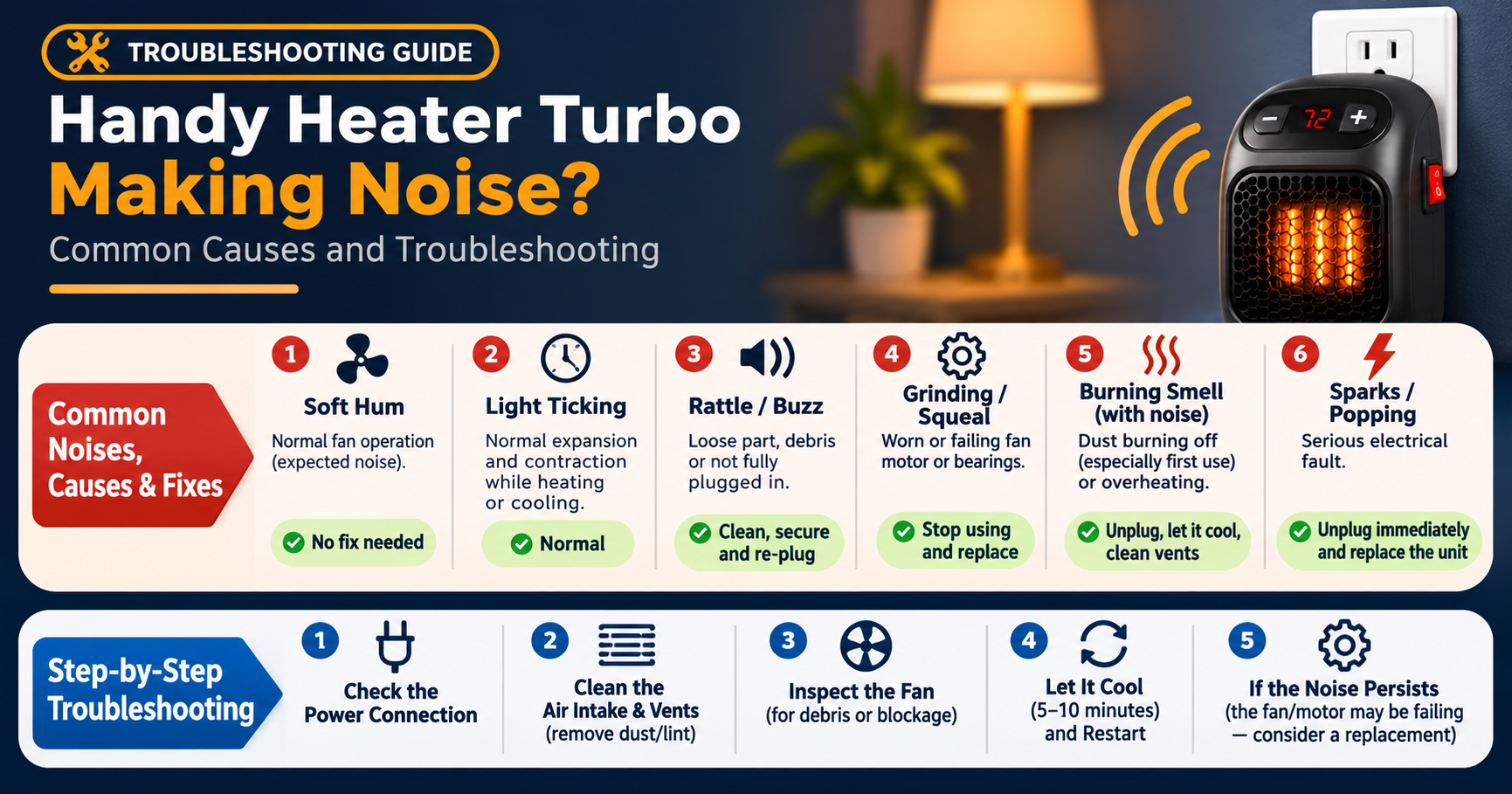
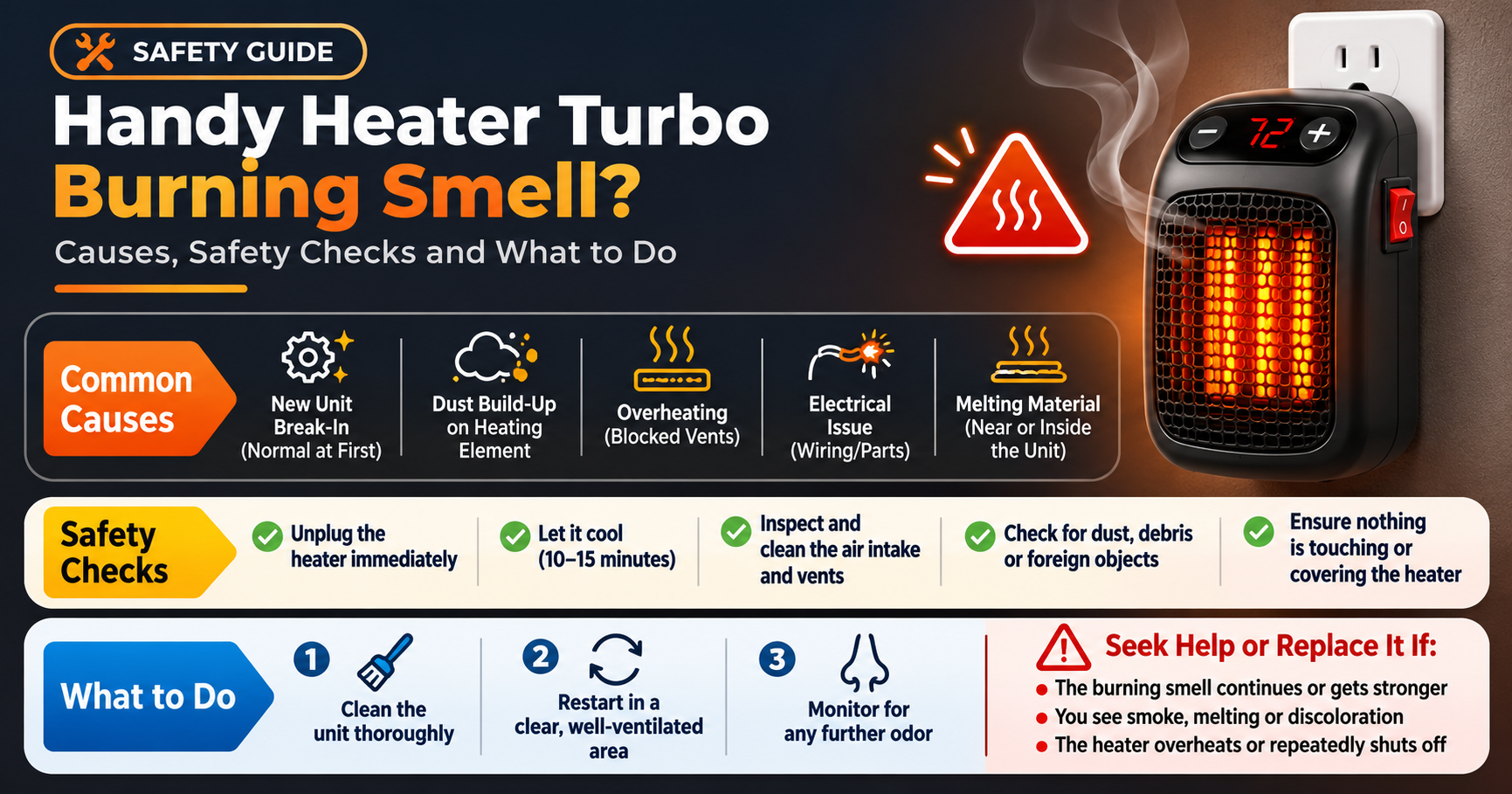
A mild, dusty, “hot metal” smell that fades within 10 to 30 minutes during the first uses, or the first use of the season, is common and usually harmless. A sharp burning plastic, fishy, electrical or acrid smell, or any smell that gets stronger, is not normal. Switch the heater off, unplug it and stop using it until the cause is found.
How a Mini Ceramic Heater Works (and Why It Can Smell)
Compact heaters like the Handy Heater Turbo pass electricity through a ceramic heating element. A small fan blows air across the hot element and into the room. Because the element reaches a high temperature in a very small space, anything sitting on or near it, such as dust, oil or manufacturing residue, can burn off and create an odor. The plug, cord, internal wiring and plastic housing also carry current and heat, so faults in those parts can produce a stronger and more worrying smell.
Common Causes of a Burning Smell
1. Manufacturing residue on a new heater
New heaters often carry traces of protective oils, coatings and adhesives from production. When the element heats up for the first time, these burn off and produce a light chemical or metallic smell. This is the most common harmless cause and normally disappears after a few hours of total running time.
2. Dust buildup after storage
If the heater sat in a cupboard over spring and summer, a thin layer of dust settled on the grille and element. Heating it produces the familiar “first day of winter” smell. It should clear quickly and does not return once the dust has burned off.
3. Blocked air intake or vents
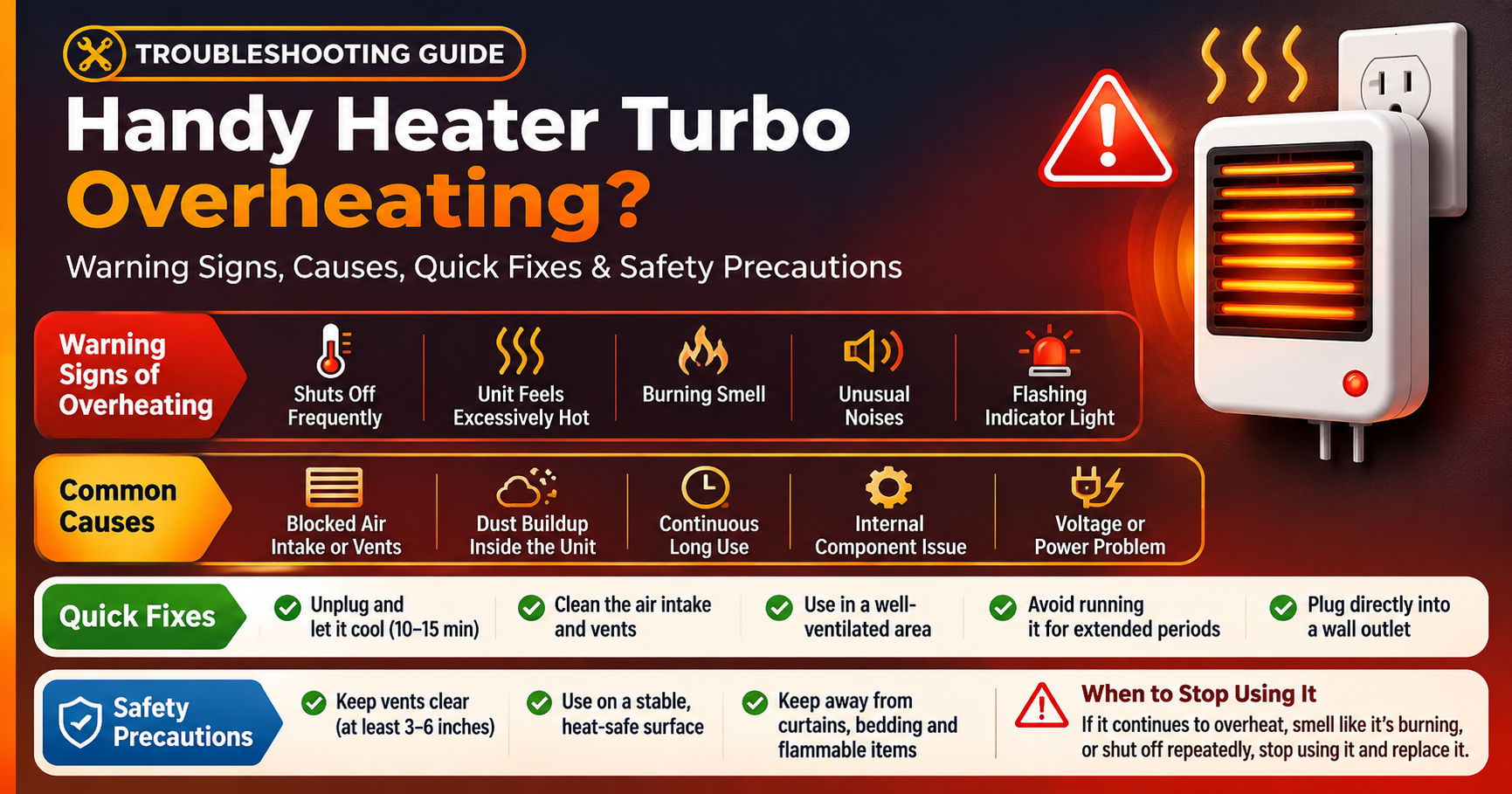
Dust, pet hair, lint or fabric over the intake or outlet reduces airflow. The element then runs hotter than designed, the smell gets stronger and the overheat protection may cut the unit off repeatedly. This is both a cause and a warning sign, so clean the vents straight away.
4. Placement too close to objects
Curtains, bedding, sofas, paper and clothes placed too near the heater can heat up and give off a scorched smell. This is a fire risk, not just a nuisance. Keep a clear space around the unit on every side.
5. Overheating plug, socket or extension cord
A heater draws a lot of current. A loose socket, worn plug, thin extension cord or a power strip shared with other devices can overheat and smell of hot plastic. If the plug or socket feels very hot or looks discolored, stop using it at once.
6. Damaged or failing internal parts
A fishy, sharp or “burning electronics” smell can mean damaged insulation, a failing fan motor, a loose connection or a faulty thermostat or temperature cut-off. Crackling, buzzing, flickering lights or tripped breakers often come with it. These cases need the heater retired, not repaired at home.
7. Dirty fan motor
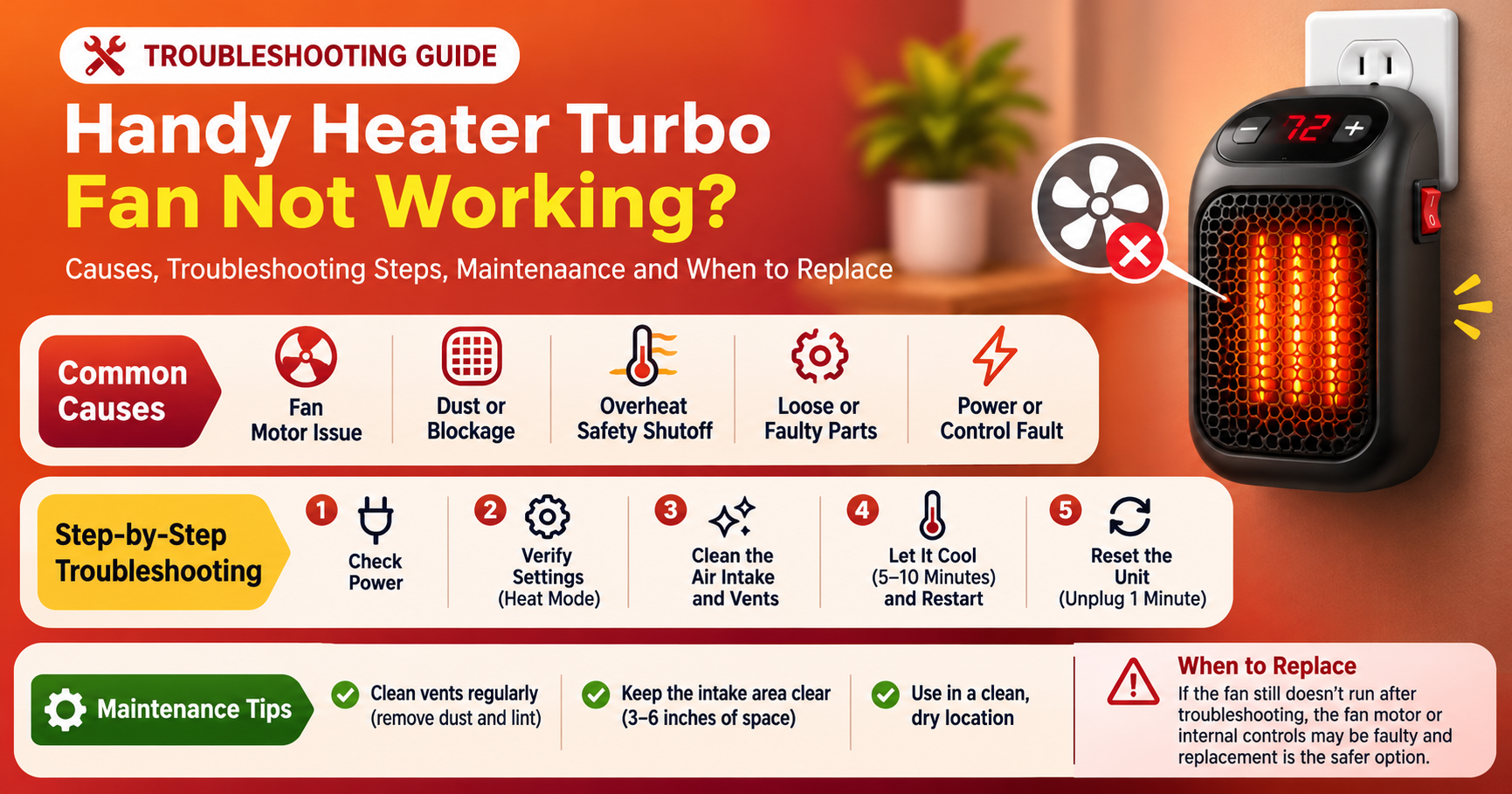
Clogged dust and hair can strain the small fan motor, which then heats up and gives off a burning-rubber or hot-wire smell. A fan that sounds rough, slow or noisy points to this cause.
Harmless vs. Dangerous: How to Tell the Difference
| Sign | Usually harmless | Warning sign |
|---|---|---|
| Type of smell | Dusty, warm metal, light chemical | Burning plastic, rubber, fishy, electrical |
| Duration | Fades within 10 to 30 minutes | Persists or gets stronger |
| When it happens | First uses or after long storage | Any time, or suddenly after months of normal use |
| Other signs | None | Smoke, sparks, crackling, flickering lights, tripped breaker, hot or discolored plug |
| Heater behavior | Normal airflow and sound | Weak airflow, rattling fan, cutting on and off |
What to Do Right Away
- Switch it off and unplug it by holding the plug, not by pulling the cord.
- Let it cool completely for at least 30 minutes before touching the body or grille.
- Ventilate the room by opening a window or door.
- Check the plug and socket. Look for melting, black marks, a loose fit or heat. If the socket is damaged, do not use it again until an electrician checks it.
- Inspect the cord for cuts, kinks, bare wire or soft spots.
- Look at the vents for dust, hair or objects blocking the airflow.
- Move it to a clear spot on a flat, hard surface, at least one meter (three feet) from anything flammable, and plug it directly into a wall socket.
How to Clean a Handy Heater Turbo Safely
Always clean with the heater unplugged and fully cool. Use a soft brush or a vacuum with a brush attachment to remove dust from the intake and outlet grilles. A can of compressed air can reach tight gaps. Wipe the outer body with a slightly damp cloth, then dry it completely. Never use water, spray cleaners or solvents on or inside the heater, and never open the casing yourself if the unit is under warranty or you are unsure what you are doing.
How to Burn Off the New-Heater Smell
If your unit is brand new and the smell is mild, you can speed up the process safely:
- Run it on the lowest or medium setting first in a well-ventilated room while you are present.
- Keep the room clear of curtains, paper and fabric.
- Run it for short sessions of 20 to 30 minutes, with breaks in between, over the first day or two.
- Keep pets, small children and anyone sensitive to odors out of the room during this time.
If the smell is still strong after a few hours of total use, treat it as a possible defect rather than residue.
Safety Rules for Any Portable Heater
- Plug it straight into a wall socket. Avoid extension cords and shared power strips.
- Keep at least one meter (three feet) of free space on all sides.
- Never cover the heater or dry clothes on it.
- Do not leave it running while you sleep or when nobody is home.
- Place it on a flat, stable, non-flammable surface, never on a bed, sofa or carpet pile.
- Keep it away from water, including bathrooms and damp rooms.
- Inspect the cord and plug regularly and stop using a heater with any damage.
- Make sure working smoke alarms are installed in the rooms where you use heaters.
When to Stop Using the Heater for Good
Retire the unit and contact the seller or manufacturer if you notice any of the following:
- A strong burning plastic or electrical smell that returns after cleaning and correct placement.
- Visible smoke, sparks, flames or melted plastic.
- A plug, cord or wall socket that becomes very hot or shows discoloration.
- Repeated tripping of the household breaker.
- Crackling, popping or buzzing sounds from inside the unit.
- The fan stops or stutters while the heating element stays on.
If there is smoke or fire, switch off at the wall if it is safe to do so, leave the room, and contact local emergency services. Do not pour water on an electrical fire.
Warranty, Returns and Reporting
If your heater is new and smells strongly of burning, keep the box, receipt and packaging and request a refund or replacement from the seller. Take clear photos of any damage and note the date and what you observed. Many regions also have a consumer product safety authority where you can report unsafe products, which helps protect other buyers.
How to Choose a Safer Portable Heater
If your Handy Heater Turbo keeps smelling or you simply want more peace of mind, look for these features before you buy any small heater:
- Independent safety certification from a recognized testing body for your country, shown clearly on the product and packaging.
- Overheat protection that automatically cuts the power if the unit gets too hot.
- Tip-over protection that switches the heater off if it falls or is knocked over.
- A thermostat and timer so the heater does not run longer than needed.
- A thick, well-made cord and firm plug with no loose fit in the socket.
- Cool-touch housing and a grille that fingers cannot easily reach through.
- Realistic power for the room size. Small heaters suit personal spaces and small rooms, not whole living areas.
- Clear manual and real warranty terms with a seller that answers support questions.
Be cautious of marketing claims that promise to heat a large space for pennies. Electric heaters convert power to heat at very similar efficiency, so a small unit cannot heat a large room cheaply, and the label wattage tells you more than any slogan.
Frequently Asked Questions
Is it normal for a Handy Heater Turbo to smell when new?
A light dusty or chemical smell for the first few hours of use is common with new heaters. A strong or sharp burning smell is not, and you should stop using it.
How long should the burning smell last?
A harmless smell typically fades within 10 to 30 minutes of running, and disappears after a few hours of total use. If it lasts longer or gets stronger, treat it as a possible fault.
Can a burning smell be dangerous?
Yes. Burning plastic, electrical or fishy smells can signal overheating wires, a damaged plug or failing components, all of which carry a fire risk.
Why does my heater smell like burning dust?
Dust on the heating element or grille burns off when the element gets hot. Cleaning the heater while it is unplugged and cool reduces this smell.
Is it safe to leave the heater on overnight?
Safety experts generally advise against running portable heaters unattended or while you sleep. Use a timer-equipped model and switch it off when you leave the room.
Can I use an extension cord with my heater?
It is best to plug directly into a wall socket. Extension cords and power strips can overheat under the high current a heater draws.
Can I repair the heater myself if it smells burnt?
You can clean the vents and check placement, but do not open the casing or repair internal parts unless you are qualified. Contact the seller or replace the unit.
Should I return a heater that smells like burning?
If the smell is strong, persistent or comes with smoke, heat damage or noises, yes. Stop using it and ask the seller for a refund or replacement.
Final Thoughts
A faint, short-lived dusty smell from a new or freshly unpacked Handy Heater Turbo is usually nothing to worry about. A strong, lingering or electrical burning smell is a different story: unplug it, let it cool, check the vents, plug and placement, and stop using it if the smell returns. No heater is worth risking your home or your family’s safety. When in doubt, replace it with a certified model that has overheat and tip-over protection, and always follow safe heater habits.
Disclaimer: This article is for general information only and is not a substitute for professional electrical advice or the manufacturer’s instructions. If you suspect a fire hazard, stop using the product and seek professional help.