







Disclosure: This site may earn a commission if you buy products we recommend, at no extra cost to you. Our comparisons are based on how each technology works and what matters to real buyers.
When the temperature drops, a small electric heater can be the difference between a cold, miserable room and a cozy one. But the moment you start shopping, you run into a big question: ceramic vs infrared room heater, which one is actually better?
Both are popular, both plug into a standard outlet, and both turn electricity into heat. Yet they feel completely different in use. One warms the air around you, the other warms you directly. Choosing wrongly can leave you with a heater that never quite feels warm enough, runs louder than you expected, or struggles in a room it was never suited for.
In this complete guide, we explain how each type works, compare them on speed, cost, safety, noise and comfort, and help you decide which heater fits your room, your budget and your habits.
Quick Answer
Choose a ceramic heater if you want to warm a whole small or medium room evenly, with built-in thermostat convenience. Choose an infrared heater if you want instant, silent warmth aimed at you or a specific spot, or you are heating a drafty space like a garage or patio.
What Is a Ceramic Heater?
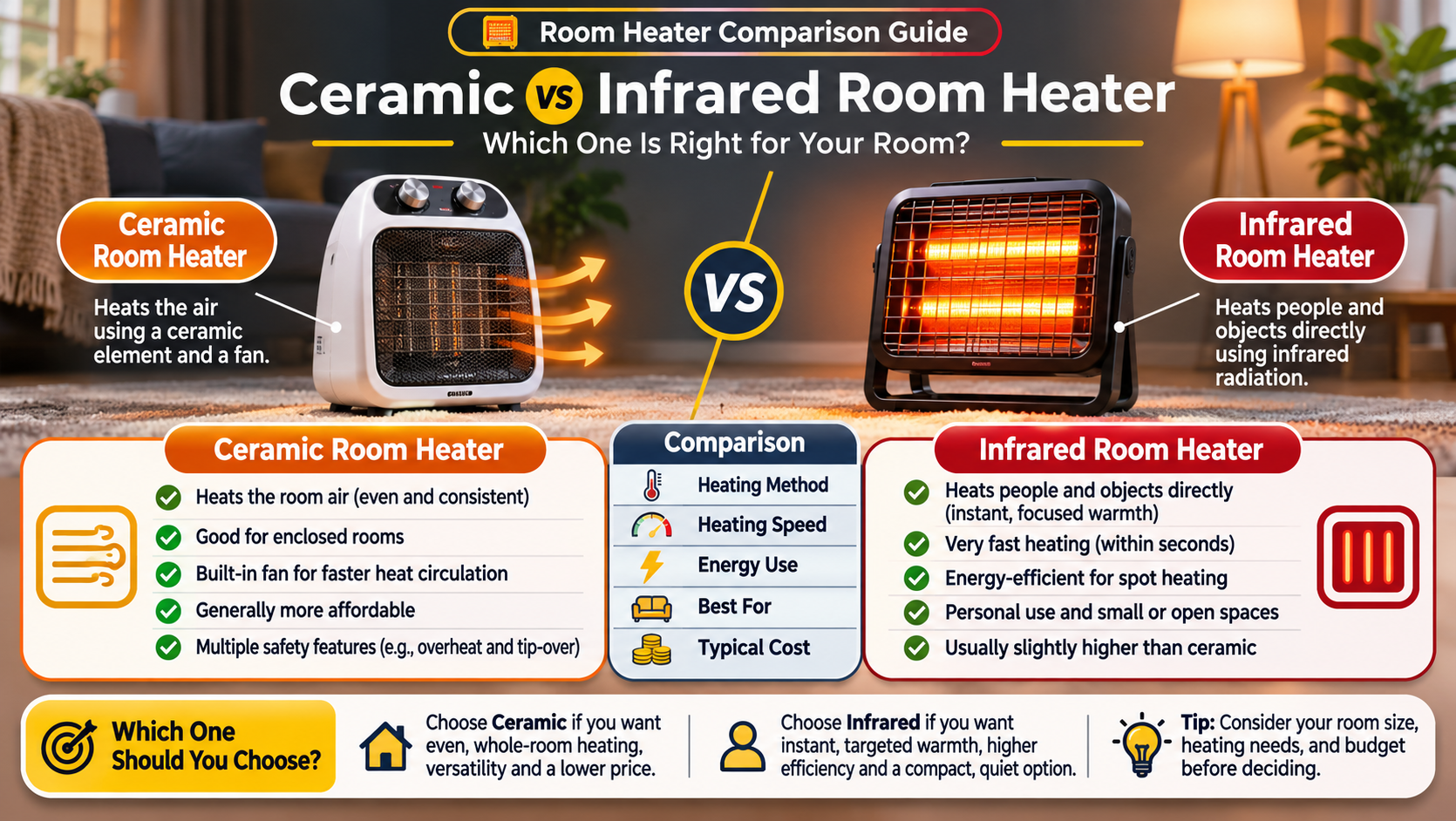
A ceramic heater is a type of electric convection heater. Inside it are ceramic plates, often made from a PTC (positive temperature coefficient) material, attached to metal fins. When electricity passes through, the ceramic plates heat up quickly. A fan then blows room air across those hot surfaces and pushes the warmed air back into the room.
The clever part is the PTC material itself. As the ceramic gets hotter, its electrical resistance rises and it draws less current, so it naturally limits its own temperature. This self-regulating behavior is one reason ceramic heaters have a reputation for being relatively safe and stable.
Pros and Cons of Ceramic Heaters
Pros of Ceramic Heaters
- Heats up fast and warms an entire small to medium room
- Self-regulating PTC elements add a layer of safety
- Many models include thermostats, timers, oscillation and remote controls
- Widely available and usually affordable
- Housing often stays cooler than exposed-element heaters
Cons of Ceramic Heaters
- Most models use a fan, so they produce some noise
- Moves air around, which can stir up dust
- Heat feels less direct if you are standing far away
- Struggles in very large, open or drafty spaces
What Is an Infrared Heater?
An infrared heater is a radiant heater. Instead of heating the air, it gives off infrared radiation, the same kind of energy you feel from the sun or a campfire. That radiation travels in a straight line until it hits a solid surface, such as your skin, your clothes, the couch or the floor, and warms it directly.
Common designs include quartz or halogen tube heaters, which glow orange-red, and flat infrared panels that give off a gentler, longer-wavelength warmth. Because there is no fan, most infrared heaters run silently.
Pros and Cons of Infrared Heaters
Pros of Infrared Heaters
- Feels warm almost immediately, no waiting for the air to heat up
- Silent operation since there is usually no fan
- Works well in drafty or semi-open spaces because it does not rely on warming air
- Does not blow dust or allergens around
- Great for targeted, personal comfort at a desk or on a couch
Cons of Infrared Heaters
- Heat is directional, so you must be in front of it to feel it
- Exposed tubes can get extremely hot and need clearance
- Less effective at raising the temperature of the whole room
- Quality models can cost more than basic ceramic units
Ceramic vs Infrared Heater: Side-by-Side Comparison
Here is how the two stack up across the features buyers care about most.
| Feature | Ceramic Heater | Infrared Heater |
|---|---|---|
| How it heats | Warms the air as it passes over hot ceramic plates (convection) | Emits infrared radiation that warms people and objects directly (radiation) |
| Heat-up time | Fast, usually noticeable within a minute | Near instant when you sit in front of it |
| Best for | Small to medium enclosed rooms, bedrooms, offices | Spot heating, drafty rooms, garages, workshops, patios |
| Typical coverage | Around 150 sq ft at 1500W | Directional, covers the area it faces |
| Noise | Fan hum is common | Usually silent, no fan |
| Surface temperature | Grille warm to hot, many models stay cooler | Heating tubes or panel can get very hot |
| Air movement | Circulates air, can stir up dust | No air movement, less dust circulation |
| Running cost | Same energy use at the same wattage | Same energy use at the same wattage |
| Typical price range | Generally budget friendly | Slightly higher for quality quartz or panel models |
Detailed Comparison: What Really Matters
1. Heating Speed and Comfort
Infrared wins on how quickly you feel warm. Radiant heat reaches your body the moment you switch it on, so you do not have to wait for the room air to warm up. Ceramic heaters are still quick, usually delivering warm airflow in under a minute, but you are warming the room first and your body second.
For whole-room comfort, ceramic usually has the advantage. As the air temperature rises, every corner of the room starts to feel warmer, not just the area in front of the heater.
2. Energy Use and Running Costs
This is the most misunderstood part of the debate. Electric heaters of every type are close to 100 percent efficient at turning electricity into heat. A 1500W ceramic heater and a 1500W infrared heater use the same amount of energy each hour, so neither one is automatically cheaper to run.
You can estimate your cost with a simple formula: wattage ÷ 1000 × hours used × your electricity price per kWh. For example, a 1500W heater uses 1.5 kWh every hour. At an electricity price of $0.16 per kWh, that is about $0.24 per hour, or roughly $29 for 120 hours of use across a month.
The real savings come from how you use the heater. If you only need warmth at your desk, an infrared heater lets you stay comfortable without heating a whole room. If you want a whole room at 70°F, a ceramic heater with a thermostat can cycle off once the target is reached, which saves energy compared with running nonstop.
Money-Saving Tip
Heat the person, not the building. Use a space heater in the room you are actually occupying, close the door, and lower your central heating a few degrees. This is where a space heater can genuinely reduce your bills.
3. Safety
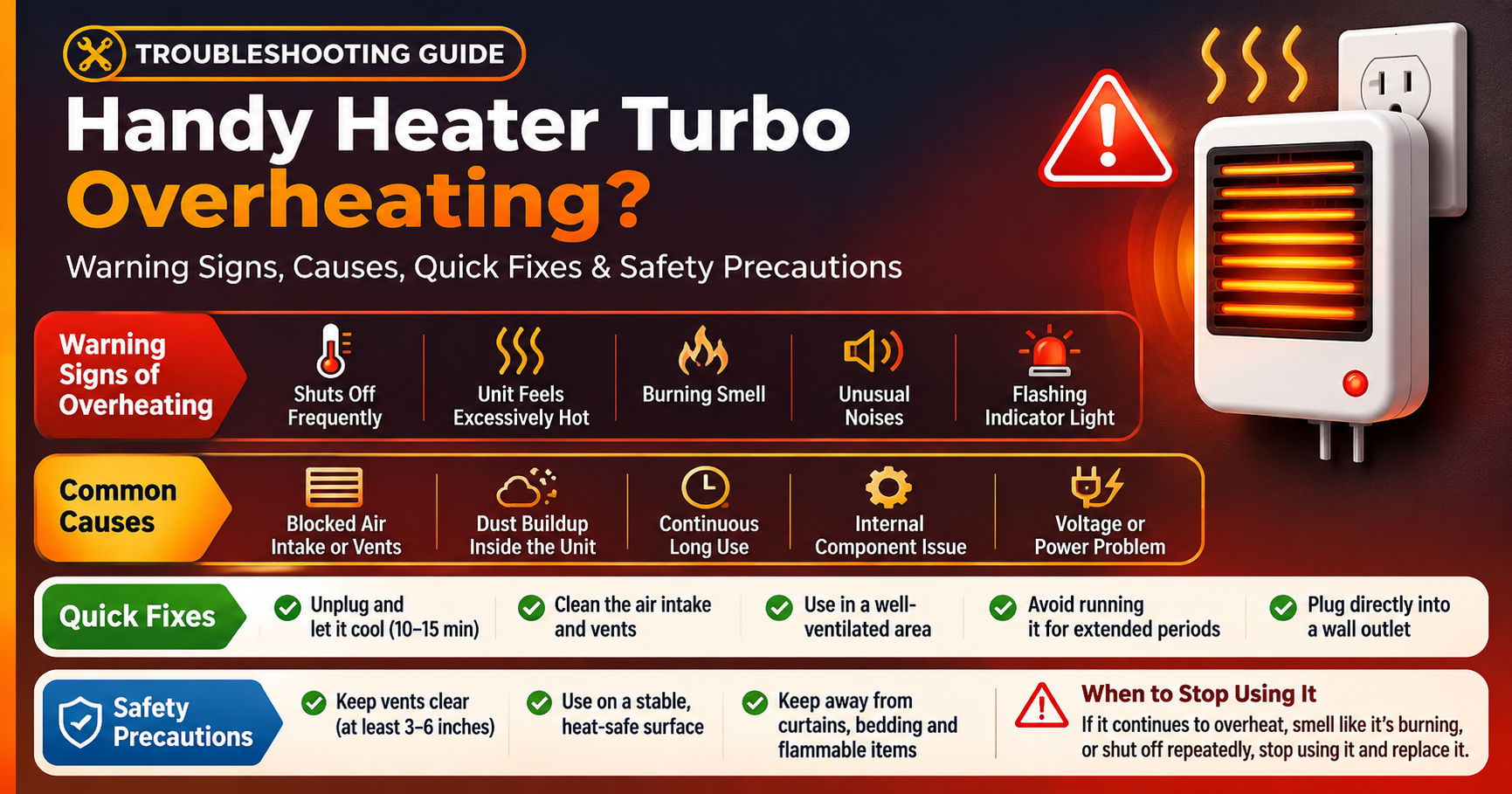
Any heater can be a fire hazard if misused, so safety features matter more than the technology type. Ceramic heaters have a slight edge because of self-regulating PTC elements and generally cooler housings. Infrared heaters, especially those with exposed quartz tubes, run hotter on the front surface and need more clearance from furniture, curtains and bedding.
Whichever type you choose, look for these features:
- Tip-over switch that shuts the heater off if it is knocked down
- Overheat protection that cuts power if internal temperatures get too high
- Safety certification from a recognized testing laboratory
- Cool-touch exterior or a protective guard in front of hot elements
- Thermostat and timer for automatic shutoff
Keep at least three feet of clear space around any portable heater, plug it directly into a wall outlet, and never leave it running unattended.
4. Noise Level
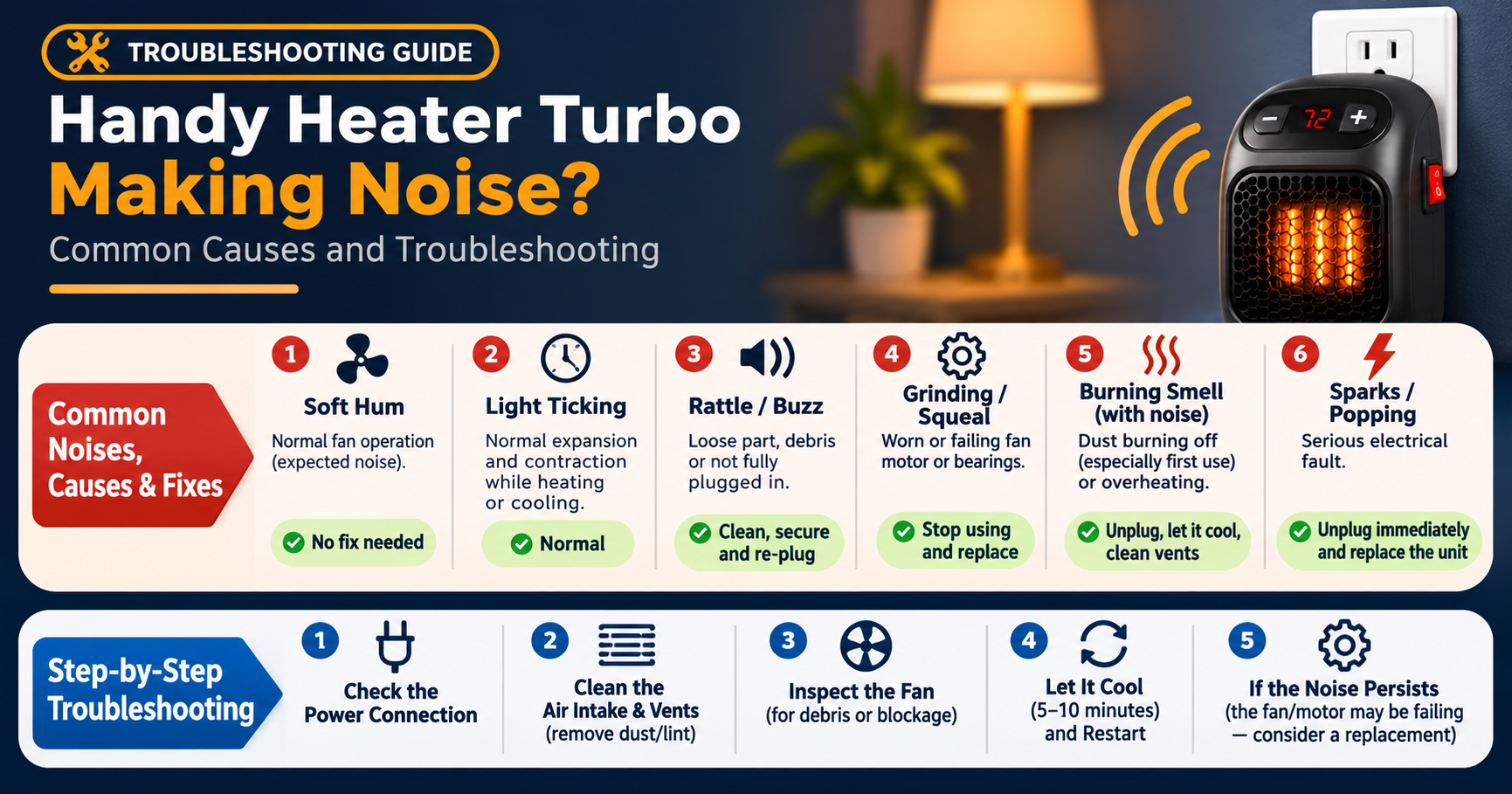
If you are a light sleeper or work from home on calls, noise matters. Most ceramic heaters have a fan that produces a steady hum, which is fine for many people but noticeable in a quiet bedroom. Infrared heaters have no fan, so they are almost silent apart from an occasional soft click as the elements cycle.
5. Air Quality and Dryness
Neither type burns fuel, so neither uses up oxygen or produces carbon monoxide. Still, fan-driven ceramic heaters move air around and can circulate dust, which may bother people with allergies. Infrared heaters leave the air still. Any heater can make a room feel drier in winter, so a humidifier or a bowl of water nearby can help.
6. Best Room Size and Placement
A good starting rule is around 10 watts per square foot of floor area. A 1500W heater therefore suits roughly 150 sq ft, about the size of a small bedroom or home office. Rooms with high ceilings, large windows or poor insulation need more power.
Ceramic heaters fit best in enclosed rooms where warm air can build up. Infrared heaters shine in places where air constantly escapes, such as garages, workshops, porches, and open-plan areas, because they warm what they hit rather than the air that would drift away.
Which Heater Is Best for Your Situation?
Best for Bedrooms and Small Rooms: Ceramic
A ceramic heater with a thermostat and timer warms the whole room evenly and turns itself down when it is warm enough. Look for an oscillating model with a low-noise mode.
Best for Home Offices and Desks: Infrared
If you sit in one spot all day, a compact infrared heater aimed at your legs and feet gives targeted warmth without needing to heat the entire room. It is also quiet enough for video calls.
Best for Garages and Workshops: Infrared
Large, poorly sealed spaces lose warm air quickly. Radiant heat keeps you comfortable at your workbench even when the air temperature stays low.
Best for Bathrooms and Cold Corners: Ceramic (with caution)
Ceramic heaters can quickly take the chill off a small space. Only use a heater in a bathroom if it is specifically rated for damp environments, and keep it well away from water.
Best for Patios and Outdoor Seating: Infrared
Because it does not depend on warming still air, infrared is the clear winner outdoors. Make sure the heater is rated for outdoor or covered-patio use.
Best for Families With Kids and Pets: Ceramic
Choose a cool-touch ceramic model with a tip-over switch and overheat protection, and place it where it cannot be knocked over or reached easily.
Buying Checklist: What to Look For Before You Buy
- Wattage: 1500W is the standard for plug-in portable heaters. Match it to your room size.
- Adjustable thermostat: Helps maintain a steady temperature and saves energy.
- Multiple heat settings: Low, medium and high lets you fine-tune comfort.
- Timer and auto shutoff: Prevents running longer than needed.
- Tip-over and overheat protection: Non-negotiable safety features.
- Portability: A carry handle and a compact base make it easy to move between rooms.
- Noise rating: Check reviews if you plan to use it in a bedroom or office.
- Remote control and oscillation: Handy extras for ceramic models that heat a whole room.
- Warranty and certification: A longer warranty and recognized safety listing signal a better built product.
Maintenance and Safety Tips
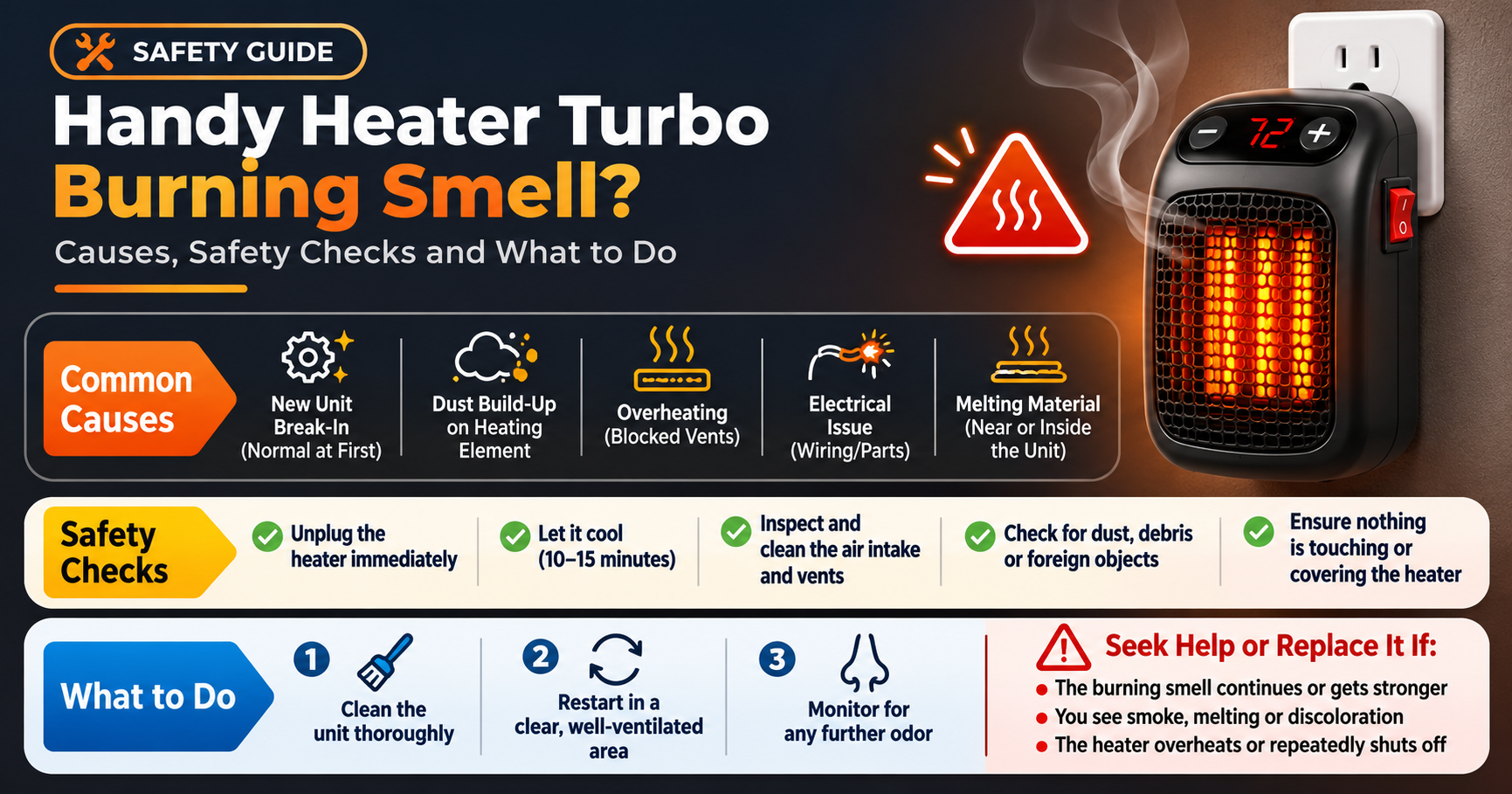
- Unplug the heater and wipe dust from the grille and vents regularly, since dust buildup can cause odors and overheating.
- Inspect the power cord and plug for damage before every season.
- Keep the heater at least three feet away from curtains, bedding, paper and furniture.
- Place it on a flat, hard, stable surface, never on carpet edges, beds or sofas.
- Do not use extension cords or power strips unless the heater’s manual allows it.
- Turn it off and unplug it when leaving the room or going to sleep.
- Make sure your smoke alarms are working before heater season starts.
Common Myths About Room Heaters
“Infrared heaters are far cheaper to run.”
At the same wattage, they use the same electricity as a ceramic heater. They only feel more economical when you use them for targeted, short-term warmth.
“Ceramic heaters are completely cool to the touch.”
The ceramic elements get very hot. Some models are designed with cool-touch housings, but the grille and airflow can still be hot, so always treat the heater with care.
“Space heaters burn oxygen.”
Electric ceramic and infrared heaters do not burn fuel, so they do not remove oxygen from the room. Dry air is the more common complaint.
Frequently Asked Questions
Is an infrared heater cheaper to run than a ceramic heater?
Not at the same wattage. Both convert almost all the electricity they use into heat, so a 1500W ceramic heater and a 1500W infrared heater cost about the same per hour. The infrared model can feel cheaper because you can feel warm quickly without heating the whole room, which lets you use a lower setting or run it for less time.
Which heater is safer for kids and pets?
Ceramic heaters with PTC elements and a cool-touch housing are usually the more forgiving choice, because their surface temperatures are lower and the elements regulate themselves. Infrared heaters with exposed glowing tubes need more clearance. Whichever you choose, look for tip-over protection, overheat shutoff, and keep the unit on a hard, level floor with space around it.
Does a ceramic or infrared heater use up the oxygen in a room?
No. Electric heaters of both types do not burn fuel, so they do not consume oxygen or produce carbon monoxide. They can make the air feel dry, so ventilate the room now and then and consider a humidifier in winter.
Can I leave a space heater on overnight?
Safety agencies generally advise against leaving any portable heater running unattended or while you sleep. If you use one in a bedroom, pick a model with a timer, thermostat, tip-over switch, and overheat protection, and turn it off when you are not awake to monitor it.
Which is better for a bedroom?
A ceramic heater with a thermostat and timer is usually the better fit, since it warms the whole room evenly and shuts off once the target temperature is reached. A quiet fanless ceramic or infrared panel can also work if you are sensitive to noise.
Which is better for a garage or workshop?
Infrared. Garages leak heat and have large volumes of air, so warming the air is inefficient. An infrared heater warms you and your workbench directly, which feels better even when the air stays cold.
Can I plug a space heater into an extension cord?
It is best to plug a heater straight into a wall outlet. Heaters draw a lot of current, and many extension cords and power strips can overheat. If you must use an extension, choose a heavy-duty cord rated for the heater’s wattage.
How many watts do I need?
A common rule of thumb is about 10 watts per square foot, so a 1500W heater suits roughly 150 sq ft. Larger or poorly insulated rooms need more heating power or a second unit, and most portable plug-in models in North America max out at 1500W.
Final Verdict: Ceramic or Infrared?
There is no single winner in the ceramic vs infrared room heater debate. The right choice depends on what you are heating and how you like to feel warm.
- Pick a ceramic heater for evenly warming a bedroom, nursery, living area or home office, especially if you value a thermostat and cool-touch safety features.
- Pick an infrared heater for fast, silent, targeted warmth at your desk or couch, or in a drafty garage, workshop or outdoor space.
- Consider owning both if you have varied needs: a ceramic unit for the bedroom and an infrared unit for the workshop or home office.
Whichever you choose, prioritize safety certifications, tip-over and overheat protection, and a thermostat. Use the heater in a room you are occupying, keep the area around it clear, and enjoy a warmer, more comfortable winter without overspending.
Key Takeaways
Ceramic heats the air and suits whole rooms. Infrared heats you directly and suits spot heating and drafty spaces. Both use the same energy at the same wattage, so choose based on how and where you will use it, then prioritize safety features above all.