


When the temperature drops, every household faces the same question: should you rely on a portable room heater or invest in a full central heating system? Both keep you warm, but they differ hugely in cost, comfort, efficiency, safety and convenience. Choosing wrongly can mean high electricity bills, cold rooms or thousands of dollars spent on a system you did not really need.
This guide compares room heater vs central heating in detail so you can decide based on your home size, climate, budget and lifestyle.
Table of Contents
- What is a room heater?
- What is central heating?
- How the two heat your home
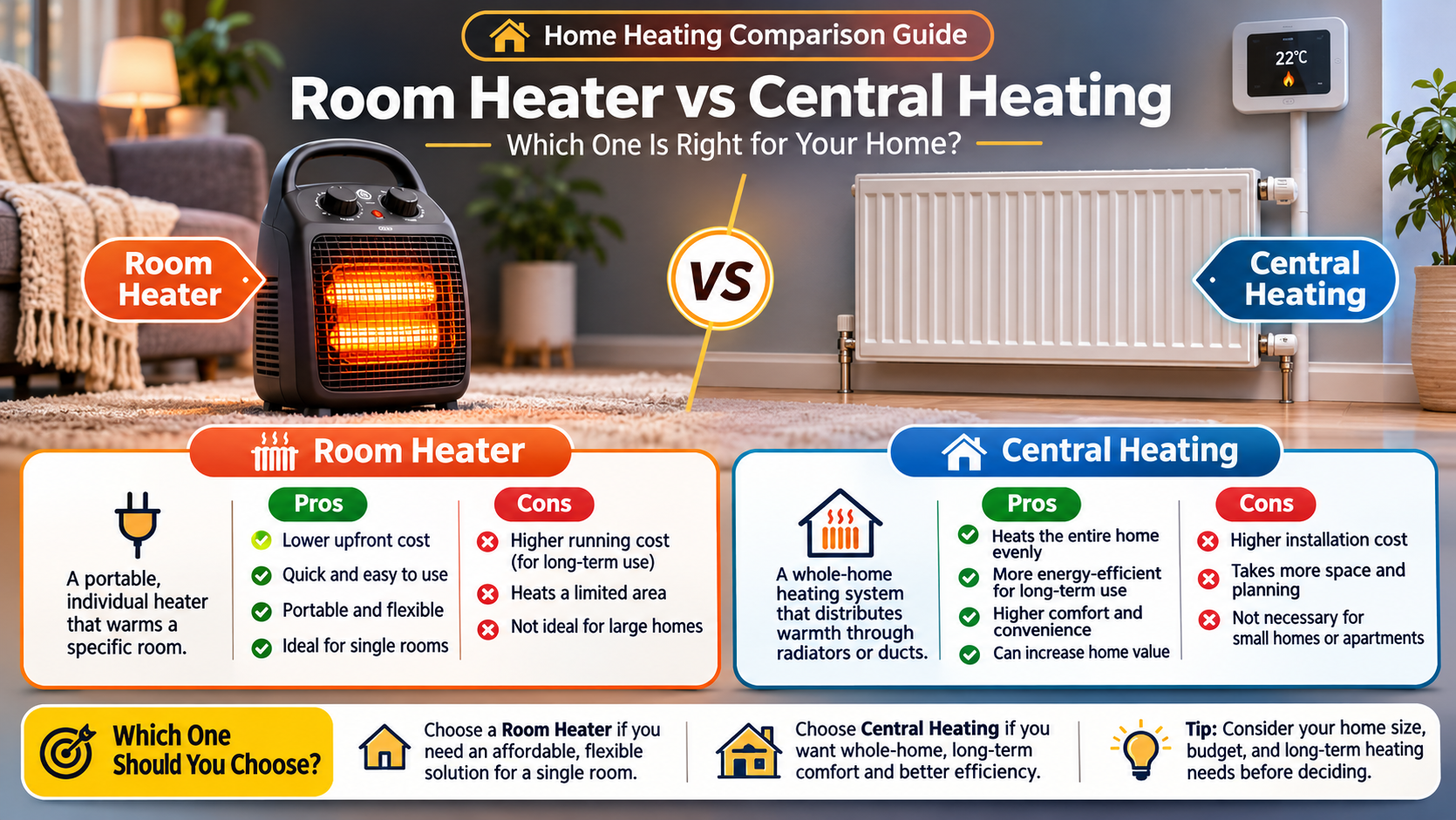
- Room heater vs central heating: side-by-side comparison
- Cost comparison
- Energy efficiency
- Comfort and air quality
- Safety
- Installation and maintenance
- Environmental impact
- Which one should you choose?
- How to buy the right room heater
- Tips to lower your heating bill
- FAQs
What Is a Room Heater?
A room heater (also called a space heater or portable heater) is a stand-alone appliance that warms a single room. You plug it in, switch it on and feel the difference within minutes. Most models are electric, though gas and kerosene versions exist in some regions.
Common Types of Room Heaters
- Fan heaters: Cheap and fast. A fan blows air over a heated element. They are noisy and best for short bursts of heat.
- Oil-filled radiators: Heat slowly but keep releasing warmth even after switching off. They are quiet and ideal for bedrooms.
- Ceramic heaters: Heat up quickly, are compact and often include thermostats and tip-over protection.
- Infrared (radiant) heaters: Warm people and objects directly rather than the air. Good for spot heating in drafty areas.
- Convector heaters: Circulate warm air naturally and suit longer, steady heating in small rooms.
- Halogen and quartz heaters: Provide instant radiant heat but are less efficient for large spaces.
What Is Central Heating?
Central heating warms an entire building from one main source, such as a boiler, furnace or heat pump. The heat is distributed to every room through radiators, underfloor pipes or air ducts, and is usually controlled by a thermostat or smart controller.
Common Types of Central Heating
- Gas or oil boiler with radiators: Hot water travels through pipes to wall-mounted radiators.
- Forced-air furnace: Heated air is pushed through ducts and vents. It often shares the same ductwork as air conditioning.
- Electric central heating: Uses electric boilers or storage heaters. Simple to install but costly to run in many regions.
- Heat pumps: Move heat from outside air or ground into the home. They are among the most efficient options available.
- Underfloor heating: Warm water pipes or electric mats under the floor give very even, comfortable heat.
How the Two Heat Your Home
The biggest practical difference is coverage. A room heater warms the space it sits in, while the rest of the house stays cold. Central heating raises the temperature of the whole home at the same time.
Room Heater vs Central Heating: Side-by-Side Comparison
| Feature | Room Heater | Central Heating |
|---|---|---|
| Upfront cost | Low (often under a few hundred dollars) | High (often thousands of dollars) |
| Installation | None. Plug in and use | Professional installation required |
| Area covered | One room | Whole home |
| Heat consistency | Uneven across the home | Even and stable |
| Running cost | Low for one room, high if many are used | Lower per room, efficient for whole home |
| Portability | Move it anywhere | Fixed |
| Automation | Basic thermostat or timer | Programmable and smart controls |
| Best for | Small homes, renters, mild winters | Larger homes, owners, cold climates |
Cost Comparison
Upfront Cost
Room heaters win here by a wide margin. A good portable heater costs from a few tens to a few hundred dollars. A central heating system must be purchased, piped or ducted and installed by a professional, so the total commonly runs into thousands. Retrofitting an older home with no existing pipes or ducts costs the most.
Running Cost
This is where the answer depends on how you use heat. An electric room heater converts nearly all the electricity it uses into heat, but electricity is often the most expensive fuel per unit of heat. Using it to heat one room for a few hours is cheap. Using several heaters across the house for many hours quickly becomes more expensive than central heating. A modern gas boiler, furnace or heat pump delivers heat more cheaply per unit, so for whole-home heating it generally costs less to run.
Energy Efficiency
Electric room heaters are close to 100% efficient at turning electricity into heat, but that does not mean they are cheap, because the cost per unit of electricity is high. Modern condensing gas boilers and furnaces typically reach roughly 90% efficiency or more, and heat pumps can deliver several units of heat for every unit of electricity they consume. Central systems also lose some heat through pipes and ducts, so insulation matters. The real efficiency gain comes from heating only the space you use, and zoning and smart thermostats help central systems do exactly that.
Comfort and Air Quality
- Comfort: Central heating gives steady, even temperatures with no cold hallways or bathrooms. Room heaters create hot and cold zones.
- Noise: Oil-filled and infrared heaters are quiet, while fan heaters can be noisy. Central systems are mostly silent, though ducted systems can produce airflow noise.
- Air quality: Heaters that burn fuel indoors without venting can release moisture and harmful gases. Ducted systems can circulate dust and allergens if filters are not changed. Radiators and electric heaters do not move much dust around.
- Dryness: Many heating methods dry the air. A humidifier or a bowl of water near the heat source can help.
Safety
Safety is a major factor, especially with children, pets and older adults at home.
- Choose room heaters with tip-over protection and overheat shut-off.
- Keep any room heater at least one metre (about three feet) away from curtains, bedding and furniture.
- Plug heaters directly into a wall socket. Avoid extension cords and power strips.
- Never use fuel-burning heaters in sleeping areas or poorly ventilated rooms, and install a carbon monoxide alarm if you do use them.
- Never leave a portable heater running while you sleep or are away from home.
- Central heating is generally safer day to day, but boilers and furnaces need an annual service to prevent leaks and faults.
Installation and Maintenance
Room heaters need no installation and almost no maintenance. Wipe off dust, check the cable and store the unit safely in summer. Central heating needs planning, permits in some areas and professional fitting. It also needs yearly servicing, radiator bleeding, filter changes for ducted systems and occasional repairs. Over a long period, these costs should be added to your budget.
Environmental Impact
The footprint depends on the energy source. A heater powered by renewable electricity is clean, while the same heater on a coal-heavy grid is not. Heat pumps are usually the lowest-emission central option, followed by efficient condensing gas systems. Older oil boilers and unvented fuel heaters are the least friendly. Better insulation reduces the environmental impact of any heating choice.
Which One Should You Choose?
Choose a Room Heater If:
- You live in a small flat or rent your home.
- Winters are short or mild.
- You spend most of your time in one or two rooms.
- You want a low-cost, no-installation solution.
- You need a backup heat source for very cold days.
Choose Central Heating If:
- You own a medium to large home and plan to stay for years.
- Winters are long and cold.
- You want even warmth in every room, including bathrooms and hallways.
- You value automation, timers and smart thermostat control.
- You are renovating or building a new home and can add pipes or ducts easily.
Best of Both Worlds
Many households combine both: central heating at a low background temperature and a room heater for extra warmth where people are actually sitting or sleeping. This keeps the whole home comfortable while avoiding the cost of heating every room to a high temperature.
How to Buy the Right Room Heater
If you decide a room heater suits you, keep these points in mind before you buy.
- Match the power to the room size: As a rough guide, allow about 100 watts per square metre of floor space for typical insulation. A 1500W heater suits a small to medium room.
- Pick the right type: Oil-filled radiators suit bedrooms and long use. Ceramic and fan heaters suit quick warm-ups. Infrared suits spot heating.
- Look for a thermostat and timer: They stop the heater from overheating the room and save electricity.
- Check safety certifications: Look for tip-over switch, overheat protection and a cool-touch exterior.
- Consider noise level: Choose a quiet model if it will be used in a bedroom or study.
- Think about portability: Wheels and a carry handle make a heater easy to move between rooms.
Tips to Lower Your Heating Bill
- Seal gaps around doors and windows with draught strips.
- Use thick curtains and close them at dusk to hold heat in.
- Add loft and wall insulation if your home allows it.
- Lower your thermostat by one degree. It can cut costs noticeably.
- Close doors to rooms you are not heating.
- Use timers so heaters only run when needed.
- Place rugs on bare floors to reduce heat loss.
- Do not block radiators or vents with furniture.
Frequently Asked Questions
Is a room heater cheaper than central heating?
For heating one or two rooms for a few hours a day, yes. For heating an entire home for long periods, central heating is usually cheaper to run.
Can a room heater replace central heating?
In a small home with a mild climate, yes. In a large or very cold home, several heaters become expensive and uneven, so central heating is the better choice.
Which room heater is best for a bedroom?
Oil-filled radiators are popular because they are quiet and give steady heat. Choose a model with a thermostat and tip-over protection, and avoid running any heater unattended overnight.
Is central heating worth the investment?
If you own your home, live in a cold climate and plan to stay for years, it adds comfort and often increases property value. The higher upfront cost is offset by lower running costs over time.
Is it safe to leave a room heater on all night?
It is not recommended. Even modern heaters carry some risk. Use a timer or turn the heater off before sleeping.
What is the most efficient way to heat a home?
A well-insulated home with a heat pump or condensing boiler, zoned controls and a smart thermostat is among the most efficient setups. Adding a room heater only where needed avoids wasting energy.
Final Verdict
There is no single winner in the room heater vs central heating debate. Room heaters are affordable, flexible and ideal for small spaces and short-term needs. Central heating costs more at the start but delivers even, automated comfort and better value in larger homes with long winters. Look at your home size, climate, budget and how long you plan to stay, and choose the option that fits your real needs. Whichever you pick, good insulation and sensible use will keep you warm and your bills under control.