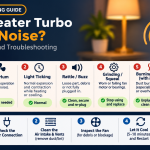
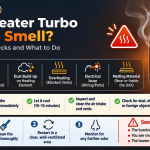
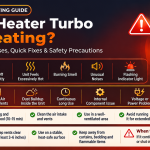
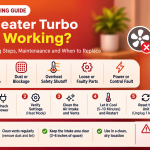
Portable Electric Heater Keeps Turning Off? 6 Causes and Easy Fixes
There is nothing more annoying than a cold room and a heater that shuts off every few minutes. You turn it on, enjoy the warmth for a short while, and then the glow fades and everything goes quiet. If your portable electric heater keeps turning off, you are not alone. It is one of the most common complaints from people who use space heaters at home, in the office or in a workshop.
The good news is that in most cases the heater is not broken. Modern heaters are packed with safety features, and those features are designed to cut the power the moment something looks wrong. A little dust, a slightly tilted base or an overloaded outlet can be enough to trigger them. In this guide you will learn exactly why this happens, how to fix each problem safely, and when it is time to replace the heater.
Quick Answer: Why Does a Portable Heater Keep Shutting Off?
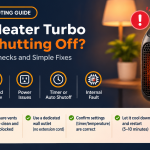
A portable electric heater usually turns itself off for one of these reasons:
- Overheat protection is triggered because the vents or filter are blocked by dust.
- The tip-over switch senses that the heater is not sitting level.
- The circuit is overloaded, so the breaker or the heater’s own plug cuts the power.
- The cord, plug or outlet is damaged or not making a firm connection.
- The thermostat or timer is doing exactly what it was set to do.
- An internal part has failed, such as a thermal fuse or thermostat.
How a Portable Electric Heater Decides to Shut Off
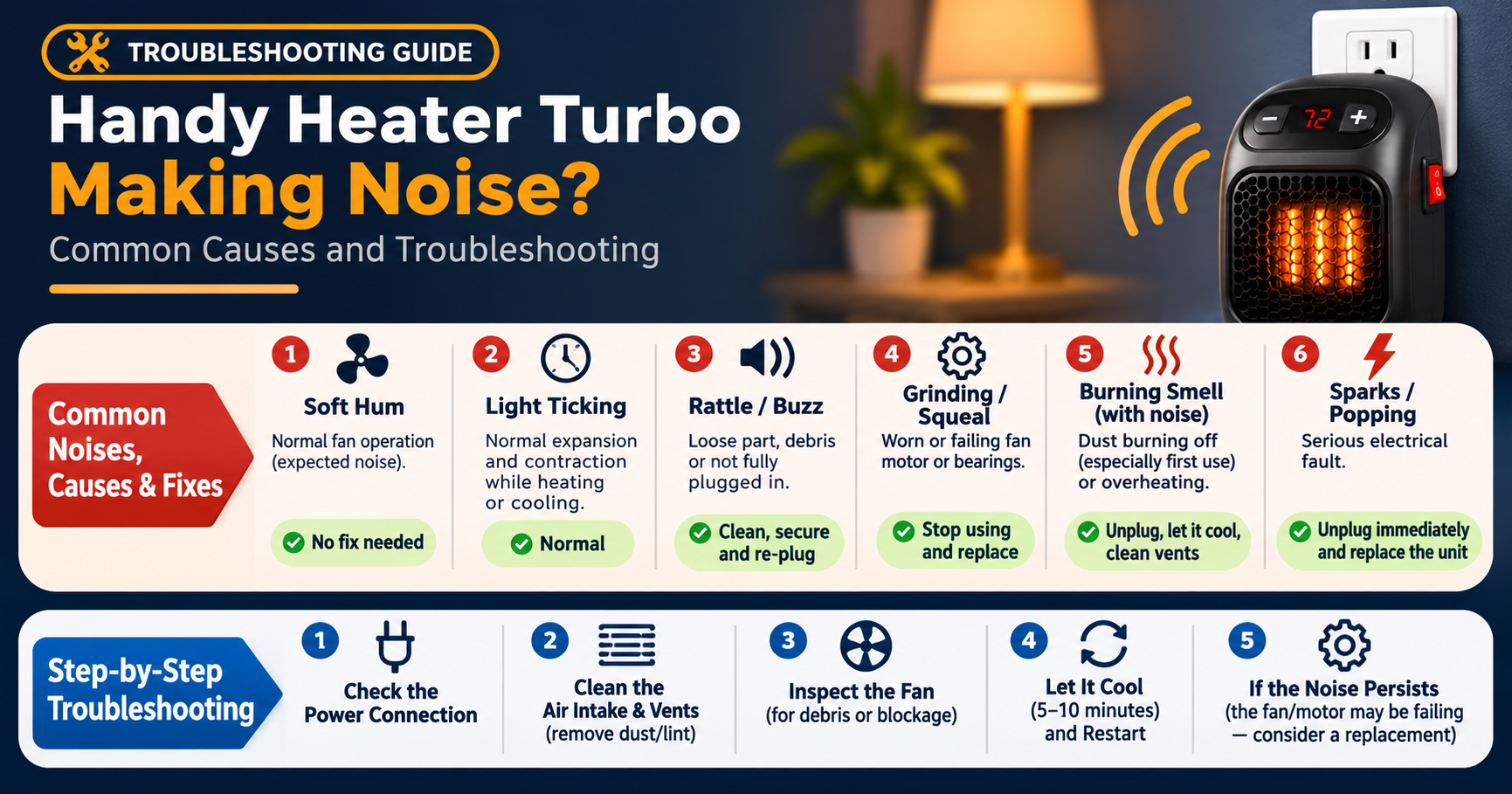
To fix the problem, it helps to understand what is happening inside the heater. A heater turns electricity into heat using a heating element. Because that element gets very hot, manufacturers add several protective parts. If any one of them senses danger, or simply thinks it senses danger, it interrupts the power. That is why a heater can appear to switch off “for no reason” when in fact a sensor made a decision.
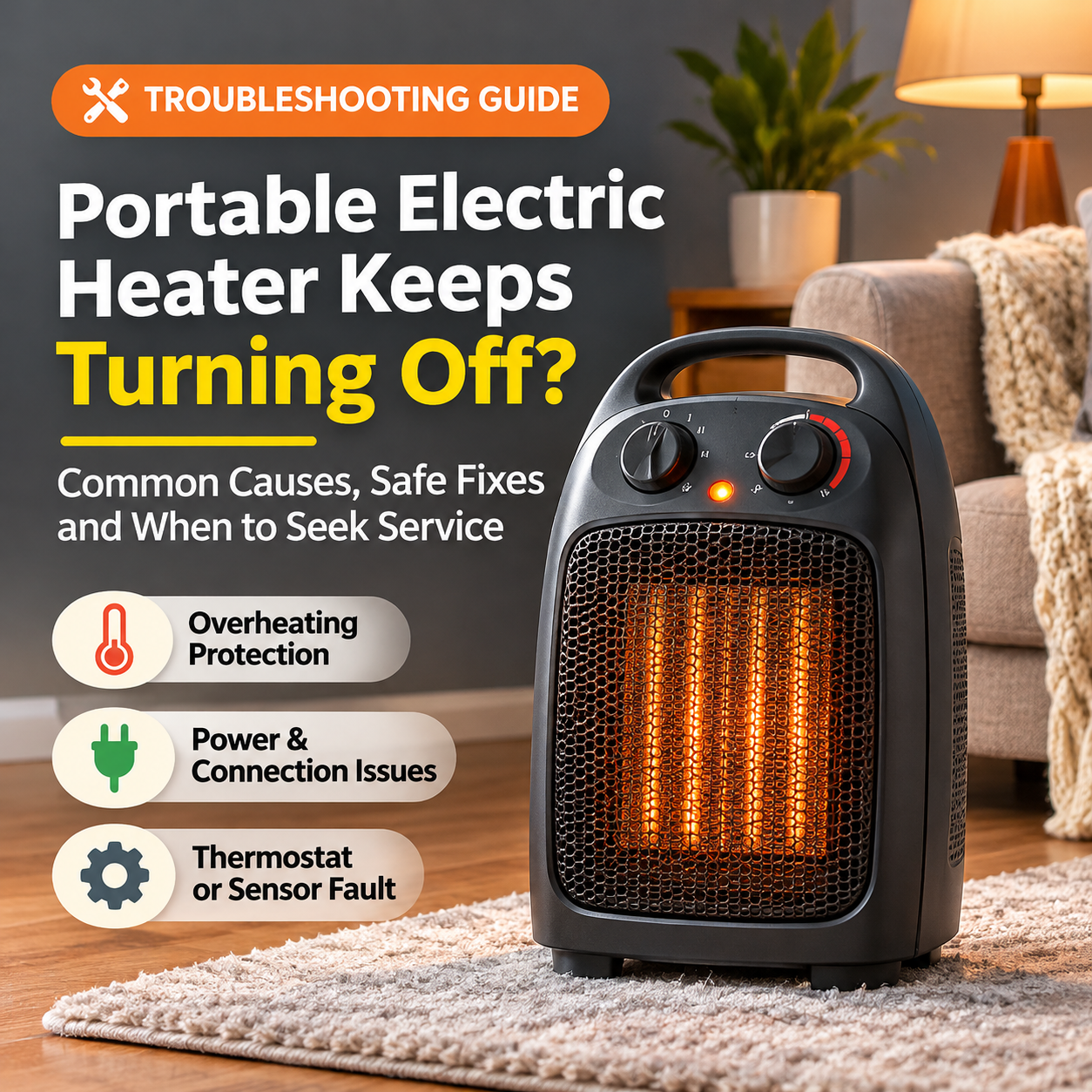
Cause 1: Overheat Protection Is Triggered
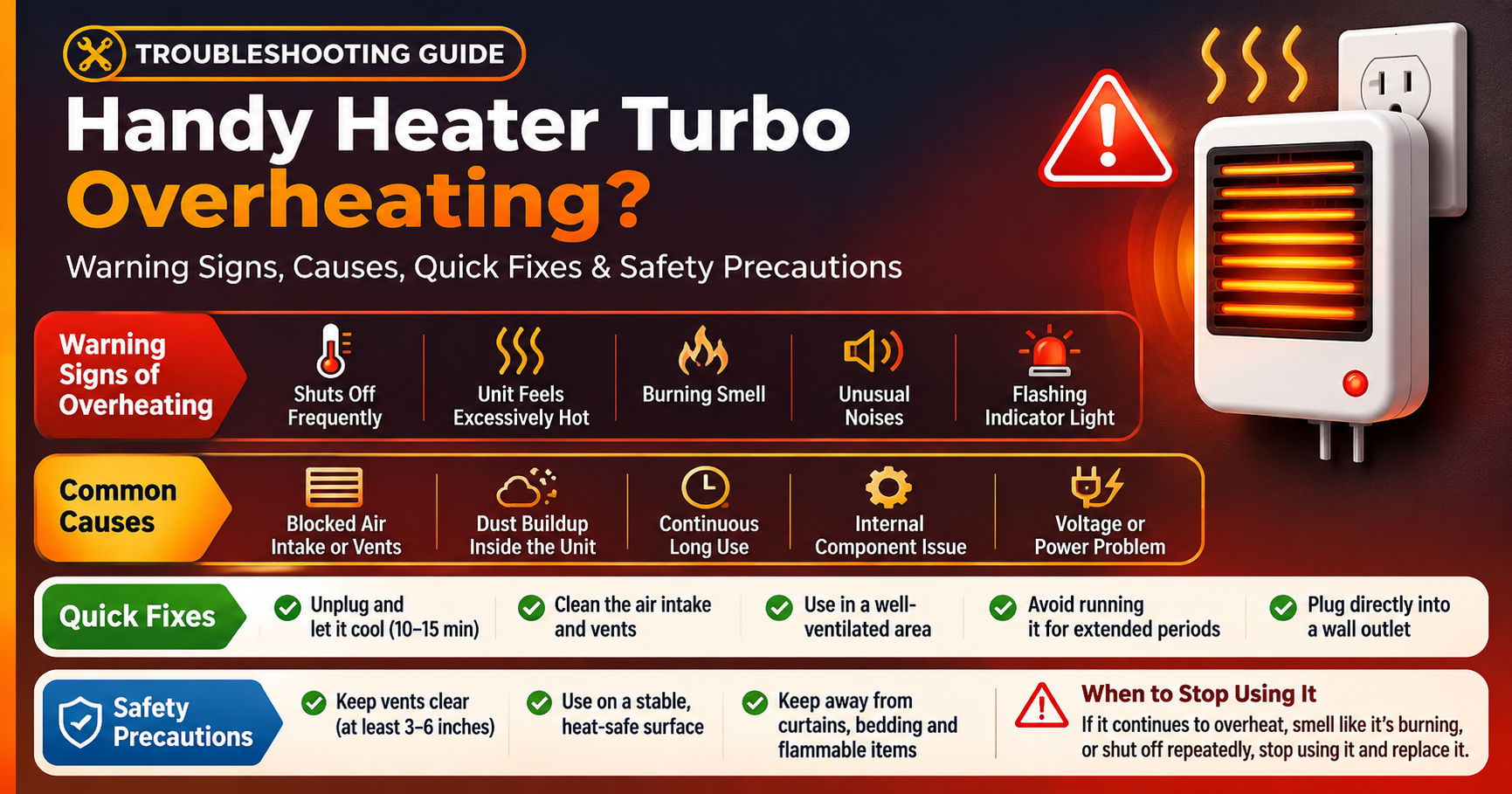
This is the number one reason a heater keeps turning off. Every quality heater contains a temperature sensor or a thermal cut-out. When the internal temperature gets too high, it turns the heater off to prevent damage or fire. Once the heater cools down, it may switch back on, and the cycle repeats.
Why the heater overheats
- Dust, pet hair and lint blocking the air intake or the front grill.
- A dirty or clogged filter on models that have one.
- Furniture, curtains, bedding or walls placed too close to the heater.
- Covering the heater, or using it to dry clothes.
How to fix it
- Unplug the heater and let it cool for at least 30 minutes.
- Use a vacuum cleaner with a soft brush attachment to remove dust from the vents and grills.
- Clean or replace the filter if your model has one.
- Move the heater so there is at least three feet (about one metre) of clear space around the front and sides.
- Plug it back in and test it for 20 to 30 minutes.
If the heater now runs without cutting out, the problem was overheating caused by airflow restriction.
Cause 2: The Tip-Over Switch Is Activated
Almost every modern portable heater has a tip-over switch at the bottom. It is a small safety device that cuts power instantly if the heater falls or leans too far. The problem is that it can be triggered even when the heater has not fallen over.
Common triggers
- Placing the heater on thick carpet, a rug or a soft surface where the base sinks unevenly.
- Standing it on an uneven floor, a wobbly table or a slightly tilted surface.
- Dust or debris stuck under the base, keeping the switch from sitting correctly.
- A worn or sticking switch on an older heater.
How to fix it
Move the heater to a hard, flat, level surface such as a tile or wooden floor. Turn it over carefully once it is cool and check the underside for dust or lint. Press the small switch or button a few times to see if it moves freely. If the heater only shuts off when it sits on a particular spot, the surface was the problem.
Cause 3: An Overloaded Circuit or Tripped Breaker
Portable electric heaters draw a lot of power. Many models use around 1,500 watts, which is a large load for a household circuit. If other devices share the same circuit, such as an air conditioner, a kettle, a microwave or a hair dryer, the circuit can overload and the breaker will trip. Some heaters also have a built-in reset plug that cuts power when it detects a problem.
Signs of circuit overload
- The heater shuts off at the same time another appliance turns on.
- Lights flicker or dim when the heater starts.
- The breaker in your electrical panel has moved to the off or middle position.
- The plug or the outlet feels warm.
How to fix it
- Run the heater alone on its circuit and unplug other high-power devices.
- Plug the heater directly into a wall outlet. Do not use an extension cord, a power strip or a travel adapter, because these can overheat and are a serious fire risk with heaters.
- If your heater has a reset button on the plug, press it after the heater cools.
- Reset the breaker in your panel, then test again.
If the breaker keeps tripping even when the heater is the only device on the circuit, ask a licensed electrician to inspect the wiring. Do not keep resetting it.
Cause 4: A Damaged Cord, Plug or Outlet
A loose connection resists electricity, and resistance creates heat. A worn cord or a loose outlet can make the heater cut off randomly, especially when you move it or touch the cord. This is one of the more dangerous causes, so treat it seriously.
What to check
- Cracks, cuts, kinks or exposed wire on the cord.
- Bent, discoloured or burnt plug prongs.
- An outlet that feels hot, smells burnt or holds the plug loosely.
- Crackling sounds or sparks when plugging in.
How to fix it
Try a different wall outlet to find out whether the outlet is the problem. If the plug or cord looks damaged or feels hot, stop using the heater immediately. Cords on heaters should not be repaired at home with tape. Contact the manufacturer or replace the heater. If the outlet is the issue, call an electrician.
Cause 5: Thermostat, Timer or Eco Settings
Sometimes the heater is working perfectly. It is simply following its settings. Many heaters switch off once the room reaches the temperature you chose, then switch back on when the room cools. If the thermostat is set too low, or if the heater sits close to the sensor’s reading point, the cycles can feel very short.
Settings that cause shut-offs
- Thermostat set too low: the heater reaches the target quickly and stops.
- Timer or auto-off: many models turn off after 1, 2, 4 or 8 hours.
- Eco mode: adjusts power automatically and may pause the heating element.
- Heater too close to a cold draught: the temperature near the sensor swings up and down.
How to fix it
Turn the thermostat to the maximum setting for a test and cancel any timer. If the heater now runs continuously, the settings were the cause. Then lower the thermostat gradually to find a comfortable level. Placing the heater a short distance from windows and door gaps also keeps the sensor reading stable.
Cause 6: A Failed Thermal Fuse, Thermostat or Internal Fault
If you have tried everything above and the heater still shuts off, an internal part may have failed. Thermal fuses are one-time safety devices. Once they blow, the heater will not work at all or will keep cutting out. Thermostats, fans, switches and wiring inside the unit can also wear out with age.
Signs of an internal fault
- The heater is old, with several winters of heavy use.
- It shuts off within seconds even when clean, level and plugged in correctly.
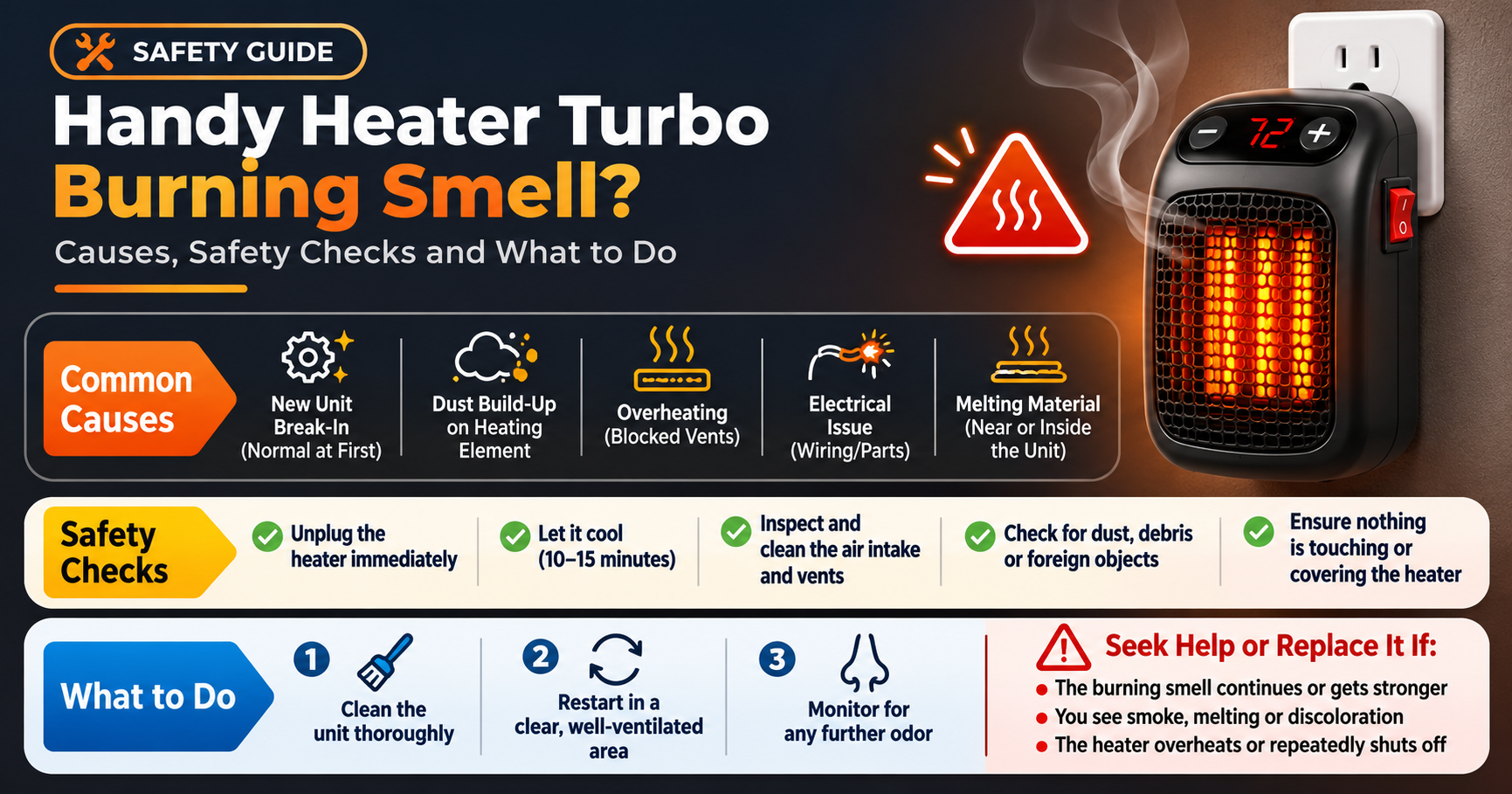
- You smell burning plastic or see discolouration on the casing.
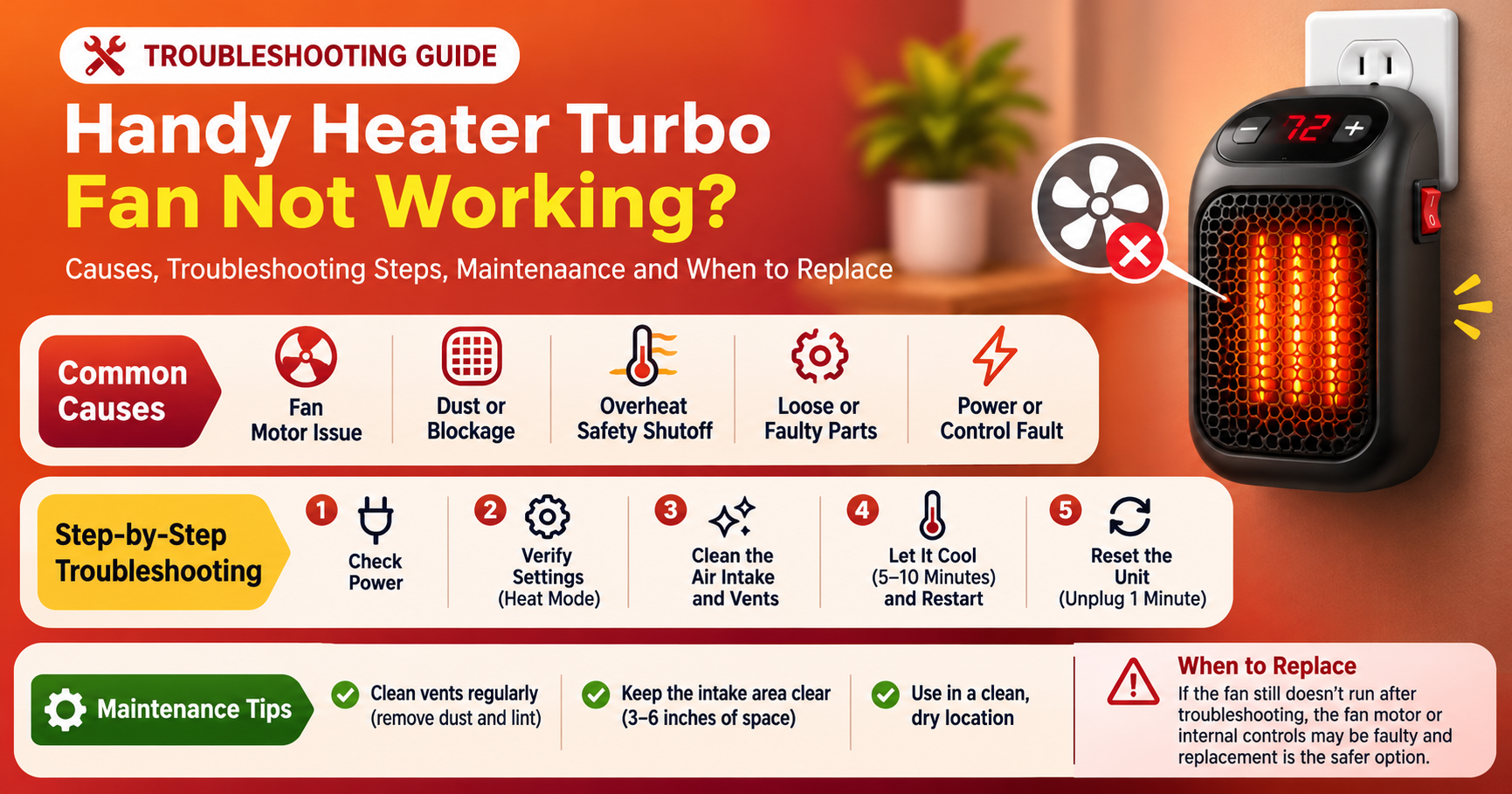
- The fan runs but there is no heat, or heat but no fan.
What to do
Check whether the heater is still under warranty and contact the seller or manufacturer. Do not open the casing yourself. Opening a heater can void the warranty and exposes you to electrical hazards. In most cases, replacing a budget heater costs less than a professional repair.
Quick Diagnosis Table
| What you notice | Most likely cause | Best first fix |
|---|---|---|
| Shuts off after 5 to 15 minutes, casing feels very hot | Overheat protection | Clean the vents and filter |
| Shuts off only on carpet or when bumped | Tip-over switch | Use a hard, level surface |
| Power drops when another appliance starts | Overloaded circuit | Use a dedicated outlet |
| Cuts out when the cord moves, plug feels warm | Damaged cord, plug or outlet | Stop use and replace the part or heater |
| Turns off, then restarts by itself | Thermostat cycling or timer | Raise the thermostat and cancel the timer |
| Never stays on, even when clean and level | Blown thermal fuse or internal fault | Use the warranty or replace |
Step-by-Step Troubleshooting Path
If you are not sure which cause applies to you, follow this order. It moves from the easiest and most common fixes to the least likely ones, so you can stop as soon as the heater works normally.
- Unplug and cool the heater. Wait at least 30 minutes before touching it.
- Clean the vents and filter. Dust is the most common culprit.
- Place it on a hard, level floor with plenty of open space around it.
- Plug it directly into a wall outlet and avoid sharing the circuit with other big appliances.
- Review the thermostat, timer and eco settings.
- Test another outlet or room to rule out a wiring problem.
- Contact support or replace the heater if nothing helps.
How to Stop It From Happening Again
A heater that is cleaned and used correctly will stay on reliably for many winters. Build a few simple habits and most shut-off problems will never appear.
- Clean the vents regularly. Dust builds up faster than most people expect, especially in homes with pets.
- Keep it level and clear. Always use a hard surface and keep curtains, bedding and furniture away.
- Use a dedicated outlet. A heater should be the only large appliance on its circuit.
- Inspect the cord and plug often. Replace the heater at the first sign of damage.
- Store it properly. In summer, clean it and keep it in its box in a dry place.
Safety Warnings You Should Never Ignore
The shut-off function is a safety feature, so please do not try to disable it. Taping down a switch, bridging a fuse or removing a sensor can turn a small inconvenience into a house fire. Keep these rules in mind:
- Never cover a heater or use it to dry clothes.
- Never leave a heater running while you sleep or when you leave home, unless the manufacturer states it is designed for that and has proper safety certification.
- Keep children and pets away from the front of the heater.
- Do not use heaters in damp bathrooms unless they are specifically rated for it.
- Stop using the heater at once if you smell burning, see sparks or notice melted plastic.
- Install working smoke alarms in rooms where you use a heater.
When Should You Replace Your Portable Heater?
Repairing a heater rarely makes sense. Replace it if it is more than five to eight years old and has started cutting out, if the cord or plug is damaged, if you smell burning, or if the unit shuts off within seconds even after careful cleaning. A new heater with better safety features is a far smaller expense than the cost of a mistake.
What to Look for in a Replacement Heater
If it is time to buy a new heater, choose one that is built for reliable and safe operation. These are the features that matter most:
- Safety certification: Look for recognised marks such as UL, ETL, CE or an equivalent in your country.
- Tip-over and overheat protection: Both should be listed clearly in the specifications.
- Adjustable thermostat: Gives you steady comfort without constant on-off cycles.
- Multiple power settings: A low setting of about 750 watts helps on shared circuits.
- Room size rating: Match the heater to your space. An undersized unit will run constantly and overheat.
- Easy-to-clean design: Removable filters and accessible grills save time later.
- Heater type: Ceramic heaters heat quickly, oil-filled radiators give steady quiet warmth, and infrared heaters warm people directly.
- Good warranty: A longer warranty shows the maker trusts the build.
- Cool-touch housing and a heavy-duty cord: Add safety, especially around children.
Frequently Asked Questions
Why does my space heater turn off after a few minutes?
The most common reason is overheat protection caused by dust blocking the vents. Other causes include an unlevel surface, an overloaded circuit, or a timer and thermostat setting. Clean the heater, place it on a hard, flat floor and plug it directly into a wall outlet.
Why does my heater turn on and off by itself?
This is usually the thermostat. The heater switches off when the room reaches the set temperature and on again as it cools. Raising the thermostat setting or moving the heater away from drafts often reduces the cycling.
Can I use an extension cord with my portable heater?
It is best not to. Heaters draw a lot of current, and most extension cords and power strips are not designed for that load. Plug the heater straight into a wall outlet.
Why does my heater shut off when I put it on carpet?
The tip-over switch detects an uneven base on soft carpet and cuts the power. Move the heater to a hard, level surface and check that nothing is stuck under the base.
Is it dangerous if my heater keeps shutting off?
The shut-off itself is a protective response, but the cause may be a real hazard, such as a damaged cord or a blocked vent. Investigate the cause promptly, and never disable a safety feature.
How long should a portable electric heater last?
With regular cleaning and careful use, most portable heaters last around five to ten years. Heavy daily use and dusty rooms shorten that lifespan.
How do I reset my heater after it shuts off?
Turn it off, unplug it and let it cool for around 30 minutes. Fix the cause, such as cleaning the vents or levelling the surface. Then plug it in and turn it on. If your model has a reset button, press it once as described in the manual.
Final Thoughts
When a portable electric heater keeps turning off, the cause is usually simple: blocked vents, an uneven floor, an overloaded outlet or settings that need adjusting. Work through the checks above in order, and you will probably have the heater running again in a few minutes. If a damaged cord, a burning smell or a persistent internal fault shows up, retire the heater and invest in a newer, safety-certified model. Staying warm is important, but staying safe is more important.
This article is for general information only. Always follow your heater’s user manual and consult a qualified electrician for wiring or circuit problems.