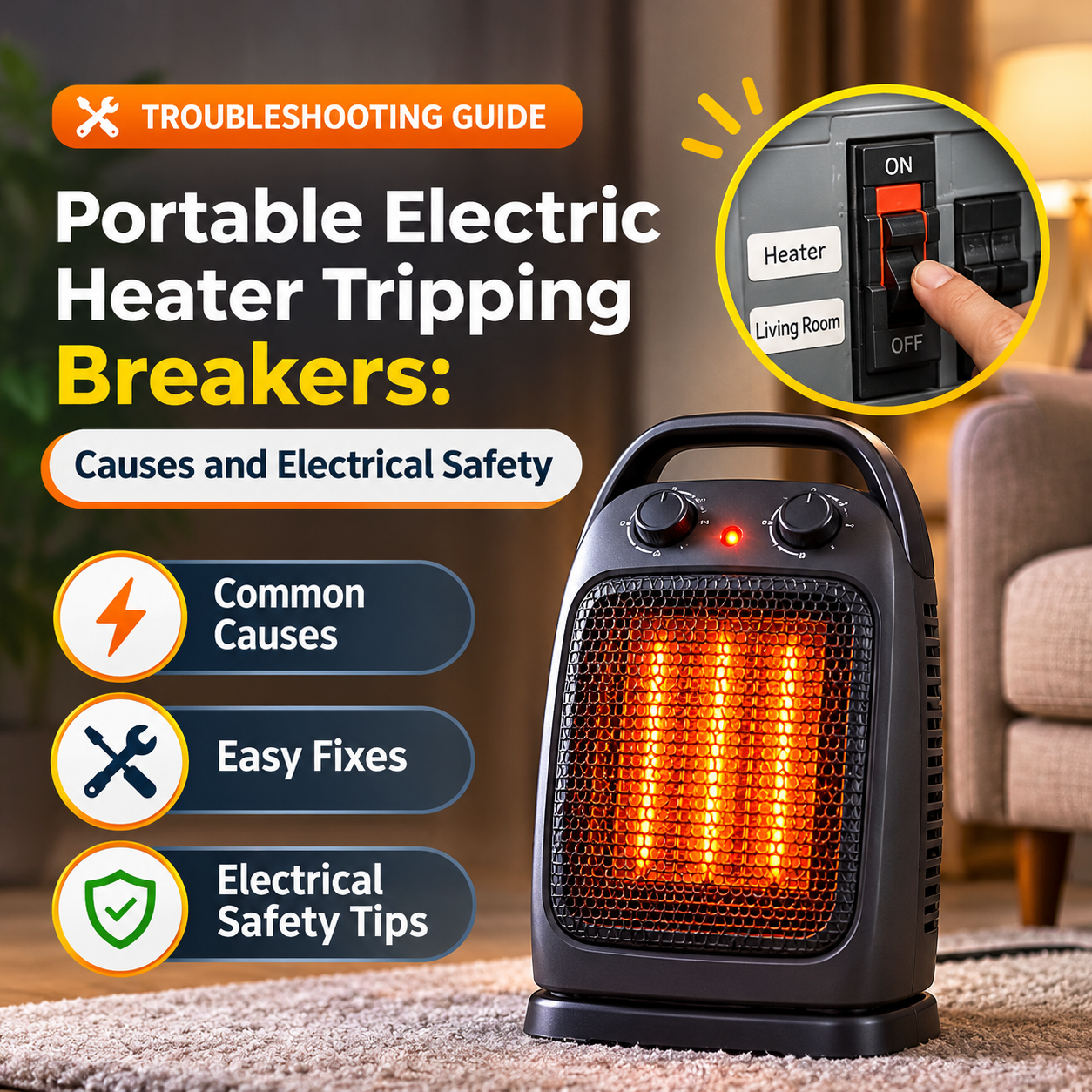

You switch on your portable electric heater on a cold evening, enjoy the warmth for a few minutes, and then everything goes quiet. The lights flicker off, the heater stops humming, and the circuit breaker has tripped again. If this keeps happening, you are not alone. A portable electric heater that trips the circuit breaker is one of the most common household electrical complaints every winter.
The good news is that a tripping breaker is not always a sign that something is broken. In most cases it is doing exactly what it was designed to do: protecting your wiring from too much electrical current. The key is to understand why it is happening so you can fix the real cause instead of just resetting the switch and hoping for the best.
In this complete guide you will learn how much power a portable heater really uses, the six most common reasons it trips a breaker, how to tell an overload from a short circuit, a step-by-step way to solve the problem, and the safety rules every heater owner should follow.
Quick Answer
A portable electric heater usually trips the breaker because it draws a large amount of power (often 1,500 watts, or about 12.5 amps on a 120-volt circuit) and the circuit becomes overloaded by the heater itself, by other devices sharing the same circuit, or by an extension cord. Less often the cause is a short circuit, a ground fault, a damaged heater, or a worn-out breaker. Plug the heater directly into a wall outlet, unplug everything else on that circuit, and if it still trips, stop using it and have it inspected.
Why Does a Portable Electric Heater Trip the Circuit Breaker?
A circuit breaker is a safety switch. Every circuit in your home is wired with cable that can only carry a certain amount of current safely, usually 15 or 20 amps. If more current flows than the wire can handle, the wire heats up, and in the worst case that heat can melt insulation and start a fire. The breaker detects the excess current and cuts the power before that happens.
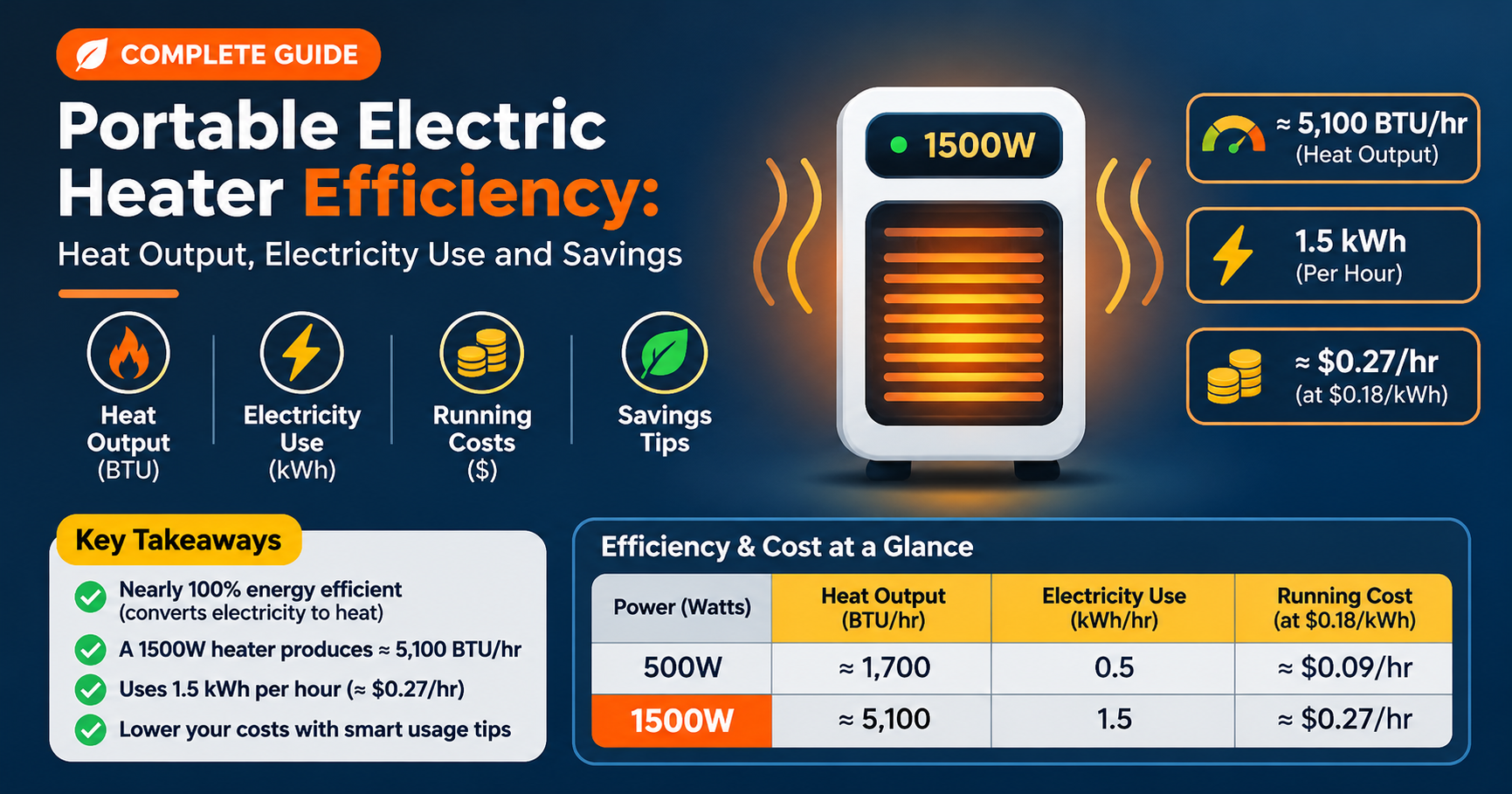
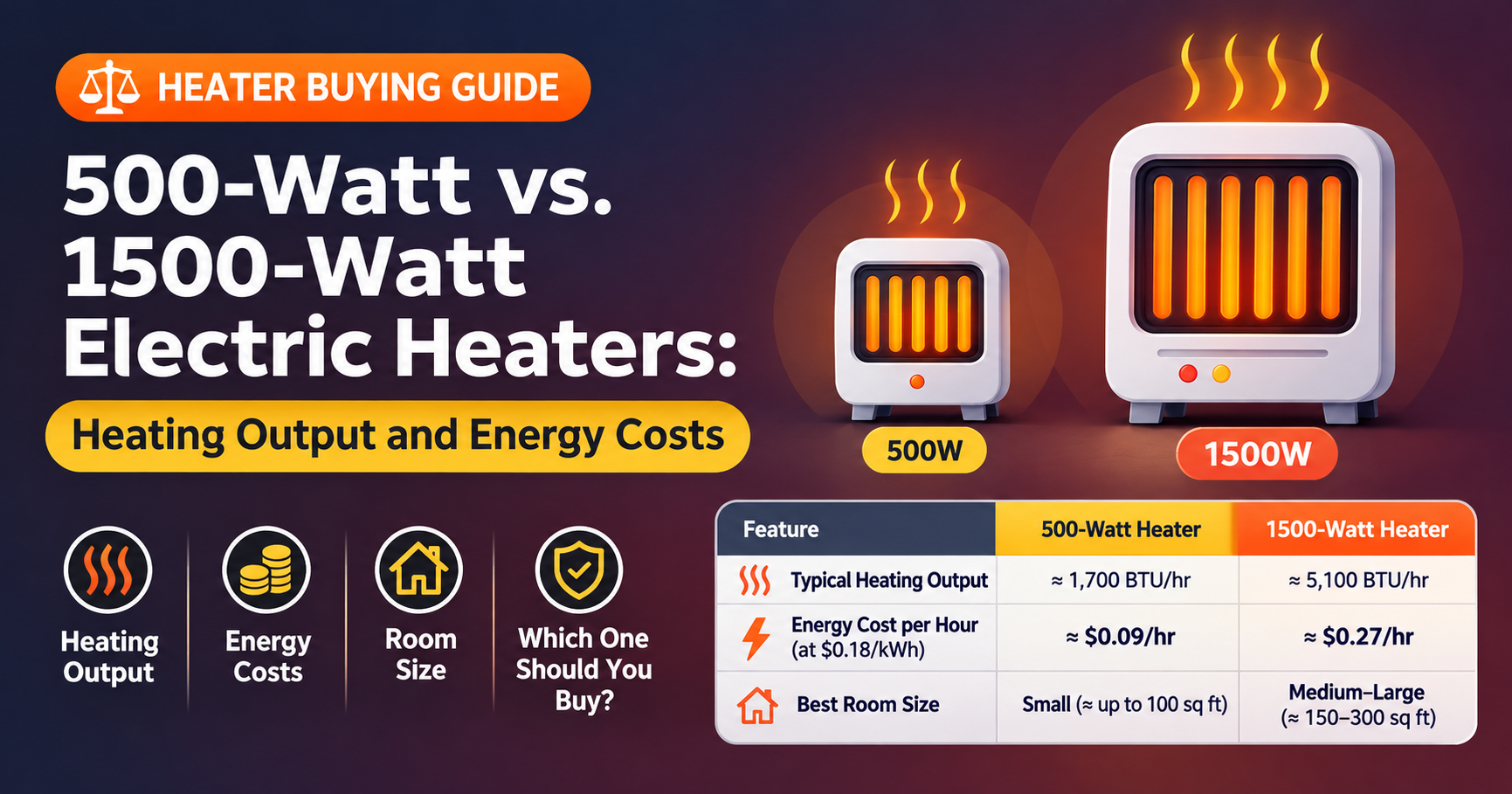
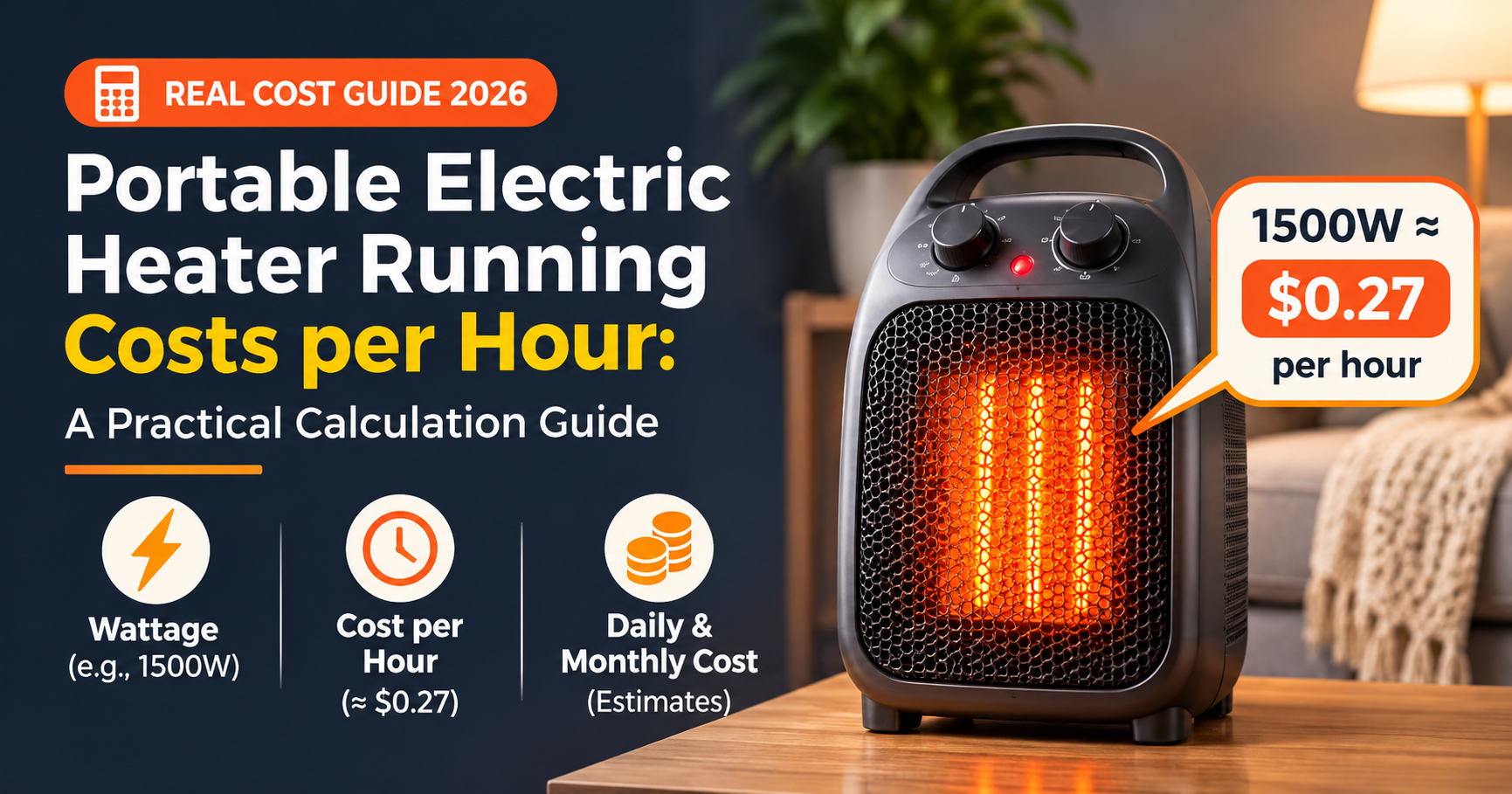
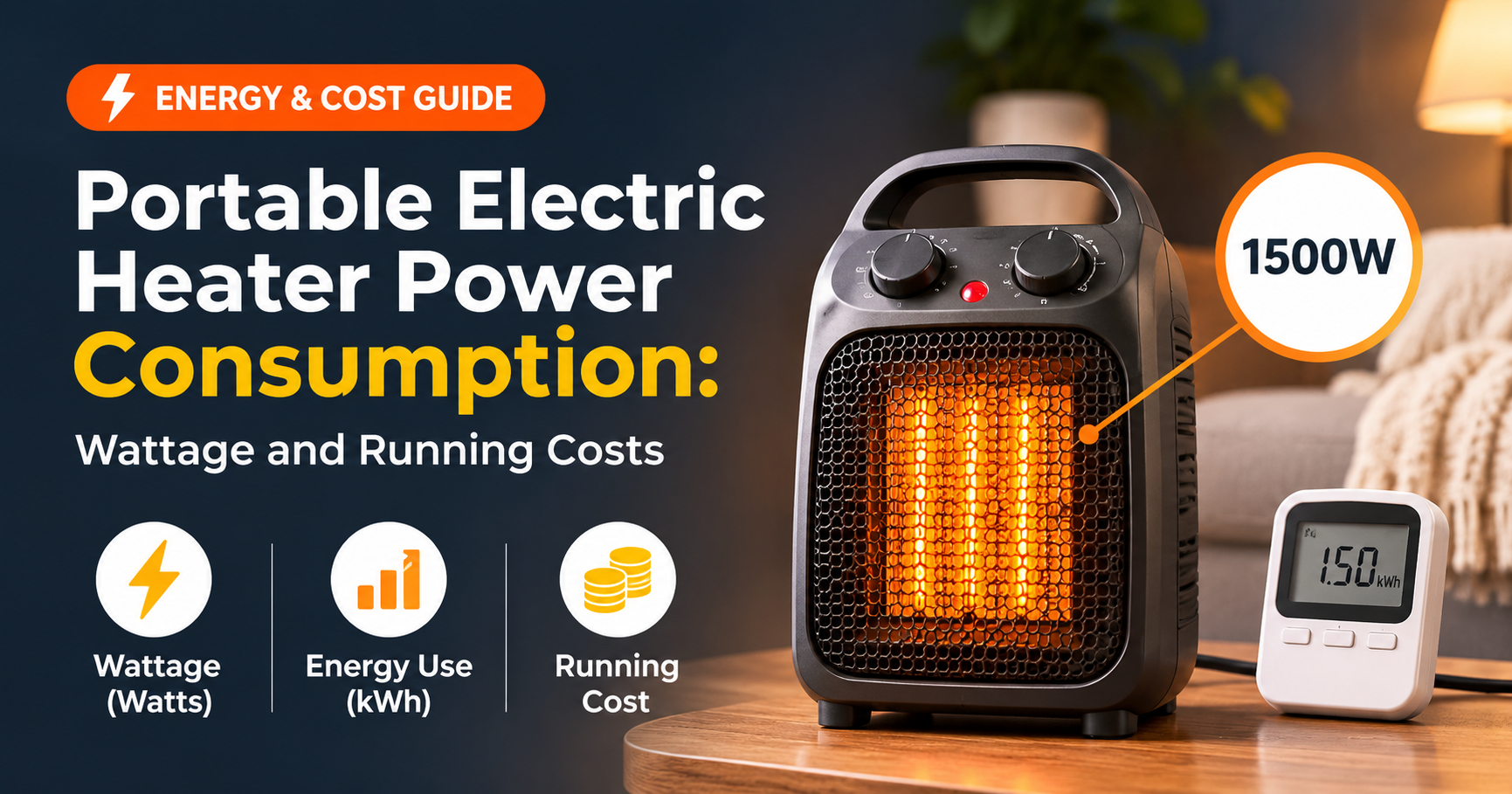
Portable electric heaters are among the most power-hungry appliances you can plug into a normal wall outlet. Unlike a lamp, a phone charger, or even a TV, a heater turns electricity directly into heat, and making heat takes a lot of energy. A typical portable heater uses 750 to 1,500 watts, which is as much as a microwave oven or a hair dryer. That is why the breaker is far more likely to trip when a heater is running than with almost any other device in your home.
How Much Power Does a Portable Heater Actually Use?
To understand why your breaker trips, you need one simple formula:
Amps = Watts ÷ Volts
Most portable heaters are labeled with their wattage, usually on the back or bottom of the unit. Divide that number by your supply voltage (120 volts in the United States, Canada, and similar regions, or 220 to 240 volts in many other countries) to see how much current the heater draws.
| Heater Setting | Power (Watts) | Current at 120 V | Current at 230 V |
|---|---|---|---|
| Low | 500 W | 4.2 A | 2.2 A |
| Medium | 750 W | 6.3 A | 3.3 A |
| Medium-High | 1,000 W | 8.3 A | 4.3 A |
| High (most common) | 1,500 W | 12.5 A | 6.5 A |
| Very High (larger units) | 2,000 W | 16.7 A | 8.7 A |
Now compare that to what a standard household circuit can handle. A 15-amp circuit at 120 volts can deliver a maximum of 1,800 watts (15 × 120). However, electrical codes and safety guidelines recommend that a load that runs for three hours or more, which is exactly how people use heaters, should not exceed 80 percent of the breaker rating. On a 15-amp circuit that is 12 amps, or about 1,440 watts. On a 20-amp circuit the continuous limit is 16 amps, or about 1,920 watts.
This means a 1,500-watt heater uses essentially the entire safe capacity of a 15-amp circuit by itself. Add even one more appliance and the breaker has very little room to spare.

Living in a 220–240 volt region? The same heater draws roughly half the current, so nuisance tripping is less common. It can still happen if the circuit is shared, the wiring is old, or the heater has a fault, so the troubleshooting steps below still apply.
6 Common Reasons a Portable Heater Trips the Breaker
Here is a quick overview of the most frequent causes, followed by a detailed explanation of each one.

1. The Circuit Is Overloaded
This is by far the most common cause. If your heater is plugged into a 15-amp circuit, it already uses around 12.5 amps on its highest setting. The moment anything else on that circuit turns on, such as a lamp, a TV, a phone charger, or a vacuum, the total current can pass the safe limit. A standard breaker does not trip instantly at a small overload. It heats up internally and trips after a delay, which is why the heater often works fine for several minutes before the power cuts out.
How to fix it: Run the heater on a lower setting, or use it on a circuit that has nothing else plugged in. If your heater has a 750-watt or 1,000-watt setting, try that first.
2. Other Appliances Share the Same Circuit
Most people do not know which outlets share a breaker. In many homes, a single 15-amp or 20-amp circuit feeds an entire bedroom, living room, or a mix of rooms. That means the heater might be sharing power with a TV, a computer, a window air conditioner, a fridge in the next room, or even hallway lights.
Appliances that draw a lot of power make the problem worse. Approximate figures include:
- Microwave oven: 1,000 to 1,500 watts
- Hair dryer: 1,200 to 1,800 watts
- Vacuum cleaner: 1,000 to 1,400 watts
- Electric kettle: 1,000 to 1,800 watts
- Toaster: 800 to 1,500 watts
- Desktop computer and monitor: 150 to 400 watts
- LED TV: 50 to 200 watts
How to fix it: Find out which outlets are on the same breaker by switching it off and testing which lights and outlets lose power. Then keep high-wattage devices off that circuit while the heater runs.
3. You Are Using an Extension Cord or Power Strip
Most heater manufacturers clearly say to plug the unit directly into a wall outlet, and for good reason. Ordinary extension cords and power strips are not built to carry 12 to 15 amps continuously. Thin cords add electrical resistance, get warm, and can overheat or melt at the plug. A power strip may also have its own small built-in breaker that trips well before the main one does.
How to fix it: Plug the heater directly into the wall. If you absolutely cannot reach an outlet, use a very short, heavy-duty cord (12-gauge or thicker) that is rated for at least the heater’s amperage, and never use a power strip or a multi-outlet adapter.
4. A Short Circuit or Internal Heater Fault
A short circuit happens when current takes an unintended path, for example when a damaged wire touches another wire or a metal part. The current spikes instantly and the breaker trips within a moment, often with a loud click. In a portable heater, short circuits can be caused by:
- A frayed, pinched, or cracked power cord
- A damaged or bent plug
- A failed heating element or a faulty thermostat or switch
- Dust, pet hair, and lint burning on the element or collecting on internal parts
- Water or moisture getting inside the unit
If the breaker trips the instant you turn the heater on, or the instant you plug it in, a short circuit is the number one suspect.
How to fix it: Unplug the heater, let it cool, and inspect the cord and plug for burn marks, discoloration, or damage. Clean dust from the vents and grille with a soft brush or a vacuum on a low setting while the heater is unplugged. If the cord is damaged or the heater still trips instantly on another circuit, stop using it and replace it.
5. A Ground Fault (GFCI Tripping)
Outlets in bathrooms, kitchens, garages, basements, and outdoor areas are usually protected by a GFCI (ground-fault circuit interrupter). A GFCI is far more sensitive than a normal breaker. It trips when it detects even a tiny amount of current leaking to ground, which can happen if moisture reaches a heater or its cord. Some heaters also have a built-in safety plug with its own test and reset buttons that trips if it detects a damaged cord.
How to fix it: Do not use a portable heater in a damp location or where it could be splashed. If a GFCI outlet or the heater’s own plug trips repeatedly, treat it as a warning sign and stop using that heater until it has been checked.
6. An Old Breaker or Loose Wiring
Sometimes the heater is perfectly fine and the problem is the electrical system itself. Breakers wear out over time, especially if they have tripped many times, and an aging breaker can trip at a lower load than it should. Loose connections at an outlet or inside the panel create heat and resistance, which can also cause repeated tripping.
Warning signs include a breaker that feels warm or hot, a buzzing sound from the panel or an outlet, flickering lights, a burning smell, or scorch marks around an outlet. If you notice any of these, stop using the circuit and call a licensed electrician right away. This is not a do-it-yourself repair.
Does It Trip Instantly or After a Few Minutes? A Simple Way to Diagnose the Problem
The timing of the trip tells you a lot about what is going wrong.
| What You Notice | Most Likely Cause |
|---|---|
| Trips instantly when plugged in or switched on | Short circuit, ground fault, or damaged cord or heater |
| Trips after 2 to 15 minutes of running | Overloaded circuit or a shared circuit |
| Trips when another appliance turns on | Combined load is above the breaker rating |
| Trips at random times, even on a low setting | Loose connection, worn breaker, or failing heater thermostat |
| Only the GFCI outlet or the heater plug trips | Ground fault, moisture, or damaged cord |
How to Fix a Portable Heater That Keeps Tripping the Breaker (Step by Step)
Follow these steps in order. Start with the safest and easiest checks first.
- Turn the heater off and unplug it. Never keep resetting a breaker while the heater is still switched on and plugged in.
- Reset the breaker properly. Push the switch fully to the OFF position first, then back to ON. A breaker that has tripped often sits in a middle position.
- Unplug everything else on that circuit. Lamps, TVs, chargers, and anything else sharing the outlets or the room.
- Remove extension cords and power strips. Plug the heater directly into a wall outlet.
- Start on a low setting. Turn on the heater on its lowest wattage, wait several minutes, and then increase the setting one step at a time.
- Inspect the cord and plug. Look for cracks, melted spots, bent prongs, or discoloration. A plug that feels hot after use is a red flag.
- Clean the heater. With the unit unplugged and cool, remove dust from the grille, vents, and intake.
- Try a different circuit. Plug the heater into an outlet in another room that is on a different breaker, ideally one with nothing else running.
- Call a professional if it still trips. If the heater trips on every circuit, the heater is probably faulty. If it only trips on one circuit even with nothing else plugged in, the breaker or the wiring may need to be checked by a licensed electrician.

When to Call a Licensed Electrician
Some problems are beyond a simple fix and should never be handled by guesswork. Call a qualified electrician if you notice any of the following:
- The breaker trips even when nothing is plugged in or the heater is off
- The breaker will not reset or feels hot to the touch
- There is a burning smell, buzzing, or crackling from an outlet or the panel
- An outlet or switch plate is discolored, warm, or has scorch marks
- Lights flicker or dim when the heater turns on
- The same circuit trips with several different appliances
- Your home is older and has outdated wiring or an old breaker panel
If you want to use a high-wattage heater regularly in a particular room, an electrician can install a dedicated circuit for it. This is often the most reliable long-term solution.
What You Should Never Do When a Heater Trips the Breaker
It can be tempting to find a quick workaround, but some shortcuts are dangerous.
- Do not install a higher-amp breaker. The breaker is sized to protect the wire in the wall. A larger breaker lets more current flow through wiring that was never designed for it, which creates a serious fire risk.
- Do not tape down or bypass the breaker. This removes the only safety device protecting the circuit.
- Do not keep resetting it again and again. Repeated resets stress the breaker and can hide a real fault.
- Do not use a damaged heater. If the cord, plug, or housing is damaged, replace the unit.
- Do not leave the heater running unattended. Turn it off when you leave the room, go to sleep, or leave the house.

How to Prevent Your Portable Heater From Tripping the Breaker
A few habits will keep your heater working safely and your breaker quiet all winter.
- Give the heater its own circuit whenever possible. Nothing else should be running on it.
- Know your wattage. Check the label on the heater and add up what else is on the circuit.
- Use the thermostat. Letting the heater cycle on and off at a set temperature reduces the time it runs at full power.
- Use the lower setting for longer. A 750-watt or 1,000-watt setting running steadily often keeps a room warm enough while staying within safe limits.
- Close doors and seal drafts. A well-insulated room needs less heat, so the heater can run on a lower setting.
- Keep the heater clean. Dust buildup causes overheating and unusual smells.
- Keep clear space around it. Maintain at least 3 feet (about 1 meter) from curtains, bedding, furniture, and anything flammable.
- Place it on a flat, hard surface. Never put a portable heater on a bed, couch, or thick carpet where it could tip or block airflow.
Choosing a Portable Heater That Is Safer and Less Likely to Trip Your Breaker
If you are shopping for a replacement, one point matters above all others: wattage, not heater type, decides how much current you draw. A ceramic heater, an oil-filled radiator, and an infrared heater that are all rated at 1,500 watts will each draw about 12.5 amps at 120 volts. What changes between them is how they deliver the heat.
Look for these features:
- Adjustable power settings. Multiple wattage levels, such as 750 W and 1,500 W, let you stay within a circuit’s limit.
- An adjustable thermostat. This prevents the heater from running at full power longer than necessary.
- Tip-over protection. The heater shuts off automatically if it is knocked over.
- Overheat protection. A built-in sensor cuts the power if the unit gets too hot.
- A recognized safety certification. Look for marks such as UL, ETL, or CE on the product and packaging.
- A heavy-duty power cord with a safety plug. Some modern heaters include a plug that cuts power if it detects cord damage.
- A cool-touch exterior. This is especially useful in homes with children or pets.
- A size that matches your room. A small heater in a large room runs constantly at full power, while a right-sized unit can cycle off once the room is warm.
Which Heater Types Are Worth Considering?
- Ceramic heaters warm up quickly and are compact, which makes them popular for bedrooms, offices, and small rooms.
- Oil-filled radiator heaters heat more slowly but keep giving off warmth after the thermostat shuts the element off, so they can cycle off for longer periods.
- Infrared (radiant) heaters warm people and objects directly, which can feel comfortable even when the air itself is not very warm.
- Fan-forced heaters circulate warm air fast, but they can be noisier.
Other Options If Your Circuit Can’t Handle a Heater
If your breaker keeps tripping no matter what you try, your home’s electrical capacity may simply be too limited for a portable heater in that room. In that case, consider asking an electrician about a dedicated circuit, a hard-wired wall or baseboard heater, or a heat pump or mini-split system, which can provide much more heat for each unit of electricity used.
Frequently Asked Questions
Why does my space heater trip the breaker even when nothing else is plugged in?
A 1,500-watt heater alone is already near the safe continuous limit of a 15-amp circuit. If the breaker is old, there are loose connections, other lights or devices on the same circuit are drawing power, or the heater has an internal fault, it can trip even with “nothing else” plugged in. Try a lower setting, test a different circuit, and have the wiring checked if the problem continues.
How many watts can a 15-amp circuit handle?
A 15-amp circuit at 120 volts can carry up to 1,800 watts, but for continuous use such as running a heater, the recommended limit is about 1,440 watts (80 percent of the rating).
Is it safe to keep resetting the circuit breaker?
No. If a breaker trips more than once, something is wrong. Repeated resetting can wear out the breaker and can hide a real hazard such as a short circuit or overloaded wiring. Find and fix the cause first.
Can I use an extension cord with a portable heater?
It is best not to. Plug the heater directly into a wall outlet. If you have no other option, use a very short, heavy-duty cord (12-gauge or thicker) rated for the heater’s current, and never use a power strip.
Will a 20-amp breaker solve the problem?
Not unless the wiring in the wall is also rated for 20 amps. Never swap a breaker for a higher rating yourself. Only a licensed electrician can safely upgrade a circuit.
Why does the heater trip the breaker only on the highest setting?
The highest setting draws the most current. Your circuit may have just enough capacity to run the heater on low or medium but not on high, particularly if anything else is sharing the circuit. Using a lower setting solves it in many cases.
My heater trips the breaker on every circuit. What does that mean?
If the same heater trips breakers on several different circuits, the heater is most likely faulty. Stop using it and replace it.
Do oil-filled heaters trip the breaker less than other types?
Not by themselves. What matters is the wattage rating. However, because an oil-filled heater holds heat, its thermostat can switch the element off for longer periods, which reduces total running time at full power.
Final Thoughts
A portable electric heater that trips the circuit breaker is almost always telling you something useful: the circuit is carrying more load than it should, or there is a fault somewhere that needs attention. Start with the simple fixes. Unplug other devices, plug the heater directly into the wall, use a lower setting, and check the cord and plug. If the problem remains, test another circuit and, when in doubt, bring in a licensed electrician.
Above all, never override or bypass a breaker to keep a heater running. A tripped breaker is an inconvenience. The fire it may be preventing is a far bigger problem. Stay warm, and stay safe.
Safety note: This article is for general information only and does not replace the advice of a licensed electrician or the heater manufacturer’s instructions. Electrical codes and wiring vary by country and by home. If you are unsure about your wiring, ask a qualified professional.