
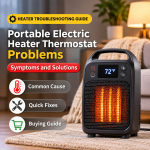

A portable electric heater is one of the simplest ways to warm up a cold bedroom, home office or garage. But when the thermostat starts misbehaving, that cozy corner turns into a frustration. Maybe the heater shuts off after a few minutes, never stops running, or blows cold air even though the dial is set to high. These are classic portable electric heater thermostat problems, and most of them have a simple explanation.
In this complete guide you will learn how a heater thermostat works, the eight most common problems, how to diagnose each one step by step, when it is time to replace the heater, and which features to look for if you decide to buy a new one.
Key Takeaways
- Most thermostat complaints come from dust, a poor heater location, a tripped safety cut-off or a worn dial, not a dead thermostat.
- Always unplug the heater and let it cool before checking anything.
- Never bypass or tape over a thermostat or safety switch.
- If the heater is more than 5 to 7 years old and the thermostat is faulty, replacing the whole unit is usually safer and cheaper.
How a Portable Electric Heater Thermostat Works
The thermostat is the brain of your heater. It measures the temperature of the surrounding air and compares it with the temperature you set. When the room is colder than your setting, it allows electricity to flow to the heating element. When the room reaches the target, it cuts power and waits until the temperature drops again.
There are two main designs. Mechanical thermostats use a bimetallic strip or a capillary tube that bends or expands with heat and physically opens or closes an electrical contact. Digital thermostats use an electronic temperature sensor (a thermistor) that sends a signal to a control board, which then switches a relay or a triac.

Because the sensor sits inside or on the heater body, anything that changes the air around it, such as dust, drafts or a heater placed too close to a wall, can fool it. That is the reason many "faulty" thermostats are actually working perfectly in the wrong conditions.
8 Common Portable Electric Heater Thermostat Problems and Fixes
Safety first: unplug the heater and let it cool for at least 30 minutes before inspecting or cleaning it.
1. Heater Will Not Turn On
Symptoms: No glow, no fan, no heat, or only the fan runs.
Common causes:
- Thermostat dial set too low, so the room already seems warm enough
- Tripped tip-over or overheat safety switch
- Loose plug, damaged cord or faulty outlet
- Burned-out thermostat contacts or a failed control board
How to fix it:
- Turn the thermostat dial to the maximum setting and test again.
- Plug the heater into a different wall outlet (never an extension cord or power strip).
- Check that the heater is on a flat, stable surface so the tip-over switch is not engaged.
- Unplug for 10 to 15 minutes to reset the overheat protection, then try again.
- If it still fails, the thermostat or control board likely needs replacement.
2. Heater Turns Off Too Soon (Short Cycling)
Symptoms: The heater runs for a minute or two, shuts off, and restarts again and again.
Common causes:
- Dust blocking the air intake so the unit overheats and trips its limit switch
- Heater placed in a very small space or too close to furniture
- Sensor reading heat from the heater body itself instead of the room
- Failing thermostat contacts
How to fix it:
- Vacuum the intake grille and vents with a soft brush attachment.
- Keep at least three feet of clear space around the heater.
- Move the heater away from corners and walls so air can circulate.
- If the problem continues in a clear, open space, replace the heater.
3. Heater Never Shuts Off
Symptoms: It keeps running at full power even when the room is hot.
Common causes:
- Thermostat contacts welded together after years of switching
- Sensor is damaged or disconnected
- Heater is too small for the space and never reaches the set temperature
- Dial is set at maximum
How to fix it:
- Lower the setting and see if the unit responds.
- Check the room size against the wattage (see the buying guide below).
- If the heater does not click off at all, unplug it and stop using it. Stuck contacts are a fire risk.
4. Inaccurate Temperature or Wrong Display
Symptoms: The room feels much hotter or colder than the number on the display or dial position.
Common causes:
- Heater placed in direct sunlight, near a draft or next to a window
- Dust covering the sensor
- Cheap sensor with poor calibration
- Dial markings are only approximate on mechanical models
How to fix it:
- Place a separate room thermometer at seating height and compare readings.
- Move the heater away from drafts, doors and windows.
- Clean around the sensor opening with compressed air.
- Use the dial as a rough guide and adjust by feel if your model is mechanical.
5. Constant Clicking Noises
Symptoms: Repeated clicking or ticking from inside the heater.
Common causes:
- Normal expansion and contraction of metal as it heats and cools
- Thermostat relay switching on and off rapidly
- Loose internal parts
How to fix it:
- A single click as the thermostat cycles is normal.
- If clicking is rapid and continuous, check for dust and blocked vents.
- If the noise is accompanied by a burning smell or sparks, unplug immediately and discard the unit.
6. Digital Thermostat Unresponsive or Showing Error Codes
Symptoms: Buttons do not work, the display is blank, or codes like E1 or E2 appear.
Common causes:
- Power surge or temporary electronic glitch
- Failed temperature sensor (error codes often relate to the sensor, but check your manual because codes vary by brand)
- Damaged control board from moisture or heat
How to fix it:
- Unplug the heater for 10 minutes and plug it back in to reset the electronics.
- Look up the error code in the user manual.
- Make sure the remote control (if any) has fresh batteries.
- If errors persist, the sensor or board must be replaced, which is rarely worth the cost on a budget heater.
7. Thermostat Dial Is Loose, Stuck or Spins Freely
Symptoms: The knob does not click, feels loose, or does not change the heat output.
Common causes:
- Worn plastic stem or broken internal gear
- Knob has slipped off the thermostat shaft
- Years of heat have made the plastic brittle
How to fix it:
- Check whether the knob simply needs to be pushed firmly back onto the shaft.
- Replace the knob if your manufacturer sells a spare.
- If the internal shaft is damaged, replacing the heater is the safer choice.
8. Mistaking the Overheat Protection for a Thermostat Fault
Symptoms: The heater cuts out suddenly, often after running for a while, and returns after cooling.
Common causes:
- Blocked vents or a covered heater
- Fan failure inside the unit
- Extension cord overheating
How to fix it:
- Make sure nothing is covering or touching the heater.
- Verify that the fan spins freely and quietly.
- Plug directly into the wall.
- If the unit trips repeatedly, retire it. The safety switch is doing its job.
Quick Troubleshooting Table
| Problem | Most Likely Cause | First Thing to Try |
|---|---|---|
| Will not turn on | Dial too low or safety switch tripped | Set to max, reset by unplugging |
| Shuts off quickly | Dust or poor airflow | Clean vents, add clearance |
| Never shuts off | Stuck contacts or undersized heater | Unplug, replace if no click |
| Wrong temperature | Bad location or dusty sensor | Relocate, use room thermometer |
| Rapid clicking | Relay cycling | Clean and check airflow |
| Error code | Sensor or board fault | Reset, check manual |
| Loose dial | Worn shaft | Reseat knob or replace unit |
Step-by-Step Diagnosis You Can Do at Home

- Check power: test the outlet with another device and inspect the cord and plug for damage or discoloration.
- Reset the heater: unplug it for 10 to 15 minutes to clear any thermal cut-off.
- Clean it: use a vacuum brush or compressed air on the intake and outlet grilles.
- Test the dial: turn it to maximum then minimum. You should hear or feel a click and notice the heat turning on and off.
- Review placement: set the heater on a hard, level floor away from walls, curtains and drafts.
Safety Rules You Should Never Ignore
- Never bypass, tape or jam a thermostat or safety switch.
- Do not open a heater and repair live electrical parts unless you are a qualified technician.
- Do not use extension cords or power strips with heaters. They can overheat.
- Stop using the heater immediately if you notice a burning smell, melted plastic, sparks or a hot plug.
- Never leave a heater running unattended while sleeping or leaving home unless the model is designed for it and has multiple safety features.
- Keep combustible materials such as bedding, curtains and paper at least three feet away.
Mechanical vs Digital Thermostats: Which Is Better?

If you want something simple that is easy to repair, a mechanical dial works well. If you want consistent room temperature, energy saving and convenience features like timers and remote controls, a digital thermostat is a better fit. Many people choose digital models for bedrooms and offices where steady temperature matters.
Repair or Replace? How to Decide
Replacement thermostats for portable heaters are often hard to find, and labor is rarely worth it for a budget heater. As a general rule:
- Repair or clean if the issue is dust, placement or a loose knob.
- Replace the heater if the unit is more than 5 to 7 years old, the thermostat is stuck, there are error codes, burned smells or visible damage.
- Call a professional only for high-end or wall-mounted units that are still under warranty or cost-effective to repair.
Check whether your heater is still under warranty. Many manufacturers cover thermostat failures for one to three years.
Buying Guide: What to Look for in a New Portable Electric Heater
If your current heater is beyond saving, use these criteria to choose a better one.
Adjustable, Accurate Thermostat
Look for a digital thermostat with one-degree adjustments, or a quality mechanical thermostat with clear markings. Accurate sensing keeps the room comfortable and reduces energy waste.
Right Wattage for Your Room
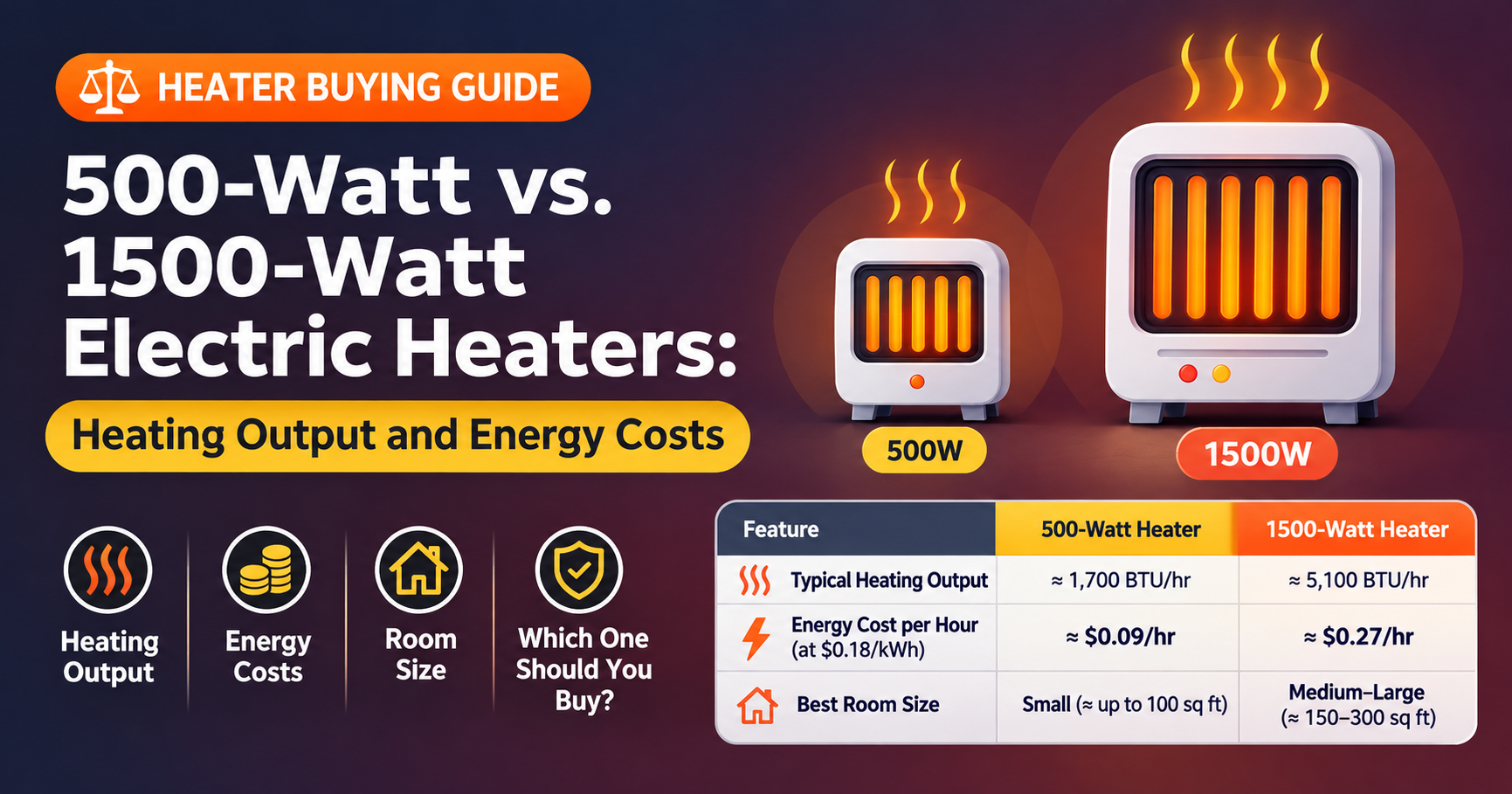
As a rough guide, a 1500-watt heater warms around 150 square feet (about 14 square meters). Smaller rooms can use 750 to 1000 watts. An undersized heater will run constantly and never satisfy the thermostat.
Safety Certifications and Protections
- Safety listing from a recognized lab such as UL or ETL (or CE in Europe)
- Automatic tip-over shut-off
- Overheat protection
- Cool-touch housing, especially with children or pets
Helpful Extra Features
- Programmable timer and eco mode
- Remote control and display
- Oscillation for even heat
- Washable or easy-clean filter
- Quiet fan operation for bedrooms
Heater Types at a Glance
- Ceramic fan heaters: heat up fast and are great for small to medium rooms.
- Oil-filled radiators: quiet and steady, ideal for bedrooms and long periods.
- Infrared heaters: warm objects and people directly, good for open or drafty spaces.
- Micathermic panel heaters: slim, quiet and efficient for offices.
Maintenance Tips to Prevent Thermostat Problems
- Vacuum the vents at least once a month during the heating season.
- Store the heater in a dry place with the cord loosely wrapped.
- Keep the heater on a hard, level surface, not on carpet or furniture.
- Inspect the cord and plug before each season.
- Avoid dropping or bumping the unit, which can damage internal parts.
Frequently Asked Questions
Why does my portable heater keep turning off?
The most common reasons are dust blocking airflow, the tip-over switch being triggered, or the overheat protection engaging. Clean the vents, place the heater on a level surface, and make sure nothing is blocking it.
Can I replace the thermostat in a portable heater myself?
It is possible on some models but not recommended unless you have electrical experience. Replacement parts are often unavailable and a wrong repair can be dangerous. In most cases, buying a new heater is the safer option.
How do I know if my heater thermostat is bad?
Signs include a heater that will not turn on despite a good outlet, one that runs constantly, one that cycles rapidly, or a thermostat dial that feels loose and produces no clicking.
Where should I put my portable heater for the best thermostat accuracy?
Place it on a flat floor in the open, a few feet from walls and furniture, and away from windows, doors and direct sunlight.
Is it normal for a heater to click?
An occasional click as the thermostat switches on and off is normal. Constant rapid clicking is not and usually points to airflow problems or a failing relay.
How long does a portable electric heater last?
With regular cleaning, most last around 5 to 10 years, though budget models may fail sooner, especially if they are used heavily every day.
Final Thoughts
Portable electric heater thermostat problems are frustrating, but many are easy to solve with a reset, a good cleaning and a better heater location. When the thermostat is truly faulty or the unit is old, replacing it is the safest and most economical choice. Choose a heater with accurate temperature control, proper safety certification and the right wattage for your room, and you will enjoy reliable warmth all winter.
Disclosure: This article is for informational purposes. Always follow your heater manufacturer’s instructions and consult a qualified electrician for any electrical repairs. This page may contain affiliate links that earn a small commission at no extra cost to you.