A space heater is one of the quickest ways to warm a cold room, but it is also one of the appliances that needs the most respect. A cat brushes past it, a child bumps it, or a vacuum cleaner catches the cord, and suddenly a hot heating element is lying on its side next to a carpet. This is exactly the moment a tip-over switch is designed for.
In this guide you will learn what a portable electric heater tip-over switch is, how it works, why it matters, how to test it safely, and what to check when choosing your next heater.
What Is a Tip-Over Switch on a Portable Electric Heater?
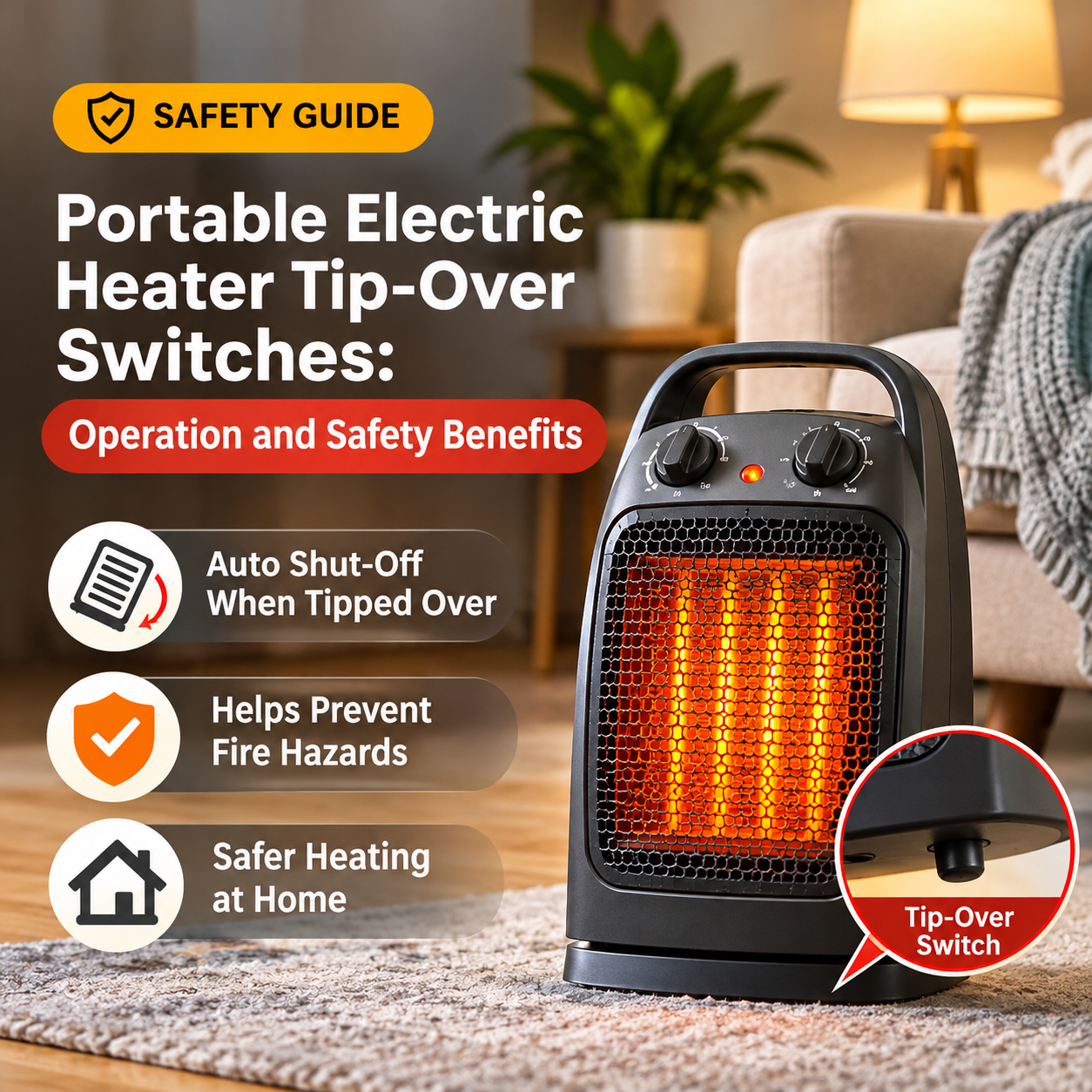
A tip-over switch (also called a tilt switch, tip-over protection or fall-over safety switch) is a small component inside the heater base. While the heater stands upright, the switch stays closed and electricity flows normally. When the unit tilts or falls, the switch opens and the circuit breaks, shutting the heater off within moments.
It is a standard feature on most modern portable heaters sold by reputable brands, and many safety standards expect it. Always confirm it is present, rather than assuming.
How Does a Tip-Over Switch Work?
There are two main designs, and both do the same job in different ways.
1. Mechanical (Plunger or Button) Switch
A spring-loaded button on the underside of the heater is pressed down by the weight of the unit sitting on the floor. If the heater is lifted or falls, the button pops out and breaks the circuit. It is simple and inexpensive, but dust or a thick carpet can sometimes interfere with it.
2. Internal Tilt Sensor (Ball or Mercury-Free Sensor)
Many newer heaters use a small ball-bearing, pendulum or electronic accelerometer inside the body. When the heater tilts past a set angle, the ball rolls or the sensor signals the control board to cut power. This design does not rely on floor contact, so it generally works on uneven surfaces and is more reliable over time.
Why a Tip-Over Switch Matters
- Fire prevention: a heating element facing a carpet, curtain or bedding can ignite it quickly. Cutting power removes the heat source.
- Protection for homes with kids and pets: accidental knocks are common and a tip-over switch gives a critical safety net.
- Insurance and peace of mind: using certified heaters with proper safety features is just good sense in any home or office.
- Burn reduction: a heater that shuts off cools down faster after a fall.
How to Test Your Heater’s Tip-Over Switch Safely
Testing the switch once a month during the heating season only takes a minute. Do it carefully:
- Place the heater on a hard, flat surface away from anything flammable.
- Turn it on and let it run for a few seconds.
- Gently tilt the heater or lift one side (with the power on, but handle only the cool, non-heating parts such as the top handle). Do not push it over hard.
- You should hear a click and the heating or fan should stop quickly.
- Return it upright. Some models restart automatically, others need to be switched on again.
If the heater keeps running when tilted, stop using it. Unplug it and replace it, or have it checked by a qualified technician. Never bypass or tape down the switch.
Common Tip-Over Switch Problems
- Heater will not turn on: the switch may be stuck in the open position, or the unit is on a slightly tilted or soft surface.
- Heater shuts off randomly: an uneven floor, thick carpet or a loose base can trigger the sensor.
- Heater does not shut off when tilted: a failed switch. This is a serious fault and the heater should be retired.
- Dust buildup: clean the base and vents regularly with the unit unplugged and cool.
Types of Portable Heaters and Their Tip-Over Protection
| Heater Type | Best For | Tip-Over Protection |
|---|---|---|
| Ceramic fan heater | Small to medium rooms, fast warm-up | Common; usually a tilt sensor or base button |
| Oil-filled radiator | Steady, quiet, long-lasting heat | Common on modern models; the heavy body is stable |
| Infrared / radiant heater | Direct spot heating | Usually included; check the label |
| Mini personal / desktop heater | Desks and small spaces | Essential, since they are light and easy to knock over |
| Tower heater | Narrow spaces, living rooms | Very important because of the tall, narrow shape |
What to Look For When Buying a Heater With Tip-Over Protection
- Clear mention of tip-over (tilt) protection in the product features and the manual.
- Overheat protection as a second layer that shuts off the unit if internal temperature rises too high.
- Recognised safety certification such as UL, ETL, CE or the standard in your country.
- Wide, stable base that is harder to knock over to begin with.
- Cool-touch housing if you have children or pets.
- Thermostat and timer for efficient, controlled heating.
- Appropriate wattage: roughly 1,500 W suits a small to medium room, and a heavy-duty cord and plug are a good sign.
- Good reviews mentioning real-world safety, not just heating speed.
Heater Safety Checklist
Extra Safety Tips
- Never dry clothes or towels on a heater.
- Do not use heaters in bathrooms or damp areas unless specifically rated for it.
- Inspect the cord and plug for heat marks, fraying or discolouration.
- Install and test smoke alarms near rooms where heaters are used.
- Unplug the heater when it is not in use for long periods.
Frequently Asked Questions
Do all portable electric heaters have a tip-over switch?
Most reputable modern models do, but cheap or old units may not. Always check the specifications and the manual before buying.
Can I repair a faulty tip-over switch myself?
It is not recommended. This is a safety-critical part, so replacing the whole heater is usually the safest and most economical option.
Is a tip-over switch the same as overheat protection?
No. A tip-over switch reacts to the heater’s position, while overheat protection reacts to temperature. A good heater has both.
Why does my heater turn off by itself?
It could be the tip-over switch detecting an uneven surface, the overheat protection activating because of blocked vents, or the built-in thermostat or timer.
Is it safe to leave a heater on overnight?
Safety experts generally advise against it. Even with a tip-over switch, heaters should not run unattended while you sleep.
Final Thoughts
A portable electric heater with a reliable tip-over switch gives you warmth without the constant worry of an accidental fall. Treat the switch as a must-have feature, test it regularly, and combine it with sensible habits: a flat surface, plenty of clearance and never leaving the heater unattended. When you shop, prioritise certified models with both tip-over and overheat protection, and you will enjoy a cosy, safer winter.
Disclosure: This article is for general information only. Always follow the manufacturer’s instructions for your specific heater.