When temperatures drop, a portable electric heater feels like the quickest fix: plug it in, press a button, and warmth arrives within minutes. But a question that every careful buyer eventually asks is this: how energy efficient are portable electric heaters, and what will they actually cost to run?
The honest answer is more interesting than a simple “yes” or “no”. Almost every portable electric heater turns nearly all of the electricity it draws into heat, so in a technical sense they are all “efficient”. Yet two households using the same model can end up with very different electricity bills. The difference comes down to wattage, thermostat control, room size, insulation, heater type, and the way the heater is used.
In this complete guide you will learn how portable heater efficiency really works, how to calculate running costs, how the main heater types compare, how to choose the right size, and which habits save the most energy, all without falling for common marketing myths.
Quick answer
- Nearly 100% of the electricity a portable electric heater uses becomes heat, regardless of whether it is ceramic, oil-filled, infrared, or convection.
- Efficiency labels rarely tell the whole story. Running cost depends on wattage × hours used × your electricity rate.
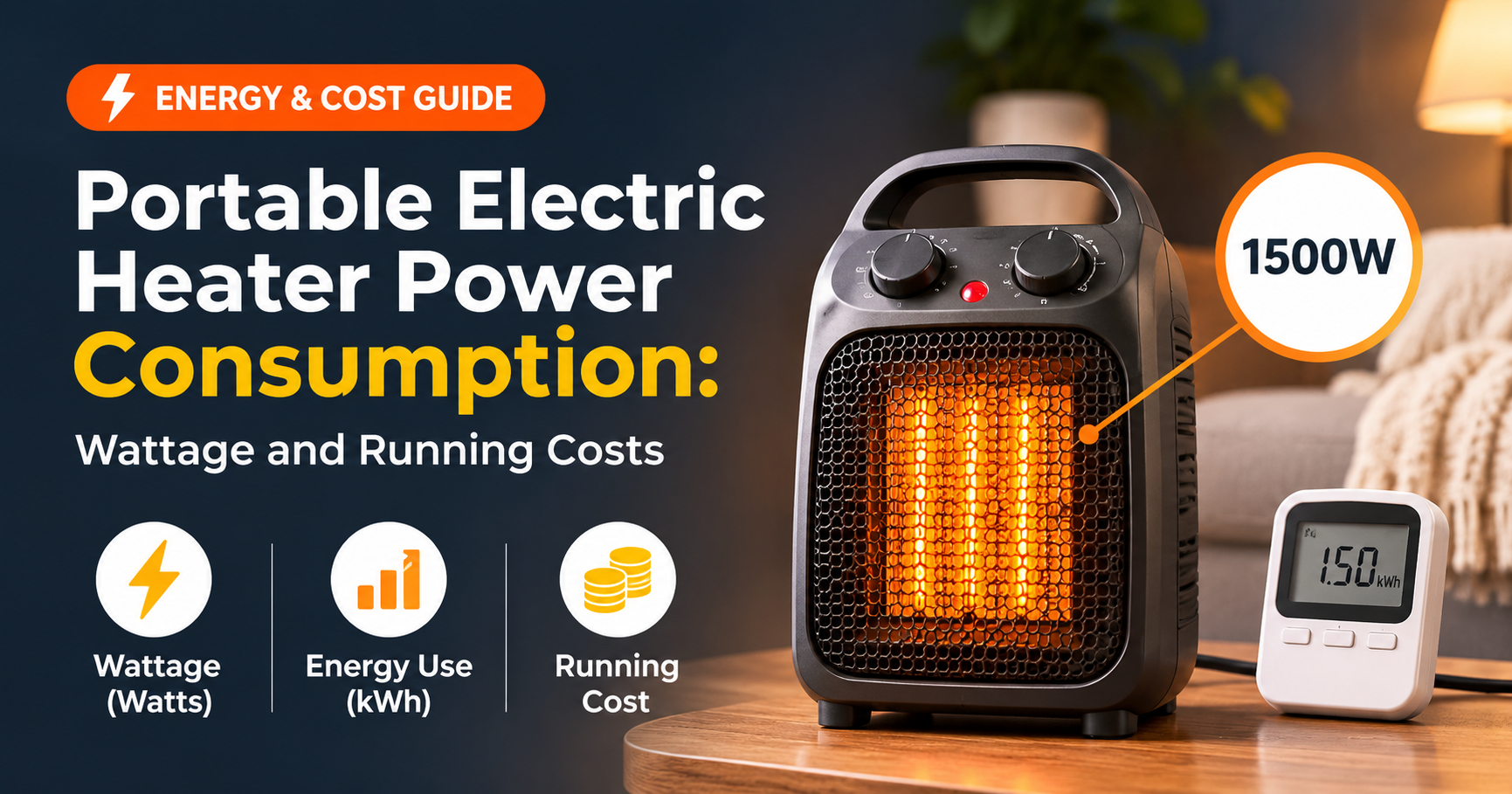
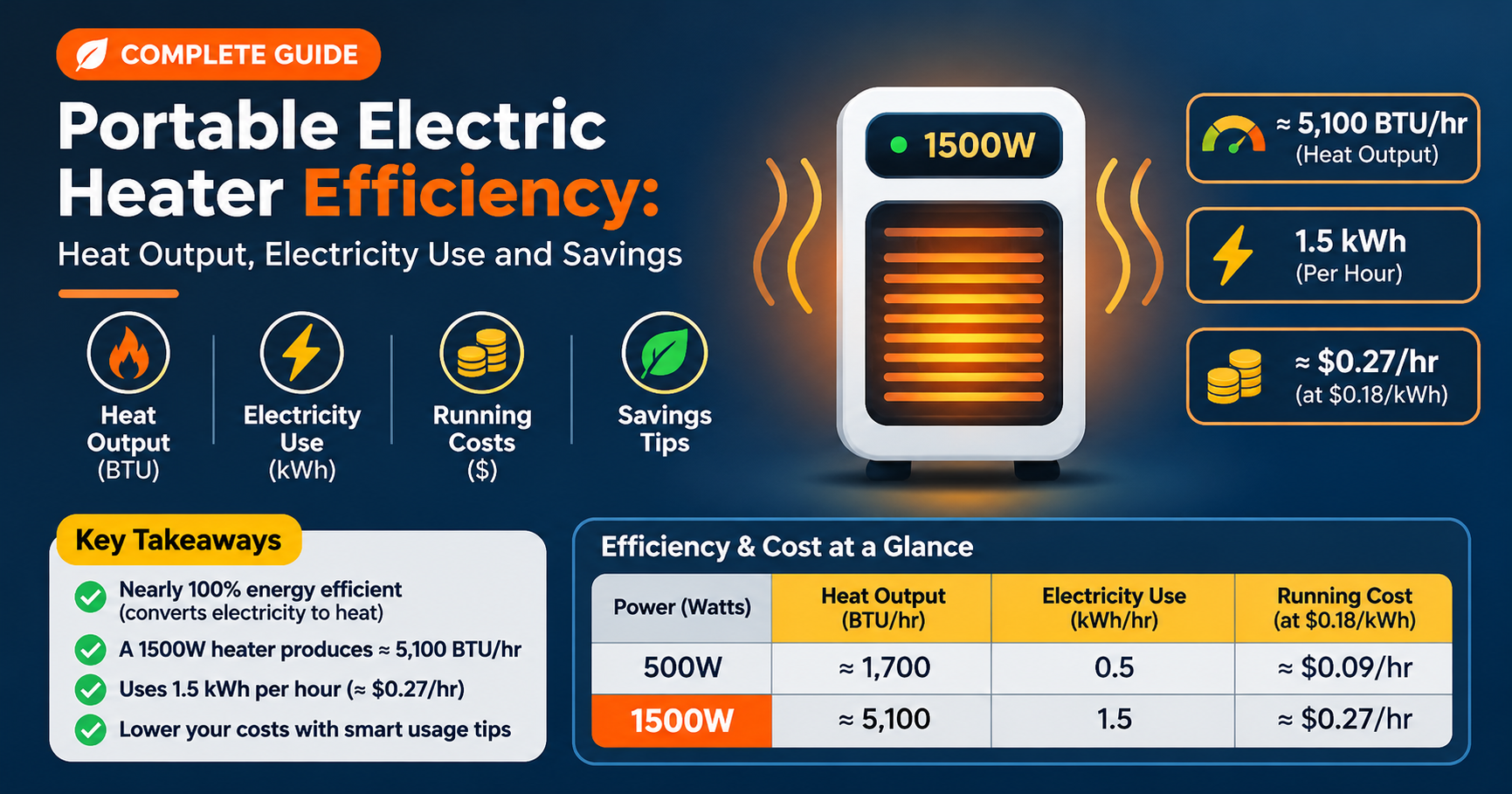
- A 1,500 W heater uses 1.5 kWh of electricity for every hour it runs at full power.
- The biggest savings come from a good thermostat, correct sizing, heating only the room you are using, and reducing heat loss.
What Does “Energy Efficiency” Mean for a Portable Electric Heater?
In everyday language, “efficient” often means “cheap to run”. In engineering, it means something different: how much of the input energy becomes the useful output you wanted. For a heater, the useful output is heat.
Electric resistance heaters, which include nearly every plug-in portable heater, convert almost all incoming electricity into heat inside the room. Very little is wasted as light or sound, and no combustion gases or exhaust carry heat away. That is why manufacturers often describe them as close to 100% efficient at the point of use.
This leads to an important point that many buyers miss. Because the conversion rate is practically the same across models, a more expensive heater is not automatically a more efficient one. What a better heater can offer is:
- Better control: an accurate thermostat that stops the heater once the room is warm enough.
- Better comfort: a heat delivery style that suits how you use the space.
- Better safety: overheat protection, tip-over switches, and sturdier build quality.
- Better convenience: timers, remote controls, and multiple power settings that help you avoid wasting energy.
Portable Heaters vs Heat Pumps: Where the Real Efficiency Gap Is
If portable heaters are close to 100% efficient, why are heat pumps and air conditioners with a heating mode described as more efficient? The answer is that a heat pump does not create heat from electricity. It moves existing heat from outside to inside, which can deliver two to four units of heat for every one unit of electricity under typical conditions. This ratio is known as the coefficient of performance (COP).
This does not mean portable heaters are a poor choice. It means they are best used strategically: to warm the room you are actually in, for the hours you actually need it, rather than as a substitute for whole-home heating over long periods.
Types of Portable Electric Heaters Compared
Since conversion efficiency is almost identical, the real differences between heater types are about how the heat is delivered and how well that matches your situation.
| Heater type | How it heats | Warm-up speed | Best for | Things to consider |
|---|---|---|---|---|
| Ceramic (fan-forced) | Heats a ceramic element and blows warm air into the room | Very fast | Small to medium rooms, offices, quick warm-ups | Fan noise; heat stops quickly once switched off |
| Oil-filled radiator | Heats sealed oil, which warms the fins that radiate heat | Slow | Bedrooms, steady all-evening warmth | Keeps radiating after cycling off; heavy; silent operation |
| Infrared / radiant | Warms people and objects directly, not the air | Instant | Spot heating, drafty or open areas, workshops | Heat is directional; you feel less warmth outside the beam |
| Convection | Warm air rises while cooler air is drawn in | Moderate | Well-sealed rooms needing even, quiet heat | Slower in large or drafty spaces |
| Panel / micro-thermic | Slim panel combining convection and radiant heat | Moderate | Wall-mounted or space-saving setups | Usually lower wattage; best in smaller rooms |
Which type feels most efficient in real life?
If you sit at a desk or on a sofa and want warmth right now, an infrared or ceramic heater feels effective immediately and lets you keep the thermostat lower. If you want a bedroom held at a comfortable temperature for hours, an oil-filled radiator with a good thermostat can feel steady and quiet. Neither is magically cheaper per kilowatt-hour; the saving comes from choosing the type that lets you use fewer hours at full power.
How Much Electricity Does a Portable Heater Use?
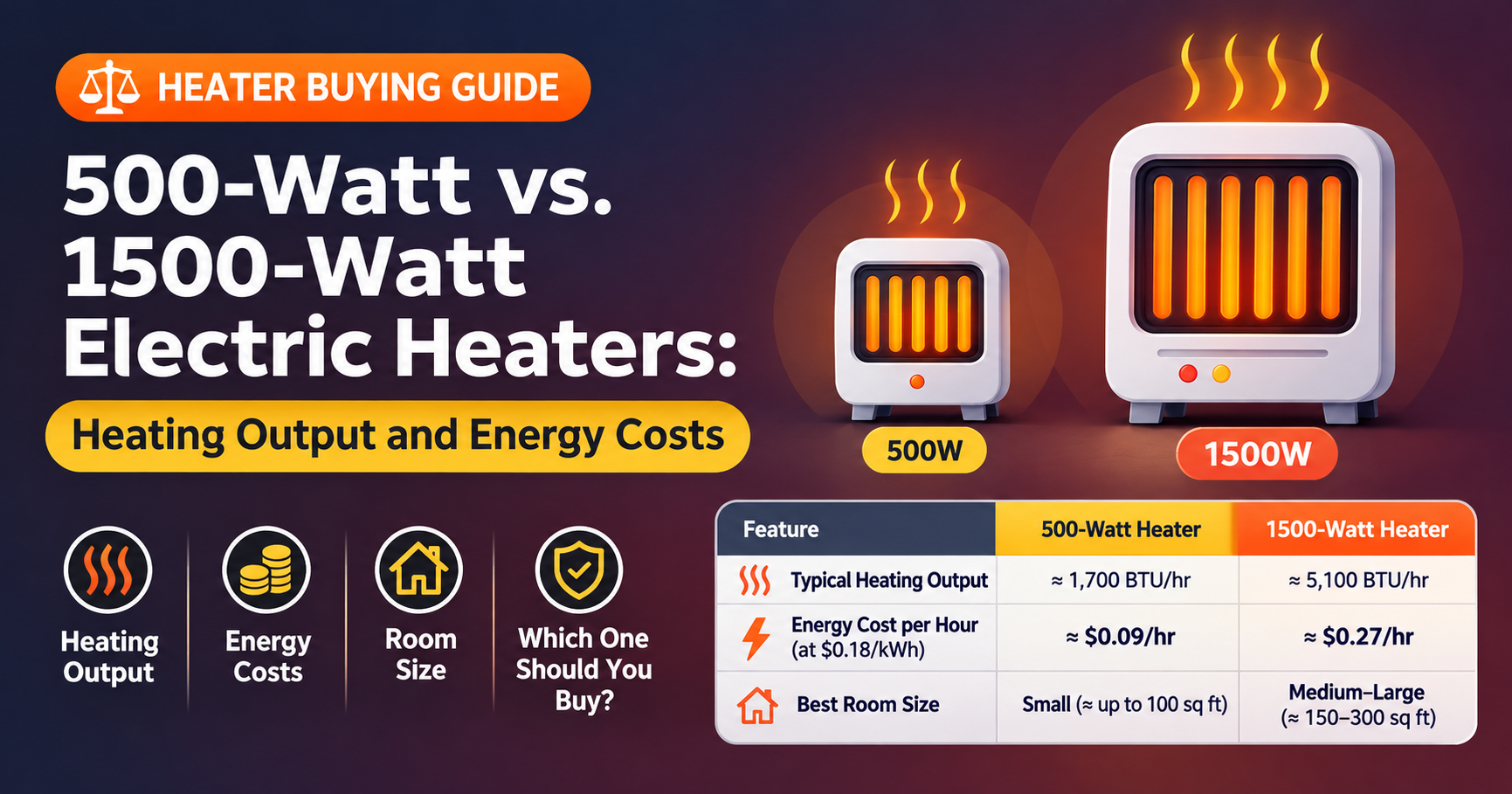
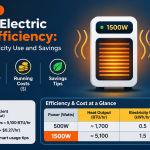
Most portable electric heaters are rated between 500 and 1,500 watts. The 1,500 W figure is especially common in many countries because it stays within the limits of a typical household outlet circuit. The formula for working out running cost is simple:
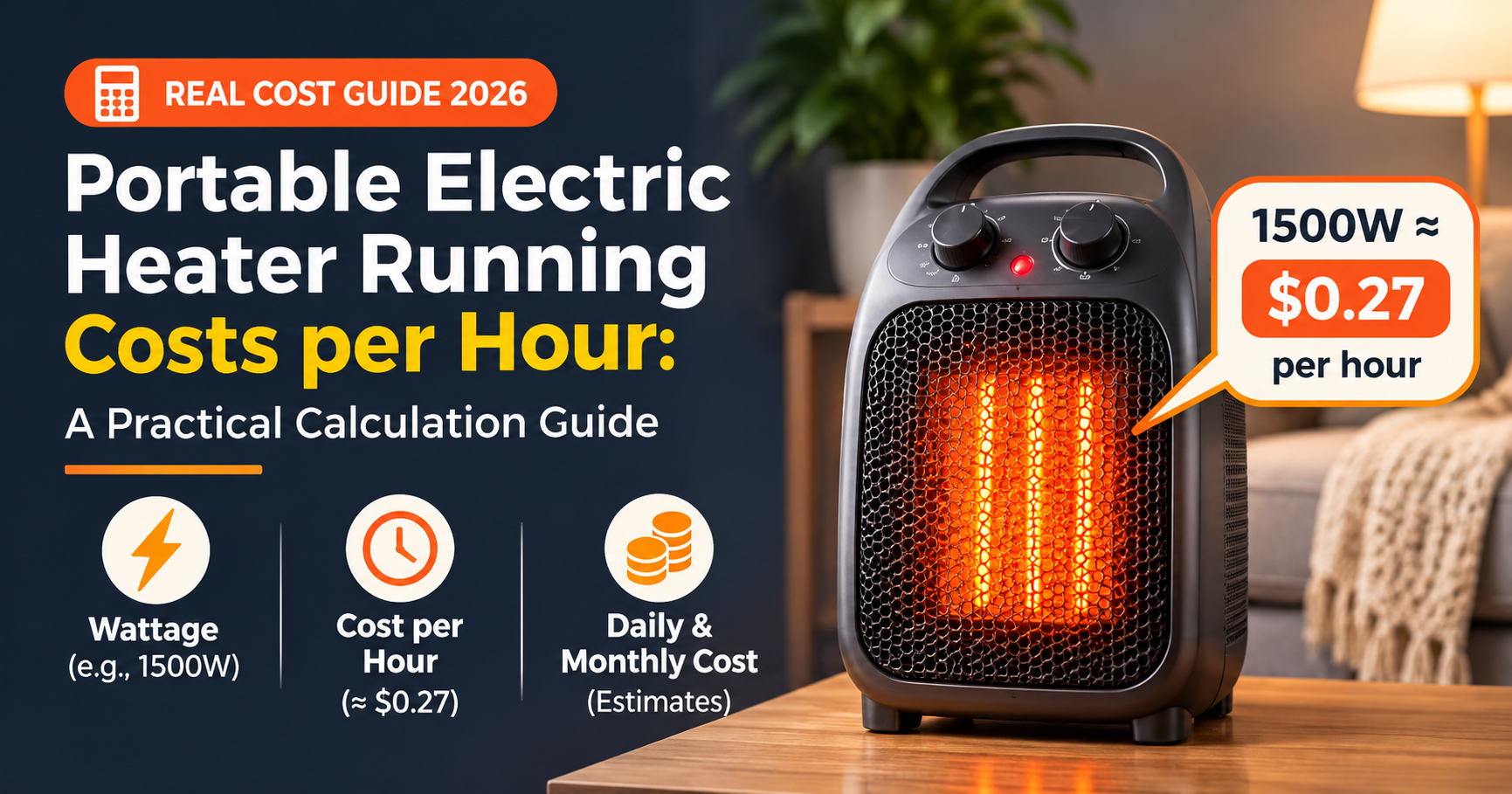
Running cost = (Watts ÷ 1,000) × Hours used × Price per kWh
Example: a 1,500 W heater running for 1 hour at a rate of $0.16 per kWh uses 1.5 kWh and costs about $0.24.
The table below uses an illustrative rate of $0.16 per kWh. Your actual rate may be higher or lower, so check your electricity bill and substitute your own number.
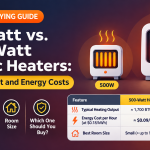
| Heater power | Energy per hour | Cost per hour* | Cost for 8 hours* |
|---|---|---|---|
| 500 W | 0.5 kWh | $0.08 | $0.64 |
| 750 W | 0.75 kWh | $0.12 | $0.96 |
| 1,000 W | 1.0 kWh | $0.16 | $1.28 |
| 1,500 W | 1.5 kWh | $0.24 | $1.92 |
*Illustrative figures at $0.16 per kWh, assuming the heater runs continuously at full power.
Why your real bill is usually lower than the table
Those numbers describe a heater that never stops drawing full power. In practice, once a room reaches the temperature you set, a thermostat-controlled heater cycles off and on. In a well-insulated room that has warmed up, the heater may run at full power for only part of each hour, so the actual consumption can be noticeably lower. In a cold, drafty room, it will run much more.
A monthly cost example
Suppose you run a 1,500 W heater for 6 hours a day for 30 days, and it effectively runs at full power the entire time. That is 1.5 kW × 6 hours × 30 days = 270 kWh. At $0.16 per kWh, the cost would be about $43.20 for the month. It is a worst-case figure for a constantly running heater, but it shows why “just leaving it on” adds up quickly.
How to Choose the Right Heater Size
An oversized heater can short-cycle and feel uncomfortable, while an undersized one runs flat out and never quite gets the room warm. A widely used rule of thumb is about 10 watts of heating power per square foot of floor area, assuming a standard ceiling height and average insulation.
| Room size | Suggested heater power | Approximate heat output |
|---|---|---|
| Up to 50 sq ft (about 4.6 m²) | 500 W | ≈ 1,700 BTU/h |
| Up to 100 sq ft (about 9.3 m²) | 1,000 W | ≈ 3,400 BTU/h |
| Up to 150 sq ft (about 14 m²) | 1,500 W | ≈ 5,100 BTU/h |
| Over 150 sq ft | One heater may not be enough | Consider zone heating or a different heating solution |
Remember that this is only a starting point. Rooms with high ceilings, large windows, poor insulation, or exterior walls on several sides will need more power. Small, well-sealed rooms may need less.
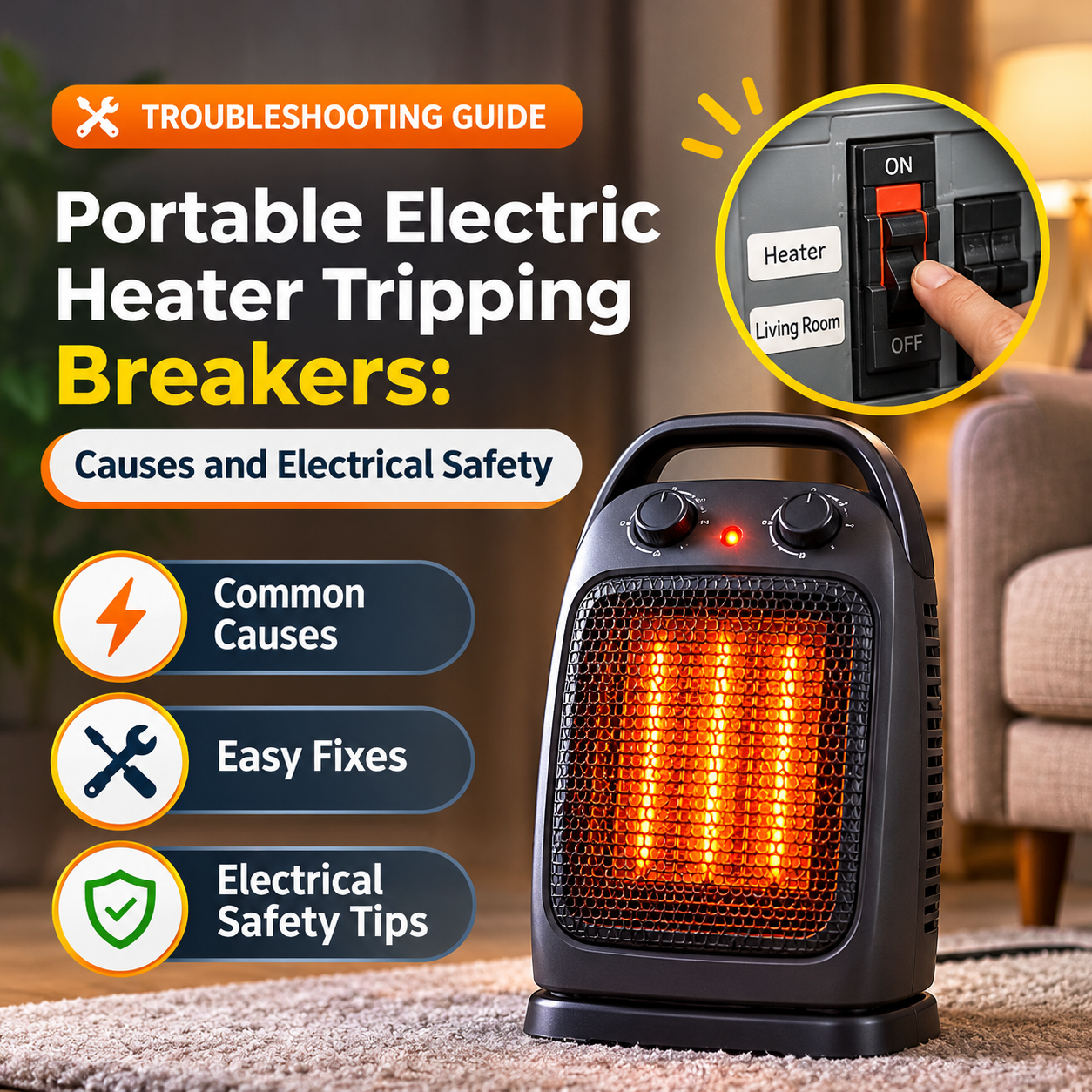
Do not stack heaters on one circuit. Most portable heaters already draw a large share of what a household circuit can safely supply. Running two high-wattage heaters on the same circuit can trip breakers or overheat wiring. If you need more heat, place heaters in rooms on separate circuits or consider a different heating solution.
Features That Improve Real-World Energy Efficiency
Because all resistance heaters convert power to heat at nearly the same rate, features that give you control are where genuine savings come from. When comparing models, prioritize the following:
1. An adjustable thermostat
This is the single most valuable feature. A thermostat lets the heater switch off once the room reaches your chosen temperature, instead of heating endlessly. Digital thermostats are generally more precise than simple dial-style ones.
2. Multiple power settings
A heater with low, medium, and high settings (for example, 750 W and 1,500 W) lets you run at a lower power once the room is warm, which avoids overshooting and wasting energy.
3. A timer or programmable schedule
Timers help you warm the room before you arrive or stop heating automatically after you fall asleep or leave, which prevents hours of forgotten operation.
4. An eco or energy-saving mode
Many modern heaters offer a mode that automatically adjusts power to maintain the set temperature. These can be convenient, though the actual saving depends on how well the mode manages cycling in your room.
5. Safety protections
Tip-over shutoff and overheat protection are essential. They do not reduce your bill, but they protect your home and family, which matters far more than a few cents per hour.
6. Remote control and a clear display
Small conveniences like a remote and an accurate temperature readout make it easier to adjust the setting instead of leaving it on high.
15 Practical Ways to Reduce Portable Heater Energy Use
- Heat the room, not the house. Use the heater only in the space you occupy and close the door.
- Set the thermostat sensibly. Even a one or two degree reduction can noticeably cut consumption.
- Use a timer. Warm the room before you need it and let the heater switch itself off.
- Seal drafts. Weatherstripping around doors and windows stops expensive heat from escaping.
- Use thick curtains. Close them at night to reduce heat loss through glass.
- Place the heater smartly. Keep it away from cold drafts and external doors that would trick the thermostat into running longer or shorter than needed.
- Keep the heater on a hard, level floor with clear space around it so air can circulate properly.
- Dress warmly. A sweater and socks let you keep the heater on a lower setting.
- Use rugs on bare floors. They add insulation and make rooms feel warmer underfoot.
- Choose infrared for spot heating. If you sit in one place, directional heat can feel warm without heating the entire room.
- Choose oil-filled for steady all-evening use. It continues radiating warmth after the element cycles off.
- Clean the heater regularly. Dust on vents and elements can reduce airflow and cause odors.
- Do not use it in an open space. Heating a large, open area with a small heater wastes power.
- Check your electricity plan. If your supplier offers cheaper off-peak rates, schedule heating accordingly.
- Combine methods. Use the portable heater alongside a lower central heating setting rather than as a substitute for good insulation.
Portable Heater Safety: Efficiency Should Never Come First
A heater that saves a little electricity but creates a fire risk is no bargain. Follow these essential safety rules every time you use a portable electric heater:
- Plug directly into a wall outlet. Avoid extension cords and power strips, which can overheat under the heavy load.
- Keep clear space around the heater. Maintain at least three feet (about one metre) from curtains, bedding, furniture, paper, and clothing.
- Never cover the heater or dry clothes on it. Blocked vents are a common cause of overheating.
- Use it on a flat, stable surface. Never place it on furniture, beds, or soft carpets that could cause it to tip or restrict airflow.
- Turn it off when leaving the room or going to sleep, unless the manufacturer specifically and clearly states otherwise.
- Look for recognized safety certification such as UL, ETL, CE, or the applicable standard in your country, and make sure the heater matches your local voltage.
- Take extra care around children and pets. Choose models with cool-touch exteriors where possible.
- Inspect the cord and plug regularly. Stop using the heater if you notice damage, discoloration, or a plug that feels unusually hot.
- Keep smoke alarms working in the rooms and hallways where you use heaters.
Common Myths About Portable Heater Efficiency
Myth: “Ceramic heaters use less electricity than other types.”
A 1,500 W ceramic heater and a 1,500 W oil-filled heater both draw the same power at full output. What differs is how quickly the room warms and how the heat is delivered.
Myth: “A heater with a higher efficiency claim will save me money.”
Be cautious with bold marketing claims. Since resistance heaters are all close to the same conversion rate, look for real differences: thermostat accuracy, power settings, timers, and safety features.
Myth: “Leaving the heater on all day is cheaper than turning it on and off.”
Running a heater when nobody needs the warmth simply uses more electricity. A timer and thermostat are better tools than leaving it on constantly.
Myth: “A bigger heater always heats faster and costs the same.”
A higher-wattage heater heats faster because it draws more power, but it also costs more per hour while running. It may switch off sooner, but oversizing can cause uncomfortable temperature swings.
Portable Heater Buying Checklist
Before you buy, run through this simple checklist:
- Measure your room and choose wattage using the 10 watts per square foot guideline.
- Decide whether you need fast spot heating (infrared or ceramic) or steady background warmth (oil-filled or convection).
- Look for an adjustable thermostat, multiple power settings, and a timer.
- Confirm tip-over and overheat protection.
- Check noise levels if you will use it in a bedroom or office.
- Consider weight and portability, such as wheels or a carry handle.
- Verify recognized safety certification and compatible voltage.
- Check the warranty and the cord length.
Frequently Asked Questions
Which type of portable electric heater is the most energy efficient?
In terms of converting electricity into heat, they are all nearly identical. The most efficient choice in practice is the one that suits your space and gives you good control, such as an accurate thermostat and a timer, so that you run it for fewer hours.
Do portable electric heaters use a lot of electricity?
They can. A 1,500 W heater uses 1.5 kWh for every hour it runs at full power, which is more than most household appliances. The cost depends on your electricity rate and how long it runs.
Is a portable heater cheaper than central heating?
It depends on your home, your energy prices, and how you use it. Warming one small room for a few hours can cost less than heating an entire house, while using several portable heaters for long periods can cost more than a well-matched central system.
Does a lower-wattage heater save energy?
A lower-wattage heater uses less power per hour, but it also produces less heat. If it is large enough to keep your room comfortable, it can save money. If it is too small, it will run constantly and still struggle to warm the space.
Is it safe to leave a portable heater on overnight?
Safety guidance generally recommends turning portable heaters off when you leave the room or go to sleep. If you need overnight warmth, consider safer options such as a heating method designed for continuous operation, better insulation, or warmer bedding.
How do I calculate how much my heater costs to run?
Divide the heater’s wattage by 1,000 to get kilowatts, multiply by the number of hours used, and then multiply by your price per kWh. For example, 1,500 W for 4 hours at $0.16 per kWh is 1.5 × 4 × 0.16 = $0.96.
Final Thoughts
Portable electric heater energy efficiency is less about finding a miracle model and more about using the right heater the right way. Every plug-in resistance heater turns almost all its electricity into heat, so the real savings come from correct sizing, good thermostat control, smart timing, and keeping heat from escaping the room in the first place.
Choose a heater with the features that give you control, place it safely, heat only the space you are using, and take simple steps to seal drafts. Do that, and you will stay comfortable through the cold months without an unpleasant surprise on your electricity bill.