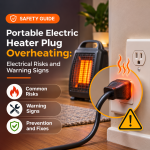
Portable Electric Heater Plug Overheating: Causes, Dangers and How to Fix It

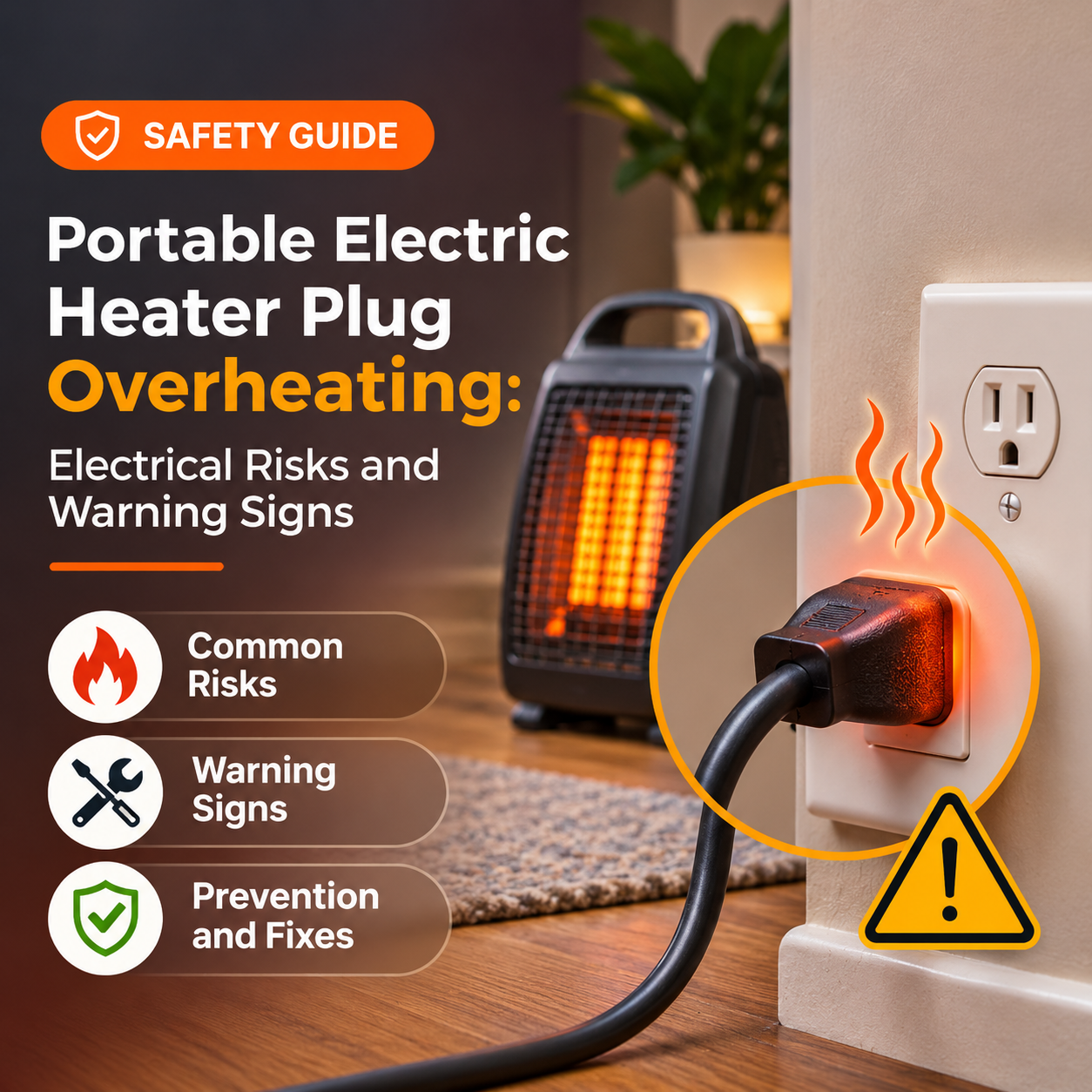
You plug in your portable electric heater, enjoy a few minutes of cozy warmth, and then reach down to find the plug itself uncomfortably hot. That moment of concern is completely justified. A portable electric heater plug overheating is one of the most common warning signs of an electrical problem, and it is a warning that should never be ignored.
Space heaters are among the highest-wattage appliances people run in a home, and almost all of that power travels through one small plug and one wall outlet. When anything in that path is worn, loose, dirty, or overloaded, the excess heat has nowhere to go except into the plastic around it. Fire safety organizations consistently report that portable heaters are involved in a large share of home heating fires, and electrical connection problems are a frequent factor.
This guide explains why heater plugs overheat, how to tell normal warmth from a dangerous situation, what to do immediately, and how to fix and prevent the problem for good.
Quick Answer
- A plug that is slightly warm after long use can be normal. A plug that is too hot to hold, smells like burning, or looks discolored is not normal.
- The most common causes are a loose or worn outlet, an extension cord or power strip, damaged or dirty prongs, and an overloaded circuit.
- Unplug the heater immediately, let everything cool, inspect the plug and outlet, and do not use that outlet until it is checked.
- Always plug a portable heater directly into a wall outlet that is in good condition.
Is It Normal for a Portable Heater Plug to Get Warm?
This is the first question most people ask, and the honest answer is: a little warmth can be normal, but heat you cannot tolerate is a red flag.
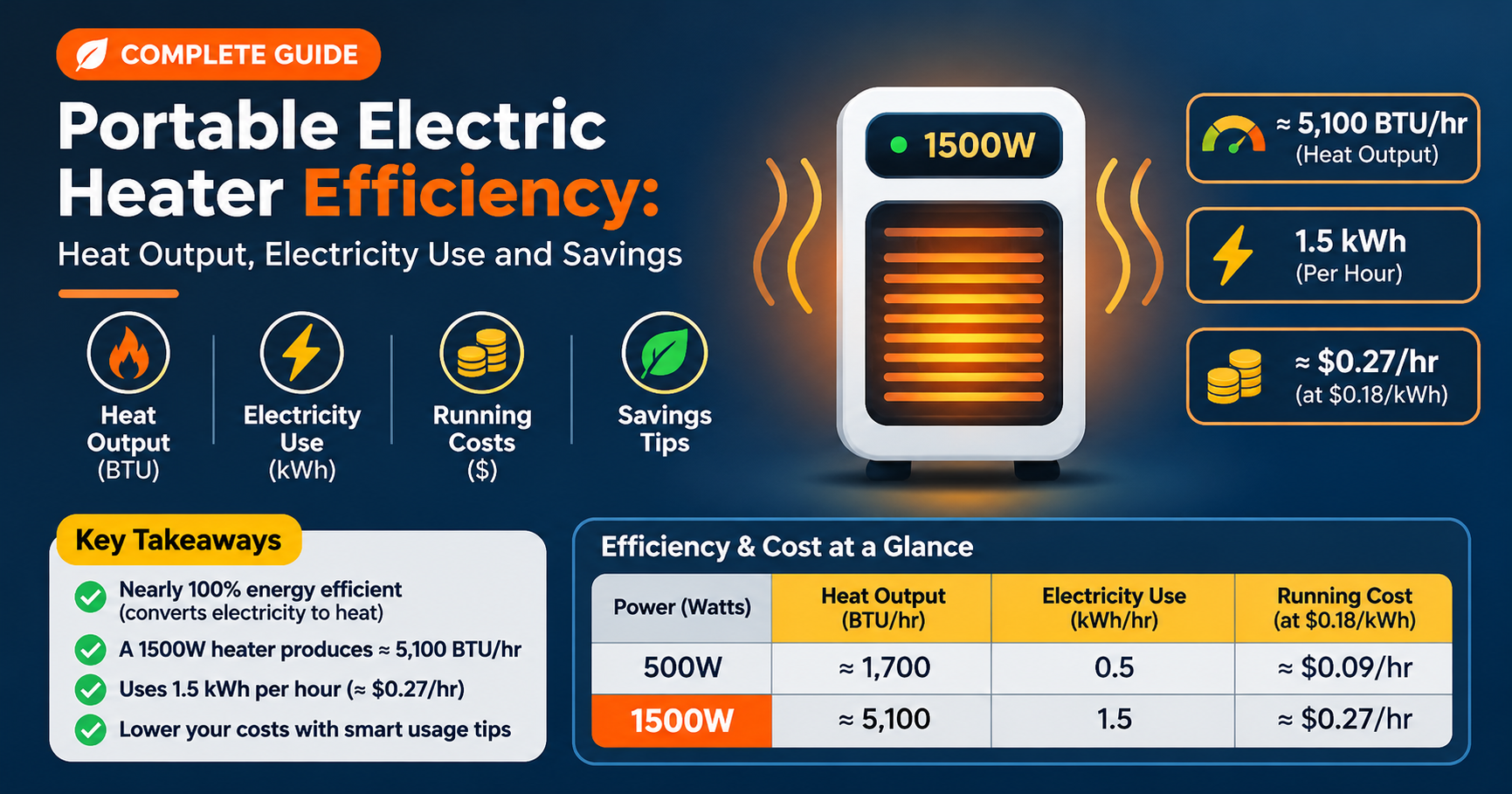
Electricity flowing through any conductor creates some heat. A 1500-watt heater draws around 12.5 amps at 120 volts, which is a very heavy load for a household cord and plug. After an hour or two of running, it is not unusual for the plug body to feel mildly warm, similar to the back of a laptop.
Normal vs. Dangerous: A Simple Comparison
| What You Notice | Usually Normal | Dangerous |
|---|---|---|
| Plug temperature | Mildly warm, comfortable to hold | Too hot to keep your fingers on |
| Smell | Faint dusty smell during the first few uses of a season | Hot plastic, fishy or acrid electrical odor |
| Appearance | Clean plug and outlet | Brown or black marks, softening, warping |
| Sound | Quiet, apart from the fan | Buzzing, sizzling or crackling at the outlet |
| Fit | Plug sits snugly in the outlet | Plug wobbles or slides out easily |
Why Heater Plugs Overheat: The Science in Plain English
The reason a heater plug overheats comes down to one principle: heat is produced wherever electrical resistance is high. The heating element inside your heater is designed to resist current and glow hot. The plug, cord, and outlet are designed to do the opposite, carrying current with almost no resistance.
When a connection becomes loose, corroded, or damaged, resistance rises at that exact spot. Because heat equals current squared times resistance, and a heater pulls a very large current, even a small increase in resistance creates a surprising amount of heat in a very small area.

The 8 Most Common Causes of Portable Heater Plug Overheating
1. A Loose or Worn Wall Outlet
This is the number one culprit. Outlets contain small metal contacts that grip the prongs. After years of plugging and unplugging, and especially after repeated use with heavy loads, these contacts lose their spring tension. A loose grip means a poor electrical connection, high resistance, and concentrated heat at the prongs.
Older homes and outlets that have been used for heaters, air conditioners, or kitchen appliances for many years are the most likely to be worn out.
2. Using an Extension Cord or Power Strip
Almost every safety guideline for space heaters says the same thing: plug them directly into the wall. Extension cords and power strips add extra connection points, and each one is another place where resistance and heat can build. Many cords are also thinner than the heater’s own cord, and power strips are usually rated for lighter electronics rather than a continuous 12 to 13 amp load.
3. Bent, Dirty or Corroded Prongs
Prongs that are slightly bent, tarnished, or coated with grime make less contact with the outlet. Moisture in a damp room can also cause oxidation on the metal surface. Reduced contact area creates the same high-resistance hot spot as a worn outlet.
4. An Overloaded Circuit
A standard 15-amp household circuit is meant to carry about 12 amps continuously. A 1500-watt heater alone uses roughly 12.5 amps, so it is already at the limit. Add a vacuum, a hair dryer, a microwave, or a second heater on the same circuit and the wiring, outlet, and plug are all pushed beyond comfortable limits.

5. A Damaged or Frayed Power Cord
If the cord has been pinched under furniture, bent sharply near the plug, chewed by a pet, or yanked from the outlet by the cord, some of the thin copper strands inside may be broken. With fewer strands carrying the same current, the remaining ones heat up. This often shows up as a plug or cord that is hot near the strain relief where the cord meets the plug.
6. Loose Wiring Behind the Outlet
Sometimes the outlet itself looks fine, but the wires behind it are not tightly secured. Quick push-in connections on the back of some receptacles are known to loosen over time. This kind of fault can make the outlet face warm or discolored even when the plug looks healthy.
7. A Low-Quality or Counterfeit Heater
Budget heaters sold without proper safety certification may use thinner conductors, weaker plug materials, or poorly crimped connections. If a brand-new heater’s plug gets hot within minutes, the product itself may be the problem.
8. Running the Heater for Long Hours Without Breaks
Extended continuous use on the highest setting keeps the plug and outlet under maximum stress for hours. A marginal connection that stays cool during short sessions can overheat during an all-night run.
Warning Signs You Should Never Ignore
Catching the problem early is the best way to avoid damage. Check your heater plug and outlet regularly for these seven signs:

How Dangerous Is an Overheating Heater Plug?
It can be very dangerous. When a plug or outlet overheats, the surrounding plastic can soften, melt, and eventually ignite. The wall behind the outlet is also a concern because wiring and building materials sit very close to the hot connection.
A few details make this particularly risky:
- It can happen without a visible flame at first. Slow overheating inside a wall outlet can smolder for a while before anyone notices.
- It often happens while people are asleep or away. Heaters are frequently left running overnight or while no one is in the room.
- Breakers may not trip. A loose connection can generate dangerous heat without drawing enough extra current to trigger a breaker.
This is exactly why a hot plug should be treated as an emergency-level warning rather than an inconvenience.
What to Do Right Now If Your Heater Plug Is Hot
- Turn the heater off and unplug it. Use dry hands and pull by the plug body, never by the cord. If the plug is too hot to touch, switch off the circuit breaker first.
- Let everything cool down completely. This can take 20 to 30 minutes. Keep flammable items such as curtains and bedding away from the area.
- Inspect the plug. Look for discoloration, bent or pitted prongs, softened plastic, and cracks. Check the cord for cuts, kinks, or exposed wire, especially close to the plug.
- Inspect the outlet. Look for brown or black marks, a loose faceplate, and cracks. Gently test whether the plug feels loose when inserted into a different, healthy outlet.
- Do not reuse a melted or scorched plug. If the plug shows any melting or burn marks, stop using the heater and have it repaired by a qualified technician or replaced.
- Do not use the suspect outlet. Keep it unused until an electrician has inspected it.
How to Fix the Problem: Solutions by Cause
| Cause | Recommended Fix | DIY or Professional? |
|---|---|---|
| Worn or loose outlet | Replace the receptacle with a quality, heavy-duty one | Licensed electrician |
| Extension cord or power strip | Remove it and plug the heater directly into the wall | DIY |
| Loose wiring behind outlet | Re-secure or replace connections | Licensed electrician |
| Overloaded circuit | Run the heater alone on its circuit, or move other appliances elsewhere | DIY, or electrician for a dedicated circuit |
| Dirty prongs | Unplug, then wipe with a dry cloth. Never clean while plugged in | DIY |
| Bent or damaged prongs | Replace the heater or have the cord professionally replaced | Replace or professional repair |
| Frayed or damaged cord | Stop using the heater. Replace the unit or have the cord replaced by a qualified technician | Replace or professional repair |
| Poor-quality heater | Replace with a certified model from a reputable brand | Replace |
How to Plug In a Portable Heater Safely
Prevention is far easier than dealing with an overheated plug. Follow these habits every time you use a portable heater.

- Plug directly into a wall outlet. Avoid power strips, surge protectors, and plug-in adapters.
- Give the heater its own circuit when possible. Avoid running other high-power devices on the same circuit at the same time.
- Make sure the plug fits snugly. If it feels loose, do not use that outlet.
- Keep the cord uncoiled and in plain sight. Never run it under rugs or furniture, where heat and damage can go unnoticed.
- Do the “touch test” early. Within the first 15 to 30 minutes of use, carefully check the plug and outlet cover. If either feels hot, stop.
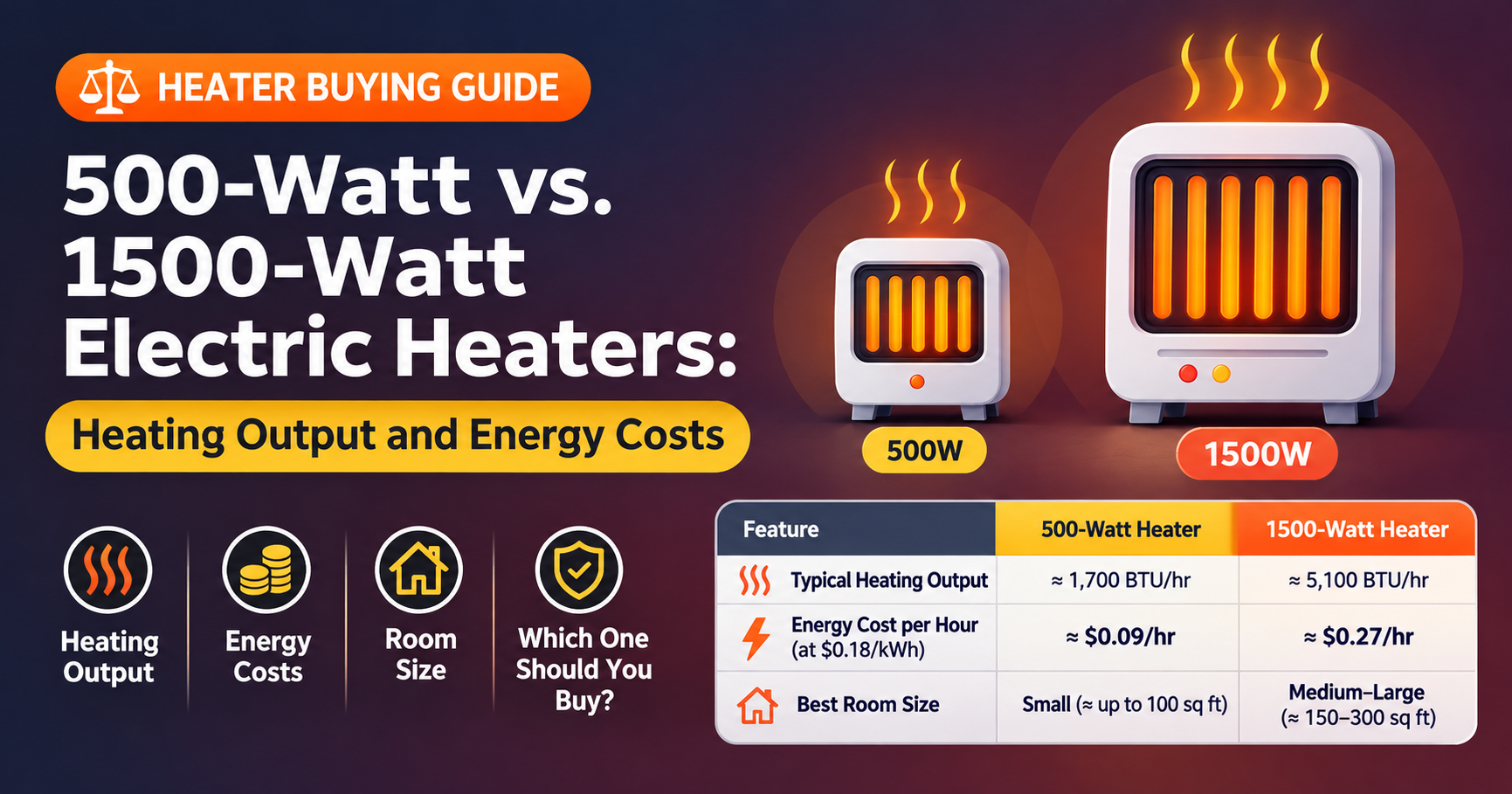
- Use the lower power setting when it is enough. A 750-watt or 1000-watt setting draws noticeably less current than 1500 watts.
- Never leave the heater running unattended or while you sleep unless it has been designed and certified for that use, and even then, a healthy outlet is essential.
What About Using an Extension Cord With a Portable Heater?
The safest answer is do not. Most heater manufacturers and fire safety organizations recommend against it.
If you have an absolutely unavoidable temporary situation, the cord must be a heavy-duty type clearly rated for the heater’s wattage, as short as possible, fully uncoiled, and of thick wire gauge. A thin, light-duty cord is a common cause of overheating. Even then, check it frequently and treat it as a short-term workaround, not a long-term setup. The long-term fix is to move the heater near a suitable outlet or have an electrician add one.
When to Call a Licensed Electrician
Do not try to repair household wiring unless you are qualified. Call a professional if:
- The outlet shows burn marks or discoloration
- The outlet is warm even when nothing is plugged in
- Plugs fall out or wobble in the outlet
- You hear buzzing or crackling inside the wall
- The breaker trips repeatedly or lights flicker when the heater turns on
- Your home has older wiring that has never been inspected
Replacing an outlet is usually an inexpensive job for an electrician, and it costs far less than fire damage.
How to Choose a Safer Portable Electric Heater
If your current heater is damaged or you want to upgrade, look for these features. They reduce the chance of plug problems and add extra layers of protection.
| Feature | Why It Matters |
|---|---|
| Recognized safety certification (UL, ETL or equivalent) | Shows the heater was tested against recognized safety standards |
| Safety plug technology | Many newer heaters include a plug that cuts power if the cord is damaged or a fault is detected. Some also monitor plug temperature |
| Overheat protection | Automatically shuts the unit off if internal temperature gets too high |
| Tip-over switch | Turns the heater off if it is knocked over |
| Multiple power settings | Lets you use less power and put less stress on the outlet |
| Thick, sturdy power cord | Better able to handle the current without heating up |
| Adjustable thermostat and timer | Cycles the heater on and off, which reduces continuous heavy load |
| Right size for the room | A properly sized heater does not need to run on maximum for hours |
Also buy from reputable sellers. Very cheap, uncertified heaters are one of the more common sources of plug and cord problems.
A Simple Monthly Heater Safety Checklist
- Inspect the plug prongs for bending, corrosion, or discoloration
- Run your fingers along the cord (unplugged) to feel for kinks, stiff spots, or damage
- Check that the plug fits tightly in the outlet
- Test the safety plug buttons if your heater has them, following the manual
- Vacuum dust from the vents so the heater does not run hotter than necessary
- Check the outlet cover for warmth or marks after a long session
Note for Homes With 220 to 240 Volt Electricity
In regions that use 220 to 240 volts, the same wattage draws roughly half the current. A 1500-watt heater pulls about 6.5 to 7 amps, which reduces stress on cords and outlets. However, the same causes still apply: loose sockets, poor-quality plugs, damaged cords, and overloaded extension boards can all overheat a plug. Heavy-duty heaters, such as 2000-watt and higher models, still demand good-quality, tightly fitting sockets. Everything in this guide about inspection and safe plugging applies equally.
Frequently Asked Questions
Why does my portable heater plug get hot but the heater works fine?
Because the problem is usually in the connection, not the heater. A worn outlet, loose plug fit, or damaged prong can overheat while the heating element itself performs normally. The heater working does not mean the plug is safe.
Can an overheating plug cause a fire?
Yes. Prolonged overheating can melt the plug housing and outlet, and can ignite nearby materials. Treat any plug that is too hot to touch as a serious hazard.
Is it okay if the outlet is warm too?
No. If the outlet cover is hot, the connection behind it may be loose or damaged. Stop using the outlet and call an electrician.
Should I use a surge protector for my heater?
No. Standard surge protectors and power strips are not designed for the continuous heavy load of a space heater and can overheat themselves. Plug directly into the wall.
Can I replace the plug on my heater myself?
It is not recommended unless you are qualified. Modifying or replacing the plug can remove built-in safety features and void the product certification. Contact the manufacturer or a qualified repair technician, or replace the heater.
How long can I safely run a portable heater?
There is no universal time limit, but shorter, supervised sessions on a healthy outlet are best. Use a thermostat or timer to reduce continuous full-power operation, and never leave it running unattended in an empty room.
Does a lower wattage setting really help?
Yes. Dropping from 1500 watts to 750 watts cuts the current roughly in half at 120 volts, which significantly reduces heat at the plug and outlet.
Final Thoughts
A portable electric heater plug that overheats is your home telling you something in the electrical path is not right. Most of the time, the cause is simple and fixable: a worn outlet, an extension cord that should not be there, or a plug that is dirty or damaged. The key is to respond quickly rather than hoping it will go away.
Unplug the heater, inspect the plug and outlet, remove any extension cords, and bring in a licensed electrician for anything involving wall wiring. Pair that with a certified heater, sensible power settings, and a quick monthly check, and you can enjoy a warm room without the worry.
Disclaimer: This article is for general informational purposes and is not a substitute for professional electrical advice. Always consult a licensed electrician for repairs involving household wiring, and follow the manufacturer’s instructions for your specific heater.