


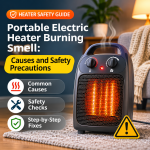
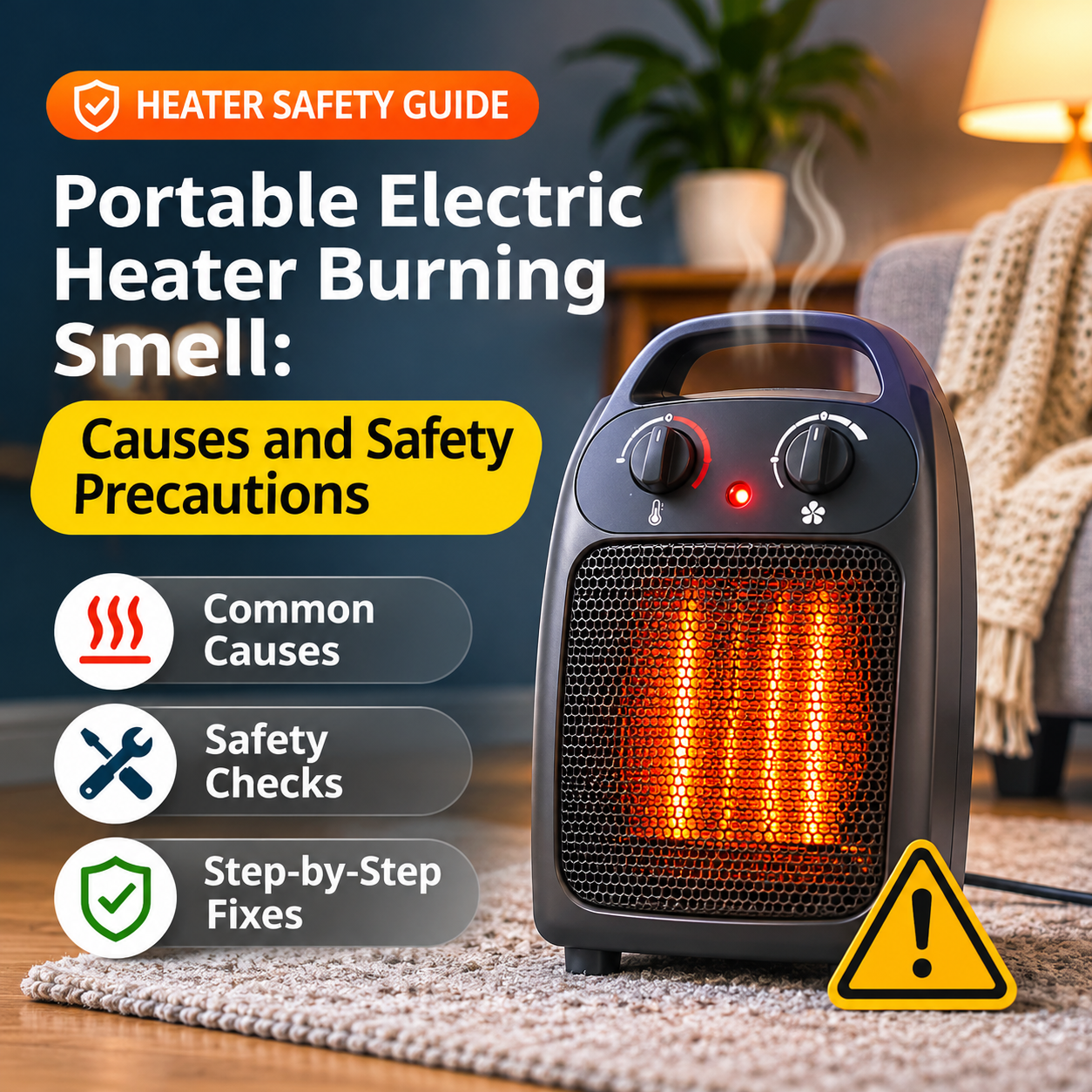
You switch on your portable electric heater on a cold evening and, within a minute, a sharp burning smell fills the room. It is alarming, and it is one of the most common worries people have about space heaters. The good news is that many burning smells are harmless and fade quickly. The bad news is that some are early warnings of an electrical fault or fire risk.
This guide explains exactly why a portable electric heater burning smell happens, how to tell a harmless smell from a dangerous one, how to fix the problem safely, and what to look for if you are buying a replacement. Read the smell chart below first, because it can tell you in seconds whether you can keep the heater on or need to unplug it immediately.
Quick Answer: Is a Burning Smell Normal?
A light dusty or “hot” smell for the first 15 to 30 minutes is normal, especially with a brand-new heater or one that has been stored for months. A strong, sharp, chemical, fishy or melting-plastic smell, or any visible smoke, is not normal. In that case, switch off, unplug and stop using the heater until it has been checked.
Stop immediately if you notice any of these
Visible smoke, sparks, crackling or buzzing, a melted or discoloured plug, a very hot power cord, or a smell of melting plastic that gets stronger over time. Unplug the heater only if it is safe to reach the plug, move everyone away, and call your local emergency number if you see flames.
7 Common Causes of a Burning Smell in Electric Heaters
1. Dust burning off the heating element
This is the number one cause. Dust, lint, pet hair and tiny fibres settle on the heating element and inside the vents while the heater is stored or switched off. When the element heats up, the dust burns and releases a smell often described as burnt hair or toast. If the smell fades within a few minutes and does not return, dust was almost certainly the cause.
2. Factory residue on a new heater
New heaters often have light protective oils, coatings, glues or insulation materials that burn off during the first hours of use. You may notice a chemical or “new electronics” smell. Run a new heater on a low setting for about 30 minutes in a well-ventilated room, ideally with a window open and without children, pets or birds nearby.
3. Spilled liquid or debris on the heater
Cooking splashes, air freshener, cleaning spray, candle wax or a spilled drink can land on the casing or grille and burn when the heater warms up. Unplug the unit, let it cool completely and clean the surface before trying again.
4. Blocked vents or poor airflow
If air cannot move freely through the heater, internal temperatures rise. This can create a hot smell and may trigger the overheat protection. Check that nothing is covering or pressed against the front or back of the unit, and clean the intake grille.
5. A failing fan motor or worn bearings
Fan heaters and ceramic fan heaters use a small motor. When it wears out, it can overheat and produce a hot-electrical smell, often with a rattling, squealing or grinding sound. A motor problem needs professional repair or replacement of the heater.
6. Damaged cord, plug or socket
Heaters draw a lot of current. A loose plug, a worn socket or a damaged cord can overheat and melt plastic, producing a fishy or acrid smell. If the plug or the wall socket feels hot, stop using that outlet and have it inspected.
7. Using an extension cord or power strip
Many standard extension cords and power strips are not designed for the continuous high load of a heater. Overloaded cords are a leading cause of heater-related fires. Always plug the heater directly into a wall socket that is in good condition.
Different Heater Types and Why They Smell
All electric heaters can smell when dusty, but some designs are more likely to give off odours than others. This table compares the most popular types.
| Heater type | Smell tendency | Typical reason |
|---|---|---|
| Fan heater | Moderate to high | Pulls in dust that burns on the element |
| Ceramic heater | Moderate | Dust on ceramic plates and fan intake |
| Oil-filled radiator | Low | New-unit coating, or oil leak if the smell is persistent |
| Infrared or quartz heater | Moderate | Dust landing on the exposed hot tube or element |
| Convector heater | Low to moderate | Dust inside the housing and vents |
Important for homes with pets
Some heaters use non-stick (PTFE or Teflon-type) coatings on internal parts. When overheated, these coatings can release fumes that are extremely dangerous to pet birds, even in small amounts. If you keep birds, move them to another room and ventilate well whenever a heater smells. Choose a heater that clearly states it is free of PTFE coatings, and keep birds well away from any heater.
How to Fix a Portable Heater Burning Smell
If there is no smoke or sparking and the smell is mild, you can try a thorough clean. Most dust-related smells disappear after this simple routine.
- Switch off and unplug. Turn the heater off, unplug it from the wall and wait at least 30 minutes so every part is cool.
- Vacuum the vents. Use a soft brush attachment to remove dust from the front grille, the rear intake and the base.
- Use compressed air. Give short bursts through the grille to dislodge dust deep inside. Hold the can upright and keep your face away from the vents.
- Wipe the casing. Use a dry or very slightly damp cloth on the outer housing only. Never spray liquid inside the heater and never wipe the heating element while it is plugged in.
- Dry and test. Make sure the unit is completely dry, then run it on the lowest setting in an open, ventilated area for 15 to 20 minutes while you stay in the room.
If the smell is gone, you can return to normal use. If it comes back, gets stronger, or you notice any smoke, stop using the heater. Contact the manufacturer or a qualified electrician instead of attempting an internal repair yourself.
Is a Burning Smell From an Electric Heater Dangerous?
It depends on the cause. A little dust burning off is not dangerous. However, the smell of melting plastic, hot insulation or scorched wiring is a serious warning sign, because overheated electrical parts can start a fire. Remember that electric heaters do not produce carbon monoxide, since they do not burn fuel. If your home also has gas, kerosene or wood heating, the smell may come from another source, so install carbon monoxide and smoke alarms and test them regularly.
If you smell rotten eggs or gas, that is unrelated to your electric heater. Leave the area, avoid switching anything on or off, and contact your gas supplier or emergency services from a safe place.
Heater Placement and Safe Use Rules
Even a well-made heater becomes risky if it is placed or used incorrectly. Safety experts commonly recommend keeping at least three feet (about one metre) of clear space around any space heater.
- Place the heater on a flat, hard, level surface, never on a bed, sofa or thick carpet.
- Plug it directly into a wall socket, not into an extension lead or power strip.
- Never leave it running while you sleep or when you leave the house, unless the manufacturer explicitly allows it and it has proper safety features.
- Do not use it to dry clothes, towels or shoes.
- Keep it away from water, so avoid using standard heaters in bathrooms.
- Inspect the cord and plug regularly for cracks, heat marks, discolouration or a loose fit.
- Test your smoke alarm every month.
How to Prevent Burning Smells in the Future
- Clean it before the cold season. Vacuum the vents before you first use the heater after months in storage.
- Clean regularly during use. In dusty homes or homes with pets, clean the vents every two to four weeks.
- Store it properly. Keep the heater in its box or under a cover in a dry place so dust cannot collect inside.
- Use the correct setting. Start on low if the heater has not been used for a long time.
- Replace old heaters. If a heater is many years old, has a frayed cord or has had repeated odour problems, replacement is safer than repair.
Buying Guide: Choose a Heater That Is Safer and Less Smelly
If your current heater keeps smelling or is simply old, upgrading is a sensible choice. When comparing models, look for the following features.
| Feature | Why it matters |
|---|---|
| Tip-over switch | Cuts the power automatically if the heater is knocked over |
| Overheat protection | Shuts the heater off if internal temperature gets too high |
| Adjustable thermostat | Keeps the room at a steady temperature and reduces constant element heat |
| Cool-touch housing | Safer around children and pets |
| Removable or easy-clean filter | Makes dust removal simple and reduces burning smells |
| Recognised safety certification | Look for marks such as UL, ETL, CE or your local standards mark |
| Correct wattage for the room | An undersized heater runs hot for hours, while an oversized one wastes energy |
| Timer and auto shut-off | Prevents the heater from running for hours without supervision |
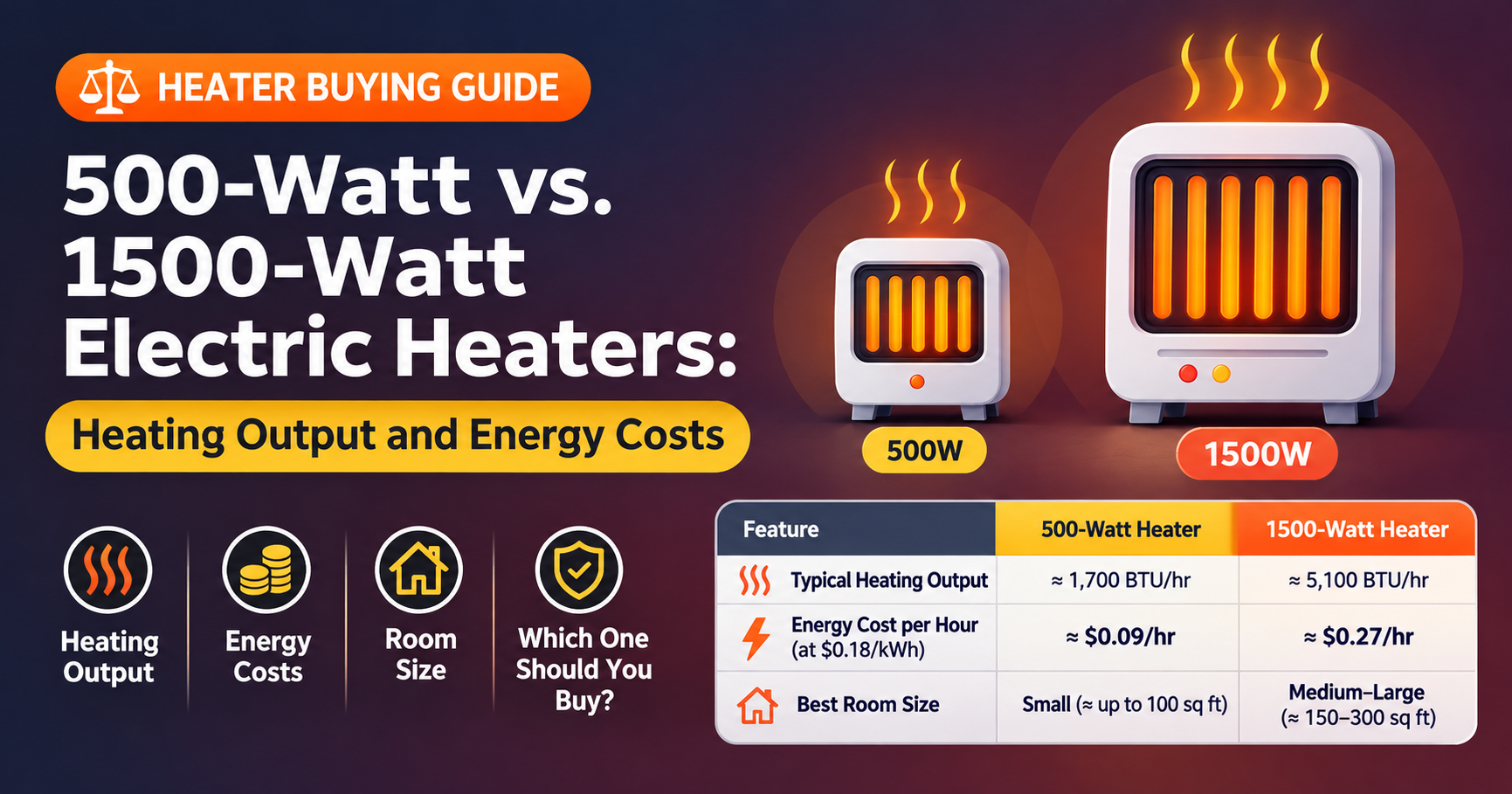
As a rough guide, a heater needs about 10 watts of power per square foot of floor area, so a 150 sq ft room generally suits a 1500 W unit. For small bedrooms or offices, an oil-filled radiator or a thermostat-controlled ceramic heater is often a good balance of comfort and low odour. For quick spot heating, a compact fan or ceramic model can work well if you keep the vents clean.
Frequently Asked Questions
How long should a new heater smell?
Most new heaters smell for 15 to 30 minutes of use, and occasionally for a couple of hours spread over the first few uses. If the smell is still strong after several hours of running, stop using it and contact the seller or manufacturer.
Why does my heater smell like burning dust every winter?
Dust settles inside the heater while it is stored. The first time you turn it on, that dust burns off the hot surfaces. Cleaning the vents before the first use of the season greatly reduces this.
Can a heater burning smell make you sick?
Light dust or coating fumes can cause headaches, throat irritation or coughing in sensitive people, especially those with asthma. Ventilate the room, and see a doctor if symptoms continue. Fumes from overheated non-stick coatings are particularly harmful to birds.
Why does my heater smell like fish?
A fishy or ammonia-like smell often comes from overheating electrical insulation or circuit components. Treat it as a warning sign and stop using the heater until it is inspected.
Why does my oil-filled heater smell like burning?
New units can give off a faint odour as paint and internal parts warm up. If the smell is persistent, or you see oil on the floor or on the unit, the heater may be leaking and should be replaced, not repaired.
Can I leave a heater on overnight?
It is safest to switch portable heaters off while you sleep. If you must use one, choose a model with tip-over protection, overheat protection and a timer, keep a clear zone around it, and have working smoke alarms.
When should I replace my portable heater?
Replace it if the cord or plug is damaged, if it smells strongly even after cleaning, if it trips breakers, or if it is very old and no longer has working safety switches. A repair is rarely worth the risk for low-cost portable models.
Final Thoughts
A portable electric heater burning smell is often just dust or factory residue, and a careful clean usually solves it. The key is to know the difference. A dusty or new-product smell that fades quickly is normal, while a melting, fishy or smoky smell is not, and needs you to unplug the heater immediately.
Clean your heater before every heating season, give it room to breathe, plug it directly into the wall and never leave it unattended. If a heater is old, damaged or keeps smelling, replacing it with a modern model that has tip-over and overheat protection is a small price to pay for peace of mind.
Safety note: This article is general information and does not replace the manufacturer’s manual or advice from a qualified electrician. If you are ever unsure whether your heater is safe, stop using it and get it inspected.