
Portable Electric Heater Power Consumption: How Many Watts, kWh and Dollars Does It Really Use?
When the first cold snap arrives, a portable electric heater feels like the easiest fix in the house. You plug it in, the room warms up in minutes, and you can finally stop wearing a coat indoors. Then the electricity bill shows up, and the same question lands on almost everyone’s mind: how much power does a portable electric heater actually use?
The honest answer is that it uses a lot of power while it is heating, but far less than most people fear when you use it smartly. In this guide you will learn exactly what the numbers on the label mean, how to calculate the running cost of any heater in under a minute, what a typical heater costs per hour, per night and per month, and which habits quietly waste the most electricity.
Quick answer
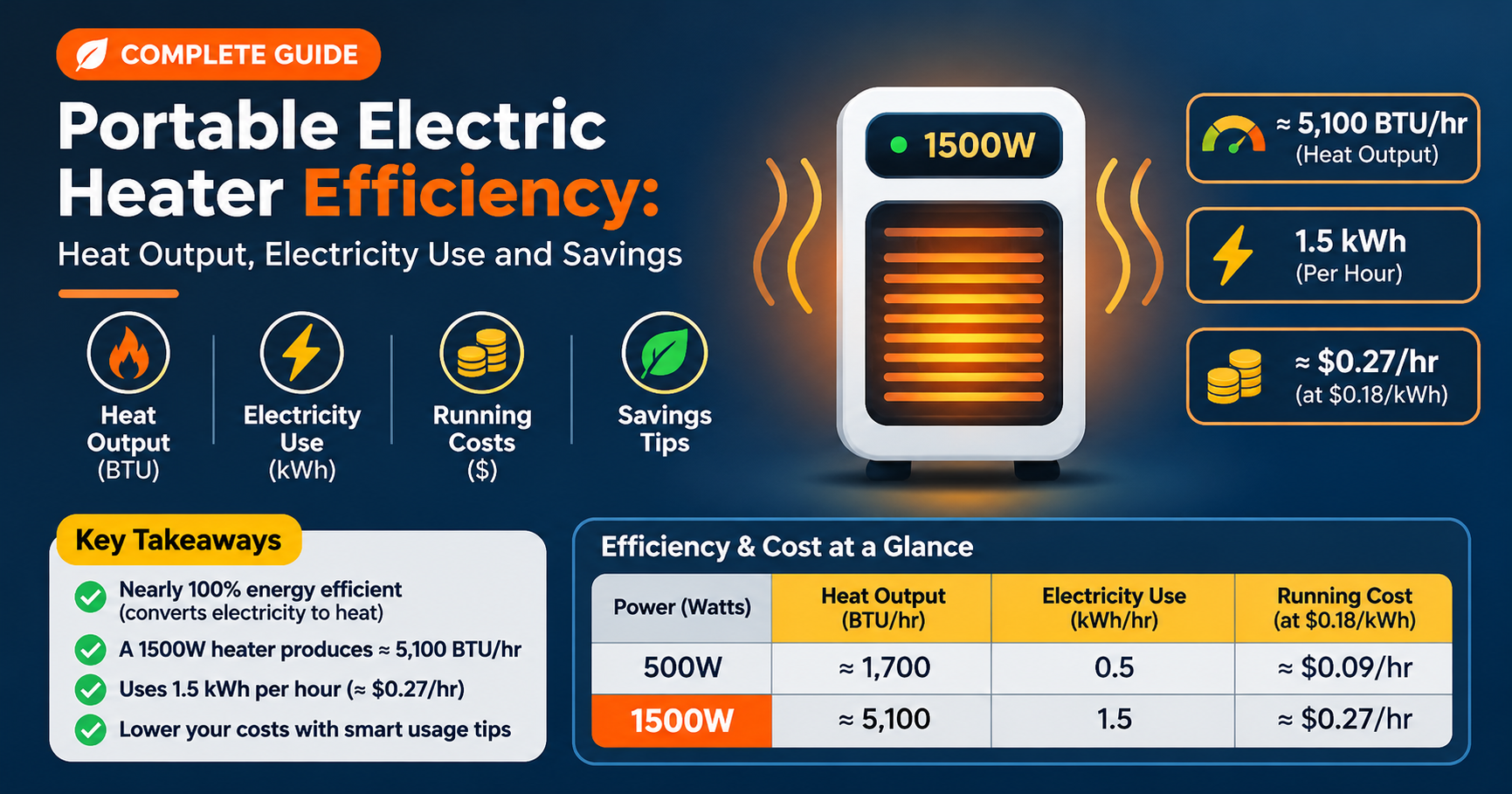
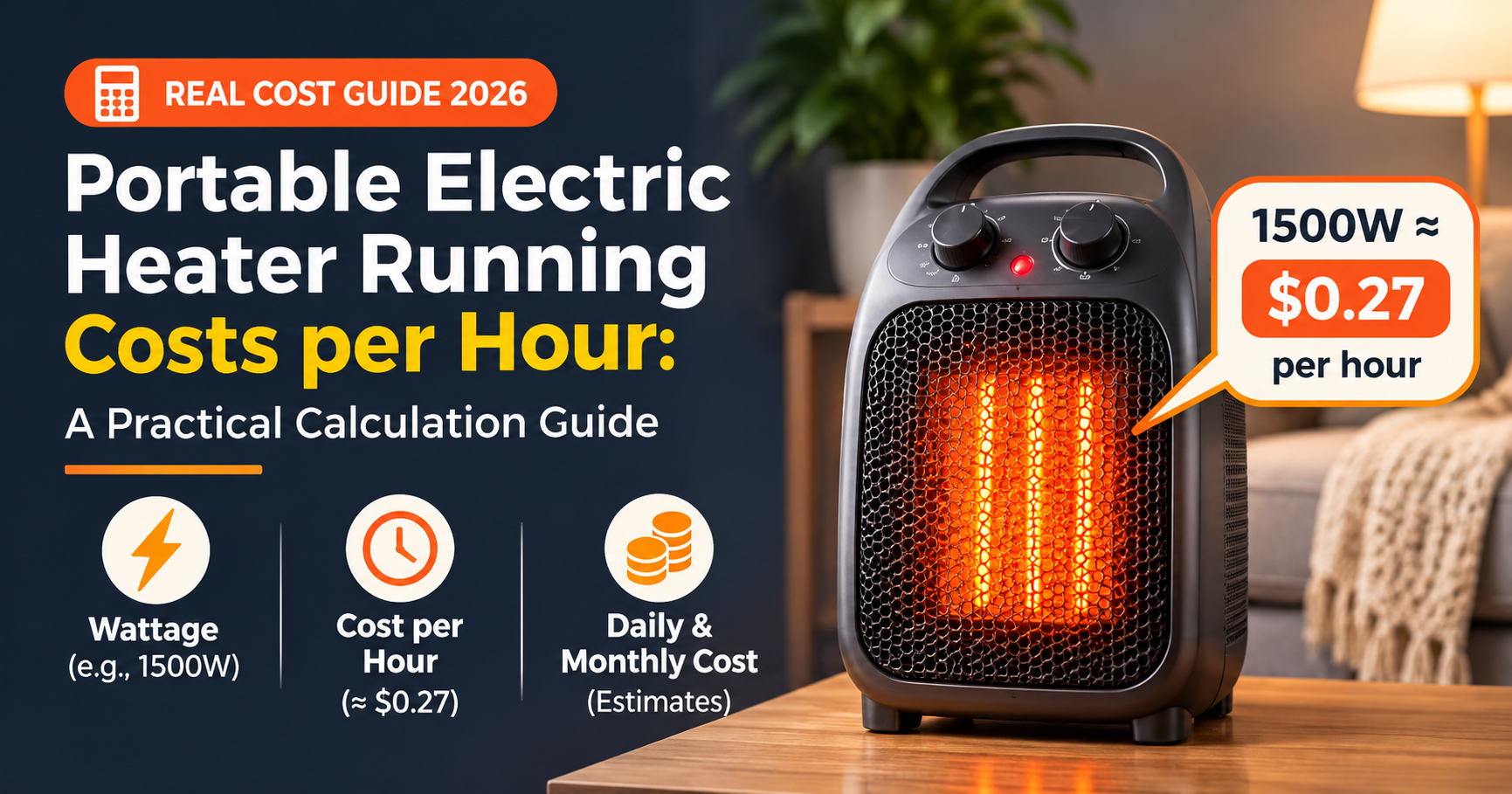
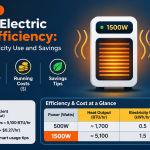
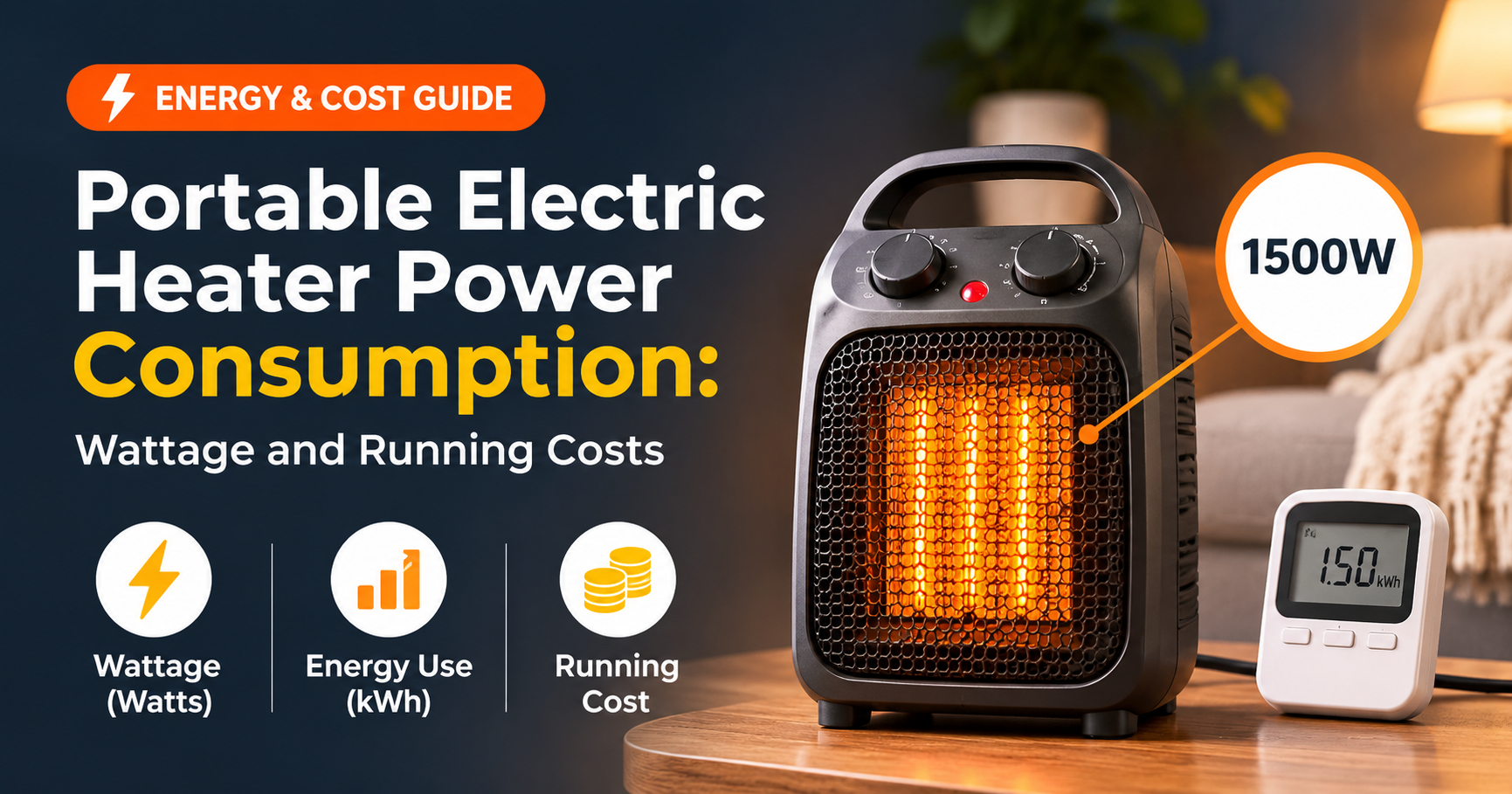
Most portable electric heaters are rated at up to 1500 watts (1.5 kW). Running at full power, that is 1.5 kWh of electricity per hour. At an electricity price of $0.16 per kWh, that works out to roughly $0.24 per hour, about $1.92 for an 8-hour stretch and up to $57.60 a month if it ran flat out for 8 hours every day.
In real life a heater with a thermostat cycles on and off, so the actual figure is often noticeably lower. Low settings (around 750 W) and small desk heaters (200–500 W) cost much less again.
What Does “Power Consumption” Mean for a Heater?
Before comparing heaters, it helps to understand four simple electrical terms. Once you know them, every spec sheet and every electricity bill becomes easy to read.
- Watt (W): the rate at which a device uses electricity at any moment. A 1500 W heater draws 1500 watts while its heating element is on.
- Kilowatt (kW): 1,000 watts. A 1500 W heater is a 1.5 kW heater.
- Kilowatt-hour (kWh): the amount of energy used when 1 kW runs for one hour. This is the unit your electricity company bills you for.
- Amp (A): the electrical current. Amps equal watts divided by volts, so a 1500 W heater on a 120 V outlet draws about 12.5 A (about 6.25 A on a 240 V supply).
The key idea is that watts describe how hard a heater works, while kilowatt-hours describe how much you pay for. A 1500 W heater used for two hours consumes 3 kWh, exactly the same as a 750 W heater used for four hours.
How Many Watts Does a Portable Electric Heater Use?
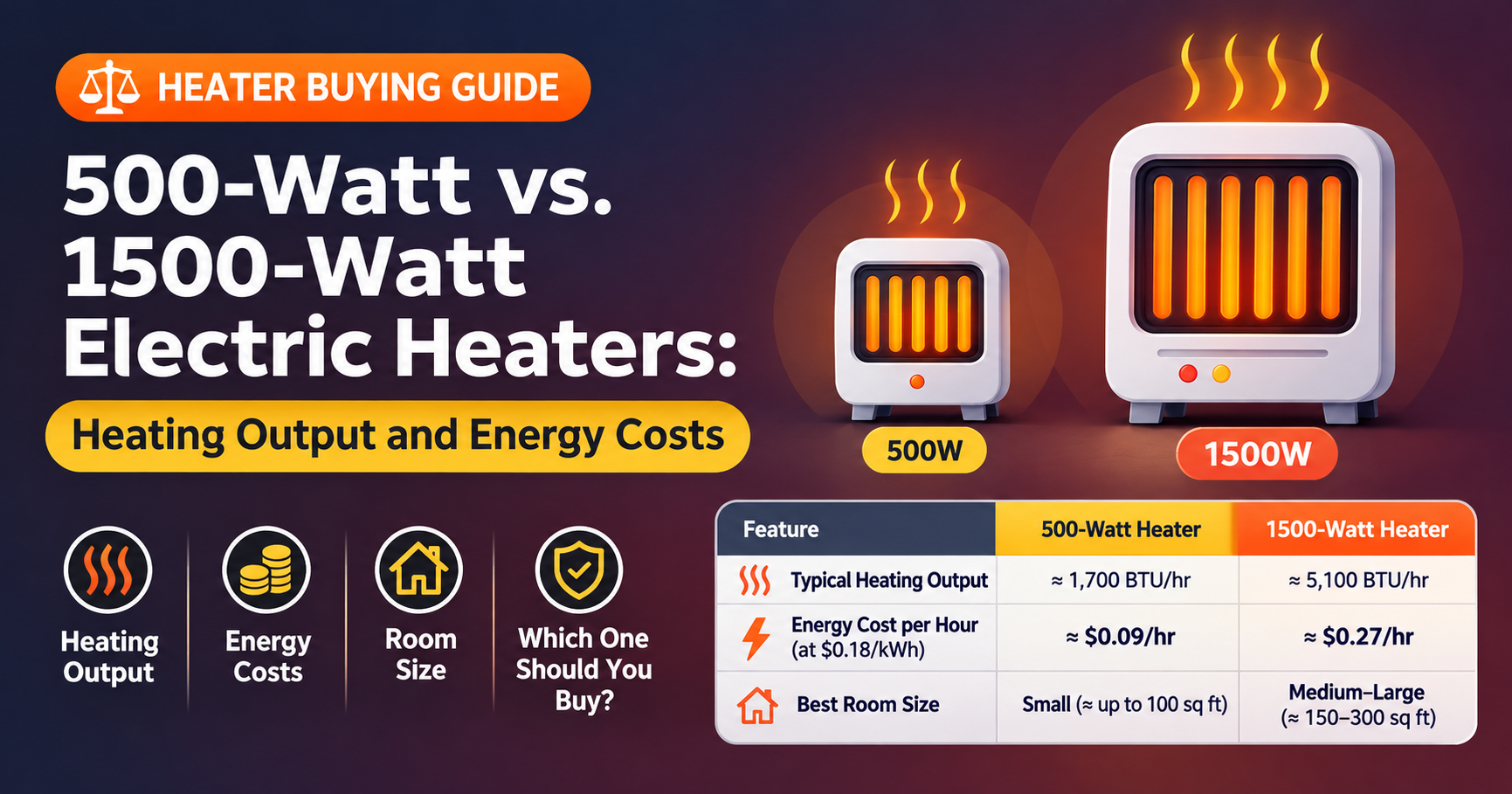
Wattage depends mainly on the size and type of the heater. The chart below shows typical ranges for common plug-in models designed for a standard 120 V household outlet.
| Heater type | Typical wattage | Best suited for |
|---|---|---|
| Mini desk or personal heater | 200–500 W | Warming your hands, feet or a small desk area |
| Ceramic fan heater | 750–1500 W (often 2 settings) | Quick heat in small to medium rooms |
| Oil-filled radiator | 600–1500 W (often 3 settings) | Quiet, steady heat for bedrooms and offices |
| Infrared / quartz heater | 400–1500 W | Warming people and objects directly |
| Panel / convection heater | 400–1500 W | Silent, draft-free background heat |
| 240 V garage or workshop heater | About 3000–5000 W | Large spaces; needs a suitable dedicated circuit |
Most home models offer two or three power levels, commonly around 750 W, 900–1000 W and 1500 W. Choosing a lower level directly lowers the watts drawn, and therefore your cost per hour.
Why Do Most Portable Heaters Stop at 1500 Watts?
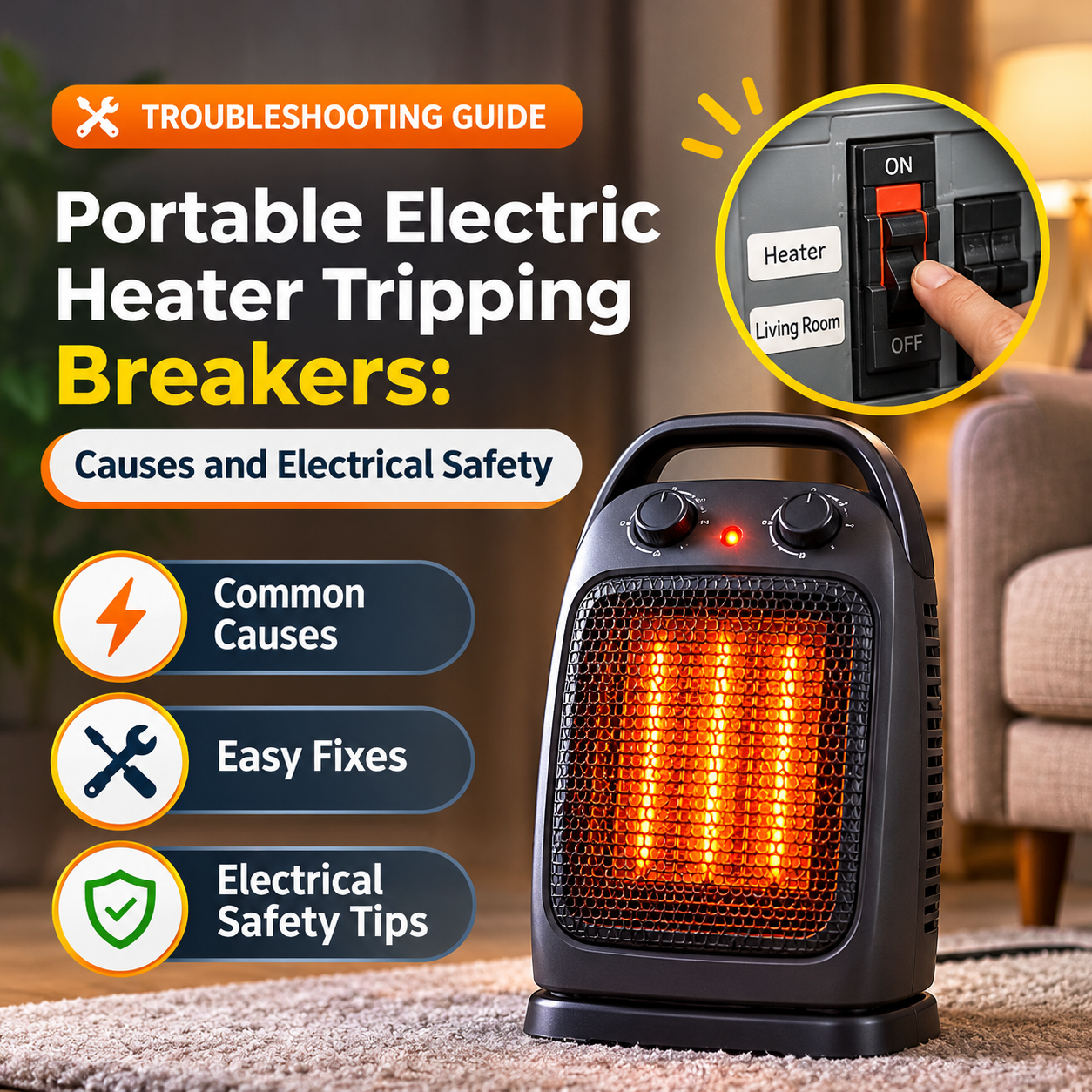
If you have ever wondered why almost every plug-in heater tops out at 1500 W, the reason is the household circuit. A typical 120 V wall circuit is protected by a 15-amp breaker. Electrical safety practice limits a load that runs for hours to about 80% of the breaker rating, which is 12 amps or roughly 1440 watts. A 1500 W heater sits right at that edge, which is why it should be the only big appliance on its circuit.
Safety note
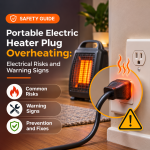
Plug a high-wattage heater directly into a wall outlet. Avoid extension cords and power strips, and do not run other high-power devices such as hair dryers, microwaves or space heaters on the same circuit at the same time. If the plug or outlet feels hot, stop using it and have it checked.
How to Calculate the Running Cost of Your Heater
You do not need special tools. Just follow these four steps using the numbers printed on your heater and your electricity bill.
- Find the wattage on the heater’s label or in the manual (for example, 1500 W).
- Convert to kilowatts by dividing by 1,000 (1500 ÷ 1000 = 1.5 kW).
- Multiply by the hours of use to get energy in kWh (1.5 kW × 8 hours = 12 kWh).
- Multiply by your electricity rate in dollars per kWh (12 kWh × $0.16 = $1.92).
Your own rate may be very different from our $0.16 example. Residential prices have recently been in the high teens of cents per kWh across the United States on average, but they vary a lot from state to state and even by time of day on some tariffs. Check the “price per kWh” line on your latest bill for the most accurate result.
Cost of a 1500 W heater at different electricity rates
| Rate per kWh | Cost per hour | Cost for 8 hours | Monthly cost (8 h/day, non-stop) |
|---|---|---|---|
| $0.12 | $0.18 | $1.44 | $43.20 |
| $0.16 | $0.24 | $1.92 | $57.60 |
| $0.20 | $0.30 | $2.40 | $72.00 |
| $0.30 | $0.45 | $3.60 | $108.00 |
Cost by power setting (at $0.16 per kWh)
| Power setting | Energy per hour | Cost for 8 hours | Monthly cost (8 h/day, non-stop) |
|---|---|---|---|
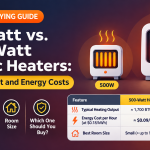
| 200 W (mini heater) | 0.2 kWh | $0.26 | $7.68 |
| 500 W | 0.5 kWh | $0.64 | $19.20 |
| 750 W (low setting) | 0.75 kWh | $0.96 | $28.80 |
| 1000 W | 1.0 kWh | $1.28 | $38.40 |
| 1500 W (high setting) | 1.5 kWh | $1.92 | $57.60 |
Your Heater Does Not Run at Full Power All the Time
This is the detail that most “power consumption” articles skip. The wattage on the label is the maximum draw while the heating element is switched on. Once the room reaches the temperature you set, the thermostat turns the element off, and it only switches on again when the room cools down.
How often it switches on depends on the size of the room, how well it is insulated, the outdoor temperature and the temperature you choose. In a well-sealed bedroom a heater may run for only a portion of each hour. In a drafty room on a freezing day it may run almost continuously. To show the effect, the chart below compares a heater running non-stop with one whose thermostat keeps it on about half the time.
The lesson is clear: a heater with an accurate, adjustable thermostat can cut your actual energy use substantially compared with the “always on” numbers. A heater without a thermostat will simply keep drawing full power until you switch it off.
Are Ceramic, Oil-Filled and Infrared Heaters Different in Energy Use?
Here is a fact that surprises many shoppers: nearly all of the electricity a plug-in heater uses ends up as heat in your room. A 1500 W heater produces about 5,118 BTU of heat per hour (1 watt is roughly 3.412 BTU per hour), whether it is ceramic, oil-filled, infrared or a panel heater. No portable electric resistance heater can give you more heat from the same watts.
What differs between types is how that heat is delivered and how it feels:
- Ceramic fan heaters warm up very quickly and push warm air around, which is ideal for fast heat in a small space. The fan adds a little noise.
- Oil-filled radiators take longer to heat up, but the hot oil keeps radiating warmth even after the element cycles off. They are quiet and good for long, steady use.
- Infrared or quartz heaters warm people and objects directly rather than the air, so they can feel effective even at lower settings when you are sitting close.
- Panel and convection heaters provide gentle, silent background warmth and are popular for bedrooms and home offices.
In other words, choose the type that matches how you will use it, not one that promises “super saving” performance. The real savings come from the right size, a good thermostat and smart habits.
How Many Watts Do You Need for Your Room?
Buying a heater that is too weak means it will run constantly and never reach a comfortable temperature. A heater that is too strong can overshoot and waste energy. A widely used rule of thumb is about 10 watts of heating power per square foot of floor space for a room with a standard 8-foot ceiling and average insulation.
If the room is drafty, has big windows, a high ceiling or sits above an unheated garage, increase the estimate by roughly 20–30%. For rooms larger than about 150 square feet, a single 1500 W plug-in heater will usually struggle, and two heaters on separate circuits or a properly installed 240 V unit is a better answer.
Is a Portable Heater Cheaper Than Central Heating?
It depends on how you use it. Electric resistance heating converts each unit of electricity into one unit of heat. Gas furnaces are often cheaper per unit of heat in many regions, and heat pumps can deliver two to four times more heat per unit of electricity. So heating your entire home with portable electric heaters is rarely the cheapest approach.
Where a portable heater shines is zone heating. If you spend the evening in one room, you can lower the central thermostat a few degrees and warm only that room with a heater. Used this way, many households find that the heater pays for itself in comfort without adding much to the monthly bill.
12 Proven Ways to Reduce Portable Heater Power Consumption
- Use the thermostat. Set it to a comfortable level (around 68–70°F or 20–21°C) instead of leaving the heater on maximum.
- Use the lowest setting that keeps you comfortable. Once the room is warm, drop from 1500 W to 750 W.
- Use a timer. Pre-heat the room 20–30 minutes before you need it and let the timer switch the heater off, rather than running it all day.
- Heat one small room, not the whole house. Close the door so the warmth stays where you are.
- Seal drafts. Weatherstripping, a door draft stopper and sealing window gaps often save more than any heater feature.
- Close the curtains at dusk. Heavy curtains reduce heat loss through glass noticeably.
- Add a rug. Bare floors lose heat, and a rug makes the room feel warmer at the same temperature.
- Place the heater correctly. Keep it on a flat, hard floor with clear space around it, ideally away from cold outer walls only if airflow stays open and safe.
- Choose the right size. Match wattage to room area using the 10 W per square foot guide.
- Consider an infrared heater for personal warmth. If you are sitting at a desk, directing heat at yourself can let you use a lower setting.
- Keep it clean. Dust on the grille or fan reduces airflow and can make the heater work harder and less safely.
- Unplug it when not in use. Modern digital models draw only a few watts on standby, but unplugging also removes any risk.
What to Look For in an Energy-Smart Portable Heater
If you are about to buy a new heater, these features have the biggest impact on both running cost and safety. Compare them carefully instead of focusing only on the headline wattage.
| Feature | Why it matters for power consumption |
|---|---|
| Adjustable thermostat | Lets the heater cycle off once the room is warm, preventing wasted energy |
| Multiple power settings | Allows you to drop to 750 W or 900 W instead of always using 1500 W |
| Programmable timer | Prevents the heater running for hours after you leave or fall asleep |
| Eco or auto mode | Automatically adjusts output to hold your chosen temperature |
| Tip-over and overheat protection | Essential safety features that shut the heater off automatically |
| Recognized safety certification | Look for a mark from a recognized testing laboratory on the product |
| Right size and wattage | Prevents under-heating (constant running) and over-heating (overshoot) |
| Low noise level | Important for bedrooms and offices if you plan to use it for long periods |
Safety Basics When Running a Heater for Hours
- Keep the heater at least 3 feet (about 1 meter) away from curtains, bedding, furniture and anything flammable.
- Always place it on a flat, stable, non-flammable surface. Never put it on a bed, sofa or carpet pile that can block airflow.
- Never cover a heater or use it to dry clothes.
- Do not leave it running unattended in rooms with children or pets, and never use it in damp bathrooms unless it is specifically rated for that use.
- Check that smoke alarms in the house are working during heating season.
- Inspect the cord and plug regularly and stop using the heater if you see damage, discoloration or a burning smell.
Frequently Asked Questions
Does a 1500 W heater use a lot of electricity?
Yes, it is one of the most power-hungry appliances in a typical home while it is on. At full power it uses 1.5 kWh per hour. However, with a thermostat, a sensible timer and a well-sized room, the actual daily consumption is far lower than running it flat out.
How much does it cost to run a portable heater all night?
At $0.16 per kWh, a 1500 W heater running non-stop for 8 hours costs about $1.92. If the thermostat keeps it on roughly half the time, the cost falls to about $0.96. On a low 750 W setting the same night costs around $0.96 or less.
Which uses less electricity: a low setting or a small heater?
A heater drawing 750 W uses 750 W whether it is a big unit on low or a small unit on high. What matters is the watts being drawn and how long they run. The best choice is the one that keeps your room comfortable using the fewest total kilowatt-hours.
Do oil-filled heaters use less electricity than fan heaters?
Not for the same wattage. They convert electricity to heat equally efficiently. Oil-filled models can feel more economical because they hold heat and cycle off for longer, but the same 1500 W rating means the same maximum draw.
Can I run a portable heater on a generator, inverter or power station?
Possibly, but check the continuous output rating first. It must comfortably exceed the heater’s wattage, so a 1500 W heater generally needs a 2000 W or larger inverter or generator. Battery power stations drain quickly under this load: a 1,000 Wh unit would run a 1500 W heater for well under an hour.
Do heaters use electricity when turned off?
A heater that is switched off at the unit but still plugged in may draw a very small standby power if it has a digital display or remote receiver, usually only a few watts. A heater with a simple mechanical switch uses essentially nothing when off.
Final Thoughts
Portable electric heater power consumption comes down to one simple relationship: watts × hours = energy, and energy × price = cost. A 1500 W heater uses 1.5 kWh for every hour it runs at full power, which typically costs between $0.18 and $0.45 per hour depending on where you live. Low settings, thermostats, timers, good insulation and a correctly sized heater can cut that figure dramatically.
Before you buy or switch on your heater this winter, calculate your own running cost with the formula above, choose a model with a reliable thermostat and safety features, and heat only the room you are using. That way you get warm, comfortable rooms without an unpleasant surprise on your electricity bill.
Note: All costs in this article are estimates based on the example rates shown. Your actual cost depends on your local electricity price, the heater’s thermostat behavior, room insulation and weather. Always follow the manufacturer’s instructions and local electrical safety guidance.