



Portable Electric Heater Cost Per Hour: What You Really Pay (2026 Guide)
Space heaters feel cheap to buy and sneaky to run. You plug one in, the room warms up in minutes, and then the electric bill arrives and you wonder what happened. The good news is that the running cost of a portable electric heater is easy to calculate once you know two numbers: the heater’s wattage and your electricity rate.
Quick Answer
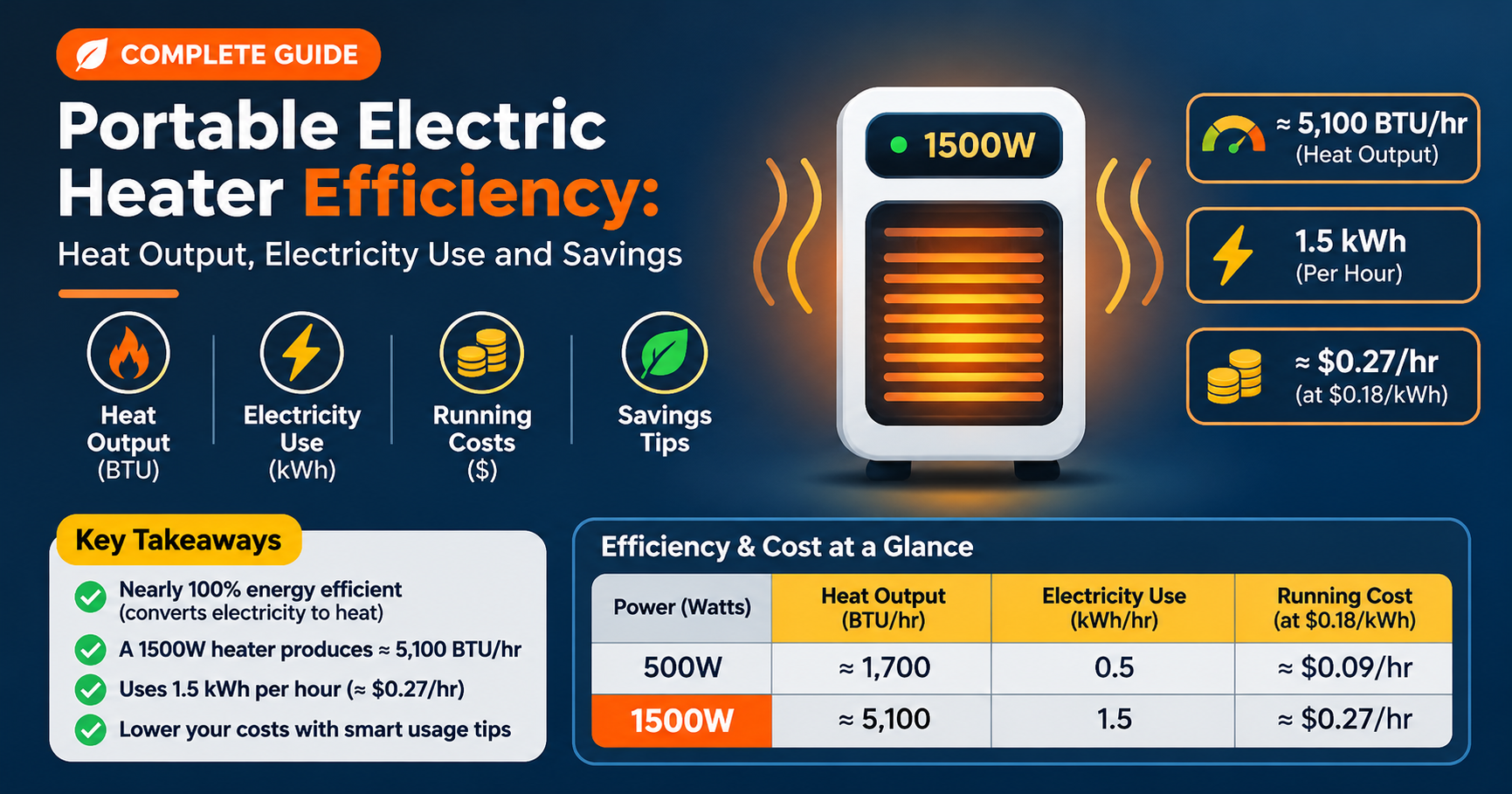
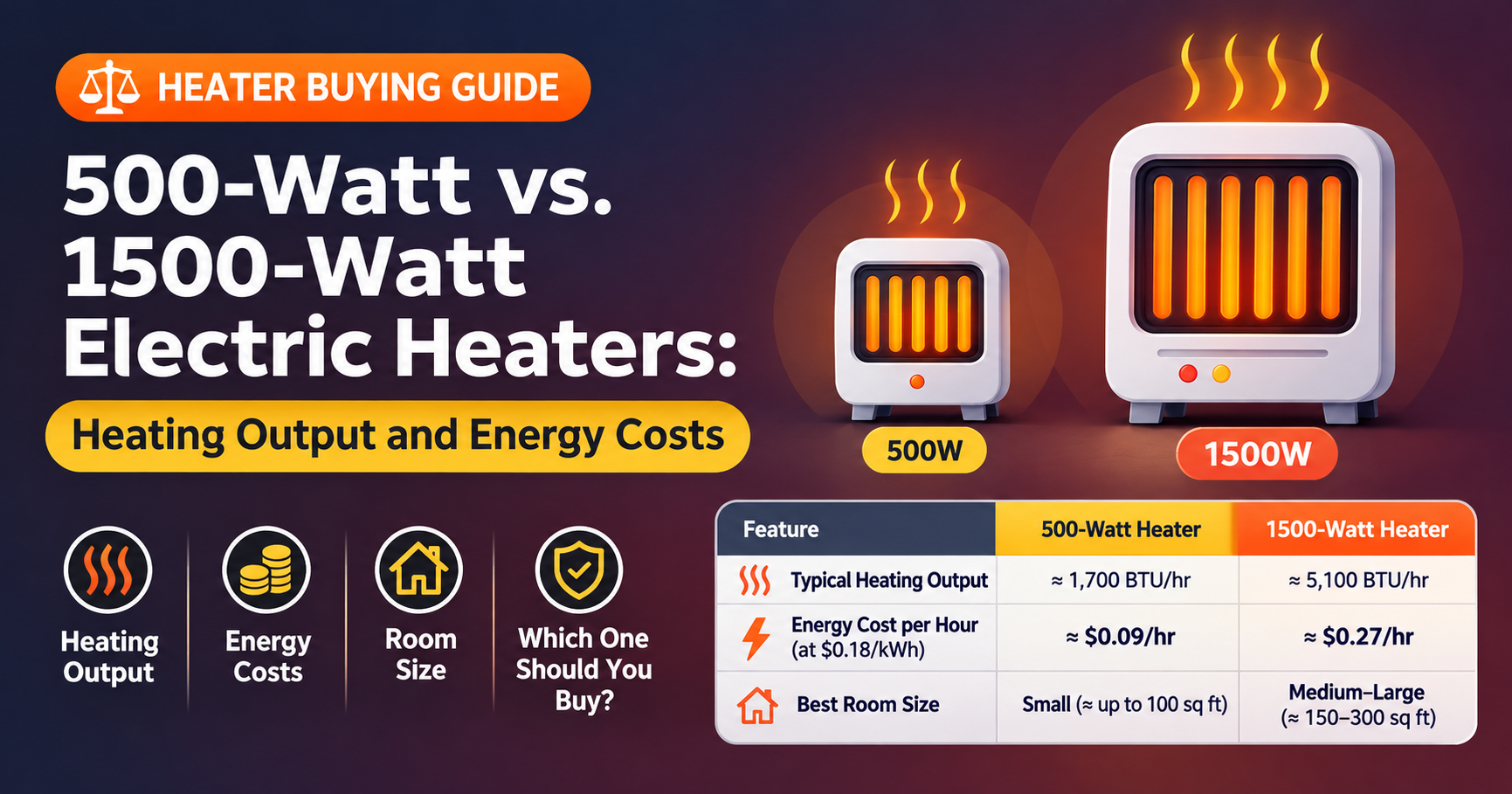
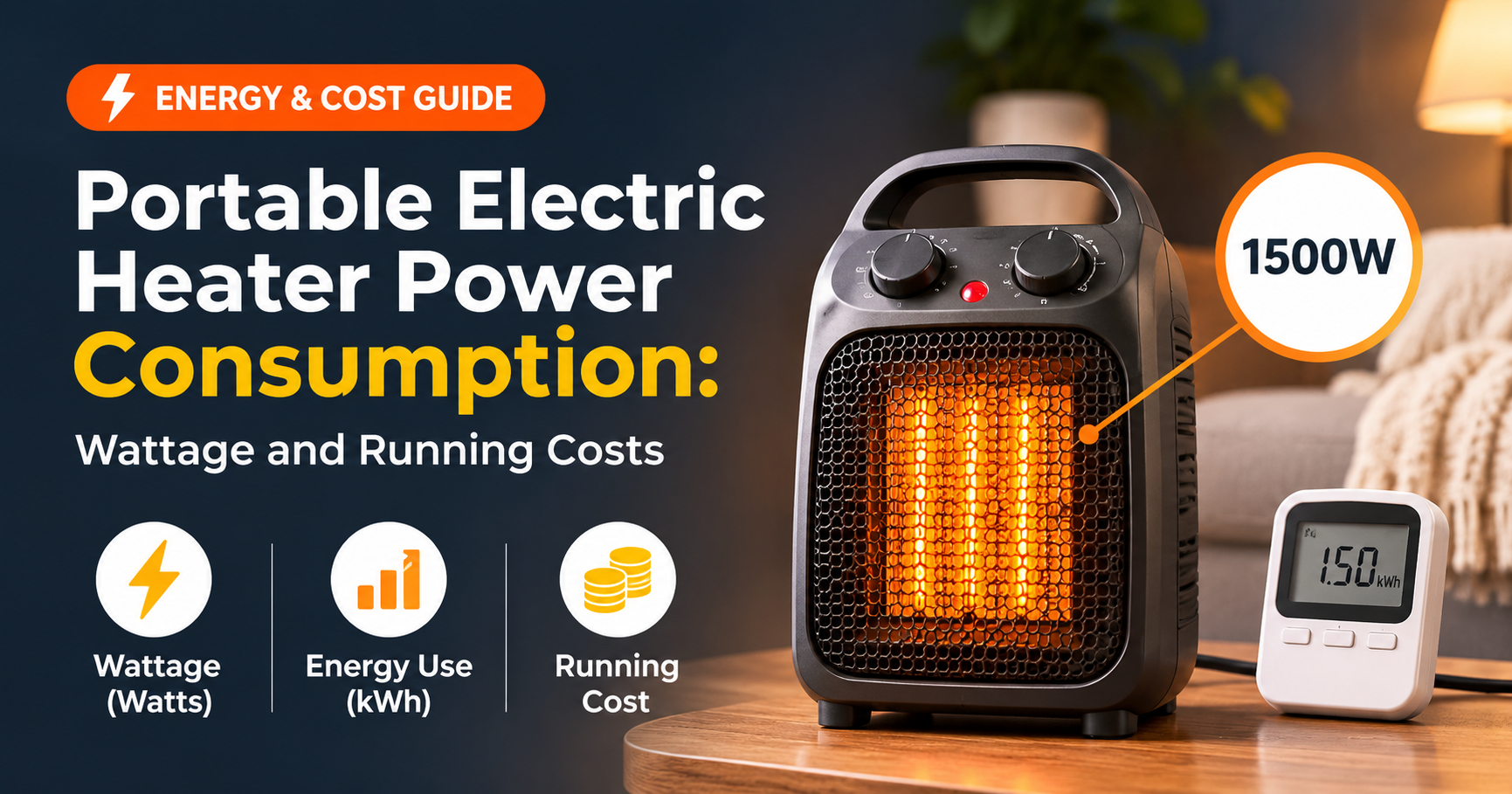
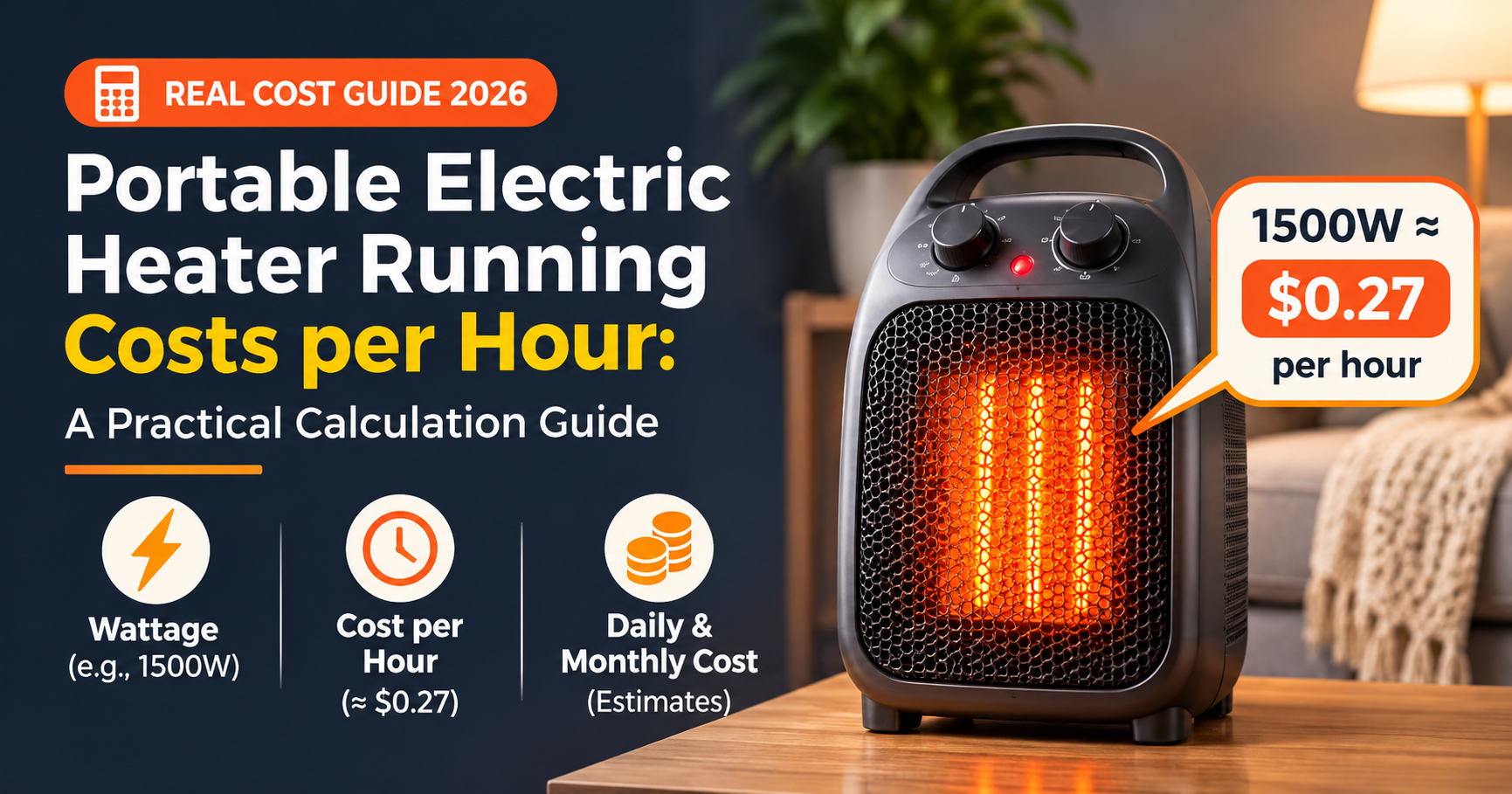
A typical 1500-watt portable electric heater costs about $0.27 per hour at the 2026 U.S. average residential rate of roughly 18 cents per kilowatt-hour. Smaller 500 to 750 watt models cost about $0.09 to $0.14 per hour. Your exact cost depends on your local rate, the heater’s power setting, and how often the thermostat switches it off.
In this guide you will learn how to calculate your own cost, see ready-made cost tables for every common wattage, understand what a heater costs per day and per month, and pick up practical ways to stay warm without a painful bill.
How to Calculate Portable Electric Heater Cost Per Hour
Electricity is billed in kilowatt-hours (kWh). One kWh is the energy used by a 1000-watt appliance running for one hour. Every heater lists its power in watts on the label, the box, or the product page. The math takes three short steps.
- Find the wattage. Most plug-in space heaters top out at 1500 watts.
- Convert to kilowatts. Divide the watts by 1000. A 1500W heater uses 1.5 kW.
- Multiply by your rate. Take the kilowatts and multiply by the price you pay per kWh.
Your rate is printed on your electricity bill, usually shown in cents per kWh or dollars per kWh. If your bill shows several tiers or time-of-use periods, use the rate that applies when you actually run the heater. Evening and early morning hours are often the most expensive on time-of-use plans.
Cost Per Hour by Heater Wattage
The table below uses 18 cents per kWh, which is close to the 2026 national average for U.S. homes according to the U.S. Energy Information Administration. All figures assume the heater runs at full power the entire time.
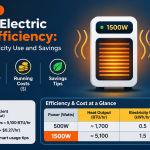
| Heater Wattage | Energy Used Per Hour | Cost Per Hour | 4 Hours | 8 Hours | 8 Hrs/Day for 30 Days |
|---|---|---|---|---|---|
| 500W | 0.5 kWh | $0.09 | $0.36 | $0.72 | $21.60 |
| 750W | 0.75 kWh | $0.14 | $0.54 | $1.08 | $32.40 |
| 1000W | 1.0 kWh | $0.18 | $0.72 | $1.44 | $43.20 |
| 1200W | 1.2 kWh | $0.22 | $0.86 | $1.73 | $51.84 |
| 1500W | 1.5 kWh | $0.27 | $1.08 | $2.16 | $64.80 |
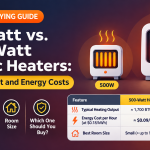
The takeaway is simple. Doubling the wattage doubles the cost. A 1500W heater on its high setting costs three times as much to run as a 500W model, but it also produces three times as much heat.
How Your Electricity Rate Changes the Cost
The same heater costs very different amounts depending on where you live. Residential rates in 2026 range from roughly 11 to 12 cents per kWh in the cheapest states up to about 40 cents or more in Hawaii. Here is what a 1500W heater costs at a range of rates.
| Electricity Rate | Cost Per Hour (1500W) | Cost for 8 Hours | Typical Region |
|---|---|---|---|
| 10¢ per kWh | $0.15 | $1.20 | Lowest-cost utilities |
| 12¢ per kWh | $0.18 | $1.44 | Plains and parts of the South |
| 15¢ per kWh | $0.23 | $1.80 | Many Midwest and Southern areas |
| 18¢ per kWh | $0.27 | $2.16 | U.S. national average |
| 25¢ per kWh | $0.38 | $3.00 | Higher-cost states |
| 30¢ per kWh | $0.45 | $3.60 | Parts of the Northeast and West Coast |
| 40¢ per kWh | $0.60 | $4.80 | Hawaii |
If you are outside the United States, the formula works exactly the same way. Just use your local currency and the price per unit of electricity on your bill.
Daily and Monthly Cost of Running a Space Heater
Hourly cost is useful, but most people care about the monthly bill. A 1500W heater uses 1.5 kWh every hour it runs at full power. The chart and table below show the monthly cost at 18 cents per kWh for different daily running times.
| Daily Running Time | kWh Per Day | Cost Per Day | Cost Per Month (30 Days) |
|---|---|---|---|
| 2 hours | 3 kWh | $0.54 | $16.20 |
| 4 hours | 6 kWh | $1.08 | $32.40 |
| 8 hours | 12 kWh | $2.16 | $64.80 |
| 12 hours | 18 kWh | $3.24 | $97.20 |
| 24 hours | 36 kWh | $6.48 | $194.40 |
Reality Check
These figures assume the heater draws full power every minute it is on. In practice, a heater with a thermostat cycles on and off once the room reaches your target temperature. In a well-insulated room, the real running time can be 40 to 70 percent of the clock time, so your actual bill is often lower than the worst-case number.
Does the Type of Heater Change the Cost?
Many shoppers assume that an oil-filled radiator, a ceramic heater, or an infrared heater has a very different running cost. They do not, at least not per watt. Almost every electric resistance heater converts nearly all the electricity it uses into heat. A 1500W ceramic heater and a 1500W oil-filled radiator both use 1.5 kWh per hour.
What does differ is how the heat is delivered and how it feels, which affects how long you need to run the heater.
Ceramic Fan Heaters
These warm up fast and push hot air around a small room. They are great for quick bursts of heat, such as warming a bathroom before a shower or taking the chill off an office. They stop warming the moment you switch them off.
Oil-Filled Radiator Heaters
These take longer to heat up but keep radiating warmth after the thermostat shuts the element off. They are quiet and good for bedrooms and long periods of use, and the stored heat can reduce how much power they draw over time.
Infrared and Radiant Heaters
Infrared models heat people and objects directly instead of heating the air. They can feel warmer quickly when you sit in front of them, which makes them useful for desks, workshops, and spot heating where you want warmth right where you are.
Convection Panel Heaters
These produce gentle, even warmth and are often wall-mounted or low-profile. Their lower wattage options, commonly 500 to 1000 watts, are a good match for small rooms and steady background heat.
Are Space Heaters Expensive to Run Compared to Other Heating?
Electric resistance heating is simple and efficient at the point of use, but electricity usually costs more per unit of heat than natural gas. That is why running a space heater to warm an entire house is rarely a good idea. A portable heater makes the most financial sense when it heats only the room you are using while you turn down the central thermostat for the rest of the home.
Heat pumps are the efficiency leader. They can deliver two to three times more heat for each unit of electricity than a plug-in resistance heater, so they cost far less to run if you already have one. If you only need to warm one room occasionally, a portable heater is still the cheapest option to buy and install.
What Affects the Real Cost of Running Your Heater?
- Room size. A common rule of thumb is about 10 watts of heating power for each square foot of floor area. A 1500W heater suits roughly 150 square feet. In a larger room it will run constantly and still struggle.
- Insulation and drafts. Leaky windows and gaps under doors let heat escape, forcing the heater to work harder and run longer.
- Outdoor temperature. The colder it is outside, the more heat your room loses and the more your heater runs.
- Thermostat setting. Each degree you add increases how long the heater stays on. Setting the target a few degrees lower can make a noticeable difference over a month.
- Power setting. Many heaters offer 750W, 1000W, and 1500W modes. Using a lower setting once the room is warm cuts the hourly cost directly.
- Ceiling height and layout. Open floor plans and tall ceilings spread the heat out and make small heaters less effective.
How to Measure Your Heater’s Real Cost
If you want an exact number instead of an estimate, plug the heater into a plug-in electricity usage monitor, often called a watt meter. Run the heater for a typical evening and read the kWh used. Multiply that number by your electricity rate and you have the true cost, including all the thermostat cycling. Many people are surprised to find the real figure is lower than the full-power estimate.
You can also check your smart meter or your utility’s online dashboard. Compare a few cold days with the heater against similar days without it to see the difference in daily kWh.
12 Smart Ways to Lower Your Space Heater Costs
- Heat the person, not the house. Warm the room you are in and lower the central thermostat everywhere else.
- Use a heater with a good thermostat. An accurate adjustable thermostat prevents the heater from running nonstop.
- Use the timer. Set the heater to turn on 30 minutes before you wake up or arrive, and switch off automatically afterward.
- Choose the right size. An oversized heater wastes energy and an undersized one never stops running. Match wattage to room size.
- Start on high, then drop to low. Use full power to warm the room quickly, then switch to a lower setting to maintain the temperature.
- Close the door. Keep the heated room sealed off so warm air stays where you need it.
- Seal drafts. Weatherstripping, door sweeps, and window film are inexpensive and pay for themselves quickly.
- Use curtains wisely. Close thick curtains at night and open them on sunny days to gain free solar warmth.
- Add rugs and layers. A rug on a cold floor and warm clothing let you set the thermostat lower without feeling cold.
- Use an eco mode. Many modern heaters include an energy-saving mode that adjusts power automatically to hold your set temperature.
- Avoid running it all night in big rooms. Use a warm blanket or heated bedding for sleeping and save the heater for waking hours.
- Check time-of-use rates. If your utility charges more during peak hours, shift heater use to cheaper periods where possible.
Features to Look For in an Energy-Smart Portable Heater
If you are shopping for a new heater, a few features make it easier to control the cost without giving up comfort.
- Adjustable thermostat. Digital thermostats are usually more precise than simple dial controls.
- Multiple power levels. Settings such as 750W and 1500W give you control over hourly cost.
- Programmable timer. Automatic on and off times prevent wasted hours.
- Eco or energy-saving mode. Helps hold a steady temperature with less power.
- Remote control or app control. Convenient for adjusting the heater without getting out of bed.
- Safety protections. Tip-over shutoff and overheat protection are essential. Look for recognized safety certification such as UL or ETL listing.
- Quiet operation. Especially important for bedrooms and home offices.
Space Heater Safety Basics
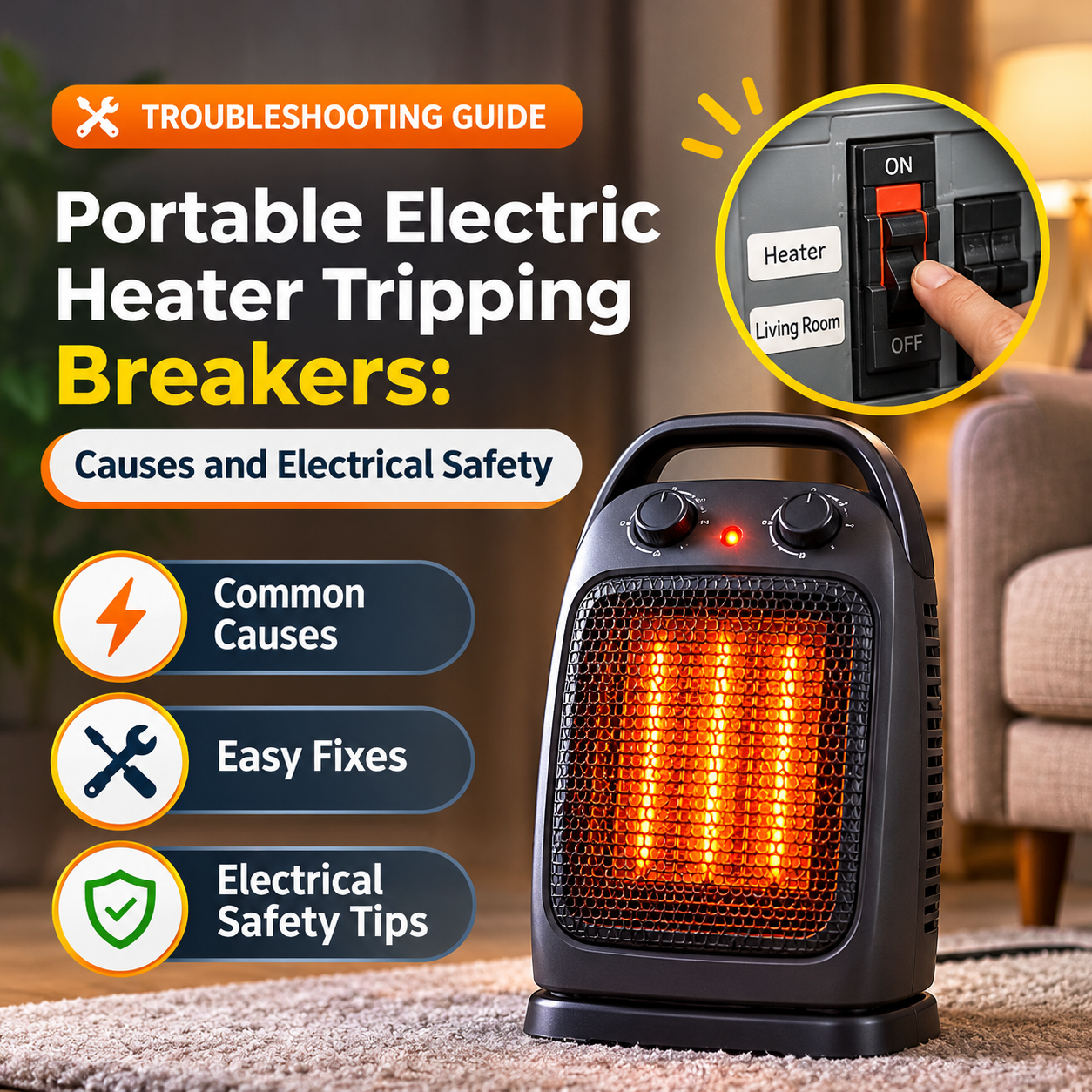
A 1500W heater draws about 12.5 amps on a standard 120-volt circuit, which is a heavy load for a household outlet. A few habits keep you safe.
- Plug the heater directly into a wall outlet. Avoid extension cords and power strips, which can overheat.
- Keep at least three feet of clear space around the heater, away from curtains, bedding, furniture, and paper.
- Place it on a flat, stable, hard surface, never on carpet edges or furniture.
- Never leave a heater running in an empty room or while you sleep unless the model is specifically designed for it and you are comfortable with its protections.
- Check that smoke alarms are working and test them regularly.
- Stop using the heater if the cord or plug feels hot, shows damage, or if the unit has any burning smell.
Frequently Asked Questions
How much does it cost to run a 1500 watt space heater for 24 hours?
At 18 cents per kWh, running a 1500W heater at full power for 24 hours costs about $6.48. In practice, thermostat cycling usually brings the real figure lower.
Is it cheaper to leave a space heater on all day or turn it on and off?
It is generally cheaper to run the heater only when you need it. Heat escapes whether or not the heater is on, so running it when nobody is in the room wastes energy. A timer is a good way to warm the room just before you use it.
How many kWh does a portable electric heater use?
A heater uses its wattage divided by 1000 in kWh per hour of full-power running. A 1500W model uses 1.5 kWh, a 1000W model uses 1 kWh, and a 750W model uses 0.75 kWh.
Which is cheaper to run, an oil-filled heater or a ceramic heater?
At the same wattage, they use the same amount of electricity. The better choice depends on how you use them. Ceramic heaters suit short bursts, while oil-filled heaters suit longer, steadier heating.
Do space heaters use a lot of electricity?
A space heater is one of the higher-wattage appliances in a home. At 1500 watts it uses far more power than a laptop, television, or light bulb, so extended daily use can add noticeably to your bill.
Will a space heater make my electric bill go up a lot?
It can. Running a 1500W heater for 8 hours every day can add about $65 per month at the national average rate. Using it for fewer hours, on a lower setting, or only in occupied rooms reduces that significantly.
Is a 750 watt heater enough for a bedroom?
A 750W heater is typically enough for a small bedroom of up to around 75 square feet in a well-insulated space. For larger rooms, a 1000W to 1500W model is usually a better fit.
What is the most energy-efficient way to use a space heater?
Match the heater to the room size, use a thermostat and timer, seal drafts, keep the door closed, and lower the heating in the rest of the house so you only heat the space you are using.
Final Thoughts
A portable electric heater costs roughly 9 to 27 cents per hour to run at typical U.S. rates, depending on its wattage. The formula is easy: watts divided by 1000, multiplied by your price per kWh. For most households, a heater used for a few hours a day in one room adds a modest amount to the bill, while running a big heater around the clock can add up to a hundred dollars or more each month.
The best way to stay warm and keep costs under control is to choose the right size heater, use the thermostat and timer, seal air leaks, and heat only the space you are using. Do the math with your own electricity rate, and you will know exactly what every warm hour costs you.
Note: All cost figures in this article are estimates based on an average U.S. residential rate of about 18 cents per kWh in 2026. Your actual cost depends on your local utility rate, taxes, fees, and how your heater is used.