
Winter is coming, the room feels cold, and you are staring at two heaters on the shelf: one rated 500 watts and one rated 1500 watts. The price difference may not look big, but the real difference shows up in how fast your room warms up, how much power you use, and how safely the heater runs on your home wiring. Picking the wrong one means either a heater that never quite warms the room or one that wastes electricity.
This guide compares a 500 watt vs 1500 watt electric heater in plain language: heating power, room size, running cost, circuit load, safety, and the best use for each. By the end you will know exactly which one fits your space and your budget.
Quick Answer
Choose a 500W heater for personal warmth in a very small space (up to roughly 50 sq ft), such as under a desk, a small bathroom or a tiny study nook. Choose a 1500W heater for a typical bedroom, home office or living room (up to roughly 150 sq ft). A 1500W heater uses about three times the electricity per hour, but it also produces three times the heat, so the cost per unit of heat is the same.
What Do 500 Watts and 1500 Watts Actually Mean?
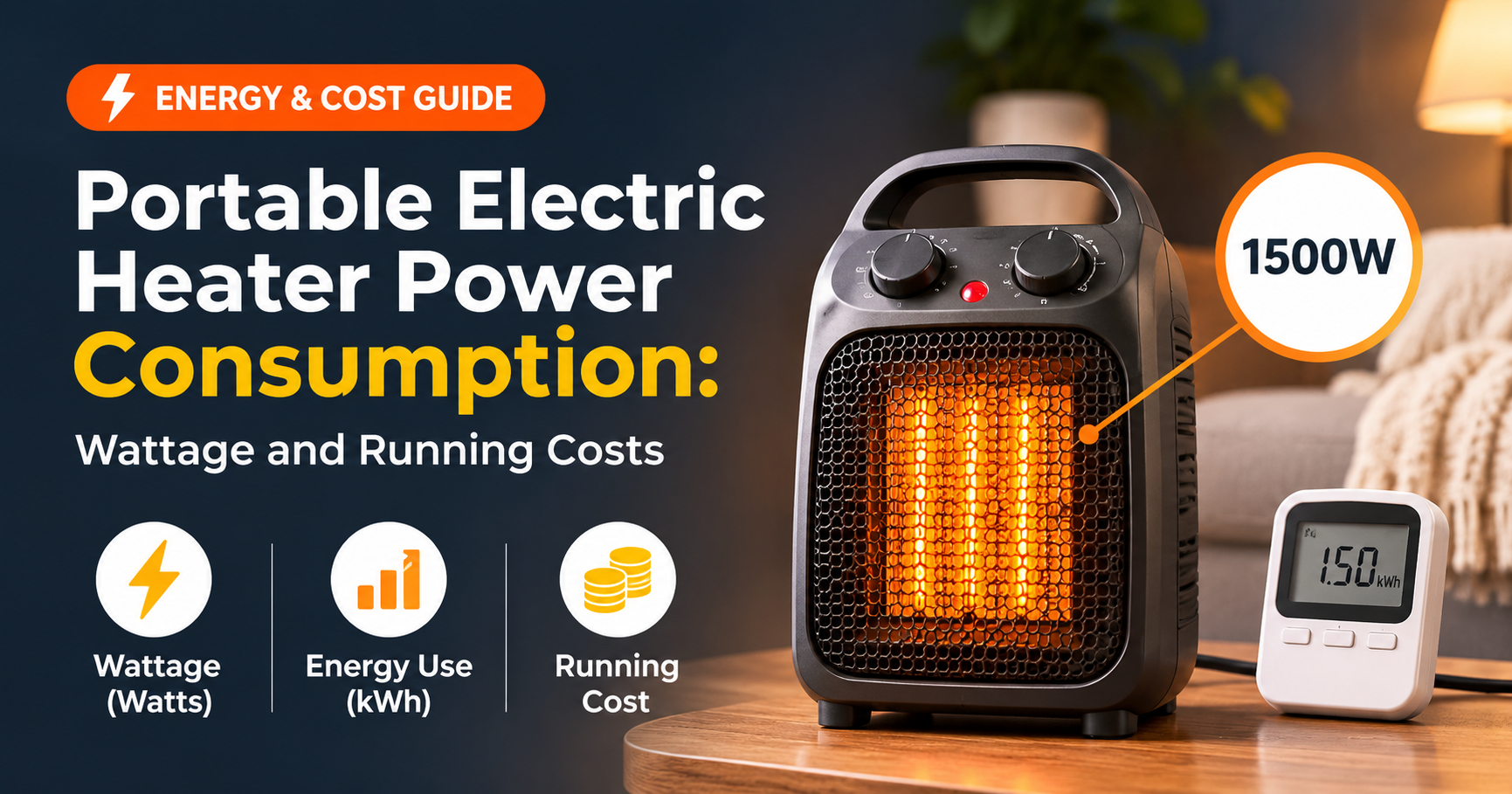
A watt is a unit of power. For an electric heater, it tells you how much electrical energy the heater converts into heat every second. A 500W heater turns 500 joules of electricity into heat each second, while a 1500W heater turns 1500 joules. Because almost all of the electricity that goes into a resistance heater ends up as heat in your room, the wattage is a very reliable guide to its heating capacity.
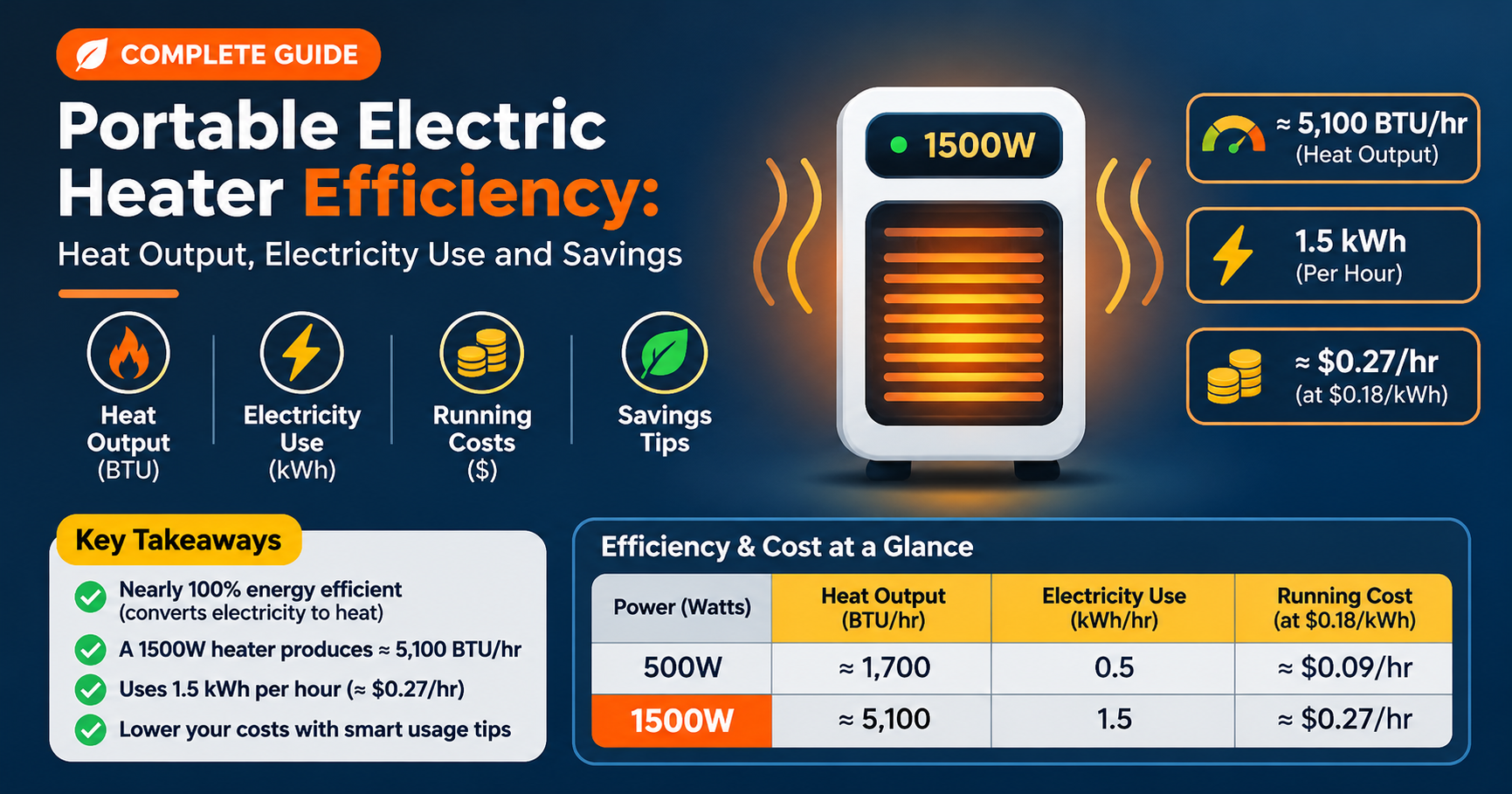
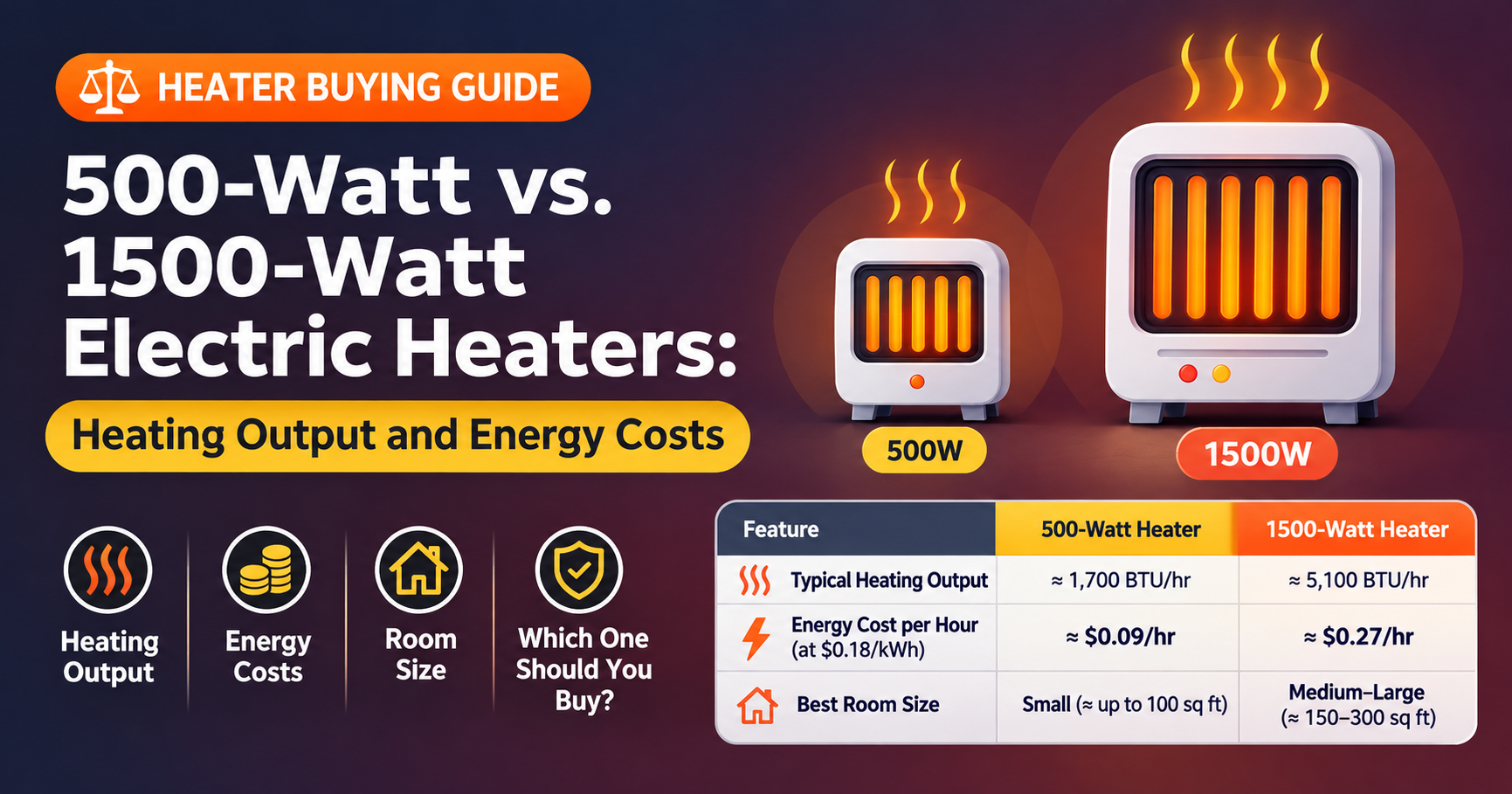
Heat output is often shown in BTU per hour. One watt equals about 3.412 BTU per hour, so:
- 500W is about 1,706 BTU/h
- 1500W is about 5,118 BTU/h
In simple terms, a 1500W heater delivers exactly three times as much heat as a 500W heater. It is not a cleverer or more efficient technology, just more power.
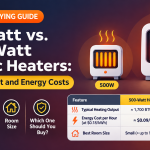
500W vs 1500W Electric Heater: Quick Comparison Table
| Feature | 500W Heater | 1500W Heater |
|---|---|---|
| Heat output | ≈ 1,706 BTU/h | ≈ 5,118 BTU/h |
| Best room size | Up to ≈ 50 sq ft (≈ 5 m²) | Up to ≈ 150 sq ft (≈ 14 m²) |
| Current draw at 120V | ≈ 4.2 amps | ≈ 12.5 amps |
| Current draw at 230V | ≈ 2.2 amps | ≈ 6.5 amps |
| Energy used per hour | 0.5 kWh | 1.5 kWh |
| Cost per hour (at $0.16/kWh) | ≈ $0.08 | ≈ $0.24 |
| Warm-up speed | Slow, best for nearby spot heating | Fast, can warm a whole room |
| Typical forms | Mini fan heaters, desk heaters, small panel heaters | Oil-filled radiators, ceramic tower heaters, convection panels, infrared heaters |
| Portability | Very compact and light | Larger and heavier |
| Ideal use | Personal, desk or bathroom heating | Bedroom, living room, home office |
Room Size: Which Heater Can Warm Your Space?
The most useful rule for sizing a heater is simple: you need about 10 watts of heating power for every square foot of floor area. This works for a standard 8 ft ceiling and average insulation. In metric terms, plan for about 100 watts per square meter.
Here is how that works out:
- A 500W heater suits about 50 sq ft, which is roughly a 7 × 7 ft space. That is a small closet-style room, a compact bathroom, or the area right around your desk.
- A 1500W heater suits about 150 sq ft, roughly a 12 × 12 ft room. That covers most small to medium bedrooms and home offices.
To calculate your own room, multiply length by width in feet, then multiply by 10. A 10 × 12 ft bedroom is 120 sq ft, so you need about 1,200 watts and a 1500W heater is the right pick. A 500W heater in that room would run constantly and still struggle to lift the temperature.
Things That Change the Numbers
- Insulation: Poorly insulated rooms, single-pane windows and drafty doors lose heat quickly and need more watts.
- Ceiling height: High ceilings mean more air to warm, so go a size up.
- Outdoor temperature: The colder it is outside, the harder the heater works.
- Floor level: Basements and ground-floor rooms with cold floors feel colder than upstairs rooms.
- Open doors: A heater cannot keep up if the room is open to a hallway or another large space.
Electricity Cost: Does a 1500W Heater Really Cost 3x More?
On an hourly basis, yes. A 1500W heater running at full power uses three times the electricity of a 500W heater. But that is only half the story, because the 1500W heater also gives you three times the heat.
Electric resistance heaters, including ceramic, oil-filled, infrared and convection types, convert nearly 100 percent of the electricity they use into heat. That means 500W and 1500W heaters have the same efficiency. If you need a certain amount of heat, the electricity you pay for is almost the same either way. The 1500W heater simply delivers it faster.
How to Calculate Running Cost
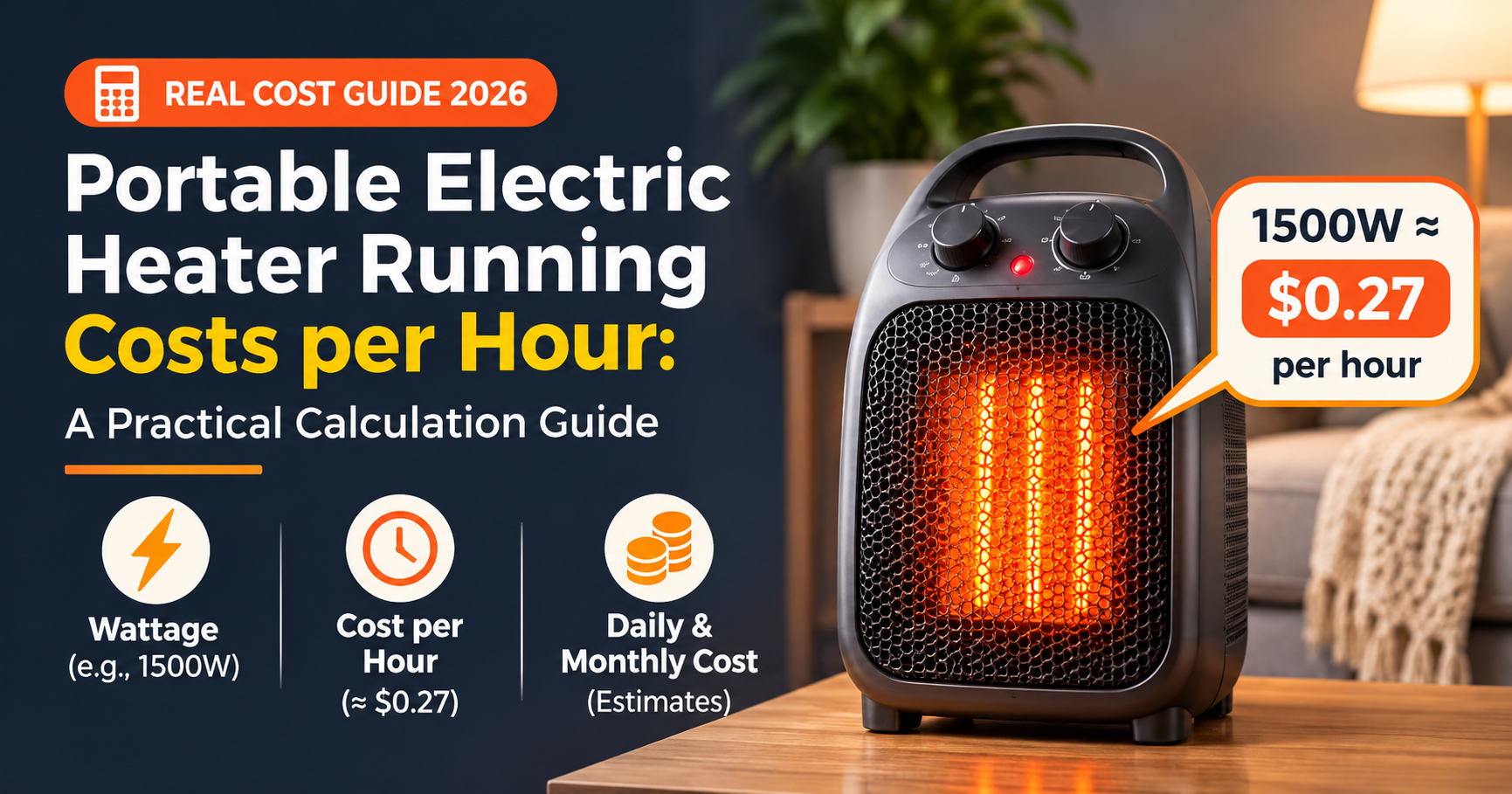
Use this simple formula:
(Watts ÷ 1000) × Hours Used × Price per kWh = Cost
Check your electricity bill for the price per kWh, because it varies a lot between countries and providers. The examples below use $0.16 per kWh purely for illustration.
| Usage | 500W Heater | 1500W Heater |
|---|---|---|
| 1 hour | $0.08 | $0.24 |
| 4 hours per day, 30 days | $9.60 | $28.80 |
| 8 hours per day, 30 days | $19.20 | $57.60 |
These are maximum figures, assuming the heater runs at full power the whole time. In real life, a heater with a thermostat switches off once the room reaches the set temperature, so a 1500W heater in a small room may only run half the time or less.
Why a Bigger Heater Is Not Always More Expensive
A 500W heater in a room that is too large will run non-stop and never reach a comfortable temperature, so you pay for electricity without feeling warm. A correctly sized 1500W heater heats the room quickly, then cycles off. The right size for your room is almost always the cheaper choice in practice.
Heating Speed and Comfort
A 1500W heater is clearly faster. In a room it suits, it can raise the temperature noticeably within 15 to 30 minutes. A 500W heater delivers only a third of the heat, so it takes much longer to warm a room, or it may never get there in a larger room.
That does not make a 500W heater a bad product. It works best as spot heating: warming you rather than the whole room. Placed under a desk or beside a chair, a small heater can keep your legs and feet warm using very little electricity. This is often the cheapest way to stay comfortable if you sit in one place for hours.
Noise matters too. Fan-forced heaters, which are common in the 500W class and in ceramic models, produce a steady hum. Oil-filled radiators and infrared panel heaters are almost silent, which is a big advantage in a bedroom or study.
Power Draw, Circuits and Wiring
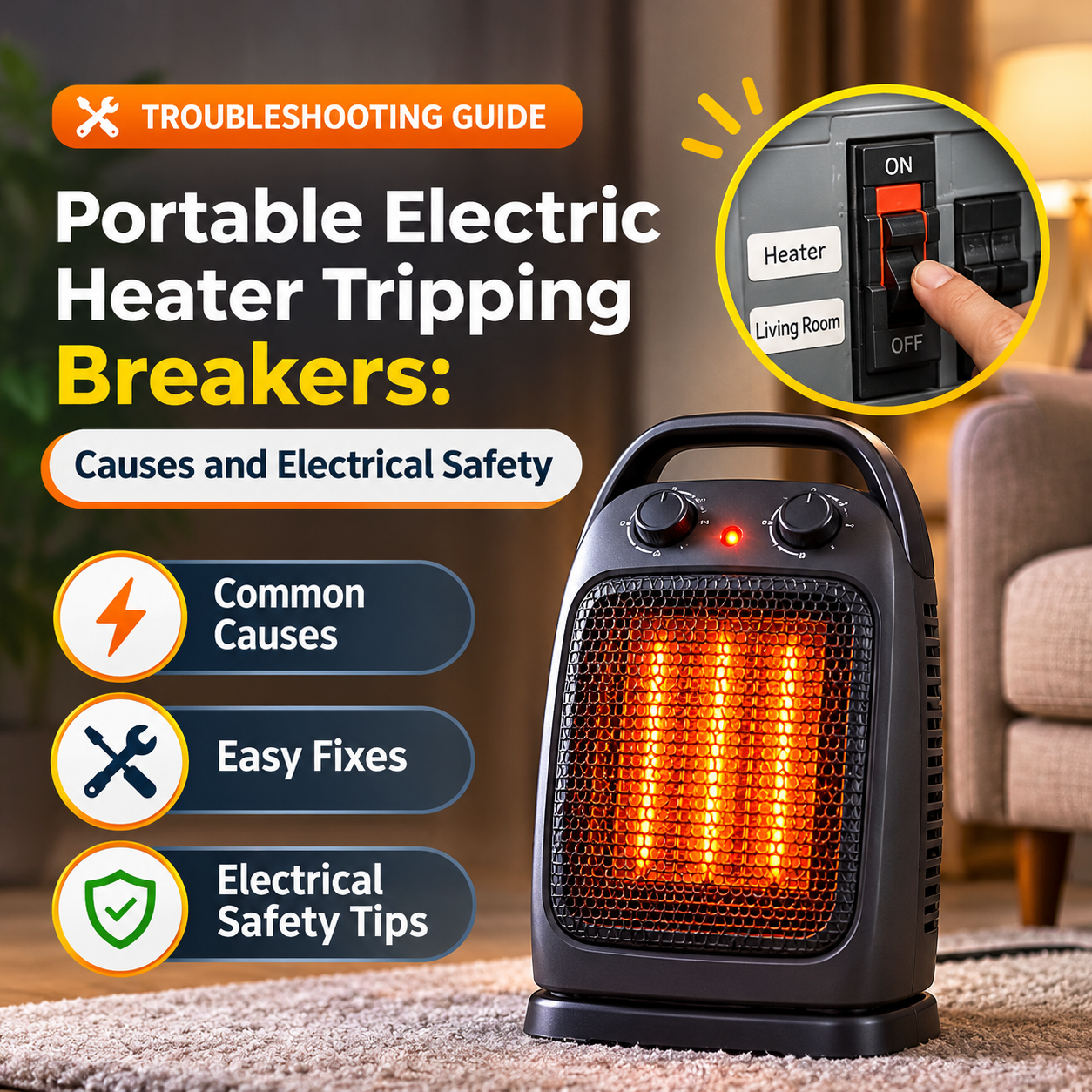
Electrical load is where the two heaters differ in an important practical way. In North America, a standard household circuit is rated at 15 amps and 120 volts. Safety guidelines recommend loading a circuit to no more than 80 percent for continuous use, which is 12 amps or about 1,440 watts. That is why most portable heaters top out at 1500W.
- A 500W heater draws about 4.2 amps at 120V, so it leaves plenty of room on a circuit for lights, a laptop and other small devices.
- A 1500W heater draws about 12.5 amps at 120V. Running it alongside a hair dryer, microwave, kettle or vacuum cleaner on the same circuit can trip the breaker.
In countries with a 220 to 240 volt supply, the same heaters draw much less current: roughly 2.2 amps for 500W and 6.5 amps for 1500W. Wiring and sockets are usually rated higher there, but the same sensible rules apply. Always plug a 1500W heater directly into a good-quality wall socket and avoid sharing the circuit with other heavy appliances.
Safety Tips for Using Electric Heaters
Portable heating equipment is among the leading causes of home fires, and almost all of those incidents come from avoidable mistakes. Whichever wattage you choose, follow these basics.
- Keep a 3 ft (1 meter) clear zone around the heater. Curtains, bedding, clothes, paper and furniture should stay well outside it.
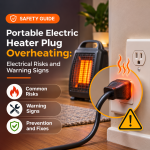
- Plug directly into a wall socket. Extension cords and power strips can overheat, especially with a 1500W heater.
- Place it on a flat, hard surface. Never put a heater on a bed, sofa, thick rug or unstable table.
- Turn it off when you leave the room or go to sleep unless the manufacturer clearly allows unattended use. A timer is a useful safeguard.
- Choose a heater with tip-over and overheat protection. These automatically cut the power if the heater falls or gets too hot.
- Look for recognized safety certification, such as UL, ETL, CE or an equivalent mark for your country.
- Check the cord and plug regularly. If the plug feels hot, discolored or loose, stop using the heater and have it checked.
- Keep it away from water unless it is specifically rated for bathroom use, and keep children and pets from touching it.
- Install working smoke and carbon monoxide alarms in the home, even though electric heaters do not burn fuel.
Types of Electric Heaters in 500W and 1500W
The wattage is only one part of the choice. The heater type changes how the warmth feels and how quickly it spreads.
Ceramic Fan Heaters
These use a ceramic heating element and a fan to blow warm air. They heat up fast, are light and affordable, and are common in both 500W mini versions and 1500W tower versions. The downside is fan noise and the fact that warmth fades quickly once the heater stops.
Oil-Filled Radiators
Sealed oil inside the radiator is heated and then releases warmth slowly, even after the element switches off. They are silent, steady and good for bedrooms. They take longer to start up and are heavier. Many models offer several power settings, with 1500W as the top level.
Infrared or Radiant Heaters
These heat objects and people directly instead of heating the air, so you feel the warmth almost instantly. They suit spot heating, garages and open areas, but you only feel the heat while you are in front of them.
Convection Panel Heaters
These warm the air as it rises through the panel and circulates around the room. They are slim, quiet and often wall-mountable, which makes them popular for bathrooms, offices and small bedrooms.
500W vs 1500W: Pros and Cons
| Pros | Cons | |
|---|---|---|
| 500W Heater | Low power draw and safe on almost any circuit Compact and easy to move Great for personal and under-desk heating Lower cost per hour |
Too weak for most full rooms Slow to warm a space Often runs non-stop in anything above a tiny room |
| 1500W Heater | Warms a whole room quickly Suits most bedrooms, offices and living rooms Many models include thermostat and multiple power settings Better for cold climates |
Higher hourly electricity cost Draws a lot of current on a shared circuit Bulkier and heavier Needs more care around safety |
Which One Should You Choose?
Choose a 500W Heater If:
- You want to warm yourself at a desk, workbench or favorite chair
- You need to heat a very small space such as a compact bathroom or storage room
- Your circuit is limited or shared with other devices
- You want a small, travel-friendly heater with a low running cost
Choose a 1500W Heater If:
- You want to heat a bedroom, home office or living room
- Your room is between about 60 and 150 sq ft
- You live in a cold climate or have a poorly insulated room
- You want the room warm quickly, then to let the thermostat maintain it
The Best of Both Worlds
If you are unsure, buy a 1500W heater with adjustable power settings and a thermostat. Most oil-filled and ceramic models let you drop to a low setting around 500W to 750W once the room is warm. You get fast heating when you need it and lower power use when you do not, all in one heater.
What to Check Before You Buy
- Room size: Multiply floor area by 10 to find the wattage you need.
- Adjustable thermostat: This keeps the room at a steady temperature and prevents wasted electricity.
- Multiple heat settings: Low, medium and high levels give you control over cost and comfort.
- Safety features: Tip-over switch, overheat protection and a cool-touch body are essential.
- Timer: Useful for bedrooms and for not leaving a heater on by mistake.
- Noise level: Choose oil-filled or panel heaters for quiet rooms.
- Portability: Look for a carry handle and wheels if you plan to move it between rooms.
- Warranty and certification: A recognized safety mark and a clear warranty are signs of a trustworthy product.
Tips to Save Electricity While Heating
- Close doors and windows, and block drafts with a towel or draft stopper.
- Heat only the room you are using instead of the whole home.
- Use the thermostat instead of running the heater at full power continuously.
- Use thick curtains at night to keep warmth in.
- Place the heater on an open section of floor away from walls for better air circulation.
- Wear warm clothing and use blankets so you can keep the thermostat lower.
- Use a timer to warm the room before you arrive or go to bed, rather than running it all day.
Frequently Asked Questions
Can a 500W heater warm a bedroom?
Only a very small one, up to about 50 sq ft. In a typical bedroom of 100 to 150 sq ft, a 500W heater will not be enough to raise the temperature noticeably. It works better for personal warmth near the bed or desk than for the whole room.
Does a 1500W heater use three times more electricity than a 500W heater?
At full power, yes, it uses 1.5 kWh per hour versus 0.5 kWh. But it also produces three times as much heat and, with a thermostat, switches off once the room is warm. The total electricity used for the same level of warmth is very similar.
Is a 1500W heater safe on a normal household circuit?
Yes, as long as it is plugged directly into a good wall socket and the circuit is not shared with other heavy appliances. On a 120V, 15 amp circuit a 1500W heater uses most of the safe continuous capacity, so avoid running anything else big on that circuit.
Which is cheaper to run, a 500W or 1500W heater?
A 500W heater costs less per hour, but if it cannot warm the room properly it runs longer and delivers poor comfort. A correctly sized heater is the cheaper choice in real use.
Can I use two 500W heaters instead of one 1500W heater?
Two 500W heaters give about 1000W of heat, which is less than one 1500W unit, and you would need two sockets. For the same money and effort, a single 1500W heater with adjustable settings is usually the better choice. Two small heaters can make sense if you want to warm two different spots.
Is it safe to leave an electric heater on overnight?
It is safest to switch the heater off before sleeping. If you must use one, choose a model with tip-over protection, overheat protection and a timer, keep it far away from bedding, and follow the manufacturer’s instructions. Oil-filled and panel heaters are generally considered the better options for bedrooms.
Which type of heater is best for a small room?
For a small room, an oil-filled radiator or a convection panel heater is a great choice thanks to quiet operation and steady warmth. A ceramic fan heater warms quickly and works well if you do not mind some noise.
Final Verdict: 500W or 1500W?
The choice between a 500 watt and a 1500 watt electric heater comes down to the size of the space you need to warm. The two heaters are equally efficient, so the real question is how much heat you need.
- For personal, desk-side or very small-space heating, a 500W heater is the cheap, safe and compact option.
- For a bedroom, living room or home office, a 1500W heater is the right tool: it heats the room quickly, then holds the temperature with far less effort.
- If you want flexibility, a 1500W heater with adjustable power levels and a thermostat covers almost every situation.
Measure your room, check your circuit, pick a heater with proper safety features, and you will stay warm without wasting electricity or taking risks.