


Portable Electric Heater for Bedroom: The Complete Buying Guide
Cold bedrooms make it hard to fall asleep, and they make getting out of bed in the morning even harder. Turning on your central heating for the whole house just to warm one room is expensive and wasteful. That is why a portable electric heater for bedroom use has become one of the most popular winter purchases: it warms only the space you are using, it plugs into any standard outlet, and you can move it wherever you need it.
But not every heater is right for a bedroom. A model that works well in a living room can be too loud for sleeping, too powerful for a small room, or missing key safety features. In this guide you will learn how to choose the right type, size, and features, how to use your heater safely, and what to expect from running costs, so you can buy with confidence.
Why Use a Portable Electric Heater in Your Bedroom?
- Targeted warmth: Heat only the room you are in instead of the whole home.
- Lower bills: Pairing a small heater with a lower central thermostat setting can reduce overall energy use.
- No installation: Just plug it in. No venting, fuel, or professional setup is needed.
- Portable: Move it to the bedroom, bathroom, or home office as needed.
- Clean operation: Electric heaters do not burn fuel, so they produce no carbon monoxide or combustion fumes in the room.
Types of Bedroom Heaters Explained
Four main types of electric heaters suit bedrooms. Each heats in a different way, so the best choice depends on your room size, noise tolerance, and how you plan to use it.
1. Ceramic Heaters
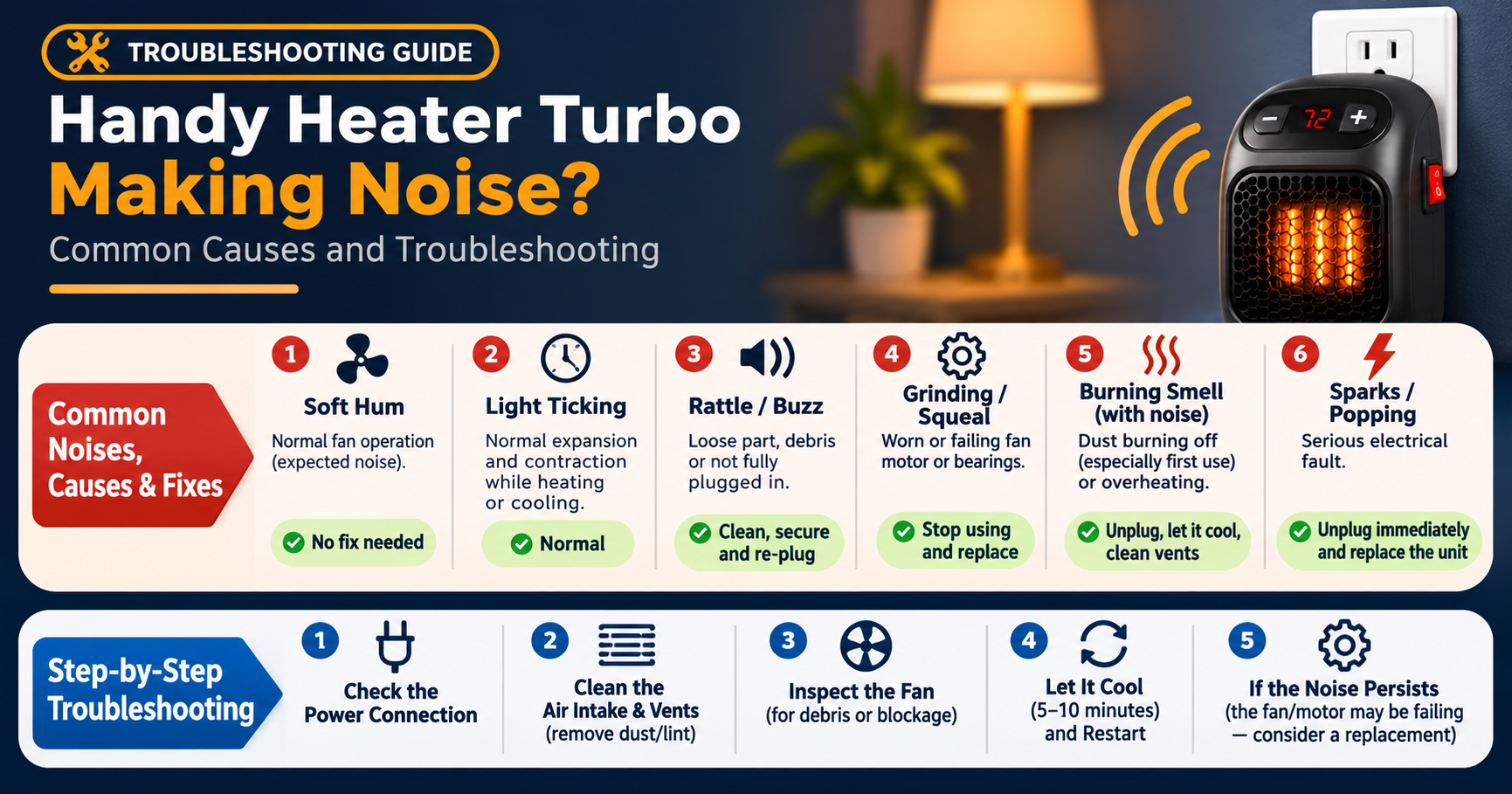
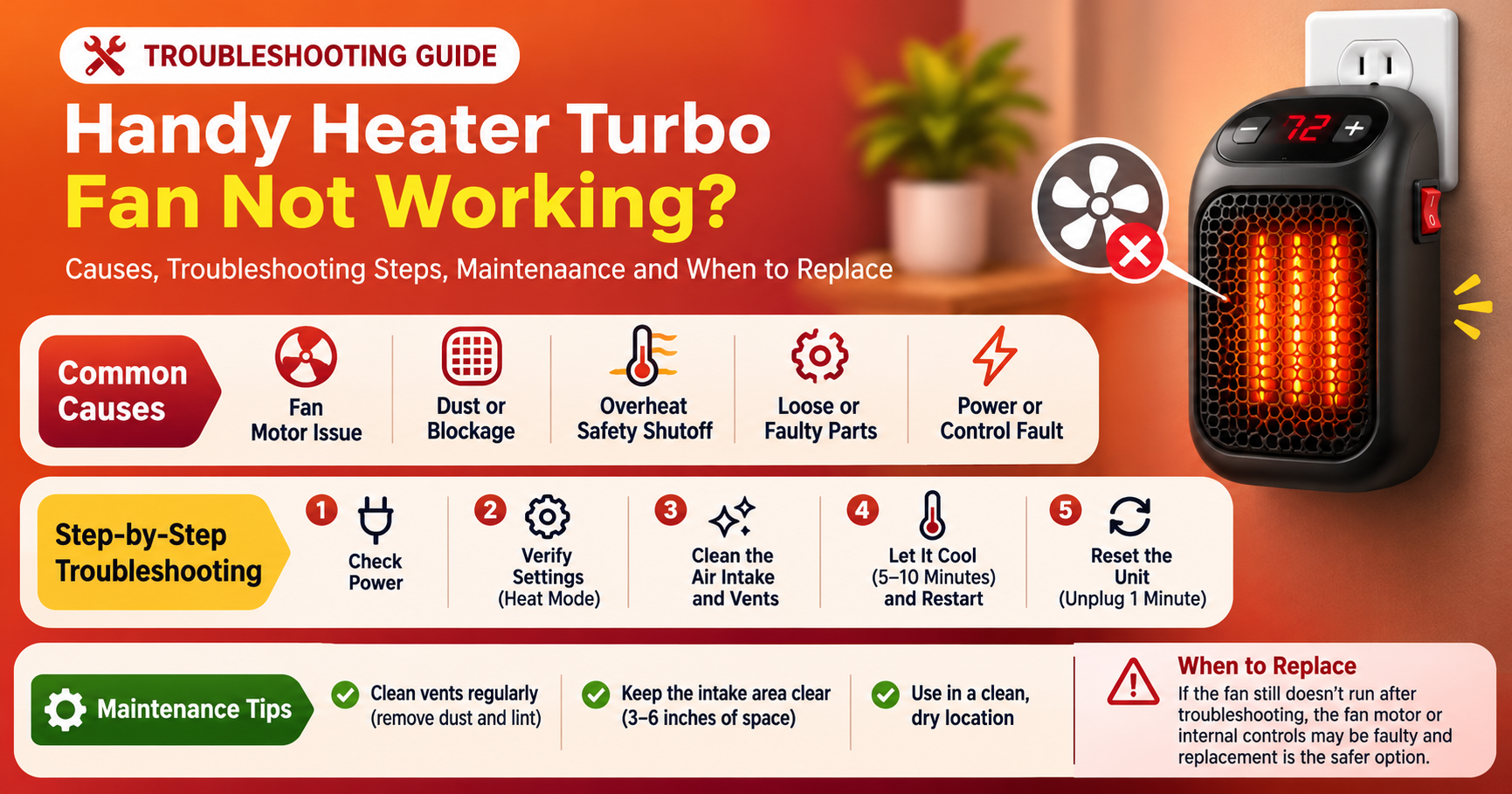
Ceramic heaters pass electricity through ceramic plates, and a fan blows warm air into the room. They heat up quickly, are lightweight, and are usually compact and affordable. The downside is fan noise, so look for models with a low or “sleep” mode if you are a light sleeper. They are ideal for small to medium bedrooms.
2. Oil-Filled Radiator Heaters
These heaters warm sealed oil, which then radiates heat steadily, even after the thermostat cycles off. They are completely silent and give soft, even warmth, which makes them a favorite for overnight use. They take longer to warm up and are heavier, but many have wheels for easy movement.
3. Infrared (Radiant) Heaters
Infrared heaters warm objects and people directly instead of heating the air. You feel the warmth almost instantly, and they run quietly. They work best when you are sitting or lying within their line of sight, such as near a bedside or desk, but they are less effective at raising the temperature of an entire room.
4. Convection Heaters
Convection models heat the air, which circulates through the room naturally or with a small fan. They provide even, whole-room warmth and suit larger bedrooms, though they warm up more slowly than ceramic or infrared units.
Quick Comparison Table
| Type | Heat-up Speed | Noise Level | Best For | Main Drawback |
|---|---|---|---|---|
| Ceramic | Fast | Low to medium (fan) | Small to medium rooms | Fan hum |
| Oil-filled | Slow | Silent | All-night, steady heat | Heavy, slow start |
| Infrared | Instant | Very quiet | Personal spot heating | Does not heat whole room |
| Convection | Medium | Low | Larger bedrooms | Slower warm-up |
How to Choose the Right Size and Wattage
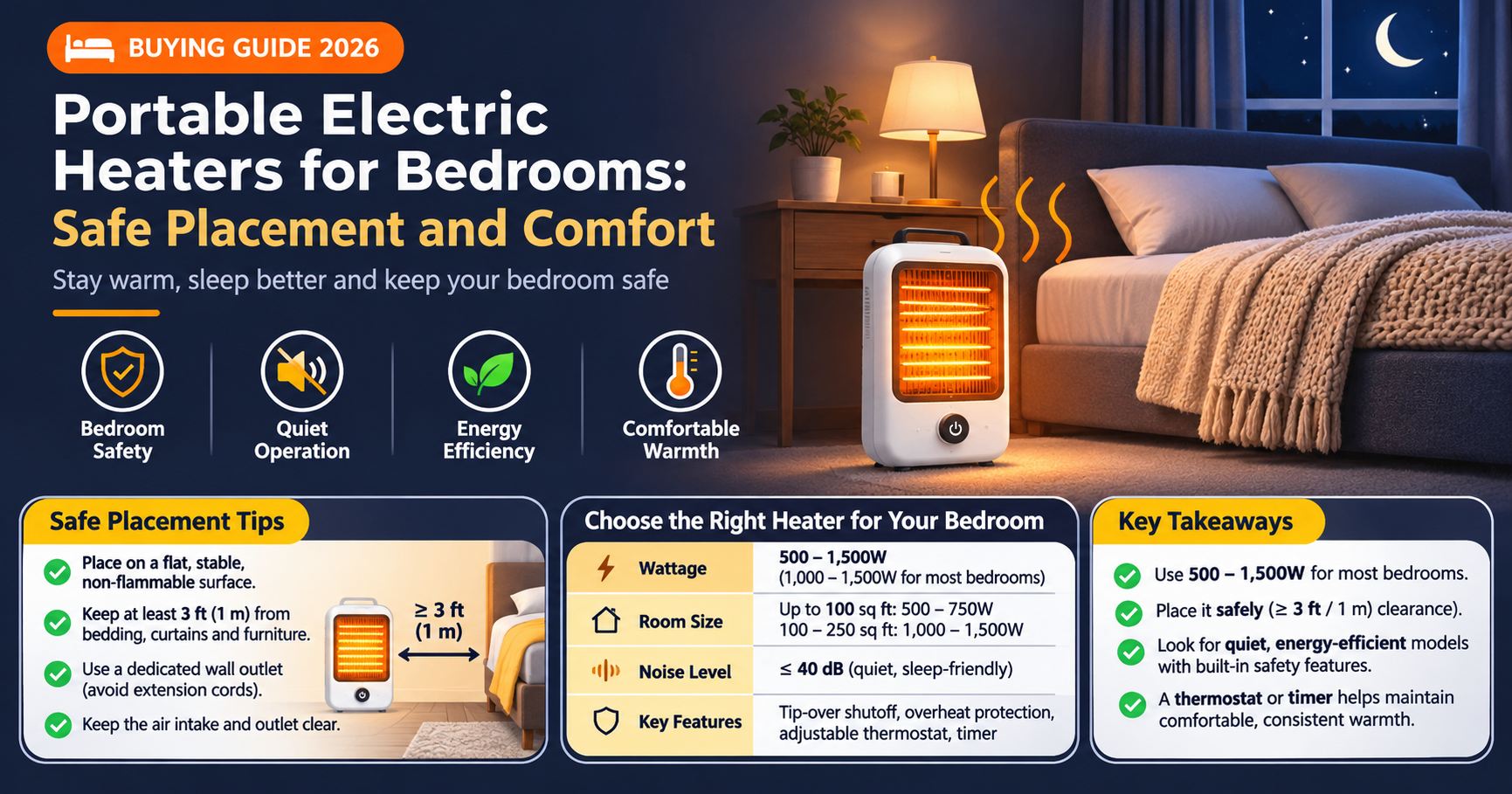
Choosing the correct wattage matters. Too weak, and the room never gets comfortable. Too strong, and you waste electricity and risk overheating the space. A simple rule is to allow about 10 watts of heating power for every square foot of floor area. Most standard portable heaters top out at 1,500 watts, which is the maximum a normal household outlet circuit is designed to handle comfortably.
To find your room size, multiply its length by its width. A bedroom that is 10 feet by 12 feet is 120 square feet, so a 1,500 W heater will cover it with ease. If your room has poor insulation, large windows, or very high ceilings, consider going up a size or choosing a model with an adjustable thermostat.
Must-Have Safety Features for Bedroom Use
Because you may use a heater while sleeping or resting, safety should be your first priority. Space heaters are a recognized cause of home heating fires when misused, so never compromise on these features:
- Tip-over protection: The heater shuts off automatically if knocked over.
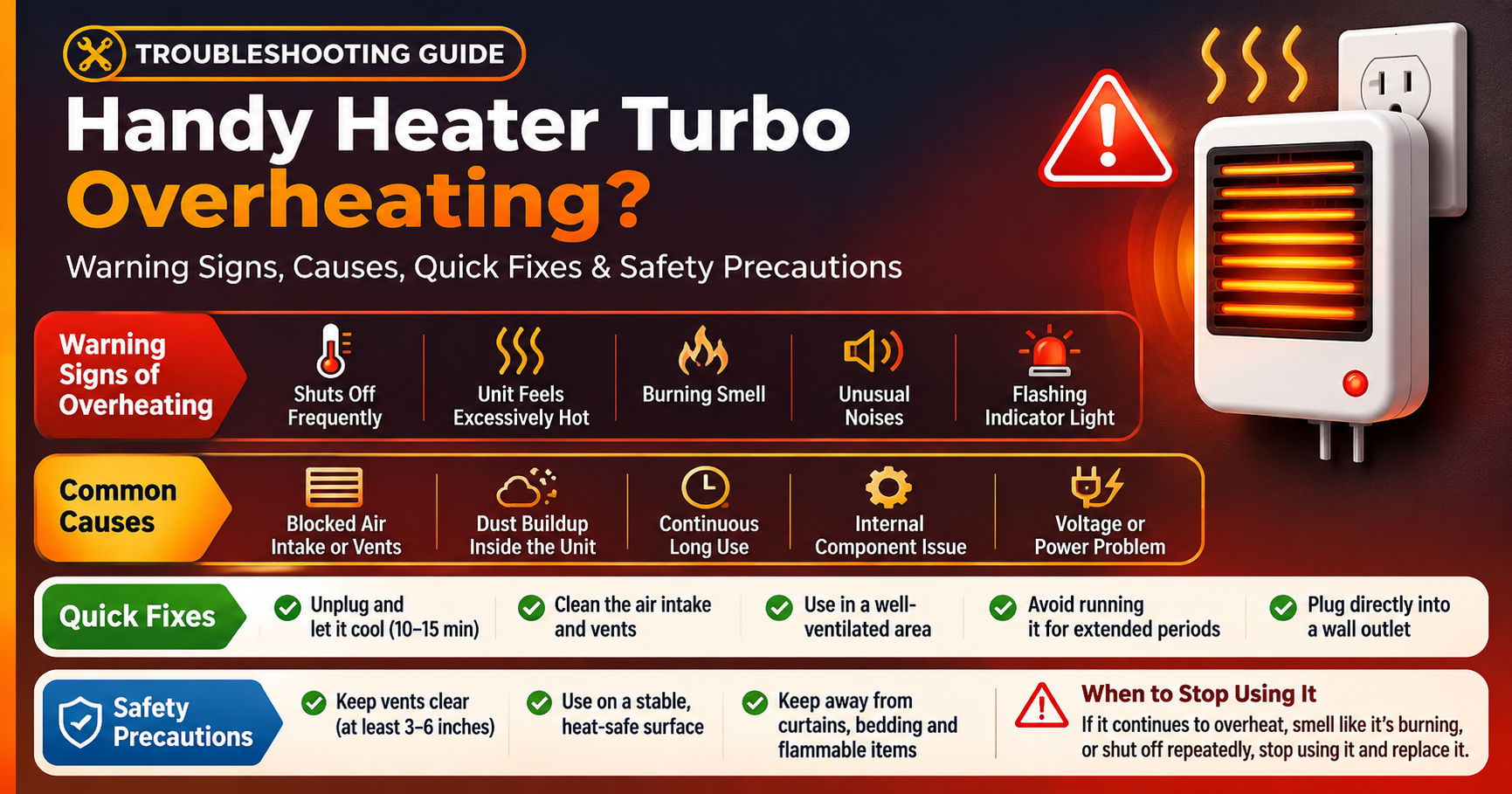
- Overheat protection: A sensor cuts power if internal temperatures get too high.
- Cool-touch exterior: Especially important for children and pets.
- Safety certification: Look for recognized marks such as UL, ETL, or CE on the product.
- Thermostat and timer: They keep the room at a steady temperature and switch the heater off automatically.
- Safe power cord: A thick, well-made cord and plug that stays cool during use.
Other Features Worth Considering
- Adjustable thermostat: Holds your preferred temperature without constant adjustments.
- Remote control: Lets you change settings from bed.
- Quiet or sleep mode: Reduces fan speed and display brightness at night.
- Oscillation: Spreads heat more evenly across the room.
- Eco mode: Adjusts power automatically to save energy.
- Dimmable display: Prevents bright lights from disturbing your sleep.
- Carry handle or wheels: Makes it easy to move and store.
How Much Does It Cost to Run?
A heater’s running cost depends on its wattage and your local electricity rate. A 1,500 W heater uses 1.5 kilowatt-hours (kWh) for every hour it runs at full power. If your electricity costs 0.15 per kWh, that is roughly 0.22 per hour at full power. Because thermostat-controlled heaters cycle on and off once the room is warm, real-world cost is usually lower than the maximum figure.
To keep costs down, close the bedroom door, use thick curtains, seal obvious drafts, and warm the room before bedtime instead of running the heater at full power all night.
Safe Usage Tips for Every Night
- Place the heater on a flat, hard surface, never on a bed, rug pile, or furniture.
- Keep it at least three feet away from bedding, curtains, clothing, and furniture.
- Plug it directly into a wall outlet. Avoid extension cords and power strips.
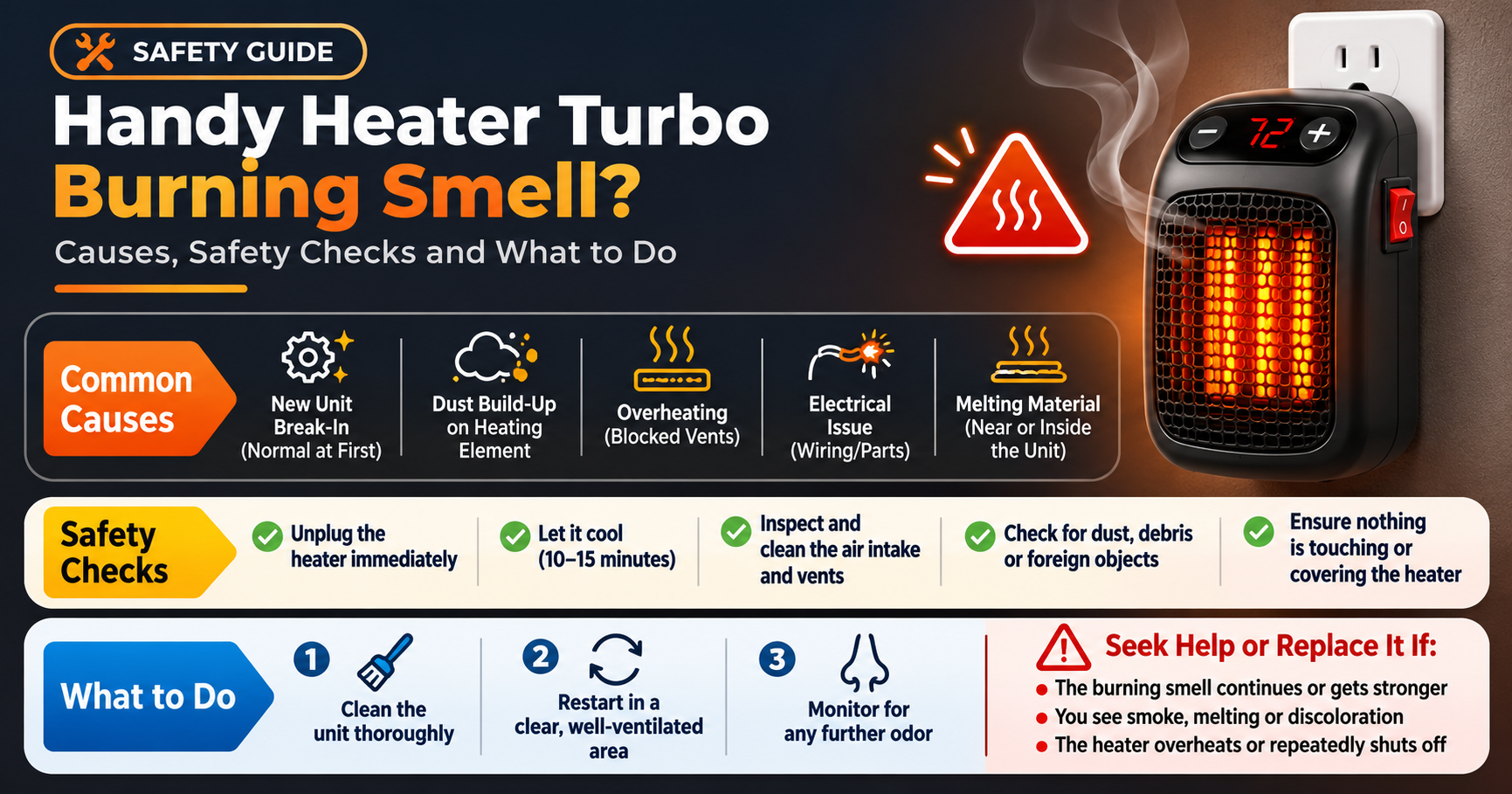
- Do not cover the heater or use it to dry clothes.
- Check the cord and plug regularly for damage or unusual warmth.
- Use a timer so the heater switches off after you fall asleep.
- Turn it off and unplug it when you leave the room or the house.
- Test your smoke alarms regularly.
Pros and Cons of Portable Bedroom Heaters
| Pros | Cons |
|---|---|
| Affordable and widely available | Can raise electricity bills if overused |
| Plug-and-play, no installation | Needs careful placement and supervision |
| Heats a single room quickly | Not designed to heat an entire home |
| Portable and easy to store | Fan models may produce noise |
| No combustion fumes | Can dry out the air slightly |
Frequently Asked Questions
Is it safe to leave a heater on all night in the bedroom?
Many safety experts advise against leaving any space heater running unattended while you sleep. If you do use one at night, choose a model with tip-over and overheat protection, a timer, and a certified safety mark, and keep it well away from anything flammable.
What is the quietest type of heater for sleeping?
Oil-filled radiators are generally the quietest because they have no fan. Infrared heaters are also very quiet.
What size heater do I need for a 150 sq ft bedroom?
A 1,500 W heater is usually sufficient for a room of about 150 square feet in normal conditions.
Do electric heaters dry out the air?
Electric heaters do not remove moisture, but warming the air lowers its relative humidity, so the room can feel drier. A small humidifier or a bowl of water can help.
Can I use an extension cord with my heater?
It is best to avoid them. Heaters draw high current, and a thin extension cord can overheat. Plug the heater directly into a wall outlet.
Are heaters with fans better than fanless ones?
Fan heaters warm a room faster, while fanless types such as oil-filled and infrared are quieter. Choose based on whether speed or silence matters more to you.
Final Thoughts
A portable electric heater for the bedroom is an efficient, flexible way to stay warm without heating your whole home. For silent, all-night comfort, an oil-filled radiator is hard to beat. For quick warmth in a small room, a ceramic model is a great fit. For bedside or desk warmth, infrared is a smart pick. Whatever you choose, match the wattage to your room size, insist on strong safety features, and follow safe-use habits every night. Do that, and you will enjoy a warm, cozy bedroom all winter long.