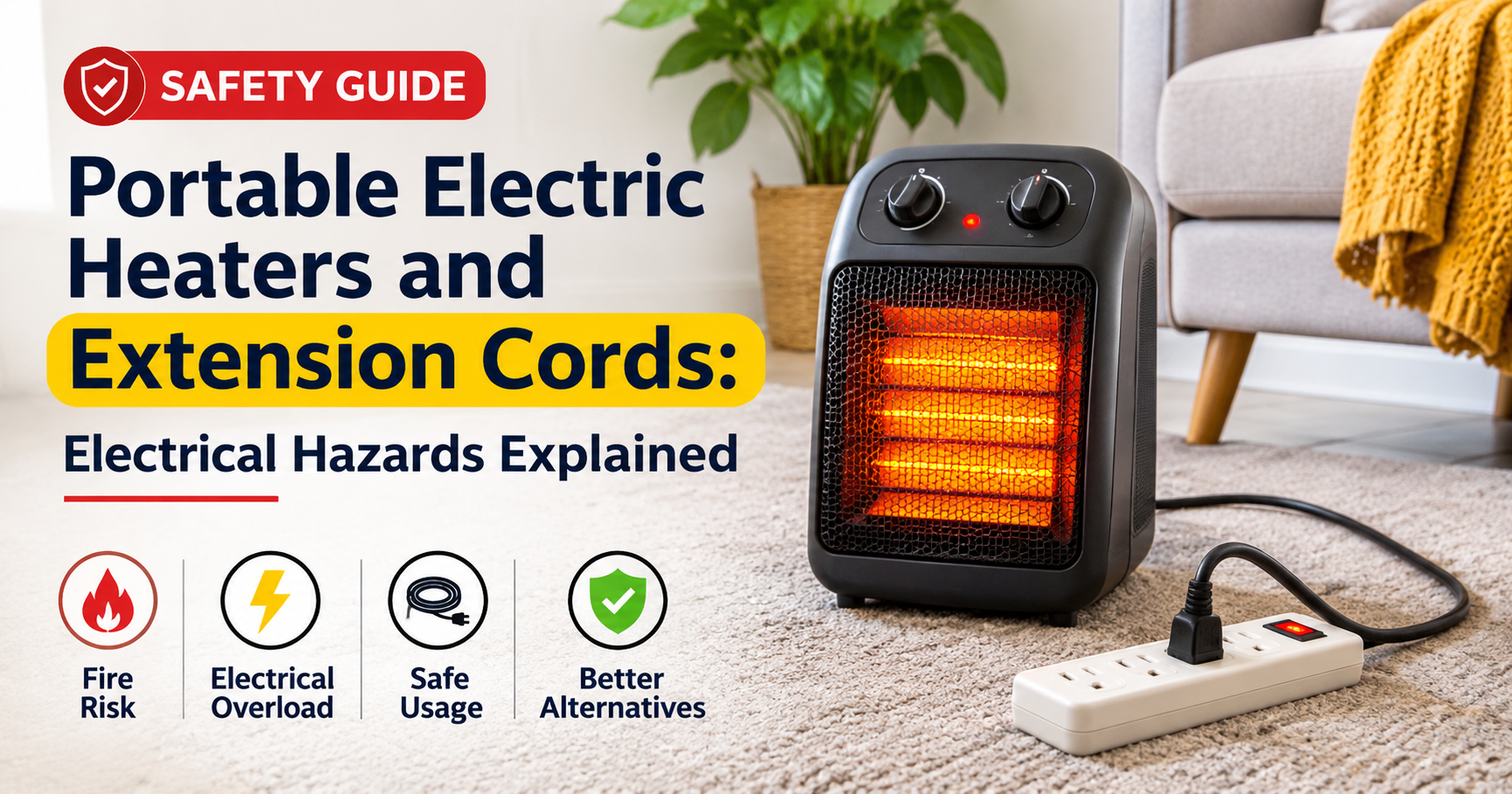

Cold weather arrives, the outlet is on the far side of the room, and an extension cord looks like the quick fix. It is one of the most common questions people ask about space heaters, and one of the most important. Portable electric heater extension cord safety is not a small detail. It is one of the main reasons a perfectly good heater turns into a fire hazard.
This guide explains why heaters and extension cords are a risky pairing, what the safest option is, how to choose a cord if you truly have no alternative, and the warning signs that mean you should unplug right away.
Quick Answer: Can You Use an Extension Cord With a Portable Electric Heater?
The short answer: avoid it whenever possible. Most heater manufacturers, fire-safety organizations and safety bodies advise plugging a portable electric heater directly into a wall outlet. Check your heater’s manual, because many state outright that extension cords and power strips must not be used, and using one may void your warranty.
If you have no alternative, a heavy-duty, properly rated, short extension cord is far safer than a thin, cheap or long one. But it is still a compromise, not a best practice.
Why Heaters and Extension Cords Are a Risky Combination
Most portable electric heaters are rated at 1,500 watts on their highest setting. On a standard 120-volt household circuit, that is roughly 12.5 amps flowing continuously. That is close to the limit of what an ordinary 15-amp circuit is designed to carry for long periods.
Compare that with other household devices:
- A phone charger draws a tiny fraction of an amp.
- A laptop draws roughly half an amp to a little over an amp.
- A television draws about one amp or less.
- A 1,500W space heater draws around 12.5 amps, for hours at a time.
Electricity flowing through any wire creates heat. A thick, short wire handles this easily. A thin, long or damaged wire resists the current, so it heats up. Plugs and connection points are the weakest spots, because loose contacts create resistance and hot spots. Over time, that heat can melt insulation and ignite nearby materials like carpet, curtains or furniture.
That is why heaters are not like most other appliances. They are high-wattage, long-running devices that put a continuous load on every link in the electrical chain, including the cord.
The Four Main Dangers
- Overheating wire: a cord with too thin a gauge cannot carry the load safely.
- Hot plugs and loose connections: the plug-to-plug connection of an extension cord adds one more place where resistance and heat can build up.
- Hidden damage: cords that are run under rugs or behind furniture can be pinched, crushed or worn without anyone noticing.
- Overloaded circuits: a heater plus other devices on the same circuit can trip the breaker, or worse, overheat wiring before it does.
The Safest Option: Plug Directly Into the Wall
The best solution is simple: plug the heater directly into a wall outlet, preferably one that is not shared with other high-power devices.
If the outlet is not conveniently placed, consider these alternatives before reaching for a cord:
- Move the heater to a spot near an outlet. Heaters warm the people nearest to them anyway, so moving it closer to where you sit often works just as well.
- Use a different outlet on a circuit with fewer devices running.
- Have an electrician install a new outlet if you regularly need heat in a spot that has none. This is the permanent, safe fix.
- Choose a heater with a long, factory-fitted power cable. Some models are designed with longer, heavy-gauge cords for this exact situation.
If You Absolutely Must Use an Extension Cord
Sometimes there is truly no alternative, for example a temporary setup in a workshop or garage. If so, treat the cord as a piece of safety equipment and choose it carefully.
1. Check the Wire Gauge (AWG)
Wire thickness is measured in AWG (American Wire Gauge), and a lower number means a thicker wire. For a 1,500W heater, a thick wire matters.

| Cord Gauge | Typical Use | Suitable for a 1,500W Heater? |
|---|---|---|
| 16 AWG | Lamps, small electronics | No. Too thin for sustained heater loads. |
| 14 AWG | Medium-duty tools, appliances | Marginal. Only for very short runs, and only if clearly rated for 15 amps. |
| 12 AWG | Heavy-duty tools, appliances | Best option if a cord is unavoidable. |
2. Keep It as Short as Possible
Longer cords mean more resistance and more heat. If you must use one, choose the shortest cord that reaches. Six feet or less is ideal, and anything long, such as 50 feet, is a poor choice for a heater.
3. Look for the Right Rating and Certification
- The cord should be rated for at least 15 amps (about 1,875 watts), and the label should say so clearly.
- Look for a UL, ETL, CSA or equivalent safety mark from a recognized testing laboratory.
- Choose a cord marked “heavy duty” with a thick outer jacket. Look at the markings on the cord itself, not just the packaging.
- Pick a grounded (three-prong) cord if your heater has a three-prong plug. Never remove the ground pin.
- For a garage, porch or any damp place, use a cord rated for outdoor use.
4. Use One Cord, Not Several
Never daisy-chain (connect one extension cord to another). Each connection adds resistance and another potential hot spot.
5. No Power Strips, No Surge Protectors
Power strips and surge protectors are built for low-power electronics, not for a continuous 12 to 13-amp load. Their internal components can overheat. Do not plug a space heater into one.
6. Give the Heater Its Own Circuit if Possible
A heater plus a microwave, kettle or hair dryer on the same circuit is a common reason for tripped breakers. Where you can, make sure the heater is the only major device on that circuit.

How to Set Up the Cord Safely
- Unplug the heater and inspect the heater’s own cable and plug for cracks, fraying or discoloration.
- Inspect the extension cord end to end. If the jacket is cracked or the prongs are bent, discard it.
- Uncoil the cord fully. A coiled cord traps heat.
- Connect firmly. The plugs should fit snugly with no wobble. A loose fit is a common cause of arcing and heat.
- Route it in plain sight. Keep it away from foot traffic to avoid tripping, and never run it under rugs, carpets or furniture.
- Keep clear space around the heater. Maintain at least three feet (about one meter) between the heater and anything flammable such as bedding, curtains or paper.
- Check on it. After 15 to 20 minutes of use, carefully feel the plug and cord. They should be at most slightly warm. If they feel hot, unplug immediately.
Warning Signs: When to Stop Using the Cord
Do not wait for smoke. Watch for these early signs and act immediately by switching the heater off and unplugging it (if safe to do so).

- The plug, cord or outlet feels hot or very warm to the touch.
- You notice a burning or melting plastic smell.
- The plug or outlet shows discoloration, scorch marks or melted plastic.
- The circuit breaker trips repeatedly, or lights flicker when the heater switches on.
- The heater’s plug feels loose in the cord or outlet.
If any of these occur, stop using that setup. Replace damaged cords, and have an electrician check the outlet and circuit before you use it again.
Other Portable Heater Safety Rules Worth Following
The cord is only one part of the picture. These habits go hand in hand with safe extension cord use:
- Choose a heater with modern safety features, including tip-over protection, overheat shut-off and a certification mark from a recognized lab.
- Place the heater on a flat, hard, level surface. Never on a bed, sofa or carpeted stack of items.
- Never leave a heater running while you sleep or when you leave the room or house.
- Keep children and pets away. Use a heater with a cool-touch exterior if you have little ones around.
- Never dry clothes or towels on or over a heater.
- Keep it away from water. In bathrooms, use only heaters specifically rated for that environment, and keep them well away from sinks and tubs.
- Have working smoke alarms and carbon monoxide detectors and test them monthly. This matters even more if you use fuel-burning heaters elsewhere in the home.
- Make sure your home wiring is in good shape. Older homes with outdated wiring are more vulnerable to overload.
What to Look for When Buying a Heater (and Cord)
If you are shopping for a new heater, a few features make life safer and simpler:
- Built-in safety shut-offs: automatic tip-over and overheat protection are essential.
- A long, factory-fitted, heavy-gauge power cord that reduces the need for any extension at all.
- Adjustable thermostat and timer: they reduce the time the heater runs at full load, which reduces stress on the electrical chain.
- Lower-wattage settings: a heater with 750W and 1,500W options lets you heat a small room using less power.
- A recognized safety certification mark on both the heater and its plug.
If you do need a cord, look for a short, heavy-duty 12-gauge, 15-amp-rated, certified extension cord with a thick jacket and a molded plug. Avoid unbranded, unmarked cords that make rating claims without any lab certification.
A Note About Different Voltages
The figures in this article use a standard 120-volt supply, common in North America. In countries with a 220 to 240-volt supply, the same 1,500W heater draws much less current (roughly 6 to 7 amps), but the safety principles remain exactly the same: avoid cords where possible, use a short, properly rated, certified cord if you must, and never use power strips, daisy chains or damaged cables. Always follow your heater’s manual and local electrical standards.
Frequently Asked Questions
Is it ever safe to use an extension cord with a space heater?
It is never as safe as plugging directly into the wall. If there is no alternative, a short, certified, heavy-duty 12-gauge cord rated for at least 15 amps is the least risky option. Always check your heater’s manual first, since many manufacturers prohibit extension cords.
What gauge extension cord do I need for a 1,500W heater?
12 AWG is the best choice. 14 AWG may be acceptable only for very short runs if it is clearly rated for 15 amps. Avoid 16 AWG cords completely.
Can I use a power strip or surge protector with a portable heater?
No. Power strips and surge protectors are designed for low-power devices and can overheat under a heater’s sustained load.
Why does my extension cord get hot when I use a heater?
Heat means the cord is struggling with the load. It may be too thin, too long, damaged or poorly connected. Unplug the heater and stop using that cord.
How long can an extension cord be for a heater?
As short as possible. Six feet or less is ideal. Longer cords increase resistance and heat, so avoid them with high-wattage heaters.
Can I leave a heater plugged into an extension cord overnight?
No. You should never leave a portable heater running while you sleep or when nobody is around, regardless of whether it is plugged into a wall or a cord.
Does a lower-wattage heater make extension cords safer?
Lower wattage does reduce the load and the heat produced, but the same precautions still apply. Always use a certified, properly rated cord and follow your heater’s manual.
Final Thoughts
Portable electric heaters are a cozy, convenient way to take the chill off a room, but they are among the highest-draw appliances in a home, and they ask a lot of the cord that powers them. The golden rule of portable electric heater extension cord safety is simple: plug directly into the wall whenever you can.
If you cannot, use a short, heavy-duty 12-gauge, 15-amp-rated, certified cord. Never use power strips or daisy chains, keep the cord visible and uncoiled, and check the plug for warmth. A few minutes of careful setup can protect your home and the people in it all winter long.
Disclaimer: This article is for general information only and is not a substitute for professional electrical advice. Always follow the manufacturer’s instructions for your specific heater and consult a licensed electrician about wiring or outlet concerns.