







When the temperature drops, the first question most people ask is simple: should I buy a portable electric heater or an oil-filled radiator? Both plug into a normal wall socket, both need no installation, and both can turn a cold room into a comfortable one. Yet they behave very differently once you switch them on.
A portable electric heater (usually a fan heater or ceramic heater) gives you fast warmth in minutes. An oil-filled radiator warms up slowly, but it keeps releasing gentle heat long after the element has switched off. Choosing the wrong one can mean a noisy bedroom, a room that never feels warm enough, or an electricity bill higher than you expected.
In this complete guide, we compare the two heater types on heating speed, heat retention, running cost, noise, safety, air quality, portability and room size, so you can pick the right heater with confidence.
Quick Answer
- Choose a portable electric heater if you want instant heat, a lightweight unit you can carry from room to room, and a lower purchase price.
- Choose an oil-filled radiator if you want quiet, steady, long-lasting warmth for a bedroom, nursery, home office or any room you heat for many hours.
What Is a Portable Electric Heater?
A portable electric heater is a compact, plug-in appliance that converts electricity into heat and pushes it into the room. The term covers several designs:
Fan Heaters
A fan heater passes air across a hot element and blows the warmed air out. It is the cheapest and most common type, and it heats the air in front of it almost immediately. The trade-off is fan noise and heat that disappears quickly once you turn it off.
Ceramic Heaters
Ceramic heaters use a ceramic heating element, often with a built-in fan. They heat up quickly, usually have better thermostat control than basic fan heaters and often include oscillation, timers and remote controls.
Infrared (Radiant) Heaters
Infrared heaters warm people and objects directly rather than the air. They feel warm the moment you sit in front of them, which makes them useful for small, draughty spaces or personal warmth at a desk.

What Is an Oil-Filled Radiator?
An oil-filled radiator looks like a traditional home radiator on wheels. Inside its metal fins is a sealed reservoir of thermal oil. An electric element at the base heats the oil, the hot oil circulates through the fins, and the metal surface releases heat into the room by convection and radiation.
The oil is never burned or used up. It simply acts as a heat store, which is why the radiator stays warm for a long time after you switch it off. Because there is no fan, an oil-filled radiator is almost silent.
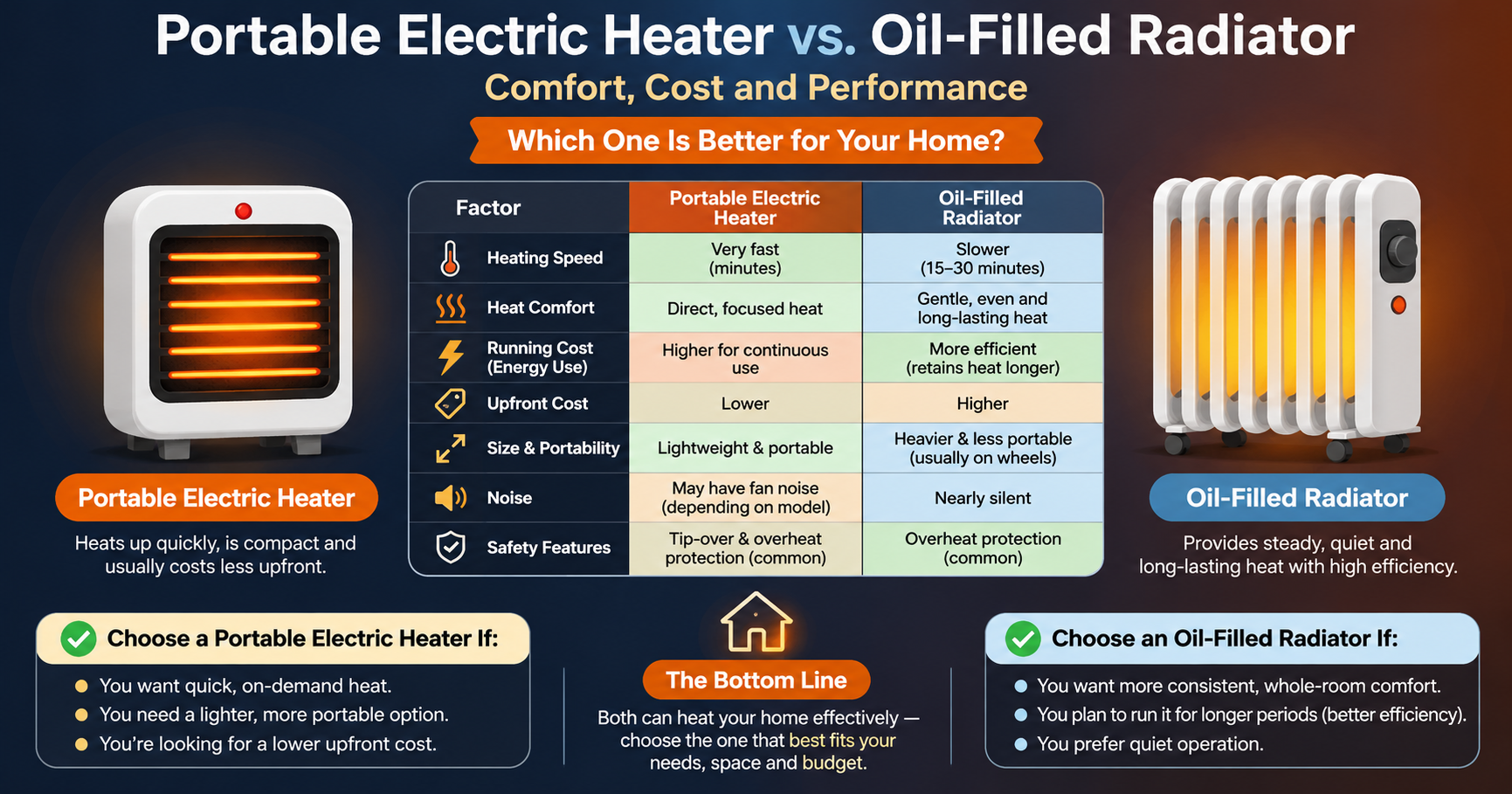
Portable Electric Heater vs Oil-Filled Radiator: Side-by-Side Comparison
| Feature | Portable Electric Heater | Oil-Filled Radiator |
|---|---|---|
| Heating speed | Very fast, noticeable within minutes | Slow, takes 15 to 30 minutes to feel the full effect |
| Heat retention | Poor, cools quickly after switch-off | Excellent, stays warm long after switch-off |
| Noise level | Fan noise (quiet to moderate) | Nearly silent |
| Type of warmth | Direct, focused blast of heat | Gentle, even, room-wide warmth |
| Weight and portability | Light and compact | Heavier, usually on wheels |
| Surface temperature | Housing is usually cool, outlet air is hot | Fins get very warm and can cause burns |
| Best for | Short, quick heating sessions and small spaces | Long hours, bedrooms and constant comfort |
| Purchase price | Generally lower | Generally higher |
Heating Speed: Which Warms the Room Faster?
If speed is your priority, a portable electric heater wins easily. A fan or ceramic heater pushes hot air into the room straight away, so you feel warmth within a couple of minutes. That makes it ideal for a cold bathroom in the morning, a chilly office desk or a quick top-up before a guest arrives.
An oil-filled radiator needs time to heat its internal oil before the fins reach a useful temperature. Expect to wait roughly 15 to 30 minutes before the room feels properly warmer. Once it gets there, however, the warmth is smooth and steady, and it does not come with the dry blast of moving air that a fan heater produces.
Heat Retention and Comfort
This is where the oil-filled radiator shines. The heated oil and metal fins hold a large amount of thermal energy, so the unit keeps radiating heat after the thermostat cuts the power. The room avoids the constant “hot, cold, hot” feeling that some fan heaters create.
A fan heater stops producing warmth the moment it switches off. In a poorly insulated room, the temperature can fall again within minutes. For all-night bedroom heating or a home office used for eight hours, the stable comfort of an oil-filled radiator is hard to beat.
Running Cost and Energy Efficiency
Here is a fact many buyers do not know: both heater types convert almost all the electricity they use into heat. A 1500 watt fan heater and a 1500 watt oil-filled radiator will use the same amount of electricity per hour when both are running at full power. Neither is magically “more efficient” at turning power into heat.
The real difference lies in how each one delivers and controls that heat. Use this simple formula to estimate your cost:
Running cost = Power (kW) × Hours used × Electricity price per unit
For example, a 1.5 kW heater running for 8 hours uses 12 units (kWh) of electricity. At a price of 10 per unit, that is a cost of 120 for the session if the heater runs at full power the whole time.
An oil-filled radiator with a good thermostat usually saves money in longer sessions. Once the room reaches the target temperature, the element switches off, but the hot oil keeps radiating warmth, so the unit spends a lot of its time drawing little or no power. A fan heater with a thermostat can also cycle on and off, but because it has no stored heat, it usually has to restart sooner.
Bottom line on cost: for short bursts, a fan or ceramic heater is perfectly economical. For long hours of steady heating, an oil-filled radiator with an adjustable thermostat often gives the more comfortable experience for the same energy use.
Noise Level
Because an oil-filled radiator has no fan, it makes almost no sound apart from an occasional soft click as the thermostat switches or the metal expands. That makes it the better choice for bedrooms, nurseries, study rooms and TV rooms.
Portable electric heaters with fans produce a constant hum or whoosh. Many modern ceramic models have a quiet mode, but they still cannot match the silence of an oil-filled unit.
Safety: Which Heater Is Safer?
Both heater types are safe when you choose a quality product and use it correctly. The main safety considerations differ:
- Tip-over protection: Look for an automatic shut-off if the unit falls. Portable fan heaters are lighter and easier to knock over, so this feature is essential. Oil-filled radiators are heavy and stable.
- Overheat protection: Both types should have a built-in cut-out that switches the heater off if it gets too hot.
- Surface temperature: The fins of an oil-filled radiator can become hot enough to burn skin on contact, so keep children and pets away. Fan heaters often have cooler casings, but the grille and outlet air can still be very hot.
- Covering the heater: Never drape clothes, towels or blankets over either type. Doing so blocks heat and can cause overheating or fire.
- Power supply: Plug directly into a wall socket. Avoid extension cords and multi-plug adapters, as heaters draw a high current.
Air Quality and Dryness
Neither heater burns fuel, so neither one uses up oxygen or releases combustion gases into the room. Both are suitable for indoor use when used as directed.
Fan heaters move air around, which can stir up dust and sometimes produces a faint burnt-dust smell when first used after months in storage. Oil-filled radiators do not blow air, so they stir up less dust and are often more comfortable for people sensitive to dry air. Keeping a small bowl of water or a humidifier nearby helps with dryness in either case.
Portability and Storage
A portable electric heater lives up to its name. Most models weigh only a few kilograms, include a carry handle and slip into a cupboard in summer. You can easily take one from the living room to the bathroom.
An oil-filled radiator is much heavier because of the oil and metal fins. Most come with wheels and a cord-wrap, so moving them across a floor is easy, but carrying one upstairs is a chore. They also take up more floor space and are better suited to a permanent spot in one room.
Which One Suits Your Room Size?
A common rule of thumb is about 10 watts of heating power per square foot (roughly 100 watts per square metre) in a normally insulated room. Poor insulation, high ceilings or very cold weather mean you will need more power.
| Room Size | Approximate Power Needed | Suggested Choice |
|---|---|---|
| Up to 100 sq ft (about 9 sq m) | 750 to 1000 W | Small ceramic heater or compact oil-filled radiator |
| 100 to 150 sq ft (about 9 to 14 sq m) | 1000 to 1500 W | Oil-filled radiator for bedrooms, ceramic heater for quick warmth |
| 150 to 250 sq ft (about 14 to 23 sq m) | 1500 to 2500 W | Higher-wattage oil-filled radiator or a powerful ceramic heater |
| Above 250 sq ft (above 23 sq m) | 2500 W or more | Consider two heaters or a different heating solution |

Pros and Cons at a Glance
Portable Electric Heater
Pros
- Heats up and warms you within minutes
- Lightweight, compact and easy to carry
- Usually cheaper to buy
- Often includes oscillation, timer and remote control
Cons
- Fan noise can be distracting
- Heat disappears as soon as you switch off
- Can stir dust and dry the air
- Lighter body can be knocked over more easily
Oil-Filled Radiator
Pros
- Near-silent operation
- Steady, even warmth that lingers after switch-off
- Great for overnight and long-hour use
- Stable body and no moving air
Cons
- Slow to warm up
- Heavy and bulkier to store
- Fins get hot and need space around them
- Usually costs more upfront
Which Heater Should You Buy? Match by Situation
- Bedroom or nursery: Oil-filled radiator, for silent, steady warmth through the night.
- Home office or study: Oil-filled radiator for all-day comfort, or a quiet ceramic heater for a small desk area.
- Bathroom or small utility space (short use): Portable ceramic heater, for fast warmth, as long as it is rated for the space and kept away from water.
- Living room with irregular use: Ceramic heater for quick warmth, or an oil-filled radiator if the room is used for hours.
- Renters and travellers: Portable electric heater, because it is light and easy to move or pack away.
- Elderly family members: Oil-filled radiator, for gentle, consistent warmth and no airflow, with a guard or safe placement away from walkways.
Buying Guide: Features to Check Before You Buy
- Wattage: Match power to your room size using the table above. More watts means faster heating and higher consumption.
- Adjustable thermostat: Lets the heater hold a set temperature and switch off automatically, which helps control running costs.
- Multiple power settings: Heat settings such as low, medium and high give you flexibility.
- Timer: Helpful for switching the heater off after you fall asleep or on automatically before you wake.
- Tip-over switch and overheat cut-out: These safety features should be non-negotiable.
- Wheels, handle and cord storage: Especially important for heavier oil-filled radiators.
- Safety certification and warranty: Choose a model with recognised safety marks from a reputable brand, and check the warranty length.
- Noise rating or quiet mode: Important for bedrooms and offices.
Common Myths About Electric Heaters
Myth 1: Oil-filled radiators use less electricity than fan heaters.
At the same wattage, both use the same power when running. Savings come from thermostat control and stored heat, not from a lower power draw.
Myth 2: The oil in a radiator needs refilling.
The oil is sealed inside permanently and is never consumed. Do not try to open the unit.
Myth 3: Electric heaters remove oxygen from the room.
Electric heaters do not burn fuel, so they do not consume oxygen. A feeling of stuffiness usually comes from dry air or poor ventilation, so open a window briefly from time to time.
Myth 4: A higher wattage always means a better heater.
Too much power in a small room leads to constant switching and wasted comfort. Choose the wattage that suits your space.
Tips for Using Your Heater Safely and Efficiently
- Place the heater on a flat, hard surface, at least one metre away from curtains, bedding, sofas and other flammable items.
- Close doors and windows to keep the warmth in the room you are heating.
- Use the thermostat instead of leaving the heater on maximum all the time.
- Do not leave a heater running while you are out of the house or asleep without a working thermostat and safety cut-out.
- Keep the vents and fins clean and dust-free, and inspect the cord and plug regularly.
- Never use a heater in a wet area, and never touch it with wet hands.
- Switch off and unplug the unit before moving or cleaning it.
Frequently Asked Questions
Is an oil-filled radiator better than a portable electric heater?
It depends on how you plan to use it. An oil-filled radiator is better for quiet, long-lasting, steady heat. A portable electric heater is better for fast warmth and easy portability.
Which is cheaper to run: a fan heater or an oil-filled radiator?
At the same wattage, they draw the same power when active. Oil-filled radiators often cost less over long sessions because the thermostat cycles the element off while the oil keeps radiating heat. Fan heaters are economical for short bursts.
Can I leave an oil-filled radiator on all night?
Many people use them overnight, and a good one with a thermostat, tip-over switch and overheat protection is designed for this. Always follow the manufacturer’s instructions, keep it clear of bedding and curtains, and never cover it.
How long does an oil-filled radiator take to heat a room?
Usually between 15 and 30 minutes to feel a clear difference, and longer for large or cold rooms. Switching it on a little before you need the warmth helps.
Are portable electric heaters safe to use in a bedroom?
Yes, if the model has a tip-over switch, overheat protection and a thermostat, and you place it away from bedding. Bedroom users often prefer oil-filled radiators because they are quieter and have no moving air.
Which heater is better for a baby or nursery?
An oil-filled radiator is a popular choice because of its silent operation and gentle heat. Keep it well out of reach, because the fins can become hot enough to burn skin, and keep the room at a comfortable, not overheated, temperature.
Do electric heaters dry out the air?
Heating air lowers its relative humidity, so any heater can make a room feel drier. Fan heaters can feel drier because of the airflow. A humidifier or a bowl of water in the room can help.
Final Verdict: Portable Electric Heater or Oil-Filled Radiator?
There is no single winner, because the two heaters solve different problems.
Go for a portable electric heater if you need fast warmth, a low price and a light unit that moves easily from room to room. It is the practical choice for quick heating, small spaces and occasional use.
Go for an oil-filled radiator if you want comfortable, silent and steady heat for hours at a time. It is the better choice for bedrooms, nurseries, home offices and anyone who values peace and consistent warmth over speed.
If you can afford both, many households use a ceramic heater for instant warmth and an oil-filled radiator for long-term comfort. Whichever you choose, check the wattage, thermostat and safety features, and match the heater to your room size for the best results this winter.
Ready to Choose Your Heater?
Compare current models, check the latest prices and read verified customer reviews on your preferred online store before you buy. Look for the right wattage, an adjustable thermostat and full safety protection to stay warm and safe all winter.