
When the temperature drops, keeping a child’s room cozy becomes a top priority for every parent. A portable electric heater looks like the easiest solution: you plug it in, switch it on, and the chill disappears within minutes. But anything that gets hot enough to warm a whole room can also hurt a curious toddler in a few seconds.
The good news is that a portable electric heater around children can be used reasonably safely when you choose the right model, place it correctly and follow a handful of non-negotiable rules. This guide walks you through the real risks, the safest heater types, the safety features worth paying for, and the everyday habits that keep your family protected all winter long.
Are Portable Electric Heaters Safe Around Children?
No heater is completely risk-free, and a heater is not a toy or a piece of furniture. However, modern electric heaters are far safer than older designs. Most reputable models include automatic shut-off systems that react when the unit tips over or overheats. The remaining risk comes mostly from how and where the heater is used.
Children are more vulnerable than adults for three simple reasons:
- Thinner skin. A child’s skin burns faster and more deeply than an adult’s, so even a brief touch on a hot surface can cause a serious injury.
- Curiosity and speed. Toddlers explore with their hands. They crawl, grab, poke and run, often faster than a parent can react.
- Limited danger awareness. Young children do not understand that something that looks harmless, glowing or colorful can hurt them.
That is why the safest approach combines three layers: a well-designed heater, a smart location and strict household habits.
The Main Risks of Using a Heater Near Kids
1. Burns from hot surfaces
Heating elements, metal grills, fins and even the outer casing of some models can get hot enough to burn skin. Radiant and metal-bodied heaters are the biggest concern. Even models marketed as “cool-touch” should still be treated with caution, because the air coming out of the vent can be very hot.
2. Fire hazards
Heaters start fires when they are placed too close to curtains, bedding, clothes, toys, paper or furniture. A blanket thrown over a heater, a stuffed toy dropped in front of the vent or a pile of laundry left too close can all become fuel within minutes.
3. Tip-overs
Children run, bump and climb. A heater that gets knocked over can land on the floor still hot, in contact with carpet or fabric. A reliable tip-over switch is therefore essential, not optional.
4. Cords and plugs
Dangling cords are a tripping hazard and a pulling hazard. Overloaded sockets, extension cords and power strips are one of the most common causes of heater-related overheating, because heaters draw a lot of power for long periods.
5. Dry air and discomfort
Electric heaters can dry out the air in a room. For babies and children with sensitive airways, very dry air may make the nose and throat feel irritated. Keeping the room at a moderate temperature and ventilating briefly each day helps.

Which Type of Portable Heater Is Safest for a Home With Children?
The three most common types of portable electric heaters behave very differently, and that matters a lot when kids are around.
Oil-filled radiator heaters
These heaters warm sealed oil inside metal fins, which then radiate gentle, steady heat. They are silent, do not blow hot air, and the heat lasts long after the unit cycles off. Their weakness is a surface that can still become hot enough to cause a burn, and their weight, which makes them stable but awkward to move. Many parents like them for bedrooms because of the quiet operation.
Ceramic fan heaters
Ceramic heaters use a heating element and a fan to push warm air into the room quickly. They heat small rooms fast, are lightweight and often come with thermostats, timers and oscillation. The outer body usually stays cooler than other designs, but the fan produces some noise, and the vent area can be hot. A good ceramic model with tip-over protection and a child lock is a popular and practical choice.
Infrared or radiant heaters
Radiant heaters warm people and objects directly rather than the air. They feel hot instantly but usually have exposed elements or very hot grills. For homes with toddlers and young children, they are generally the least suitable option unless the element is fully enclosed and the unit is placed well out of reach.

| Heater Type | Best For | Main Drawback | Kid-Friendliness |
|---|---|---|---|
| Oil-filled radiator | Bedrooms, steady and silent warmth | Slow to heat, surface still gets warm | Good |
| Ceramic fan heater | Small rooms, fast warm-up | Fan noise, hot air outlet | Good with safety features |
| Infrared / radiant | Spot heating for adults | Very hot surface or exposed element | Low |
Avoid gas, kerosene, propane and other fuel-burning portable heaters inside rooms where children spend time. They can release carbon monoxide, a colorless and odorless gas, and are not designed for use in enclosed living spaces without proper ventilation.
Must-Have Safety Features to Look For
When you shop for a heater for a home with children, the safety features matter more than the brand or the price. Check the product description and the packaging for the following:

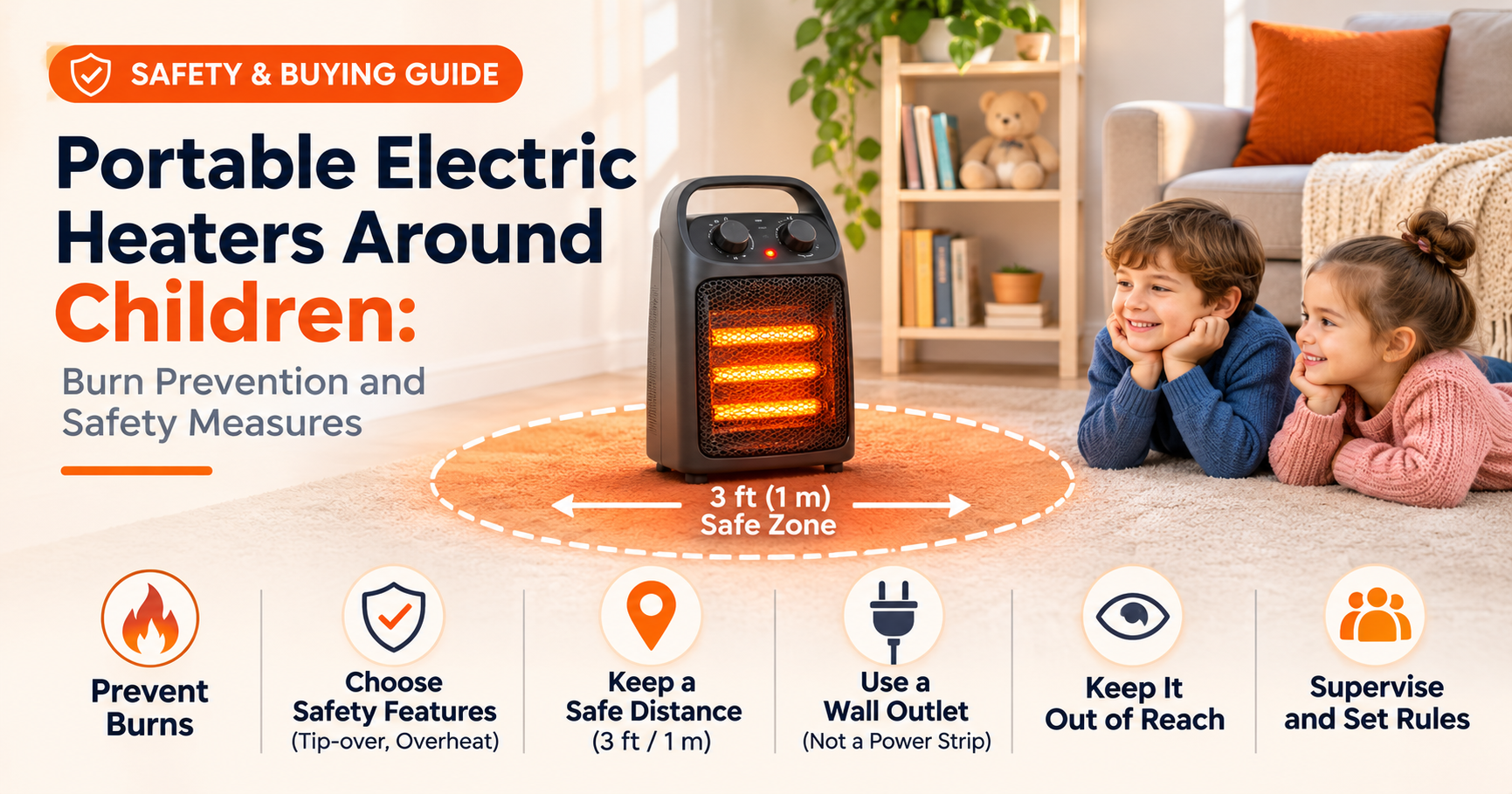
- Automatic tip-over shut-off: cuts the power instantly if the heater falls or tilts.
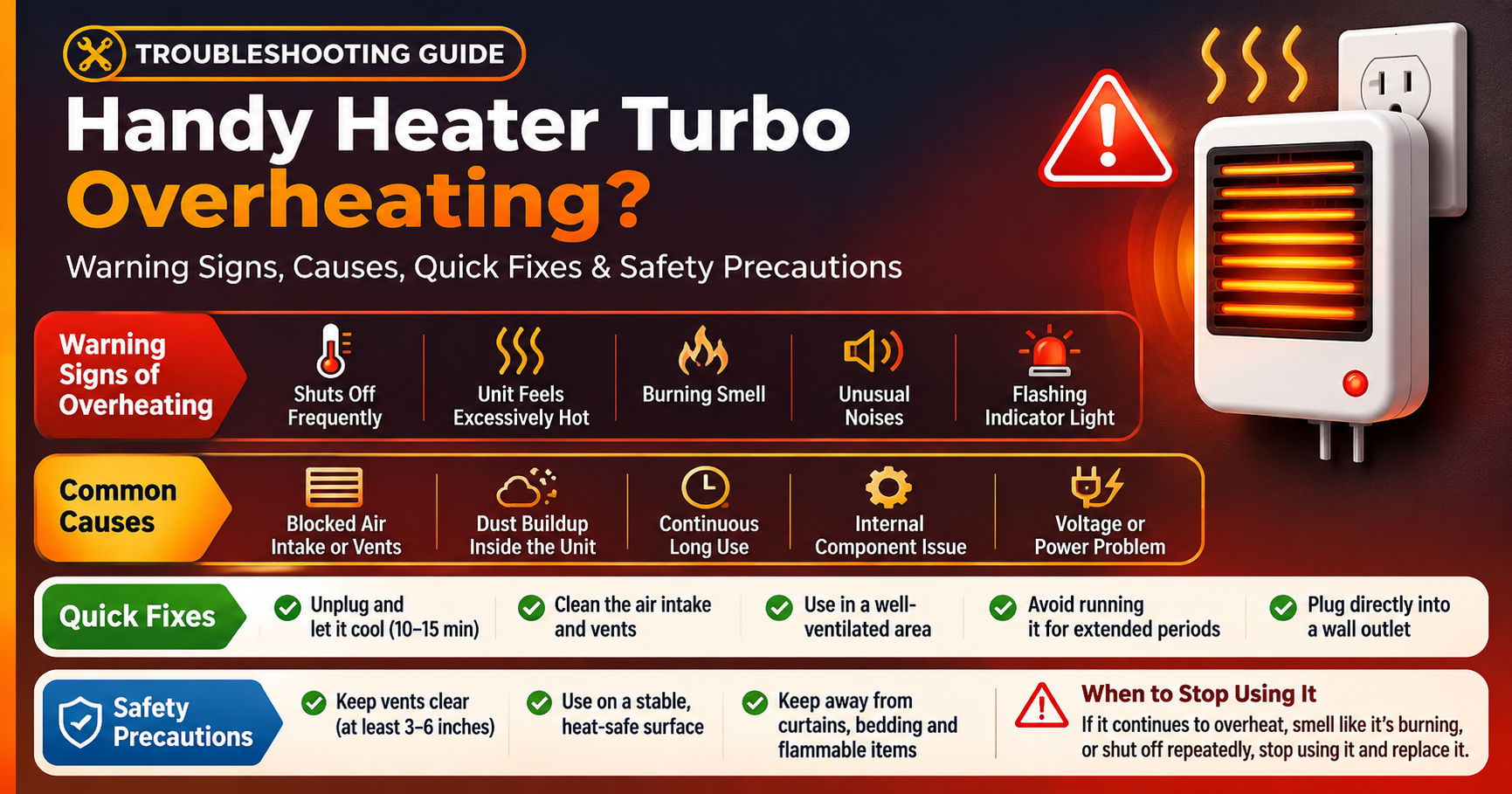
- Overheat protection: switches the heater off if internal temperature climbs too high, for example if the vents are blocked.
- Cool-touch or protected exterior: reduces the chance of burns if a child touches the casing. Look for narrow-gap grills that small fingers cannot fit through.
- Adjustable thermostat: keeps the room at a steady temperature instead of running at full power all the time.
- Timer or auto shut-off: prevents the heater from running for hours when you forget it.
- Control lock or child lock: stops little hands from changing the settings.
- Recognized safety certification: look for marks from independent testing bodies relevant to your country, such as UL, ETL, CE or UKCA.
- Stable, wide base: a heavier or wider base is harder to knock over.
- Fixed carrying handle and a reasonably long, sturdy cord: so you never need an extension cord.
How to Choose the Right Size and Power
Bigger is not always better. An oversized heater cycles on and off aggressively and can overheat a small room, while an underpowered one runs constantly and still leaves the room cold. As a rough guide, a heater needs about 10 watts of power per square foot of floor area (around 100 watts per square meter) in a typical, reasonably insulated room. Use that as a starting point and check the manufacturer’s recommended room size.
Also check the plug and the socket. Most portable heaters in the 1500-watt range draw a lot of current, so they should be plugged straight into a wall outlet on a circuit that is not already powering other high-demand appliances.

Where to Place the Heater: The Golden Rules
- Keep a 3-foot (1 meter) clearance on all sides and above the heater. No curtains, bedding, clothes, toys, paper, furniture or pets inside that space.
- Use a flat, hard, stable floor. Never place a heater on a bed, sofa, thick rug, shelf or table where it can be pulled or tipped.
- Plug directly into a wall socket. Do not use extension cords, adapters or power strips.
- Route the cord safely. Keep it short, straight and out of walking paths, and never run it under rugs or furniture.
- Position it away from doorways and play areas so no one runs, crawls or trips near it.
- Never cover the heater and never dry clothes, towels or shoes on it. Blocked airflow is a leading cause of overheating.
- Switch it off and unplug it when you leave the room, go to sleep or leave the house.
Using a Heater in a Baby’s Room or Nursery
A nursery needs extra care. Babies cannot move away from heat, cannot tell you when they are uncomfortable and are more sensitive to temperature swings. Many pediatric guidelines suggest a sleeping room temperature of roughly 16 to 20 degrees Celsius (about 61 to 68 degrees Fahrenheit). A baby does not need a hot room.
- Warm the room first, then switch the heater off. Heat the room for a while before bedtime and turn the heater off before the baby is put down to sleep, relying on suitable sleepwear to stay comfortable.
- Dress the baby in layers or a sleeping bag rather than adding blankets to the cot or relying on a hotter room.
- Use a room thermometer so you are guided by actual temperature, not guesswork.
- Keep the heater far from the cot and well beyond the 3-foot zone, with no cord within reach.
- Watch for signs of overheating, such as sweating, flushed cheeks, a hot chest or back of the neck, or restlessness. If you see them, reduce the temperature.
If you are unsure what room temperature is right for your baby, speak to your pediatrician or health visitor.
Child-Proofing Tips Around a Heater
- Teach the word “hot.” Even toddlers can learn to recognize it and keep their distance with consistent reminders.
- Use a sturdy safety gate or barrier to block the heater area if the room layout allows it. The barrier must stand firmly outside the 3-foot zone and must not touch the heater.
- Never rely on a barrier alone. Supervision is still your best protection.
- Do not let children touch, move or play near a heater, even when it is switched off, because the surface can stay hot for some time.
- Set a family rule: only adults operate the heater. Children never switch it on, adjust it or unplug it.
- Protect pets as well. Cats and dogs often curl up near warm spots and may brush against a hot surface.
Do Not Forget the Basics: Smoke and Carbon Monoxide Alarms
Working smoke alarms on every level of your home, and especially near sleeping areas, give early warning in case something goes wrong. If you use any fuel-burning appliance in the house, a carbon monoxide alarm is also important. Test every alarm regularly and replace batteries when needed. Alarms do not replace safe heater habits, but they add a vital extra layer of protection.
Smart Ways to Keep Kids Warm Without Relying on a Heater
The best heater is sometimes the one you use less. These simple steps cut down heater time and make any heating more effective:
- Dress children in layers. Thin layers trap warm air better than a single thick one and are easy to adjust.
- Seal drafts around windows and doors with draft excluders or weather stripping.
- Use thick curtains at night to hold heat in the room (keeping them well away from any heater).
- Add rugs and soft furnishings to insulate cold floors, away from the heater zone.
- Heat only the room in use and keep the door closed so the warmth stays where it is needed.
What to Do in an Emergency
If a child is burned
Move the child away from the heater, then cool the burn under cool (not ice-cold) running water for about 20 minutes. Remove tight clothing or jewelry near the area unless it is stuck to the skin, and cover the burn loosely with a clean, non-fluffy material such as cling film. Seek medical help promptly, especially for burns on babies, the face, hands or genitals, or burns that are large or blistering. Do not apply creams, butter or ice.
If the heater smells odd, sparks or overheats
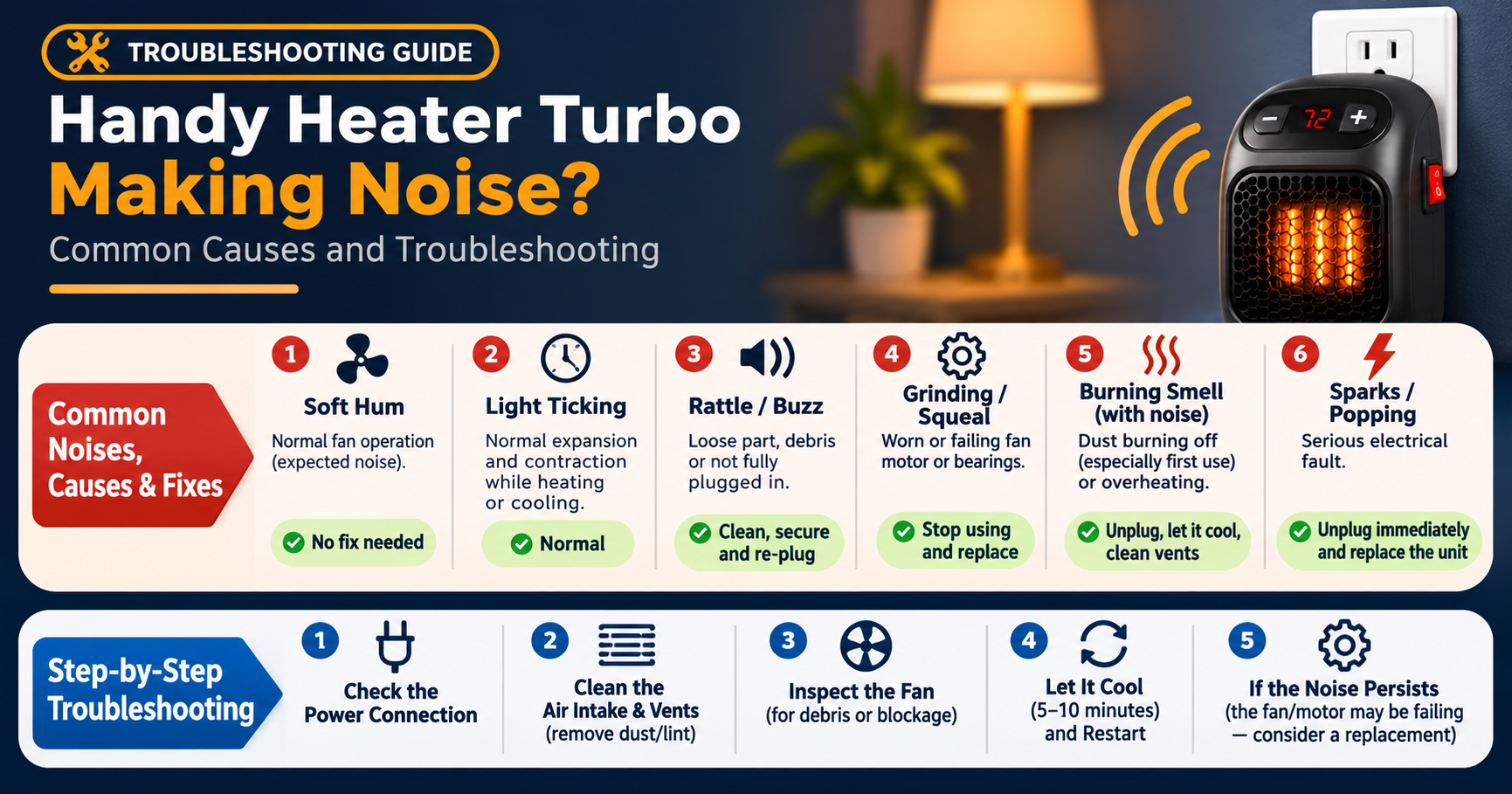
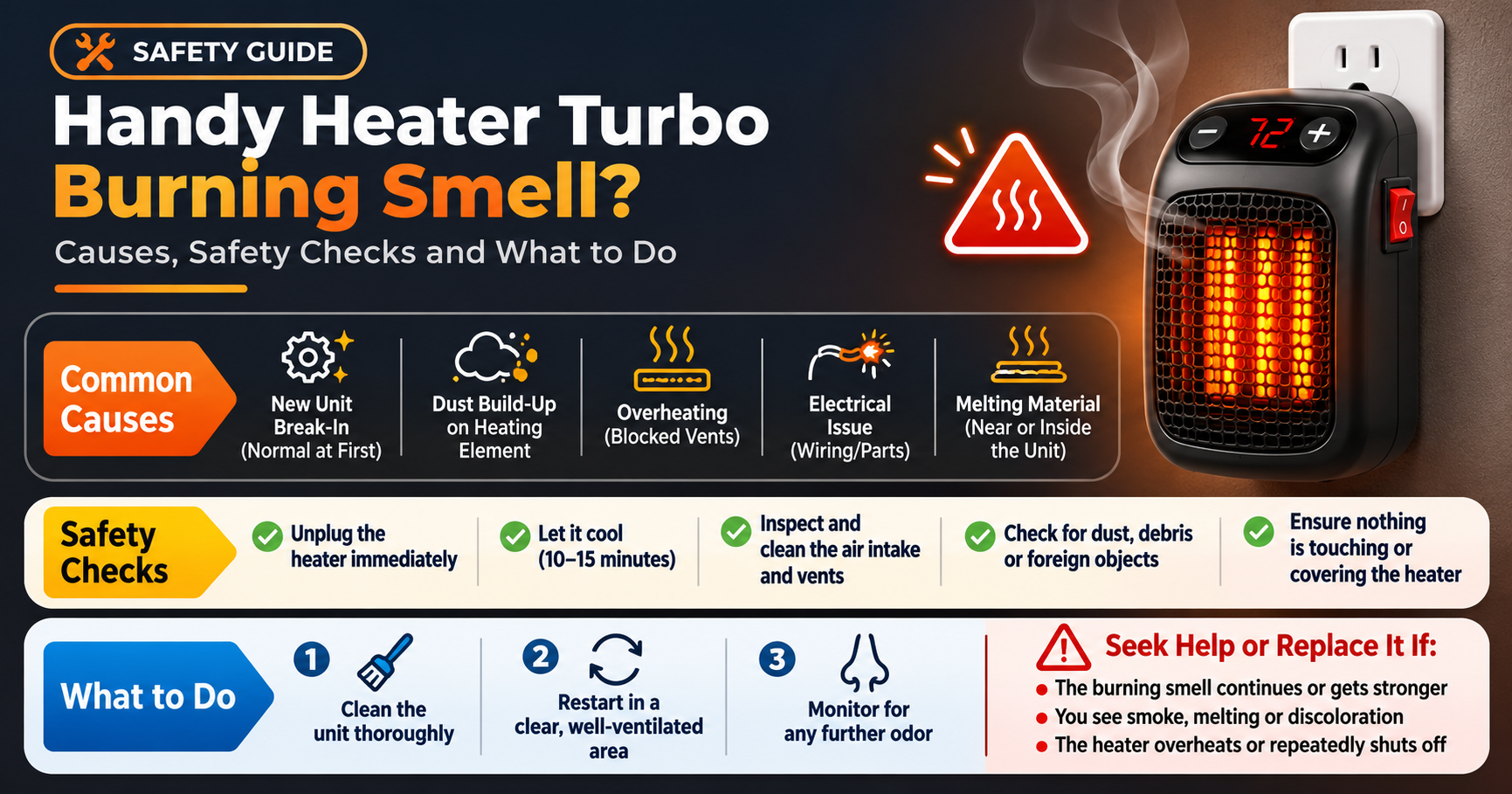
Switch it off at the wall if it is safe to do so, unplug it and stop using it. A burning smell, scorch marks, a damaged plug, a hot cord or buzzing sounds mean the heater needs inspection or replacement.
If a fire starts
Get everyone out of the house first, close doors behind you if you can do so safely and call your local emergency number from outside. Do not try to fight a fire that is growing, and never pour water on an electrical fire.
Maintenance Tips for a Safer Heater
- Check the cord and plug regularly for fraying, discoloration or heat damage.
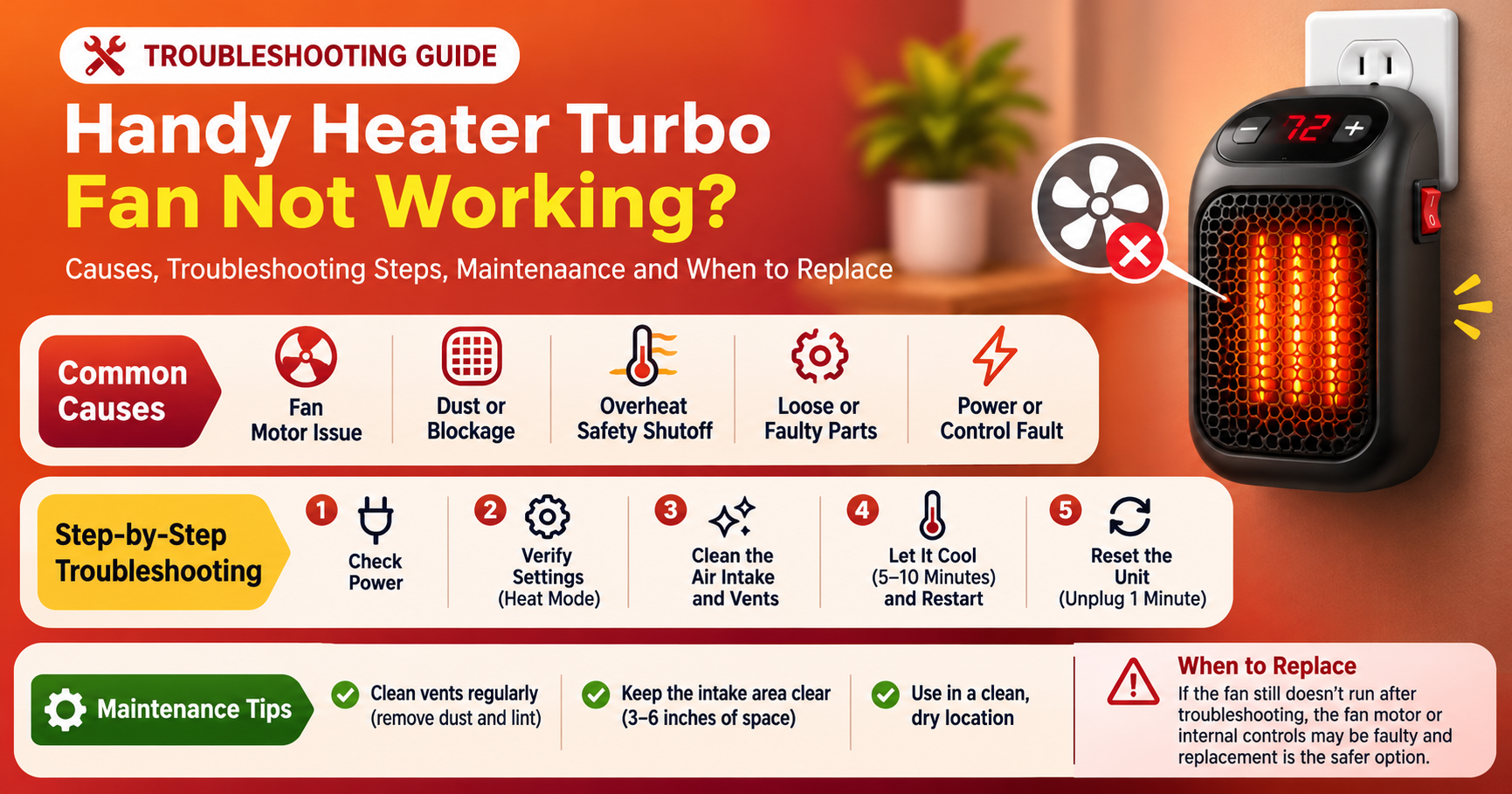
- Keep vents and grills free from dust and lint using a dry cloth while the heater is unplugged and cool.
- Store the heater in a dry place in the off season and follow the manufacturer’s cleaning instructions.
- Replace any heater that is damaged, runs unusually hot, trips the breaker or has stopped responding to its safety cut-off.
- Read the manual. Every model has its own limits and instructions.
Frequently Asked Questions
Is it safe to leave a portable heater on in a child’s room overnight?
It is best not to. Even with a thermostat and a timer, running a heater unattended through the night adds risk, especially in rooms with babies or toddlers. Warm the room before bedtime, switch the heater off and use suitable sleepwear and bedding to keep the child comfortable.
How far should a heater be from a child?
Keep children at least 3 feet (1 meter) away from a portable heater at all times, and keep that same clearance from curtains, bedding and furniture. In practice, the more distance you can create, the better.
Which is safer around kids: an oil-filled heater or a ceramic heater?
Both can be suitable if they include tip-over and overheat protection. Oil-filled radiators are silent and avoid blowing hot air, while ceramic heaters warm a small space faster and are lightweight. Choose the one whose safety features and size fit your room, and place it out of reach either way.
Can a heater make a child sick?
A heater itself does not cause illness, but very dry or overly hot air can irritate the nose and throat and make a child uncomfortable. Keep the room at a moderate temperature, ventilate for a few minutes each day and make sure the child is not overdressed.
Are cool-touch heaters completely safe for children?
No. A cool-touch exterior lowers the risk of surface burns, but the air outlet and internal parts can still get hot, and fire and tip-over risks remain. Always keep children at a distance and supervise.
Can I use an extension cord with a portable heater?
You should not. Portable heaters draw a lot of power, and most extension cords and power strips are not designed to handle that load for long periods, which can lead to overheating. Plug the heater directly into a wall socket.
Is it safe to use a heater in a small bedroom?
It can be, as long as the heater is the right size for the room, sits on a flat floor with a full 3-foot clearance and is switched off when you are not present. In very small rooms, it may be hard to keep a safe distance. In that case, consider warming the room before use and then switching the heater off.
Final Thoughts
A portable electric heater can make a child’s room comfortable on a freezing night, but it deserves the same respect you give to a stove or an iron. Choose a model with tip-over shut-off, overheat protection and a thermostat, keep a clear 3-foot zone, plug it directly into the wall and never leave it running when you are away or asleep. Add smoke alarms, a few child-proofing habits and warm layered clothing, and you can enjoy a warm home without compromising your children’s safety.
This article is for general information only and does not replace professional advice. Always follow the manufacturer’s instructions for your specific heater and consult your pediatrician about your child’s needs.