

When the temperature drops, most of us reach for a portable electric heater. Our dogs and cats feel the cold too, and they are usually the first to curl up beside anything warm. That is exactly where the danger starts. A heater that is perfectly fine in an empty room can become a real hazard once a curious puppy, a sleepy cat, or a tail-wagging Labrador shares the space.
The good news is that you can use a portable electric heater around pets safely. You need the right type of heater, the right safety features, smart placement, and a few simple daily habits. This guide walks you through all of it, step by step, so you can keep your home warm without putting your best friend at risk.
Quick takeaways
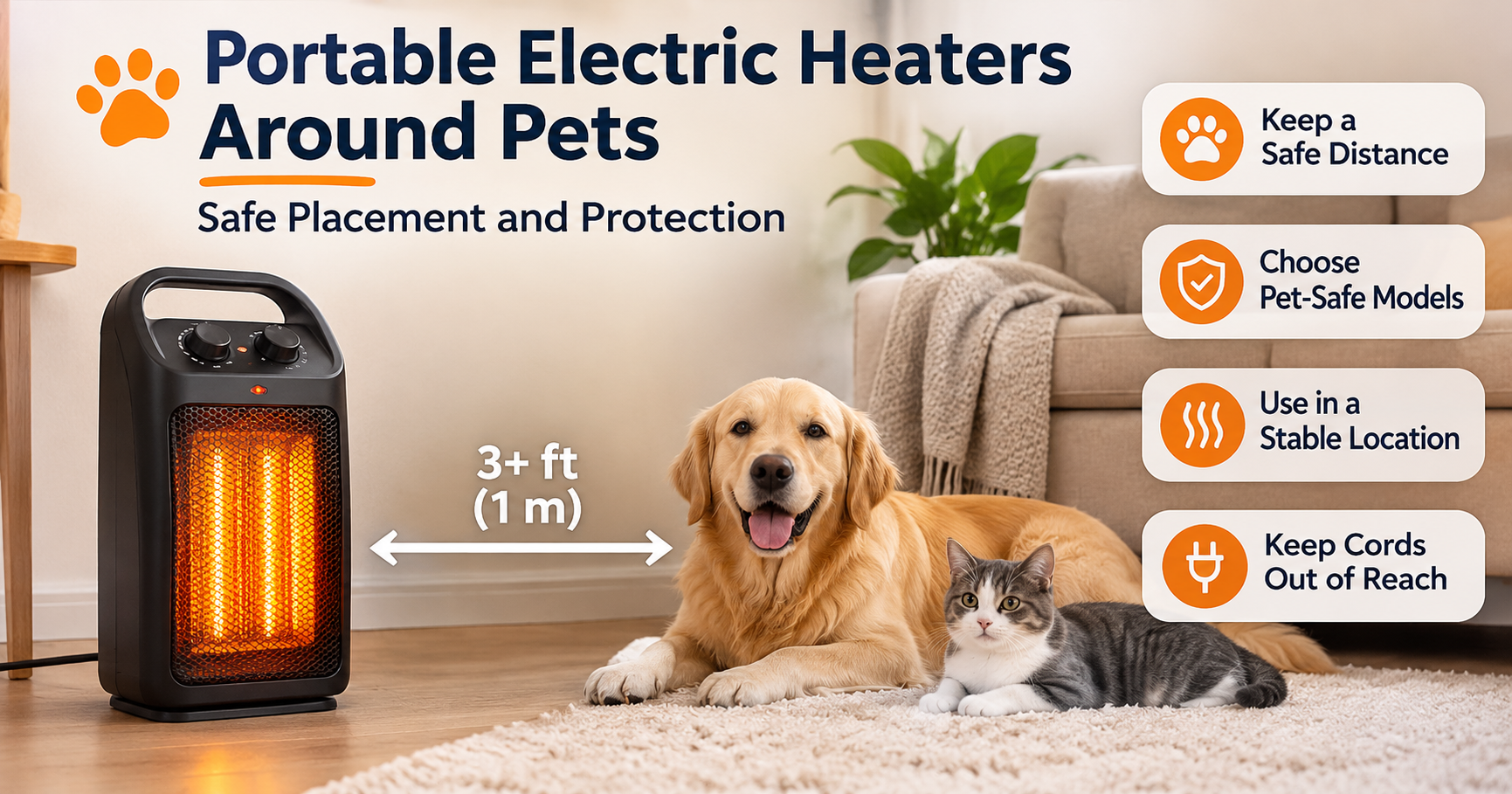
- Choose a heater with tip-over shutoff, overheat protection, and a cool-touch outer shell.
- Keep the heater at least 3 feet (about 1 meter) away from pets, bedding, curtains, and furniture.
- Plug it straight into a wall outlet. Never use an extension cord or a power strip.
- Never leave a heater running when you are asleep or out of the house.
- Watch your pet for signs of overheating, such as heavy panting or restlessness.
Is It Safe to Use a Portable Electric Heater Around Pets?
Yes, it can be safe, but only when you treat the heater as a piece of equipment that needs rules. Pets do not understand that a glowing grille is hot or that a cord is not a chew toy. Cats are especially drawn to warm spots and will happily sit right against a heater. Dogs may knock a unit over while playing. Because pets cannot protect themselves from these risks, the responsibility sits with you.
Think of safety as three layers: the heater you buy, where you place it, and how you supervise it. If all three layers are strong, the risk drops dramatically.
The Main Risks of Heaters Around Pets
Knowing what can go wrong makes it easier to prevent. These are the most common hazards in homes with pets:
- Burns. Heaters with exposed elements or metal grilles can burn paws, noses, and fur. Cats and small dogs that press up against a unit are at the highest risk.
- Tip-overs. A wagging tail, a zoomie session, or a curious nose can push a lightweight heater over. A tipped heater that keeps running can start a fire.
- Chewed cords. Puppies, kittens, and rabbits may chew power cords, which can cause electric shock or sparks.
- Fire. Pet beds, blankets, toys, and long fur sitting too close to a heating element can ignite.
- Overheating and dehydration. Heated rooms are warm and dry. Pets that cannot move away from the heat can overheat or become dehydrated.
- Fumes. Some heating products use non-stick coatings that can release fumes when very hot. Birds are especially sensitive to airborne fumes, so check the manual and ask your vet if you share your home with birds.
Types of Portable Electric Heaters Compared
Not every heater suits a pet household. The table below compares the four most common types so you can see how they differ for pet safety.
| Heater type | How it heats | Pet-safety notes | Best for |
|---|---|---|---|
| Oil-filled radiator | Heats oil sealed inside fins, which warms the room gently | No glowing element and quiet. Surface still gets hot, so keep pets from touching it. | Bedrooms and long, steady heating |
| Ceramic heater | Fan blows air over a heated ceramic plate | Many models have cool-touch housing and tip-over protection. The fan can be noisy for nervous pets. | Small to medium rooms, quick warm-up |
| Infrared or radiant heater | Warms objects and people directly with radiant heat | Warm zone is directional and the front can get very hot. Needs extra distance and a guard. | Spot heating where pets cannot reach |
| Fan-forced (coil) heater | Fan pushes air across a hot metal coil | Exposed coils can get very hot. Choose models with a fine guard grille and safety shutoffs. | Short, supervised use in small spaces |
For most pet owners, an oil-filled radiator or a ceramic heater with a cool-touch shell is the easiest place to start. Both avoid a bright, exposed heating element, which lowers the chance of contact burns. Whatever you choose, the safety features below matter more than the label on the box.
Safety Features to Look For Before You Buy
A heater for a pet household should earn its place with built-in protection. Use this checklist while you shop.

- Tip-over shutoff. A sensor cuts power as soon as the unit tilts or falls. This is the single most important feature when pets and children are around.
- Overheat protection. If the internal temperature climbs too high, the heater switches itself off.
- Cool-touch housing. The outer shell stays much cooler than the heating parts, which helps if a pet brushes against it.
- Thermostat control. A thermostat keeps the room at a steady temperature instead of running at full power all day.
- Timer and auto-off. Useful for stopping the heater if you forget to switch it off.
- Safety certification. Look for a recognized testing mark such as UL, ETL, or CE on the product label, depending on where you live.
Bonus features worth having include a sturdy, wide base, a short or tucked-away cord, a locking control panel (to stop paws and noses changing settings), and a fine-mesh guard that keeps whiskers and claws away from hot parts.
Where to Place a Heater: The Safe-Distance Rule
Even the safest heater needs breathing room. A good rule is to keep at least 3 feet (about 1 meter) of clear space on every side. Nothing that can burn, including pet beds, blankets, curtains, and furniture, should sit inside that zone. Place your pet’s favorite resting spot well outside it.

Placement rules that work
- Put the heater on a flat, hard floor. Never place it on a rug, a bed, a sofa, or a table where it could slide or fall.
- Keep it in a corner or against an area your pet rarely uses, with the cord running along a wall.
- Block off the area with a freestanding pet gate or play pen if your pet tends to investigate.
- Do not place it in a small, closed crate area or near a pet’s food and water bowls.
- Never cover a heater, and never dry clothes or towels on it.
Electrical Safety: Cords, Outlets, and Power
Many heater accidents come from the electrical side, not the heating element. Follow these habits:
- Plug directly into a wall outlet. Extension cords and power strips can overheat under the high load of a heater.
- Keep the cord out of reach. Use cord covers or a cord organizer, and route it where your pet will not find it.
- Check the cord and plug often. Look for chew marks, fraying, discoloration, or a plug that feels hot. If you see any, stop using the heater and replace it.
- Avoid sharing the circuit. Do not run other high-power devices from the same circuit at the same time.
Choosing the Right Size and Power
Bigger is not always better. A heater that is too strong for the room will cycle on and off, waste energy, and tempt you to run it longer. As a rough rule of thumb, a heater needs about 10 watts for every square foot of floor space. That means a typical 1,500-watt heater suits a room of around 150 square feet. Rooms with high ceilings, poor insulation, or large windows may need a little more, while small rooms need less.
If your heater has adjustable settings, start on a low or medium setting and let the thermostat do the work. A steady, mild temperature is better for pets than a blast of heat.
Heater Safety Tips for Different Pets
Dogs
Active dogs and puppies are the most likely to bump or chew a heater. Use a gate, choose a heavy or low-profile unit, and teach a firm “leave it” command. Thick-coated breeds can overheat quickly, so keep the room at a moderate temperature. Short-haired, small, elderly, or arthritic dogs often welcome extra warmth, but offer it from a safe distance.
Cats
Cats love heat and will sit directly against a heater if they can. This puts them at risk of contact burns, and fur can sometimes singe without the cat noticing. Make sure the housing stays cool to the touch, keep a barrier in place, and give your cat a warm alternative, such as a thick blanket in a sunny spot.
Puppies, kittens, and senior pets
Very young and very old animals struggle to control their body temperature. They may need a little extra warmth, but they also cannot always move away when they get too hot. Supervise them closely and make sure they can step away from the warmest area.
Small animals and birds
Rabbits, guinea pigs, hamsters, and birds should not rely on a room heater to keep their cage warm. Sudden temperature changes and dry air can harm them, and some heaters can release fumes that affect birds. Ask your vet for guidance on the ideal temperature range for each species, and keep cages away from direct heat and drafts. Reptiles have special heating needs, so use only equipment made for their species.
How to Tell If Your Pet Is Too Hot or Too Cold
Your pet cannot tell you how it feels, so learn the signs.
| Too hot | Too cold |
|---|---|
| Heavy panting or drooling Restlessness or pacing Moving away from the heater and lying on cool floors Unusual tiredness or weakness Excessive thirst |
Shivering or trembling Curling up tightly or tucking paws Reluctance to move or go outside Seeking out blankets and warm laps Cold ears and paws |
If your pet shows signs of heat stress, switch off the heater, move your pet to a cooler room, offer fresh water, and contact your vet right away if symptoms are severe or do not improve quickly.
A Simple Daily Safety Routine
- Inspect the heater, cord, and plug for damage before turning it on.
- Clear the 3-foot zone of bedding, toys, clothing, and curtains.
- Set the thermostat to a comfortable, moderate temperature.
- Offer fresh water in a bowl located away from the heater.
- Supervise your pet whenever the heater is running.
- Switch off and unplug when you leave the house or go to sleep.
Common Mistakes to Avoid
- Leaving a heater on overnight or while you are out.
- Placing a pet bed next to the heater because it “looks cozy”.
- Using an extension cord to reach a faraway outlet.
- Setting the heater on a rug, bed, or sofa.
- Ignoring a frayed cord or a plug that feels warm.
- Assuming a pet will move away when it gets too hot.
Pet-Friendly Alternatives and Add-Ons
You do not have to rely on a room heater alone. Combine these options to keep your pet comfortable with less risk:
- Pet-specific heated beds or mats designed for animals, with low power use and chew-resistant cords.
- Thick blankets and raised beds that keep your pet off cold floors.
- Dog sweaters or coats for short-haired, small, or senior dogs.
- Draft stoppers and window insulation to hold heat in the room.
- Sunny resting spots, which cats in particular will use all day.
Frequently Asked Questions
Can I leave a portable electric heater on while my pet is home alone?
It is best not to. Even heaters with strong safety features can fail, and a pet alone cannot respond if something goes wrong. Turn the heater off and unplug it when you leave, and use a pet-safe heated bed or warm bedding instead.
What is the safest type of heater for homes with cats and dogs?
Many owners prefer an oil-filled radiator or a ceramic heater with cool-touch housing and tip-over protection. These avoid exposed glowing elements. Remember that no heater is completely risk-free, so placement and supervision still matter.
How far should a heater be from my pet?
Keep at least 3 feet (about 1 meter) of clear space around the heater, and always follow the instructions in the product manual. Place your pet’s bed well outside that zone.
Do portable heaters dry out the air and affect pets?
Electric heaters can make indoor air feel drier, especially in closed rooms. Keep fresh water available, and consider ventilating the room briefly each day. A humidifier can also help if the air feels very dry.
Can heaters affect birds and small animals?
Yes. Birds are sensitive to airborne fumes, and small animals struggle with sudden temperature swings. Keep their cages away from heaters and talk to your vet about safe temperatures for your species.
Is a heated pet bed safer than a room heater?
For a single pet’s resting spot, a heated bed made for animals is often a simpler choice because it warms only the area your pet uses. Choose one with a chew-resistant cord and a certified safety label, and check it regularly for wear.
Final Thoughts
Keeping your home warm and keeping your pets safe can go hand in hand. Choose a heater with tip-over shutoff, overheat protection, and a cool-touch shell. Give it a clear 3-foot zone, plug it straight into the wall, and never leave it running unattended. Watch your pet’s behavior and adjust the room temperature before small problems become big ones.
With the right heater and a few good habits, your dog or cat can enjoy a cozy winter, and you can enjoy peace of mind.
This article is for general information only and does not replace professional veterinary advice. Always follow the manufacturer’s instructions for your heater, and speak with your vet about your pet’s specific needs.