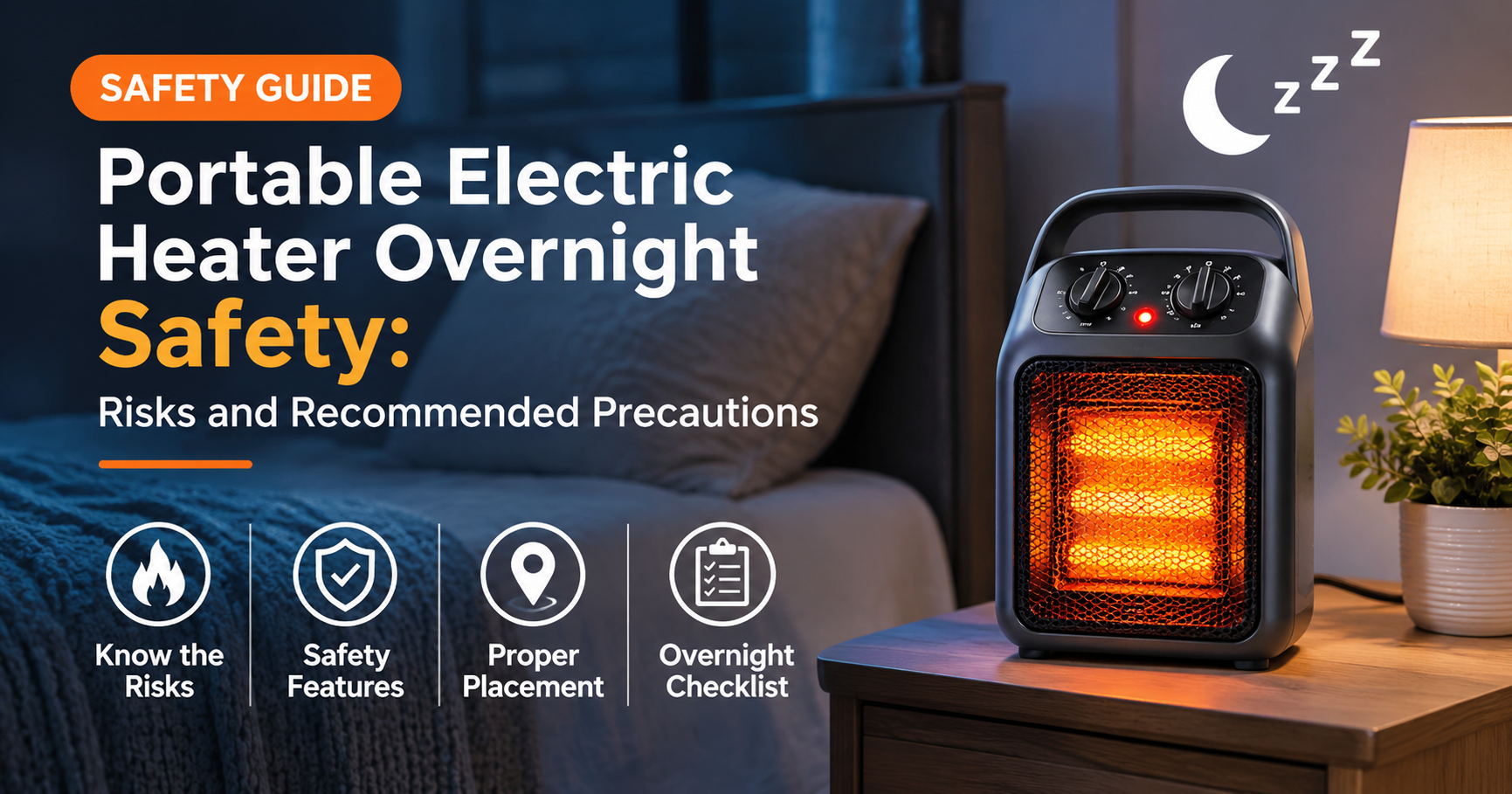
When the temperature drops, a portable electric heater can turn a freezing bedroom into a comfortable place to sleep. But the same device that keeps you warm can become a serious fire hazard if it is used the wrong way. That is why portable electric heater overnight safety is one of the most searched questions every winter.
In this complete guide, you will learn whether it is safe to leave a space heater on all night, what the real risks are, which safety features actually matter, exactly where to place the heater, and what to do instead if your heater does not meet the standard. By the end, you will have a simple checklist you can follow every night.
- Is it safe to leave a portable electric heater on overnight?
- Why heaters cause problems while you sleep
- Safety features every overnight heater should have
- The safest types of heaters for a bedroom
- Where to place your heater (the 3-foot rule)
- Power, cords and outlets: the hidden danger
- Your nightly safety checklist
- Warning signs that mean stop using it
- Safer ways to stay warm at night
- Frequently asked questions
1. Is It Safe to Leave a Portable Electric Heater On Overnight?
Short answer: It is not recommended. Most fire safety organizations and heater manufacturers advise turning a portable electric heater off before you go to sleep and never leaving it running unattended.
The reason is simple. When you are awake, you can notice a burning smell, a hot cord, or a heater that has been knocked over. When you are asleep, you cannot. A small problem can grow into a fire before you wake up.
That said, many people live in cold climates or in homes with weak heating, and they genuinely need some warmth at night. If that is you, the goal is to reduce the risk as much as possible: choose a modern heater with the right protective features, place it correctly, plug it in safely, and follow a routine. The rest of this guide shows you how.
Important: No heater is completely risk-free for overnight use. Even the best models work only when the room, outlet and wiring are also in good condition. If you are unsure, turn the heater off before sleeping and use a safer alternative from Section 9.
2. Why Heaters Cause Problems While You Sleep
Understanding the risks makes it easier to avoid them. Here are the most common ways a portable electric heater causes trouble overnight.
Flammable items too close to the heater
Bedding, curtains, clothes, paper, and furniture can ignite if they sit too close to a heating element. During sleep, a blanket can easily slide off the bed and drift toward the heater without you noticing.
Overloaded outlets and extension cords
Heaters draw a lot of electricity. Many models use around 1,500 watts, which is a heavy load for a household circuit. Plugging a heater into a thin extension cord or a shared power strip can cause the cord or plug to overheat, melt, and start a fire.
Tipped-over heaters
A pet, a child, or even your own foot in the dark can knock a heater over. Without a tip-over switch, the heater may keep running while lying against the carpet or a curtain.
Faulty or damaged equipment
Frayed cords, cracked plugs, loose internal connections, and old heaters with worn-out parts can all overheat. Heaters bought from unknown brands without safety certification are a particular concern.
Dust buildup
Dust and pet hair collect inside the heater over time. When the heater runs for many hours, that dust can burn and produce a smell, smoke, or in rare cases a fire.
Dry air and discomfort
Not a fire risk, but running a heater all night can dry the air in your bedroom. This may lead to a dry throat, itchy skin, or a blocked nose in the morning, especially in small rooms.
What about carbon monoxide?
Electric heaters do not burn fuel, so they do not produce carbon monoxide. This is a big safety advantage over kerosene, gas, propane, or wood-burning heaters. Never use those fuel-burning heaters in a closed bedroom overnight, because carbon monoxide can build up silently. If you use any fuel-burning appliance in your home, a working carbon monoxide alarm is essential.
3. Safety Features Every Overnight Heater Should Have
If you plan to use a heater in a bedroom at night, the heater itself matters a great deal. These are the features to look for when buying. They are also the points that make the biggest difference to portable electric heater overnight safety.
Tip-over protection
This is a switch inside the heater that cuts the power instantly if the unit is knocked over or tilted. It is one of the most important features for any heater used around beds, pets and children.
Overheat protection
A sensor monitors the internal temperature. If the heater gets too hot, perhaps because the vents are blocked or the fan has failed, it turns itself off automatically.
Adjustable thermostat
A thermostat lets the heater switch on and off to hold the room at your chosen temperature. This keeps the heating element from running at full power all night, which reduces both risk and electricity use.
Timer or auto shut-off
A timer is especially useful. You can set the heater to warm the room while you fall asleep and switch itself off after a few hours, before the deepest part of the night.
Cool-touch housing
The outer casing should not become dangerously hot to touch. This reduces the chance of burns and of nearby items catching fire from contact.
Safety certification marks
Look for a mark from a recognized testing laboratory on the product and its packaging. Common examples include UL, ETL, CSA, CE and UKCA, depending on where you live. A certified heater has been tested against safety standards. Be careful with very cheap, unbranded heaters that carry no clear certification.
A heavy-duty, short power cord
A thick, well-made power cord with a firm plug is safer than a thin, flimsy one. Some modern heaters also include a plug that senses overheating and cuts power at the outlet.
Buying tip: Before you buy, check the product page and the box for tip-over protection, overheat protection, a thermostat and a timer. If any of these four are missing, choose a different model for bedroom use.
4. The Safest Types of Heaters for a Bedroom
Not all portable electric heaters work the same way. Some are naturally better suited to a room where people sleep. Here is how the most common types compare.
| Heater type | How it heats | Surface heat | Noise | Bedroom suitability |
|---|---|---|---|---|
| Oil-filled radiator | Heats oil sealed inside fins, which warms the room slowly and steadily | Warm to hot | Very quiet | Often a good choice, with steady heat and no glowing element |
| Ceramic fan heater | Fan blows air over a heated ceramic element | Usually cool-touch | Fan hum | Good if it has tip-over and overheat protection; fan noise may bother some sleepers |
| Micathermic panel heater | Combination of convection and radiant heat from a thin panel | Moderate | Quiet | Good for slim spaces; check the safety features |
| Infrared (radiant) heater | Directly warms people and objects in front of it | Very hot element | Silent | Less suited to overnight use, because anything in front of it can overheat |
| Basic coil or bar heater | Exposed glowing element | Extremely hot | Silent or light fan | Not recommended for bedrooms or for overnight use |
For most households, an oil-filled radiator or a ceramic heater with full safety protection offers the best balance between warmth and safety for a bedroom. Heaters with exposed glowing elements are the riskiest around bedding and curtains.
Choosing the right size
A heater that is too weak will run constantly without warming the room, while one that is too powerful can overheat a small space. As a rough guide, a small bedroom is usually comfortable with a heater in the range of 750 to 1,500 watts. Read the manufacturer’s room-size recommendation and choose a model with a thermostat so it cycles off once the room is warm.
5. Where to Place Your Heater: The 3-Foot Rule
Where you put the heater matters just as much as which heater you buy. The golden rule is the 3-foot rule: keep anything that can burn at least 3 feet (about 1 meter) away from the front, sides and back of the heater.
Placement rules to follow
- Place it on a flat, hard, level surface. A wobbly surface makes tipping more likely. Never put a heater on a bed, sofa, or soft rug.
- Keep it away from bedding and curtains. Even if the heater is cool-touch, hot air can still scorch fabric over many hours.
- Point it away from the bed. Position it so the warm air flows across the room, not directly onto you or your blankets.
- Keep walkways clear. Put the heater where you will not trip over it if you get up in the dark.
- Do not cover it. Never drape clothes or towels over the heater to dry them. Blocked vents are a leading cause of overheating.
- Keep it away from water. Do not use a standard heater in a bathroom or any damp space unless it is specifically rated for that purpose.
- Keep pets and children away. Set up a barrier or choose a model with a child lock and cool-touch housing if little ones or curious animals are around.
6. Power, Cords and Outlets: The Hidden Danger
Many heater fires do not start in the heater at all. They begin at the plug or the outlet, because the connection cannot handle the electrical load. This is a part of portable electric heater overnight safety that people often overlook.
Plug directly into the wall
Plug the heater straight into a wall outlet. Do not use extension cords, power strips, or travel adapters, as they are often not designed for the heavy, continuous current a heater draws.
Use a circuit that is not already busy
Do not run the heater on the same circuit as other high-power appliances such as a kettle, iron, hair dryer, microwave, or air conditioner. Sharing the load can trip breakers or overheat wiring.
Check the plug and outlet regularly
During use, the plug should be at most slightly warm. If the plug, cord or outlet feels hot, smells of burning, or has discolored marks, turn the heater off and unplug it.
Inspect the cord
Look for cracks, fraying, kinks, exposed wire, or bent pins. Do not run the cord under rugs or furniture, where heat can build up and damage goes unnoticed.
Consider the age of your wiring
In older homes, the wiring may not be able to support a high-wattage heater running for hours. If breakers trip often, lights dim when the heater starts, or outlets feel warm, ask a qualified electrician to check your wiring before you use a heater overnight.
7. Your Nightly Safety Checklist
If you decide to use a heater in the evening or overnight, go through this short routine every time. It takes less than two minutes.
- Inspect the heater. Look for cracks, loose parts, and dust buildup on the grille. Clean it when it is unplugged and fully cool.
- Check the cord and plug. Confirm there is no fraying, and that the plug sits firmly in the outlet.
- Plug it in directly. No extension cords, no power strips.
- Clear the area. Make sure bedding, curtains, clothing, paper and furniture are at least 3 feet away.
- Set the thermostat low. You do not need a hot bedroom to sleep well. A cooler room is generally better for sleep, so aim for a comfortable, not toasty, temperature.
- Use the timer. Set it so the heater switches off after you are asleep, rather than running until morning.
- Test your smoke alarm. A working smoke alarm in or near the bedroom can give you critical extra minutes if something goes wrong.
- Know your exit. Make sure your path out of the bedroom is clear and that everyone in the home knows what to do in an emergency.
8. Warning Signs That Mean Stop Using the Heater
Switch the heater off and unplug it immediately if you notice any of the following. Do not use it again until a qualified person has checked it, or replace it.
- A burning, melting plastic or electrical smell
- Smoke or sparks from the heater, plug or outlet
- A plug, cord or outlet that is hot to touch
- Scorch marks or discoloration on the plug, outlet or wall
- Flickering lights or a tripping circuit breaker when the heater runs
- Strange buzzing, crackling or rattling sounds
- The heater switching on and off erratically
- A cracked casing or exposed internal parts
If there is a fire: Do not try to be a hero. Leave the room, close the door behind you if you can, get everyone out, and call your local emergency number from outside. Never pour water on an electrical fire.
9. Safer Ways to Stay Warm at Night
If your heater lacks the right safety features, or if you simply feel uneasy leaving it on, there are many effective ways to stay warm through the night without running a heater while you sleep.
Warm the room before bed, then turn it off
Run the heater for an hour or so before bedtime to take the chill off the room. Then switch it off and unplug it before you sleep. A closed door and well-sealed windows will hold the heat for hours.
Improve your bedding
- Use a thicker duvet or add a second blanket.
- Choose flannel, fleece or brushed cotton sheets.
- Use a thermal blanket layer under your quilt.
- Wear warm sleepwear, socks and, if you like, a light hat.
Use a hot water bottle
A hot water bottle or a microwavable wheat pack placed near your feet warms the bed gently and carries no electrical risk. Always follow the maker’s instructions to avoid burns.
Consider an electric blanket
Electric blankets and heated mattress pads warm the bed itself rather than the whole room, which can use less energy. Choose a model with an automatic shut-off and modern safety controls, never use a damaged or folded blanket, and replace old ones. Many people pre-heat the bed and then switch the blanket off or down before sleeping.
Seal drafts
Door gaps, window frames and chimneys let heat escape. Draft excluders, weather stripping, and heavy curtains can make a noticeable difference to how warm your bedroom stays.
Use a heating system with safer overnight controls
If possible, set your central heating or a wall-mounted heater on a timer or a programmable thermostat to keep the home above a basic comfortable temperature at night. These systems are designed for continuous use in a way portable heaters are not.
10. Frequently Asked Questions
Can I leave a portable electric heater on all night?
It is generally not recommended. Fire safety guidance says to turn space heaters off when you leave the room or go to sleep. If you must use one, choose a certified model with tip-over protection, overheat protection, a thermostat and a timer, and follow the placement and power rules in this guide.
Is an oil-filled radiator safer to leave on overnight?
Oil-filled radiators are often considered a better choice for bedrooms because they have no glowing element and heat the room steadily and quietly. However, their surface still becomes hot, and they still need clear space around them and a direct wall outlet. No heater is risk-free if left unattended.
Are electric heaters safe for sleeping in a closed room?
Electric heaters do not produce carbon monoxide, so they do not use up oxygen or release fumes the way fuel-burning heaters do. The main risks are fire and overheating, not air quality. That said, a very dry room can cause discomfort, so a bowl of water or a humidifier can help in a closed room.
How far should a heater be from the bed?
Keep the heater at least 3 feet (about 1 meter) from the bed, bedding, curtains, and any other flammable item. More distance is better. Never place a heater on the bed.
Can I use an extension cord with my space heater?
Avoid it. Heaters draw a lot of power, and extension cords and power strips can overheat. Plug the heater directly into a wall outlet. If the cord does not reach, move the heater or ask an electrician to install an outlet in a convenient place.
What temperature should I set my heater to at night?
Most people sleep best in a cool room, often somewhere around 60 to 67°F (15 to 19°C). You do not need a hot bedroom. Use the lowest setting that keeps you comfortable with your bedding and sleepwear.
Is it safe to use a heater with a timer overnight?
A timer improves safety because the heater turns off by itself after a few hours. It does not remove every risk, so you still need correct placement, a direct wall outlet, and a working smoke alarm.
Can I leave a space heater on with pets or children in the room?
Be extra careful. Children and pets can knock a heater over or touch it. Choose a cool-touch model with tip-over protection and a child lock, and keep a barrier around it. For babies’ rooms and nurseries, the safest option is to heat the room beforehand and switch the heater off before the child sleeps.
How do I know if my heater is too old to use?
Replace a heater that has a damaged cord, cracked casing, loose switches, a strong burning smell, or that shuts off unexpectedly. If it lacks tip-over and overheat protection, or if it has been used for many years, replacing it with a modern certified model is a sound safety investment.
How often should I clean my heater?
Unplug the heater and let it cool completely. Then gently remove dust from the grille and vents with a soft brush or vacuum at least once a month during heavy use. A dust-free heater runs cooler and safer.
Final Thoughts: Warm Is Good, Safe Is Better
A portable electric heater can make a cold bedroom far more comfortable, but it should never be treated casually. The safest approach to portable electric heater overnight safety is to warm the room before bed and turn the heater off before you sleep. If you truly need to run one at night, make sure it is a certified modern model with tip-over protection, overheat protection, a thermostat and a timer, keep it at least 3 feet from anything flammable, plug it straight into the wall, and keep a working smoke alarm nearby.
Take two minutes each evening to run through the checklist in this guide. A little care at bedtime is a small price for keeping your home and the people in it safe all winter long.
Quick recap: Choose a certified heater with safety protection. Keep a 3-foot clear zone. Plug directly into the wall. Use the timer and thermostat. Test your smoke alarm. And if in doubt, turn it off before you sleep.
Disclaimer: This article provides general safety information and is not a substitute for the manufacturer’s instructions or professional advice. Always read and follow the instruction manual for your specific heater, and consult a qualified electrician if you have concerns about your home’s wiring.