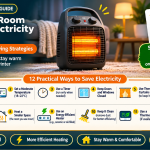

A room heater is one of the fastest ways to make a cold room comfortable, and one of the quickest ways to make your electricity bill jump. Most portable electric heaters draw between 1,000 and 2,000 watts, which is a lot more than a lamp, a laptop or even a refrigerator. Run one for eight hours every day and it can easily become the biggest single item on your monthly bill.
The good news is that you do not have to choose between a warm home and a manageable bill. With the right size heater, smarter settings, a few low-cost insulation fixes and better habits, most households can cut their heater running costs noticeably. This guide explains how room heaters use electricity, how to calculate what yours really costs, and 12 practical ways to lower the bill without sitting in the cold.
Quick answer
To reduce your room heater electricity bill: pick a heater that matches your room size, use a thermostat and timer, heat only the room (and person) that needs it, seal drafts and cover windows, wear warm layers, keep the heater clean, and choose the heater type that suits how you use it. Together these habits reduce how long the heater has to run, and run time is what drives the cost.
How a Room Heater Uses Electricity
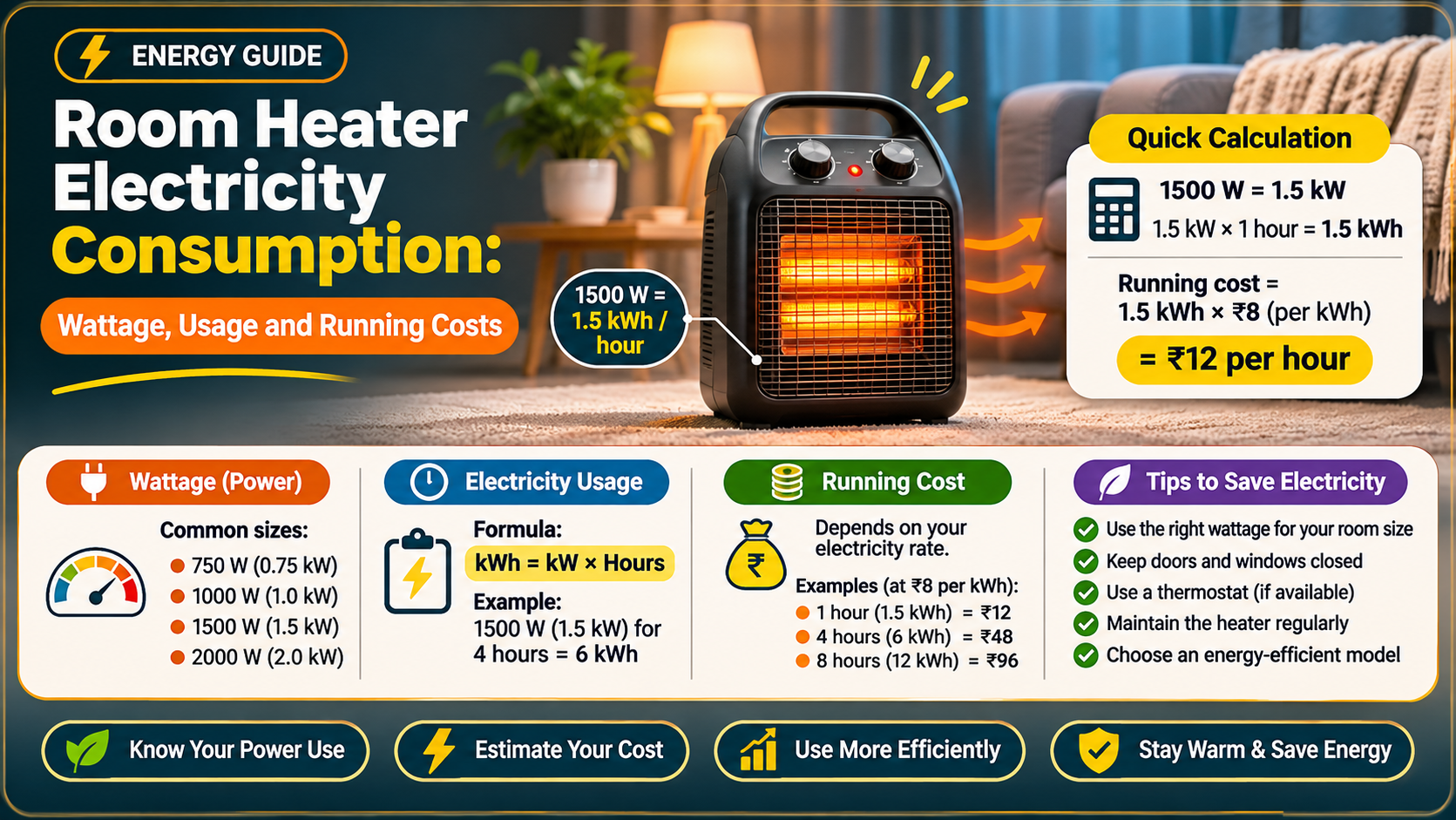
Every electric resistance heater, whether it is a fan heater, oil-filled radiator, panel heater or infrared heater, turns almost all of the electricity it draws into heat. That means a 1,500 W heater gives off roughly 1,500 W of heat no matter which type it is. A more expensive model does not magically create more heat from the same electricity.
What changes the bill is how many watts the heater draws, how many hours it runs, and how much of that heat actually stays where you need it. Reducing any of those three lowers your cost. Electricity is billed in kilowatt-hours (kWh), where one kWh equals a 1,000 W appliance running for one hour.
How Much Does It Cost to Run a Room Heater?
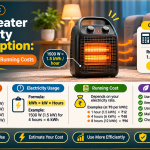
You can work out the cost of any heater with a simple formula. Check the wattage on the label, convert it to kilowatts, then multiply by the hours used and your electricity rate.
The table below uses an example rate of 0.15 per kWh. Replace it with the rate on your own electricity bill to get an accurate figure for your home.
| Heater power | Energy per hour | Cost per hour | Cost for 8 hours | Cost for 30 days at 8 h |
|---|---|---|---|---|
| 500 W | 0.5 kWh | 0.075 | 0.60 | 18.00 |
| 1,000 W | 1.0 kWh | 0.150 | 1.20 | 36.00 |
| 1,500 W | 1.5 kWh | 0.225 | 1.80 | 54.00 |
| 2,000 W | 2.0 kWh | 0.300 | 2.40 | 72.00 |
These figures assume the heater runs at full power the whole time. In real life a heater with a thermostat switches off once the room is warm, so the actual bill is usually lower. That is exactly why the first few tips below matter so much.
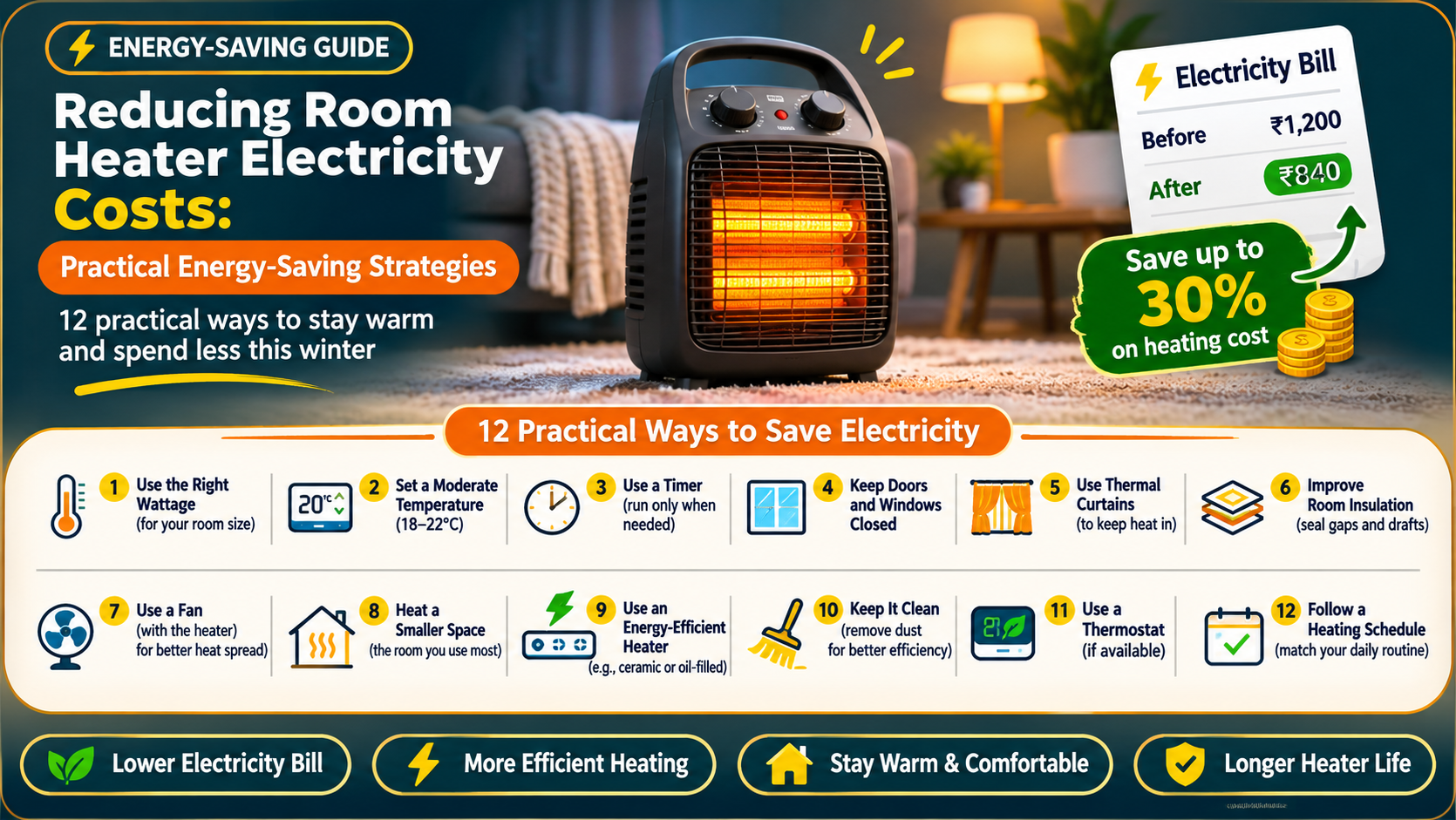
12 Ways to Reduce Your Room Heater Electricity Bill
1. Choose the Right Size Heater for Your Room
A heater that is too small will run flat out and never reach a comfortable temperature. A heater that is far too big wastes money to buy and can overheat the room quickly, then cycle on and off. A common rule of thumb for a normally insulated room with standard ceilings is around 10 watts per square foot, or roughly 100 watts per square metre.
- A small bedroom or study of about 100 square feet usually needs around 1,000 W.
- A medium room of about 150 square feet is often well served by 1,500 W.
- Add extra capacity for high ceilings, large windows, poor insulation or very cold climates.
2. Use the Thermostat and Set It Sensibly
A built-in thermostat lets the heater switch off when the room reaches your chosen temperature, then switch back on only when it cools. This single feature can cut run time dramatically compared with leaving a heater on full power. Set it to a comfortable but not tropical level. Many energy agencies suggest that lowering the thermostat by even one degree over long periods trims heating costs by a few percent, and a cosy 18 to 21 °C (about 64 to 70 °F) is comfortable for most people when they are dressed for the season.
3. Use a Timer or Programmable Control
It is easy to forget a heater is running. A timer lets you warm the room 30 to 60 minutes before you need it and switch off automatically afterwards. It is especially useful at bedtime: heat the bedroom before you go to sleep, then let blankets do the work overnight. A plug-in timer or smart plug is an inexpensive way to add this to a basic heater, as long as the plug is rated for the heater’s wattage.
4. Heat the Person, Not Just the Room
If you are sitting at a desk or on a sofa, warming the entire room is often unnecessary. Dress in layers, wear warm socks and use a blanket or lap throw. Layered clothing traps a thin layer of warm air next to your body, and that keeps you comfortable at a lower room temperature. Radiant or infrared heaters are designed for this kind of spot heating, because they warm people and objects directly rather than the air around them.
5. Seal Drafts Around Doors and Windows
Warm air escapes through every small gap, and cold air flows in to replace it. Your heater then works harder to compensate. Check for gaps around window frames, under doors and around any pipes or vents that pass through walls. Self-adhesive weatherstripping, draft excluders and door sweeps are cheap, simple to fit and often pay for themselves within a single winter.
6. Cover Windows to Keep Heat In
Glass loses heat much faster than an insulated wall. Heavy or thermal-lined curtains, closed at dusk, create an insulating layer of trapped air. Window insulation film, which is applied over a window frame, can also reduce heat loss through single-pane glass. During the day, open curtains on sunny windows to let free solar warmth in, then close them as the sun goes down.
7. Heat One Room and Keep the Door Closed
Use the heater in the room you are actually occupying and keep the door shut. Heating a room that opens onto a cold hallway or a large open space means the heater is trying to warm far more air than you need. If possible, close doors to unused rooms so the warmth stays concentrated where you are.
8. Insulate the Floor with Rugs
Cold floors make a room feel colder, which tempts people to turn the heater up. A thick rug, carpet or foam floor mats reduce heat loss through the floor and make the room feel warmer underfoot. This is particularly helpful on tile, concrete or bare wooden floors.
9. Choose the Right Type of Heater for How You Use It
Because all electric resistance heaters convert electricity to heat equally, the real difference is how they deliver and hold that heat. The right choice depends on whether you need short bursts or long steady warmth.
| Heater type | How it heats | Best for | Watch out for |
|---|---|---|---|
| Oil-filled radiator | Heats oil inside fins, which radiates warmth slowly | Bedrooms and long, steady use | Slow to warm up; heavy |
| Ceramic fan heater | Blows air over a hot ceramic element | Quick boost in a small room | Noisy; warmth fades fast once off |
| Infrared (radiant) heater | Warms people and objects directly | Spot heating at a desk or seating area | Only warms what it faces |
| Convection panel heater | Warms air that circulates through the room | Quiet background heat | Slower to feel warm than a fan heater |
10. Place the Heater Smartly
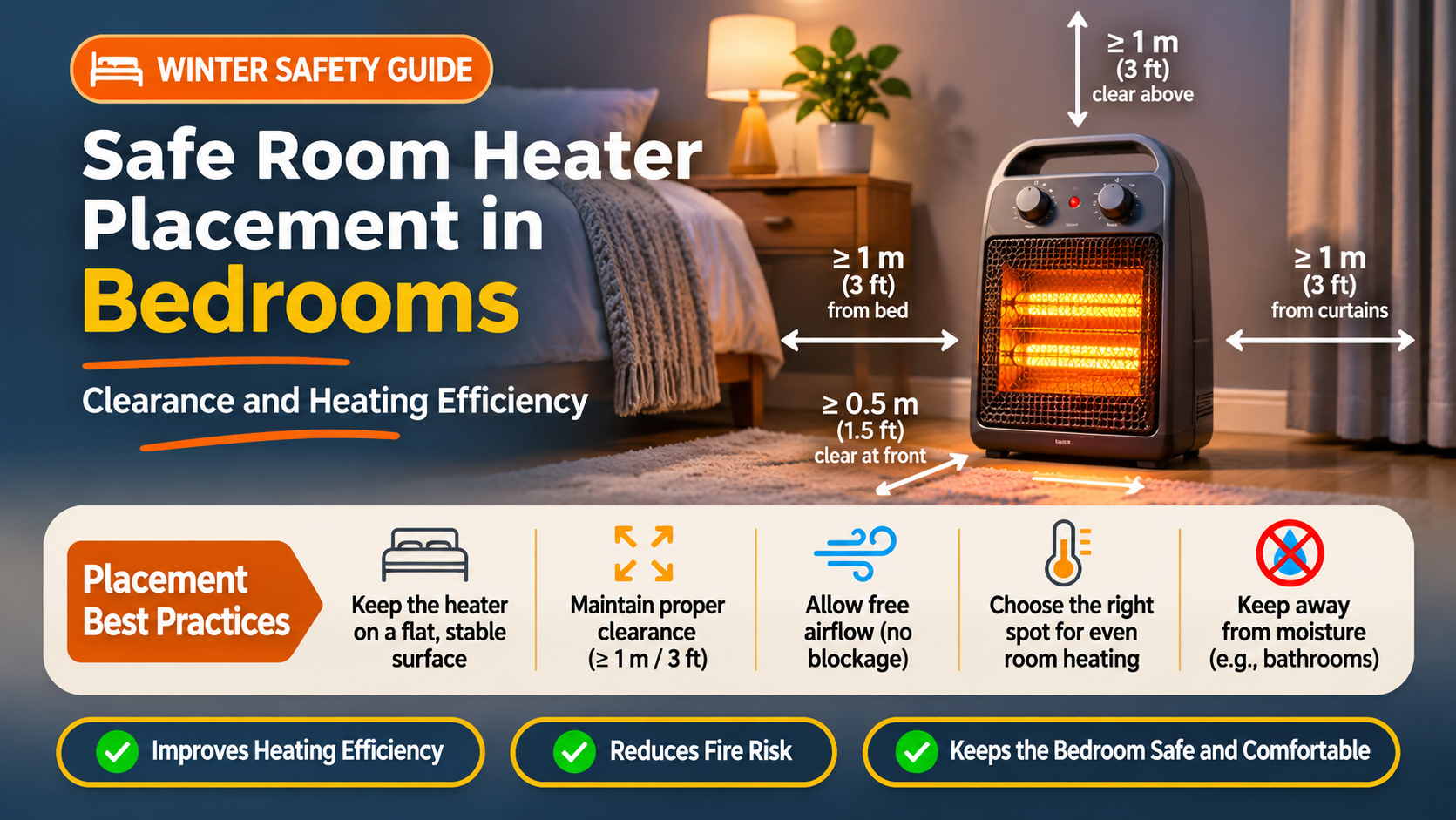
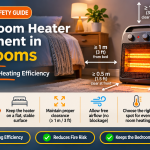
Position the heater on a hard, level surface away from furniture, curtains and walls, with at least a metre (about 3 feet) of clear space in front. Placing it near the area where you sit makes the warmth more useful. Avoid placing it directly under a window if you can, since the heat then flows straight toward the cold glass. Never push furniture or hang clothes close to it, because that blocks airflow and creates a fire risk.
11. Keep the Heater Clean and Well Maintained
Dust on the element, grille or fan makes the heater less effective and can cause a burning smell or overheating. Unplug the heater and let it cool, then gently clean the grille and vents with a soft brush or a dry cloth, following the maker’s instructions. Check the cable and plug for damage regularly. A clean, well-kept heater delivers its heat more reliably and safely.
12. Use Free Heat and Smart Habits
- Open curtains on sunny days to use free solar warmth.
- Reverse a ceiling fan to run clockwise at low speed, if it has that setting, to push warm air down from the ceiling.
- Cook, shower and use other warm appliances with the door closed so their warmth stays inside the house, while still allowing ventilation where needed.
- Use a hot water bottle or electric blanket for bedtime; these use far less power than heating a whole bedroom all night.
- Turn the heater off when you leave the room, even for an hour or two.
How Much Can These Habits Save?
Savings stack, because each habit reduces the number of hours your heater runs at full power. The chart below shows a simple worked example for one 1,500 W heater. It is an illustration, not a guarantee, but it shows how combining a thermostat, a shorter run time and draft sealing can bring a monthly cost down substantially.
Room Heater Safety While You Save
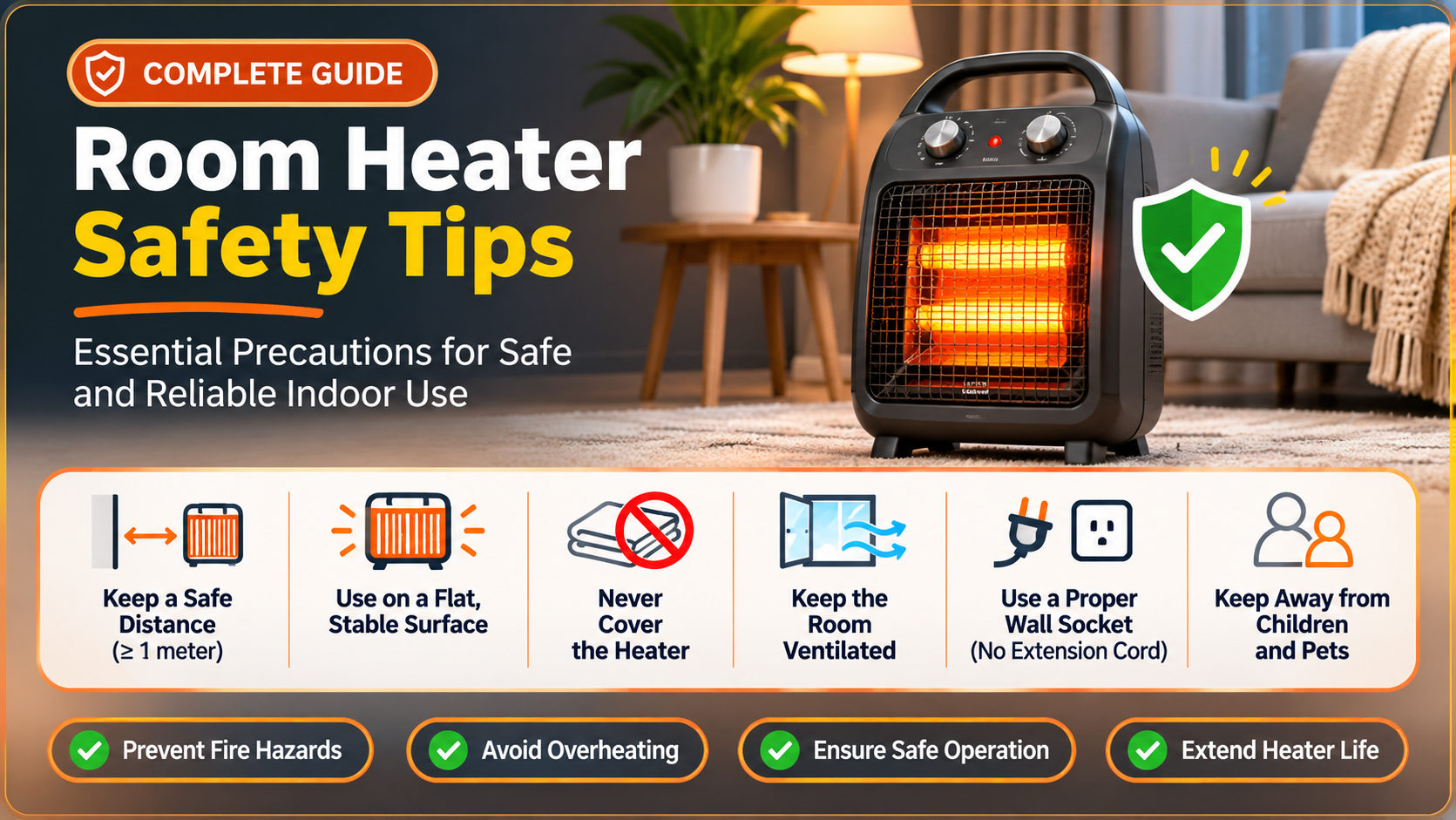
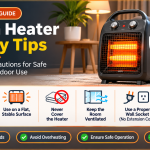
Saving money should never mean cutting corners on safety. Portable heaters are a common cause of home fires when used incorrectly, so follow these basics every time.
- Plug the heater directly into a wall socket. Avoid extension cords and power strips, because high-wattage heaters can overheat them.
- Choose a heater with tip-over protection and overheat protection.
- Keep it at least a metre (3 feet) away from curtains, bedding, sofas and anything flammable.
- Never cover a heater or use it to dry clothes.
- Do not leave it running unattended, while sleeping, or around young children and pets without supervision.
- If you notice a burning smell, flickering, sparks, or a very hot plug, switch it off and stop using it until it has been checked.
What to Look For When Buying an Energy-Wise Heater
If your current heater is old, faulty or the wrong size, replacing it with a better-suited model can be worth it. Features that help you control the bill include:
- An adjustable thermostat and several power settings, so you do not have to run at full power.
- A built-in timer or a compatible smart plug, for automatic switch-off.
- Tip-over and overheat protection for safe use.
- A wattage that matches your room size, rather than simply the biggest model available.
- A type that suits your habits: oil-filled for long steady use, ceramic for quick boosts, infrared for spot heating, panel for quiet background warmth.
- A frost or eco setting if you want to keep a space just above freezing while you are away.
If you heat a large space for many hours every day, it may also be worth looking at more efficient whole-home options such as a heat pump or an inverter air conditioner with a heating mode, which move heat rather than creating it and can deliver several units of heat for each unit of electricity. They cost more upfront, but they can be much cheaper to run over a whole winter.
Common Mistakes That Waste Electricity
- Running the heater on the highest setting all day instead of using the thermostat.
- Buying an oversized heater, then leaving it running on full.
- Heating a room with the door or window open.
- Ignoring drafts and gaps that let heat leak out.
- Leaving the heater on in an empty room.
- Using the heater to dry clothes, which is both wasteful and unsafe.
- Never cleaning the heater, which makes it less effective over time.
Frequently Asked Questions
Do room heaters use a lot of electricity?
They can. Most portable heaters draw 1,000 to 2,000 W, which is far more than most household appliances. The cost depends on how many hours they run, so shorter run time and better insulation make the biggest difference.
Which room heater is cheapest to run?
Electric resistance heaters convert almost all electricity to heat, so a 1,500 W model of any type costs about the same per hour at full power. The cheapest heater in practice is the one that suits your room and habits, so it does not need to run for as long. Oil-filled radiators suit long steady use, and infrared heaters suit heating a single person.
Is it cheaper to leave a heater on all day or switch it on and off?
In most cases it is cheaper to heat only when you need the room, using a timer or thermostat. Leaving a heater on all day in an empty room just spends electricity on warmth nobody is using.
Does a lower wattage heater save money?
Only if it is still big enough to warm the room. A small heater that runs constantly can cost as much as a larger one that reaches the target temperature and then cycles off. Match the wattage to your room size.
Is an electric blanket cheaper than a room heater?
Usually yes for bedtime warmth. Electric blankets typically use far fewer watts than a room heater, because they warm only you and your bed instead of the whole room.
Can a timer or smart plug really reduce the bill?
Yes, because it cuts the hours the heater runs without you needing to remember. Just make sure any timer or smart plug is rated for the wattage of your heater.
Final Thoughts
Lowering your room heater electricity bill comes down to one idea: spend electricity only on heat you actually use. Choose a heater sized for your room, let the thermostat and timer do the work, keep warmth from escaping with draft-proofing, curtains and rugs, and warm yourself with layers and blankets rather than heating empty air. Add regular cleaning and sensible safety habits, and you can stay comfortable all winter while keeping your bills under control.
Start with the easiest wins today, such as closing the door, sealing the biggest draft and setting a timer, then add the others as you go. Small changes repeated every day are what bring a heater bill down.