







How to Remove Dust from a Room Heater: Safe Step-by-Step Guide
Every winter, the first time you switch on your room heater, you may notice a burning smell, a puff of dust or even a weak stream of warmth. The reason is simple: dust settled on the heater while it sat in storage. If you want to know how to remove dust from a room heater safely and properly, this complete guide walks you through every step, for every common heater type.
Cleaning your heater takes about 15–20 minutes, needs only a few household tools and brings real benefits: better heating, lower electricity use, cleaner air and a much lower fire risk.
Why Dust Removal from a Room Heater Matters
Dust is more than an eyesore. When it collects on heating elements, fans and vents, it causes several problems:
- Burning smell: Dust burns off when the element heats up, creating that familiar “toasted” odor.
- Reduced heat output: A dust layer blocks airflow and traps heat inside the unit, so the room warms slowly.
- Higher power bills: The heater runs longer to reach the same temperature.
- Overheating and fire risk: Blocked vents make internal parts run hotter than designed, and thick dust is flammable.
- Poor air quality: Fan heaters blow dust, pet hair and allergens around the room, which can trigger sneezing, coughing or allergies.
- Shorter product life: Dust-clogged motors and elements wear out sooner.
Safety First: Do This Before You Start
Never clean a heater that is plugged in or still warm. Follow these four safety steps every single time.
- Unplug the heater from the wall socket. Turning it off at the switch is not enough.
- Let it cool completely for at least 30 minutes, longer for oil-filled radiators.
- Choose the right spot. Clean it outdoors, on a balcony or on spread-out newspaper, so dust does not settle back into your room. Wear a dust mask if you have allergies.
- Inspect the unit. If the cord is frayed, the plug is discolored or the casing is cracked, stop and have it checked by a technician instead of cleaning it yourself.
Tools and Materials You Need
You do not need anything expensive. Most of these items are already in a typical home.
- Soft brush or old paintbrush: loosens dust from grills without scratching the finish.
- Vacuum cleaner with brush attachment: removes loosened dust instead of spreading it.
- Microfibre cloth: traps fine dust and leaves no lint behind.
- Compressed air can (optional): great for narrow slots and fan blades.
- Cotton buds: clean tight corners and control-panel edges.
- Screwdriver (optional): only if the manufacturer manual says the back panel can be opened.
- Mild soap and water: a few drops in a bowl for the outer body only.
Step-by-Step: How to Remove Dust from a Room Heater
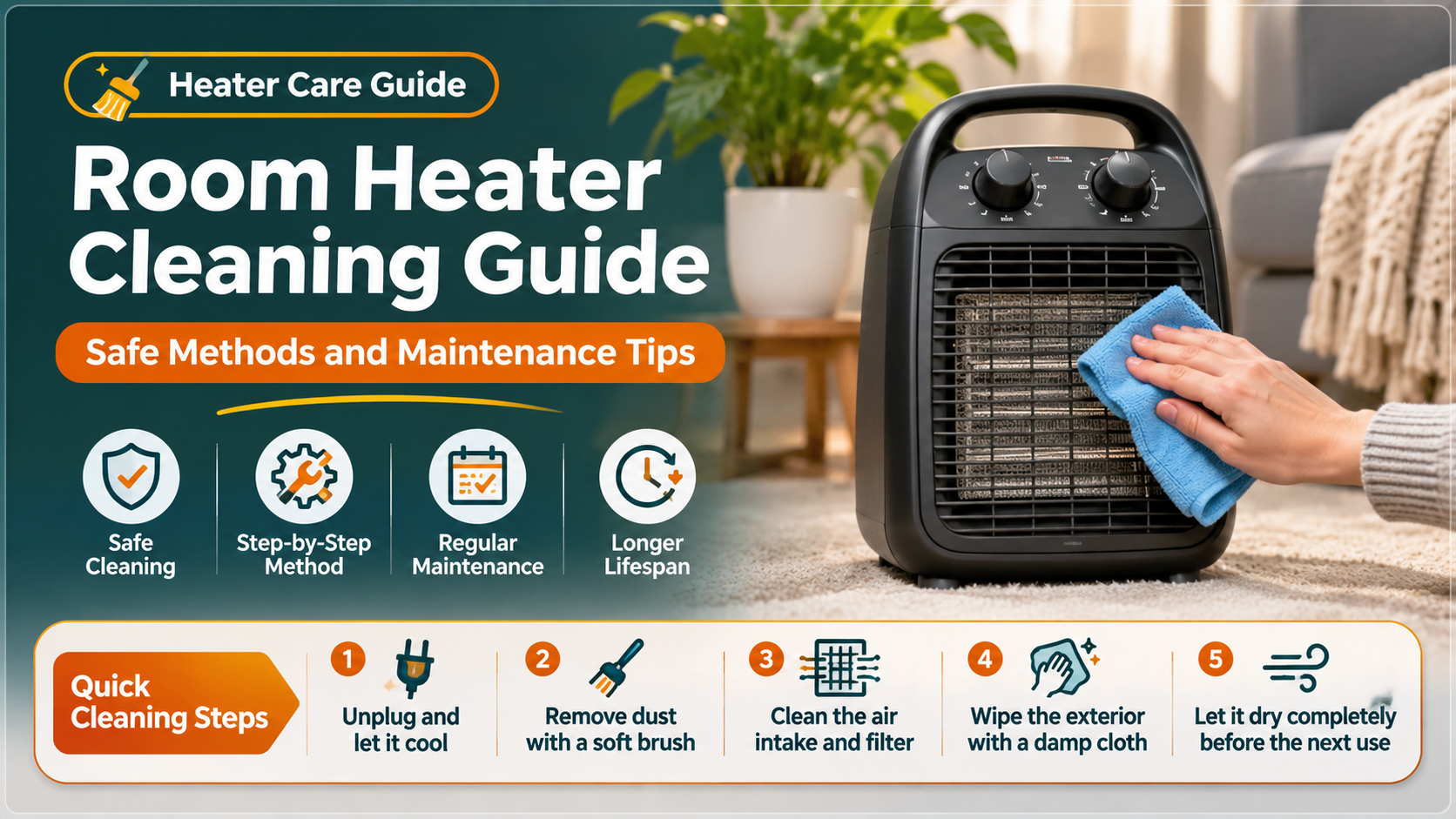
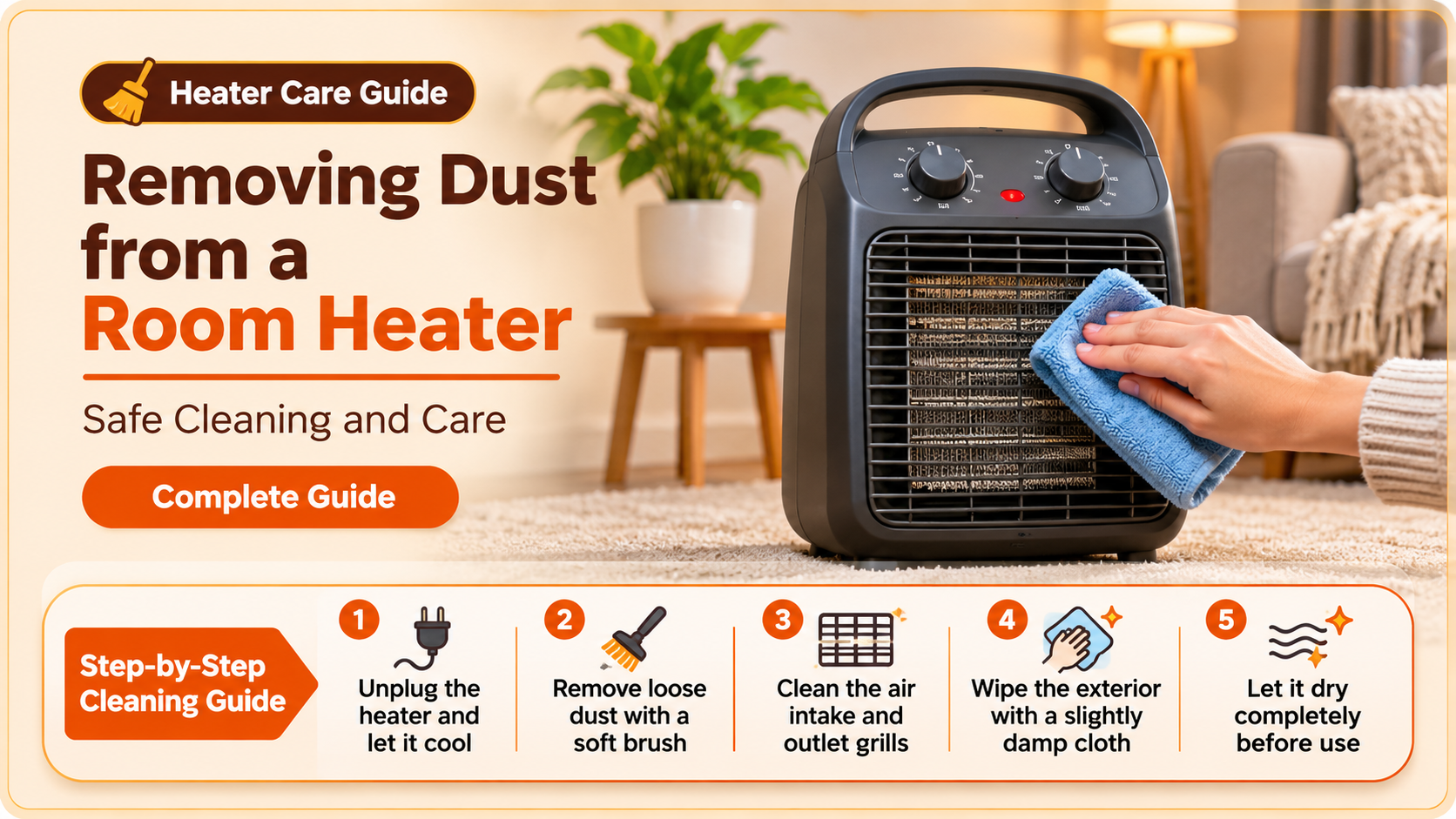
Step 1: Unplug and Cool the Heater
Disconnect the power cord and wait until the heater is cold to the touch. Move it to your cleaning spot.
Step 2: Brush Off Loose Dust
Use a soft brush to sweep dust from the front grill, side vents and back inlet. Brush in one direction, from top to bottom, so dust falls away from the unit rather than settling deeper inside.
Step 3: Vacuum the Vents and Grills
Attach the brush nozzle and run it gently over all openings. Use low suction and avoid pressing hard on heating elements or thin fins, which bend easily. This is the most effective step for removing the bulk of dust.
Step 4: Clean Hard-to-Reach Areas
For narrow slots, use short bursts of compressed air (hold the can upright, a few inches away) or a cotton bud. If the manual allows, remove the back cover and clean the fan blades and motor housing with a dry brush. Never touch or bend the heating element.
Step 5: Wipe the Outer Body
Dampen a microfibre cloth with water and a drop of mild soap, wring it out until barely damp, and wipe the casing, handle and control panel. Do not spray liquid directly on the heater and keep moisture away from switches and vents.
Step 6: Dry Completely and Test
Let every part air-dry for at least 30 minutes, then wipe once more with a dry cloth. Reconnect the heater and run it on a low setting for a few minutes in a ventilated room. A faint smell from leftover dust is normal and should disappear quickly.
How to Clean Different Types of Room Heaters
Each heater design collects dust differently, so adjust your method accordingly.
Fan Heaters and Blower Heaters
These pull air through a rear inlet, so dust builds up on the intake grill and fan blades. Vacuum the inlet, brush the blades gently and clean the filter if your model has one.
Oil-Filled Radiator Heaters
The sealed fins stay closed, so dust sits mostly on the outside. Wipe each fin with a damp cloth, or slide a thin cloth between the fins. Never open the oil chamber.
Halogen and Infrared Heaters
The glass tubes are delicate. Use only a dry soft brush or dry microfibre cloth on the guard and reflector. Do not touch the tube with bare fingers, as skin oils can shorten its life.
Ceramic (PTC) Heaters
These have honeycomb-like plates that trap fine dust. Vacuum with a brush nozzle and use compressed air for the honeycomb openings.
Convector and Panel Heaters
Dust collects along the bottom intake and top outlet. Vacuum both and wipe the panel with a barely damp cloth.
How Often Should You Clean Your Room Heater?
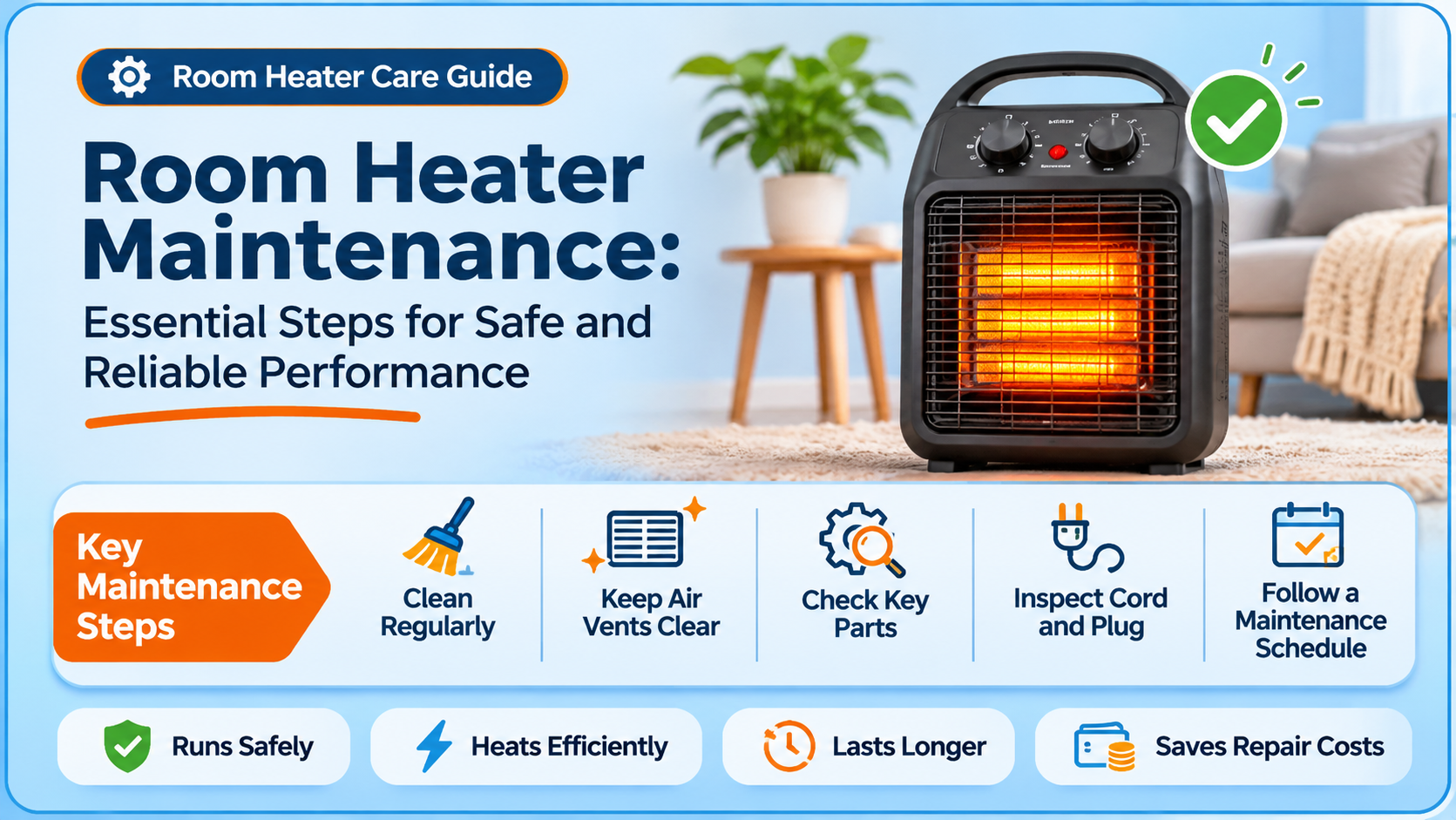
As a general rule, give your heater a quick wipe every two weeks during the heating season and a deep clean before you first use it each winter and again before storing it. If you have pets, live near a busy road or have a dusty home, clean it more often.
Common Mistakes to Avoid
- Cleaning while plugged in or hot: a serious shock and burn risk.
- Using water or spray cleaners on electrical parts: moisture can cause short circuits.
- Blowing dust with your mouth or a hairdryer: it only moves dust into the motor and room.
- Using harsh chemicals or abrasive pads: they damage paint and plastic.
- Bending the heating element or fins: this can reduce performance or cause hot spots.
- Skipping the drying time: turn it on only when every part is fully dry.
- Opening sealed parts without the manual: this may void your warranty and is unsafe.
Signs Your Heater Needs Cleaning Right Now
- A burning or dusty smell when switched on
- Visible dust on the grill or vents
- Weak airflow or slow room heating
- Louder fan noise than usual
- The heater feels hotter than normal on the outside
- Frequent automatic shut-offs from overheating protection
Tips to Prevent Dust Buildup
- Cover the heater with a breathable cloth or its original box when storing it for summer.
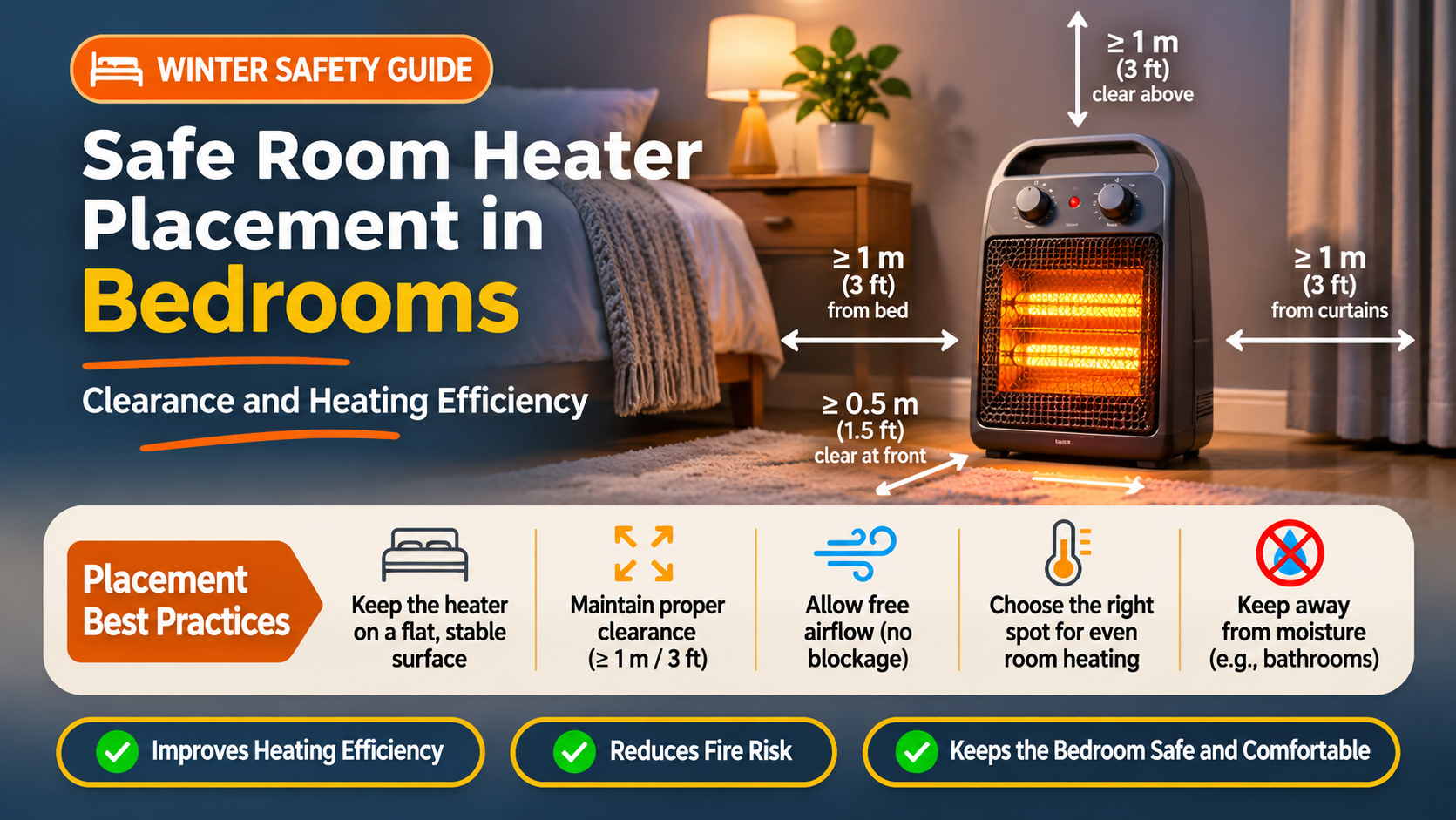
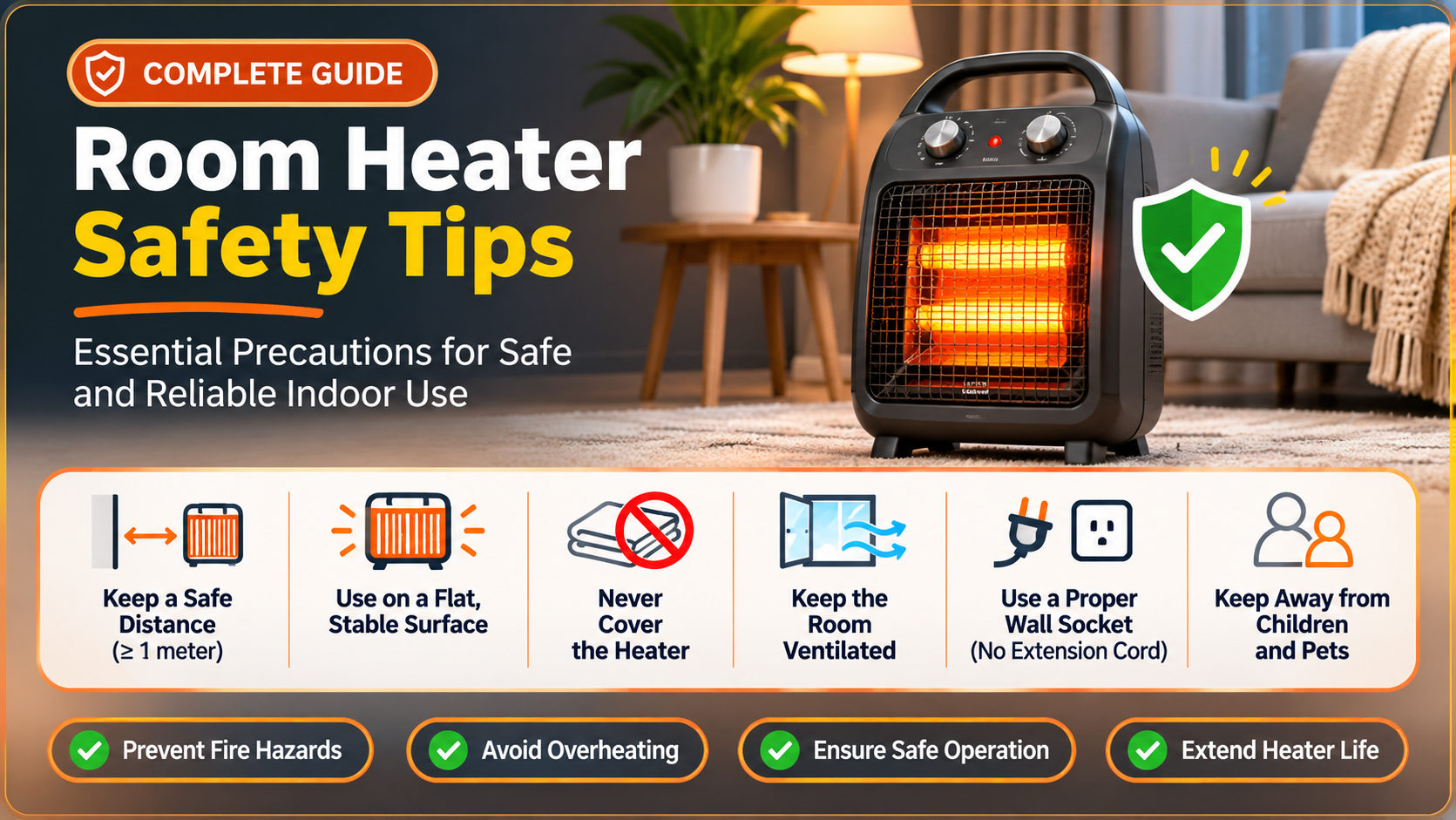
- Keep it at least 3 feet away from curtains, beds, sofas and carpets.
- Vacuum the floor and furniture around the heater regularly.
- Place the heater on a hard, flat surface instead of a dusty rug.
- Brush pets often to reduce fur around the heater.
- Consider an air purifier in the room to reduce airborne dust.
When to Call a Professional
Seek help from a qualified technician if you smell burning plastic even after cleaning, see sparks, notice a damaged cord, or the heater trips the circuit breaker. Heaters with sealed fan motors or complex internal wiring should be serviced professionally.
Choosing a Heater That Is Easier to Keep Clean
If you are planning to buy a new heater, look for features that make dust control easier:
- Removable or washable filter on the air intake
- Smooth, easy-to-wipe body with fewer crevices
- Oil-filled or panel designs, which collect less dust than open-element models
- Tip-over and overheat protection for added safety
- Accessible back panel that opens with simple screws
Frequently Asked Questions (FAQs)
Can I clean my room heater with water?
You can wipe the outer casing with a barely damp cloth, but never pour or spray water on the heater, and never let moisture reach the heating element, fan or switches.
Why does my heater smell like burning dust?
Dust on the element burns off when the heater is first turned on after storage. Cleaning it thoroughly usually removes the smell. If it continues, stop using the heater and have it inspected.
Can I use a hairdryer to blow dust out?
It is not recommended. A hairdryer can push dust deeper into the motor. A vacuum with a brush attachment is a much better choice.
Is it safe to use compressed air on a heater?
Yes, when the heater is unplugged and cool. Use short bursts and keep the can upright and a few inches from the surface.
How do I clean an oil-filled heater?
Wipe the fins with a damp microfibre cloth and dry them well. The internal oil is sealed and needs no maintenance.
Can dust in a heater cause a fire?
Heavy dust buildup near hot components is a recognized fire hazard, which is why regular cleaning is recommended by heater manufacturers.
How long should I wait before turning the heater on after cleaning?
Wait at least 30 minutes after wiping so all parts are completely dry.
Final Thoughts
Knowing how to remove dust from a room heater is one of the easiest ways to stay warm, safe and healthy this winter. Unplug it, let it cool, brush, vacuum, wipe, dry and test. A few minutes of regular care improves heating performance, cuts power use and helps your heater last for many seasons.
Make dust cleaning part of your seasonal routine, and your heater will give you clean, efficient warmth whenever you need it.