






A room heater works hard all winter, and it quietly collects dust, lint and pet hair while it does. A dirty heater heats slower, uses more electricity, can smell like burning dust and, in the worst case, becomes a fire risk. The good news is that cleaning one takes about 20 minutes and needs only basic supplies. This guide explains how to clean a room heater step by step, with tips for each heater type.
Why You Should Clean Your Room Heater Regularly
- Better heating: Dust on elements and vents blocks airflow and reduces warmth.
- Lower power bills: A clean heater reaches the set temperature faster.
- Safety: Built-up dust can burn or overheat parts.
- Cleaner air: Heaters blow dust and allergens around the room.
- Longer lifespan: Less strain on the fan, motor and thermostat.
Safety First: Before You Start
- Switch the heater off and unplug it from the wall.
- Let it cool completely, at least 30 minutes after use.
- Never spray liquid directly on the heater, controls or cord.
- Never put a heater in water, and never use harsh chemicals or solvents.
- Check your user manual for model-specific warnings.
Supplies You Will Need
Gather a soft brush, a microfibre cloth, a vacuum with a brush attachment, mild dish soap, warm water, cotton swabs and a dry towel. A can of compressed air is a useful extra for tight spaces. Keep a small screwdriver ready if your heater’s grille is held with screws.
How to Clean a Room Heater: Step-by-Step
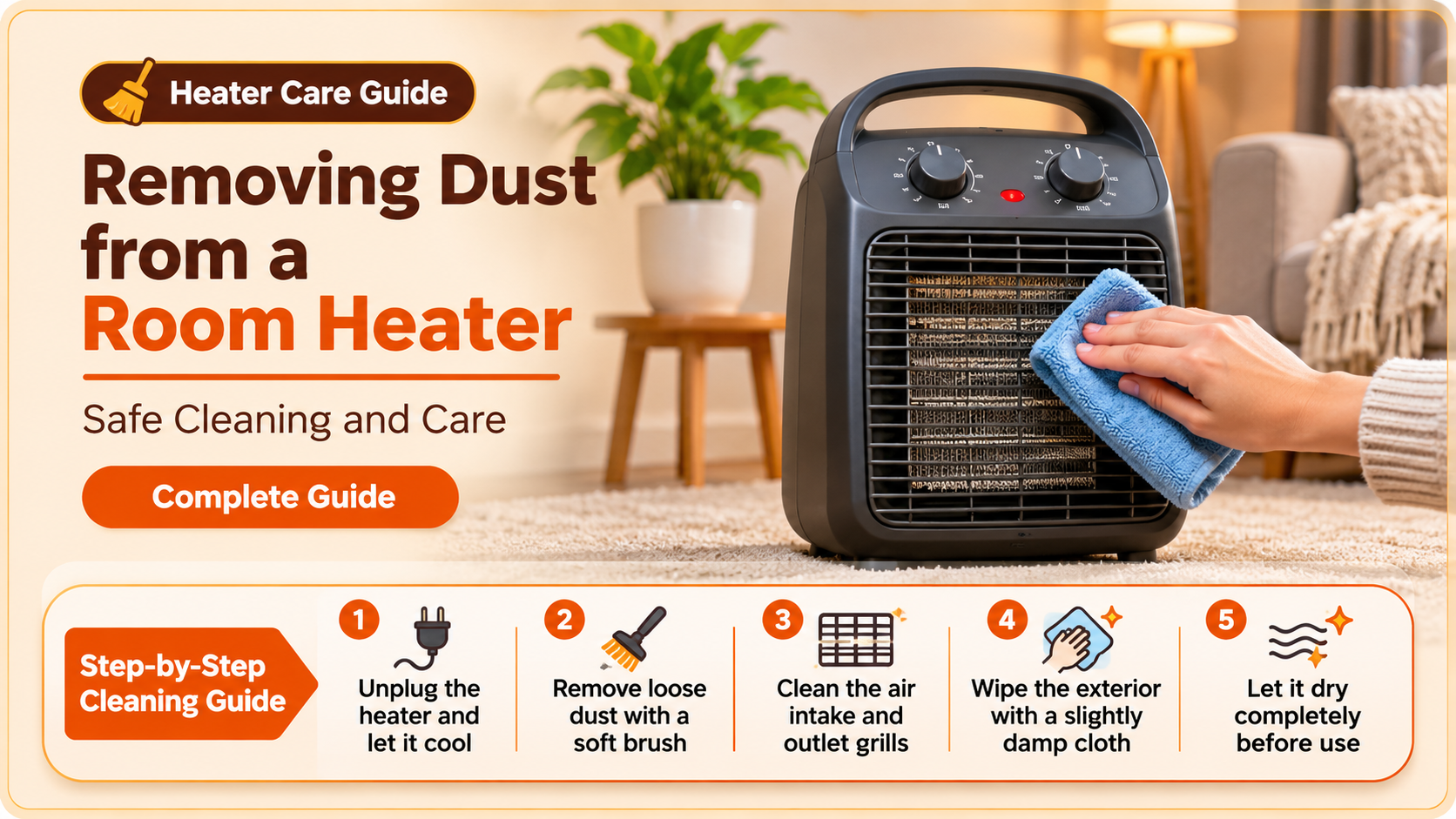
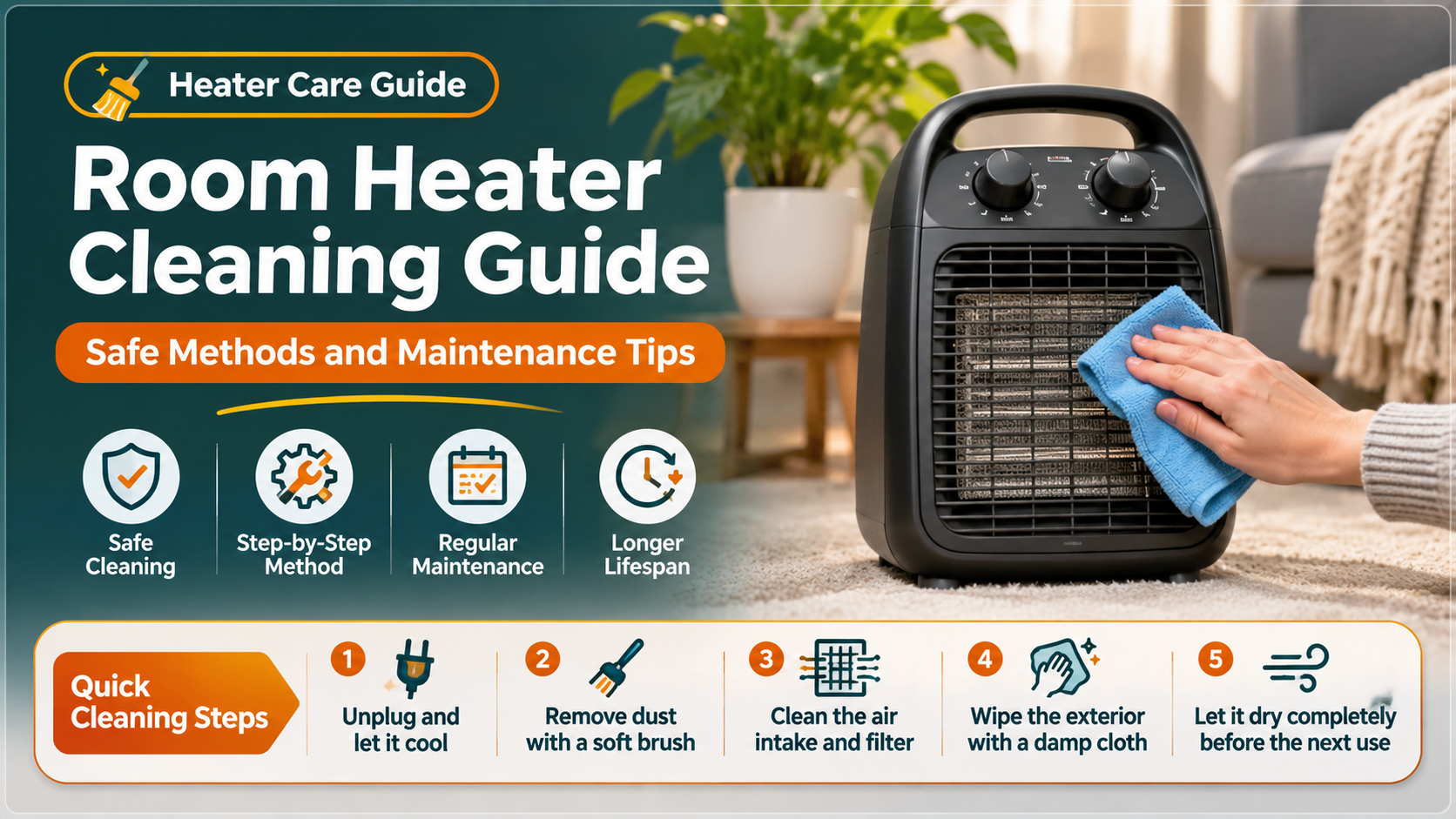
Step 1: Unplug and let it cool
Disconnect the power and wait until every part is cool to the touch. Move the heater to a well-lit area, ideally on newspaper or an old sheet to catch dust.
Step 2: Vacuum the dust
Use the brush attachment on low suction to remove dust from the front grille, side vents and rear air intake. Move slowly so dust does not scatter. Work from top to bottom.
Step 3: Wipe the outer body
Mix a few drops of mild soap in warm water. Dampen a microfibre cloth, wring it until nearly dry, and wipe the casing, handle and base. Do not wipe the plug or the control panel with a wet cloth.
Step 4: Clean the vents, fins and heating parts
Use a soft brush or a cotton swab to reach between grille bars and fins. For stubborn lint, short bursts of compressed air work well. Always blow dust away from the heating element, not into it.
Step 5: Dry and test
Dry every surface with a towel and leave the heater to air dry for 15 to 30 minutes. Plug it in and run it on low for a few minutes. A faint smell for the first minute is normal as leftover dust burns off, but a strong or persistent smell means you should switch it off and check again.
How to Clean Different Types of Room Heaters
| Heater type | Best cleaning method | Avoid |
|---|---|---|
| Fan heater | Vacuum intake and outlet, brush the fan blades gently | Bending blades, wet motor |
| Oil-filled radiator | Wipe each fin with a damp cloth, vacuum the base | Opening the oil chamber |
| Ceramic heater | Vacuum the grille, clean the filter if it has one | Soaking ceramic plates |
| Halogen or infrared | Dust the guard, wipe tubes only when fully cool with a dry cloth | Touching tubes with bare fingers, water |
| Convector heater | Vacuum the lower inlet and upper outlet slots | Blocking vents with cloth |
How Often Should You Clean a Room Heater?
Homes with pets, carpets or heavy dust may need cleaning more often. If you notice a burning-dust smell, weaker heat or visible dust in the vents, clean it right away.
Common Mistakes to Avoid
- Cleaning the heater while it is plugged in or still warm.
- Using sprays, bleach, alcohol or abrasive pads on the casing.
- Pushing metal objects into the heating element.
- Putting the heater back before it is fully dry.
- Skipping the air filter, if your model has one.
Tips to Keep Your Heater Cleaner for Longer
- Place it on a hard, flat floor rather than thick carpet.
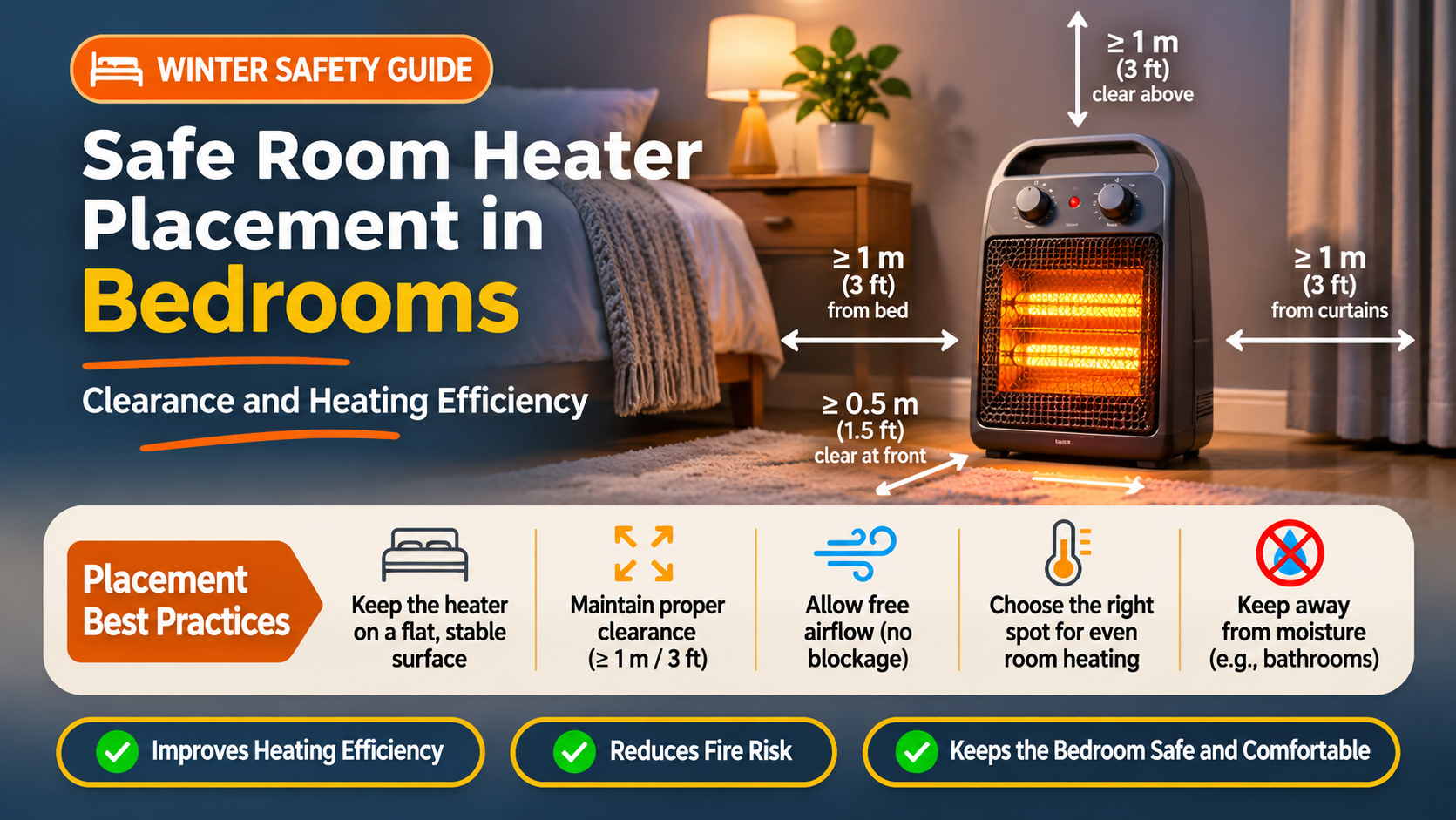
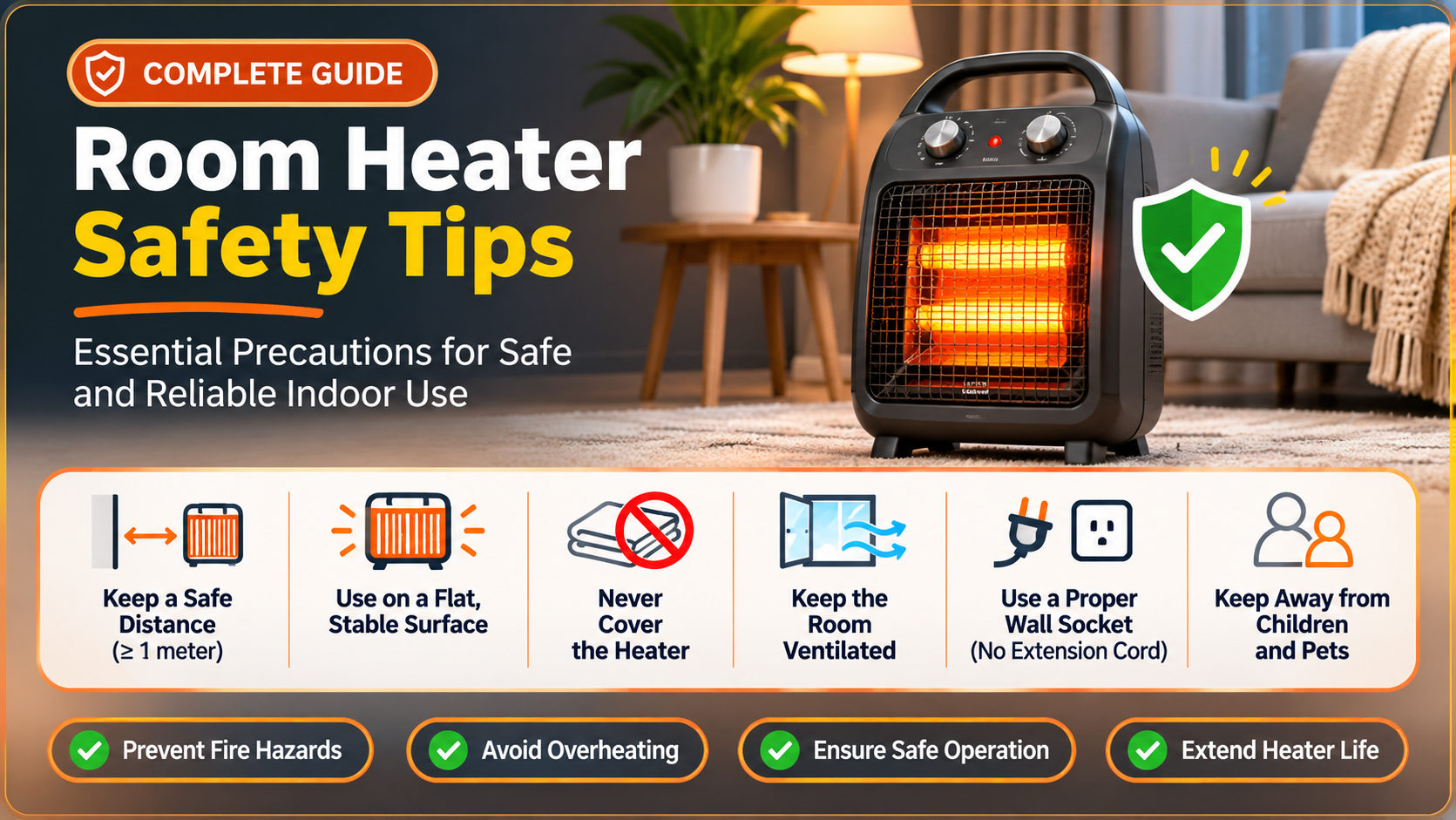
- Keep curtains, bedding and furniture at least one metre away.
- Cover it with a dust sheet or box when storing it for summer.
- Vacuum the room regularly to reduce airborne dust.
- Keep pets away from the air intake.
When to Call a Professional or Replace the Heater
Stop using the heater and contact a technician if you see a damaged cord, scorch marks, flickering power, frequent tripping of the breaker or a persistent burning smell after cleaning. If the heater is very old or the repair cost is close to a new unit’s price, replacing it is the safer choice. When shopping, look for tip-over protection, overheat shutoff, an adjustable thermostat and an easy-to-clean design.
Frequently Asked Questions
Can I wash a room heater with water?
No. Only wipe the outer casing with a barely damp cloth. Water must never reach the heating element, motor or electrical parts.
Why does my heater smell when I turn it on?
Dust on the element burns off when the heater is first used after storage. Cleaning it before use reduces this smell.
Is it safe to use compressed air on a heater?
Yes, when the heater is unplugged and cool. Use short bursts and keep the can upright.
How do I clean the heater filter?
If your model has a removable filter, take it out, vacuum it or rinse it gently in lukewarm water, and let it dry fully before refitting.
Can a dirty heater increase my electricity bill?
Yes. Blocked airflow forces the heater to run longer to reach the same temperature.
Conclusion
Learning how to clean a room heater is simple: unplug, let it cool, vacuum, wipe, detail the vents, dry and test. A few minutes of care each month gives you warmer rooms, lower bills and a much safer home all winter. Make it part of your seasonal routine and your heater will serve you for many years.