

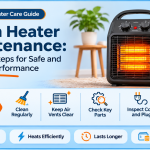

How to Maintain a Room Heater: Complete Care Guide for Safe, Efficient Heating
A room heater is one of the hardest-working appliances in your home during cold months, yet it is often ignored until it stops working. A little regular care goes a long way. If you are wondering how to maintain a room heater so it stays safe, efficient and reliable year after year, this guide gives you a simple routine you can follow, whatever type of heater you own.
Proper maintenance reduces electricity use, improves heat output, lowers fire and shock risks and can help your heater last many more winters. The good news: most tasks take only a few minutes.
Why Room Heater Maintenance Matters
- Safety: Heaters are a leading cause of home fires when they are damaged, blocked or misused. Regular checks catch problems early.
- Efficiency: Dust and blocked vents force the heater to work harder, which wastes electricity.
- Longer lifespan: Clean, well-stored heaters avoid premature motor, element and switch failures.
- Cleaner air: A well-kept heater circulates less dust, pet hair and allergens.
- Lower repair costs: Small issues like a loose knob or worn cord are cheap to fix before they become big problems.
Know Your Heater Type First
Different heaters need slightly different care. Always keep the manufacturer’s manual handy, because it overrides general advice.
- Fan or blower heaters: Need regular cleaning of the air intake, fan and vents.
- Oil-filled radiators: Sealed and low-maintenance. Mainly need external cleaning, cord checks and safe storage upright.
- Halogen and infrared heaters: Need gentle dry cleaning of the guard and reflector. The glass tube is delicate.
- Ceramic (PTC) heaters: Need vent and filter cleaning, since fine dust collects in the honeycomb plates.
- Convector and panel heaters: Need clear intake and outlet vents and a wiped body.
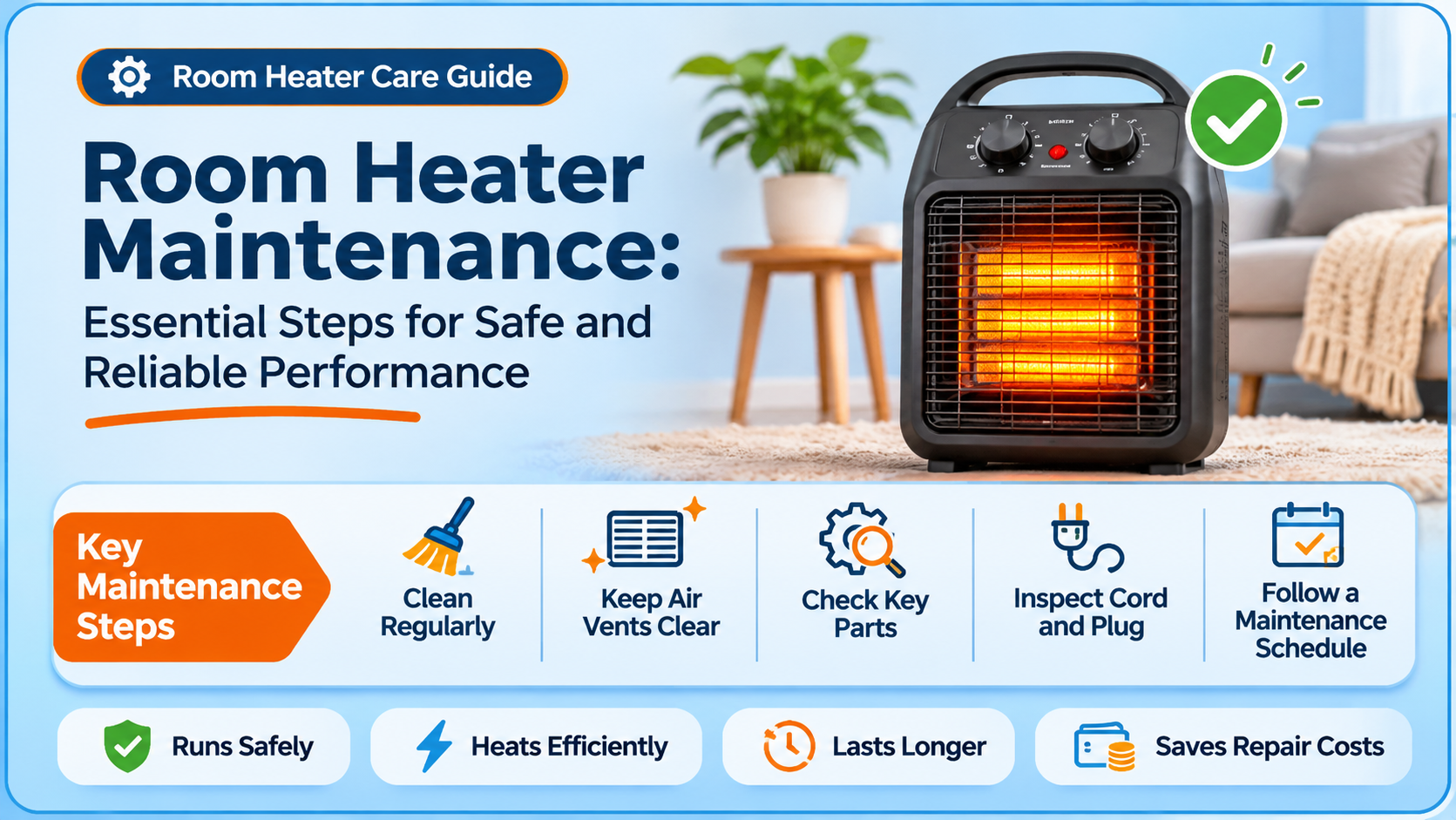
Your Room Heater Maintenance Schedule
The easiest way to keep up is to follow a simple schedule. Here is a routine that works for most homes.
Weekly Tasks (During Heating Season)
- Look over the heater for dust buildup, damage or anything unusual.
- Wipe the outer body with a dry or barely damp microfibre cloth.
- Make sure nothing, such as clothes, curtains or furniture, is too close.
Monthly Tasks
- Unplug the heater, let it cool, and vacuum the vents and grills with a brush attachment.
- Inspect the power cord and plug for damage.
- Test the tip-over and overheat safety features if your model allows it.
- Check that knobs, switches and the thermostat respond smoothly.
Before Winter Starts
- Give the heater a deep clean, including the fan area if the manual allows opening the casing.
- Run it for a short time outdoors or in a ventilated room to burn off any stored dust.
- Test every heat setting and the timer.
- Replace any damaged parts or the entire unit if it is old or unsafe.
End of Season
- Clean the heater completely and let it dry fully.
- Loosely coil the cord without tight bends.
- Store it in its original box or under a breathable cover, in a dry place.
How to Clean a Room Heater the Right Way
- Unplug and cool. Never clean a plugged-in or warm heater.
- Brush loose dust from the grill and vents with a soft brush.
- Vacuum the openings using a brush nozzle on low suction.
- Use compressed air in short bursts for narrow gaps, if needed.
- Wipe the body with a barely damp cloth, avoiding switches and vents.
- Dry completely for at least 30 minutes before plugging in again.
Never use water sprays, harsh chemicals or abrasive pads on a heater.
Monthly Inspection Checklist
A quick monthly inspection helps you spot trouble early. Use this checklist while the heater is unplugged.
Power Cord and Plug Care
The cord and plug are the most common source of electrical problems.
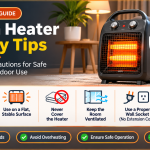
- Plug the heater directly into a wall socket. Avoid extension cords and power strips because heaters draw high current.
- Never run the cord under rugs or furniture, where heat and damage can go unnoticed.
- Do not wrap the cord tightly around the heater while it is warm.
- If the plug feels hot, smells or looks discolored, stop using the heater and have the socket and plug checked.
Safe Placement and Usage Habits
How you use the heater is part of maintenance too.
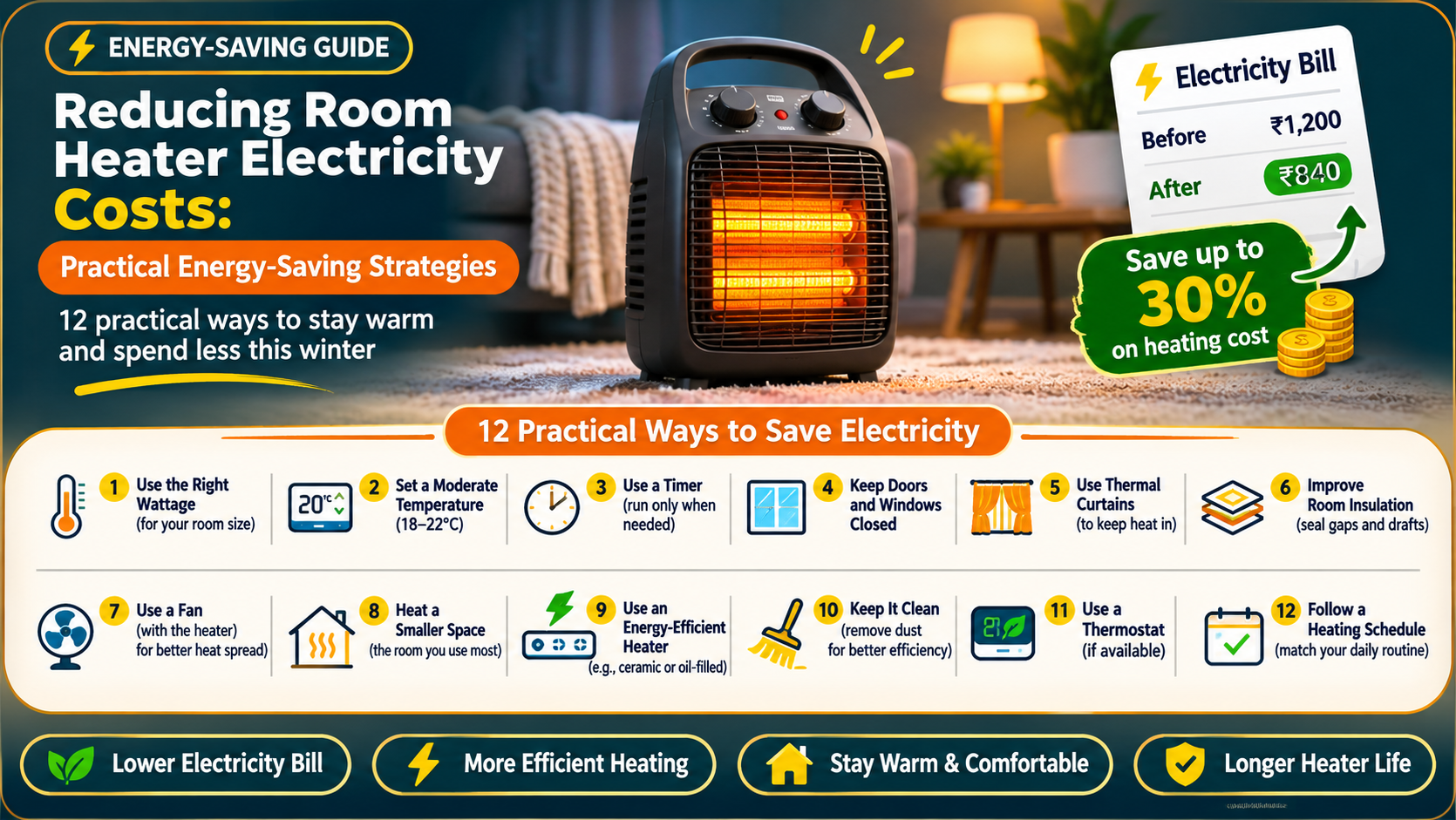
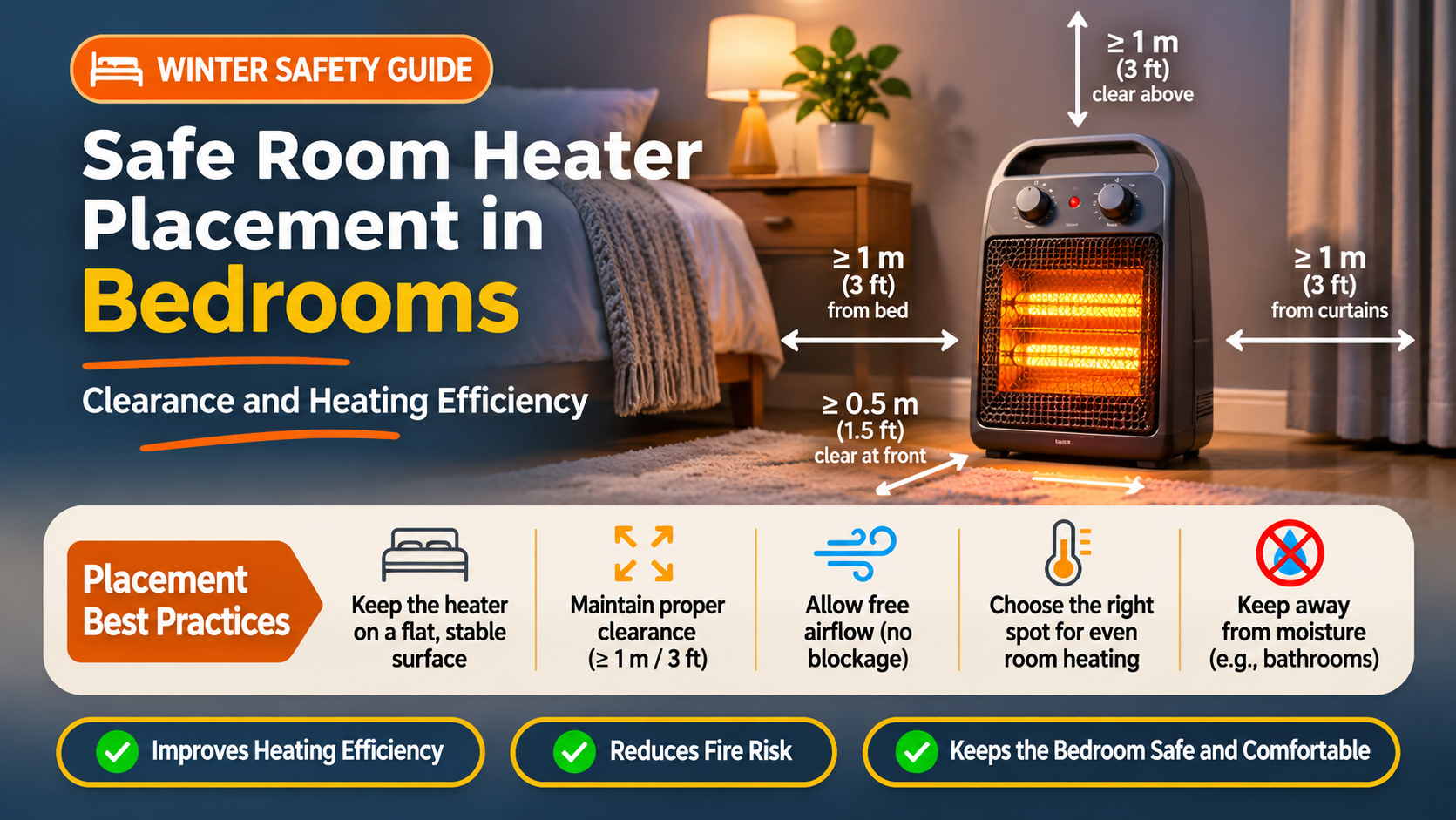
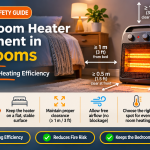
- Keep at least 3 feet (about 1 meter) of clear space around the heater.
- Place it on a flat, stable, non-flammable surface, never on a bed, sofa or thick carpet.
- Do not use it to dry clothes or towels.
- Switch it off and unplug it when leaving the room or going to sleep, unless it is designed and approved for continuous use.
- Keep children and pets away from hot surfaces.
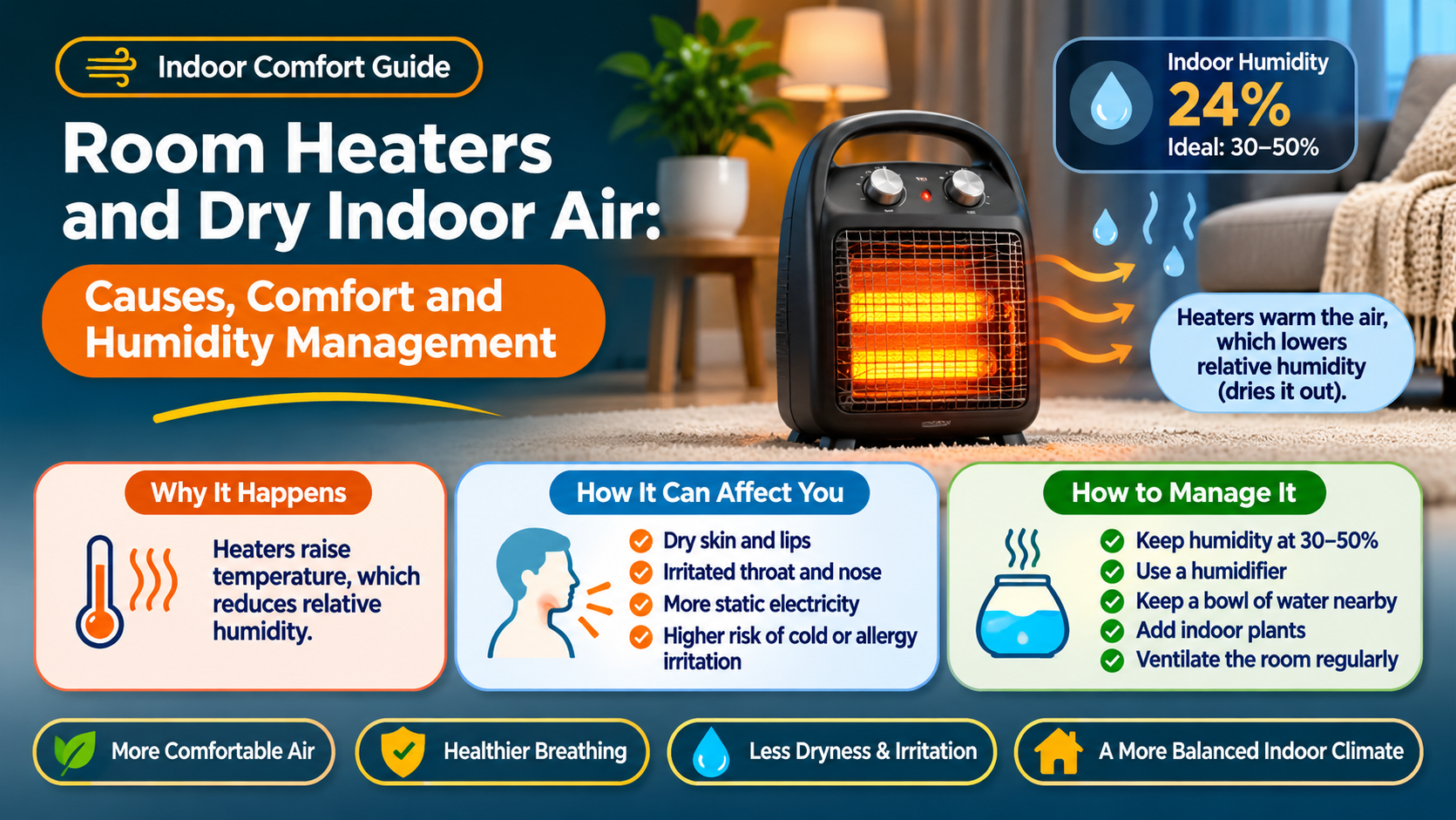
- Avoid using it in wet or very humid rooms unless it is rated for such areas.
Do’s and Don’ts at a Glance
How to Store a Room Heater in the Off-Season
Poor storage is a hidden cause of winter breakdowns. Follow these steps before putting your heater away.
- Clean it thoroughly and make sure it is completely dry.
- Check the cord and plug for damage and arrange repairs now rather than next winter.
- Wrap the cord loosely and tuck it neatly.
- Place the heater in its original box, or cover it with a breathable cloth. Avoid plastic bags that trap moisture.
- Store oil-filled radiators upright, in a dry place away from damp walls.
- Keep it somewhere safe from pests, moisture and heavy items.
Troubleshooting Common Room Heater Problems
Many problems have simple causes. Always unplug the heater before checking anything.
The Heater Does Not Turn On
Check the wall socket with another device, inspect the plug and cord, and confirm the thermostat is turned up. If the heater was tipped over, make sure it is upright and the safety switch has reset.
The Heater Produces Little Heat
Dusty vents are the usual cause. Clean the intake and outlet. Also check that the room is not too large for the heater’s power rating.
The Heater Smells Like Burning
A short dusty smell is normal at the start of the season. If it continues after cleaning, or smells like burning plastic, switch it off, unplug it and have it inspected.
The Heater Makes Strange Noises
Rattling can mean loose screws or a dirty fan. Clean it and tighten external parts if safe. A grinding or scraping noise from the motor needs professional attention.
The Heater Keeps Shutting Off
This is often the overheat protection working. Clean the vents, make sure nothing blocks airflow and avoid placing it too close to walls or furniture. If it keeps happening, the thermostat or protection switch may be faulty.
Signs It Is Time to Repair or Replace
- The cord is frayed, cracked or hot to the touch.
- The casing is cracked, warped or discolored from heat.
- The heater sparks, trips the circuit breaker or gives small shocks.
- Safety features such as the tip-over switch no longer work.
- Repairs would cost close to the price of a new heater.
- The heater is many years old and heats poorly despite cleaning.
Do not attempt to repair internal electrical parts yourself unless you are qualified. A technician or the manufacturer’s service center is the safer option.
Tips to Make Your Heater Last Longer
- Clean it regularly, because dust is the biggest enemy of any heater.
- Use the lowest setting that keeps the room comfortable.
- Avoid frequent on/off switching and rough handling.
- Let it cool before moving or storing it.
- Keep the manual and warranty details somewhere easy to find.
- Use a thermostat or timer to avoid unnecessary running time.
Choosing a Low-Maintenance Heater
If you are shopping for a new heater, features like these make upkeep easier:
- Washable or removable air filter
- Smooth, wipe-clean body with fewer crevices
- Built-in safety features such as tip-over and overheat protection
- Sealed oil-filled design, which needs very little internal care
- Easily accessible back panel and a clear manual
- Thermostat and timer for efficient, controlled heating
Frequently Asked Questions (FAQs)
How often should I maintain my room heater?
Do a quick check weekly, a vent cleaning and cord inspection monthly, and a deep clean before winter and before storage.
Does a room heater need servicing?
Most portable heaters need no professional servicing if cleaned and inspected regularly. Take it to a technician if you notice electrical faults, burning smells or unusual noises.
How long does a room heater last?
Lifespan varies by type, quality and use, but a well-maintained heater commonly lasts many years. Dust buildup, rough handling and poor storage shorten it.
Can I leave my room heater on overnight?
It is generally safer not to. Switch off and unplug it when you sleep or leave the house, unless the manufacturer states it is designed for unattended use.
Is it safe to use an extension cord with a heater?
Not recommended. Heaters draw a lot of power and can overheat extension cords. Plug directly into a wall socket.
Why does my heater smell when I first turn it on?
Dust that settled during storage burns off the element. Cleaning before the season usually prevents it. A persistent or plastic-like smell needs inspection.
Does maintenance really lower electricity bills?
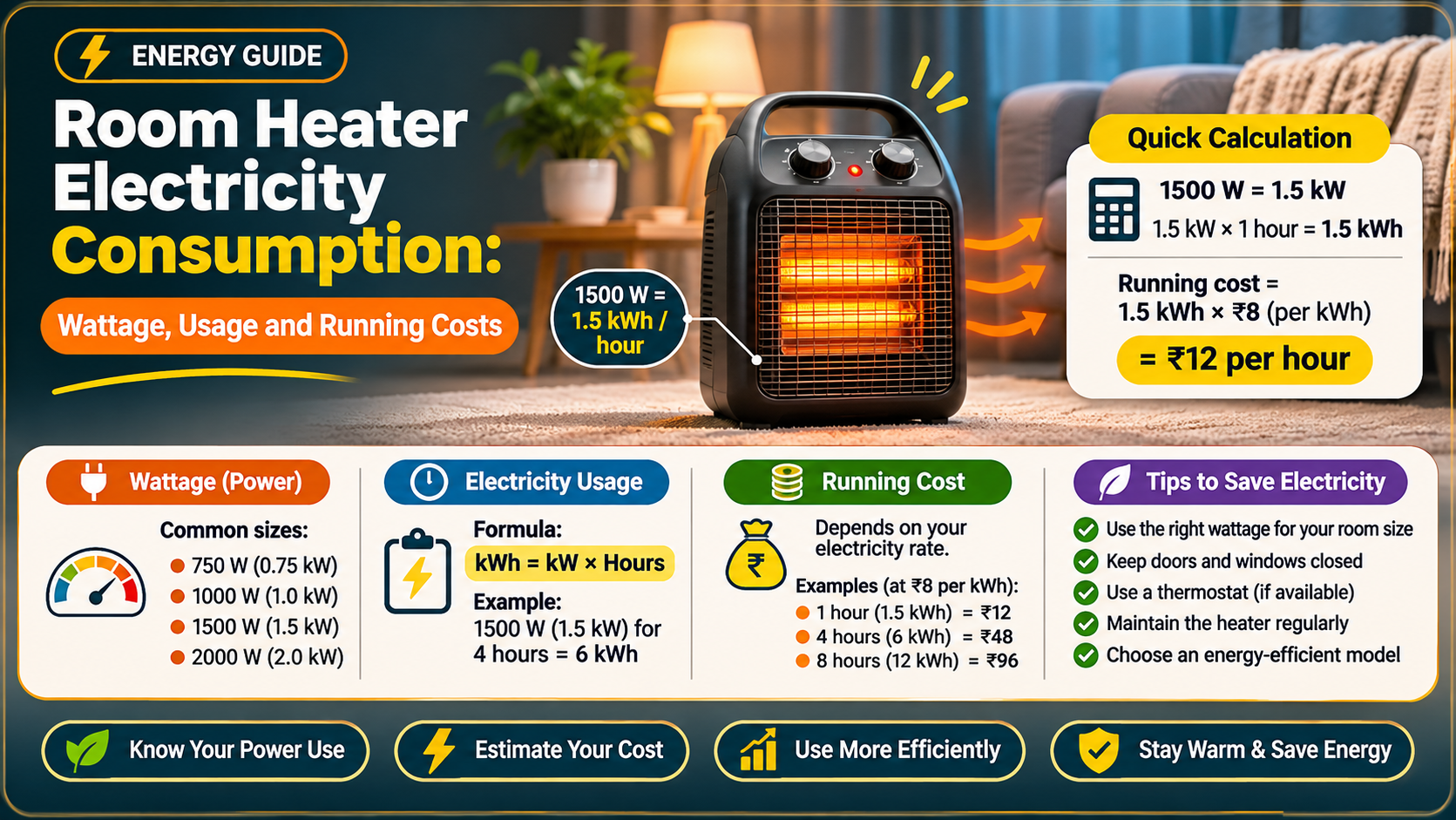
A clean heater with clear airflow works more efficiently, so it can reach the set temperature faster and avoid wasting energy.
Final Thoughts
Learning how to maintain a room heater is simple: keep it clean, inspect it regularly, use it safely and store it properly. A few minutes each month protects your family, saves energy and keeps your heater warming your home for many winters.
Start today by unplugging your heater, checking the cord and cleaning the vents. Your next cold night will be safer and warmer for it.