Handy Heater Turbo Instructions: A Complete Guide to Setup, Safe Use, Cleaning and Troubleshooting
When the temperature drops, a compact heater like the Handy Heater Turbo can feel like a small miracle. You plug it in, switch it on, and within minutes the chill around your desk, bed or sofa starts to fade. But a heater is only as good as the way you use it. Placed badly, run for too long, or left dusty, even a well-made unit will heat poorly, make odd noises, or become a safety risk.
This guide walks you through the Handy Heater Turbo instructions from start to finish: what to check before the first use, how to operate it step by step, where to place it, how to keep it clean, what it costs to run, and how to fix the most common problems. Keep it handy for the whole winter.
- Read the manual and the rating label on your unit first. Exact controls differ between models and sellers.
- Plug the heater straight into a wall socket. Avoid extension cords and power strips.
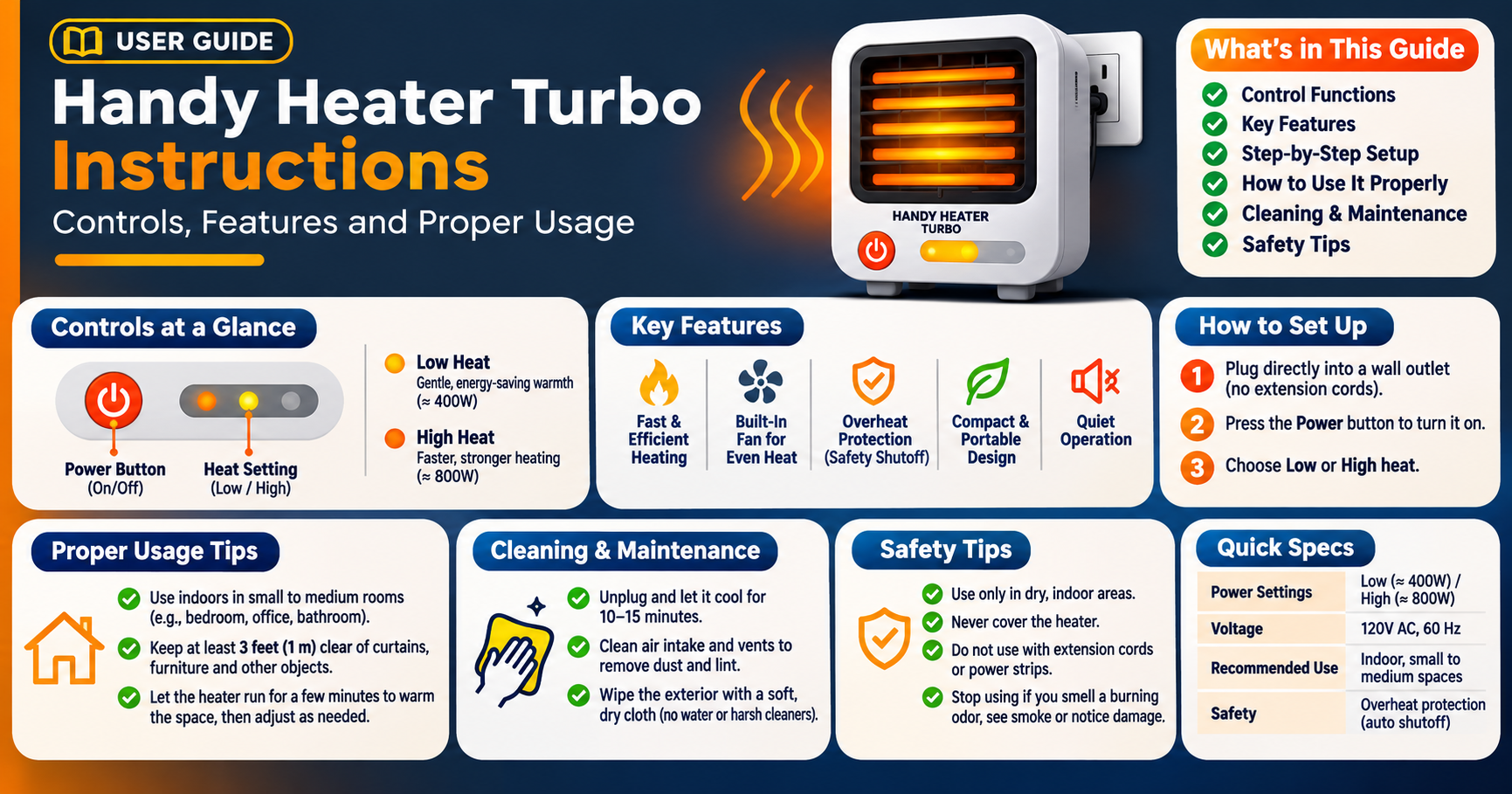
- Keep at least 1 metre (3 feet) of clear space around the front and sides.
- Place it on a flat, hard, stable surface, never on a bed, sofa or carpet pile.
- Never cover it, never dry clothes on it, and never leave it running unattended.
- Unplug and let it cool before cleaning. Clean the vents and filter area regularly.
What Is the Handy Heater Turbo?
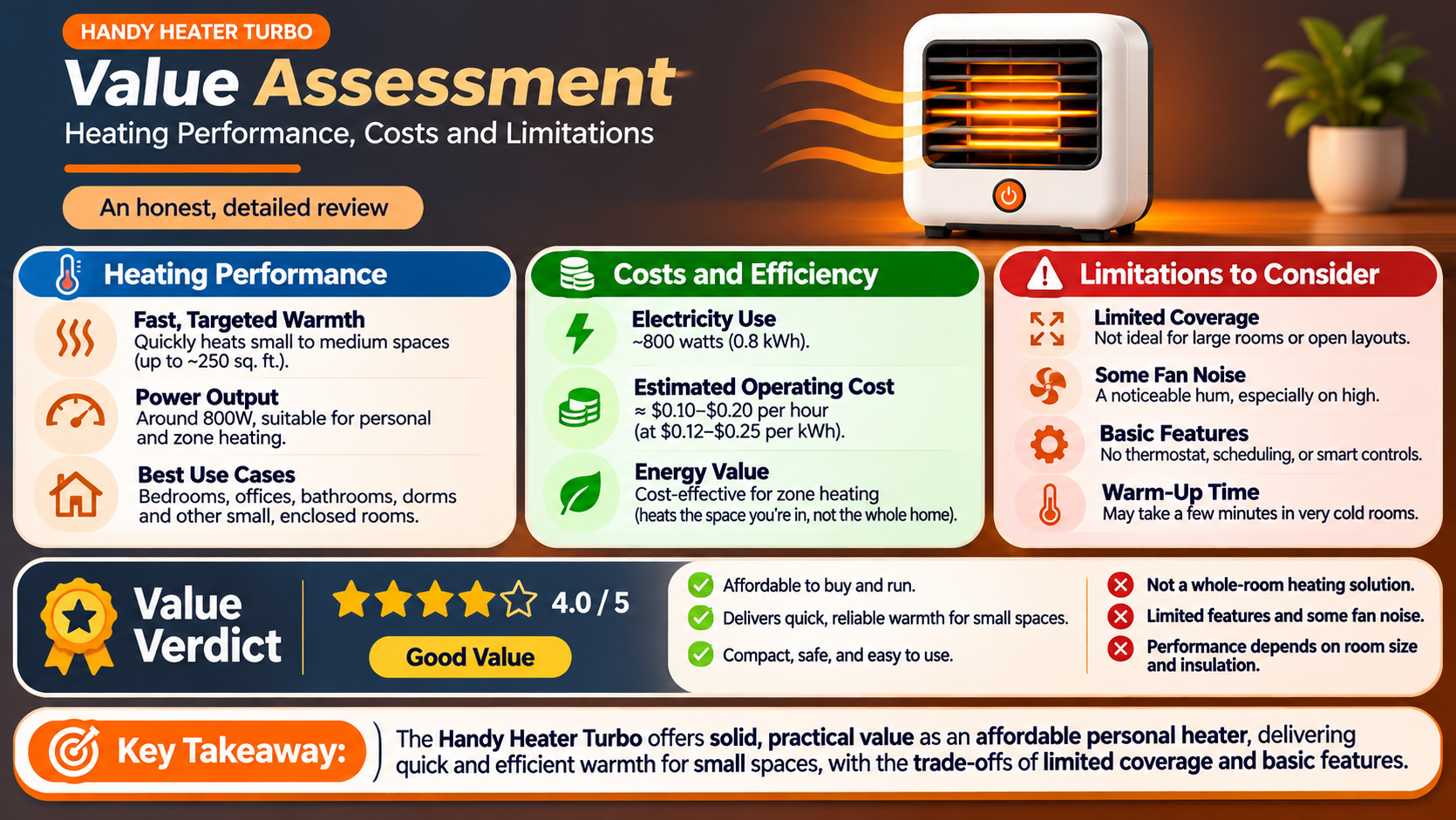
The Handy Heater Turbo is a small, plug-in electric room heater built for quick, personal warmth. Heaters in this category usually combine an electric heating element with a small fan that pushes warm air out of the front vents. Because they are compact, they warm the air close to you rather than an entire house, which makes them popular for bedrooms, home offices, study rooms, bathrooms (when the model is rated for it) and small living spaces.
Because several versions and look-alike products are sold under similar names, always treat the printed label on the back or bottom of your own unit as the final word on voltage, wattage and safety ratings. The advice below applies to typical compact fan-forced electric heaters and is meant to be used alongside your manual, not instead of it.
Before You Use It for the First Time
A two-minute check before the first use prevents most problems later.
- Unpack and inspect. Look for cracks in the casing, bent plug pins, or a damaged cord. If anything looks wrong, do not plug it in.
- Read the rating label. Confirm that the voltage printed on the unit matches your household supply, and note the wattage. You will need the wattage later to estimate running costs.
- Check the socket. The wall socket should be in good condition, grip the plug firmly, and not feel warm or loose.
- Expect a slight smell. A faint, harmless odour during the first few minutes is common as manufacturing residue burns off. Ventilate the room. If the smell is strong, sharp or keeps coming back, switch off and unplug immediately.
Handy Heater Turbo Instructions: Step-by-Step Operation
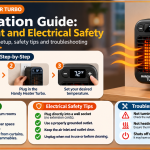
Follow this sequence every time you use the heater. It takes only a minute and keeps both you and the unit safe.
Step 1: Choose the right spot
Pick a flat, hard, stable surface such as a tiled or wooden floor, or a sturdy table. Keep the heater away from curtains, bedding, paper, furniture and anything that can burn.
Step 2: Check that the switch is off
Make sure the power switch is in the off position before you plug in. This avoids a sudden surge of heat when the plug makes contact.
Step 3: Plug directly into the wall socket
Push the plug in fully. Heaters draw a lot of current for their size, so extension cords, multi-plugs and power strips can overheat. A direct wall connection is the safest choice.
Step 4: Switch on and select a setting
Turn the heater on and choose the mode you need. Many compact heaters offer a fan-only option, a lower heat setting and a higher or “turbo” heat setting. Start with the higher setting to take the chill off quickly, then drop to a lower setting once the area feels comfortable.
Step 5: Adjust the thermostat or temperature dial (if your model has one)
A thermostat cycles the heating element on and off to hold your chosen temperature, which saves electricity. If your unit has one, turn it up until the heater is running, then lower it slowly until it just clicks off at a comfortable temperature.
Step 6: Give it a few minutes
Small heaters warm the air in front of them first. Sit within the warm airflow zone, but not so close that the hot air blows directly on your skin or clothing for long periods.
Step 7: Switch off and unplug when finished
Turn the switch off, pull the plug out by gripping the plug itself (never the cord), and let the heater cool down before moving it. Allow the fan to finish its cool-down run if your model has that feature.
Understanding the Common Controls and Protections
Most compact heaters share a similar set of features. Here is what they do and why they matter.
| Feature | What it does | Tip |
|---|---|---|
| Power switch | Turns the unit on and off | Always switch off before unplugging |
| Heat / fan modes | Selects fan only, lower heat or higher heat | Use the high setting briefly, then step down |
| Thermostat | Holds the room near your chosen temperature | Helps reduce electricity use |
| Overheat protection | Cuts power if internal temperature gets too high | If it trips, unplug, cool down and check for blocked vents |
| Tip-over protection | Switches the heater off if it falls over | Do not rely on it as a reason to place the heater on unstable surfaces |
| Timer (if fitted) | Switches off after a set period | Useful for short warm-ups, not a substitute for supervision |
If your heater has none of these extras, that does not necessarily make it unsafe, but it does mean you should be more careful about placement and supervision.
Where to Place Your Handy Heater Turbo
Placement affects both safety and comfort. The golden rule is to leave plenty of open space so air can flow freely into the back of the heater and warm air can flow out of the front.
- Keep 1 metre (3 feet) clear at the front and sides of the heater. Anything closer, such as curtains, blankets, clothes or furniture, can overheat or ignite.
- Use a hard, level surface. A soft surface can tilt the heater or block the intake vents.
- Aim the airflow toward where you sit, not at walls or doors.
- Choose a spot near the socket so the cord does not stretch across walkways, where it could be tripped over.
- Keep it away from water. Do not use it near a sink, bath or shower, and never with wet hands. Use it in a bathroom only if the manual states that the model is rated for it.
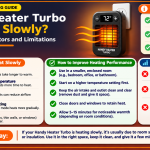
How to Get the Most Warmth From a Small Heater
A compact heater is designed for personal or small-room heating. These habits help it perform at its best.
- Close the door and windows. Heat escapes quickly through gaps. Draught-proofing the bottom of the door makes a noticeable difference.
- Heat the space you are using. Warm only the room you are in rather than trying to heat the whole house.
- Use the thermostat. Letting the heater cycle saves energy compared with running it flat out.
- Pre-heat before you settle in. Run it for a few minutes before sitting down or getting into a chair, then turn it down.
- Layer up. Warm clothing plus a small heater is cheaper and more comfortable than a hot room.
- Keep it clean. Dust on the vents and element reduces airflow and heating performance.
Important Safety Rules
Electric heaters are a leading cause of home heating fires, and nearly all of those cases involve misuse rather than faulty products. Treat these rules as non-negotiable.
- Never leave it running unattended. Switch it off when you leave the room or go to sleep.
- Never cover the heater. Do not drape towels, clothes or blankets over it, and do not use it to dry laundry.
- Do not use extension cords or power strips, unless the manufacturer explicitly allows it for your model.
- Keep children and pets away. The front grille and casing can get hot. Never let children play with the heater.
- Check the cord and plug regularly. If the plug or cord feels hot, looks discoloured, or is frayed, stop using the heater and have it checked.
- Do not use it in dusty, damp or flammable environments. Keep it away from petrol, aerosol cans, paint, solvents and other flammable materials.
- Do not insert objects into the vents. Not even a pen or a finger.
- Stop using it if something seems wrong. A burning smell, sparks, flickering power or loud rattling are all signs to switch off, unplug and investigate.
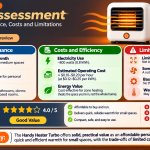
How Much Electricity Does It Use?
Every electric heater converts almost all the power it draws into heat, so the running cost depends mainly on its wattage and how long you use it. You can estimate the energy with a simple formula:
Here is an example for a heater rated at 1000 watts, shown for illustration only. Use the wattage printed on your own unit for an accurate result.
To turn this into a cost, multiply the kWh figure by the price per unit on your electricity bill. Using the thermostat, closing the door, and heating only while you are in the room are the easiest ways to bring that number down.
Cleaning and Maintenance
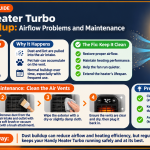
Dust is the enemy of every heater. It blocks airflow, causes uneven heating, creates burning smells and can lead to overheating. A few minutes of upkeep keeps the unit running well.
| How often | What to do |
|---|---|
| Before each use | Look at the cord, plug and vents. Make sure nothing is blocking the front or back. |
| Every week of regular use | Wipe the outer casing with a dry or slightly damp cloth (heater unplugged and cool). |
| Every 2 to 4 weeks | Vacuum the vents and grille with a soft brush attachment to remove dust. |
| End of season | Do a full clean, let it dry completely, then store it properly. |
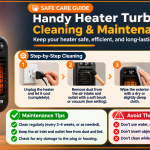
How to clean it safely
- Switch off, unplug, and wait until the heater is completely cool.
- Use a soft brush or a vacuum with a brush attachment to remove dust from the vents and grille.
- Wipe the casing with a lightly dampened cloth. Never pour or spray water onto the heater.
- Do not use harsh chemicals, abrasive pads or solvents, which can damage the plastic.
- Let everything dry fully before plugging it back in.
- Never open the casing yourself. Internal repairs should be left to a qualified technician.
Storing it between seasons
Clean the unit, make sure it is dry, loosely coil the cord without kinking it, and store the heater in its original box or a covered container in a dry place. Avoid damp garages and sheds, where moisture can affect the electrical parts.
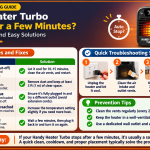
Troubleshooting Common Problems
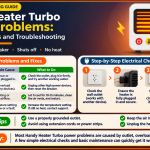
Most issues with small heaters have simple causes. Always switch off and unplug before checking anything.
| Problem | Likely cause | What to try |
|---|---|---|
| Won’t turn on | Loose plug, dead socket, tripped breaker, or tip-over switch activated | Test the socket with another appliance, reset the breaker, and place the heater upright on a level surface |
| Power light on but no heat | Heat setting not selected, thermostat set too low, or heating element fault | Select the heat mode, turn the thermostat up, and if there is still no heat, stop using it |
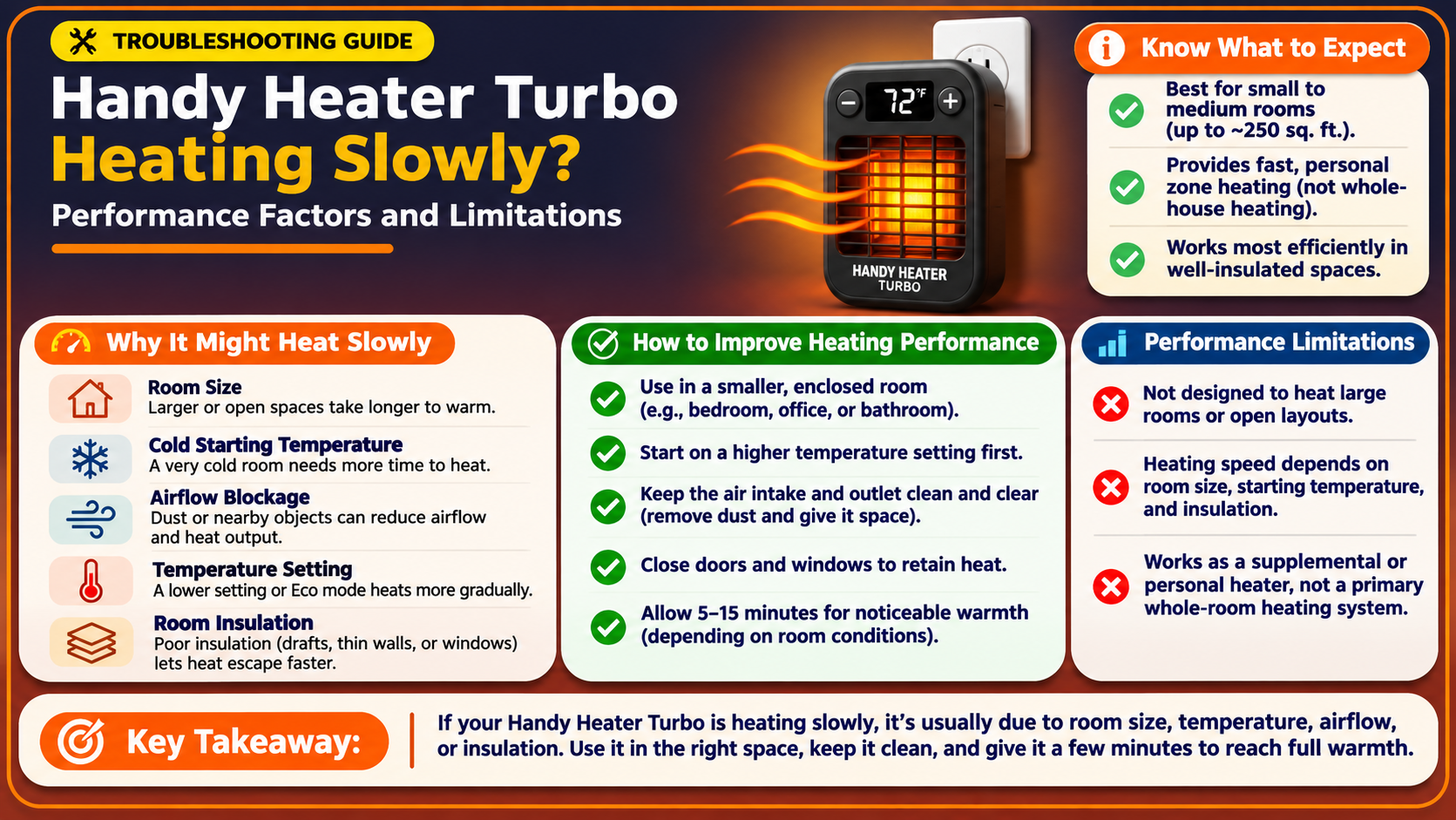
| Heats slowly or weakly | Dust, blocked vents, large or draughty room | Clean the vents, close doors and windows, and move the heater closer to where you sit |
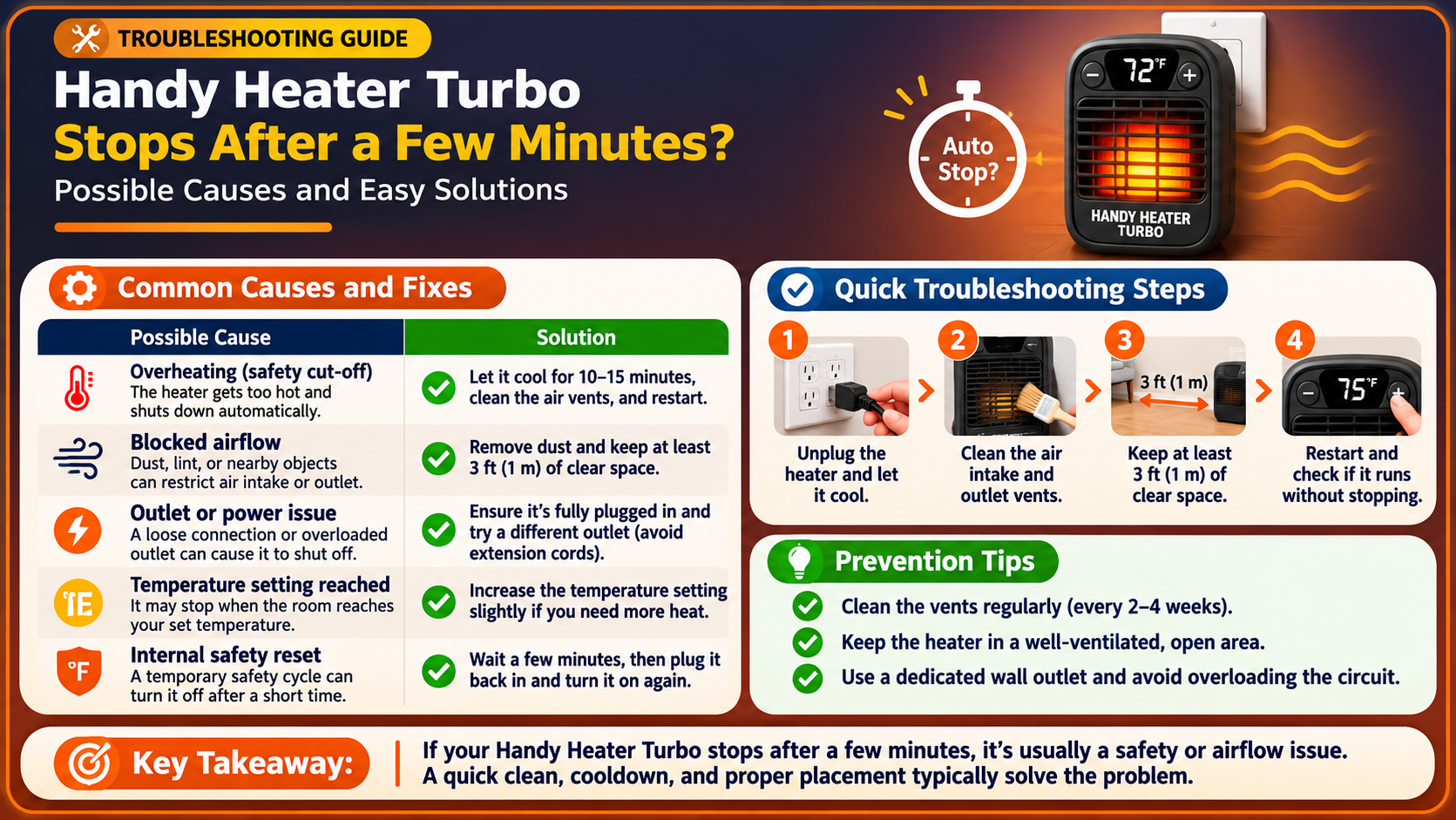
| Switches off after a few minutes | Overheat protection from blocked airflow or too little clearance | Unplug, let it cool for 15 to 30 minutes, clear the vents, and move it away from walls and furniture |
| Burning or dusty smell | Dust burning off, or something stuck against the element | A brief smell after storage is normal, so clean the vents. If it is strong or persistent, stop using it |
| Buzzing or rattling noise | Dust on the fan, loose part, or uneven surface | Clean the vents, place on a flat surface, and stop using it if the noise is loud or getting worse |
| Plug or cord feels hot | Loose socket connection, damaged cord, or an extension lead in use | Stop using it immediately and have the socket and cord inspected by a qualified electrician |
When to stop and get help: If you notice sparks, smoke, a strong burning smell, a melted plug, or a damaged cord, do not keep trying to use the heater. Unplug it if it is safe to do so, and contact the seller or a qualified technician.
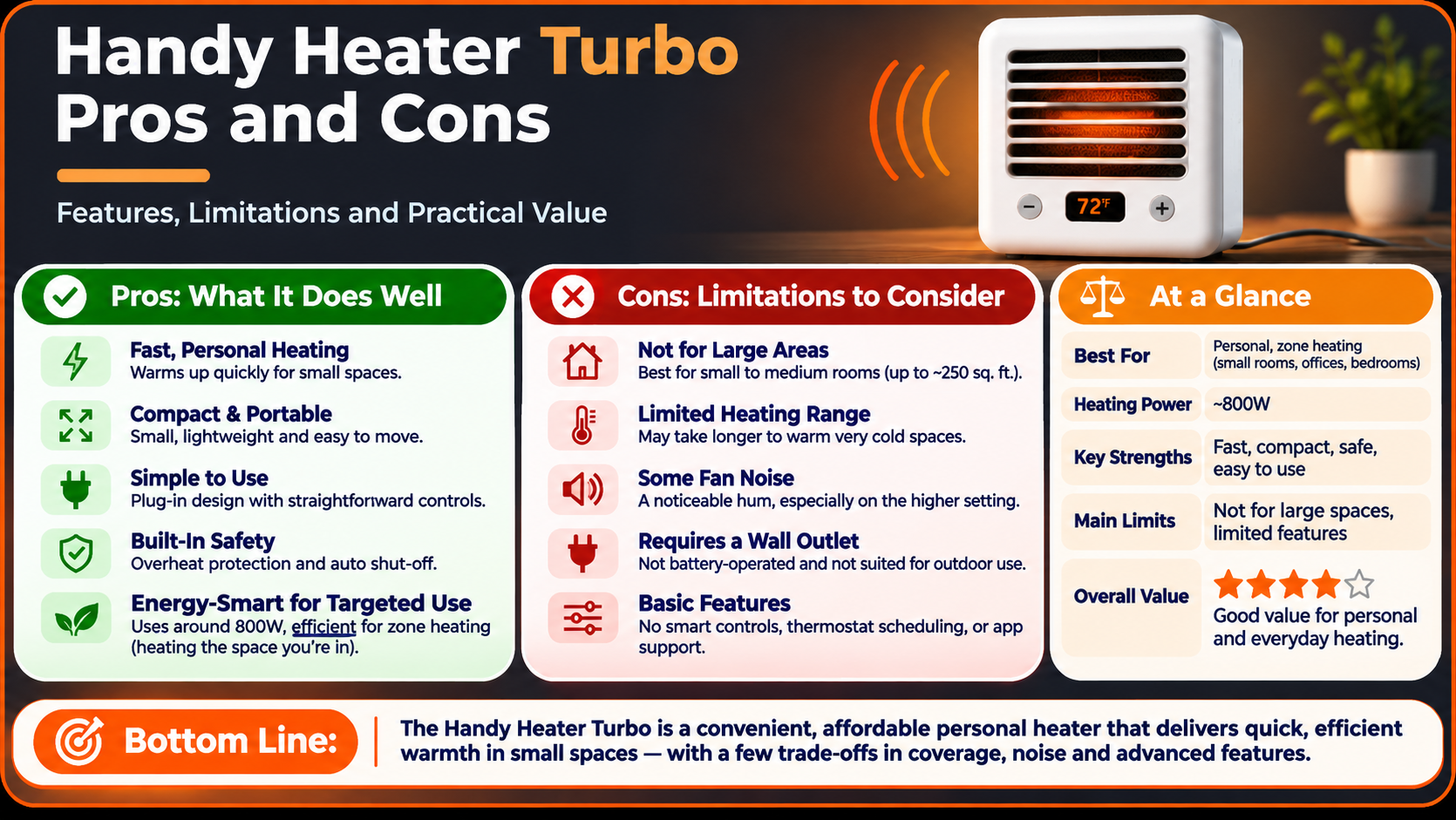
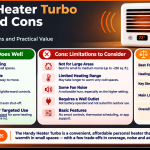
Pros and Cons of a Compact Heater Like the Handy Heater Turbo
- Small and easy to carry from room to room
- Quick warm-up for personal space
- Simple to operate, with no installation needed
- Useful for a desk, bedside corner or small room
- Affordable compared with larger heaters
- Not designed to heat large or open spaces
- Running it for long hours increases your bill
- Needs regular cleaning to keep performing well
- Needs careful placement and supervision
- Fan noise may be noticeable in very quiet rooms
Who Is It Best For?
A compact heater is a good match if you want fast, targeted warmth in a small area: a student at a desk, someone working from home, a person who feels cold in one room, or a household that only needs a short burst of heat in the morning or evening. It is less suitable as the only heat source for a large, poorly insulated space, where a larger, more powerful heating solution would work better.
Frequently Asked Questions
Can I leave the Handy Heater Turbo on all night?
It is best not to. Heaters should be switched off when you go to sleep or leave the room. If you need warmth at bedtime, warm the room beforehand, switch off the heater, and use warm bedding.
Can I plug it into an extension cord?
Avoid it. Heaters draw high current, and extension cords or power strips can overheat. Plug directly into a wall socket unless your manual says otherwise.
How long does it take to warm a room?
It depends on the room size, the starting temperature, the heater’s wattage and how well the room is sealed from draughts. A compact heater warms the air near it within a few minutes, but it will not quickly heat a large room.
Why does it smell when I turn it on after storage?
Dust that has settled on the element burns off when it heats up. Clean the vents before use, and ventilate the room. If the smell is strong or does not fade quickly, stop using it.
Does it dry out the air?
Electric heaters do not remove moisture from the air, but warming the air lowers its relative humidity, so the room can feel drier. A bowl of water or a humidifier nearby can help if you notice dry skin or throat.
Is it safe to use in a bathroom?
Only if the product is specifically rated for bathroom use, and only when positioned well away from water. Check the rating label and manual. When in doubt, do not use it in a damp room.
The heater keeps shutting off. Is it broken?
Not necessarily. Overheat protection often switches the unit off when vents are blocked or dusty, or when it is too close to a wall or furniture. Unplug it, let it cool, clean the vents and reposition it with proper clearance.
Where should I keep the manual?
Keep it with the box or in a drawer near where you store the heater. Your manual contains the exact ratings, warnings and model-specific instructions that no general guide can replace.
Final Thoughts
The Handy Heater Turbo can be a convenient way to stay warm through the colder months, as long as you use it the right way. Read the manual, plug directly into the wall, give it plenty of space, use the thermostat or lower setting once the room is comfortable, and never leave it running while you sleep or are out of the room. Add a little regular cleaning, and you will get steady, safe warmth for many winters.
Follow the instructions in this guide, and your heater will warm you up quickly, use less electricity, and stay safe in the process.
Disclaimer: This article offers general guidance for compact electric room heaters. Always follow the manual, rating label and safety warnings supplied with your specific product, and consult a qualified electrician for any electrical concerns.