
When temperatures drop, a small plug-in heater looks like the easiest fix: no floor space, no tangled cord, no complicated setup. The Handy Heater Turbo, sold as the Turbo 800, is one of the best-known products in that category. But a low price and a tidy design do not automatically mean it is right for your room. In this guide we cover the Handy Heater Turbo pros and cons, its real features and limitations, and where it delivers practical value (and where it does not).
Quick verdict
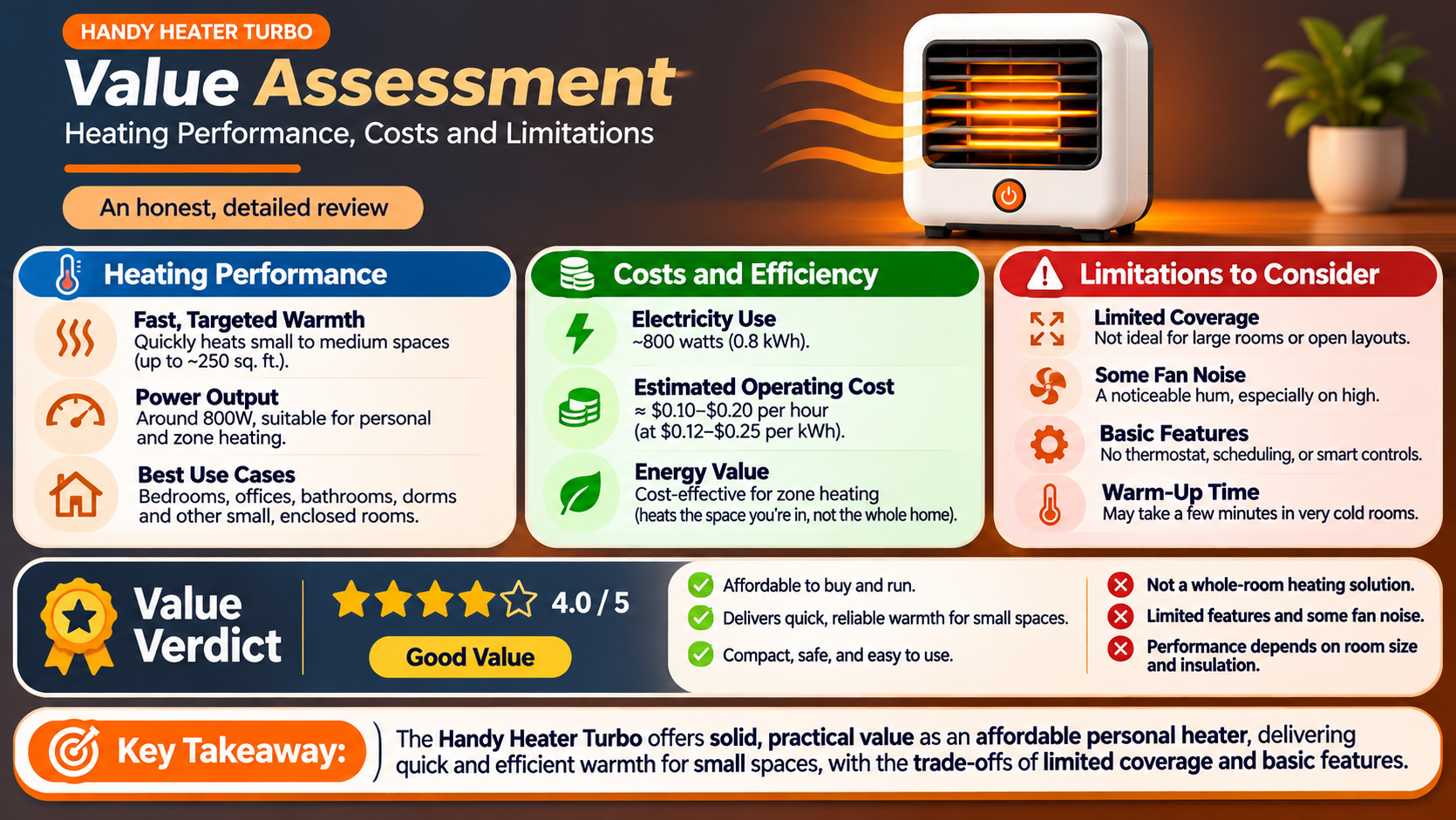
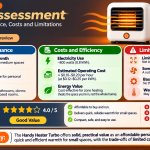
The Handy Heater Turbo is a good personal heater for small, reasonably insulated spaces such as a bedroom corner, a bathroom, a home office or a desk area. It is not a whole-room or whole-house solution. If you expect it to warm a large, drafty room, you will likely be disappointed.
What Is the Handy Heater Turbo?
The Handy Heater Turbo (marketed by Ontel as the Turbo 800) is a compact ceramic space heater that plugs straight into a standard wall outlet. Instead of sitting on the floor, the whole unit mounts on the outlet itself. Listings describe an 800-watt ceramic heating element, a fan that pushes warm air into the room, a digital LED display, an adjustable thermostat and a programmable timer.
Because it uses a standard household outlet and requires no assembly, it appeals to renters, students, remote workers and anyone who wants quick, supplemental warmth without buying a bulky heater.
Key Features at a Glance
- 800-watt ceramic heating element: A ceramic (PTC-type) element heats up quickly and is generally considered a safer design than an exposed metal coil.
- Adjustable thermostat: Listings state a range of roughly 60°F to 90°F, so the heater can switch on and off to hold your chosen temperature.
- Programmable timer: A timer of up to 12 hours lets you schedule heating instead of leaving it running all day.
- Digital LED display: You can see the set temperature at a glance.
- Safety features: Auto shut-off, overheat protection and a stay-cool housing are commonly listed, along with ETL certification on retailer pages.
- Quiet fan operation: Many users describe it as quiet enough for a bedroom or office.
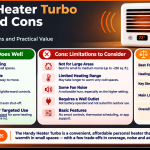
Handy Heater Turbo Pros
1. It saves floor and desk space
This is the biggest selling point. Because the heater sits in the wall outlet, nothing occupies the floor and nothing can be knocked over like a freestanding heater. In small bedrooms, narrow hallways and cramped offices, that matters.
2. No cord clutter
Traditional portable heaters have a cord that you can trip over or route across the room. A plug-in design removes that problem completely, and it also removes the temptation to use a long extension cord, which is one of the riskiest habits with any heater.
3. Useful temperature control
A thermostat is not a given at this price. Being able to set a target temperature means the heater cycles instead of running flat out, which keeps the room steadier and can reduce wasted energy.
4. A timer that supports safer habits
The 12-hour programmable timer is practical. You can warm a room before you wake up or while you work, and let the heater stop on its own. That is a real convenience for people who forget to switch things off.
5. Quiet enough for everyday spaces
Ceramic heaters with small fans tend to be quieter than larger fan heaters, and the Turbo is generally described as suitable for bedrooms and offices. It will not be silent, but it is not usually a major distraction.
6. Easy setup and a low price
There is nothing to assemble. Plug it in, set the temperature and you are done. Prices vary by store and season, but it is commonly sold at a budget level compared with larger heaters.
7. Portable between rooms
You can move it from the bedroom to the bathroom to the home office whenever you need, as long as there is a free outlet.
Handy Heater Turbo Cons
1. 800 watts has a clear ceiling
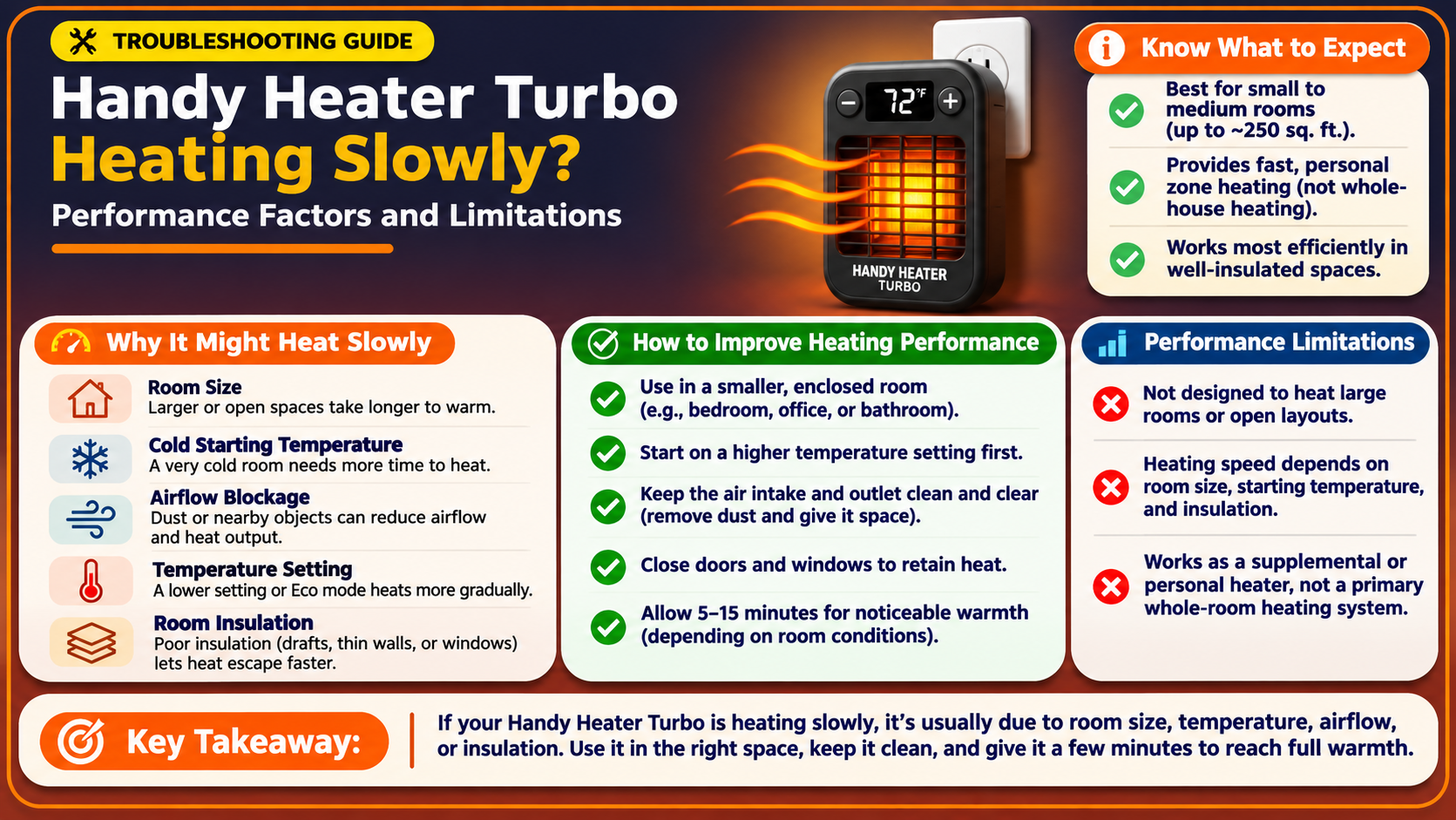
Standard portable heaters often run at 1,500 watts. At 800 watts, the Turbo simply has less heat to give. It can take the chill off a small room, but it will struggle in a large living room, an open-plan space or a room with high ceilings.
2. Coverage claims vary
Some retailers say it suits rooms up to about 250 square feet, while others rate it for under 100 square feet. That wide gap is a signal: treat the larger number as a best-case figure in a well-insulated room, and plan on the smaller number for dependable comfort.
3. It heats the air near the outlet
Because the heater is fixed to the wall at outlet height, warmth reaches you mainly through the air. If your seating or bed is across the room, the benefit may be modest. Placing it in a spot where air can circulate freely helps, but you cannot aim it or move it closer to you.
4. It occupies an outlet and puts load on it
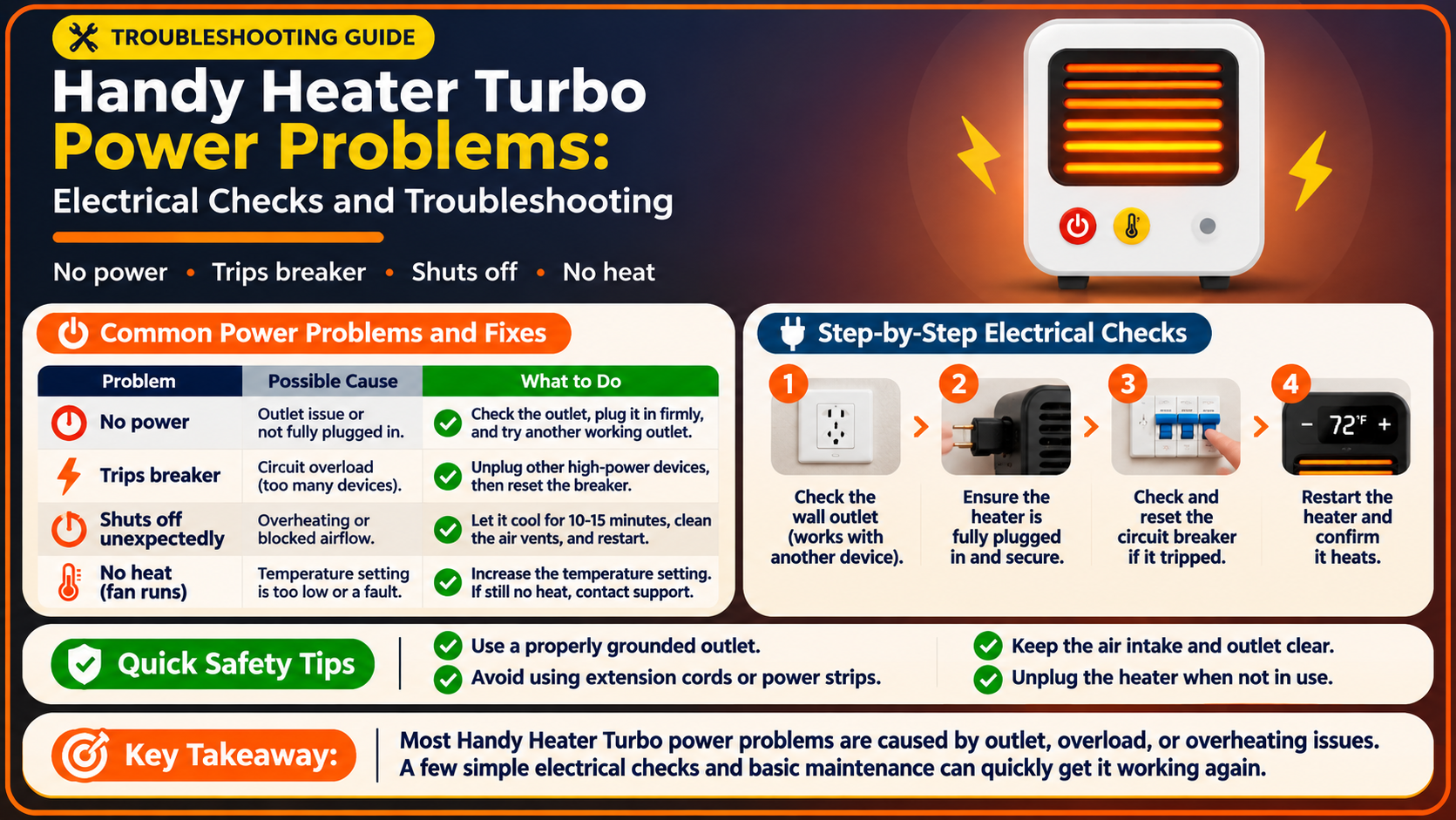
The heater typically blocks at least part of the outlet it plugs into. It also draws around 6.7 amps at 120 volts (800 watts divided by 120 volts), which is a significant continuous load. If the outlet is old, loose or shares a circuit with other high-draw devices, that is a concern.
5. Not ideal for poorly insulated rooms
In a drafty room with single-pane windows, much of the heat leaks out as fast as it arrives. Low-wattage heaters feel the worst in those conditions.
6. Value depends on expectations
Listed prices run from budget levels to noticeably higher, depending on the retailer. If you pay near the top of that range, a traditional 1,500-watt heater with a stand and more output may give you better value for a bigger room.
7. Long-term durability is mixed in user feedback
As with many low-cost heaters, experiences vary. Some owners are happy for a whole season, while others report problems such as slow heating, shutdowns or noise. Check the warranty terms for the exact model you buy, since they differ by seller.
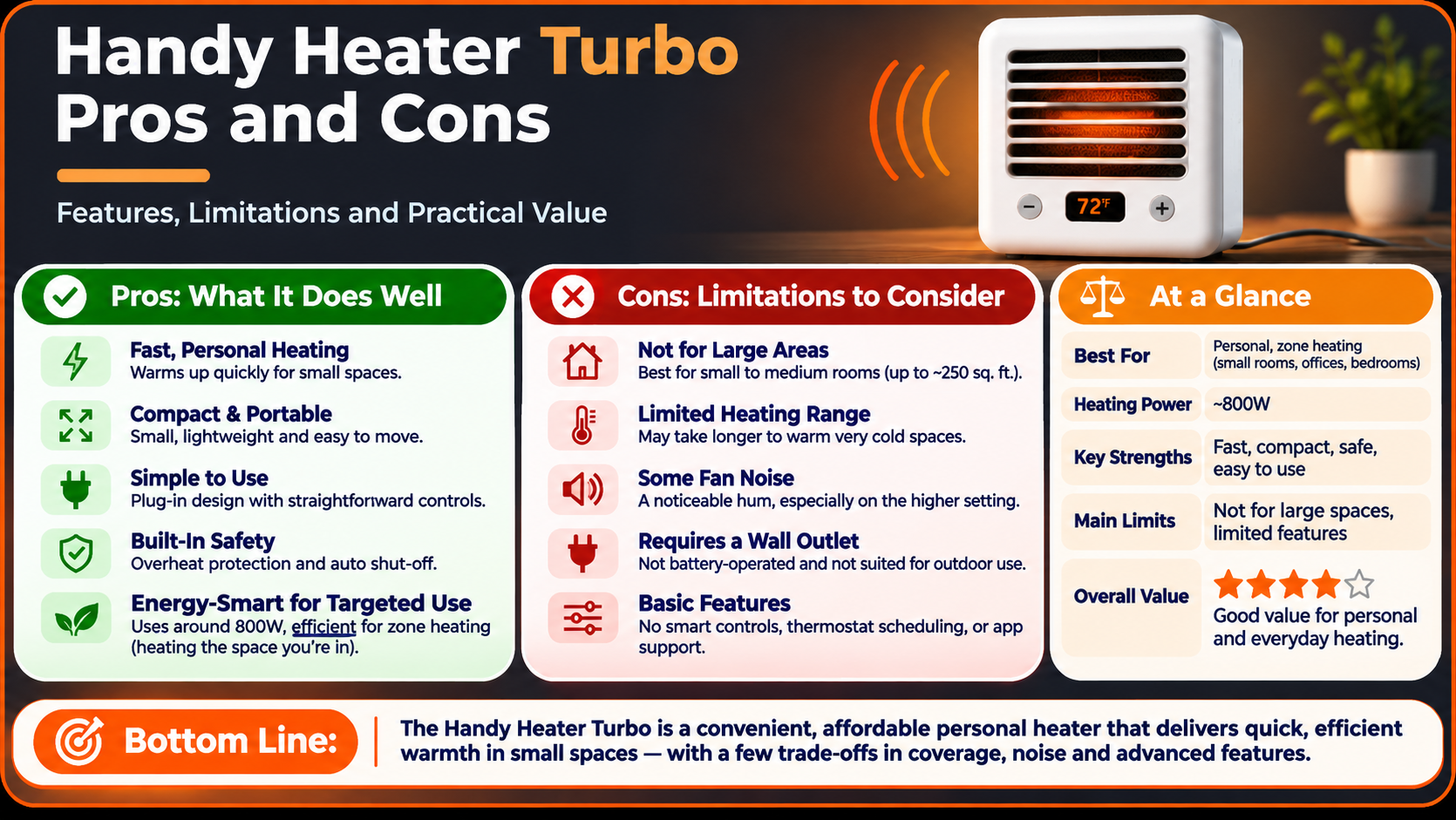
Pros and Cons Summary
Real-World Performance and Electricity Cost
At 800 watts, the heater uses 0.8 kilowatt-hours (kWh) for every hour it runs at full power. The actual cost depends on your local electricity price, and the thermostat means it will not run continuously once the room reaches the set temperature.
| Electricity price | 1 hour at full power | 8 hours at full power |
|---|---|---|
| 12¢ per kWh | About $0.10 | About $0.77 |
| 16¢ per kWh | About $0.13 | About $1.02 |
| 25¢ per kWh | About $0.20 | About $1.60 |
The takeaway: a personal heater like this is cheap to run for a few hours in one room, but it is not a money-saver if it replaces your central heating for a whole home. It works best when you heat only the space you are using and keep the rest of the house cooler.
Safety Considerations You Should Not Skip
Any electric heater needs sensible handling, and a wall-mounted unit adds a few specific points.
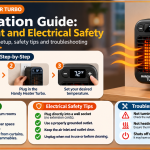
- Plug directly into the wall. Do not use extension cords or power strips with a heater of this wattage.
- Check the outlet. Use a secure outlet in good condition. If the outlet or the plug feels hot, stop using it and have the wiring checked by a qualified electrician.
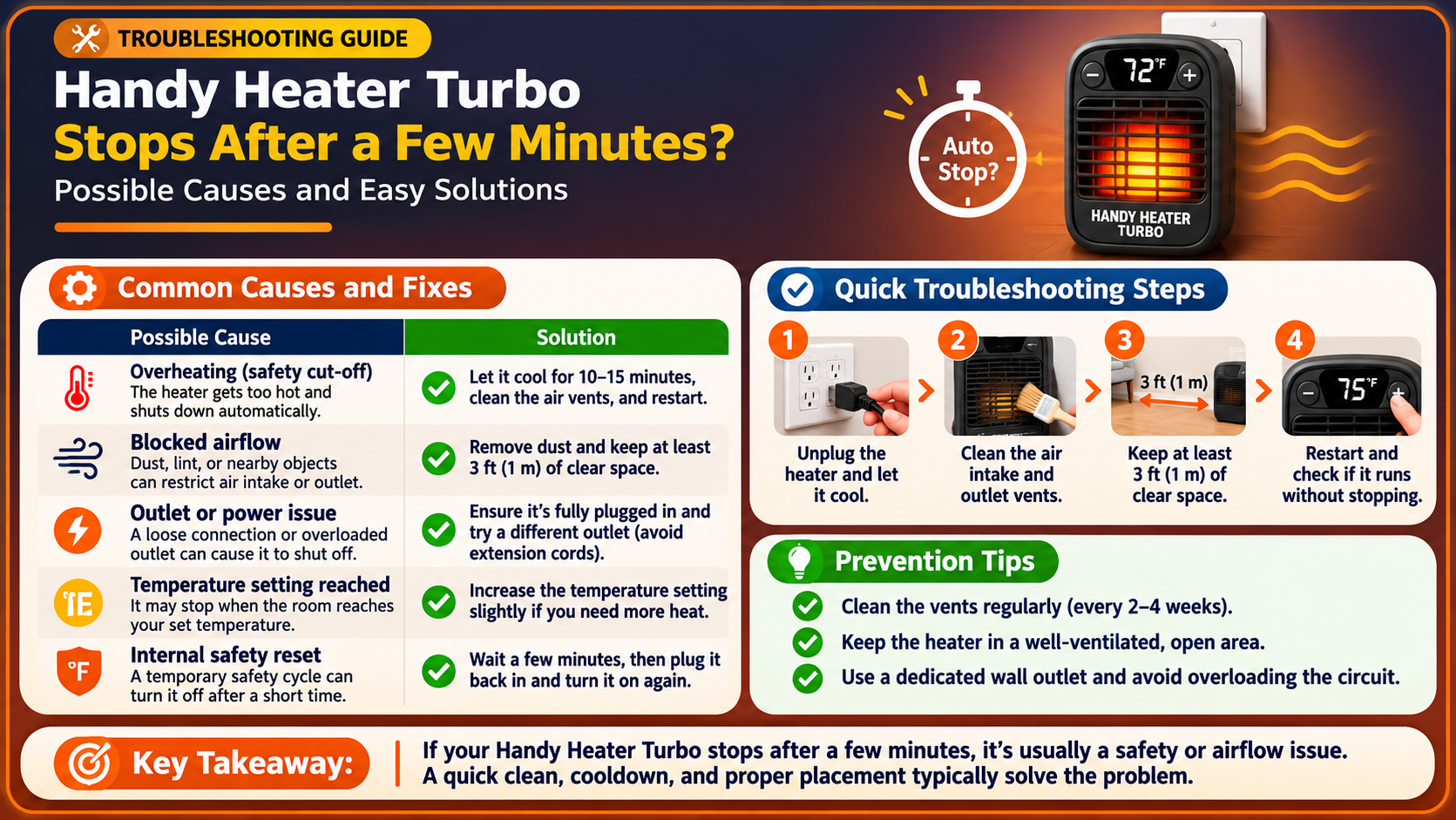
- Keep the area clear. Leave space around the unit and keep curtains, bedding, furniture and paper away from the vents.
- Be careful overnight and when unattended. Use the timer, make sure smoke alarms work and follow the manufacturer’s instructions in the manual.
- Keep it dry. Do not use it where it can get wet, and follow the manual’s guidance for bathrooms.
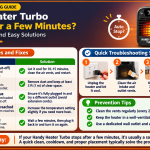
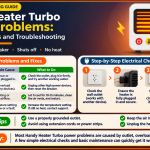
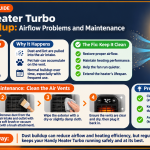
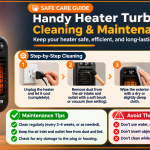
- Dust matters. Dust in the vents can reduce airflow and cause overheating shutdowns, so vacuum the vents gently when the heater is unplugged and cool.
Who Should Buy the Handy Heater Turbo?
- People who need a bit of extra warmth in a small bedroom, bathroom, nursery-sized room or home office.
- Renters and students who want a no-assembly, space-saving heater.
- Anyone who wants a thermostat and timer at a modest price.
- Users who want to warm their personal area instead of the whole home.
Who Should Skip It?
- Anyone with a large living room, open-plan area or high ceiling.
- Rooms that are poorly insulated or very cold in winter.
- Homes with old outlets or wiring you do not trust.
- People who want a heater they can aim directly at their seat or bed.
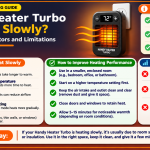
Tips to Get the Most Out of It
- Close the door and windows to hold the warmth in.
- Use a draft stopper or thick curtains in a cold room.
- Start the heater before you need the room, using the timer.
- Set a realistic thermostat target instead of the maximum.
- Keep the vents clean and the area around the unit clear.
- Choose an outlet that is not shared with other high-power appliances.
Alternatives to Consider
If the limits above matter to you, look at a freestanding 1,500-watt ceramic heater for medium rooms, an oil-filled radiator for steady and silent heat, or an infrared or panel heater for targeted warmth at a desk. Each trades convenience for power, and each has its own safety and cost profile.
Frequently Asked Questions
Is the Handy Heater Turbo worth buying?
Yes, for the right use. It is worth it as a personal or small-room heater at a reasonable price. It is not worth it if you expect to heat a big room.
How much space can it heat?
Listings range from under 100 square feet to about 250 square feet. For dependable comfort, think of a small bedroom, bathroom or office.
Does it need a special outlet?
No, it plugs into a standard household outlet. At 800 watts it draws under 7 amps, but the outlet should still be in good condition and not overloaded.
Can I leave it on all night?
Follow the manufacturer’s manual. Using the timer and thermostat, keeping the area clear and having working smoke alarms are sensible precautions for any electric heater.
Is it expensive to run?
At full power it uses 0.8 kWh per hour, which usually costs roughly 10 to 20 cents an hour depending on your electricity rate. The thermostat reduces actual usage.
Final Verdict
The Handy Heater Turbo succeeds at what it is designed to do: provide quiet, convenient and affordable supplemental heat in a small space without using floor space. Its limits are just as clear: 800 watts, fixed placement and a demanding load on one outlet. If you match it to a small, reasonably insulated room, follow basic safety habits and keep expectations realistic, it offers genuine practical value. If you need to heat a larger space, a more powerful freestanding heater is the better investment.