
Handy Heater Turbo Stops After a Few Minutes: Possible Causes and Solutions
You switch on your Handy Heater Turbo on a cold evening, the warm air starts to flow, and then, just a few minutes later, it goes silent. The fan stops, the heat fades, and the room slowly gets cold again. It is a frustrating problem, but it is also a very common one with compact portable heaters.
The good news is that a heater that shuts off after a short time is usually not “broken.” In most cases it is doing exactly what it was designed to do: protecting itself and your home from overheating or from an electrical fault. This guide explains why the problem happens, how to diagnose it step by step, how to fix it safely, and when it is time to stop using the heater and get help.
Quick Answer: Why Does a Handy Heater Turbo Stop After a Few Minutes?
The most common reasons are overheat protection being triggered by dust or blocked vents, an unstable power supply (loose plug, worn socket, thin extension cord or power strip), a tip-over safety switch reacting to an uneven surface, or a timer or thermostat setting that ends the heating cycle. Less often, a worn internal component such as a thermal fuse, fan motor or switch is the cause.

How a Compact Heater Works (and Why It Shuts Off)
To understand the problem, it helps to know the basic design. Compact heaters such as the Handy Heater Turbo typically use a heating element, often ceramic (PTC) or a metal coil, and a small fan. The element heats up when electricity passes through it, and the fan pushes warm air into the room. The fan also carries heat away from the element, which keeps the internal temperature in a safe range.
Because the unit is small and powerful, safety features are built in. These usually include:
- Thermal cutoff or overheat protection: shuts the heater off when internal temperatures rise too high.
- Tip-over protection: cuts power if the heater is knocked over or tilted.
- Thermostat: turns the heating on and off to hold a set room temperature.
- Timer (on some models): ends the heating session after a set period.
When any of these safety systems activates, the heater stops. So if your unit shuts off after a few minutes, the real question is: which safety feature is being triggered, and why?
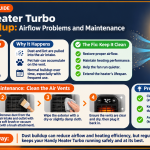
Cause 1: Overheat Protection Triggered by Blocked Airflow
This is the number one reason a portable heater stops working after a few minutes. If air cannot move freely through the heater, heat builds up inside the housing. Once the internal temperature passes the safe limit, the thermal cutoff trips and the heater turns off. After it cools down, it may start working again, only to shut off again a few minutes later.
Common signs:
- The heater works for 3 to 10 minutes and then stops.
- The body or grille feels very hot when it shuts off.
- It restarts after a cooling period, then repeats the cycle.
- The air coming out seems weak.
What blocks airflow? Dust and pet hair on the rear intake, a front grille covered with lint, a heater placed too close to a wall, curtains or furniture, or a heater sitting on a thick rug or bed that restricts the intake.
How to fix it:
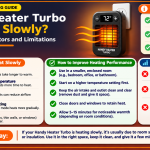
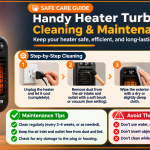
- Unplug the heater and let it cool completely for at least 15 to 20 minutes.
- Move it to a hard, flat surface with about three feet (one meter) of clear space on all sides and in front.
- Use a vacuum with a soft brush attachment to clean the front grille and the rear intake.
- Use a dry, soft brush or a can of compressed air to loosen dust you can see through the vents.
- Plug the heater back in and test it for 15 to 20 minutes.
Cause 2: Dust Buildup on the Fan and Heating Element
Even if the outside looks clean, dust can collect on the fan blades and around the heating element. A dusty fan spins less efficiently and moves less air. A dusty element holds more heat in one place. The combined effect is a higher internal temperature, which brings the overheat protection into play much sooner than it should.
Dust also causes the familiar burning smell when a heater has not been used for a while. A small, brief smell at the start of the season can be normal as dust burns off. A strong or persistent burning smell is a warning sign, and you should switch the heater off and unplug it right away.
Prevention tip: clean the vents at the start of every heating season and then once a month during regular use. Homes with pets, carpets or construction dust may need cleaning every one to two weeks.

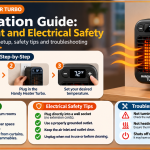
Cause 3: Unstable or Weak Power Supply
Heaters draw a lot of power compared with most household devices. If the electricity supply is not stable, the heater may cut out suddenly. This can look just like an overheating problem, but the cause is electrical.
Possible power problems include:
- A loose plug or worn socket: if the plug wiggles in the outlet, the connection can heat up and drop out.
- Low or fluctuating voltage: common in some areas during peak evening hours, when many appliances run at once.
- A shared circuit: other high-power devices (an iron, kettle, air conditioner or geyser) on the same circuit can overload it.
- A tripping circuit breaker or fuse: the heater itself may be fine while the breaker cuts the power.
- A faulty power cord: internal wire damage can cause on-off interruptions.
How to test it:
- Plug the heater directly into a different wall socket, preferably one on a different circuit.
- Turn off other heavy appliances that share the same line.
- Check the main breaker or fuse box for a tripped switch.
- Feel the plug and cord (carefully, after unplugging) for unusual warmth, discoloration or a melted smell.
If the plug or socket is discolored, loose or hot, stop using that outlet and have a qualified electrician inspect it.
Cause 4: Extension Cords and Power Strips
This is one of the most overlooked causes. Portable heaters should be plugged directly into a wall socket whenever possible. Thin extension cords and ordinary multi-plug power strips are not built for the continuous, high current that a heater draws. They can overheat, lose power or trigger their own built-in cutoffs, which makes the heater stop after a few minutes.
More importantly, an overloaded cord is a real fire hazard. If you must use an extension cord temporarily, choose a short, heavy-duty cord that is rated for the heater’s wattage, and keep it fully uncoiled. Never daisy-chain cords or power strips, and replace any cord that feels warm during use.
Cause 5: Tip-Over Switch Reacting to the Surface
Many heaters include a tilt or tip-over switch that cuts power if the unit is not upright. If the heater sits on an uneven floor, on a soft rug, on the edge of a bed or on a slightly sloped surface, the switch can trigger even though the heater has not fallen over. Vibrations from the fan can also nudge a poorly balanced heater until the safety switch activates.
Fix: place the heater on a firm, flat, level surface. Avoid carpets with a deep pile, cushions, and unstable tables. Check the base for debris or anything that stops the feet from sitting evenly.
Cause 6: Timer, Thermostat or Mode Settings
Before assuming a fault, check the settings. If your model has a timer, it may be set to turn the heater off after a short time. If it has a thermostat, the heater will cycle off once the room reaches the set temperature, which can happen quickly in a small room. A low thermostat setting can make it seem like the heater “stops” when it is really just waiting for the room to cool slightly.
Try this: turn the timer off (or set it to its longest duration), set the thermostat to its highest setting for a test, and select the highest heat or turbo mode. If the heater runs normally, the original problem was just a setting.
Cause 7: A Worn Internal Component
If you have ruled out airflow, power and settings and the heater still stops after a few minutes, an internal part may be worn out. Possible culprits include:
- A weak thermal fuse or thermostat that trips at a lower temperature than it should.
- A failing fan motor that slows down or stops as it warms up, causing overheating.
- A worn switch or loose internal connection that loses contact when the unit heats and expands.
- A damaged heating element that cannot work consistently.
These are not do-it-yourself repairs. Opening a heater can void the warranty and exposes you to electrical hazards. If the unit is still under warranty, contact the seller or manufacturer. If it is old or the repair cost is close to the price of a new unit, replacement is usually the safer, more economical choice.
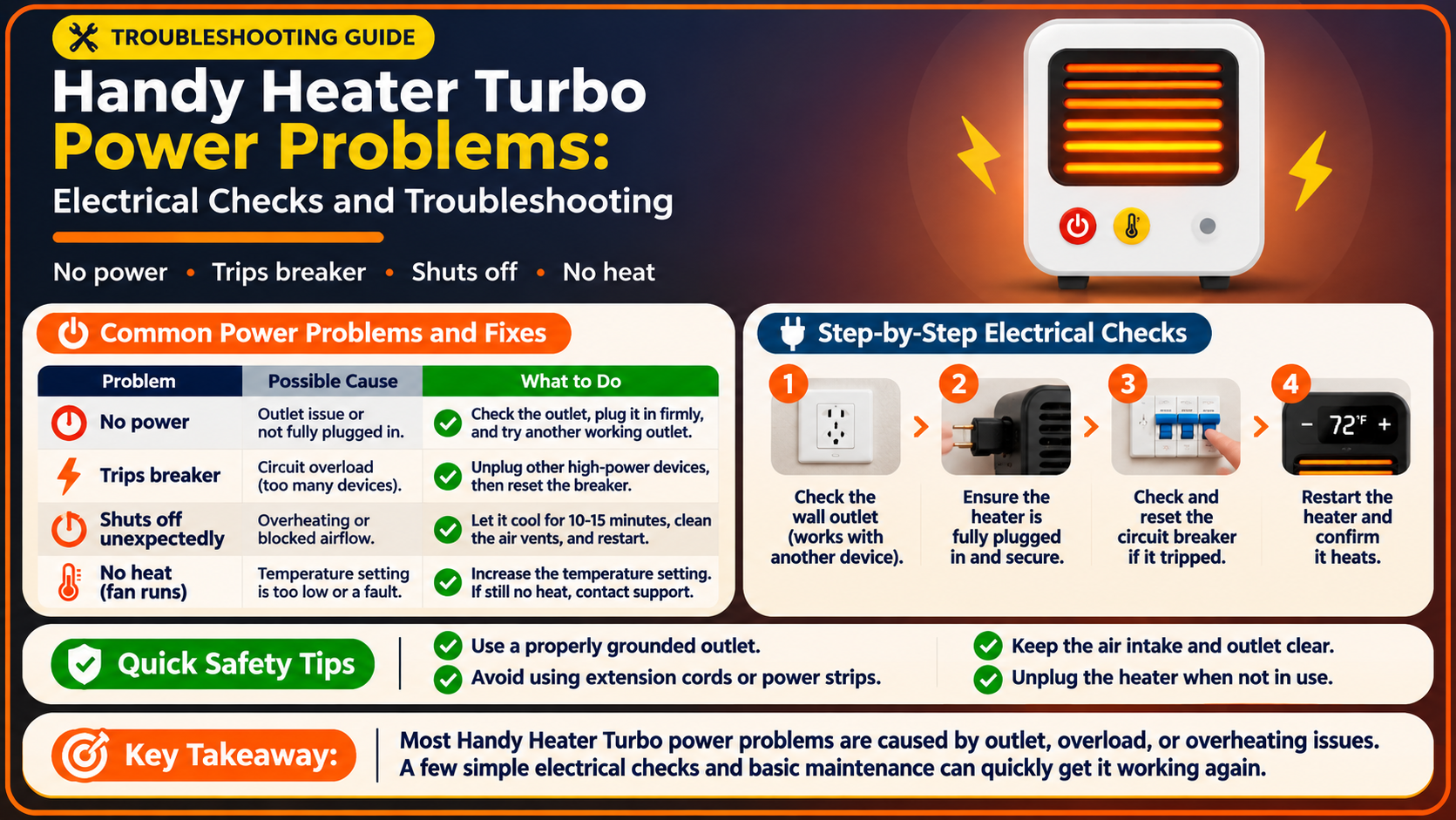
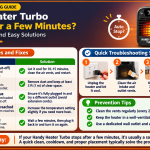
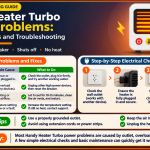
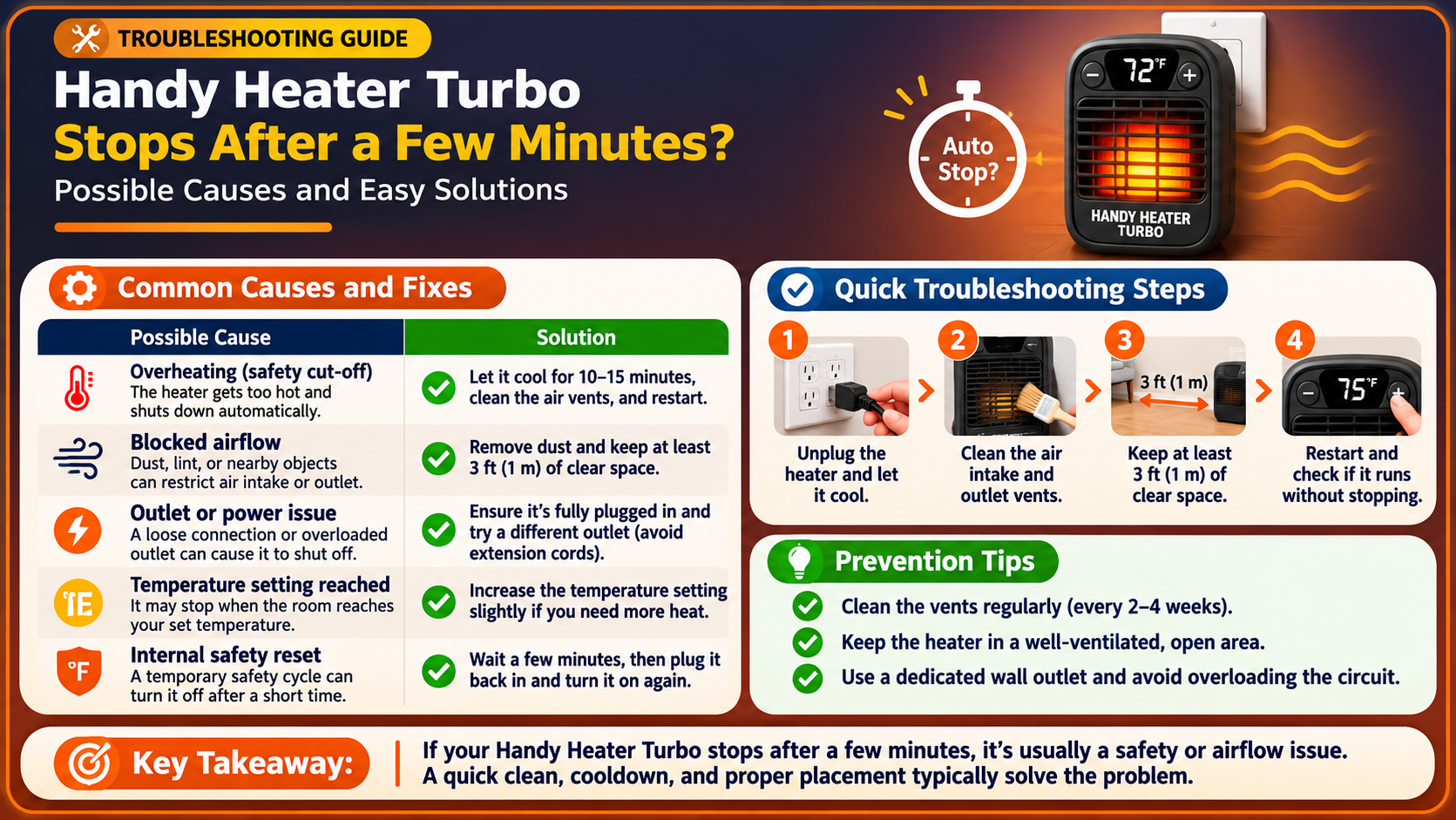
Step-by-Step Troubleshooting Guide
Follow this order to find the problem quickly without taking any risks:

- Unplug and cool down. Let the heater rest for 15 to 20 minutes so any overheat protection can reset.
- Inspect and clean the vents. Remove visible dust and lint from the intake and the outlet grille.
- Change the outlet. Plug directly into a wall socket that you know works well. Skip extension cords and power strips.
- Check the position. Put the heater on a hard, level surface with plenty of space around it.
- Review settings. Turn off the timer, raise the thermostat and select the highest mode.
- Run a supervised test. Stay nearby for 15 to 20 minutes. Note how long it runs, whether the body gets very hot and whether it smells unusual.
If the heater now runs continuously, you have found the cause. If it still shuts off after the same amount of time, move on to the “When to stop using it” section below.
Safety Rules You Should Never Ignore
A heater that keeps shutting off is giving you information. Treat it seriously and never try to defeat the protection that is stopping it.
- Never bypass or tape down a safety switch. Overheat and tip-over protections exist to prevent fires.
- Never cover the heater or use it to dry clothes or towels.
- Keep flammable items away: curtains, bedding, paper, sofas and clothes should be at least three feet away.
- Do not leave it unattended while you sleep or leave the house unless the manufacturer’s manual specifically allows it.
- Never use it in a bathroom or near water unless it is specifically rated for that environment.
- Keep children and pets away from the hot grille and the cord.

When to Stop Using the Heater
Unplug the Handy Heater Turbo and stop using it if you notice any of the following:
- A strong or persistent burning, melting or fishy plastic smell.
- Sparks, crackling or visible smoke.
- A plug, cord or outlet that is hot, discolored or deformed.
- A cracked housing or damaged cord.
- Frequent shutdowns even after you cleaned it, changed the outlet and checked the settings.
- The breaker trips repeatedly when the heater is on.
At that point, contact the seller, the manufacturer’s support or a qualified technician. If you purchased it recently, keep your receipt and packaging, as they can help with a warranty claim or a replacement.
How to Prevent the Problem in the Future
- Clean it regularly. A quick vacuum of the vents every few weeks can prevent most overheating shutdowns.
- Use a wall outlet. Direct connection gives the heater the steadiest power.
- Give it space. Good airflow in front, at the sides and behind is essential.
- Use it on a stable surface. A level floor prevents false tip-over triggers.
- Match the heater to the room. A compact heater works best in a small to medium room. In a large or drafty room, it may run constantly and heat up more.
- Store it properly. At the end of the season, clean it, keep it dry and store it in its box or under a cover.
Frequently Asked Questions
Is it normal for a heater to turn off by itself?
It is normal for a heater with a thermostat to cycle on and off once the room reaches the target temperature. It is not normal for it to shut down completely after a few minutes in a cold room. That usually points to overheat protection, a power issue or a tilt switch.
Why does the heater work again after I switch it off for a while?
This is a classic sign of thermal protection. The heater overheats, shuts off, cools down and can then run again until it overheats once more. Cleaning the vents and improving airflow usually solves it.
Can I reset the heater?
Most compact heaters reset automatically after they cool down. Unplug the unit, wait 15 to 20 minutes, then plug it in again. If your model has a reset button, follow the instructions in its manual.
Can a power strip cause the heater to stop?
Yes. Power strips and thin extension cords can overheat or cut power under the heavy load of a heater. For best results and safety, use a wall outlet.
Should I repair it myself?
Cleaning the outside vents and checking the outlet and settings are safe for most people. Opening the heater or replacing internal parts is not recommended unless you are a qualified technician, because of the shock and fire risks and the possible loss of warranty.
How long should a heater run without stopping?
A working heater should run continuously until the thermostat or timer turns it off. Short, repeated shutdowns, especially within the first few minutes, mean something is restricting airflow, interrupting power or triggering a safety feature.
Final Thoughts
When a Handy Heater Turbo stops after a few minutes, the cause is usually simple and fixable: dust and blocked vents, an unstable power source, a poor surface or a setting you did not expect. By cleaning the heater, plugging it straight into a good wall outlet, placing it on a level surface with plenty of room, and checking the timer and thermostat, you can solve most cases in under half an hour.
If the problem continues after these steps, do not push the heater harder or bypass its safety features. A heater that keeps shutting itself off is telling you something needs attention. Stay safe, and consider professional help or a replacement so you can enjoy steady, reliable warmth all winter.