





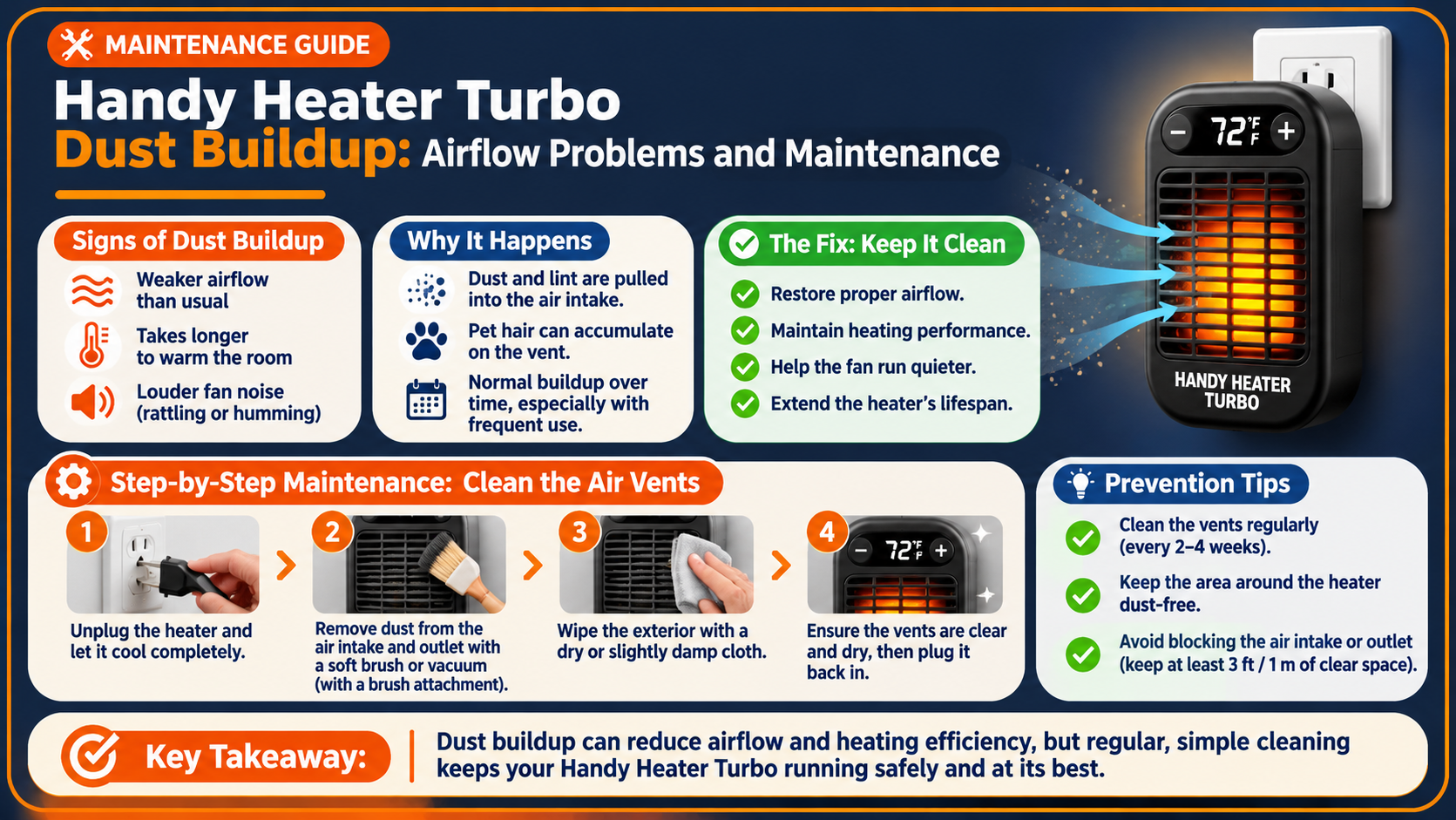
Handy Heater Turbo Dust Buildup: Airflow Problems and Maintenance
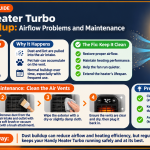
A compact heater looks simple from the outside: you plug it in, it blows warm air, and the room slowly gets comfortable. But inside that small body, a fan is pulling in room air, pushing it across a heating element, and sending it back out. Anything that interferes with that path, and dust is the number one culprit, quickly shows up as weak airflow, lukewarm output, strange smells, or a heater that keeps shutting itself off.
If you own a Handy Heater Turbo or any similar portable fan-forced heater, this guide explains exactly how dust builds up, which warning signs to watch for, how to clean the unit safely, and how often to do it. We also cover what to look for if you are deciding whether a compact heater is right for your home.
- Dust collects on the air intake, fan blades, and heating element over time.
- Restricted airflow causes weak heat, louder noise, burning odors, and overheating shutdowns.
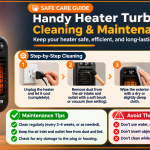
- Always unplug the heater and let it cool completely before cleaning.
- A soft brush and a vacuum with a brush attachment handle most routine cleaning.
- Light cleaning every two to four weeks in heavy-use season keeps airflow healthy.
How Air Moves Through a Compact Fan Heater
To understand why dust matters, it helps to picture the airflow path. Room air is drawn in through the intake grille at the back or side of the unit. A small fan pushes that air across a heating element, usually a ceramic or metal element, where it picks up heat. The warmed air then leaves through the front grille and spreads into the room.
Why Dust Builds Up in a Handy Heater Turbo
Every heater that moves air also moves whatever is floating in that air. A small fan-forced heater sits close to the floor, where dust, pet hair, lint from carpets and blankets, and fine fibers are most concentrated. Over weeks of use, those particles stick to the intake grille, wrap around the fan blades, and settle on the heating element.
Several everyday conditions make the problem worse:
- Floor-level placement. Dust and hair are denser near the ground, and the intake pulls them straight in.
- Pets. Shedding fur is one of the fastest ways to clog an intake.
- Carpets, rugs, and bedding. These constantly release fine fibers into the air.
- Long storage periods. A heater that sits in a closet all summer gathers dust before its first use of the season.
- Construction, sanding, or cooking nearby. Fine particles and grease vapor leave sticky residue that traps even more dust.
- Static electricity. Plastic housings and dry winter air attract dust like a magnet.
Warning Signs of Dust Buildup and Poor Airflow
Dust rarely announces itself. Instead, performance slips gradually, which makes it easy to blame the heater itself or the weather. Watch for these signs:
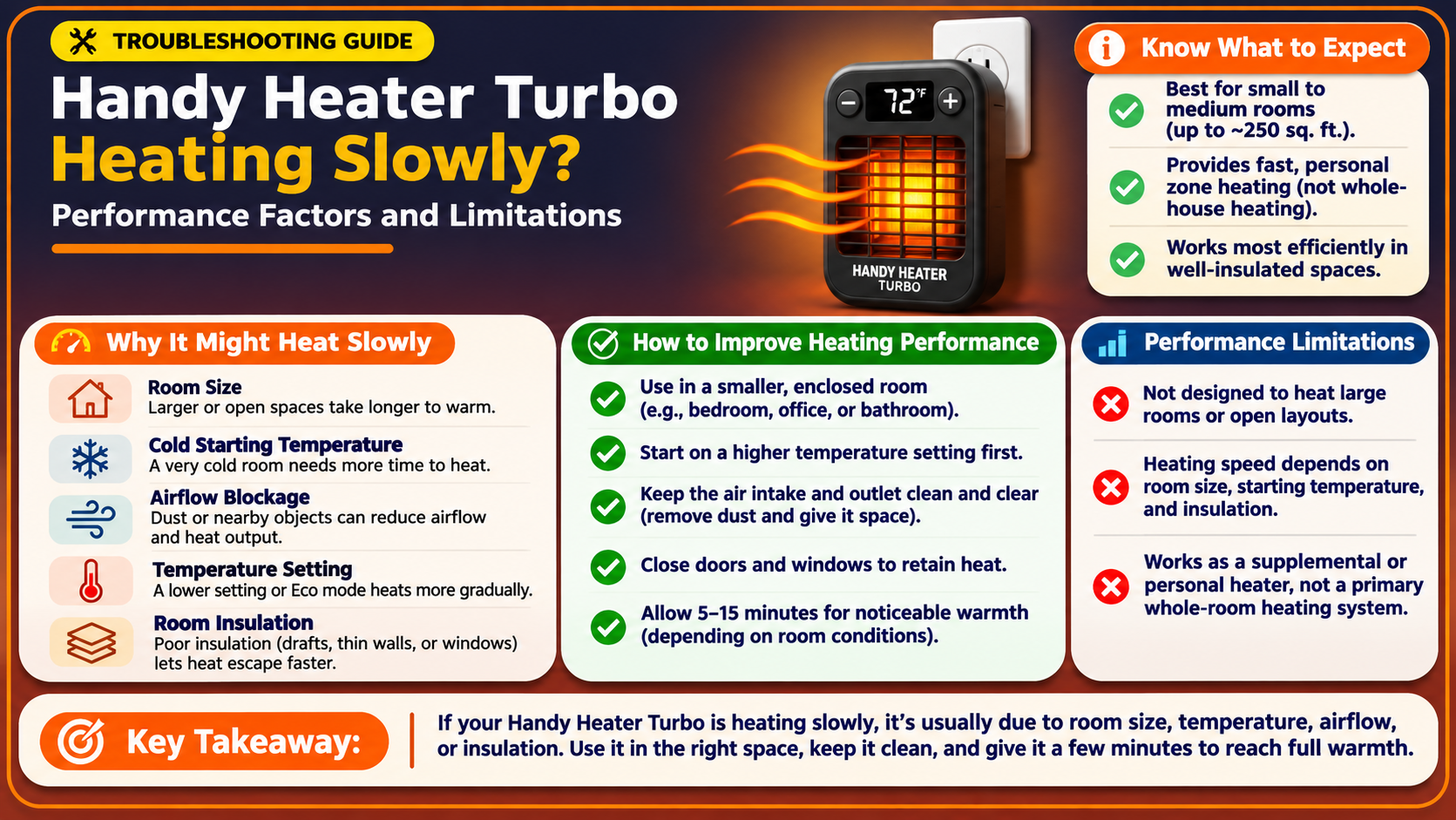
- Weaker airflow. Hold your hand in front of the outlet. If the air feels softer than when the heater was new, the intake or fan may be restricted.
- Lukewarm output. Heat that does not carry across the room often means less air is moving over the element.
- Louder or rattling fan. Debris on the blades unbalances them and adds noise.
- Burning dust smell. A short, mild smell at the start of the season is common as dust burns off. A strong or persistent smell is a sign to stop and clean the unit.
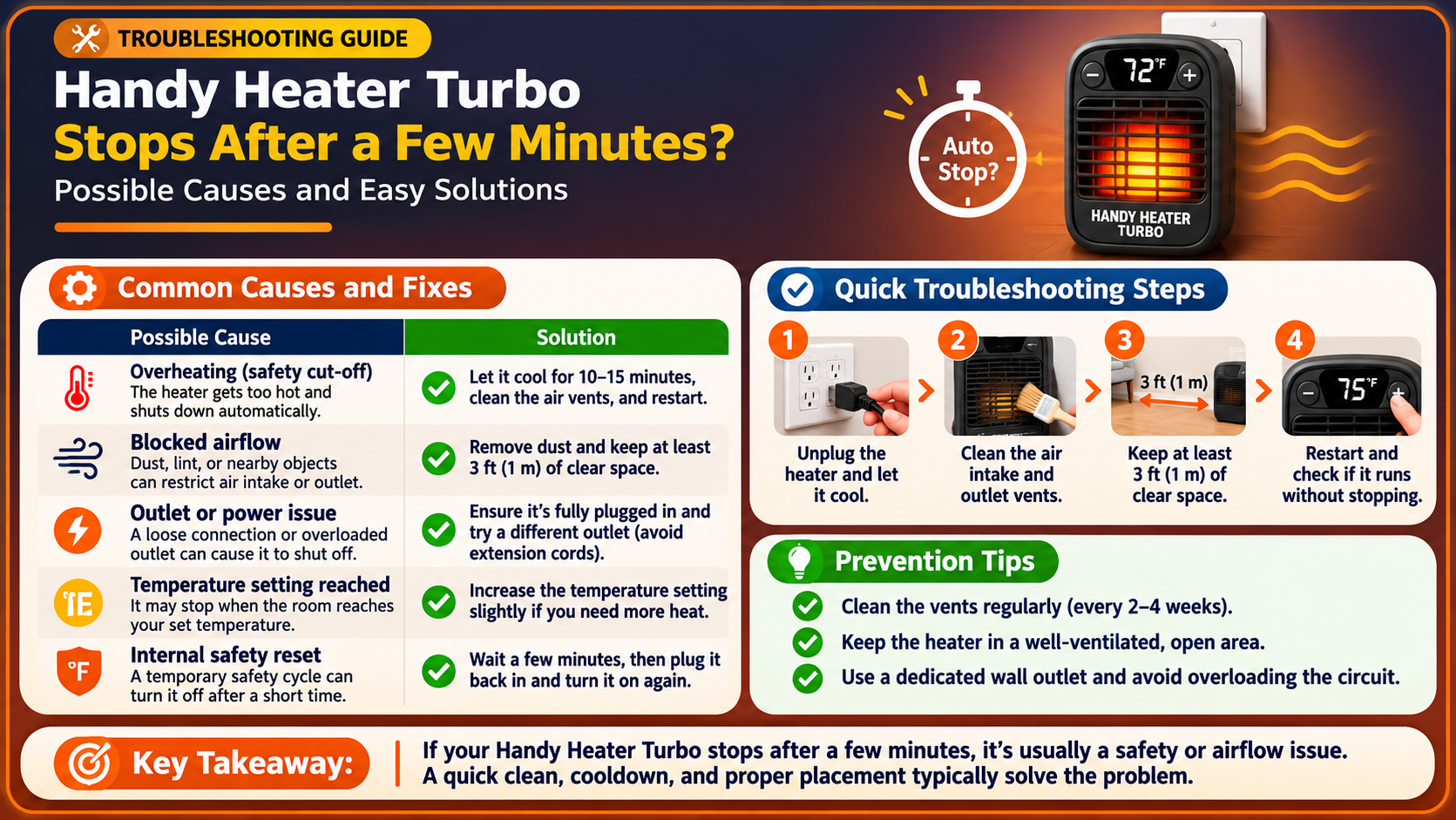
- Frequent shutoffs. Many compact heaters include overheat protection. When airflow drops, internal temperature rises and the safety cut-off trips.
- Visible dust or lint on the grille. If you can see it, there is usually more inside.
- Uneven heating or hot casing. The housing running hotter than usual suggests trapped heat.
Important: If you notice smoke, sparking, a melting smell, or a damaged cord or plug, unplug the heater immediately and stop using it. That is not a cleaning problem. It needs inspection or replacement.
What Dust Does to Performance and Safety
A heater with clogged airflow has to work harder to deliver less comfort. The fan motor strains against the blockage, the heating element runs hotter than designed because there is less air to carry the heat away, and the safety cut-off may trip repeatedly. Over time that stress shortens the life of the unit and can create a fire risk if dust accumulates on hot parts.
Safety First: Before You Clean Anything
- Unplug the heater from the wall. Never clean a heater while it is connected to power.
- Let it cool completely. Give it at least 30 minutes after use.
- Move it to a flat, well-lit surface, ideally somewhere you do not mind a little dust, such as a garage, balcony, or on newspaper.
- Read the manual. Check what the manufacturer says about cleaning and whether opening the casing is allowed. Opening it may void the warranty.
- Keep water away. Do not spray liquids into the grille or submerge any part of the unit.
Step-by-Step: How to Clean a Dusty Handy Heater Turbo
Step 1: Vacuum the Intake and Outlet Grilles
Attach the soft brush head to your vacuum and run it slowly over the rear intake and the front outlet. Use low suction so you do not scratch the plastic or dislodge parts. This removes most surface dust, lint, and hair in a minute or two.
Step 2: Loosen Packed Dust with a Soft Brush
A clean paintbrush, makeup brush, or soft toothbrush works well for grille slots. Brush gently, working from the inside edge outward, and vacuum again right away so the dust does not simply settle back in.
Step 3: Clear Visible Fan Blades Carefully
If you can see the fan through the grille, use a thin brush or a cotton swab to lift buildup off the blades. Do not push hard or bend the blades, because a bent blade makes noise and reduces airflow. If the fan is not accessible without opening the casing, leave it and rely on vacuuming.
Step 4: Use Compressed Air Sparingly
Short bursts of compressed air from a few inches away can push out fine dust deeper inside. Keep the can upright, hold the fan blades still with a soft tool so they do not spin too fast, and do it outdoors or in a ventilated area so the dust does not end up in your lungs. Vacuuming afterward catches what is blown loose.
Step 5: Wipe the Exterior and Let It Dry
Wipe the casing with a slightly damp microfiber cloth. Never let moisture enter the vents. Dry the surface with a clean cloth and let the heater sit for a few minutes before plugging it back in.
Step 6: Test Run
Plug the unit in on a low setting, stand nearby, and listen and feel. The airflow should be steadier and quieter. A faint dusty smell during the first minute is normal if some dust remains. If a strong odor continues, unplug the heater and repeat the cleaning.
What Not to Do
- Do not clean a heater that is plugged in or still warm.
- Do not use water, sprays, or wet wipes inside the vents.
- Do not use sharp tools like screwdrivers or pins in the grille.
- Do not use harsh chemicals or solvents that can damage plastic or leave flammable residue.
- Do not disassemble the unit unless the manual allows it.
- Do not keep using a heater that smells strongly of burning, makes grinding noises, or trips repeatedly.
Recommended Maintenance Schedule
How often you clean depends on your home. This table gives a practical starting point.
| Task | Normal Home | Pets / Dusty Home |
|---|---|---|
| Quick wipe and visual check | Weekly | Every few days |
| Vacuum intake and outlet grilles | Every 2 to 4 weeks | Every 1 to 2 weeks |
| Deeper brush clean | Monthly during heating season | Every 2 to 3 weeks |
| Cord and plug inspection | Monthly | Monthly |
| End-of-season clean before storage | Once | Once |
Troubleshooting Common Airflow Problems
| Problem | Likely Cause | What to Try |
|---|---|---|
| Weak airflow | Dust on intake or fan | Vacuum and brush the grilles |
| Heater shuts off by itself | Overheat protection from poor airflow | Clean, cool down, restart on a flat surface |
| Burning smell | Dust burning on the element | Unplug, clean thoroughly, retest |
| Rattling or loud fan | Debris or unbalanced blades | Remove visible debris gently |
| Low heat only | Restricted airflow or blocked outlet | Check clearance around the unit, then clean |
| No heat or fan at all | Power or internal fault | Check outlet and cord, then contact the seller or manufacturer |
Smart Habits to Reduce Dust Buildup
- Raise the heater slightly. Placing it on a stable, non-flammable surface away from floor dust helps, provided it is safe and stable.
- Keep clearance. Leave at least three feet of free space around the unit, away from curtains, bedding, and furniture.
- Vacuum the room regularly. Less dust in the room means less dust in the heater.
- Groom pets. Brushing pets reduces loose fur floating near the intake.
- Cover and store properly. At season end, clean the unit, let it dry, and store it in its box or a bag in a dry place.
- Plug directly into the wall. Avoid extension cords and power strips unless the manufacturer explicitly allows them.
- Never leave it unattended for long periods or run it while you sleep unless the model has proper safety features and the manual says it is appropriate.
Buying Tips: What to Look for in a Compact Heater
If your current heater keeps clogging or you are shopping for a new one, these features make long-term maintenance easier and use safer:
- Easy-access intake or removable filter. Models you can clean without tools save time.
- Tip-over protection. The unit should shut off automatically if knocked over.
- Overheat protection. This is a must-have for any portable heater.
- Safety certification. Look for recognized marks such as UL, ETL, or CE on the product or packaging.
- Adjustable thermostat and heat levels. These reduce running time and wear.
- Cool-touch housing. Important in homes with children or pets.
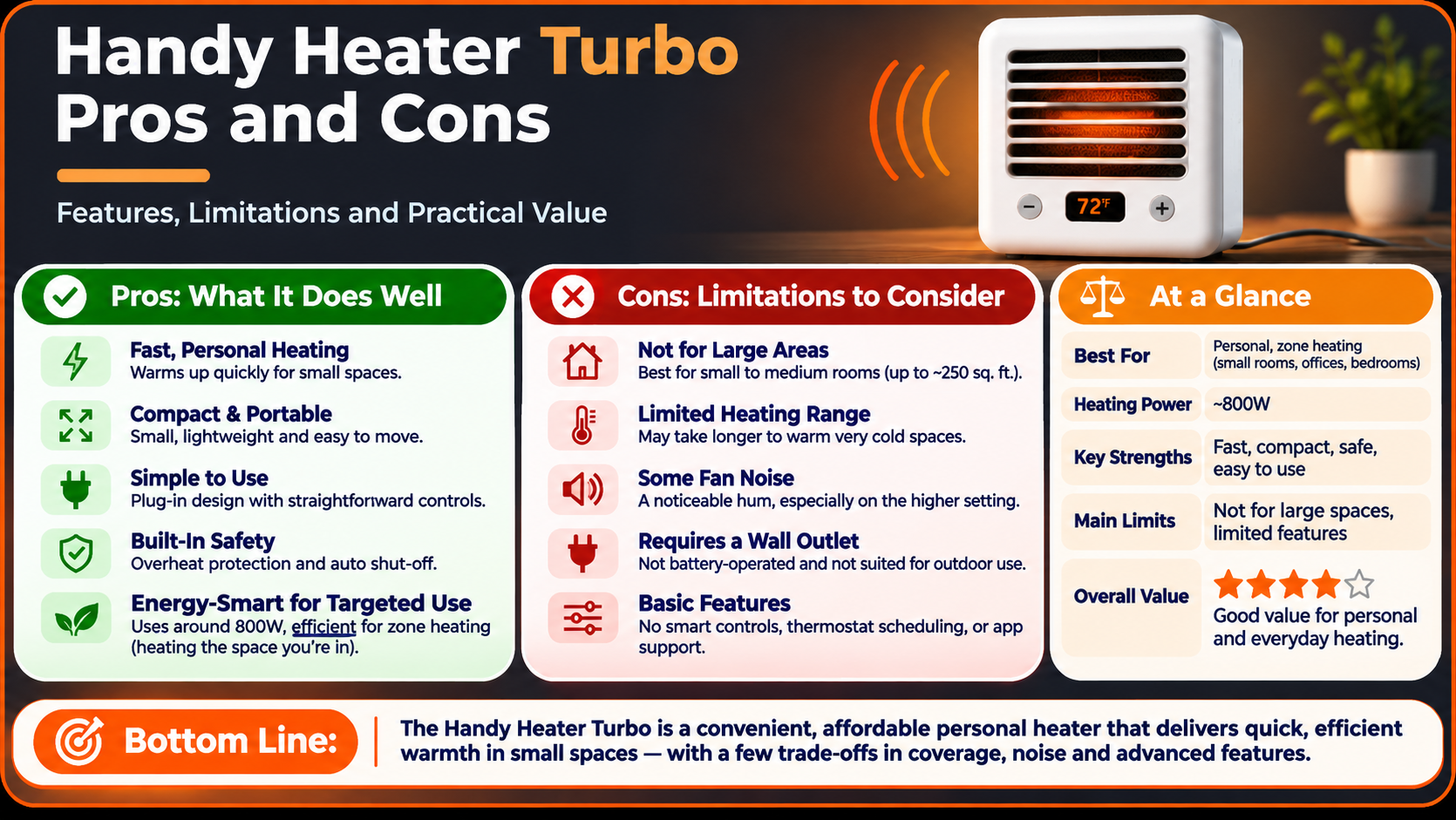
- Realistic expectations. Compact heaters suit small rooms, desks, and personal spaces. They are not a replacement for central heating, so check the stated room size and read independent customer reviews before buying.
Frequently Asked Questions
Is a dusty smell from my heater normal?
A faint, brief dusty smell the first time you use the heater in a season is common, because small amounts of dust burn off the element. A strong, sharp, or lingering burning smell is not normal. Unplug the unit and clean it.
Why does my heater turn off after a few minutes?
Overheat protection is the most common reason. When dust blocks airflow, internal temperature climbs and the safety switch cuts power. Cleaning the grilles and making sure the heater has free space around it often solves this.
Can I wash the heater with water?
No. Water inside the vents can damage electrical parts and create a shock hazard. Use a barely damp cloth on the outside only, and make sure everything is fully dry before plugging in.
How often should I clean a compact fan heater?
For most homes, a quick vacuum of the grilles every two to four weeks during the heating season is enough. Homes with pets, carpets, or a lot of dust should clean more often.
Should I open the heater to clean inside?
Only if the manufacturer’s manual says it is safe and allowed. Opening the casing can void your warranty and is risky without electrical knowledge. If heavy dust remains inside, contact customer support or a qualified technician.
When should I replace the heater instead of cleaning it?
Replace it if it has a damaged cord or plug, melted or discolored parts, sparks, repeated shutoffs after cleaning, grinding fan noises, or signs of burning. Safety comes before saving money.
Final Thoughts
Dust buildup is the most common and most preventable cause of airflow problems in a Handy Heater Turbo and similar compact heaters. A few minutes of safe, regular cleaning keeps the fan moving freely, protects the heating element, reduces odors, and helps the unit deliver the warmth you paid for. Make a habit of checking the grilles weekly, vacuuming them every few weeks, and giving the heater a proper clean before and after each season. If the heater still behaves strangely after cleaning, stop using it and contact the seller or manufacturer.
Disclosure: This article is for general information only. Always follow the manufacturer’s instructions and safety warnings for your specific model. Some content on this site may include affiliate relationships at no extra cost to you.