

Handy Heater Turbo vs Ceramic Heater: Which One Is Better for You?

When the temperature drops, a good heater feels like a small miracle. But the market is crowded, and two names keep coming up in searches: the compact Handy Heater Turbo and the classic ceramic heater. They look different, they are priced differently, and they solve different problems.
In this guide, we compare them honestly on heating power, room coverage, running cost, safety, portability and value, so you can choose the right one for your space and budget.
Table of Contents
- What Is a Handy Heater Turbo?
- What Is a Ceramic Heater?
- Quick Comparison
- Heating Performance
- Room Size and Coverage
- Electricity Cost
- Safety Features
- Portability and Design
- Noise Level
- Pros and Cons
- Who Should Buy Which?
- Buying Checklist
- Safety Rules
- FAQs
- Final Verdict
What Is a Handy Heater Turbo?
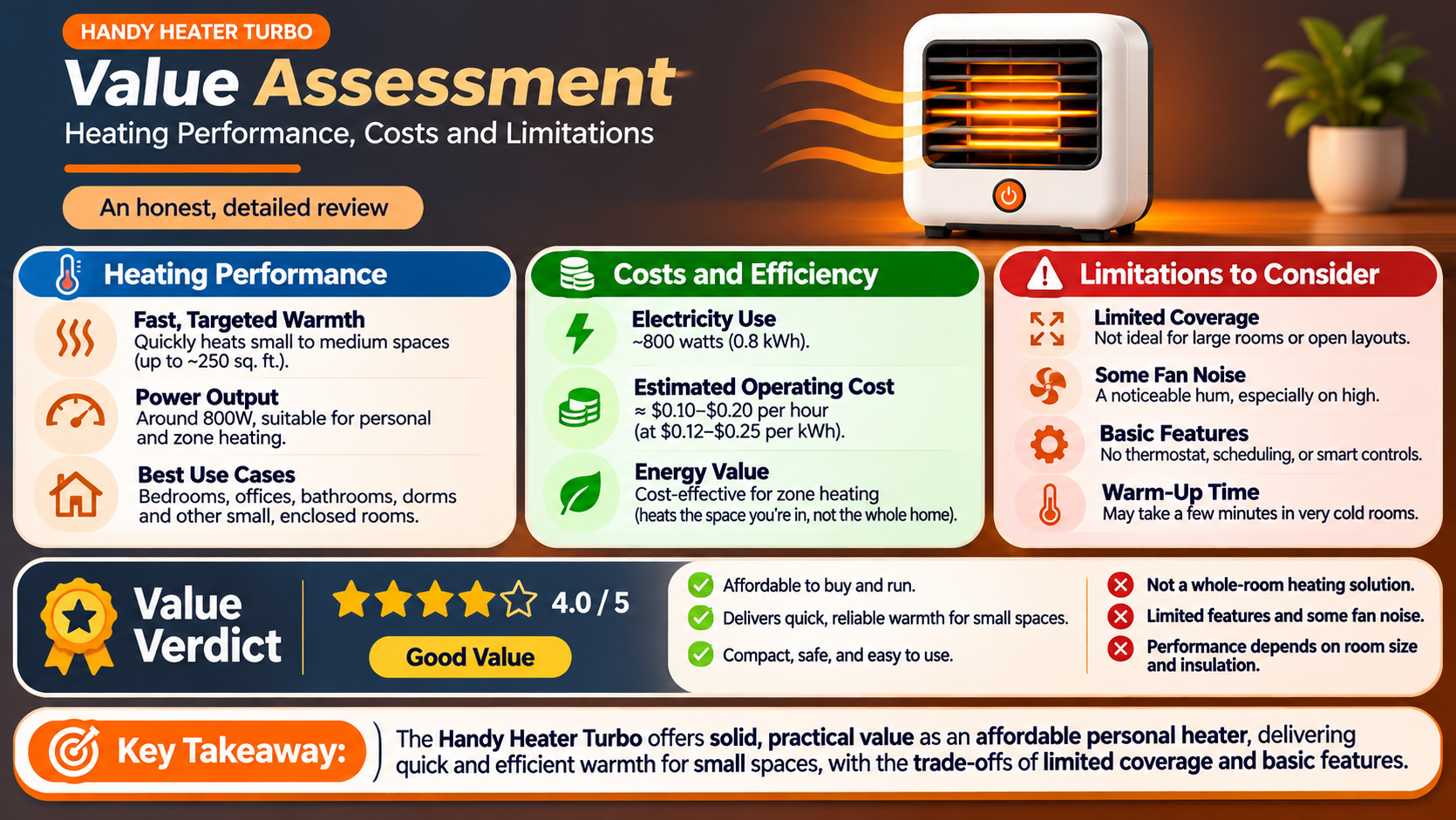
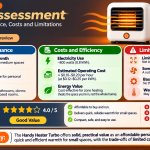
The Handy Heater Turbo is a small, plug-in personal heater designed to deliver quick warmth to a limited area. It is usually palm-sized or slightly bigger, plugs straight into a wall socket, and is marketed as a convenient way to warm a desk, bathroom, bedside or small corner.
Because it is compact and low-powered, it is not meant to heat a whole room. Think of it as a spot heater: it warms the space right around it, not the entire house.
Important note: Exact wattage, features and build quality can differ between sellers and versions. Always read the rating label on the product you receive and compare it with the seller’s description.
What Is a Ceramic Heater?
A ceramic heater uses a ceramic heating element (often called PTC, positive temperature coefficient). Electricity heats the ceramic plates, and a fan blows air across them to spread warm air through the room. Most models are tower or box shaped and offer adjustable settings.
Many ceramic heaters have two or three heat levels (for example, around 750 W and 1500 W), a thermostat, an oscillation feature and a tip-over switch. They are among the most popular choices for bedrooms, offices and living rooms.
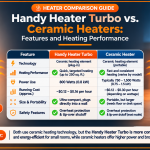
Quick Comparison

Heating Performance
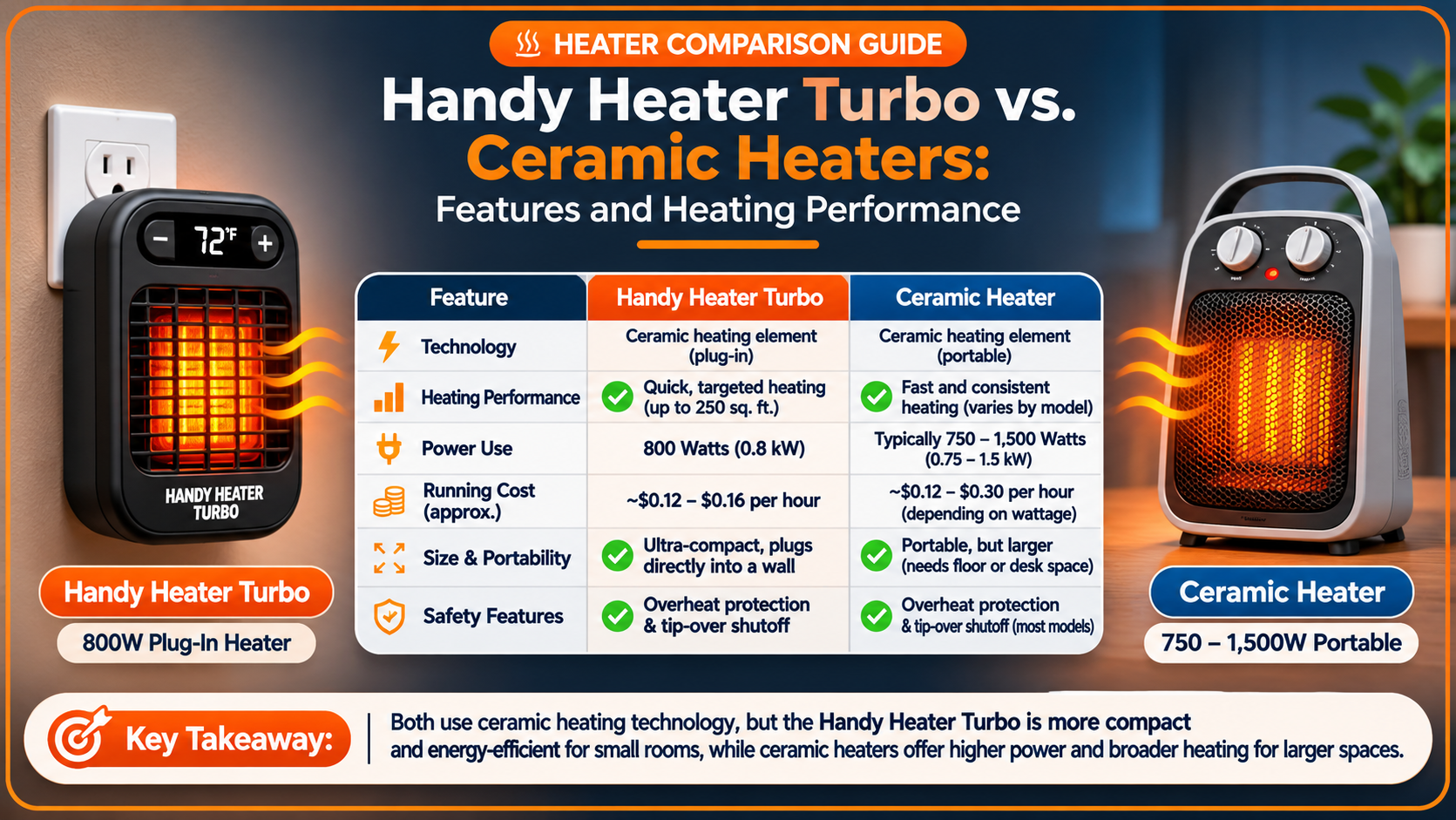
A heater’s ability to warm a space depends mainly on its wattage. In simple terms, more watts means more heat output. A standard ceramic heater commonly runs at up to about 1500 W, while compact plug-in heaters like the Handy Heater Turbo run at a much lower wattage.
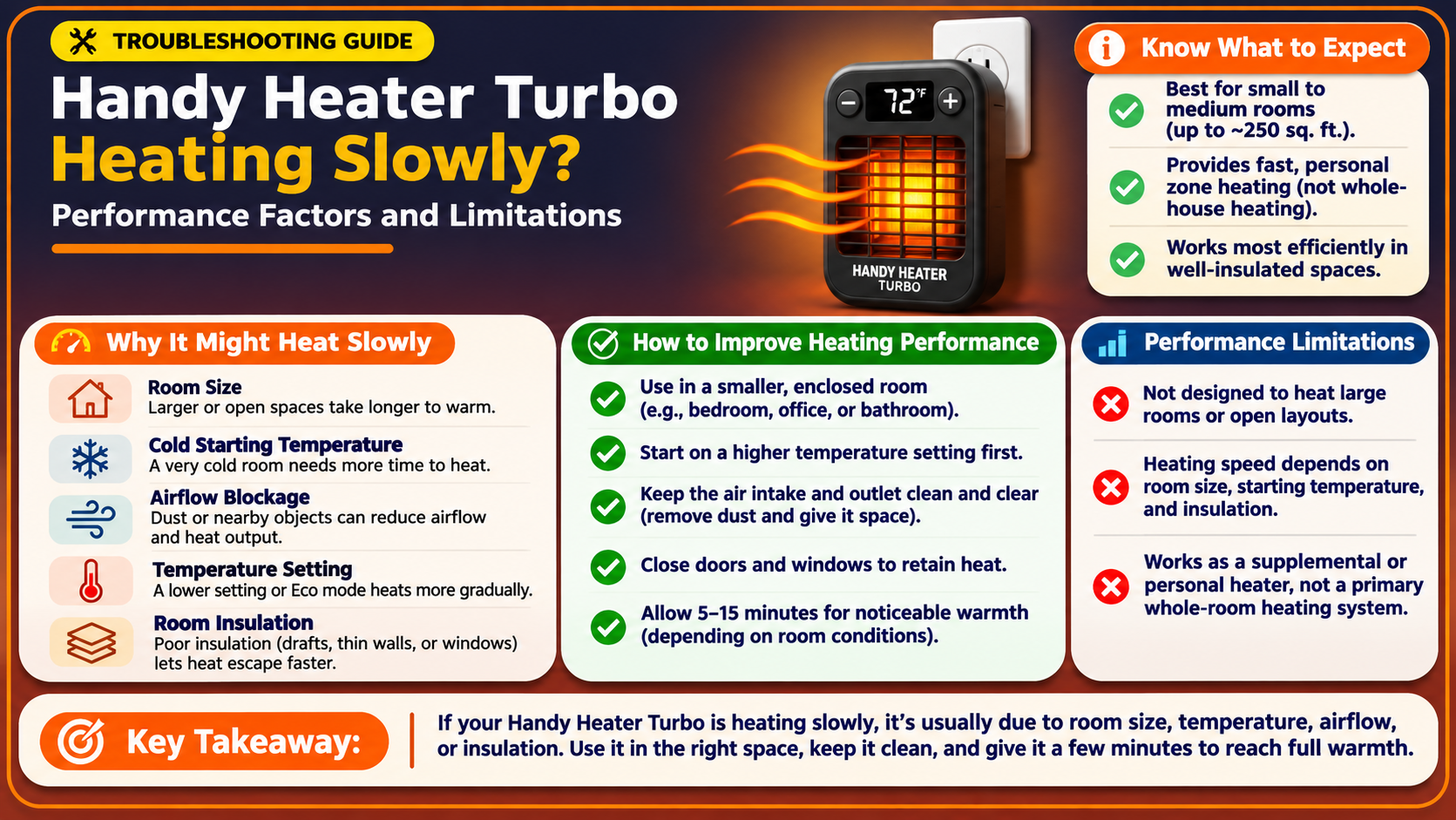
Handy Heater Turbo: Heats up fast and is pleasant when you are sitting close to it. The warmth stays local, so you feel it near the unit but not across the room.
Ceramic heater: Takes a moment to start, then pushes warm air throughout the room using its fan. With a thermostat, it can also hold a steady temperature.
The simple truth: if you need to warm yourself, a compact heater can be enough. If you need to warm a room, a ceramic heater is the stronger tool.
Room Size and Coverage
- Handy Heater Turbo: Best for a desk area, small bathroom, a corner of a bedroom or a tiny study space.
- Ceramic heater: Better for small to medium rooms such as bedrooms, home offices and small living rooms.
In a large, open or draughty room, neither will do a perfect job, and a room that is badly insulated will lose heat quickly. Closing doors and windows helps either option perform better.
Electricity Cost
Electricity use is easy to estimate: watts ÷ 1000 × hours = kWh. Multiply the kWh by your local rate per unit to get the cost.

A low-wattage heater uses much less energy per hour than a 1500 W ceramic heater. That makes a compact heater attractive when you only need personal warmth for a few hours. However, if a tiny heater cannot make you comfortable and you run it for a long time anyway, the saving may disappear. Match the heater to the job.
Ceramic heaters with a thermostat can save energy because they switch off when the room reaches the temperature you set.
Safety Features
Heaters are safe when used correctly, but they are also a common cause of household accidents. Check these features before buying any heater:
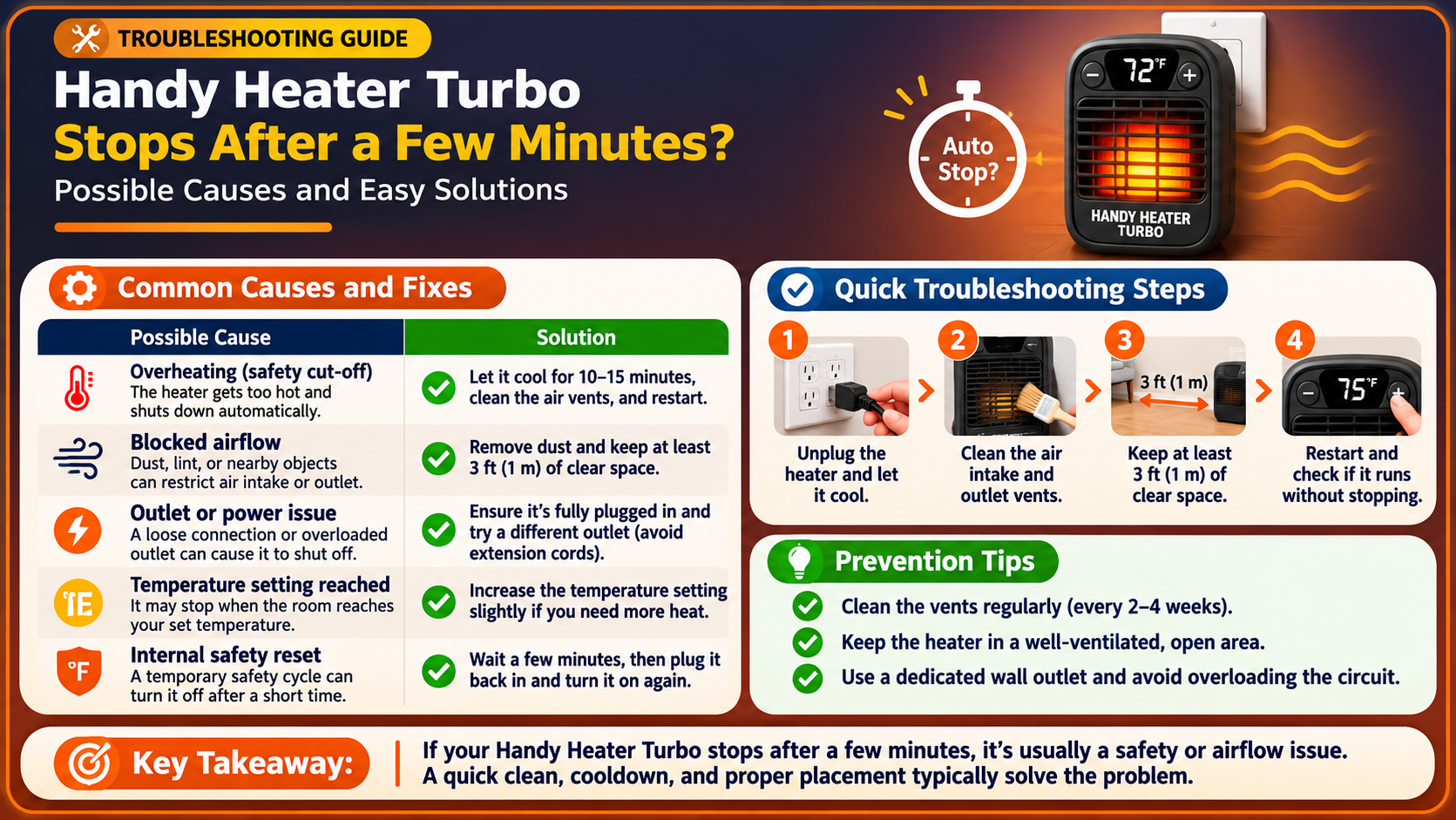
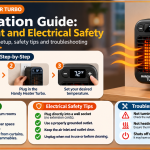
- Overheat protection: Cuts power if internal temperature gets too high.
- Tip-over protection: Turns the unit off if it falls.
- Flame-retardant housing: Reduces risk if the body gets very hot.
- Certification marks: Look for recognised safety approvals valid in your country.
Ceramic heaters from established brands often include several of these protections as standard. With any low-cost plug-in heater, check the packaging and manual to see exactly what is included, rather than relying on the advertisement alone.
Portability and Design
The Handy Heater Turbo wins on portability. It fits in a bag, plugs into a wall and is easy to carry between rooms or take while travelling. Ceramic heaters are heavier and bulkier, but most have handles, a flat base and a cord that is long enough for normal room use.
Noise Level
Small plug-in heaters are often fairly quiet, though some have a small fan. Ceramic heaters use a larger fan, so you may hear a steady hum. Many models offer a low setting that is quiet enough for bedrooms and offices.
Pros and Cons
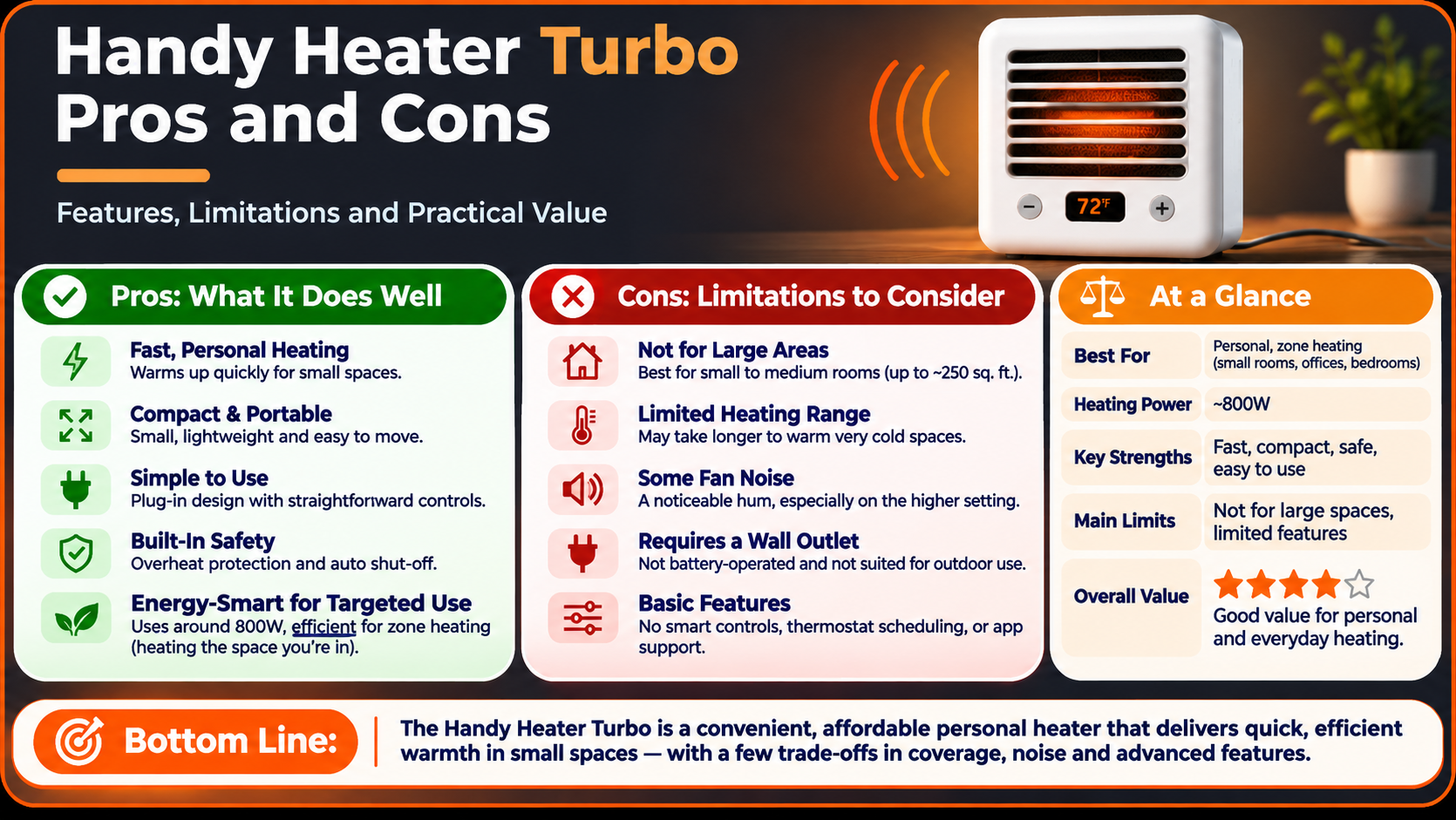
Handy Heater Turbo
Pros
- Very compact and lightweight
- Low power use per hour
- Quick personal warmth
- Easy to use and store
Cons
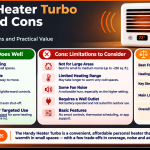
- Cannot heat a full room
- Fewer controls and safety extras (varies by model)
- Wall-mounted use may block other sockets
Ceramic Heater
Pros
- Heats small to medium rooms effectively
- Thermostat and multiple heat settings
- Commonly includes tip-over and overheat protection
- Fan spreads heat evenly
Cons
- Higher electricity use at full power
- Bulkier and heavier
- Fan noise on some models
Who Should Buy Which?
Choose the Handy Heater Turbo if:
- You only need warmth at your desk, bedside or in the bathroom
- You want something small and travel-friendly
- You want a low-wattage, short-use option
Choose a ceramic heater if:
- You want to warm an entire bedroom, office or small living room
- You want a thermostat and adjustable settings
- You want stronger built-in safety features
- You will use it for long hours every day in winter
Buying Checklist
- Measure your room and decide whether you need room heat or spot heat.
- Check the wattage on the label and make sure your socket and wiring can handle it.
- Confirm that overheat and tip-over protection are included.
- Look for safety certification and a clear warranty.
- Read recent customer reviews, especially about durability and heat output.
- Compare the price with the features you actually need.
Heater Safety Rules You Should Always Follow

Frequently Asked Questions
Is the Handy Heater Turbo enough to heat a room?
Usually no. Compact plug-in heaters are best for small spaces or personal warmth. For a whole room, a ceramic heater with higher wattage is the better choice.
Which is cheaper to run?
Per hour, a low-wattage compact heater is cheaper. But a thermostat-controlled ceramic heater can be efficient for heating a full room because it cycles off once the target temperature is reached.
Is a ceramic heater safe to leave on overnight?
Manufacturers generally advise against leaving any heater unattended or running while you sleep. Use a timer or turn it off before bed.
Can I plug a heater into an extension cord?
It is best to plug high-wattage heaters directly into a wall socket. Extension cords and multi-plugs can overheat under heavy load.
Do ceramic heaters dry out the air?
They do not remove moisture, but warm air feels drier. Keeping a bowl of water or using a humidifier can improve comfort.
Which is better for a small bathroom?
Only use a heater that is rated for bathroom use, and keep it far from water. Check the product manual before using any heater in a damp area.
Final Verdict
There is no single winner, because these heaters are built for different jobs.
- Best for personal, portable warmth: Handy Heater Turbo
- Best for heating a whole small or medium room: Ceramic heater
If you want one heater for most situations, a ceramic heater with a thermostat is the safer, more flexible investment. If you just need a little warmth for a small space, a compact heater is convenient and economical. Whichever you choose, buy from a trusted seller, check the safety features and follow the safety rules above.
Disclaimer: Specifications and performance vary by brand, model and seller. Always check the product label and manual before purchase and use.