Handy Heater Turbo Energy Efficiency: Real Running Costs, Wattage Facts and Smart Usage Tips

Every winter, the same question comes up: how do you stay warm without a shocking electricity bill? Heating a whole house for one person sitting in one room is expensive, and that is exactly why compact plug-in heaters such as the Handy Heater Turbo have become so popular. But does the Handy Heater Turbo really deliver on its energy efficiency promise, or is it just clever marketing?
In this guide, we break down how the Handy Heater Turbo works, what its 800-watt rating means for your power bill, how much it costs to run per hour and per month, and how to get the most warmth from every unit of electricity. We keep it honest and practical, so you can decide whether it fits your home.
Quick Summary
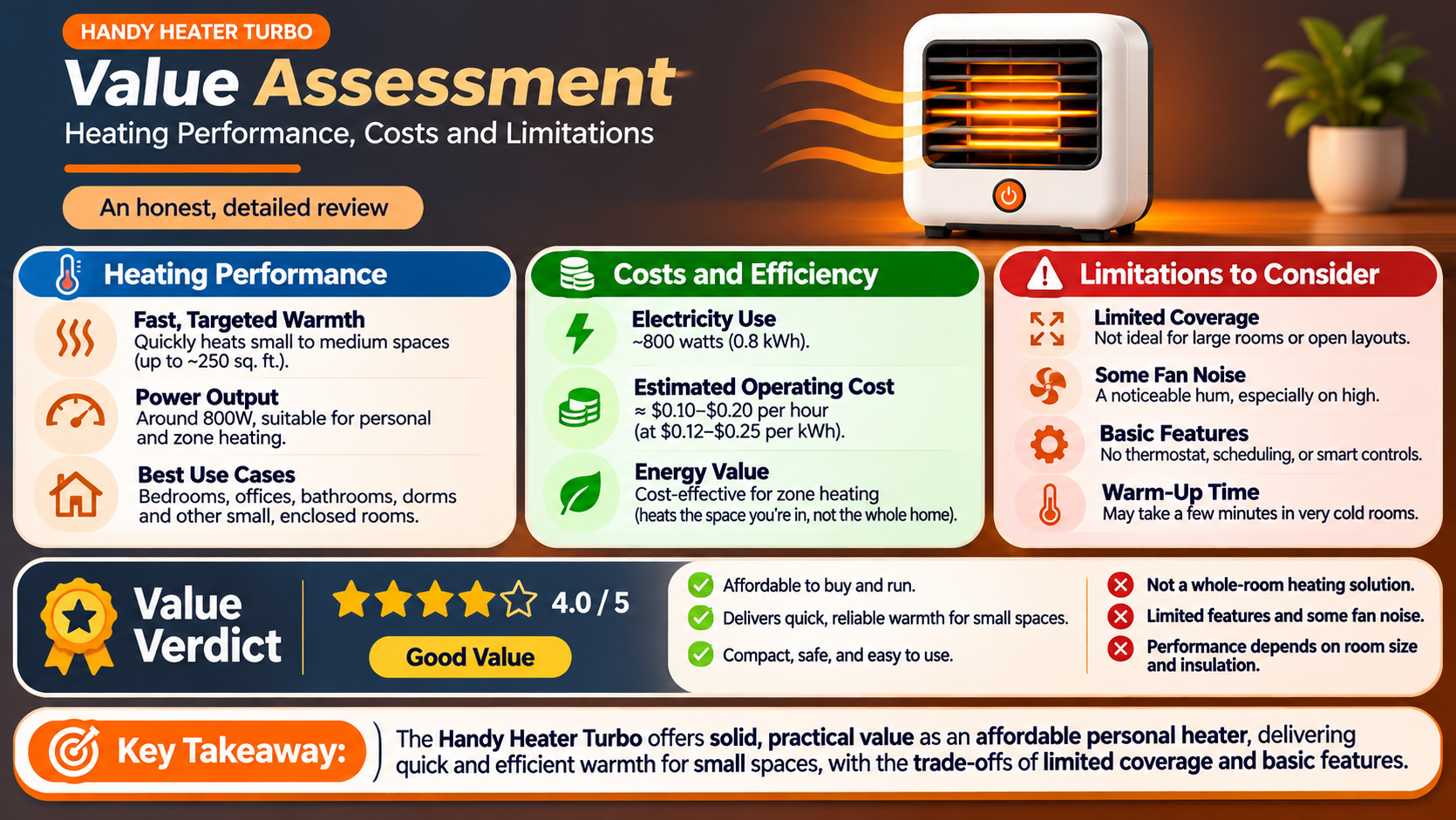
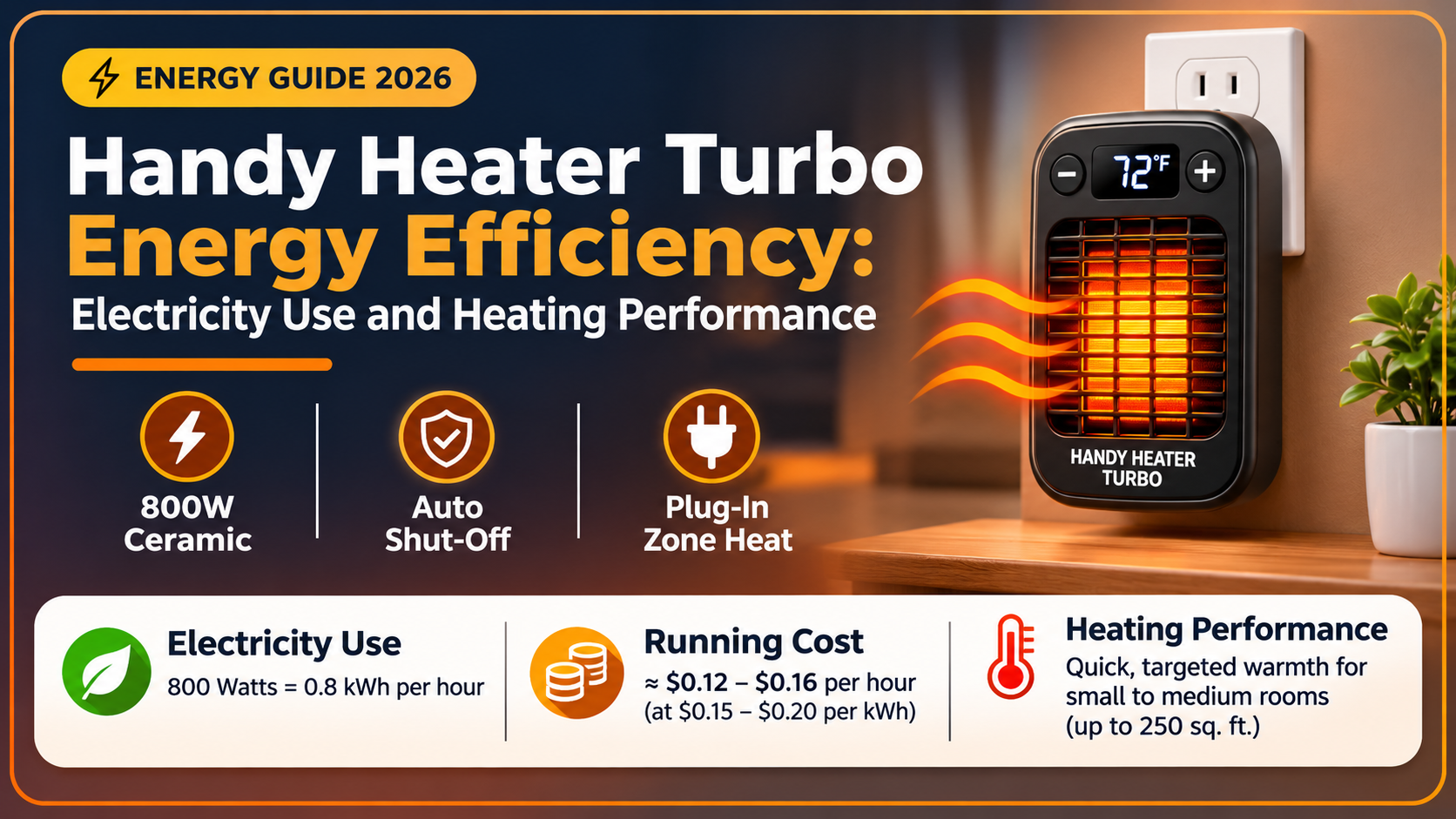
- Power rating: 800 watts (0.8 kWh per hour of full-power use)
- Technology: advanced ceramic heating element with adjustable thermostat
- Best for: small rooms, desks, bathrooms, bedrooms and home offices
- Efficiency truth: it is efficient because it heats a small zone, not because it breaks the laws of physics
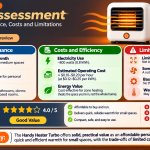
- Typical cost: roughly 10 to 20 cents per hour, depending on your local electricity rate
What Is the Handy Heater Turbo?
The Handy Heater Turbo is a compact, wall-outlet ceramic space heater. It plugs directly into a standard socket, so it needs no floor space and no extension cord. The popular Turbo 800 version is listed at 800 watts and 110 volts, and it measures roughly 5.75 inches wide and 9 inches tall, which makes it small enough to tuck into a corner, a hallway or a travel bag.
Retail listings describe its main features as ceramic heating technology, an adjustable thermostat, quiet operation, a stay-cool housing and an automatic shut-off function. Some listings also mention a built-in timer. In most stores the heater sells for around 30 dollars, which is far less than a large oil-filled radiator or a tower heater.
| Specification | Handy Heater Turbo 800 |
|---|---|
| Power | 800 watts |
| Voltage | 110 volts (check the label for your region) |
| Heating type | Ceramic element, wall-outlet design |
| Size | About 5.75 in wide x 9 in high |
| Controls | Adjustable thermostat (timer on some versions) |
| Safety | Stay-cool housing, automatic shut-off |
How Energy Efficient Is the Handy Heater Turbo, Really?
This is where most online reviews get vague, so let us be clear. Almost every electric resistance heater, whether ceramic, oil-filled or a bar heater, converts close to 100 percent of the electricity it draws into heat. That means the Handy Heater Turbo is not magically more efficient than other electric heaters at turning power into warmth.
So where does the real efficiency come from? It comes from three practical advantages:
- Low wattage. At 800 watts, it draws roughly half the power of a typical 1,500-watt space heater. It simply cannot spend as much energy per hour.
- Zone heating. Instead of warming an entire house, you warm only the room, or even only the area, where you are sitting. This is the biggest saving of all.
- Thermostat control. Once the room reaches your chosen temperature, the heater cycles down instead of running flat out, which cuts wasted electricity.
In other words, the Handy Heater Turbo is efficient in the way a desk lamp is efficient compared with lighting an entire stadium. It is the smart choice when you need a little warmth in a small space, and a poor choice when you expect it to heat an open-plan living area.
How Much Does It Cost to Run per Hour and per Month?
You can calculate the running cost of any heater with one simple formula:
Cost = (Watts ÷ 1,000) x Hours Used x Electricity Rate per kWh
For an 800-watt heater, that means 0.8 kWh of electricity for every hour it runs at full power. Here is what that looks like at three common electricity rates:
| Electricity Rate | Cost per Hour | 4 Hours a Day for 30 Days |
|---|---|---|
| $0.12 per kWh | about $0.10 | about $11.52 |
| $0.16 per kWh | about $0.13 | about $15.36 |
| $0.25 per kWh | about $0.20 | about $24.00 |
These figures assume the heater runs at full power the whole time. Because the thermostat cycles the element on and off, real-world cost is often lower. Always check your own utility rate for an accurate estimate.

Hourly running cost comparison at an example rate of $0.16 per kWh.
Zone Heating: Where the Real Savings Happen
Imagine a home where the central heating system costs much more per hour than a small plug-in heater. If you spend your evening in one room, running the whole system just to keep that room warm is wasteful. Lowering the central thermostat by a few degrees and using a small heater like the Handy Heater Turbo in the room you actually occupy can reduce your overall heating use.
This approach works best when:
- You work from a home office for several hours a day
- You sleep in a bedroom that is colder than the rest of the house
- You need quick warmth in a bathroom before a shower
- You live in an apartment or dorm with limited control over central heat
- You want to take the chill off a garage corner or hobby room (with proper safety precautions)
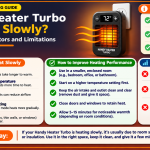
It works poorly when you try to heat a large, open or poorly insulated space. In that case the heater runs constantly, the room never feels warm, and the saving disappears.
Features That Support Energy Savings
Ceramic Heating Element
Ceramic elements warm up quickly, so you feel heat within a short time of switching the unit on. Fast warm-up means you do not need to leave it running for long periods just to reach a comfortable level.
Adjustable Thermostat
The thermostat is the most important efficiency feature. By setting the temperature you actually need, you stop the heater from overshooting and wasting electricity. Many people make the mistake of turning any heater to its highest setting, which rarely heats a room faster.
Timer Function (Where Available)
Some versions include a timer so the heater switches itself off after a set period. That is useful when you fall asleep or leave the room and forget to unplug it. Check the specific model you buy, as features differ between versions.
Automatic Shut-Off and Stay-Cool Housing
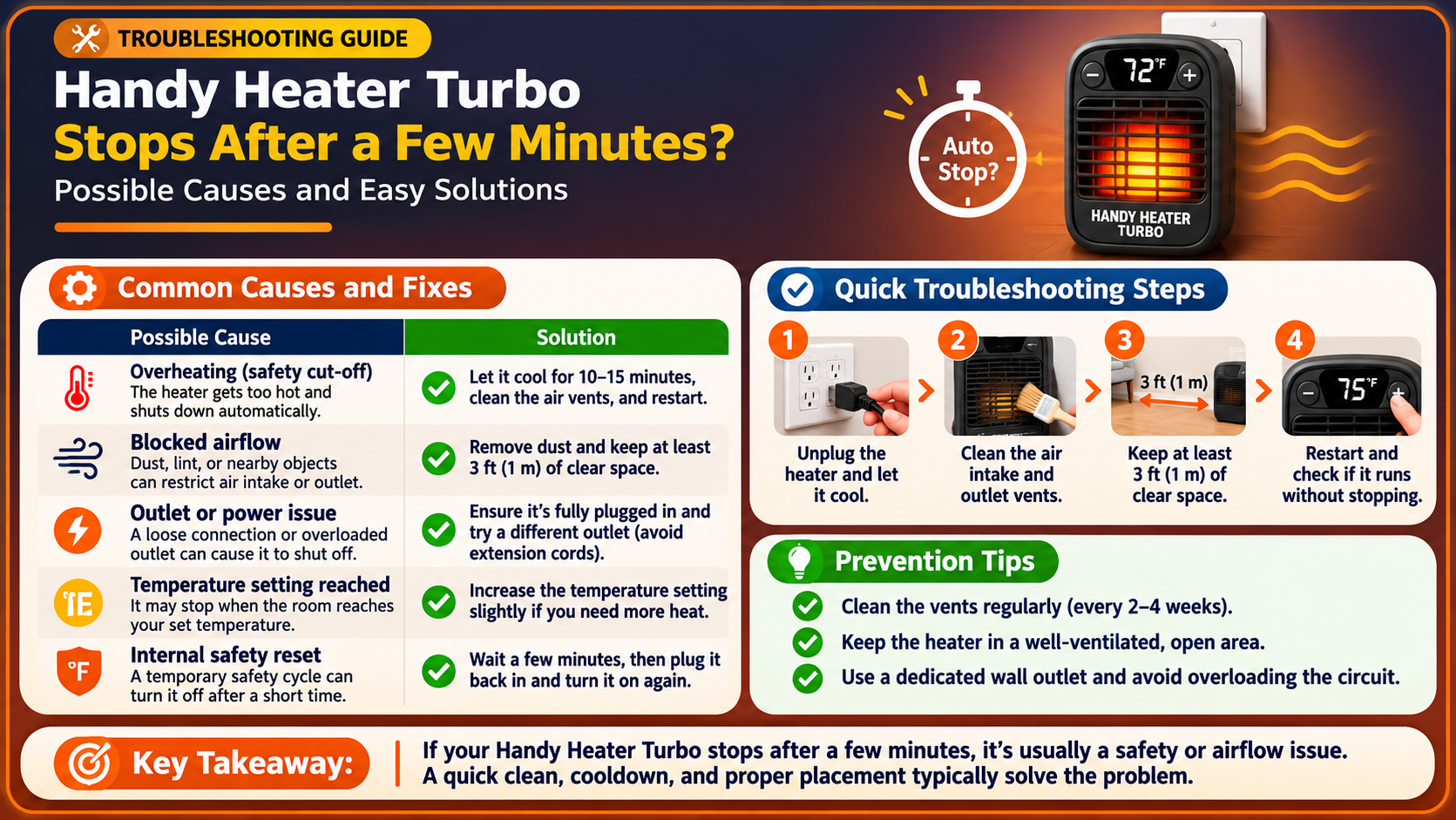
These are primarily safety features, but they also prevent accidental waste. A heater that shuts itself off when it overheats is less likely to run unattended in a bad situation.
6 Smart Ways to Use the Handy Heater Turbo More Efficiently

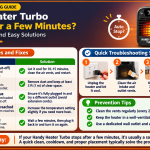
- Heat only the room you are using. Close the door so the warm air stays where you need it.
- Block drafts. A rolled towel at the bottom of a door or a simple window seal can noticeably improve how warm a small room feels.
- Use the thermostat instead of maximum heat. Pick a comfortable temperature and let the heater cycle.
- Use short sessions. Warm the room for a while, then switch off. Small rooms hold heat surprisingly well if they are insulated.
- Keep the area around it clear. Leave several feet of free space in front of the heater. Never cover it or place it near curtains, bedding or furniture.
- Plug it straight into the wall. Avoid extension cords and power strips. Heaters draw a lot of current and need a solid connection.
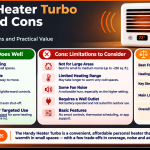
Pros and Cons of the Handy Heater Turbo
| Pros | Cons |
|---|---|
|
|
Who Should Buy It, and Who Should Skip It?
A good fit if you: want affordable, supplemental heat for a bedroom, home office, bathroom, nursery area (with the usual safety distance), dorm room or small apartment, and you want to avoid heating rooms nobody is using.
Skip it if you: need to heat a large living room, a draughty basement or an entire home. In those cases a higher-capacity heater, a heat pump or proper central heating will serve you better, and a small unit will simply run nonstop without making much difference.
Safety Tips You Should Never Ignore
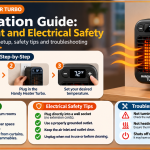
Efficiency means nothing if safety is neglected. Space heaters are a leading cause of home heating fires, so follow these basic rules:
- Plug directly into a wall outlet that is in good condition. Stop using the heater if the plug or outlet feels hot or shows discoloration.
- Keep it away from curtains, bedding, paper, clothes and furniture.
- Never leave it running unattended for long periods or while you sleep unless the model has proper safety functions and you are comfortable with the risk.
- Do not use it to dry clothes or place anything on top of it.
- Keep it away from water, and use it only where the manufacturer says it is suitable.
- Supervise children and pets around the unit.
- Read the manual that comes with your specific model before first use.
Frequently Asked Questions
Is the Handy Heater Turbo energy efficient?
It is energy efficient in the practical sense: its low 800-watt draw and thermostat control make it economical for heating a small area. Like any electric resistance heater, it turns nearly all the electricity it uses into heat, so the savings come from heating less space, not from a special technology.
How much electricity does the Handy Heater Turbo use?
At full power it uses 0.8 kWh per hour. At an electricity rate of 16 cents per kWh, that is about 13 cents per hour. The thermostat reduces actual use once the room is warm.
Can it heat a whole room?
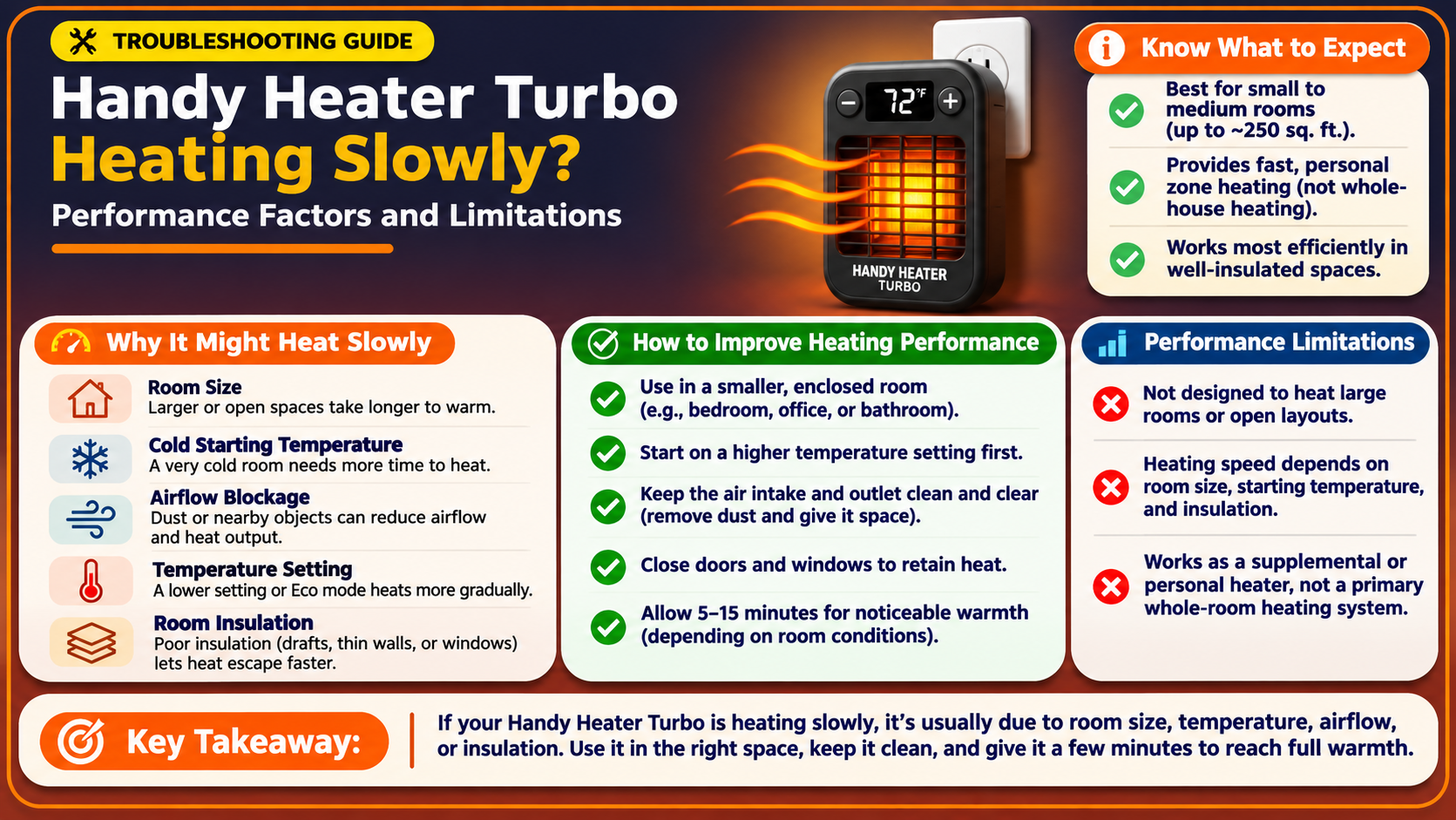
It can warm a small to medium room, especially if the door is closed and the room is reasonably insulated. In large, open or very cold spaces it will struggle.
Will it lower my electricity bill?
It can, but only if it replaces heating more space than necessary, for example by letting you turn down central heating while you use one room. If you simply add it on top of your normal heating, your bill will go up slightly.
Is it safe to leave on overnight?
Most safety organizations advise against leaving any space heater running unattended or while sleeping. Use the timer or thermostat features where available, and follow the manufacturer instructions.
What is the difference between Handy Heater models?
You will see versions rated at different wattages, such as 400 watts, 800 watts and higher. A lower wattage costs less to run but heats a smaller area. Always check the label of the exact model you are buying.
Final Verdict
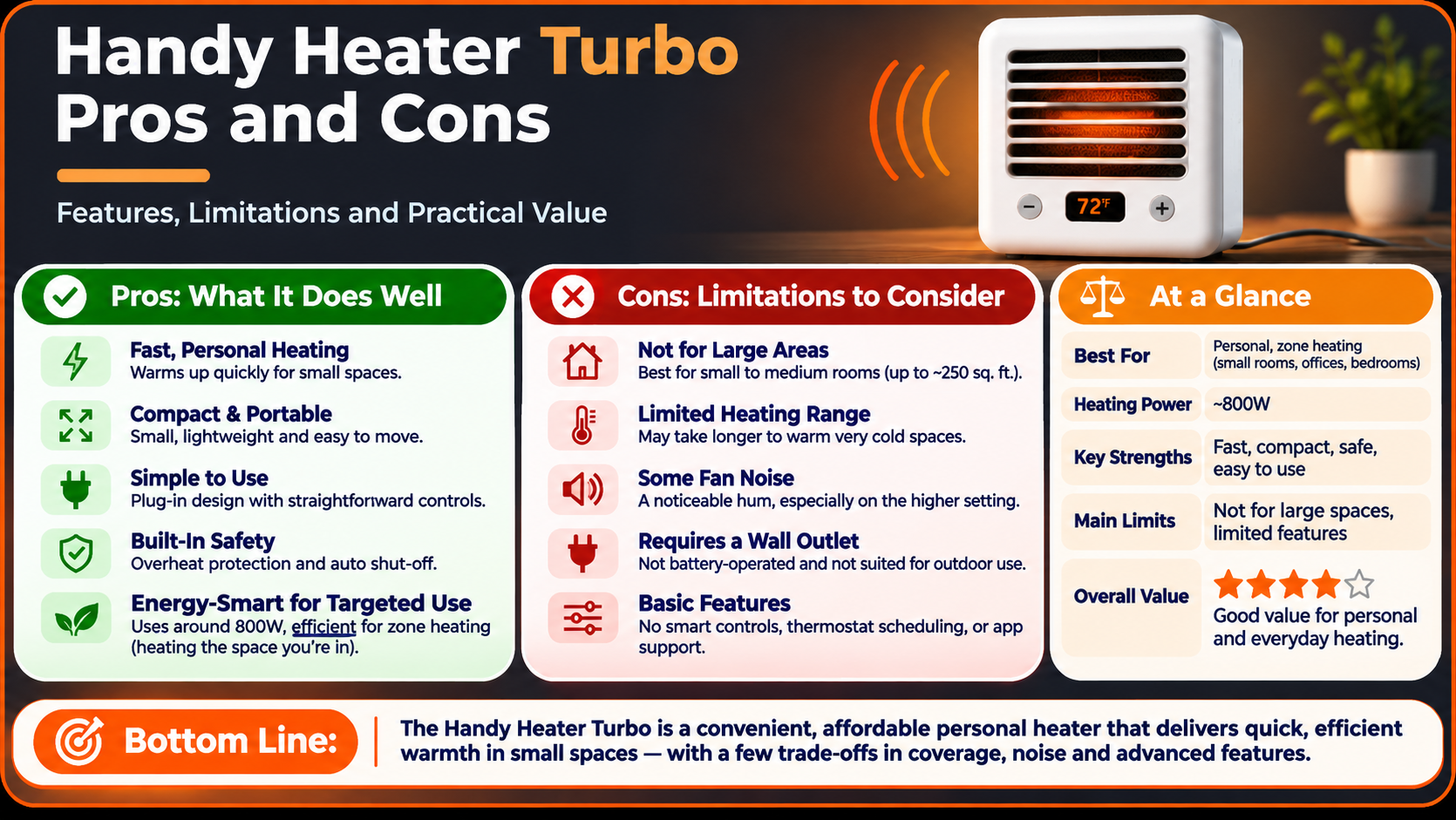
The Handy Heater Turbo is a sensible, budget-friendly choice for anyone who wants to warm a small space without heating an entire house. Its 800-watt rating keeps the cost per hour low, the thermostat helps avoid waste, and the compact plug-in design makes it easy to use anywhere. Just keep your expectations realistic: it is a personal, supplemental heater, not a replacement for central heating, and its efficiency comes from smart usage rather than any miracle technology.
If you have a cold home office, a chilly bedroom or a bathroom that needs a quick warm-up, the Handy Heater Turbo is worth considering. Compare the current price and available features from your preferred retailer, check the exact wattage of the version you are buying, and use the efficiency tips above to get the best value from every kilowatt-hour.
Disclosure: This article is for general information only. Electricity costs depend on your local rate and how you use the heater. Always follow the manufacturer’s instructions and local safety guidance.