Handy Heater Turbo Power Problems: Electrical Checks and Troubleshooting

A small heater that suddenly refuses to switch on is frustrating, especially on a cold morning. The Handy Heater Turbo is a compact plug-in style space heater, and like every heating appliance it depends on a steady, safe flow of electricity. When something interrupts that flow, you may see symptoms such as no power, no heat, a tripped breaker, flickering lights, or a unit that shuts itself off after a few minutes.
This guide walks you through the most common Handy Heater Turbo power problems, the electrical checks you can safely do at home, and the point where you should stop and call a professional. Read the safety section first, because heaters draw a lot of current and mistakes can be dangerous.
Quick answer: Most power problems come from five things: a dead or overloaded outlet, a damaged cord or plug, a tripped safety cut-off, blocked vents causing overheating, or an internal fault. The first four are simple to check. An internal fault means the heater should be replaced, not repaired.
Table of Contents
- Safety first: read before you troubleshoot
- How the Handy Heater Turbo uses electricity
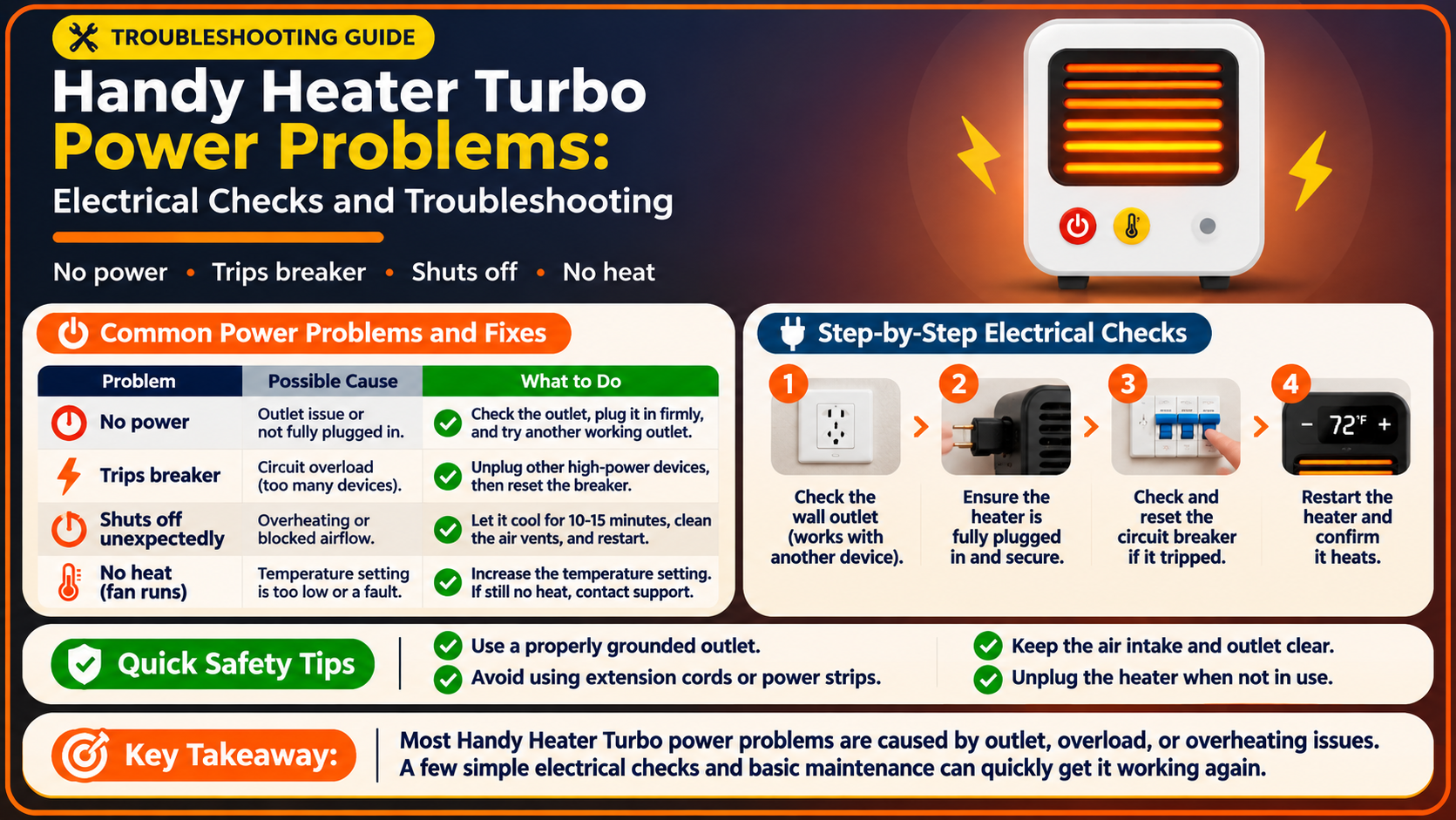
- Common power problems and what they mean
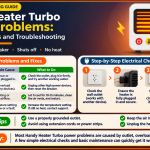
- Step-by-step troubleshooting flowchart
- The 6-point electrical checklist
- Why the heater trips the breaker
- Why the heater turns off by itself
- Extension cords and power strips
- When to stop and replace the heater
- Prevention and maintenance tips
- Buying advice for a safer heater
- Frequently asked questions
Safety First: Read Before You Troubleshoot
Electric heaters are among the highest-load appliances in a typical home. Before you test anything, follow these rules.
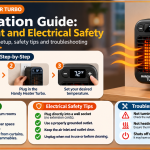
- Unplug the heater before inspecting the cord, plug, or vents.
- Never open the housing. The inside contains live wiring and a heating element. Opening it voids the warranty and creates a shock hazard.
- Do not test live circuits with a multimeter unless you are trained to do so. Simple visual checks and swapping devices are enough for most owners.
- Keep the heater dry. Never use it in a wet bathroom area or touch it with wet hands.
- Let it cool for at least 15 minutes before handling.

How the Handy Heater Turbo Uses Electricity
Compact ceramic-style heaters convert electrical energy into heat using a heating element and a small fan. Many models in this category are rated at around 1,000 to 1,500 watts, which is close to the maximum a standard household outlet circuit can comfortably supply. Always check the rating label on your own unit for the exact figure.
A simple formula helps you understand the load: Amps = Watts ÷ Volts. A 1,500 watt heater on a 120 volt circuit draws about 12.5 amps. A common 15 amp household circuit therefore has very little room left for anything else. On a 230 volt supply, the same wattage draws roughly 6.5 amps, but plugs, sockets, and wiring still need to be in good condition.
| Heater Rating | Approx. Current at 120 V | Approx. Current at 230 V |
|---|---|---|
| 750 W | 6.3 A | 3.3 A |
| 1,000 W | 8.3 A | 4.3 A |
| 1,200 W | 10 A | 5.2 A |
| 1,500 W | 12.5 A | 6.5 A |
Because of this heavy load, any weak point in the path, such as a loose outlet, worn plug, or thin extension cord, can heat up and cause problems.
Common Power Problems and What They Mean
| Symptom | Likely Cause | What to Check |
|---|---|---|
| Heater does not turn on at all | Dead outlet, tripped breaker, damaged cord, failed internal fuse | Test outlet with another device, check breaker panel, inspect cord |
| Lights on but no heat | Thermostat set too low, heating element fault, safety switch active | Turn thermostat to maximum, reset the unit, check tip-over switch |
| Fan runs but air stays cool | Heating element failure or overheat protection engaged | Clean vents, wait 15 minutes, restart; replace if it persists |
| Trips the circuit breaker | Overloaded circuit, short circuit, moisture, faulty element | Use a dedicated outlet, unplug other devices, stop use if it repeats |
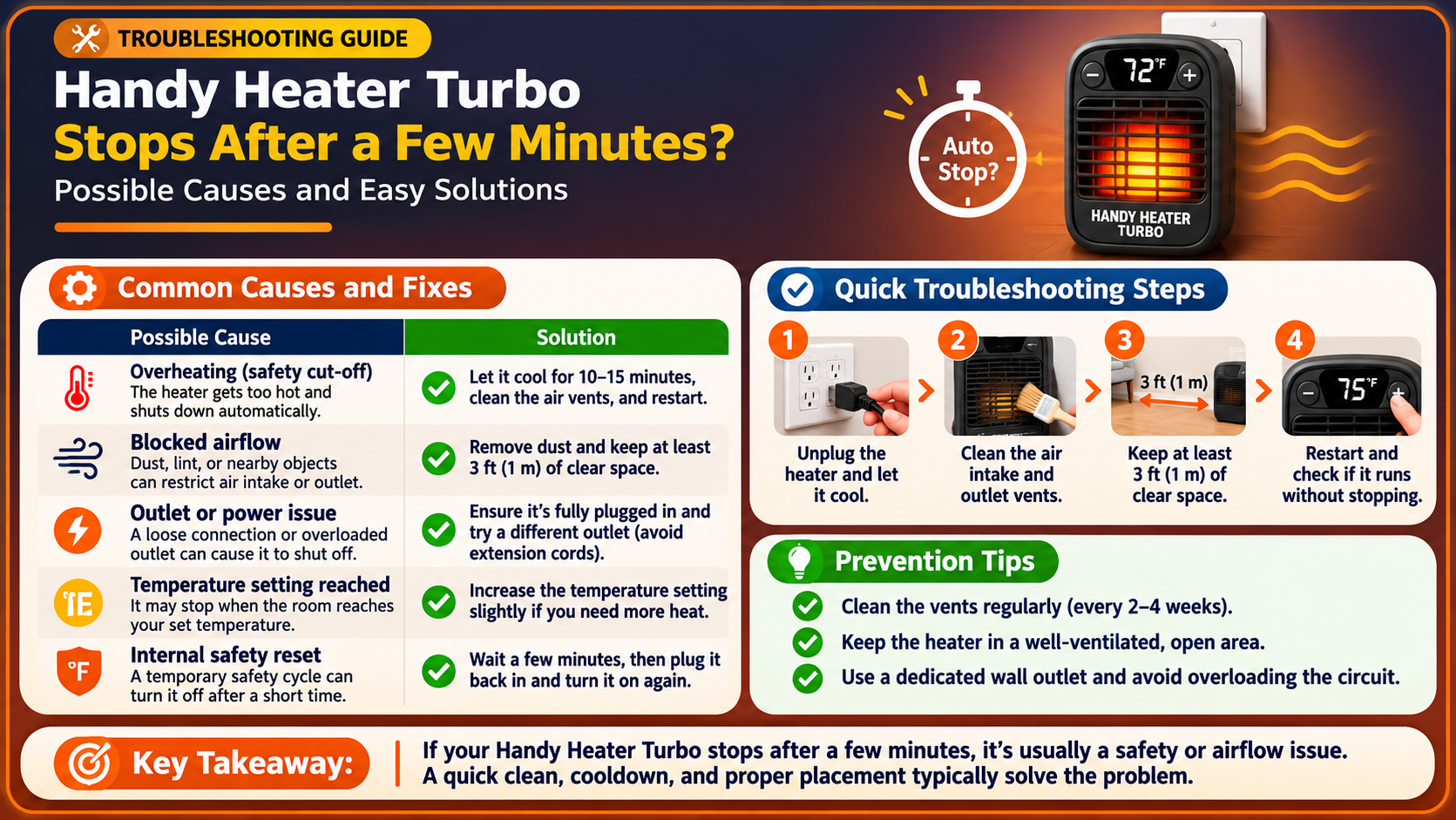
| Turns off after a few minutes | Overheat protection from blocked vents or weak power supply | Clean dust, give clearance, avoid extension cords |
| Plug or outlet feels hot | Loose connection, worn prongs, overloaded outlet | Stop use immediately and have the outlet inspected |
| Burning smell | Dust burning off (brief) or electrical fault (persistent) | A short dusty smell is normal at first; any strong or lasting smell means unplug at once |
| Flickering or dimming lights nearby | Circuit under heavy load or voltage drop | Move heater to another circuit; consult an electrician |
Step-by-Step Troubleshooting Flowchart
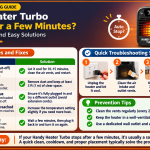
Follow the sequence below from top to bottom. Stop as soon as the heater works normally, and stop using it if you notice any sign of damage.

Step 1: Test the Wall Outlet
Plug a lamp or phone charger into the same outlet. If it does not work, the problem is the outlet or circuit, not the heater. Check the breaker panel or fuse box, and look for a reset button on any GFCI outlet nearby (often found in kitchens, bathrooms, and garages). Try the heater in a different outlet on a different circuit.
Step 2: Inspect the Cord and Plug
With the heater unplugged, run your eyes and fingers along the whole cord. Look for cracks, cuts, flattened sections, exposed wire, discolored plastic, or a plug that looks melted or blackened. If you find any of these, do not use the heater again. A damaged power cord is not a repair job for a household appliance of this type.
Step 3: Check the Tip-Over Switch and Reset
Most modern heaters contain a tip-over switch that cuts power when the unit is not upright. Place the heater on a flat, hard surface, not on carpet, a bed, or an uneven table. Some models also have a reset function: unplug, wait a minute, plug back in, and switch on.
Step 4: Clean the Vents and Filter
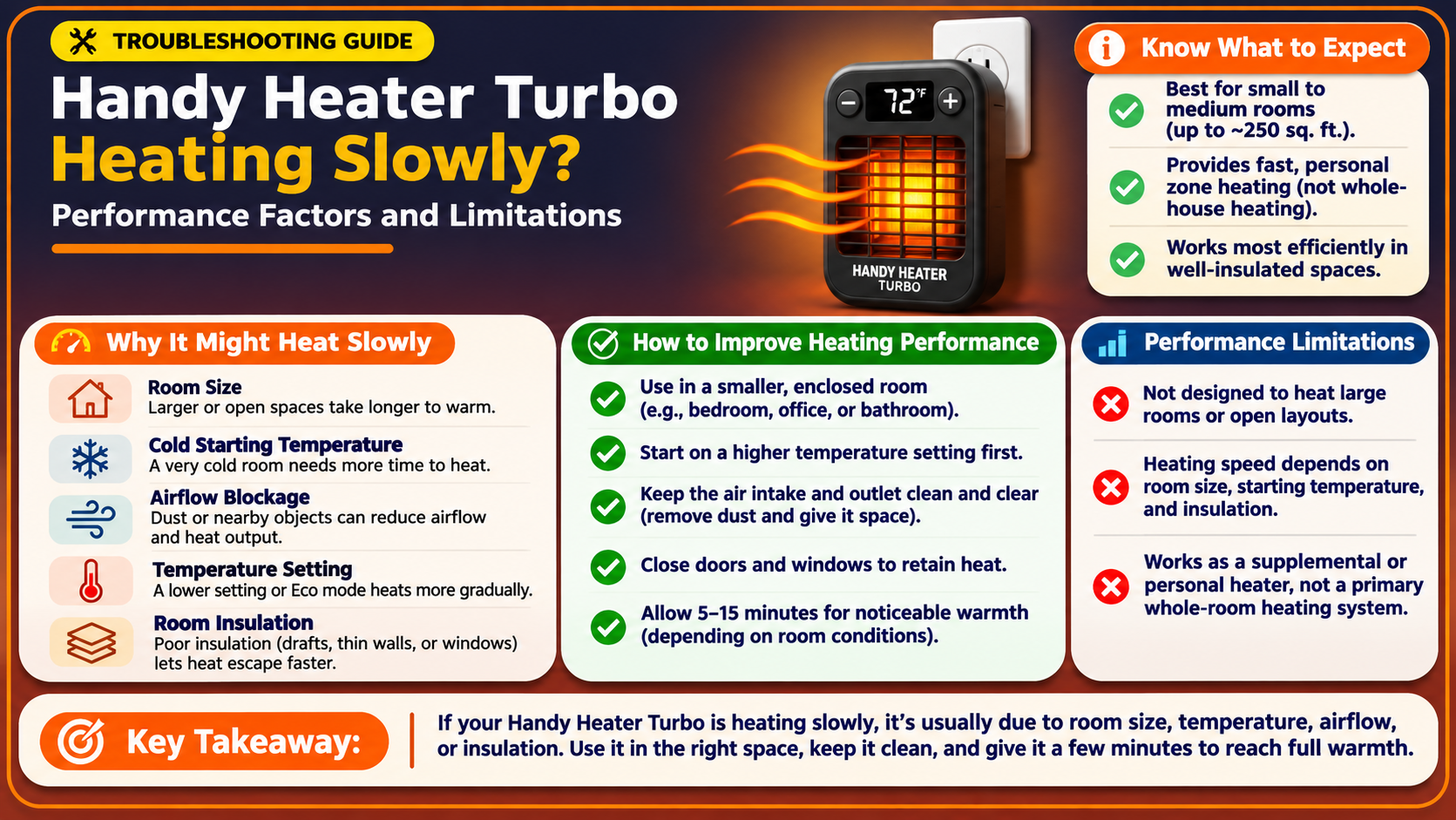
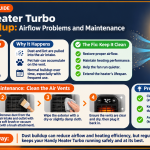
Dust build-up is one of the most common reasons a small heater shuts down. With the unit unplugged and cool, use a soft brush or a vacuum with a brush attachment to clear the air intake and outlet. Wait about 15 minutes so the overheat protection can reset, then try again.
Step 5: Check the Thermostat and Settings
Turn the thermostat or temperature setting to its highest level. If the room is already warmer than the thermostat setting, the heater will not produce heat even though it has power. Also confirm the mode (low, high, or turbo/fan only) is set correctly.
Step 6: Decide Whether to Continue
If the outlet works, the cord is undamaged, the unit is upright, the vents are clean, and the settings are correct, yet there is still no power or heat, the fault is probably internal. At this point the safest option is to stop using the heater and contact the seller regarding the warranty or return policy.
The 6-Point Electrical Checklist
Use this quick checklist whenever your heater acts up. It covers the full electrical path from the wall to the heating element.

Why the Heater Trips the Breaker
A tripping breaker is a warning sign, not just an annoyance. Common causes include:
- Overloaded circuit: The heater shares the circuit with a vacuum, microwave, hair dryer, air conditioner, or other high-wattage devices.
- Short circuit: Damaged internal wiring or a faulty element causes a sudden surge of current.
- Ground fault: Moisture or leakage to ground trips a GFCI or RCD protected circuit.
- Worn breaker: Older breakers can trip at lower loads than they should.
Try running the heater alone on a circuit with nothing else plugged in. If it still trips immediately, unplug it and do not keep resetting the breaker. Repeated resets can overheat wiring. If the same breaker also trips with other devices, have an electrician check the circuit.
Why the Heater Turns Off by Itself
Automatic shutdown is usually a built-in protection feature. The most frequent reasons are:
- Overheat protection: Blocked vents or soft furnishings too close to the unit make internal temperature rise.
- Thermostat cycling: The room reached the set temperature, so the heater pauses and restarts later. This is normal behavior.
- Voltage drop: Long or thin extension cords reduce voltage and can cause unstable operation.
- Loose plug connection: A worn outlet may lose contact when the plug warms up and expands.
- Timer settings: If your model has a timer or auto shut-off, confirm it is not active.
Extension Cords and Power Strips
The manufacturers of nearly all portable heaters recommend plugging directly into a wall outlet. Power strips and light-duty extension cords are not designed for continuous heater loads and are a frequent cause of overheated plugs and fires. If you absolutely cannot reach an outlet, use only a heavy-duty cord rated for the heater’s wattage and keep it fully uncoiled. A better solution is to move the heater or have a new outlet installed.
When to Stop and Replace the Heater
Stop using the heater permanently if you notice any of the following:
- A damaged, frayed, or melted cord or plug
- A persistent burning or electrical smell
- Sparks, smoke, or buzzing from the unit
- Repeated breaker trips even on a clean, dedicated circuit
- Scorch marks on the housing, plug, or outlet
- Intermittent power that returns only when you wiggle the cord
Small heaters are sealed consumer products. Internal repair is not recommended and may be unsafe. Check whether your purchase is still covered by a return or warranty period, and keep your receipt and order details handy.
Prevention and Maintenance Tips
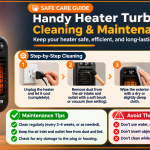
- Vacuum the vents every two to four weeks during heavy use.
- Store the heater in a dry place when not in use during warm months.
- Do not wrap the cord tightly around the unit while it is still warm.
- Keep at least three feet of clear space around the heater.
- Test your smoke and carbon monoxide alarms regularly.
- Do not leave the heater running when you leave the house or go to sleep.
- Inspect the plug for warmth after the first 30 minutes of each new use.
Buying Advice for a Safer Heater
If you are replacing a faulty unit or comparing options, look for features that reduce electrical risk and improve reliability.
| Feature | Why It Matters |
|---|---|
| Tip-over protection | Cuts power if the heater falls or tilts |
| Overheat protection | Prevents internal damage and fire risk |
| Safety certification mark (such as UL, ETL, CE, or BSTI where applicable) | Shows the product was tested against recognized safety standards |
| Cool-touch housing | Reduces burn risk for children and pets |
| Adjustable thermostat | Avoids constant full-power use and saves energy |
| Heavy-gauge power cord | Handles the electrical load with less heat |
| Clear wattage label | Helps you match the heater to your circuit |
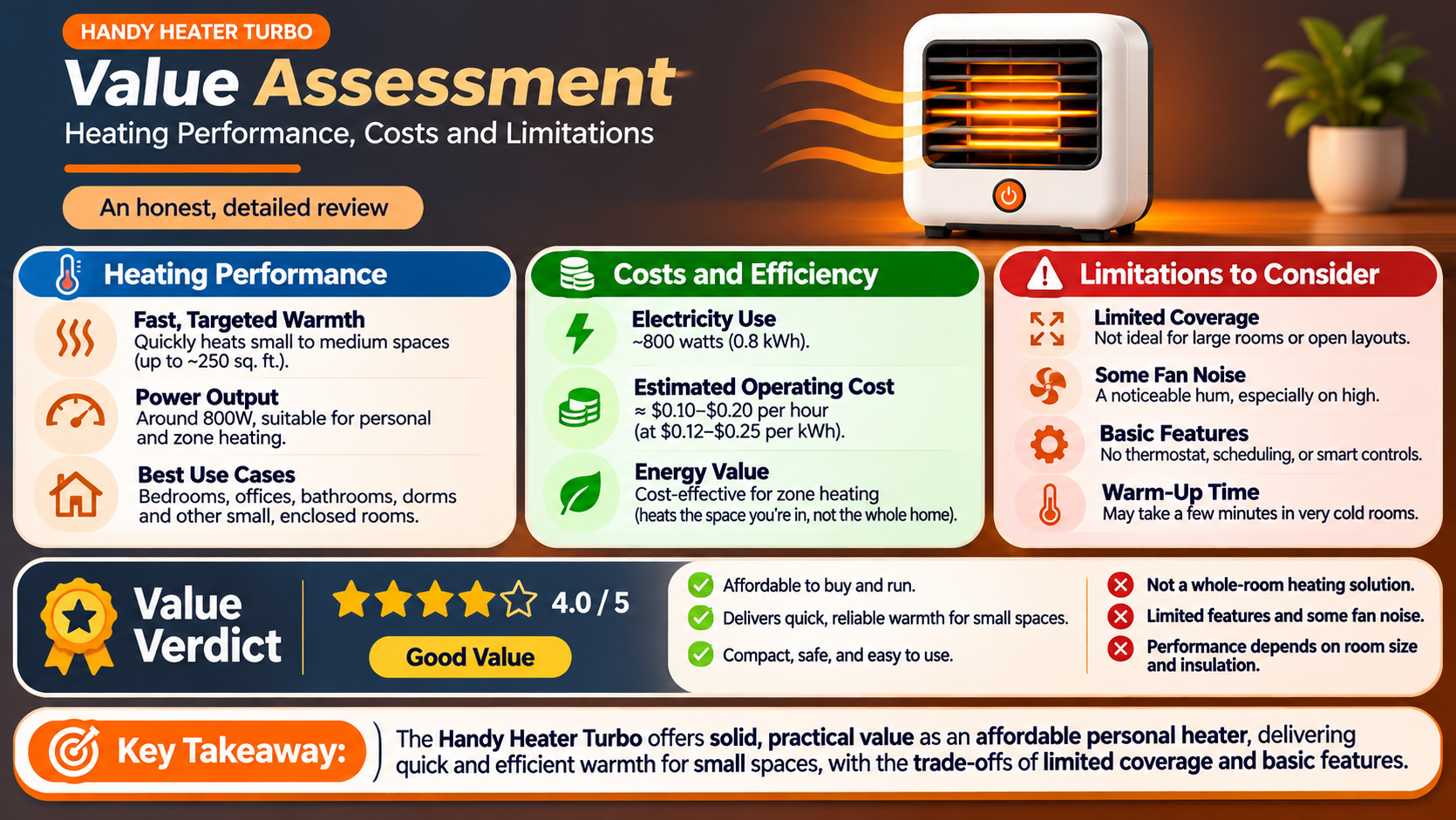
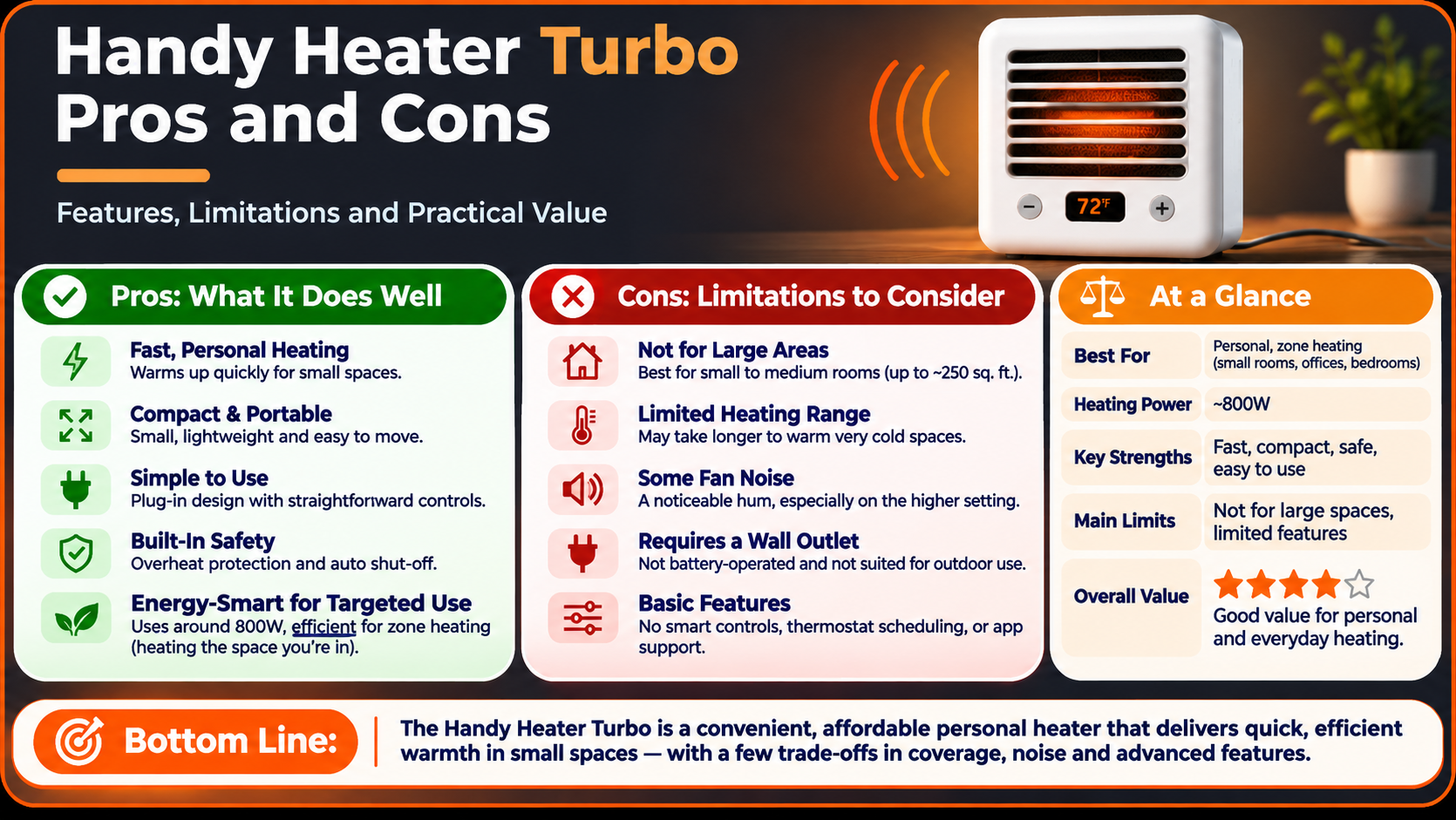
Be cautious about exaggerated advertising claims, such as promises of huge electricity savings or heating an entire house with a tiny unit. Wattage determines how much electricity a heater uses, and a small heater is best suited for personal space or a small room.
Frequently Asked Questions
Why is my Handy Heater Turbo not turning on?
Start with the outlet. Test it with another device, confirm the breaker has not tripped, and inspect the cord and plug. Then check that the unit is upright, the vents are clean, and the thermostat is turned up. If all of that checks out, an internal fault is likely.
Why does my heater blow cold air?
The thermostat may be satisfied, the overheat protection may be active, or the heating element may have failed. Clean the vents, wait 15 minutes, and try again. If it still blows cool air with the thermostat at maximum, the element is probably faulty.
Is it safe to use a Handy Heater with an extension cord?
It is best to avoid it. Plug directly into a wall outlet. Standard extension cords and power strips can overheat under a heater’s continuous load.
Can I repair the heater myself?
No. Sealed heaters contain live wiring and safety components. Opening the case can cause shock, void the warranty, and remove built-in protections. Replace it or use the warranty instead.
Why does my heater smell when I first use it?
A faint dusty smell for a few minutes after storage is normal because dust on the element burns off. A strong, sharp, or lasting smell is not normal. Unplug the heater immediately and do not use it again until it has been checked.
How many watts does a small space heater use?
Most portable models range from about 750 to 1,500 watts. Check the label on the back or bottom of your unit for the exact rating.
How long should a small heater last?
With regular cleaning and careful use, many portable heaters last several seasons. Heavy daily use, dust, and power supply problems shorten the lifespan.
Final Thoughts
Most Handy Heater Turbo power problems can be traced to simple causes such as a faulty outlet, a tripped safety switch, blocked vents, or an overloaded circuit. Work through the checks in order, keep safety as your top priority, and never ignore signs of heat damage or burning smells. If the heater still fails after the basic checks, replacing it is almost always safer and more economical than attempting a repair.
Stay warm, stay safe, and always plug your heater directly into a healthy wall outlet.
Disclosure: This site may earn a small commission from qualifying purchases at no extra cost to you. This article is for general information only and does not replace advice from a licensed electrician or the manufacturer’s instruction manual.