
Handy Heater Turbo Value Assessment: Heating Performance, Costs and Limitations
When the temperature drops, a small plug-in heater looks like an easy fix. It is cheap to buy, easy to carry and promises instant warmth. The Handy Heater Turbo sits in exactly this category, and its marketing leans heavily on speed, convenience and low running costs. But how much of that is realistic?
This value assessment looks past the promotional language. We break down how this type of heater actually works, what kind of heating performance you can reasonably expect, what it costs to run, where it falls short and who should (and should not) consider buying it. By the end, you will be able to decide whether it is good value for your space.
Quick Overview
| Product type | Compact plug-in ceramic fan heater |
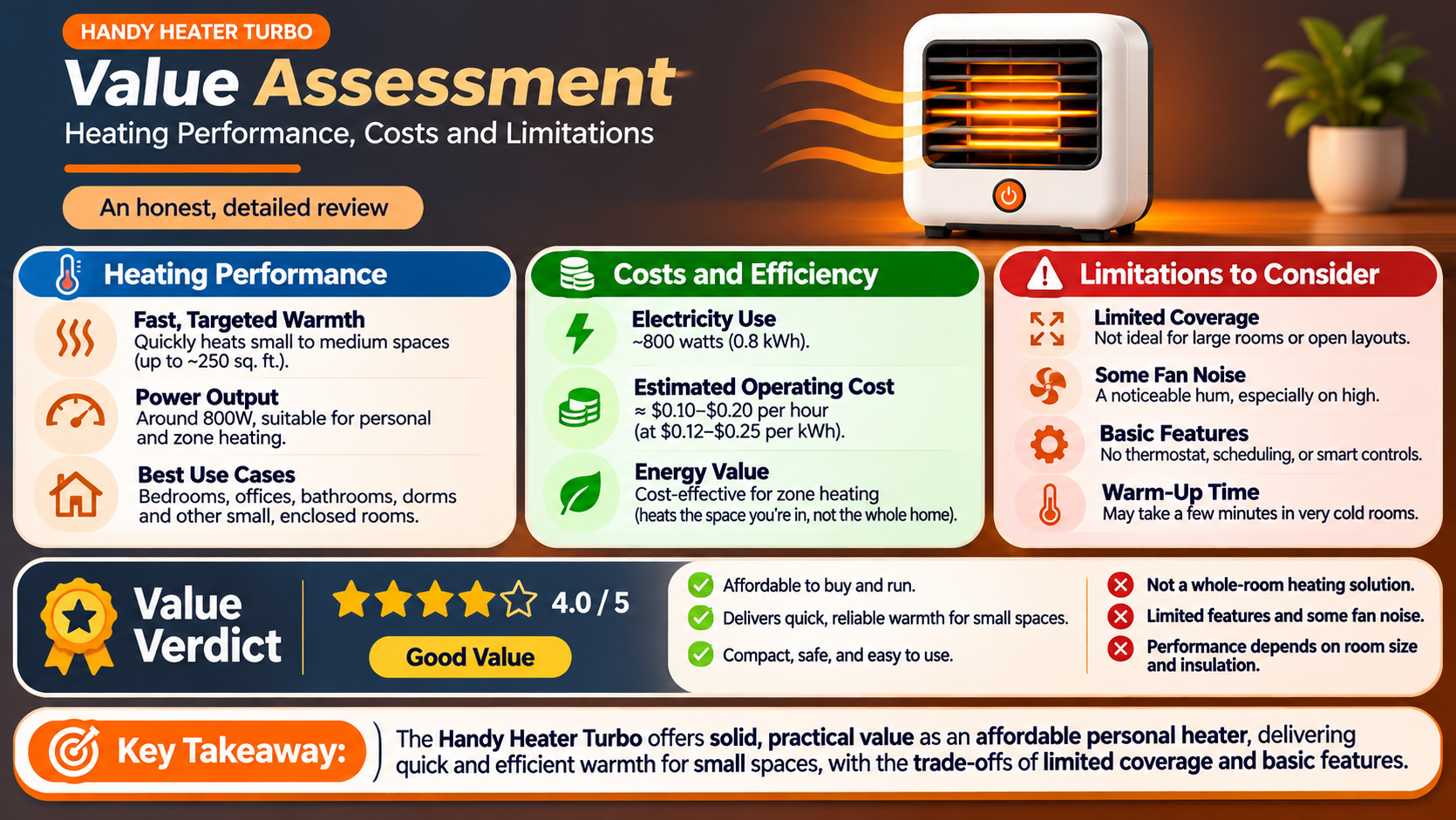
| Typical power range for this category | Roughly 400W to 1000W (always confirm the figure printed on the unit or packaging) |
| Best for | Desks, small bedrooms, home offices and personal warmth |
| Not ideal for | Large rooms, open-plan spaces and whole-house heating |
| Main appeal | Portability, low upfront price, quick warm-up feel |
| Main drawback | Limited heat output, so it cannot replace a proper heating system |
What Is the Handy Heater Turbo?
The Handy Heater Turbo is a small, portable electric heater designed to warm a limited area. Devices like this usually use a ceramic heating element combined with a small fan. You plug it into a standard wall socket, switch it on, and a stream of warm air is pushed into the room.
Because of its size, it is marketed as a convenient solution for people who feel cold at a desk, in a bedroom, or in a small room where switching on central heating would be wasteful. It is not designed to heat an entire home, and it is important to keep that expectation in mind from the start.
How It Works

Most compact heaters in this category follow the same four-step process:
- Power on: electricity flows from the wall socket to the heating element.
- Element heats up: a ceramic (PTC) element warms quickly. PTC elements limit their own temperature, which is one reason ceramic heaters are popular in small designs.
- Fan circulates air: a built-in fan pushes air across the hot element and out into the room.
- Thermostat control: where a thermostat is included, the heater cycles the heat on and off to hold a set temperature.
This is a convection-style approach. It warms the air near the unit first, then gradually the rest of the space. That is why you feel warmth quickly when you sit close, but the whole room takes much longer to change.
Heating Performance: What to Realistically Expect
Heating performance is where most buyers feel disappointed, so it is worth being clear about the physics. Every electric resistance heater converts nearly all of the electricity it uses into heat. A 1000W heater produces about 3,400 BTU of heat per hour, and a 500W heater produces about half of that. No design trick can create more heat than the electrical power going in.
A common rule of thumb is that you need about 10 watts per square foot to heat a room with standard ceilings. Based on that:
- A 500W unit suits roughly 50 square feet, such as a very small office or a personal space around a desk.
- A 1000W unit suits roughly 100 square feet, such as a small bedroom with doors and windows closed.
- Larger or drafty rooms will see only a modest improvement, mostly near the heater.
Where it performs well
- Close-range comfort: sitting within a metre or two, you will feel the warmth within a minute or so.
- Small, closed spaces: a small room with the door shut warms noticeably better than an open area.
- Supplemental heating: taking the chill off in the morning or evening without heating the whole home.
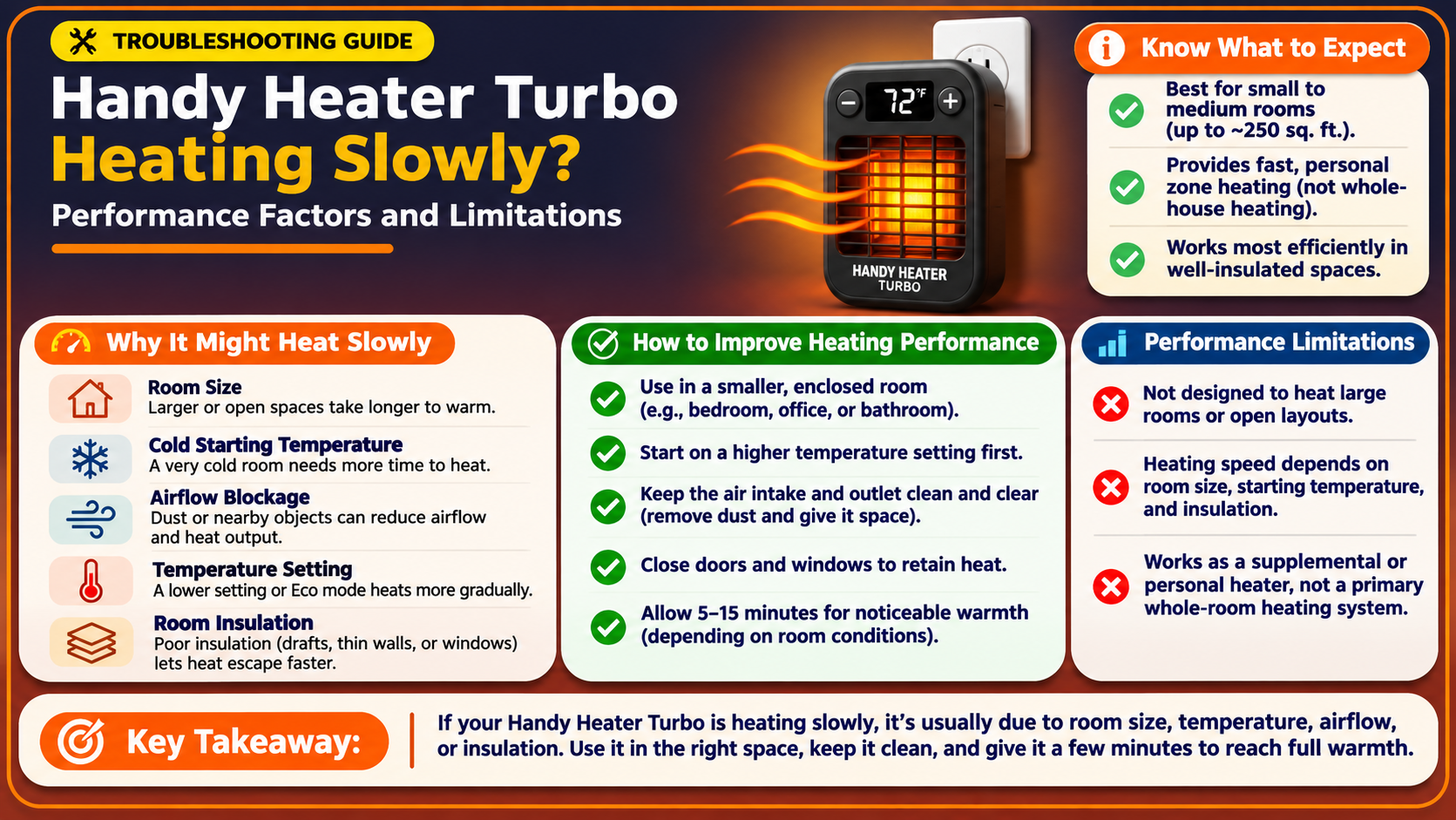
Where it struggles
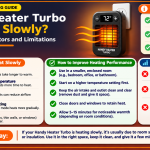
- Large rooms: there is simply not enough wattage to change the overall room temperature in a meaningful way.
- Very cold rooms: if a room is far below a comfortable temperature, a compact heater can take a long time, or never fully catch up.
- Drafty spaces: warm air escapes through gaps around windows and doors faster than the heater can replace it.
Be cautious with claims such as “heats a whole room in seconds”. A compact heater can make the air near it feel warm in seconds, but it cannot raise the temperature of an entire room that quickly.
Running Costs: What Will It Add to Your Electricity Bill?
One of the biggest selling points of small heaters is that they are “cheap to run”. That is partly true: a low-wattage heater draws less power than a large space heater. But it is not free, and it is not automatically more efficient than other electric heaters. All electric resistance heaters turn power into heat at essentially the same rate, so the real saving comes from heating only the space you are using.
The simple formula
Cost = (Watts ÷ 1000) × hours used × your electricity rate per kWh
For example, a 1000W heater running for 4 hours a day at $0.16 per kWh costs: 1 kW × 4 hours × $0.16 = $0.64 per day, or roughly $19 per month.

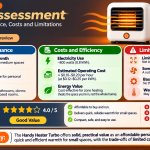
Remember that thermostats help: once the room reaches your target temperature, the heater cycles off and uses less energy than the chart’s continuous-use figures. Your real cost will usually be lower than the maximum shown, but only if the room is reasonably well insulated.
Is it good value overall?
The value case is strongest when you replace heating a whole house with heating one small area for a few hours. It is weakest if you plan to run it all day in a big or drafty room, because you will pay for the electricity and still feel cold.
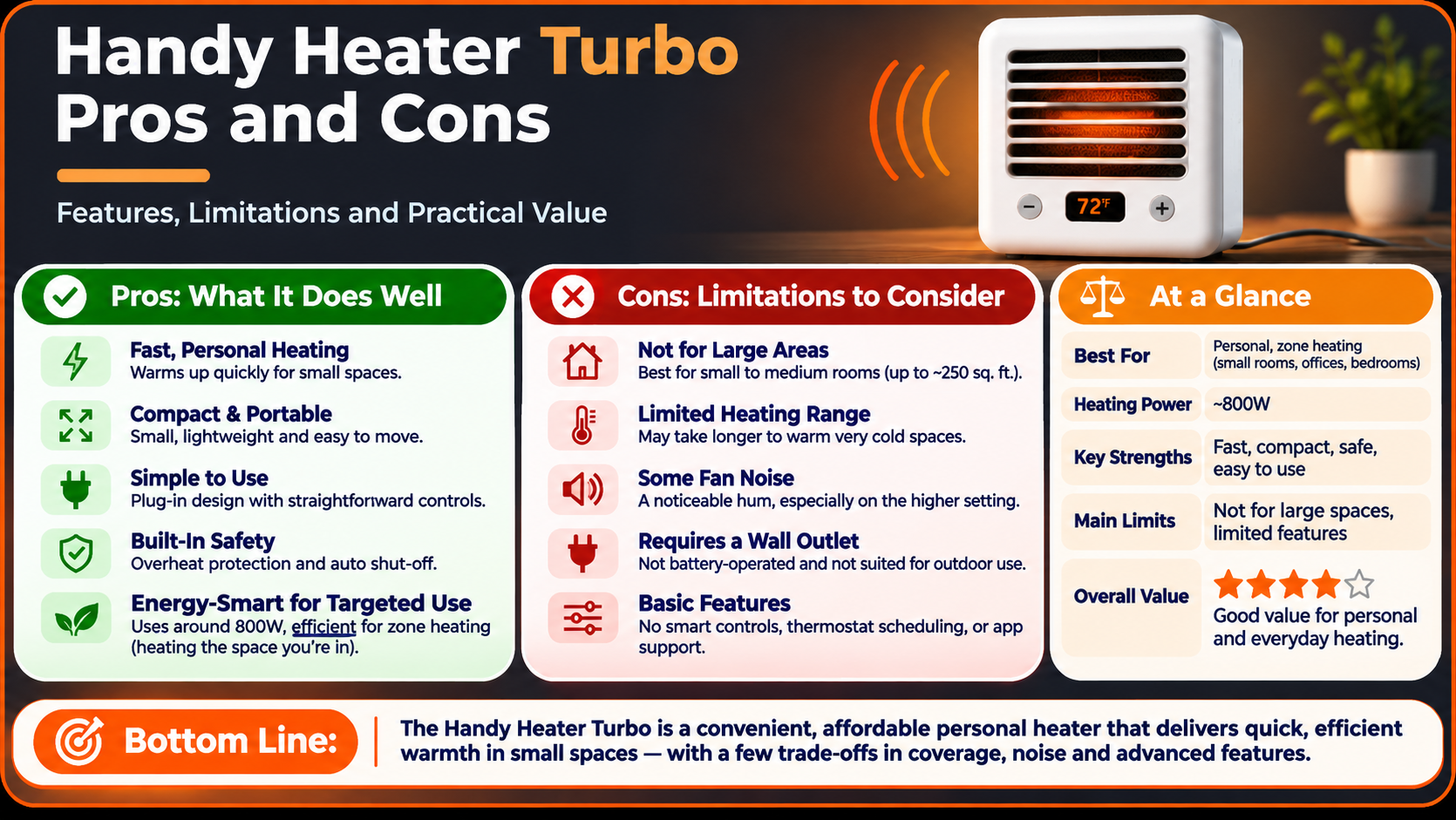
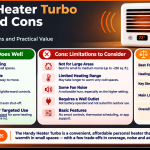
Pros
- Low upfront cost compared with larger heaters.
- Compact and portable so you can move it between rooms or take it to the office.
- Fast personal warmth at close range.
- Simple operation with no installation required.
- Useful for targeted heating when you do not want to heat the entire home.
- Typically quiet enough for a bedroom or home office, though fan noise varies by unit.
Limitations and Cons
- Limited power: it is not a replacement for central heating or a larger room heater.
- Exaggerated marketing: promotional claims about speed and coverage can set unrealistic expectations.
- Warmth is localized: the further you are from the unit, the less you feel it.
- Not a money-saving miracle: electricity is still the energy source, and prolonged use adds up.
- Build quality varies: low-cost heaters in this category can differ a lot in materials, switches and plugs. Check reviews from verified buyers and look for recognized safety certifications.
- Fan noise and dry air: some users notice a hum or a drier feeling in the air during longer sessions.
Safety Considerations
Any electric heater, no matter how small, needs sensible use. Follow these practices:
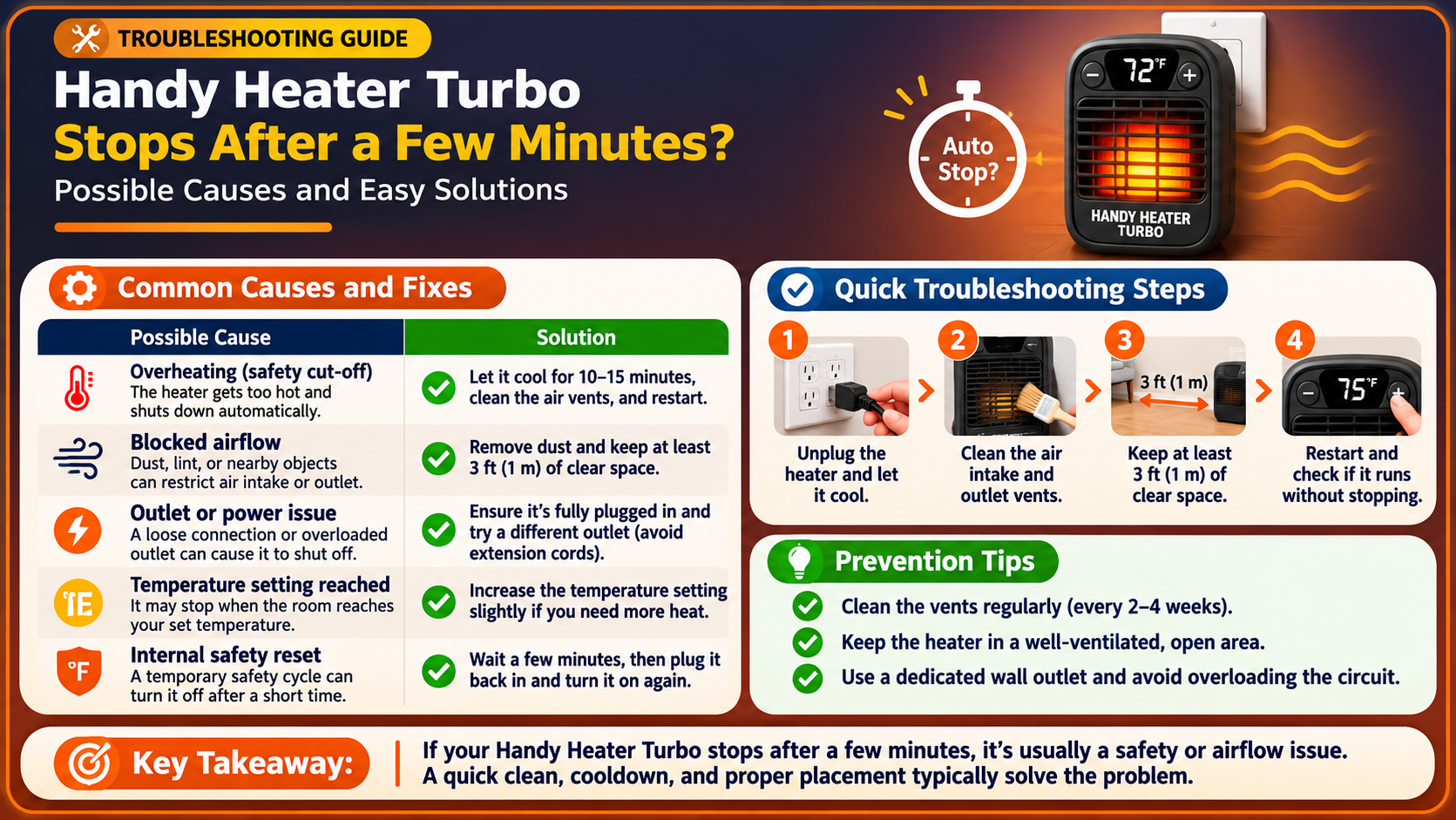
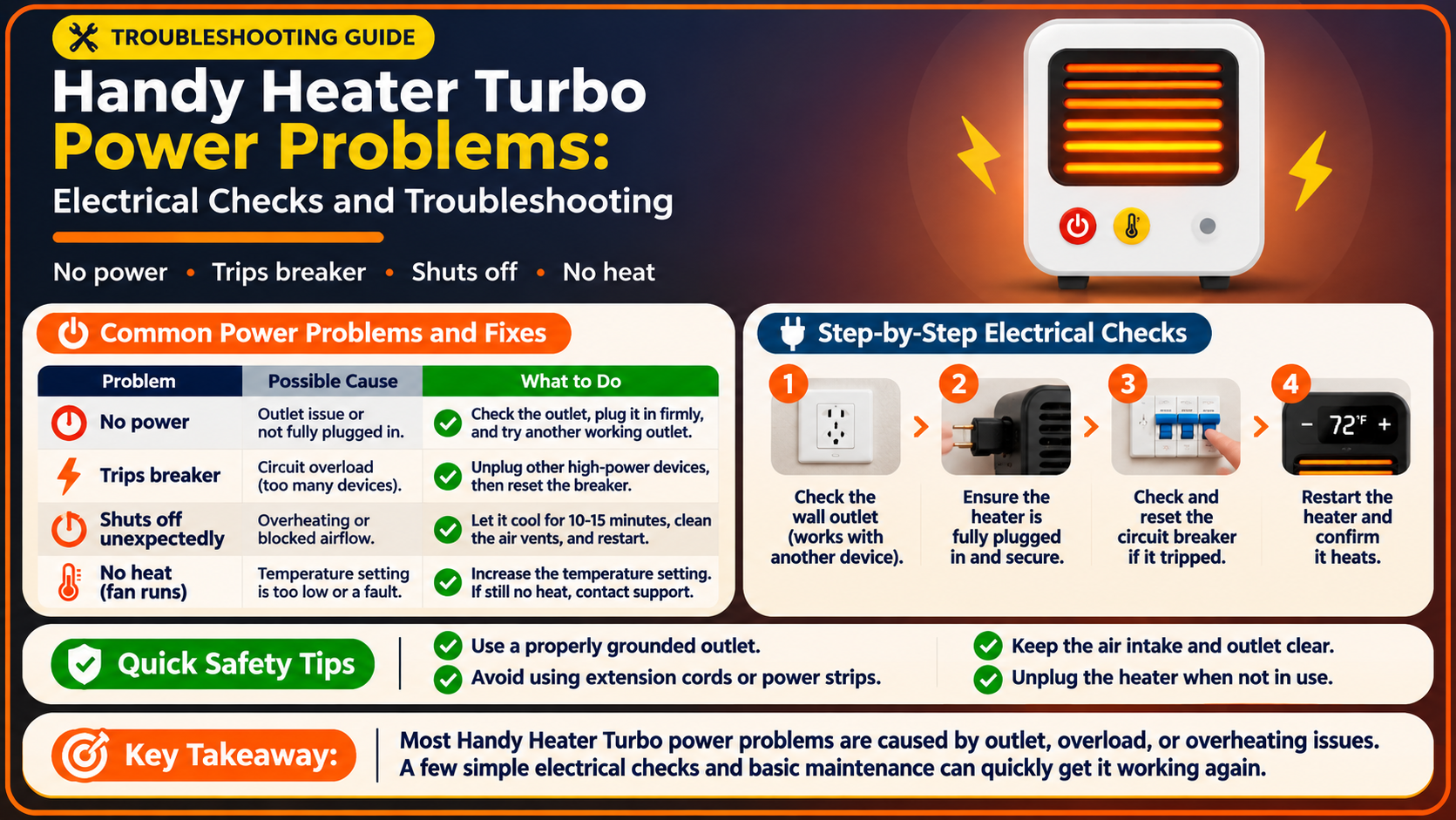
- Plug it directly into a wall socket. Avoid extension cords and power strips unless the heater’s instructions specifically allow them.
- Keep it at least one metre (about three feet) away from curtains, bedding, furniture and anything flammable.
- Place it on a flat, stable, hard surface, never on a bed or sofa.
- Do not leave it running unattended or while you sleep unless the manual explicitly says it is designed for that and it has safety features such as overheat and tip-over protection.
- Check the plug and socket for warmth or discoloration. If either is unusually hot, stop using the heater.
- Keep it away from water and damp areas unless it is specifically rated for bathroom use.
- Look for visible certification marks that apply in your country and read the user manual before first use.
Who Should Consider the Handy Heater Turbo?

A good fit if you:
- Want warmth at a desk, in a small office or in a small bedroom.
- Need a low-cost, temporary or backup heat source.
- Prefer to heat only the space you are using.
- Understand that it provides supplemental, not whole-room, heating.
Probably not a good fit if you:
- Need to heat a large living room or open-plan area.
- Live in a very cold climate and need a main heat source.
- Expect the heater to warm a room quickly from very cold.
- Want an appliance to run unattended for long periods.
Tips to Get the Most Out of It
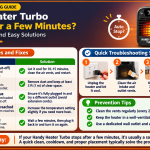
- Close the door and keep the heater in a small, enclosed space.
- Block drafts around windows and door gaps to keep the warmth in.
- Position it correctly: point it toward where you sit, but keep safe clearances.
- Use the thermostat (if available) rather than running it on full power continuously.
- Combine with warm clothing or a blanket. Warming yourself is more efficient than warming the room.
- Clean the vents regularly, since dust reduces airflow and can cause odors.
Alternatives to Consider
If the Handy Heater Turbo does not fit your needs, these categories are worth comparing:
- Oil-filled radiators: slower to warm up but they hold heat well and suit longer use in bedrooms.
- Larger ceramic or fan heaters (1500W): more output for medium rooms.
- Infrared or panel heaters: warm people and objects directly, which can feel more efficient in some setups.
- Heat pumps or mini-split systems: a higher upfront investment but much more efficient for regular, long-term heating.
- Electric blankets or heated throws: very low-cost personal warmth for sofas and beds.
Frequently Asked Questions
Can the Handy Heater Turbo heat a whole room?
It can warm a small, enclosed room reasonably well, but it is not designed to heat a large room or an entire home. Expect strong warmth near the unit and a gentler effect further away.
How much electricity does it use?
That depends on the wattage of your specific unit. Multiply the wattage (in kilowatts) by the hours you use it and by your local electricity rate. A 1000W heater uses 1 kWh for every hour at full power.
Is it cheaper to run than central heating?
It can be cheaper if you only heat one small room instead of the whole house. It is rarely cheaper than an efficient heat pump or gas system if you need to heat many rooms for many hours.
Is it safe to leave on overnight?
Most safety guidance advises against leaving any portable heater running unattended or while you sleep. If you do consider it, make sure the manual allows it and that the unit has overheat and tip-over protection.
Does it dry out the air?
Heaters do not remove moisture from the air, but warming the air lowers its relative humidity, which can feel dry. A bowl of water or a humidifier can help in small rooms.
Is it worth buying?
If you want an inexpensive way to feel warmer at a desk or in a small room, and you have realistic expectations, it can be a reasonable purchase. If you need serious heating for a larger space, you will get better value from a more powerful option.
Final Verdict
The Handy Heater Turbo makes the most sense as a personal or small-room supplement, not as a primary heating solution. Its biggest strengths are portability, simplicity and a low entry price. Its biggest weaknesses are limited power and the gap between marketing promises and what physics allows.
If you approach it as a way to stay comfortable in a small, closed space for a few hours at a time, it offers fair value. If you are hoping for a pocket-sized heater that warms a big room instantly and costs almost nothing to run, you will likely be disappointed. Before buying, check the exact wattage, safety certifications, return policy and warranty, and choose the heater that matches the size of the room you actually want to heat.
Disclaimer: Specifications and performance vary between product versions and sellers. Always read the manual and follow the manufacturer’s safety instructions. Running cost figures in this article are illustrative estimates only.